For sophisticated planners, chair massage new orleans programming is not simply a wellness perk. It is a guest-experience operation that must align with the run of show, venue constraints, audience expectations, and sponsor goals. The right plan creates a welcome pause without disrupting the event around it.
Request an event massage consultation for your New Orleans program.
Why Chair Massage Works in an Event Strategy
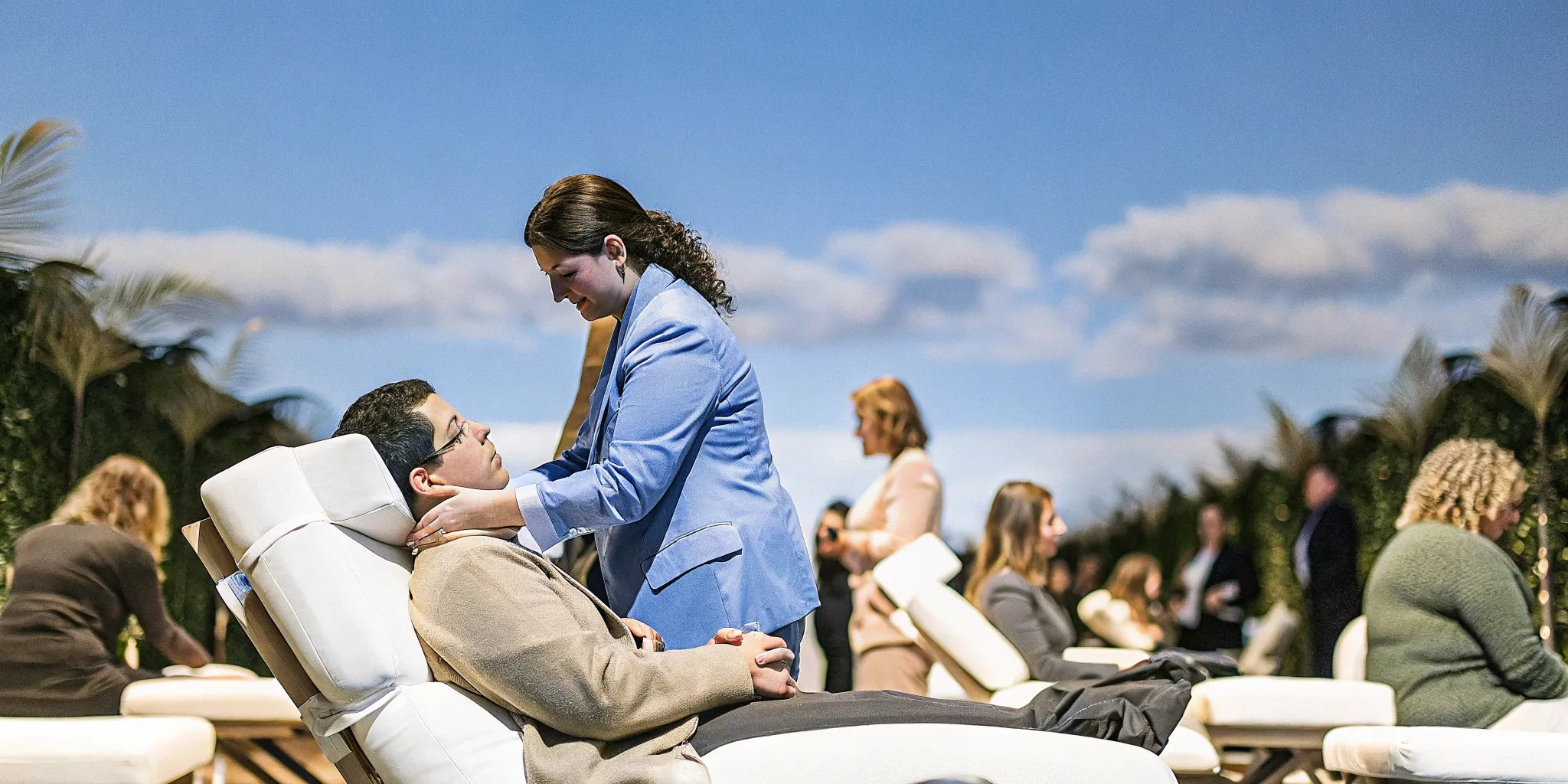
Chair massage gives planners a flexible, fully clothed experience that can fit within a broader event program. It can support attendee comfort, employee appreciation, sponsor engagement, or VIP hospitality while keeping guests near the action. Its real value comes from thoughtful integration, not simply placing chairs in an unused corner.
Design the experience around a business objective
Start with the result the event owner wants. A conference organizer may want an attendee amenity that improves the midday experience. An exhibitor may need a memorable activation that encourages qualified conversations. A corporate host may want a visible expression of employee care. These objectives lead to different placement, staffing, messaging, and scheduling decisions.
Define success before selecting the format. Useful measures may include completed sessions, appointment utilization, wait-time observations, guest feedback, or sponsor leads captured through a separate opt-in process. Keep massage intake and marketing consent distinct so guests understand exactly what information they are providing.
Protect the event’s tone
The station should feel consistent with the program. A leadership retreat may call for discreet scheduling and a calm room. A convention booth may benefit from an open, energetic setup with clear branding. An employee event may prioritize equitable access across shifts. Share audience, dress code, brand guidelines, and service expectations with the provider early.
- For attendee care: place the activation where it offers relief without pulling guests away from essential sessions.
- For sponsor engagement: create a natural waiting experience, but do not pressure guests into sales conversations.
- For employee appreciation: plan access around departments, shifts, and operational coverage.
Choose the Right Massage Format for the Program
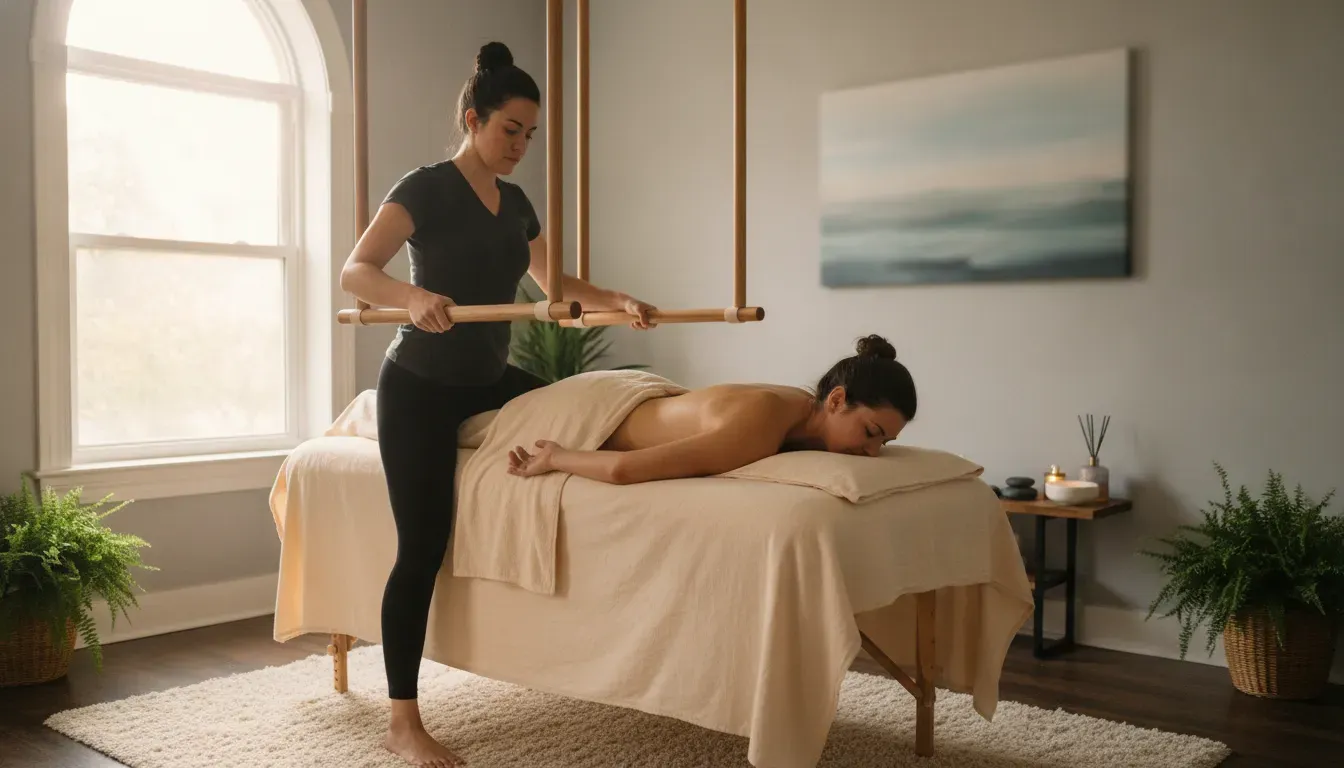
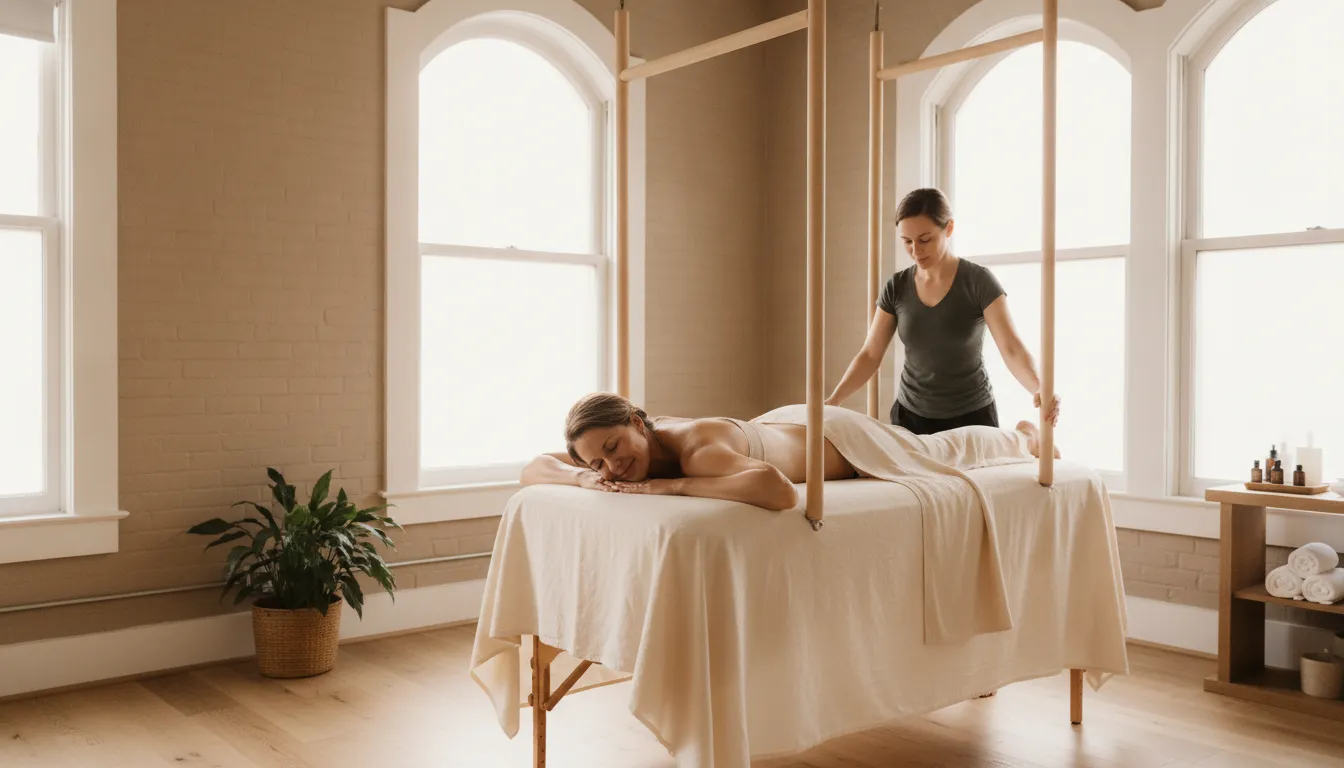
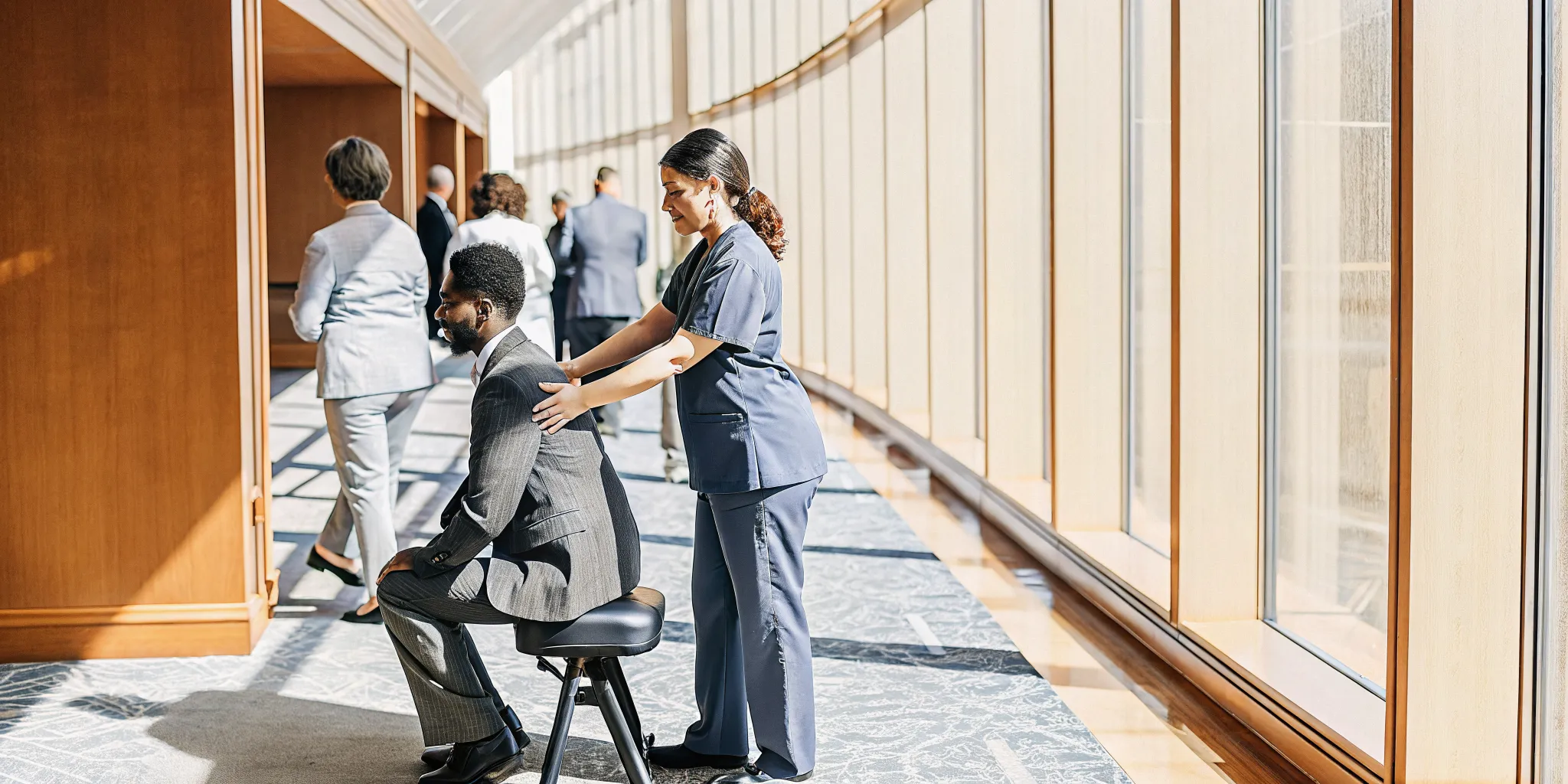
The best format depends on guest volume, privacy expectations, agenda flexibility, and the purpose of the activation. Chair massage usually suits short, accessible sessions in active event settings. Table massage better fits longer, more private experiences. A provider should confirm the final setup after reviewing the venue and schedule.
Compare formats before committing space
| Planning factor | Chair massage | Table massage | Wellness lounge |
|---|---|---|---|
| Best use | Conferences, offices, booths, receptions | Retreats, VIP care, private hospitality | Multi-activity programs and longer dwell time |
| Guest experience | Brief, fully clothed, easy to join | More private and time intensive | Flexible mix of scheduled and informal activities |
| Operational emphasis | Throughput and visible queue control | Privacy, room turnover, and scheduling | Zoning, wayfinding, and activity coordination |
| Agenda fit | Works between sessions or during open periods | Best with protected appointments | Best with dedicated wellness blocks |
Match the format to the guest promise
A short chair session should be presented as a convenient reset, not as a substitute for a full therapeutic appointment. Guests with deeper wellness goals can explore the studio’s broader massage service options. Clear language helps planners set expectations and helps the onsite team deliver a consistent experience.
Ask the venue whether an open activation, screened area, or enclosed room is appropriate. Consider sound levels, lighting, nearby food service, photography, and traffic. If the station is sponsor funded, agree on tasteful branding that does not interfere with guest comfort or therapist movement.
Build Capacity from Attendance and Session Length
Capacity planning should begin with attendance, likely participation, service hours, and the length of each appointment. Therapist count should follow from those variables, not from a generic ratio. A realistic plan also allows time for guest transitions, sanitation, breaks, late arrivals, and demand spikes between agenda blocks.
Use a transparent throughput model
Calculate the usable service minutes for each therapist, then divide by the full appointment cycle. The cycle includes the massage plus any reset or transition time the provider recommends. Multiply that result by the therapist count to estimate total appointment capacity. Then compare capacity with the number of guests likely to participate.
For example, do not assume every registered attendee will want a session or that demand will be evenly distributed. Review prior event behavior, audience profile, competing agenda items, and promotion plans. Model at least a conservative case and a high-demand case. This reveals whether you need more capacity, shorter sessions, or tighter access rules.
Plan for peaks, not only totals
A schedule may look sufficient on paper and still fail during a concentrated break. Map likely surges against keynote endings, exhibit-hall openings, meal periods, and shift changes. If several hundred guests become free at once, use reservations, timed cohorts, or a waitlist rather than allowing an unmanaged physical line to form.
- Reserved appointments: create predictability for guests and the service team, especially during structured programs.
- Walk-up service: preserves spontaneity during expos, networking blocks, and open-house events.
- Hybrid access: protects some bookable capacity while keeping a portion available for walk-ups or VIP needs.
- Priority windows: can support executives, speakers, event crew, or employees on limited breaks when communicated fairly.
Discuss attendance, session timing, and staffing for a tailored event plan.
Engineer Guest Flow and the Service Footprint
A strong chair massage new orleans activation should be easy to find, intuitive to join, and calm once a guest is seated. Guest flow depends on where people approach, how they check in, where they wait, and how they exit. Venue operations and accessibility should shape every part of the layout.
Place the station with intention
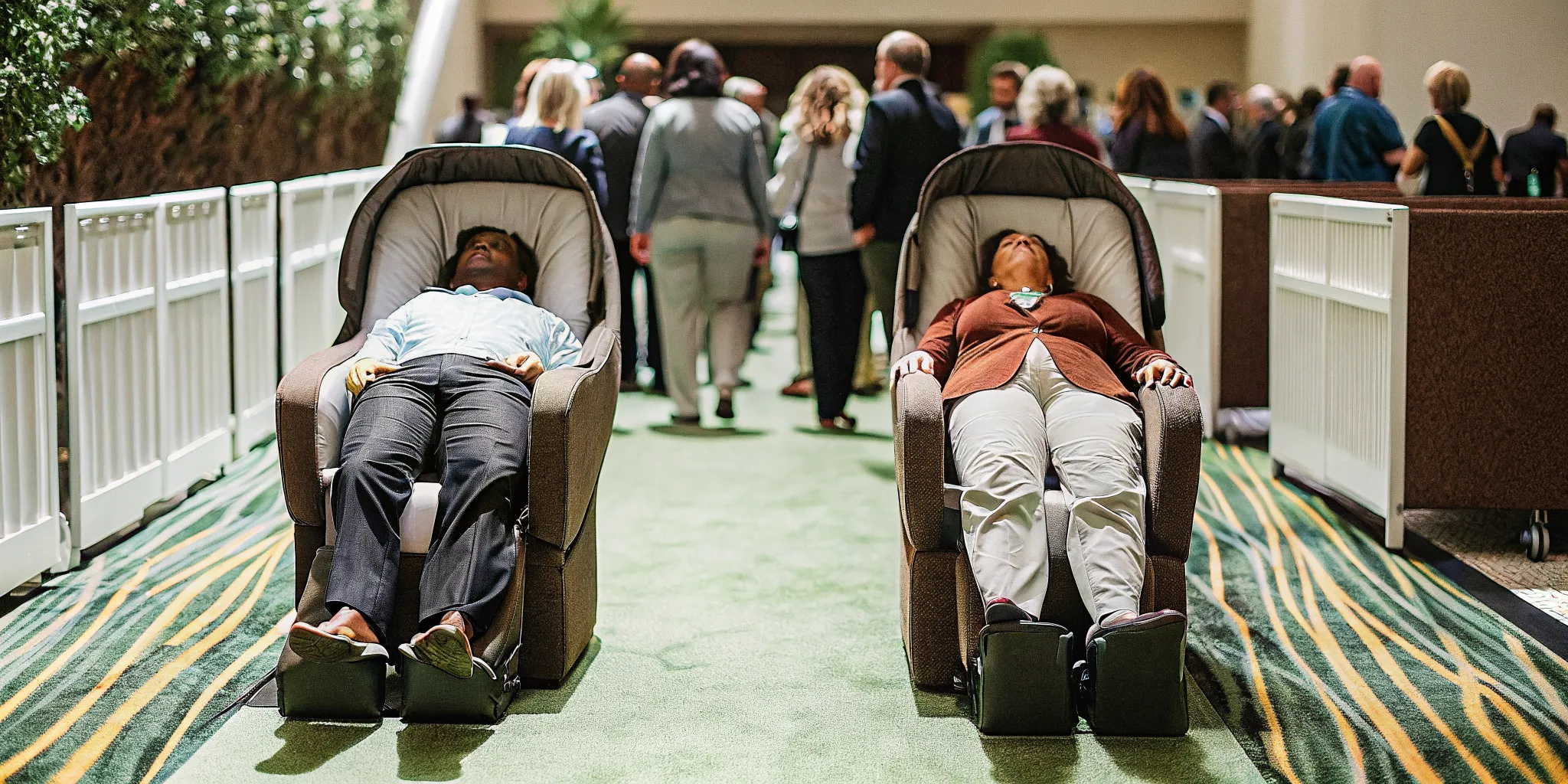
High visibility can support participation, but excessive noise and congestion undermine the experience. Look for a location near natural traffic that does not block doors, registration, food service, emergency routes, or neighboring exhibitors. Ask the massage provider to confirm working clearance and ask the venue to approve the footprint before final production plans are issued.
Create a clean check-in sequence
Guests should quickly understand whether the service is complimentary, how long it takes, and how to join. Use concise signage and a host when demand warrants it. Keep the active service area separate from the waiting area so conversations, bags, and bystanders do not crowd therapists or seated guests.
- Approach: wayfinding identifies the activation before guests reach the entrance.
- Decision: signage explains eligibility, session expectations, and the appointment method.
- Check-in: a host or simple system confirms the guest and next available time.
- Wait: guests receive a realistic expectation without blocking circulation.
- Service: the provider manages intake, comfort, and professional boundaries.
- Exit: guests leave through a clear path and can rejoin the event naturally.
Coordinate venue and production details
Confirm loading access, credentials, freight-elevator procedures, parking, security screening, floor protection, and setup windows. Ask whether the venue requires certificates of insurance or approved-vendor documentation. Share the current floor plan and production schedule with the provider, then identify one onsite decision-maker for day-of questions.
Select Event Formats That Support the Experience
Chair massage can serve very different event formats when its role is clearly defined. The activation may function as an attendee amenity, employee benefit, hospitality feature, or sponsor touchpoint. Each setting requires a distinct service window, communication plan, and flow model rather than a one-size-fits-all setup.
Conferences and conventions
Use chair massage during exhibit-hall hours, longer breaks, or attendee-service windows. A station near the action can be convenient, but avoid competing with mandatory programming. If an exhibitor hosts the activation, separate the massage queue from lead collection and give guests a clear choice about any follow-up communication.
Corporate wellness and appreciation days
Office programs need equitable scheduling. Coordinate with managers so participation does not leave customer-facing or operational teams uncovered. For multi-shift organizations, consider multiple service windows rather than concentrating the benefit during standard office hours. Planners comparing program approaches can review NOLA Bliss Massage’s overview of corporate massage experiences.
Leadership retreats, VIP hospitality, and client events
Smaller programs often value privacy, discretion, and schedule precision more than maximum throughput. Integrate appointments into the itinerary, protect transition time, and communicate attire or access notes in advance. Avoid placing guests in the position of choosing between the massage and a high-value discussion they are expected to attend.
Brand activations and trade-show booths
At a booth, the service must support the brand without turning guest care into a transaction. Establish who manages the queue, how appointments are confirmed, and whether guests can leave and return. Give therapists room to work safely, and keep promotional demonstrations, loud audio, and active sales conversations away from the service zone.
Vet the Provider and Control Operational Risk
Provider selection should examine professionalism, communication, staffing, and operational readiness, not just availability. Ask how the team handles intake, hygiene, guest comfort, schedule changes, and venue requirements. A credible proposal should connect the recommended format and therapist count to your attendance forecast, agenda, and service goals.
Ask decision-grade questions
- Staffing plan: How will therapist count be calculated, and what happens if a scheduled therapist becomes unavailable?
- Scope: What does the provider bring, and what must the venue or planner supply?
- Guest safety: How are intake, contraindications, consent, hygiene, and guest concerns handled?
- Credentials: What licensing, insurance, and venue documents can the provider supply?
- Schedule: What setup, service, break, reset, and breakdown time is required?
- Accessibility: How can the experience be adapted when a standard massage chair is not appropriate for a guest?
- Changes: What are the policies for attendance shifts, timing changes, cancellations, and venue moves?
Protect the guest experience
Massage is personal, even in a public event setting. Guests should never feel obligated to participate, disclose health details publicly, appear in photos, or accept marketing messages. Align on photography rules and privacy expectations before doors open. Make sure event staff know where provider responsibilities end and when to involve venue security or medical personnel.
Use one operational brief
Consolidate approved details into a single brief shared with the provider, venue, producer, and relevant event staff. Include contacts, service hours, therapist count, location, access instructions, floor-plan reference, queue method, signage owner, dress code, emergency process, and escalation path. Version control matters when plans change close to the event.
Bring your venue details and run of show to an event massage consultation.
Use the Event Planner Checklist
A reliable checklist turns a promising idea into an activation that survives real event conditions. Work backward from doors open and assign an owner to every decision. The provider should advise on massage operations, while the planner retains responsibility for venue approval, program integration, communications, and cross-vendor coordination.
Strategy and procurement
- Define the objective: document whether the priority is hospitality, appreciation, engagement, or another measurable goal.
- Describe the audience: share attendance, participant profile, likely demand, and any access considerations.
- Set the service model: choose chair massage, private appointments, or a broader wellness format.
- Request a tailored quote: provide service hours, venue, attendance, and operational requirements for an accurate proposal.
- Review terms: confirm scope, insurance, change policies, payment milestones, and responsibilities.
Venue and production
- Approve the location: validate access, noise, privacy, circulation, and working clearance with venue operations.
- Map guest flow: show approach, check-in, wait, service, and exit zones on the floor plan.
- Confirm access: distribute loading, parking, credential, security, and setup instructions.
- Coordinate vendors: align massage operations with registration, catering, audio, cleaning, security, and exhibit teams.
- Prepare contingencies: identify an alternate location and an escalation contact for day-of changes.
Guest communications and day-of control
- Explain the offer: tell guests what the experience is, how long it takes, and how to participate.
- Manage demand: select reservations, walk-ups, or a hybrid approach based on the agenda.
- Brief staff: give hosts concise answers about eligibility, wait times, location, and guest concerns.
- Monitor operations: watch utilization, wait experience, schedule adherence, and impacts on nearby activities.
- Close the loop: review participation, guest feedback, operational lessons, and future recommendations.
Frequently Asked Questions
How much does chair massage cost for a New Orleans event?
Cost depends on the event duration, therapist count, schedule, venue logistics, and requested service level. Request a tailored quote built around the actual run of show and attendance forecast rather than relying on an unverified flat rate. A complete request helps the provider identify the operational choices that affect the proposal.
How many massage therapists should an event planner book?
Calculate staffing from attendance, expected participation, session length, reset time, and the number of service hours. A provider can model realistic throughput and recommend a therapist count after reviewing those inputs. Also evaluate peak demand, since a concentrated break may require a different plan than steady traffic across the day.
What does the venue need to provide for chair massage?
Requirements vary by provider and venue. Planners should confirm an accessible service zone, loading instructions, security procedures, noise conditions, signage rules, and any venue insurance requirements before the event. Ask the provider what equipment and supplies the team brings, then record each remaining responsibility in the operational brief.
Should guests reserve chair massage appointments or walk up?
Reservations work well when the agenda is structured or demand is predictable. Walk-up service suits fluid networking events. A hybrid plan, with some reserved appointments and some walk-up capacity, can balance access and flexibility. Choose the method only after mapping demand peaks and deciding who will manage check-in.
Plan Chair Massage New Orleans Guests Will Value
Successful event massage feels effortless to the guest because the operational work happened in advance. Align the activation with a clear objective, calculate capacity from real inputs, secure venue approval, and give every stakeholder one reliable plan. NOLA Bliss Massage can help translate your attendance and agenda into a tailored recommendation.
Request a tailored chair massage quote for your New Orleans event.