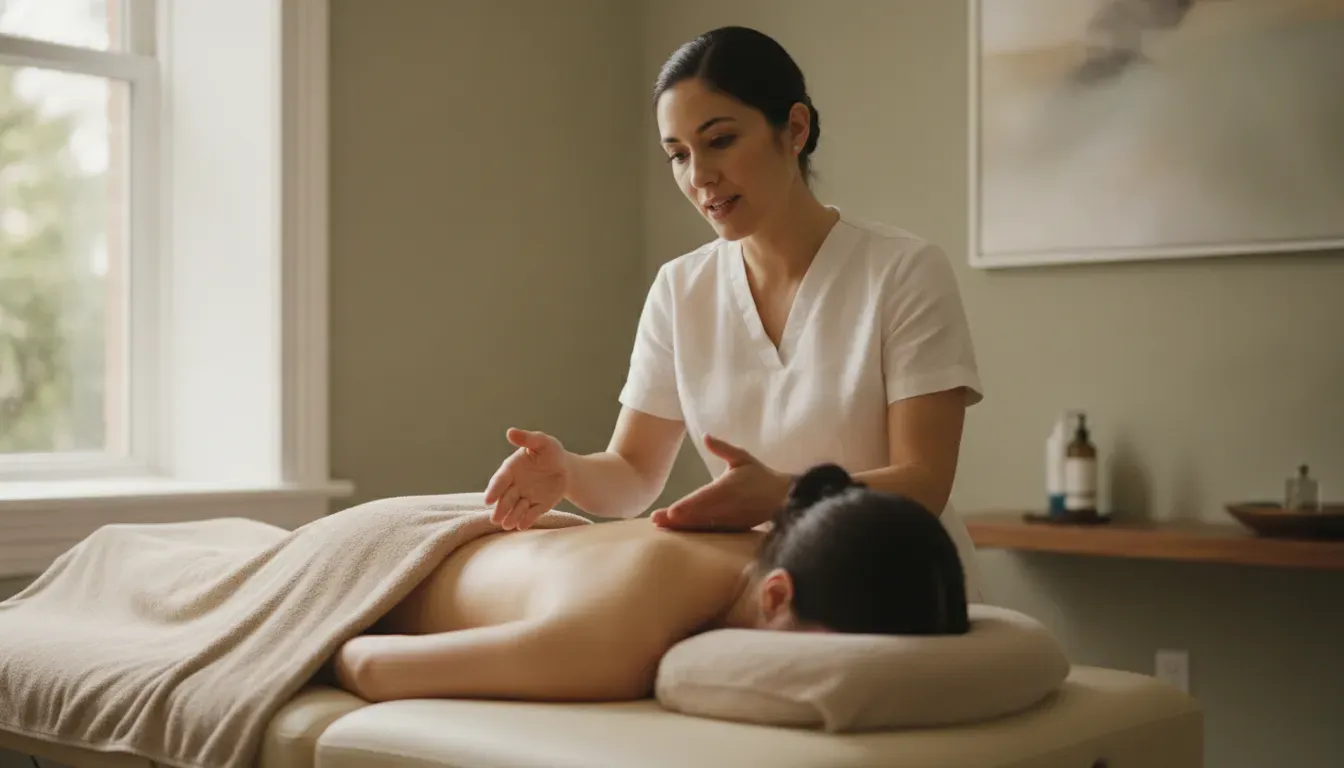

You might be surprised to learn that sciatica isn’t a condition. It’s a symptom—your body’s alarm that the sciatic nerve is being pinched. The culprit is often simpler than you think: tight muscles in your glutes or lower back. Understanding this is key to finding real relief. Instead of just managing the pain, you can address the source directly. A skilled therapist can release the specific muscles causing the nerve compression. This is the goal of an effective medical massage for sciatica, a treatment that targets the cause for lasting freedom from pain.
Key Takeaways
- Address the muscular root cause: Therapeutic massage provides relief by releasing the specific tight muscles, often in the glutes and lower back, that are compressing your sciatic nerve.
- Choose the right technique for relief: For lasting results, opt for targeted massage styles like deep tissue or Ashiatsu, which are designed to work on the deeper muscle layers causing the nerve irritation.
- Prioritize a safe and informed approach: Always get a diagnosis from your doctor first, then find a licensed therapist experienced with sciatica to ensure your treatment is both safe and tailored to your specific needs.
Let’s Talk Sciatica: What It Is and Why It Hurts
If you’ve ever felt a sharp, shooting pain that travels from your lower back down through your leg, you might be dealing with sciatica. It’s a distinct and frustrating type of pain that can make simple activities like walking, sitting, or even standing feel like a major challenge. While the term is common, what’s actually happening in your body is often misunderstood. Sciatica isn’t a condition on its own, but rather a symptom of another problem, like a herniated disc, spinal stenosis, or, very often, simple muscle tension.
Understanding the root cause of your discomfort is the first step toward finding real relief. The pain is your body’s signal that the sciatic nerve, the longest nerve in your body, is being compressed or irritated. Think of it as a persistent alarm bell telling you something is wrong. By learning what triggers this alarm, you can find effective ways to ease the pressure and get back to feeling like yourself. For many people, targeted therapeutic massage offers a powerful, non-invasive path to soothing the muscles that contribute to this painful condition. Before we get into the specific massage techniques that can help, let’s break down what sciatica is and why it causes so much trouble. We’ll cover the basics of the sciatic nerve, the common symptoms to watch for, and how something as simple as a tight muscle can lead to so much pain.
What Sciatic Nerve Pain Actually Feels Like
So, what exactly is happening when you feel that tell-tale sciatic pain? It all comes down to the sciatic nerve, a major nerve that starts in your lower back and runs through your hips and buttocks, then down each leg. Sciatica occurs when this nerve gets pinched or compressed. This pressure is what causes the sharp pain, soreness, numbness, or tingling sensations that can radiate all the way down to your feet. Think of it like a kink in a garden hose, where the pressure buildup is causing problems down the line.
Are You Experiencing These Sciatica Symptoms?
Sciatica symptoms can range from mildly annoying to completely debilitating. The most common sign is pain that starts in the lower back or buttock and travels down the back of your thigh and into your leg. This pain is often described as sharp or burning, rather than a dull ache. You might also experience tingling, numbness, or muscle weakness in the affected leg or foot. For most people, sciatica only affects one side of the body, and the pain can feel worse after standing for a long time, coughing, or bending over.
The Common Causes of Sciatic Pain
Sciatic pain doesn’t just appear out of nowhere; it’s triggered by something specific putting pressure on the nerve. The causes generally fall into two main categories: issues related to your spine and problems with the surrounding muscles. While spinal problems like a herniated disc are often the first thing people think of, it’s frequently the muscles in your glutes and lower back that are the real culprits. Identifying the source of the compression is key, as it determines the most effective path to relief. Let’s look at both of these common causes more closely.
Herniated Discs and Other Spinal Issues
One of the most well-known causes of sciatica is a herniated disc. Your spine is made up of vertebrae stacked on top of each other, with soft, gel-like discs acting as cushions between them. When one of these discs bulges or ruptures, it can press directly on the sciatic nerve root where it exits the spine. This direct compression is what triggers the sharp pain and numbness. Another spinal condition, known as spinal stenosis, involves a narrowing of the spinal canal, which can also pinch the nerve. While these conditions sound serious, they are quite common. It’s important to get a proper diagnosis from a doctor to confirm if a spinal issue is the source of your pain before seeking treatment.
Piriformis Syndrome and Muscle Inflammation
More often than you might think, the source of sciatic pain isn’t the spine at all, but a small muscle deep in your buttocks called the piriformis. The sciatic nerve runs right underneath, and sometimes even through, this muscle. If the piriformis becomes tight, inflamed, or goes into spasm, it can squeeze the nerve and cause sciatica-like symptoms—a condition known as piriformis syndrome. This is a classic example of how muscle tension can have far-reaching effects. A skilled therapist can use targeted deep tissue massage to manually release the tension in the piriformis, providing direct and often immediate relief by freeing the compressed nerve.
Why Tight Muscles Can Lead to Sciatic Pain
One of the most common culprits behind sciatic nerve pain is surprisingly simple: tight muscles. When the muscles in your lower back and glutes become overly tense, they can press directly on the sciatic nerve. The piriformis muscle, located deep in the buttock, is a frequent offender. If it becomes too tight, it can irritate the nearby sciatic nerve, leading to pain. This is where a therapeutic massage can make a significant difference. By relaxing these tense muscles, a skilled therapist can help release the pressure on the nerve, providing much-needed relief.
How Massage Therapy Provides Sciatica Relief
When you’re dealing with the sharp, radiating pain of sciatica, finding real relief can feel like a full-time job. While it’s easy to think of massage as just a way to relax, therapeutic massage is a powerful tool that directly addresses the root muscular causes of sciatic nerve pain. It’s not about a temporary fix; it’s about creating lasting change by releasing the tension that’s putting pressure on your nerve in the first place.
A skilled massage therapist can identify and work on the specific muscles contributing to your discomfort, helping your body heal and function without pain. By focusing on the source of the problem, massage provides a non-invasive and effective path toward recovery.
How Massage Calms an Irritated Sciatic Nerve
At its core, sciatica is often a problem of pressure. When the muscles in your lower back and glutes become overly tight, they can compress the sciatic nerve, leading to pain, tingling, and numbness down your leg. The good news is that massage therapy can help release these tense muscles, thereby reducing pressure on your sciatic nerve. Think of it as creating space for the nerve to function without being pinched. By manually softening and lengthening the tight muscle fibers, a therapist can directly alleviate the compression that causes so much discomfort. Our various massage services are designed to target this kind of muscular tension effectively.
Unlocking Your Body’s Natural Pain Relief
Beyond just releasing tight muscles, a therapeutic massage taps into your body’s own powerful healing systems. When a therapist applies pressure to sore areas, it does more than just feel good—it significantly increases blood circulation. This improved blood flow is crucial for recovery because it delivers a fresh supply of oxygen and nutrient-rich blood to the inflamed tissues surrounding your sciatic nerve. Think of it as sending in a clean-up crew to remove waste products and a construction crew to start the repairs. This process helps support the body’s natural ability to heal, providing a drug-free way to manage your pain and get you back on your feet.
The Role of Endorphins
One of the most incredible benefits of massage is its ability to trigger the release of endorphins. When you receive a massage, the stimulation of your muscles and skin sends signals to your brain to release these powerful neurochemicals, which act as the body’s own natural pain relievers. They work in a similar way to pain medication but without any of the side effects, creating a natural sense of well-being and significantly reducing your perception of pain. For someone dealing with sciatica, this endorphin rush can provide immediate and welcome relief, helping to break the cycle of pain and tension without reaching for a pill bottle.
Targeting the Muscles That Matter for Sciatica
Effective sciatica relief isn’t about a generic, all-over massage. It requires a targeted approach that focuses on the specific muscles responsible for compressing the sciatic nerve. For many people, the main culprit is the piriformis, a small muscle located deep in the buttocks. When it gets tight, it can directly irritate the sciatic nerve. A knowledgeable therapist will use precise techniques to release the piriformis, glutes, and surrounding lower back muscles. A deep tissue massage is particularly effective for this, as it allows the therapist to work on deeper layers of muscle and connective tissue to release chronic knots and tension.
The Glutes and Piriformis
Your gluteal muscles—and the smaller piriformis muscle tucked beneath them—are often the primary culprits behind sciatic pain. The piriformis is located deep in the buttock, and because the sciatic nerve runs right alongside or sometimes even through it, it’s a frequent offender. When this muscle becomes too tight from overuse, prolonged sitting, or injury, it can directly press on the nerve, causing that familiar radiating pain. A skilled massage therapist understands this relationship and will focus on releasing the tension in both the larger glute muscles and the specific, hard-to-reach piriformis. This targeted work is essential for creating space and taking pressure off the irritated nerve.
Hip Rotators
Beyond the piriformis, the entire group of deep hip rotator muscles can contribute to sciatic nerve compression. These muscles work together to rotate your leg, and when they become tight and imbalanced, they can create a pattern of tension that affects the entire hip and lower back area. An effective massage for sciatica goes beyond just rubbing the sore spots; it involves a knowledgeable approach to release these interconnected muscles. Our therapists are trained to use precise techniques that address the entire hip rotator group, ensuring that the source of the compression is fully addressed. This comprehensive approach helps restore balance and provides more sustainable relief from sciatic pain.
Hamstrings and Calf Muscles
While the root cause of sciatica is typically in the lower back or gluteal region, the pain often travels down the entire length of the leg. As the sciatic nerve runs through your hamstrings and down into your calf muscles, tension in these areas can either be a symptom of the nerve irritation or a contributing factor to your discomfort. Releasing tightness in the hamstrings and calves can help soothe the entire nerve pathway, reducing the overall sensation of pain and improving your mobility. A thorough therapeutic massage will address these lower leg muscles to ensure the whole system can relax and recover.
How Massage Fights Inflammation and Improves Blood Flow
Beyond just releasing tight muscles, massage plays a crucial role in your body’s healing process. The physical manipulation of muscle tissue significantly improves circulation in the affected area. This increased blood flow is vital because it brings oxygen and nutrient-rich blood that can help your body heal while carrying away metabolic waste that can contribute to inflammation and pain. Better circulation helps calm irritation around the nerve and gives your tissues the resources they need to repair themselves. Techniques like Ashiatsu Deepfeet Bar Therapy, which uses deep, compressive strokes, are excellent for promoting this healing response and providing lasting relief.
Which Massage Style Is Right for Your Sciatica?
When you’re dealing with sciatica, not just any massage will do. The right approach targets the specific muscles contributing to your pain. A skilled therapist will often blend several techniques to give you the most effective relief. Here are five of the most common and effective massage styles for easing sciatic nerve pain, each offering a unique path to feeling better.
Deep Tissue Massage: Reaching the Source of Pain
If you feel like your pain is buried deep in your muscles, a deep tissue massage might be what you need. This technique uses slow, firm pressure to reach the deeper layers of muscle and connective tissue. For sciatica, the focus is often on the glutes and lower back muscles, where adhesions (or knots) can form and irritate the sciatic nerve. By breaking down these adhesions, a deep tissue massage can help restore movement and significantly reduce pain, offering relief that some find comparable to anti-inflammatory medications.
Trigger Point Therapy: Releasing Knots and Tension
Sometimes, the source of your radiating leg pain is a tiny, contracted knot in a muscle, known as a trigger point. These knots can be surprisingly powerful, referring pain to other areas of the body. Trigger point therapy applies direct, isolated pressure to these specific points to release them. For sciatica sufferers, a therapist will often focus on trigger points in the piriformis and gluteal muscles, as tension in this area is a frequent cause of sciatic nerve compression. Releasing these knots can provide immediate relief from that nagging, persistent pain.
Myofascial Release: Freeing Up Connective Tissue
Your muscles are wrapped in a web of connective tissue called fascia. When this tissue becomes tight and restricted, it can pull on your muscles and compress nerves, including the sciatic nerve. Myofascial release is a gentle technique that involves applying sustained pressure to the fascia, allowing it to stretch and soften. This method helps to release tension across a broader area than trigger point therapy, improving your flexibility and alleviating the pressure that contributes to sciatic pain. It’s a subtle but powerful way to restore balance to your body.
Swedish Massage: A Soothing Option for Milder Pain
If you’re new to massage or your pain is more moderate, a Swedish massage is an excellent choice. This technique uses long, gliding strokes, kneading, and gentle tapping to relax the entire body. While it’s less intense than deep tissue, it’s highly effective at reducing overall muscle tension and improving blood flow. Better circulation helps deliver oxygen and nutrients to sore tissues, which promotes healing and reduces inflammation around the sciatic nerve. It’s a soothing way to find comfort and encourage your body to let go of stress.
Ashiatsu: Using Deep Compression for Relief
For a truly unique and deeply effective experience, consider Ashiatsu Deepfeet Bar Therapy. In this technique, the therapist uses their feet to deliver long, flowing, and deep strokes while using overhead bars for balance and support. The broad surface of the foot provides a deep, consistent pressure that can release tight muscles and fascia without the pointed discomfort that can sometimes come with deep tissue work. It’s especially beneficial for sciatica, as it allows for incredible depth in the glutes and lower back, helping to create space and relieve pressure on the sciatic nerve.
Neuromuscular Massage: A Targeted Approach
Think of neuromuscular massage as a highly specialized form of detective work for your muscles. This technique goes beyond general relaxation to address the communication breakdown between your nervous system and your muscles. A therapist trained in this method will use their fingers, knuckles, or elbows to apply concentrated pressure to specific trigger points—those tight, painful knots in your muscle tissue. For sciatica, this means zeroing in on the exact spots in your glutes and lower back that are causing nerve compression. According to research on massage for sciatic pain, this targeted pressure helps release tension, improve blood flow, and ultimately calm the irritated nerve, offering a precise solution to your discomfort.
Hot Stone Massage: Soothing with Heat
If deep pressure sounds a bit intense, a hot stone massage offers a wonderfully soothing alternative that still delivers powerful therapeutic benefits. In this treatment, smooth, heated stones are placed on key points along your body and also used by the therapist to massage your muscles. The gentle heat penetrates deeply, helping to relax and soften tight muscles before the hands-on work even begins. This warmth makes it easier for the therapist to address tension without needing to apply intense pressure. It also significantly improves circulation, which is crucial for reducing inflammation around the sciatic nerve. At Nola Bliss, you can add Hot Himalayan Salt Stones to your session for an experience that is both deeply relaxing and effective for pain relief.
Your First Sciatica Massage: What to Expect
Knowing what to expect can help you get the most out of your massage appointment. A therapeutic massage for sciatica is a focused session where you and your therapist work together to address the source of your discomfort. It’s a collaborative process aimed at providing targeted relief. Your therapist will act as your guide, creating a personalized treatment plan to release muscle tension, reduce nerve compression, and help you find lasting comfort. From the moment you walk in, our goal is to understand your specific symptoms and apply the right techniques to help you feel better.
First, We’ll Talk: The Initial Consultation
Your session will begin with a conversation. Before getting on the table, your licensed massage therapist will sit down with you to discuss your symptoms and health history. It’s helpful to have already seen a doctor to understand the root cause of your sciatica, as this information allows your therapist to work more effectively and safely. Be ready to share where you feel the pain, what movements make it worse, and what your goals are for the session. This initial assessment is crucial for tailoring the massage to your specific needs and ensuring your complete comfort and safety throughout the treatment.
How Your Therapist Will Address Your Pain
Your therapist will use a combination of techniques designed to relax the muscles in your lower back, glutes, and legs that may be compressing the sciatic nerve. A Deep Tissue or Swedish Massage is often the foundation, using firm pressure and targeted strokes to release chronic tension. For even deeper, more consistent pressure, Ashiatsu Deepfeet Bar Therapy can be incredibly effective, as it allows the therapist to use their body weight to address the large muscles of the glutes and hamstrings. Depending on your needs, your therapist may also incorporate trigger point therapy to release specific knots. Many different massage types can provide relief, and your therapist will choose what’s best for you.
Communicating Your Comfort Level
Your massage is a partnership, and your feedback is the most important part of the session. While your therapist is an expert in anatomy and technique, you are the expert on your own body. It is essential to tell your therapist if anything feels uncomfortable or if the pressure is too intense. A professional therapist will check in with you throughout the session, but you should never hesitate to speak up. The goal is to find that perfect pressure—strong enough to be effective but never painful. This open line of communication ensures your session is not only safe but also perfectly tailored to what your body needs to heal.
Understanding Therapeutic Discomfort
When working on deep, chronic knots, you might experience what’s known as “therapeutic discomfort.” It’s that “good hurt” feeling, similar to a deep stretch, which signals that a tight muscle is beginning to release. However, this is very different from pain. If you feel any sharp, shooting sensations, tingling, numbness, or an increase in your sciatic pain, that’s your body’s way of saying “stop.” These feelings can indicate that the nerve is being directly irritated. A skilled therapist knows how to ease sciatica pain by working on the muscles around the nerve, not on the nerve itself, ensuring the session is both productive and safe.
How Long and How Often Should You Go?
Sciatica relief is rarely a one-time fix. While a single session can provide significant comfort, consistency is key to achieving long-term results. Your therapist will recommend a treatment plan based on the severity of your symptoms. For acute flare-ups, starting with weekly 60 or 90-minute sessions can be highly beneficial for calming inflammation and releasing deep-seated tension. As your symptoms improve, you might transition to bi-weekly or monthly appointments for maintenance. This regular care helps prevent the muscles from tightening up again, giving you more mobility and keeping pain at bay.
What Kind of Sciatica Relief Can You Really Expect?
When you’re dealing with the sharp, radiating pain of sciatica, the main result you want is relief. The good news is that therapeutic massage delivers on that, but the benefits don’t stop there. A skilled massage therapist can help you find not just immediate comfort but also lasting changes that improve your daily life. It’s about more than just a temporary fix; it’s about helping your body heal and function better.
The goal of a targeted sciatica massage is to address the root muscular issues that are putting pressure on your sciatic nerve. By releasing tight muscles in the lower back, glutes, and legs, your therapist can create space and reduce that painful compression. While every person’s experience is unique, you can generally expect a combination of short-term relief and long-term improvements in your mobility and overall well-being. Our team of experienced therapists is dedicated to understanding your specific symptoms and creating a treatment plan that helps you feel your best, both on and off the massage table.
Feeling Better, Faster: Short-Term Relief
One of the most welcome results of a sciatica massage is the immediate sense of relief. When muscles like the piriformis become tight, they can directly press on the sciatic nerve, causing that distinct pain. Massage therapy works to release these tense muscles, which can quickly reduce pressure on your sciatic nerve. Many people walk out of their session feeling less pain and an increased range of motion. This isn’t just about feeling relaxed; it’s a functional treatment that helps calm the nerve and ease the symptoms that are disrupting your day. A Deep Tissue or Swedish Massage can be especially effective for this.
Moving Freely Again: Long-Term Benefits
While immediate relief is fantastic, the long-term goal is to keep the pain from coming back. Regular massage sessions play a crucial role in achieving this. Consistent treatment helps retrain your muscles, easing chronic tension and preventing the patterns that led to sciatica in the first place. Over time, this can lead to improved flexibility and range of motion, making it easier to move, bend, and walk without pain. Think of it as proactive care for your body. By regularly addressing muscle tension, you support lasting pain relief and help your body maintain its natural alignment and mobility.
Getting Back to the Activities You Love
Chronic pain doesn’t just affect your body; it impacts your mood, your sleep, and your ability to enjoy life. Sciatica is stressful, and that stress can make your muscles even tighter, creating a frustrating cycle. Massage helps break this pattern. By relaxing tense muscles and calming your nervous system, it can make you feel less anxious and more at ease. This mental calm is a powerful part of the healing process. When your body feels better, your mind follows suit. Our massage services are designed to provide a therapeutic escape, helping you manage pain and find a renewed sense of well-being.
Self-Massage Techniques for At-Home Relief
While nothing replaces the targeted care of a professional massage therapist, you can take steps at home to manage your sciatica between appointments. These simple self-massage techniques can help release tension in key areas, providing temporary relief and supporting the work done during your professional sessions. Think of them as essential tools for your pain-management toolkit, designed to help you stay more comfortable and mobile in your daily life. By learning how to address muscle tightness on your own, you can take an active role in your recovery and make the benefits of your therapeutic massages last even longer.
Using a Tennis Ball to Target the Piriformis
The piriformis muscle, a small muscle located deep within your glutes, is often the main culprit behind sciatic pain. When it gets too tight, it can press directly on the sciatic nerve, causing that familiar radiating discomfort. A simple tennis or lacrosse ball is an excellent tool for targeting this tricky spot. To try it, sit on the floor with your knees bent and place the ball under the glute of your affected side. Gently roll on the ball until you find a tender spot—that’s likely your piriformis. Hold steady pressure on that spot for 30-60 seconds, breathing deeply, until you feel the muscle start to release. While this technique is helpful, a skilled therapist can provide a more precise and comprehensive release.
Foam Rolling for Broader Muscle Release
A foam roller is another fantastic tool for addressing the larger muscles that contribute to sciatic pain, like your glutes and hamstrings. Gently rolling over these areas helps to release general tightness and improve blood flow. This increased circulation is key, as it delivers fresh oxygen and nutrients to your tissues while helping to flush out the metabolic waste that can cause inflammation. Think of it as helping your body’s natural healing process along. To use it, simply sit on the roller and slowly move back and forth over your glutes and the backs of your thighs. This can be a great way to warm up muscles or cool down after activity, supporting your overall recovery and reducing muscle soreness.
Is Massage Therapy Right for Your Sciatica?
Deciding on the best way to manage sciatica pain can feel overwhelming, but you don’t have to figure it out alone. Therapeutic massage is a powerful tool for relief, but it’s important to know if it’s the right fit for your specific situation. Let’s walk through who benefits most from massage, how it fits into a broader treatment plan, and the essential safety steps to take before you book an appointment. This will help you make an informed decision and get on the path to feeling better.
Who Sees the Best Results from Sciatica Massage?
If your sciatica is caused by tight muscles, you are an excellent candidate for massage therapy. Often, pain radiates down your leg because muscles in your lower back, glutes (especially the piriformis), and hamstrings have become tense and are compressing the sciatic nerve. Massage directly addresses this by working to release that tension. A skilled therapist can use techniques like deep tissue massage to soften these tight muscles, which can take pressure off the nerve and provide significant relief. People who experience muscle spasms or a constant, deep ache alongside their sciatica often find massage to be incredibly effective at easing their symptoms.
How Massage Complements Other Sciatica Treatments
Massage therapy rarely works in a vacuum. For many people, it’s one piece of a larger wellness puzzle. Combining regular massage with other treatments can create a more effective, long-term solution for your sciatica. For example, your doctor might recommend pairing massage with physical therapy exercises, gentle stretching, or chiropractic adjustments. This kind of integrated approach helps tackle the issue from all angles. Massage can relax the muscles, making it easier for a chiropractor to perform an adjustment or for you to complete your physical therapy stretches. Always talk with your healthcare providers to create a coordinated care plan that works for you.
When to Be Cautious: Health and Safety First
Before you schedule your first massage, it is essential to see your doctor for an accurate diagnosis. While muscle tension is a common culprit, sciatica can also be caused by other issues like a herniated disc or spinal stenosis. Getting a clear diagnosis ensures that massage is a safe option for you. Once you have your doctor’s approval, be sure to communicate openly with your massage therapist. Tell them about your diagnosis, where you feel the pain, and what movements make it worse. Our team of licensed massage therapists is trained to adapt their techniques to your specific needs, ensuring your session is both safe and effective.
A Note on Pregnancy and Sciatica
Pregnancy is a time of incredible change, and for many, that includes the unwelcome arrival of sciatic pain. As your body shifts to accommodate your growing baby, the added pressure can sometimes irritate the sciatic nerve. While massage can be a wonderful, drug-free way to find relief, it’s essential to approach it with care. Always talk to your doctor first to make sure massage is a safe option for you and your baby. Once you have the green light, seek out a therapist who is specifically trained and experienced in prenatal massage. They will know how to position you comfortably and avoid pressure points that aren’t safe during pregnancy. Our prenatal massage sessions are designed to provide safe, targeted relief for expectant mothers dealing with sciatica.
How to Find the Right Massage Therapist
Finding the right massage therapist is the most important step in getting effective relief from sciatica. You need someone with more than just good hands; you need a professional who understands the underlying muscles and nerves involved in your pain. A great therapist will listen to your concerns, assess your condition, and create a treatment plan tailored specifically to you. Don’t be afraid to do a little research and ask questions. Your comfort and health are the top priorities, and a qualified therapist will always be happy to discuss their experience and approach with you before you even get on the table.
What to Look For in a Sciatica Massage Specialist
When searching for a therapist to help with sciatica, start by confirming they are a Licensed Massage Therapist (LMT). This ensures they have met professional standards for training and knowledge. Beyond that, look for a team with a strong background in therapeutic massage. While a relaxation massage feels nice, sciatica requires a more targeted approach. Therapists with experience in deep tissue, trigger point therapy, or specialized modalities like Ashiatsu Deepfeet Bar Therapy often have a deeper understanding of musculoskeletal issues. Take a moment to read about the therapists’ qualifications on a studio’s website to get a feel for their expertise and passion for healing.
Ask These Questions Before You Book
Once you find a promising studio, call and explain that you’re dealing with sciatica. A knowledgeable receptionist or therapist should be able to answer your questions confidently.
Here are a few key things to ask:
- Do your therapists have experience working with clients who have sciatica?
- What types of massage services do you recommend for nerve-related pain?
- How do you customize a session to address specific pain points, like those in the lower back, glutes, or legs?
Their answers will give you a clear idea of their expertise and whether they are the right fit for your needs. A professional studio will welcome these questions and provide clear, helpful information.
How to Prepare for Your First Appointment
Your first appointment will begin with a conversation. Be prepared to talk about your pain, your health history, and what you hope to achieve with massage therapy. Your therapist will use this information to create a personalized treatment plan. Be specific about your symptoms. Where exactly do you feel the pain? Is it sharp, dull, or tingling? What activities make it worse? The more details you can provide, the better your therapist can target the source of your discomfort. This initial consultation is a crucial part of the process, ensuring your session is both safe and effective for your specific condition.
Checking Your Insurance Coverage
It’s worth checking if your health insurance can help cover the cost of your treatment. While coverage for massage therapy varies widely, many plans will reimburse you for sessions that are considered medically necessary. This usually means you’ll need a diagnosis and a prescription or referral from your doctor specifically for massage to treat your sciatica. The best first step is to call your insurance provider directly and ask about your benefits. Be specific: ask if “therapeutic massage” is a covered service for your condition and what documentation you need to submit a claim. While we don’t bill insurance directly at Nola Bliss, we are always happy to provide you with a detailed receipt for your service that you can use for reimbursement purposes.
Related Articles
Frequently Asked Questions
Will a massage for sciatica be painful? This is a great question, and the answer is that it shouldn’t be painful, but you might feel some discomfort. A therapeutic massage for sciatica involves working on deep, tight muscles that are causing you pain, so you will likely feel focused pressure. Your therapist will communicate with you throughout the session to ensure the pressure is productive, not painful. The goal is to release tension, and you should always feel comfortable enough to speak up if the pressure is too much.
How many sessions will I need to feel better? This really depends on your specific situation, including how long you’ve had the pain and what’s causing it. Many people feel a noticeable improvement after just one session. However, for long-term relief, a series of appointments is usually most effective. Your therapist will likely recommend a plan, which might start with weekly sessions and then transition to maintenance appointments every few weeks as your symptoms improve.
I’m not sure which type of massage to book. What should I choose? You don’t have to have it all figured out before you book. The best approach is to schedule a Deep Tissue or Swedish massage and use the initial consultation to talk with your therapist. Based on your specific symptoms and comfort level, they will recommend the right techniques for you. They might blend different styles, like incorporating trigger point therapy into a deep tissue session, to give you the most effective relief.
Can I still get a massage if my sciatica is caused by a herniated disc? Yes, you can often still benefit from massage, but it’s essential that you get a clear diagnosis from your doctor first. Once you have your doctor’s approval, a skilled therapist can work on the surrounding muscles (like the glutes, piriformis, and lower back) to relieve tension. This can reduce secondary pain and muscle spasms, even if the massage doesn’t directly treat the disc itself. Always inform your therapist about your diagnosis so they can adjust their techniques for your safety.
Is there anything I can do at home to support the benefits of my massage? Absolutely. Your therapist may suggest gentle stretches you can do between sessions to maintain flexibility in your hips and lower back. Simple things like using a foam roller on your glutes and hamstrings, applying heat to tight muscles, and being mindful of your posture while sitting can make a big difference. These small habits help extend the relief you feel after your massage and prevent the muscles from tightening up again.