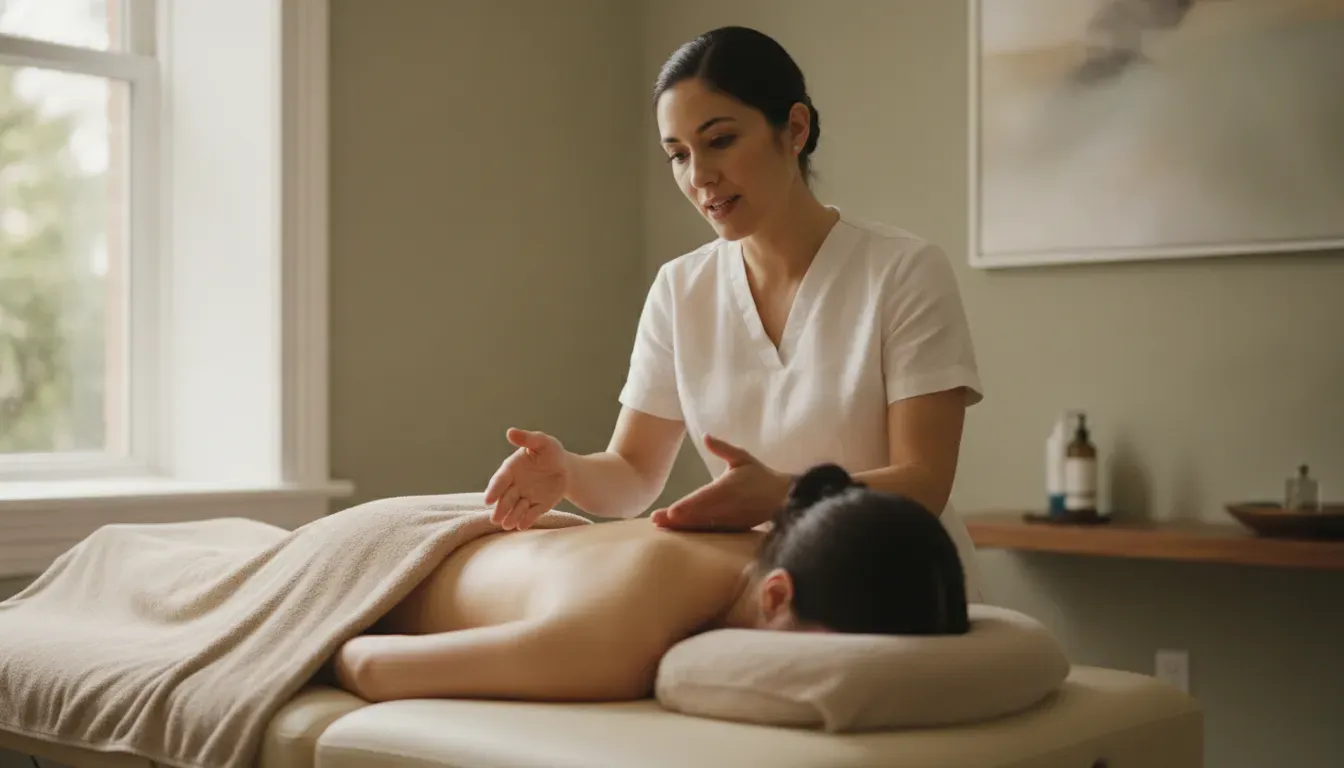

Ever wondered what separates a simple shoulder rub from a truly great massage? It’s not just pressure—it’s a language spoken between the therapist’s hands and your muscles. Understanding this language empowers you to communicate exactly what you need. This guide will teach you the fundamental neck massage techniques professionals use. You’ll learn to recognize the skill involved in a healing session and confidently ask for the specific approaches that work best for your body, ensuring every massage is a restorative one.
Key Takeaways
- Address both physical pain and mental stress: A professional neck massage releases tight muscles to improve your range of motion and ease discomfort, while also calming your nervous system to help you feel more centered.
- Technique and communication create real results: Understanding basic methods like kneading and trigger point release helps you communicate your needs to a therapist, while providing feedback on pressure ensures the massage is both safe and effective.
- Make relief last with simple daily habits: Extend the benefits of your professional massage by incorporating a simple routine of gentle neck stretches, staying hydrated, and being mindful of your posture at your desk.
Why Does a Neck Massage Feel So Good?
That persistent ache in your neck isn’t just an annoyance—it’s your body signaling that it needs attention. Whether it’s from leaning over a computer, carrying stress in your shoulders, or recovering from an injury, neck pain can disrupt your entire day and even lead to headaches or limited movement. A targeted neck massage is one of the most direct and powerful ways to find relief. It goes beyond simple relaxation to address the root causes of your discomfort, helping your body heal and your mind unwind.
A professional massage therapist understands the intricate network of muscles, nerves, and connective tissue in your neck and upper back. They can identify the specific areas holding tension and apply techniques that release tightness in ways you simply can’t on your own. This isn’t just about feeling good for an hour; it’s about restoring function and preventing chronic issues. By focusing on this critical area, a skilled therapist can release tension that you might not even realize you’re holding onto, providing benefits that ripple through your entire body and improve your overall well-being.
Understanding Why Your Neck Hurts
That persistent ache in your neck isn’t just an annoyance—it’s your body signaling that it needs attention. Whether it’s from leaning over a computer, carrying stress in your shoulders, or recovering from an injury, neck pain can disrupt your entire day and even lead to headaches or limited movement. A targeted neck massage is one of the most direct and powerful ways to find relief. It goes beyond simple relaxation to address the root causes of your discomfort, helping your body heal and your mind unwind.
A professional massage therapist understands the intricate network of muscles, nerves, and connective tissue in your neck and upper back. They can identify the specific areas holding tension and apply techniques that release tightness in ways you simply can’t on your own. This isn’t just about feeling good for an hour; it’s about restoring function and preventing chronic issues. By focusing on this critical area, a skilled therapist can release tension that you might not even realize you’re holding onto, providing benefits that ripple through your entire body and improve your overall well-being.
The Anatomy of Neck Pain
It’s easy to think of your neck as just the thing that holds up your head, but its structure is incredibly complex. It’s a busy intersection of bones, ligaments, nerves, and layers of muscle working together to support your head and allow for a wide range of motion. When one part of this intricate system is out of balance, it can cause a ripple effect of discomfort. A skilled massage therapist doesn’t just rub the sore spot; they understand this underlying anatomy. They know how the different muscle groups interact and can identify the true source of your pain, which might be different from where you actually feel it. This knowledge is the key to providing targeted, effective relief that lasts.
Key Muscles to Know: SCM, Levator Scapulae, and Scalenes
Let’s get to know a few of the key players often responsible for that nagging neck pain. The sternocleidomastoid (SCM) is a large, rope-like muscle running from behind your ear to your collarbone; it’s the one you feel pop out when you turn your head. Tension here is common and can make your neck feel stiff. Deeper in, the levator scapulae connects your upper neck vertebrae to your shoulder blade. If you have trouble turning your head or feel pain radiating down toward your shoulders, this muscle is often the culprit. Finally, the scalenes are a group of small, deep muscles on the side of your neck that help with breathing. When they get tight, they can contribute to discomfort and restrict movement.
Common Causes of Neck Discomfort
So, what causes these muscles to get so tight and angry? More often than not, the answer lies in our daily habits. The human body was designed for movement, but modern life often involves long periods of stillness in less-than-ideal positions. Think about your average day: sitting at a desk, driving in traffic, or scrolling on your phone. Each of these activities can contribute to muscle strain and postural imbalances that build up over time. This chronic, low-level stress on the neck and shoulders is one of the most frequent reasons people seek out therapeutic massage. It’s not usually a single event but the accumulation of daily strains that leads to persistent pain.
The “Tech Neck” Epidemic
One of the biggest modern culprits is “tech neck.” This term describes the strain placed on your neck from constantly looking down at phones, tablets, and laptops. The posture is unmistakable: head pushed forward, chin tucked down, and shoulders rounded. With so many of us working from home or relying on handheld devices for hours a day, experts believe nearly everyone experiences some degree of tech neck. This forward-head posture forces the muscles in the back of your neck to work overtime to hold your head up, leading to fatigue, tightness, and pain that can radiate into your shoulders and upper back.
How Your Head’s Weight Affects Your Spine
To understand why tech neck is so problematic, consider this: the average human head weighs about 10 to 12 pounds. When your head is balanced perfectly over your spine, your neck muscles can support it with relative ease. However, for every inch your head juts forward, the perceived weight on your cervical spine effectively doubles. So, if you’re looking down at your phone with your head angled forward just two or three inches, your neck muscles are struggling to support the equivalent of a 30- or 40-pound weight. It’s no wonder they get exhausted and sore. This constant strain is a recipe for chronic pain and stiffness.
Occupational and Recreational Strains
Of course, screens aren’t the only cause. Neck pain is incredibly common, affecting a large portion of the population each year. Your job might require you to hold your head in a fixed position for hours, whether you’re a painter, a driver, or a dentist. Even recreational activities, like cradling a phone between your ear and shoulder, sleeping on a pillow that’s too flat or too fluffy, or carrying a heavy bag on one side can create imbalances. These seemingly minor habits, repeated day after day, put consistent strain on the muscles on the sides and back of your neck, leading to the kind of tension that feels impossible to shake on your own.
The Connection Between Neck Pain and Headaches
If you suffer from frequent headaches, your neck might be the real source of the problem. When the muscles in your neck and upper back become overly tight, they can create what are known as tension headaches. This happens because the tight muscles can refer pain signals up into your scalp, forehead, and behind your eyes. These trigger points—small, contracted knots in the muscle—are notorious for causing pain in other areas of the body. The good news is that if your headaches are rooted in muscle tension, a targeted deep tissue massage can provide significant relief. By releasing the knots and easing the tension in your neck and shoulders, a therapist can help reduce both the frequency and intensity of these debilitating headaches.
Easing Physical Tension and Pain
A professional neck massage does more than just feel good in the moment; it actively works to restore your body’s balance. The techniques used help loosen painfully tight muscles and break up knots, or trigger points, that cause stiffness and limit your range of motion. This process improves blood flow to the affected tissues, delivering the oxygen and nutrients they need to heal properly. At the same time, the therapeutic touch encourages your body to release its own natural painkillers, like endorphins, which can provide lasting relief. Regular sessions can even help prevent future pain by keeping your muscles flexible and healthy.
Calming Your Mind and Reducing Stress
The connection between your mind and body is incredibly strong, and nowhere is that more apparent than in your neck and shoulders. Stress and worry often translate directly into physical tension in this area. A neck massage helps calm your entire nervous system, signaling to your brain that it’s time to relax. As the therapist works to release physical tightness, you’ll likely feel your mental stress begin to melt away, too. This creates a peaceful state that can improve your mood, reduce anxiety, and leave you feeling more centered and clear-headed long after you leave the massage table.
Is a Neck Massage Right for You?
While anyone can enjoy a neck massage, some people find it especially essential. If you spend hours at a desk, in a car, or looking down at your phone, you’re a prime candidate for the chronic pain often called “tech neck.” People in these positions frequently develop significant tension in their neck and upper back. A focused Deep Tissue or Swedish Massage can directly address the strained muscles causing discomfort. This type of massage provides immediate relief and helps counteract the daily strain that modern life puts on your body, making it a vital part of any self-care routine.
5 Essential Neck Massage Techniques to Master
A truly therapeutic neck massage is much more than just rubbing sore spots. Licensed massage therapists are trained in specific techniques designed to address different layers of muscle and types of tension. When you understand these methods, you can better communicate what you need during your session and appreciate the skill involved in providing lasting relief. Each technique serves a unique purpose, from gently warming up the muscles to releasing stubborn, deep-seated knots. At Nola Bliss, our therapists are experts at blending these approaches to create a customized experience that targets your specific sources of pain and stress. We don’t follow a rigid script; instead, we listen to your body and adapt our approach accordingly. This tailored treatment is why our massage services are so effective for everything from post-workout soreness to the chronic stiffness that comes from hours at a desk. Knowing a bit about these techniques empowers you to be an active participant in your own wellness journey.
Effleurage: The Gentle Gliding Stroke
Think of effleurage as the introduction to your massage. These are the long, sweeping, and gentle gliding strokes that a therapist uses to begin a session. Typically performed with the palms, these movements help warm up your muscle tissue and increase blood flow to the area. Effleurage is incredibly relaxing and helps your body and mind settle into the treatment. It allows the therapist to assess the muscle tone and identify areas of tension without applying intense pressure right away. These initial strokes establish a rhythm and build trust, preparing your neck muscles for the more focused work to come. It’s the perfect way to ease into deep relaxation.
Petrissage: The Kneading Motion
After your muscles are warmed up with effleurage, your therapist may move on to petrissage. This technique involves kneading, squeezing, and lifting the muscles, much like kneading dough. By using their fingers, knuckles, and palms, the therapist can grasp and gently roll the muscle tissue. This action is fantastic for releasing deeper tension, breaking up minor knots, and flushing out metabolic waste from the muscles. Petrissage is a core component of a classic Swedish massage and works wonders on the tight muscles of the upper back and neck, improving circulation and leaving you feeling looser and more flexible.
Trigger Point Therapy for Deep Knots
If you have a specific, painful “knot” in your neck that just won’t go away, trigger point therapy is the technique to ask for. Trigger points are tight bands of muscle fiber that can be tender to the touch and often refer pain to other parts of the body, like causing a headache. This technique involves applying direct, sustained pressure to the trigger point until the tension melts away. While it can feel intense for a moment, the release provides significant relief from both localized and referred pain. It’s a highly effective method for tackling chronic pain and restoring normal muscle function.
Deep Tissue Methods for Lasting Relief
Deep tissue massage is often misunderstood as simply a massage with very firm pressure. In reality, it’s a specific set of techniques that use slow, deliberate strokes to target the deepest layers of your muscle and connective tissue. This method is ideal for addressing chronic pain, muscle adhesions (or “knots”), and stiff areas that don’t respond to lighter work. By applying focused pressure, a therapist can break down scar tissue and release long-held tension patterns. A deep tissue massage on the neck can dramatically improve range of motion and alleviate persistent soreness from injuries or poor posture.
Myofascial Release to Unwind Connective Tissue
Myofascial release focuses on the fascia—the thin, web-like connective tissue that wraps around every muscle and organ in your body. When the fascia becomes tight or restricted due to stress, injury, or inflammation, it can cause widespread pain and limit your mobility. This technique involves applying gentle, sustained pressure and stretching to the fascial tissue. The goal is to “unstick” these restrictions, allowing the muscles underneath to move more freely. It’s a subtle yet powerful method that can provide profound relief, especially for chronic neck pain that doesn’t seem to have a clear muscular cause.
Skin Rolling: A Simple Myofascial Technique
Skin rolling is a specific form of myofascial release that feels surprisingly gentle yet delivers powerful results for stubborn tension. Your therapist will use their fingers and thumbs to carefully pick up and roll the skin, creating a small, moving wave across the treatment area. This deliberate action is designed to loosen the tight, web-like connective tissue, or fascia, that lies just beneath the skin’s surface. By separating these stuck tissues, skin rolling helps increase local blood flow, delivering fresh oxygen and encouraging the muscles underneath to finally relax and heal.
While it may seem less intense than other methods, skin rolling is especially effective for chronic neck pain that doesn’t resolve with deep pressure alone. Often, lingering discomfort isn’t in the muscle itself but is caused by restrictions in the surrounding fascia. Knowing this empowers you to better communicate with your therapist; you can point out areas that feel “stuck” or “tacky” rather than just sore. This is a perfect example of how a targeted therapeutic massage can address complex issues by using precise, intelligent techniques to provide lasting relief.
How to Give a Great Neck Massage: A Step-by-Step Guide
Giving someone a neck massage is a wonderful way to show you care and help them release the tension of the day. You don’t need to be a professional to provide real comfort, but learning a few simple techniques can transform a simple shoulder rub into a truly effective and relaxing experience. The goal is to help the muscles relax, not to force them into submission. By creating a calm environment and listening to the person you’re working on, you can help soothe away stress and ease discomfort.
While these at-home tips are perfect for providing immediate relief, they can also complement the work of a professional. For deep-seated knots or chronic pain, the targeted techniques used by a licensed therapist in a deep tissue massage can provide more lasting results. Think of a home massage as maintenance that helps you feel better between your professional appointments. The following steps will guide you through the basics, helping you deliver a neck massage that feels amazing and genuinely helps.
Create a Calm and Relaxing Space
Before you even lay hands on someone, take a moment to create a peaceful atmosphere. A calm environment sends a signal to the brain that it’s safe to unwind, which helps the muscles let go. Dim the lights and play some soft, instrumental music to minimize distractions. If you have a favorite massage oil or lotion, warm a small amount in your hands before you begin. Using a product with a calming scent like lavender or chamomile can introduce the benefits of aromatherapy, making the experience even more soothing. The goal is to engage all the senses in the act of relaxation.
Learn the Basic Hand Positions
The way you use your hands determines the type of relief you can offer. Different parts of your hand are suited for different tasks. Use your palms and the length of your fingers to apply long, gliding strokes over broader areas like the shoulders and upper back. This warms up the muscles and is a great way to start and end the massage. For more targeted work on tight spots, use your fingertips to apply circular pressure. If you find a particularly stubborn knot, you can use your knuckles to apply firm, steady pressure, but be sure to move slowly and check in about the intensity.
Techniques for Massaging Someone Lying Down
When someone is lying face down, you have much better access to the muscles of their neck and upper back. Have them rest comfortably, perhaps with a small pillow under their chest to help their shoulders relax forward. Start by using your palms to perform long, gliding strokes (effleurage) from their mid-back up and over the shoulders to the base of the skull. After a few warming passes, you can begin to gently knead the large muscles on top of the shoulders (the trapezius) using your fingers and thumbs. This kneading motion, known as petrissage, helps release deeper tension. Remember to communicate about pressure and always avoid pressing directly on the spine. These foundational techniques are central to a classic Swedish massage and are perfect for providing effective, soothing relief at home.
How Much Pressure Should You Use?
The single most important rule of any massage is to communicate. What feels good to one person might be too intense for another. Always start with light pressure to warm up the muscles and gradually increase it as they begin to relax. Make a habit of asking, “How does this pressure feel?” or “Would you like more or less here?” Pain is a sign that you’re pushing too hard, which can cause the muscles to tense up even more. A truly effective massage never forces its way through resistance; it coaxes the muscles into letting go.
Target the Neck’s Common Tension Spots
Many people hold tension in the trapezius muscles, which are the large muscles that fan out from the base of your neck across your shoulders. You’ll often find tight, tender spots here known as trigger points. When you locate one of these knots, don’t try to rub it out aggressively. Instead, use your thumb or a few fingertips to apply firm, direct pressure. Hold that pressure for about 10 to 15 seconds while the person breathes deeply. You might feel the muscle twitch or soften under your fingers. Release slowly and then follow up with a few gentle, gliding strokes over the area.
Finish with Gentle, Calming Strokes
How you finish the massage is just as important as how you begin. Instead of stopping abruptly, gradually wind down the session with techniques that soothe the nervous system. Return to the long, gentle, sweeping strokes you used at the beginning. Use your palms to glide from the top of the shoulders up to the base of the skull and back down again. These calming movements are reassuring and help flush the area with fresh circulation. This brings the massage to a peaceful close, leaving the person feeling relaxed and cared for.
The Best Tools for a Better Neck Massage
While a skilled pair of hands is the most important tool for any massage, a few simple additions can make a world of difference. You don’t need a whole arsenal of expensive gadgets to relieve neck tension at home. Often, the most effective tools are things you already have or can easily find. Incorporating oils, simple massagers, or even temperature therapy can deepen relaxation and help you target stubborn knots more effectively. These tools can enhance a massage you’re giving to a partner or be used for your own self-care routine between professional sessions.
How to Choose the Right Massage Oil or Lotion
Using a high-quality massage oil or lotion is one of the easiest ways to improve a neck massage. It reduces friction, allowing your hands to glide smoothly over the skin without pulling or causing irritation. This is especially helpful if you or the person you’re massaging has sensitive skin. The right product can also add a layer of aromatherapy to the experience. Scents like lavender are well-known for their calming properties and can help you relax even more deeply. At Nola Bliss, we often incorporate enhancements like CBD into our massage services to further soothe sore muscles and reduce inflammation.
Handheld Massage Tools for Targeted Relief
You don’t need to invest in complicated equipment to give a great neck massage. In fact, sometimes the simplest approach is best. While a little massage oil can make the process easier by reducing friction, it isn’t strictly necessary if you don’t have any on hand. Your own hands are incredibly versatile tools for kneading, rubbing, and applying pressure to tight spots. The key is to focus on your technique and listen to what your body (or your partner’s body) needs. The goal is to create a soothing experience, and that can be achieved with nothing more than focused intention and gentle, consistent pressure.
When to Use Heat vs. Cold Therapy
Temperature can be a powerful ally in relieving neck pain. Applying heat before a massage, perhaps with a warm towel or a heating pad, helps relax and loosen tight muscles, making them more receptive to massage. After a session, it’s important to drink plenty of water and rest. If you feel any soreness, you can use heat or ice as needed. A cold pack can help reduce inflammation and numb sharp pain, while heat continues to promote circulation and relaxation. For a truly luxurious experience, our Hot Himalayan Salt Stones enhancement combines heat with mineral benefits to melt away tension.
The Benefits of Hot Stones
Hot stones are more than just a cozy addition to your massage; they are a powerful therapeutic tool. The smooth, heated stones are placed on key points of your body and also used by the therapist to massage your muscles. The penetrating warmth allows your muscles to relax more deeply and quickly than they would with massage alone, making it easier for your therapist to address stubborn knots and tension. This heat also improves circulation, bringing fresh, oxygenated blood to sore areas to promote healing. The combination of warmth and pressure is incredibly soothing, helping to melt away not just physical tightness but also mental stress. When combined with the natural minerals found in Himalayan salt, as in our Hot Himalayan Salt Stones enhancement, the benefits are even more profound.
The Best Tools for Neck Self-Massage
For those times when you can’t get a professional massage, a few simple pieces of equipment can help you find relief at home. You can use a foam roller or a simple massage ball to work out knots on your own. Tennis balls are a fantastic and inexpensive option. Here’s a great trick: put a tennis ball inside a long sock or pillowcase and throw it over your shoulder. This allows you to easily move the ball around your back and neck by leaning against a wall, giving you precise control to target trigger points. This simple technique lets you apply deep pressure to those hard-to-reach spots between your shoulder blades that often contribute to neck pain.
A Quick Tip: Support Your Head for Better Results
Here’s a simple but game-changing tip: for a neck massage to be truly effective, the neck muscles must be completely relaxed. This is impossible if they’re busy holding up the weight of the head. When you’re massaging someone who is sitting up, ask them to rest their forehead on their own hand or on a pillow placed on a table in front of them. This small adjustment allows the muscles at the back of the neck to go slack, making them much more receptive to your touch. You’ll find that the tissue is softer and more pliable, allowing your massage techniques to work more deeply and provide greater relief without needing to apply excessive force.
Neck Massage Safety: What You Need to Know
A great neck massage can feel like a mini-vacation, melting away the stress of the day. But because the neck is such a delicate area, it’s important to approach it with care, whether you’re massaging a partner or working on your own tension spots. Think of it less like trying to force a knot out and more like gently encouraging the muscle to relax. Following a few simple guidelines ensures the experience is not only effective but also completely safe. These best practices will help you provide relief without accidentally causing more harm than good, so you can feel confident in your touch.
General Safety Rules to Follow
First things first: always be gentle. The neck houses critical structures, from the spine to major arteries, so a light touch is your best friend. When massaging, use the pads of your fingers or your palm, and never press directly on bones. Make sure to avoid the cervical spine (the bones in the center of the neck) and the collarbone, as direct pressure here can be painful and risky. It’s also extremely important to stay away from the front of the neck and never apply pressure to the throat area. Stick to the muscular areas on the sides and back of the neck for safe, effective relief.
Understanding Safe Pressure Levels
The golden rule of massage pressure is to communicate. If you’re massaging someone else, ask them how the pressure feels and adjust accordingly. What feels good to one person might be too much for another. Start with light, gentle strokes to warm up the muscles. As they begin to relax, you can gradually introduce a bit more pressure if it feels right. The goal is to find that sweet spot—what we call therapeutic discomfort—not to cause sharp pain. If you’re working on yourself, listen to your own body. The massage should feel relieving, not punishing.
Red Flags: When to Stop the Massage
Your body is excellent at telling you when something is wrong—you just have to listen. If you or the person you’re massaging feels any sharp, shooting, or radiating pain, stop immediately. Numbness or tingling are also red flags that you might be pressing on a nerve. Pay close attention to reactions; even a subtle flinch or a sharp intake of breath is a sign to ease up or change what you’re doing. A massage should be a relaxing experience. If a particular spot is causing genuine pain, it’s best to work around it gently or leave it to a professional.
When to Pause: Dizziness, Fever, and Inflammation
It’s also crucial to know when to avoid a neck massage altogether. If you have a fever, your body is already working hard to fight off an illness, and a massage can sometimes make you feel worse by increasing circulation. Similarly, if your neck is actively inflamed from a recent injury, massaging the area can increase irritation. Listen carefully for signals like dizziness, numbness, or tingling during a massage. These are signs that you might be pressing on a nerve, and it’s essential to stop right away. While a gentle touch can be incredibly healing, some situations require rest or medical attention. When in doubt, it’s always best to consult a professional. A licensed therapist is trained to assess your condition and determine the safest approach, which is why we prioritize a thorough consultation for all our massage services.
When Should You See a Professional?
While at-home massage is great for general tension, some issues require an expert touch. If you’re dealing with chronic neck pain, a recent injury, or pain that doesn’t improve, it’s time to see a licensed massage therapist. A professional has a deep understanding of anatomy and can safely address the root cause of your discomfort. Never try to perform sharp, sudden movements or attempt to “crack” someone’s neck—this should only be done by a trained professional like a chiropractor. For targeted, safe, and effective relief, consider booking a professional deep tissue massage to ensure you get the care you need.
Ready for More? Advanced Neck Massage Techniques
Once you’ve mastered the basics, you can explore more advanced methods to find even greater relief from neck pain and tension. These techniques focus on combining professional care with smart at-home habits to create a sustainable routine for a healthy, comfortable neck. By layering these strategies, you can address the root causes of your discomfort and maintain the positive effects of your massage for much longer. It’s all about creating a holistic approach that supports your body both on and off the massage table.
Incorporate Professional-Level Techniques at Home
While at-home massage is great for maintenance, nothing compares to the skill of a licensed massage therapist. Professionals are trained to identify the source of your pain and use specific techniques to release deep-seated tension safely and effectively. A therapeutic massage helps ease neck pain by relaxing tight muscles, improving blood flow to the area, and encouraging your body to release its own natural painkillers. For persistent knots and chronic stiffness, consider a Deep Tissue or Swedish Massage to work through stubborn layers of muscle. For an even deeper experience, Ashiatsu Deepfeet Bar Therapy uses gravity and the therapist’s body weight to deliver consistent, deep pressure that can soothe even the most troubled muscles.
SCM Release for Side-of-Neck Tension
The sternocleidomastoid (SCM) is that prominent, rope-like muscle running from behind your ear down to your collarbone. It’s a major player in turning and tilting your head, and it gets incredibly tight from modern habits like looking down at your phone. A therapist can perform a specific release for this muscle. As described in a helpful guide on side-of-neck massage, the technique involves gently grasping the muscle while you slowly turn your head away from it. This allows the therapist’s fingers to slide down the muscle fibers, creating a gentle pulling and stretching motion. This precise movement helps release the surrounding fascia and muscle tissue, providing significant relief from the stiffness that can lead to headaches and limited rotation.
Gentle Joint Mobilisations
Sometimes, neck stiffness isn’t just about tight muscles; it’s also about restricted joints in your cervical spine. Gentle joint mobilizations are a subtle but powerful technique that a trained therapist can use to improve your neck’s range of motion. This isn’t about forceful cracking or sudden adjustments. Instead, it involves applying slow, rhythmic pressure to the sides of the vertebrae. The goal is to gently loosen the small joints and encourage them to move more freely. This technique can feel incredibly releasing and is often integrated seamlessly into a deep tissue or Swedish massage, complementing the muscle work to provide more complete and lasting relief from stiffness.
Introduction to Lymphatic Drainage
Lymphatic drainage is a highly specialized technique that uses an incredibly light touch to support your body’s natural detoxification process. Think of your lymphatic system as a network that removes waste and excess fluid. When it’s sluggish, you might feel puffy, sore, or just run down. A lymphatic drainage massage for the neck involves very gentle, feather-light strokes that encourage the movement of lymph fluid toward your lymph nodes. This can be especially helpful for reducing swelling from an injury, easing sinus pressure, or calming general inflammation. It’s a profoundly relaxing technique that supports your immune system and soothes the nervous system, making it a wonderful addition for holistic wellness.
Build a Daily Neck Care Routine
The benefits of a great massage don’t have to end when you walk out the door. To extend the feeling of relief, build a simple self-care routine. After a professional session, be sure to drink plenty of water to help your body flush out metabolic waste released from your muscles. For the rest of the day, rest and avoid any strenuous activities. A daily habit of simple neck stretches can also make a huge difference. Gently tilting your head from side to side, performing slow neck rotations, and doing a few shoulder rolls each day can keep your muscles pliable and prevent tension from building back up. Think of it as essential maintenance that keeps your neck feeling good between appointments.
Pair Your Massage with Gentle Neck Stretches
Combining gentle stretches with massage can significantly improve your results. Stretching helps make your neck more flexible, reduces stiffness, and can even improve your posture over time. While your massage therapist works on a tight spot, you can deepen the release with active stretching. For example, as they apply pressure to one side of your neck, you can slowly turn your head toward the opposite shoulder as far as you comfortably can. This simple movement allows the muscle to lengthen while it’s being worked on, leading to a more effective release. Always communicate with your therapist and move slowly, never pushing into pain. Our team of therapists can guide you through stretches that are safe and effective for your specific needs.
The Doorway Stretch for a Tight Chest
So much of our neck pain actually starts in the chest. When we spend hours hunched over a desk or phone, our chest muscles get tight, pulling our shoulders forward and straining our neck. The doorway stretch is a simple and effective way to counteract this. To do it, stand in an open doorway and place your forearms on the frame with your elbows bent at a 90-degree angle. Step forward with one foot and gently lean in until you feel a good stretch across your chest and the front of your shoulders. Hold this for 15 to 30 seconds, breathing deeply. This stretch is a fantastic complement to a therapeutic deep tissue massage, as it helps maintain the postural corrections your therapist works to achieve.
The “Reverse the Hunch” Floor Exercise
Here’s an incredibly simple exercise that uses gravity to do the work for you, making it perfect for reversing the forward hunch we develop from daily life. Simply lie flat on your back on the floor, with your legs either bent or straight—whatever is most comfortable. Let your arms rest out to your sides with your palms facing up, and allow your shoulders to relax and fall back toward the ground. To deepen the stretch, you can place a rolled-up towel or a foam roller lengthwise under your spine. Stay in this position for a few minutes, focusing on your breath. This passive stretch helps open up your chest and is a wonderful way to unwind after a long day, extending the benefits of your professional session.
Long-Term Strategies for a Pain-Free Neck
The best way to handle neck pain is to prevent it from becoming a long-term problem. Addressing discomfort early with a combination of professional massage and consistent self-care can stop minor aches from turning into a chronic issue that impacts your quality of life. Pay attention to your daily habits, especially your posture while sitting at a desk or looking at your phone. Taking short breaks to stretch and move around can prevent the muscle strain that leads to “tech neck.” By viewing massage as a vital part of your wellness plan rather than an occasional indulgence, you invest in your long-term health and comfort.
Neck Massage Solutions for Common Problems
Neck massage is more than just a way to unwind; it’s a targeted treatment for some of the most common issues we face. Whether you’re dealing with stiffness from your desk job, recovering from a workout, or just carrying the weight of daily stress, the right massage techniques can provide specific and lasting relief. By focusing on the neck and shoulders, a skilled therapist can address the root cause of your discomfort, helping you feel better in both body and mind. Let’s look at how neck massage can help with a few specific problems.
How to Relieve “Tech Neck” from Desk Work
If you spend your days hunched over a computer or looking down at your phone, you’re probably all too familiar with “tech neck.” That persistent ache and stiffness in your neck and shoulders comes from holding your head in an unnatural position for hours. A focused neck massage can work wonders by easing the built-up tension in those strained muscles. By improving blood flow to the area, massage helps reduce tightness and can even lessen related tension headaches. Regular deep tissue or Swedish massage can counteract the daily grind of desk work, leaving you with more energy and a better mood.
Setting Up an Ergonomic Workspace
While massage provides incredible relief, preventing the strain in the first place is just as important. A few simple adjustments to your workspace can make a huge difference in avoiding tech neck. Start by positioning your computer monitor so your eyes are level with the top third of the screen, which encourages you to keep your head up. Next, adjust your chair height so your hips are slightly higher than your knees, helping to maintain a healthy spinal curve. These small changes help you create a good workstation that supports a more natural posture throughout the day, reducing the constant strain on your neck and shoulder muscles and making your regular massage sessions even more effective.
Ease Post-Workout Neck Strain
Pushing yourself at the gym is great for your health, but it can leave your muscles, especially those in your neck and shoulders, feeling sore and tight. Massage therapy is an excellent tool for post-workout recovery. It helps relax overworked muscles and improves circulation, which speeds up the removal of metabolic waste products that cause soreness. A good massage also encourages your body to release its own natural painkillers, called endorphins, providing immediate relief. By incorporating massage into your fitness routine, you can help your body repair itself more efficiently and get back to your workouts feeling stronger.
Melt Away Daily Stress and Tension
For many of us, stress settles directly in our neck and shoulders. You might not even notice you’re tensing those muscles until you feel that familiar, nagging ache. Neck massage is a powerful way to manage daily stress because it helps break this cycle of tension. The physical act of massage calms your nervous system, signaling to your entire body that it’s time to relax. This not only soothes sore muscles but also quiets the mental chatter that often comes with a stressful day. Making time for a couples massage can be a wonderful way to de-stress with a partner and reconnect.
Can a Neck Massage Help You Sleep Better?
Constant neck pain can make it nearly impossible to get a good night’s sleep. Tossing and turning to find a comfortable position only leads to more frustration and fatigue. Regular massage can be a game-changer for your sleep quality by addressing the root of the problem. By relieving chronic muscle tension and reducing discomfort, massage helps your body achieve a state of deep relaxation that is essential for restful sleep. When your neck isn’t aching, you can fall asleep faster and stay asleep longer. Adding enhancements like Hot Himalayan Salt Stones can deepen this relaxation for an even better night’s rest.
Related Articles
Frequently Asked Questions
How often should I get a neck massage for chronic pain? There isn’t a one-size-fits-all answer, but consistency is key for managing chronic issues. Many people find that starting with a massage every one to two weeks can make a significant impact. This frequency helps your therapist make progress on long-held tension. As you start to feel better, you can often extend the time between sessions to every four to six weeks for maintenance. The best approach is to talk with your massage therapist to create a plan that works for your body and your goals.
I’m worried a neck massage will be painful. Should it hurt? A therapeutic massage should never be outright painful. You might feel what we call “therapeutic discomfort” when your therapist works on a particularly tight knot, but it should feel like a productive, relieving sensation, not a sharp or unbearable pain. Communication is the most important part of your session. A good therapist will check in with you about the pressure, and you should always feel comfortable speaking up if something is too intense. The goal is to encourage your muscles to release, not to force them.
What’s the real difference between a Swedish and a Deep Tissue massage for my neck? Think of it as a difference in goals. A Swedish massage uses long, gliding strokes and gentle kneading primarily to promote relaxation, improve circulation, and relieve general muscle tension in the more superficial layers. It’s a fantastic choice for stress relief. A Deep Tissue massage, on the other hand, uses slower, more focused pressure to target the deeper layers of muscle and connective tissue. It’s specifically designed to address chronic pain, stubborn knots, and limited mobility.
Can a neck massage really help with my tension headaches? Absolutely. Many tension headaches originate from tight muscles in the neck and upper back, often referred to as trigger points. When these muscles are constantly contracted, they can refer pain up into your head. A skilled therapist can identify and release these specific trigger points, which often provides immediate relief from the headache itself. Regular neck massages can also help prevent them from occurring in the first place by keeping those muscles relaxed and healthy.
Are at-home massages and tools enough, or do I really need a professional? At-home massage and simple tools are wonderful for daily maintenance and managing minor tension between appointments. However, they can’t replace the expertise of a licensed massage therapist. A professional has a deep understanding of anatomy and can identify the root cause of your pain, applying specific techniques to provide lasting relief safely. Think of self-care as your daily upkeep and a professional massage as the essential deep-clean that truly resets your body.