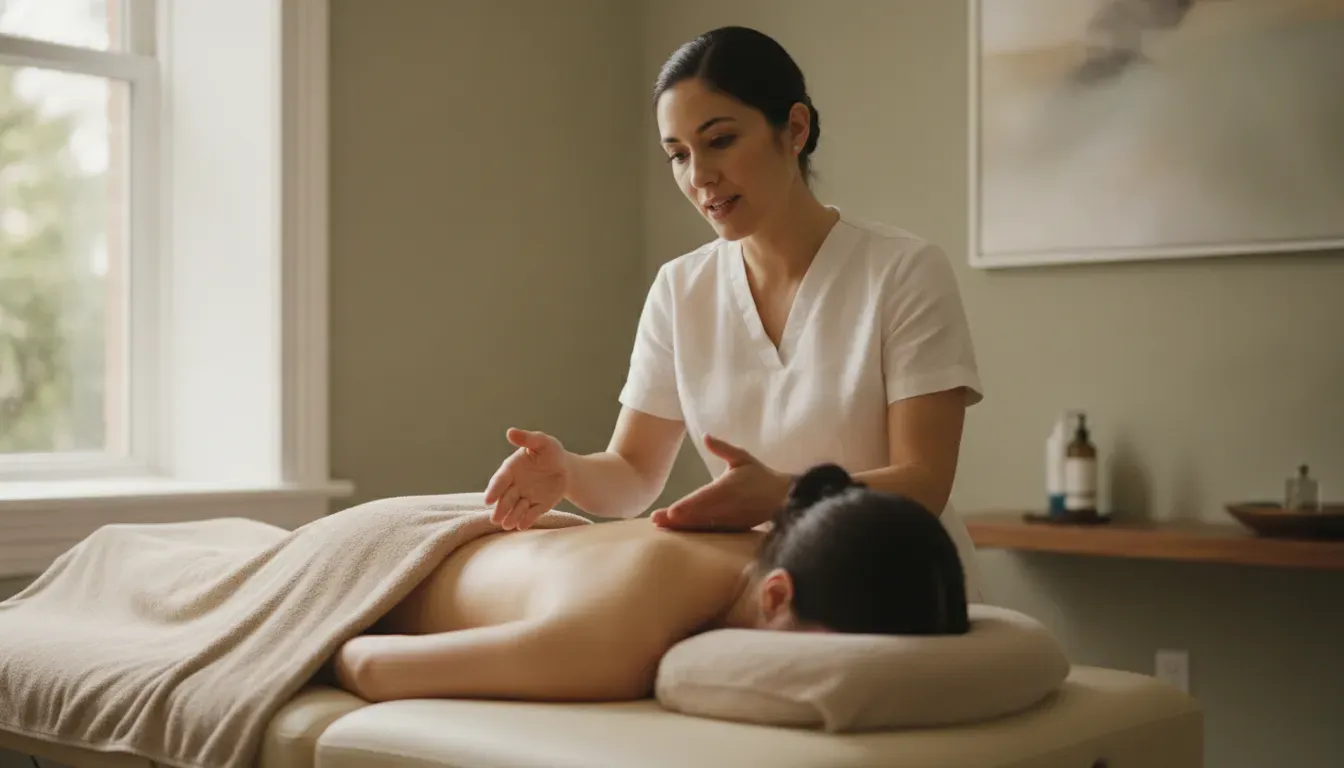

When you’re dealing with a nagging headache or a wave of anxiety, your first instinct might be to rub the tense spot. You may be tapping into the principles of acupressure without even realizing it. This ancient practice is built on the idea that applying pressure to specific points can send a signal to your body to relax and rebalance itself. A professional acupressure massage takes this concept to the next level, using expert knowledge of the body’s energy systems to provide targeted relief. It’s a needle-free alternative to acupuncture that offers a hands-on way to manage pain, calm your mind, and support your body’s innate healing abilities.
Key Takeaways
- Acupressure Works with Your Body’s Energy: This ancient practice uses targeted, needle-free pressure on specific points to release tension, clear energy pathways, and support your body’s own ability to heal.
- You Can Practice It Yourself: Learning to apply firm, steady pressure to a few key acupoints gives you a powerful tool for managing everyday issues like headaches or stress. This simple self-care practice is a great way to support your well-being between professional massage appointments.
- Prioritize Safety and Professional Care: While generally safe, acupressure isn’t for everyone, particularly during pregnancy or with certain health conditions. For chronic pain or deep tension, the expertise of a licensed massage therapist ensures you get a safe, effective, and personalized treatment.
What Is Acupressure Massage?
You’ve probably heard of massage for relaxing sore muscles, but what about a massage that works with your body’s energy? That’s the idea behind acupressure. It’s an ancient healing art that uses firm, targeted pressure on specific points of the body. Think of it as a cousin to acupuncture, but without any needles involved. Instead, a therapist uses their fingers, palms, or elbows to apply pressure to these spots, called acupoints. The goal is to help your body find balance, release tension, and encourage its own natural healing abilities. It’s a gentle yet powerful technique that has been used for centuries to address everything from headaches to stress.
Where Does Acupressure Come From?
Acupressure has a rich history that goes back thousands of years to ancient China. It’s one of the core practices within Traditional Chinese Medicine (TCM), a complete system of health and wellness. This practice is built on the same foundational concepts as acupuncture, focusing on the body’s energy flow and the delicate balance between yin and yang. By stimulating specific points on the body, practitioners aim to restore this balance, which is believed to be essential for good health. It’s a time-tested method that has been passed down through generations as a way to promote healing and well-being.
Understanding Qi, Meridians, and Acupoints
To really get what acupressure is all about, it helps to know three key terms from Traditional Chinese Medicine: qi, meridians, and acupoints. TCM theory says that a vital life force called qi (pronounced “chee”) flows through our bodies. This energy travels along specific pathways known as meridians. When our qi is flowing freely, we feel healthy and balanced. However, stress, injury, or illness can cause blockages or imbalances in these pathways. Acupoints are the specific spots along the meridians where the energy flow can be influenced. Applying pressure to these points is thought to clear blockages and get your qi moving smoothly again.
Acupressure vs. Acupuncture: What’s the Difference?
People often use the terms acupressure and acupuncture interchangeably, but they are not the same. While both practices come from Traditional Chinese Medicine and work with the same system of meridians and acupoints, the key difference lies in their methods. Acupuncture involves a licensed practitioner inserting very thin needles into the skin at specific acupoints. Acupressure, on the other hand, is completely non-invasive. It uses the firm but gentle pressure of hands, fingers, or elbows. This makes it a great option for anyone who is curious about the benefits of TCM but might be a little hesitant about needles.
How Does Acupressure Work?
Acupressure is built on the principle that our bodies have a network of energy pathways. By applying targeted pressure, a practitioner can help release blockages, restore balance, and encourage your body’s natural ability to heal itself. It’s a gentle yet powerful way to address everything from a nagging headache to persistent stress. Unlike some other therapies, it’s completely non-invasive, using only the power of touch to bring your body back into alignment.
The Techniques Behind the Pressure
At its core, acupressure is a hands-on therapy rooted in thousands of years of practice. A practitioner uses their fingers, palms, elbows, or even feet to apply firm, steady pressure to specific acupoints on your body. Sometimes, they might use special tools to apply more targeted pressure. This massage treatment is different from a general massage because it’s not about kneading large muscles. Instead, the focus is on stimulating these precise points, which can also involve gentle stretching or massage techniques as part of the treatment. The goal is to send a signal to the body to relieve tension, improve circulation, and promote relaxation.
What to Expect During a Session
If you’re new to acupressure, you might be wondering what a session looks like. It’s a very comfortable and relaxing experience. You’ll lie down fully clothed on a soft massage table. Your practitioner will then gently press on various acupoints around your body. A typical session lasts about an hour, and while you might feel relief after just one visit, a series of sessions can often provide more lasting results. One of the great things about acupressure is that you can also learn to apply it yourself at home to manage symptoms between professional treatments.
How Acupressure Compares to Other Massages
While both acupressure and other forms of massage therapy can leave you feeling fantastic, they work in different ways. A traditional Deep Tissue or Swedish massage focuses on relaxing larger muscle groups, releasing knots, and easing overall muscular tension. Acupressure, on the other hand, is much more targeted. It zeroes in on small, specific points on the body to restore the flow of energy. Think of it this way: a traditional massage works on the muscles and soft tissues, while acupressure works with your body’s underlying energy system to address the root cause of discomfort.
What Are the Benefits of Acupressure?
Beyond simple relaxation, acupressure is a practice rooted in the idea of helping your body heal itself. By applying targeted pressure to specific points, this technique can trigger a wide range of positive effects, from relieving physical pain to calming your mind. Think of it as a way to tune up your body’s internal systems, encouraging balance and well-being from the inside out. Many of the benefits are backed by modern research, showing just how effective this ancient practice can be for addressing the complaints of our modern lives. Whether you’re dealing with a nagging headache, feeling overwhelmed by stress, or just want to sleep a little better, acupressure offers a natural path toward feeling your best.
Find Relief from Pain and Headaches
One of the most celebrated benefits of acupressure is its ability to relieve pain. If you’re struggling with tension headaches, a sore neck from sitting at a desk, or persistent low back pain, this technique can offer significant relief. Research from health experts confirms that acupressure can help with these common issues. The targeted pressure helps release tight muscles and may even prompt your body to release endorphins, which are your own natural painkillers. It’s a gentle yet effective way to address the source of your discomfort without medication, making it a fantastic complement to therapeutic services like deep tissue massage.
Ease Stress and Find Emotional Balance
In our busy world, it’s easy for stress and anxiety to build up. Acupressure provides a wonderful way to calm your nervous system and restore a sense of peace. Applying pressure to certain points can help quiet an overactive mind and reduce feelings of anxiety. The practice is designed to balance your body’s energy flow, often called Qi, which helps regulate your emotional state. When your energy is balanced, you feel more centered and less reactive to life’s daily pressures. It’s a simple, hands-on way to manage stress and support your overall emotional health.
Soothe Nausea and Digestive Issues
Feeling nauseous or dealing with an upset stomach can completely derail your day. Acupressure is surprisingly effective at soothing these uncomfortable symptoms. It’s widely recognized as a natural remedy for nausea caused by everything from motion sickness and pregnancy to the side effects of medical treatments. By stimulating specific acupoints, particularly one on the inner wrist, you can help calm your stomach and ease digestive distress. This makes it a safe and valuable tool for expectant mothers, who can also find relief through our specialized prenatal massages.
Improve Your Sleep Quality
A good night’s sleep can feel like a luxury, but it’s essential for your health. If you have trouble falling or staying asleep, acupressure might be the natural solution you’ve been looking for. By relieving pain, easing stress, and calming the mind, acupressure helps create the ideal conditions for deep, restorative rest. It’s not a sedative; instead, it helps your body reset its natural sleep-wake cycle. Incorporating a few minutes of acupressure into your nightly routine or receiving a professional session can help you unwind and signal to your body that it’s time to sleep.
Naturally Support Your Mood
Your physical state and emotional state are deeply connected. Acupressure works on both to help you feel more balanced and positive. By releasing physical tension and encouraging the smooth flow of energy throughout your body, the practice can have a direct impact on your mood. It helps clear away the stagnation that can leave you feeling stuck, irritable, or down. Think of it as hitting a reset button for your entire system. This holistic approach helps you build resilience, so you can face your day with a clearer mind and a lighter spirit.
Key Acupressure Points to Know
While traditional Chinese medicine maps out hundreds of acupoints on the body, you don’t need to know all of them to experience some benefits. A few key points are especially useful for addressing common complaints like headaches, stress, and digestive upset. Learning to locate these points on your own body is a great first step into the world of acupressure. Here are five of the most well-known and accessible acupoints you can start with.
Large Intestine 4 (LI 4) for Headaches and Stress
If you’ve ever instinctively pinched the fleshy part of your hand during a headache, you may have been using this point without even knowing it. The Large Intestine 4, or LI 4, point is located in the web of skin between your thumb and index finger. It’s a go-to point for general pain relief, and as WebMD notes, the LI 4 point is sometimes used for headaches and is believed to help relieve stress. To find it, press your thumb and index finger together. The point is at the highest spot of the muscle that bulges out. Apply firm pressure here for a minute or two, and you might feel some tension start to melt away.
Pericardium 6 (PC-6) for Nausea and Anxiety
This point is a lifesaver for motion sickness, morning sickness, or general feelings of nausea. The Pericardium 6 (PC-6) point is found on your inner forearm, about three finger-widths down from your wrist crease, right between the two large tendons. You may have even seen special wristbands designed to apply continuous pressure to this spot for nausea and anxiety relief. Applying firm, steady pressure with your thumb or forefinger can help calm your stomach and ease feelings of anxiety. It’s a discreet and effective technique you can use anywhere, from a bumpy car ride to a stressful meeting.
Liver 3 (LR-3) for Tension and Emotional Balance
Our feet carry so much of our daily tension, and this point can help release it. The Liver 3 (LR-3) point is located on the top of your foot in the soft flesh between your big toe and second toe. It’s often used to alleviate tension, irritability, and menstrual pain, and it can also help promote emotional balance. To stimulate this point, press down firmly in the groove between the bones. Because it’s linked to the body’s “wood” element, which governs stress and anger, working on this point can be a great way to feel more grounded and less frustrated at the end of a long day.
Spleen 6 (SP-6) for Digestion and Menstrual Pain
This versatile point is located on the inner side of your lower leg. To find it, place four fingers just above your inner ankle bone. The Spleen 6 (SP-6) point is just behind the large shin bone (tibia). It’s a common point used in acupressure to address digestive issues and menstrual pain. Because it influences several meridians, it’s considered a powerful point for overall wellness, particularly for pelvic and abdominal health. Due to its potency, this point is often avoided during pregnancy, so it’s always best to be cautious.
Stomach 36 (ST-36) for Energy and Immunity
Known as the “three-mile point,” Stomach 36 (ST-36) was historically used by ancient Chinese warriors to fight fatigue and march for longer distances. Located about four finger-widths down from the bottom of your kneecap, just to the outside of your shin bone, pressing on this point is believed to enhance energy levels and support your immune system. If you feel your energy flagging in the afternoon, try applying firm pressure to this spot on both legs for a few minutes. It’s a simple way to give yourself a natural pick-me-up without reaching for another cup of coffee.
How to Try Acupressure at Home
While nothing can replace the healing touch of a skilled massage therapist, practicing acupressure on yourself is a fantastic way to manage symptoms and promote well-being between your professional sessions. It gives you a simple, effective tool to address discomfort as it arises, whether you’re at your desk, on the couch, or winding down for bed. Learning to apply pressure to a few key points can help you feel more in control of your body’s responses to stress and pain.
Think of at-home acupressure as a form of targeted self-massage. By focusing on specific acupoints, you can work on everything from a nagging headache to a bout of anxiety. It’s a gentle practice you can easily incorporate into your daily routine. When you’re ready for a more comprehensive treatment, you can explore our full range of therapeutic massages to deepen your results.
Simple Tools You Can Use
You don’t need any special equipment to get started with acupressure. In fact, you already have the most effective tools right at your fingertips: your hands. You can use your thumb, index finger, or middle finger to apply steady pressure to most acupoints on your body. Your palm can also be used to cover larger areas with gentle, firm pressure.
For points that are hard to reach or need deeper pressure, like those on your back or the soles of your feet, simple household items work wonders. A tennis ball, golf ball, or foam roller can help you apply pressure effectively. Just place the ball between your body and a wall or the floor and lean into it to find the right spot.
Applying Pressure the Right Way
The key to acupressure is applying firm, sustained pressure. Instead of rubbing the area, you want to press directly into the acupoint. Once you’ve located the point, use your thumb or finger to gradually apply pressure until you feel a mild, dull ache or a sense of tenderness. This sensation is a sign that you’ve found the right spot.
Hold the pressure steady for 30 seconds to two minutes while taking slow, deep breaths. You can also make small, firm circles with your thumb to gently massage the point. This technique helps stimulate nerves and can influence stress hormones, which is a core part of how acupressure treatment works to relieve pain and tension.
How Often Should You Practice?
Consistency is more important than duration. You can practice acupressure for just 5 to 15 minutes a day to see benefits. For general wellness, try stimulating a few key points once or twice daily. If you’re addressing a specific issue, like a headache or nausea, you can apply pressure to the relevant points as soon as you feel symptoms, holding for a few minutes and repeating every hour or so as needed.
Listen to your body and notice how you feel. While at-home practice is great for maintenance, remember that a professional session often lasts about an hour, and it may take a few treatments to achieve the best results. Think of your daily practice as a supportive habit that complements the deeper work done during a professional massage.
Is Acupressure Always Safe?
Acupressure is a gentle and effective practice for many, but it’s not a one-size-fits-all solution. While it’s generally considered safe, there are important situations where you need to be cautious. Your health and safety are the top priorities, so it’s essential to know when to press pause and seek advice. Before you try acupressure at home or book a session, it’s wise to understand the potential risks, especially if you are pregnant or have certain health conditions. Being informed helps you make the best decisions for your body and ensures any treatment you receive is truly beneficial.
Considerations for Pregnancy
If you are pregnant, you should approach acupressure with caution. Certain acupressure points are believed to stimulate uterine contractions and could potentially induce labor. For this reason, it’s crucial to avoid applying pressure to these specific points throughout your pregnancy unless you are under the guidance of a professional trained in prenatal care. Instead of experimenting on your own, consider a professional prenatal massage with a licensed therapist who knows exactly which areas to focus on and which to avoid, ensuring a safe and relaxing experience for both you and your baby. Always talk with your doctor before trying any new bodywork during pregnancy.
When to Be Cautious with Health Conditions
Acupressure involves applying firm pressure, which may not be suitable for everyone, especially those with specific health issues. You should always talk to your doctor first if you have a chronic condition like heart disease or cancer. According to experts, you should avoid deep pressure on any area with a cancerous tumor or where cancer has spread to the bones. Similarly, if you have rheumatoid arthritis, a spinal injury, or a bone disease, firm pressure could make things worse. The goal of any massage treatment is to promote healing, not cause harm, so being transparent about your health history is key.
Why You Should Talk to Your Doctor First
Ultimately, the best first step is a conversation with your primary care doctor. They have a complete picture of your health and can offer personalized advice on whether acupressure is right for you. Your doctor can help you understand any potential risks and give you the confidence to proceed safely. Once you have your doctor’s guidance, it’s just as important to communicate that information to your massage therapist. A professional therapist will use this information to tailor your session, ensuring your treatment is both safe and effective. This open communication is a simple step that helps everyone work together for your well-being.
When to See a Professional Massage Therapist
Trying acupressure at home is a great first step, but sometimes you need a little more support. While self-care is powerful, there are moments when the skill and intuition of a professional therapist can make all the difference. If your aches and pains are sticking around, or if you’re looking for a deeper, more comprehensive treatment for stress and tension, it might be time to book an appointment. A professional can assess your unique situation and provide a level of care that’s hard to achieve on your own.
When Self-Care Isn’t Cutting It
At-home acupressure can be a wonderful tool for daily maintenance, but it has its limits. If you’re dealing with chronic pain, deep-seated muscle tension, or stress that just won’t quit, a professional massage therapist can offer a more targeted and effective solution. They have the anatomical knowledge to safely address complex issues. While acupressure can help your body release its own natural pain relievers, a therapeutic massage provides a more intensive approach to relax muscles and improve circulation. Think of it as calling in an expert when a DIY fix isn’t quite enough to solve the problem.
Acupressure vs. Therapeutic Massage
It’s helpful to understand that acupressure and therapeutic massage have different goals. Acupressure focuses on specific points along your body’s meridians to restore energy flow. Therapeutic massage, on the other hand, works on larger areas of the body to address the muscles and connective tissues directly. Modalities like a Swedish or deep tissue massage are designed to release knots, soothe sore muscles, and promote overall relaxation. While both practices are beneficial, a therapeutic massage is often the better choice when your primary goal is to relieve physical tension and muscular discomfort.
Find the Right Massage for You in New Orleans
With so many options, how do you choose the right treatment? The best first step is to talk to a specialist who can guide you. Our experienced massage therapists at Nola Bliss are here to listen to your needs and help you find the perfect fit. Whether you’re curious about the unique pressure of an Ashiatsu massage or need the gentle support of a prenatal massage, we can create a session tailored just for you. You don’t have to figure it out alone; let our team help you find the path to feeling your best.
Related Articles
Frequently Asked Questions
Does acupressure hurt? Acupressure shouldn’t be painful, but you will likely feel a firm, specific pressure. When the right spot is stimulated, it’s common to feel a dull ache or a sense of tenderness, which is a good sign that the point is being activated. The goal is to apply enough pressure to send a signal to your body, not to cause discomfort. If you ever feel sharp or shooting pain, the pressure is too intense and should be lightened.
How is acupressure different from a deep tissue massage? Think of it as a difference in focus. A deep tissue massage works on broad areas of the body to release knots and tension within the larger muscle groups and connective tissues. Acupressure, however, uses targeted pressure on very specific, small points to influence your body’s nervous system and energy pathways. While both can relieve pain, a deep tissue massage addresses the muscles directly, and acupressure works to restore balance from a different angle.
How long does it take to feel the benefits of acupressure? This really depends on what you’re trying to address. For some issues, like nausea, you might feel relief within just a few minutes of applying pressure to the right point. For more chronic problems, such as long-term stress or persistent pain, the benefits tend to build over time. You may feel more relaxed after one session, but consistent practice or a series of professional treatments often yields more lasting results.
Do I have to believe in “qi” for acupressure to work? Not at all. While the practice comes from a tradition that includes the concept of qi, or life force energy, you can still experience the benefits from a modern, scientific perspective. Applying pressure to these points stimulates nerves, increases blood flow, and can cause your brain to release endorphins, which are your body’s own natural pain relievers. So, whether you think of it as balancing energy or stimulating your nervous system, the physical results are the same.
Can I use at-home acupressure to replace professional massages? Practicing acupressure on yourself is a fantastic way to manage symptoms and support your well-being between appointments. Think of it as great daily maintenance. However, it’s not a replacement for a professional session. A licensed therapist can address points you can’t reach, apply more consistent and knowledgeable pressure, and create a comprehensive treatment plan for complex issues. At-home practice and professional massage work together beautifully to help you feel your best.