
You know the client. They’re the ones who, no matter how much pressure you apply with your hands, forearms, or elbows, always say, “a little deeper, please.” You work hard to meet their needs, but you end up exhausted, and they still feel like something was missing. What if you could finally give them the deep, consistent, and broad pressure they’ve been looking for, all while feeling deeply relaxing to them? That is the magic of Ashiatsu. This foot-based therapy is a game-changer for clients who love deep work. Your search for “ashiatsu training near me” is the first step toward becoming the therapist who can finally satisfy even the most pressure-loving clients.
Key Takeaways
- Invest in Your Career Longevity: Ashiatsu training teaches you to use your body weight to deliver deep pressure, saving your hands from strain while setting your practice apart from the competition.
- Satisfy Clients Who Want More Pressure: This modality uses the foot’s broad surface to provide a deep, gliding compression that feels powerful yet comfortable, making it an ideal solution for clients who find traditional deep tissue work too intense.
- Choose Your Training Program Wisely: Your success depends on the quality of your education, so look for certified instructors, small class sizes for individual attention, and a curriculum focused on safety, body mechanics, and hands-on practice.
What Is Ashiatsu Massage?
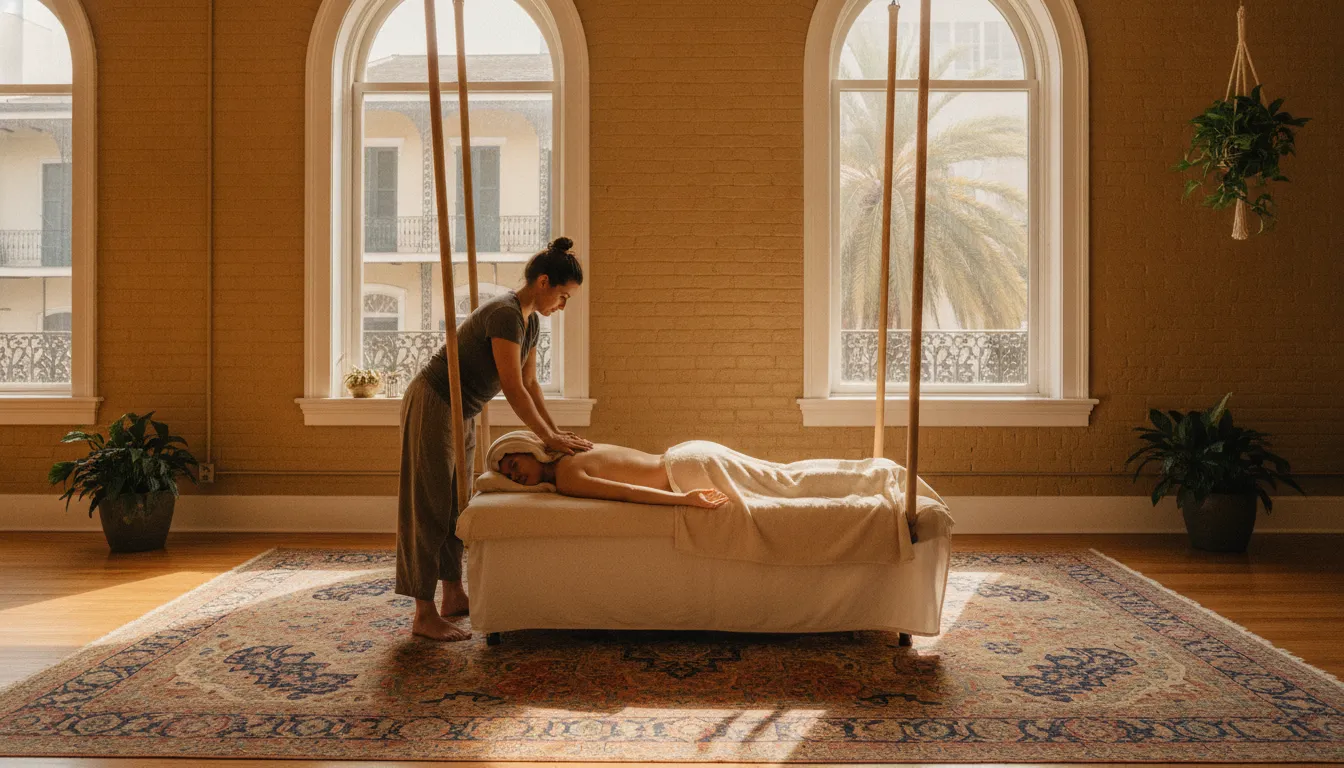
If you’ve ever wished you could deliver deeper, more consistent pressure without exhausting your hands and body, Ashiatsu might be the answer. The name comes from two Japanese words: “ashi” for foot and “atsu” for pressure. In this modality, the therapist uses their bare feet to perform the massage, applying deep, broad strokes that feel incredible to the client. It’s a highly skilled technique, not just someone walking on your back. Therapists use parallel bars installed on the ceiling for balance, support, and leverage, allowing them to fine-tune the amount of pressure with precision.
This gravity-assisted method allows you to provide a deep tissue experience that is both effective and deeply relaxing. For clients who love deep work but find the pointed pressure of elbows and thumbs to be too intense, Ashiatsu is a game-changer. It’s a powerful and graceful therapy that can transform your practice and provide amazing results for your clients. Learning this technique allows you to offer a truly unique service, like our signature Ashiatsu Deepfeet Bar Therapy, that sets you apart from other therapists.
Ashiatsu vs. Traditional Massage
The most obvious difference between Ashiatsu and traditional massage is the tool. Instead of using hands, forearms, or elbows, you use your feet. This fundamental change creates a completely different experience for the client. While a traditional deep tissue massage uses smaller, more pointed tools to work out knots, Ashiatsu uses the broad, soft surface of the foot. This allows you to apply deep, consistent pressure over a much larger area.
Think of it this way: the pressure from an elbow can feel sharp, sometimes causing a client to tense up. The pressure from a foot, however, feels like a giant, warm hand applying smooth, gliding compression. This makes the deep work feel more comfortable and less painful, allowing the client’s muscles to relax and accept the therapy more readily. It’s a way to achieve significant depth without the “no pain, no gain” feeling associated with some other massage services.
Why Clients Love It
Clients often describe their first Ashiatsu massage as a revelation. It’s especially effective for large muscle groups like the back, glutes, and hamstrings, where the broad pressure can release chronic tension more efficiently than smaller tools. The long, flowing, gravitational strokes help to elongate the spine and improve posture, leaving clients feeling taller and more open. Many people find the continuous, deep pressure to be incredibly meditative and fall into a state of deep relaxation.
Because the foot is a larger, softer tool, the deep pressure is dispersed in a way that feels both powerful and soothing. It’s the perfect solution for clients who always ask for more pressure but can’t quite relax with the intensity of a traditional deep tissue massage. Offering Ashiatsu Deepfeet Bar Therapy gives you a way to meet this demand, providing a memorable experience that keeps clients coming back.
Why Get Certified in Ashiatsu?
As a massage therapist, you know that your skills are the foundation of your career. Deciding to learn a new modality is a big step, one that requires time, money, and dedication. So, why should Ashiatsu be at the top of your list? Simply put, getting certified in Ashiatsu is an investment in yourself. It offers powerful benefits that can reshape your practice, protect your health, and grow your business in ways that few other modalities can. It’s more than just adding another service to your menu; it’s a strategic move for a more sustainable and successful career.
Think about the common challenges in our profession: physical burnout, the pressure to stand out in a crowded market, and the need to consistently attract clients who value your work. Ashiatsu addresses all three. By learning to use your feet and body weight, you can deliver deep, consistent pressure without the usual strain on your hands and wrists. This not only feels better for you but also allows you to provide a uniquely effective treatment for your clients. This certification opens doors to new clients, higher earning potential, and a longer, healthier career in a field you love. It’s a chance to deepen your practice and truly set yourself apart as an expert therapist.
Protect Your Body and Extend Your Career
Let’s be honest: a massage therapist’s career can be physically demanding. The repetitive strain on your hands, wrists, and shoulders is a real concern that leads many talented therapists to burnout or injury. Ashiatsu offers a brilliant solution. By learning to use your feet and body weight to deliver deep, consistent pressure, you can save your hands from the stress of deep tissue work. This technique helps prevent strain and burnout, allowing you to work with less pain and more energy. It’s a smarter, more ergonomic way to practice that can extend your career by years, letting you continue your passion for healing as one of our dedicated team members would.
Stand Out from the Competition
In a field with many talented practitioners, setting yourself apart is key to building a thriving practice. Because it requires specific training and equipment, not many therapists offer Ashiatsu Deepfeet Bar Therapy. Becoming certified immediately makes you a unique and in-demand professional in your area. Clients who have experienced the deep, gliding pressure of Ashiatsu often seek it out exclusively. By mastering this modality, you can attract a loyal clientele and become the go-to expert for one of the most effective deep tissue treatments available. This specialization doesn’t just fill your appointment book; it builds your reputation as a highly skilled and knowledgeable therapist.
Offer More Services and Earn Higher Rates
Adding Ashiatsu to your skill set directly impacts your bottom line. This modality allows you to provide a level of deep, consistent pressure that is difficult to achieve with hands alone. You can finally satisfy those clients, even the “big guys,” who say they can never get enough pressure. Because Ashiatsu is a specialized, premium service that delivers profound results, you can command higher rates for your sessions. Expanding your massage services with Ashiatsu diversifies your offerings and increases your earning potential with every appointment. It’s a powerful way to add value for your clients while also increasing your own income.
Are You a Good Candidate for Ashiatsu Training?
Thinking about adding Ashiatsu to your toolkit is a big step, and it’s smart to ask if it’s the right move for you. This isn’t just about learning a new modality; it’s about investing in your career, your body, and your ability to provide incredible results for your clients. Before you sign up for a class, it’s helpful to take a moment and consider a few key things. Are you properly licensed? Are you physically prepared for a new way of working? Answering these questions will help you walk into your training with confidence, ready to make the most of the experience.
The great thing about Ashiatsu is that it was developed with the therapist’s well-being in mind. It’s a powerful technique that allows you to deliver deep, consistent pressure without the usual wear and tear on your hands, wrists, and shoulders. This makes it an incredible option for therapists at any stage of their career. Whether you’re just starting out and want to build sustainable habits or you’re a seasoned pro looking for a way to keep doing the work you love without the pain, Ashiatsu has something to offer. Let’s break down the prerequisites and physical considerations so you can see if this exciting modality is your next right step.
Review the Licensing and Experience Prerequisites
First things first, let’s talk about who can learn Ashiatsu. The primary requirement is that you must be a licensed or certified massage therapist. Ashiatsu training is considered continuing education, building upon the foundational knowledge you already have in anatomy, physiology, and client safety.
You might be wondering if you need years of experience to qualify, and the answer is no. The training is designed for massage therapists who want to learn new skills, whether you’re a recent graduate or a 20-year veteran. It’s a fantastic way to differentiate your practice from the start or to reinvigorate a long-standing career by offering a unique and effective Ashiatsu Deepfeet Bar Therapy service.
Assess Your Physical Readiness
One of the biggest draws of Ashiatsu is its focus on therapist longevity. If you’ve ever ended a day of deep tissue work with aching hands and wrists, you already know why this is so important. Ashiatsu training teaches you how to use your body weight and the force of gravity to deliver pressure through your feet. This technique saves your hands, thumbs, and arms from the repetitive strain that can lead to burnout or injury.
You don’t need to be a professional athlete, but a general level of physical fitness, balance, and body awareness is helpful. The training will teach you the proper mechanics to work safely and effectively. For many therapists, learning Ashiatsu is the key to a longer, healthier career, allowing them to continue their passion for healing people without sacrificing their own well-being.
How to Choose the Right Ashiatsu Program
Once you’ve decided to get certified, the next step is finding a training program that’s right for you. Not all Ashiatsu courses are created equal, and the quality of your education will directly impact your confidence, skill, and safety. Investing a little time upfront to research your options will pay off for years to come. Think of it as choosing a mentor, not just a class. You want an instructor and a curriculum that will set you up for a long and successful career. Here are the key factors to consider to make sure you’re choosing the best possible program.
Verify Certifications and CEUs
First things first, let’s talk logistics. Your massage license depends on accumulating continuing education units (CEUs), so you need to make sure any training you take will count. Before you even look at a curriculum, verify that the program is an approved provider for continuing education in your state. Reputable programs will state this clearly on their website. This isn’t just about checking a box; it’s about making a smart investment in your professional development that also fulfills your licensing requirements. Don’t be shy about asking for proof of their provider status.
Evaluate the Curriculum and Hands-On Practice
A great Ashiatsu course teaches you more than just a sequence of moves. Look for a curriculum that focuses on anatomy, proper body mechanics, and contraindications. The goal is to learn how to use your feet with the same intelligence and intuition as your hands, not to just memorize a routine. The best programs emphasize hands-on practice, giving you plenty of time on the table to apply what you’re learning. This practical approach is what builds the skill and confidence you need to perform an effective Ashiatsu Deepfeet Bar Therapy session.
Check the Instructor’s Credentials
Your instructor is your guide, so you want to learn from someone with deep experience. Look for an instructor who is not only a skilled Ashiatsu practitioner but also a passionate and experienced teacher. How long have they been practicing? How long have they been teaching? An instructor with years of experience has seen it all and can offer invaluable insights that go beyond the textbook. They can share real-world advice and help you troubleshoot issues as you learn. Check out the program’s website for instructor bios to learn more about their background and teaching philosophy.
Consider Class Size and Format
When you’re learning a physical skill like Ashiatsu, personalized feedback is everything. It’s nearly impossible to get that in a massive workshop. Look for programs that offer small class sizes, ideally with four to eight students. This ensures you’ll get plenty of one-on-one attention from the instructor. A smaller group allows the teacher to correct your form, answer your specific questions, and tailor the instruction to your learning style. Also, pay attention to the equipment. A professional training center will use sturdy, custom-made bars that prioritize your safety and the client’s comfort.
What You’ll Learn in an Ashiatsu Course
Enrolling in an Ashiatsu certification course is an exciting step for any massage therapist. While every program has its unique structure, a quality training will always ground you in the essential skills needed to perform this modality safely and effectively. You’ll move beyond theory and get hands-on (or rather, feet-on) experience, preparing you to confidently offer this incredible service to your clients. A comprehensive curriculum typically covers three key areas: the techniques themselves, the equipment you’ll use, and the safety protocols that protect both you and your client.
Core Techniques and Body Mechanics
The heart of any training is learning the fundamental strokes. You’ll discover how to use your feet to deliver long, flowing, and deep strokes that feel luxurious, not painful. Unlike the pointed pressure from thumbs or elbows, Ashiatsu Deepfeet Bar Therapy uses the broad surface of the foot to apply pressure, which allows clients to relax into the deep work. Just as important, you’ll learn how to use your own body weight and proper mechanics to deliver this pressure without straining your hands, wrists, or back. This focus on therapist self-care is a game-changer for career longevity.
Bar Setup and Equipment
Those overhead bars might look intimidating, but your training will teach you that they are your best friend. A significant part of your course will focus on the proper setup and use of your equipment. You’ll learn how to use the bars for balance, stability, and leverage, allowing you to control the depth of your pressure with precision. Instructors will guide you through how to move gracefully and safely around the table while holding the bars, ensuring you feel completely comfortable before you ever work with a client. This knowledge ensures you can create a safe and effective Ashiatsu setup in your own practice.
Client Assessment and Safety
Knowing how to perform the strokes is only half the battle; knowing when and when not to is what makes you a true professional. Your training will include detailed instruction on client screening and safety. You’ll learn about the specific contraindications for Ashiatsu and how to use intake forms to identify any potential risks. The curriculum will also cover which areas of the body are ideal for this work, like the large muscles of the back, hips, and thighs. This training ensures you can confidently provide a range of professional massage services while always prioritizing your client’s well-being.
Common Myths About Ashiatsu Training
If you’ve been curious about Ashiatsu, you’ve probably also heard a few rumors. Like any specialized modality, Ashiatsu has its share of myths that can make therapists hesitate to sign up for training. Let’s clear the air and separate fact from fiction. Understanding the truth about this practice is the first step toward deciding if it’s the right move for your career. We’ll walk through some of the most common misconceptions so you can make an informed choice.
“It’s only for advanced therapists.”
This is one of the biggest myths out there. You don’t need decades of experience to learn Ashiatsu. In fact, this training is designed for any licensed massage therapist who wants to add a powerful new skill to their toolkit. Whether you’re just starting out or you’re a seasoned pro, learning Ashiatsu can be a game-changer. It’s an incredible way to offer a unique service while protecting your own body from the repetitive strain that can lead to burnout. It’s less about how long you’ve been practicing and more about your desire to learn and grow as a therapist.
“It’s too intense for most clients.”
Many people hear “massage with feet” and immediately picture a therapist walking all over a client with painful, uncontrolled pressure. That couldn’t be further from the truth. Ashiatsu Deepfeet Bar Therapy is a highly controlled and nuanced technique. Using overhead bars for support, the therapist can apply a range of pressure, from light to very deep, with precision. Because the foot is a broader, softer tool than an elbow or thumb, it can deliver deep, consistent pressure without the “poky” feeling some clients dislike. This makes it a wonderfully effective and surprisingly relaxing deep tissue experience for a wide variety of clients.
“You need expensive equipment to start.”
The thought of buying new equipment can be daunting, but getting started with Ashiatsu is more accessible than you might think. While you do need a specific setup, including professionally installed overhead bars, it’s a one-time investment in your career and safety. Reputable training programs will guide you on exactly what you need and how to set it up safely. Think of it not as a huge, scary expense, but as a foundational investment that allows you to perform a valuable service safely and effectively for years to come. The return on this investment can be significant.
Where to Find Ashiatsu Training
Finding the right Ashiatsu training program is the most important step you’ll take toward mastering this incredible modality. A great course will give you the confidence and skill to practice safely and effectively, while a poor one can leave you with bad habits that are hard to break. You want to find a program that not only teaches you the strokes but also instills a deep understanding of body mechanics and client safety. It’s about finding an instructor who is as passionate about teaching as they are about the therapy itself. Let’s look at where you can find top-tier training that will set you up for a long and successful career in Ashiatsu.
Nola Bliss: The Gulf Coast’s Certified Ashiatsu Training Center
If you’re a massage therapist on the Gulf Coast, your search for world-class instruction can start and end right here in New Orleans. Nola Bliss Massage is the only certified training center for Ashiatsu Deepfeet Bar Therapy in the entire region. We built our training program with the same dedication to excellence that defines our client services. Our instructors are seasoned therapists who live and breathe this modality. They are passionate about sharing their expertise to help other therapists protect their bodies and deepen their practice. We keep our classes small to ensure every student gets personalized, hands-on guidance, so you’ll leave feeling fully prepared to bring Ashiatsu to your own clients.
Search Certified Training Directories
For those outside the Gulf Coast, a great place to start your search is with official training directories. Organizations that create and standardize Ashiatsu curricula often maintain lists of certified instructors and training centers across the country. Using these directories is the best way to verify that a program is legitimate and adheres to the highest standards of the practice. This step helps you find a qualified instructor who has been properly vetted, ensuring you receive a quality education in Ashiatsu. It cuts through the noise and connects you directly with reputable trainers in your area, so you can feel confident in your investment.
Key Questions to Ask Before You Enroll
Before you sign up for any course, it’s smart to do a little homework. Think of it like interviewing the program to make sure it’s the right fit for you. First, confirm that the course is approved for continuing education units (CEUs) in your state. Ask about the instructor’s credentials, including how long they’ve been practicing and teaching Ashiatsu. You should also inquire about the class size, as smaller groups allow for more one-on-one attention. Finally, ask for a curriculum overview to ensure it covers essential topics like safety, contraindications, bar installation, and, of course, plenty of hands-on practice. Asking these questions upfront will help you choose a program that truly supports your professional growth.
What Does Ashiatsu Training Cost?
Investing in a new skill is a big decision, and the cost is always a key part of the equation. Ashiatsu training is an investment in your career, your physical well-being, and your earning potential. While prices vary between training centers, understanding the typical costs and what you get for your money will help you make a smart choice for your practice.
Understanding Typical Course Fees
Ashiatsu training is usually broken down into different levels, and the cost reflects the length and complexity of each course. A foundational or fundamentals course, which might last three days, can run around $750. This initial training is where you’ll learn the basic techniques and safety protocols. From there, you can move on to shorter, more specialized courses. An intermediate or advanced class might be a two-day workshop costing about $500. These build on your foundational skills and introduce more intricate strokes. You can also find classes focused on specific techniques like range of motion work or using hot stones with your feet, which often have similar pricing.
How to Find Discounts and Payment Plans
Don’t let the initial price tag be a barrier. Many training centers want to make certification accessible and offer ways to make the cost more manageable. It’s always worth asking about early bird discounts if you can register ahead of time. Some schools also offer payment plans that allow you to spread the tuition over several months. Another thing to look for are package deals. If you plan to take multiple courses, you might get a discount for bundling them together. Some programs even include valuable extras, like free access to an online library of videos and resources, which adds a lot of value beyond the in-person class. Exploring a studio’s massage services can give you a feel for their expertise before you inquire about training options.
Know What Your Tuition Includes
When you’re comparing programs, make sure you have a clear picture of what your tuition covers. The good news is that certified Ashiatsu courses will almost always count toward the continuing education units (CEUs) you need to maintain your massage license. Your tuition should also cover a comprehensive training manual and, most importantly, quality, hands-on instruction from an experienced teacher. The best programs focus on teaching you a deep understanding of anatomy and body mechanics, not just a memorized routine. This ensures you can apply your new skills safely and effectively. A school’s commitment to quality is often reflected in the experience of its team, so take a moment to learn about us and the instructors leading the training.
Is Ashiatsu Certification a Good Investment?
Deciding to get certified in a new modality is a big step, and it’s smart to think of it as an investment in your career. Ashiatsu certification, in particular, offers a powerful return by changing how you work, who you can help, and how long you can practice massage therapy. It’s not just about adding another service; it’s about building a more sustainable and profitable practice for the long haul.
Calculating the ROI for Your Practice
Let’s talk numbers and sense. The most significant return on your investment in Ashiatsu is your own physical well-being. This modality allows you to use your body weight and gravity to deliver deep, consistent pressure, saving your hands, wrists, and shoulders from the strain that leads to burnout and injury. This alone can extend your career by years. Financially, specialization allows for premium pricing. Clients seeking powerful, effective bodywork are often willing to pay more for a service that truly meets their needs. By offering Ashiatsu Deepfeet Bar Therapy, you can attract a new clientele and command higher rates, directly impacting your bottom line.
What to Expect After Certification
Once you’ve completed your training, the journey is just beginning. Your certification course will provide you with the foundational skills and, importantly, the continuing education units (CEUs) needed for your license renewal. However, true mastery comes with practice. You’ll need to dedicate time to honing your technique and learning how to blend Ashiatsu seamlessly into your sessions. A great training program provides more than just a certificate; it offers a community. You should feel supported by your instructors and fellow students as you build your confidence. This network becomes an invaluable resource for asking questions and sharing experiences long after the class ends, reflecting the collaborative spirit of a team of dedicated therapists.
Your Next Steps to Becoming Certified
Feeling inspired to add Ashiatsu to your practice? That’s fantastic. Taking the first step is often the hardest part, but mapping out your path to certification makes the process much more manageable. Here’s a straightforward guide to what comes next.
First, think about how you learn best. Do you thrive in a group setting, learning alongside other therapists, or would you prefer personalized, one-on-one instruction tailored to your pace? While some programs offer online components, live, in-person classes are essential for this modality. This hands-on training is the only way to truly master the body mechanics and ensure you can perform the techniques safely and effectively for your clients.
Next, choose the right course level for your experience. If you’re brand new to Ashiatsu or it’s been over a year since your last class, start with an introductory course. This is where you’ll build a strong foundation in the core techniques. Once you’ve mastered the basics, you can explore intermediate and advanced classes to refine your skills. Our certified training center here at Nola Bliss can help you find the perfect starting point for your journey.
Finally, make sure you’re learning from a qualified professional. Your instructor will be your guide, so you want to find someone with deep experience and a passion for teaching. You can use online directories to find certified instructors and verify their credentials. As the only certified training center for Ashiatsu Deepfeet Bar Therapy on the Gulf Coast, we are proud to be a trusted resource for therapists ready to begin their training.
Related Articles
Frequently Asked Questions
Do I need to be a certain weight or have perfect balance to learn Ashiatsu? Not at all. A common myth is that you need to be a certain size or a gymnast to do this work, but the technique is designed for therapists of all body types. The overhead bars are there for balance and support, so you are always stable. The training focuses on proper body mechanics, teaching you how to use your body weight efficiently, not brute force. It’s about leverage and gravity, which allows you to work smarter, not harder.
How long does it take to feel confident offering Ashiatsu after the training? This really depends on you and how much you practice. A good certification course will give you the foundational skills and knowledge to perform a safe and effective session. Most therapists feel ready to start practicing on friends and family right away to build their flow and confidence. After a handful of practice sessions, you will likely feel prepared to introduce it to your regular clients and start booking appointments.
What kind of setup do I need in my treatment room to offer Ashiatsu? The main requirement is a set of professionally installed overhead bars. Your safety and the client’s safety are the top priority, so this is not a place to cut corners. Your training program will provide specific guidance on bar installation. You will also need a sturdy massage table that can support the combined weight of you and your client. It’s a straightforward setup, and the initial investment pays for itself by allowing you to offer a premium service for years to come.
How do I talk to my clients about trying Ashiatsu? The best way is to explain the benefits simply. For clients who always ask for more pressure, you can tell them you’ve learned a new technique that delivers deep, consistent compression without the “poky” feeling of elbows. For others, you can describe it as a luxurious, full-body massage that uses broad, flowing strokes to release tension. Framing it as the ultimate deep tissue experience or a “deep tissue massage without the pain” often makes clients very curious to try it.
Is Ashiatsu only for clients who want extremely deep pressure? While Ashiatsu is famous for its ability to provide deep pressure, it is a surprisingly versatile technique. Because you use the overhead bars for support, you have complete control over how much of your body weight you apply. You can easily adjust the pressure from light and relaxing to very deep, depending on the client’s needs and preferences. It’s a fantastic tool for a wide range of clients, not just the ones who want the deepest work.