If you think all deep massages are created equal, it’s time to think again. There’s a world of difference between a therapist using their hands and one using their feet. A traditional deep tissue massage uses precise, targeted pressure—which is effective, but can sometimes feel sharp. Ashiatsu, however, offers a different kind of deep. It uses broad, gliding strokes from the therapist’s feet for a consistent compression that feels incredible. Exploring the ashiatsu deep tissue distinction will help you discover which method your body truly needs for lasting relief.
Key Takeaways
- Ashiatsu offers deep pressure without the sharpness: It uses broad, gliding strokes from the therapist’s feet, making it ideal for those who want intense relief over large areas without the pinpointed feeling of an elbow.
- Deep tissue targets specific problem areas: This technique uses focused pressure from hands and forearms to zero in on and release stubborn knots, making it perfect for chronic pain in places like your neck or lower back.
- Your goals determine the best massage for you: You don’t have to decide alone; a consultation with your therapist is the best way to create a personalized session that addresses exactly what your body needs, sometimes even by combining both techniques.
What Is Ashiatsu Massage?
If you’ve ever wished for a deep tissue massage that could work out the toughest knots without the sharp, pointy pressure of an elbow or thumb, you might want to meet Ashiatsu. The name itself gives you a hint about the technique; in Japanese, “ashi” means foot and “atsu” means pressure. It’s a unique and luxurious form of bodywork where a highly trained therapist uses their feet to deliver a deep, consistent, and incredibly relaxing massage.
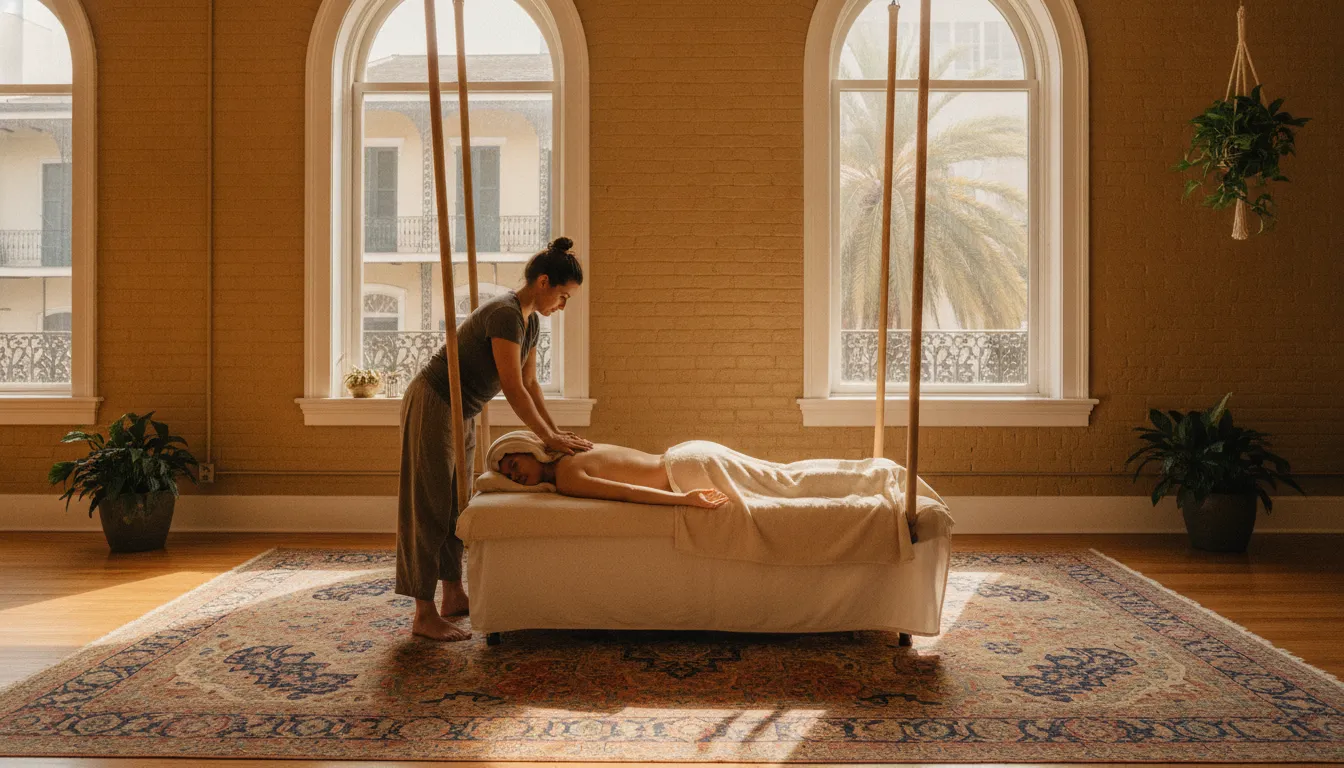
Using parallel bars suspended from the ceiling for balance and support, the therapist glides across your back, legs, and shoulders, using their body weight to apply the perfect amount of pressure. This method allows for a depth that’s hard to achieve with hands alone. It’s especially effective for those with dense muscle tissue or anyone who simply loves a seriously deep massage. Think of it as the ultimate therapeutic experience, combining the intensity of deep tissue with a smooth, flowing feel.
The Ancient Roots of a Modern Practice
From Eastern Healing Art to Western Therapy
Ashiatsu might seem like a modern luxury, but its origins stretch back thousands of years across various Eastern cultures. The name itself, a combination of the Japanese words “ashi” (foot) and “atsu” (pressure), perfectly describes the technique. For centuries, healers used their feet to apply broad, therapeutic pressure as a form of energy work and healing. The modern practice of Ashiatsu Deepfeet Bar Therapy has thoughtfully adapted this ancient wisdom, blending traditional philosophies with contemporary anatomical knowledge. This evolution allows therapists to use their body weight to deliver a deep, consistent pressure that feels both powerful and soothing, a quality that has made it a beloved therapy in the West for anyone seeking profound relief without the sharp points of a typical deep tissue massage.
It’s More Than Just “Walking on Your Back”
The idea of a barefoot massage might sound unusual, but it’s a highly refined and controlled art form. Your therapist isn’t just walking on your back. Instead, they use the overhead bars to carefully manage their weight and position, ensuring every movement is precise and intentional. Using the broad, soft surfaces of their feet, they apply long, gliding strokes that help to stretch shortened muscles and relieve tension. This technique is the core of Ashiatsu Deepfeet Bar Therapy, allowing for a deep compression that can release trigger points, improve posture, and create a sense of openness throughout the body.
How Is It Different From a Hands-On Massage?
The biggest difference between Ashiatsu and a traditional hands-on massage comes down to the quality of the pressure. While a deep tissue massage often uses smaller tools like thumbs and elbows to target specific knots, this can sometimes feel sharp or uncomfortable. Ashiatsu, on the other hand, uses the entire surface of the foot to apply pressure. This distributes the force more evenly, creating a deep, consistent compression that feels both powerful and gentle. It allows your muscles to relax and accept the deep work without tensing up, leading to a more effective and enjoyable release of chronic pain and tension.
Achieving Deep Myofascial Release
Myofascial release is all about loosening the tough, connective tissue—the fascia—that wraps around your muscles. When this tissue gets tight, it can cause pain and limit your movement. Ashiatsu is exceptionally good at addressing this because the therapist uses the broad surface of their foot to apply long, gliding strokes. This technique allows for a deep, sustained compression that gently stretches both the muscle and the fascia together. Unlike the targeted pressure of a thumb, which can sometimes cause your muscles to tense up in defense, the even pressure from a barefoot massage encourages your body to relax and accept the work. This creates the perfect environment for releasing chronic tension and restoring a sense of openness and flexibility.
And What Is Deep Tissue Massage?
If you’ve ever dealt with chronic muscle pain or stubborn knots that just won’t go away, a deep tissue massage might be exactly what you need. This isn’t your average relaxation massage; it’s a highly therapeutic technique designed to work on the deepest layers of your muscle and connective tissue, or fascia. Think of it as a focused effort to release long-held patterns of tension in the body. Our therapists use this method to address specific problem areas, making it a go-to treatment for people with persistent pain from old injuries, postural problems, or repetitive strain.
While the pressure is firm, a common misconception is that a deep tissue massage has to be painful to be effective. You might feel some discomfort as the therapist works on a particularly tight spot, but it should always feel productive, like a “good hurt.” The goal is to work with your body, not against it, to unstick muscle fibers, release tightness, and restore movement. It’s an intense but incredibly effective way to find lasting relief from chronic aches and pains that a lighter massage just can’t reach.
The Power of Targeted Pressure
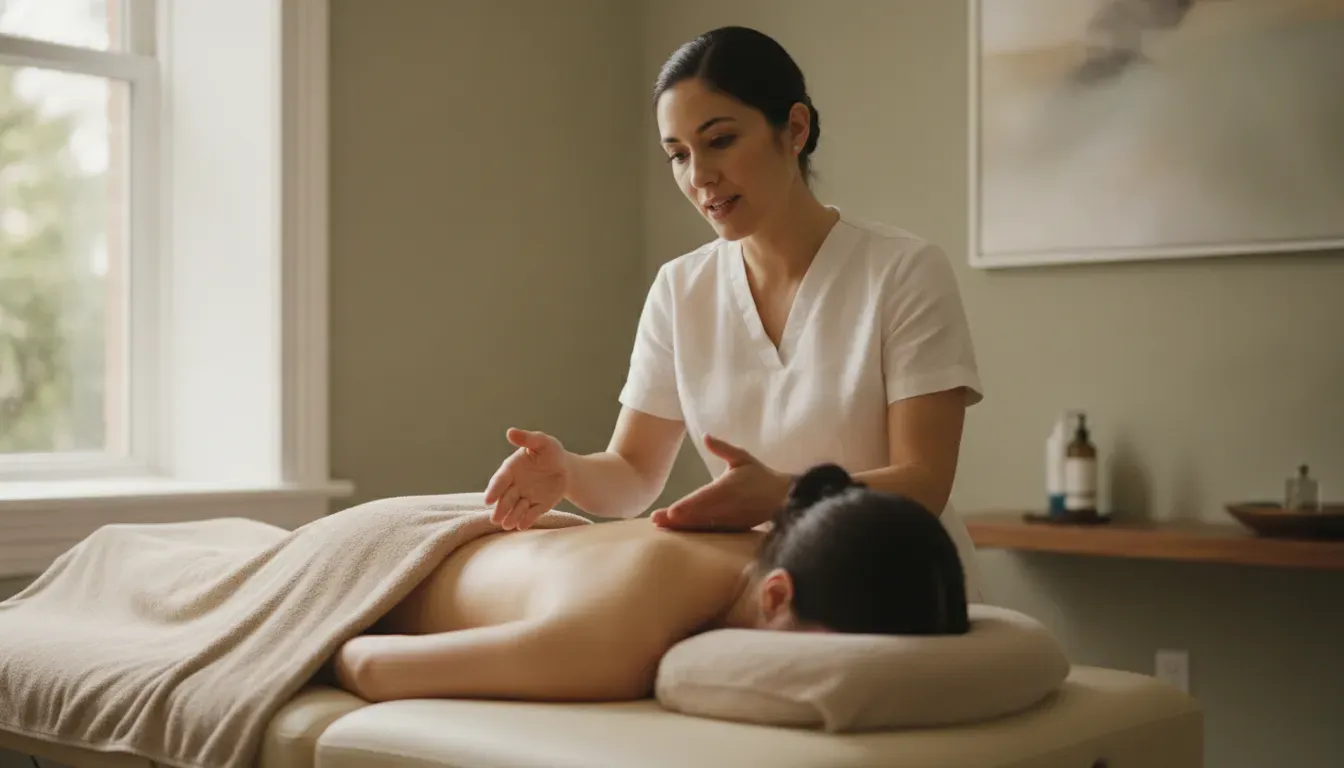
So, how does a therapist get to those deep muscle layers? It’s all about slow, deliberate strokes and sustained pressure. Your massage therapist will use their knuckles, forearms, and sometimes even elbows to apply focused pressure on specific areas of tension. This isn’t about rushing; the slow pace allows your muscles to relax and the therapist to reach the deeper tissue effectively.
Most importantly, a deep tissue session is a partnership between you and your therapist. Open communication is key. We encourage you to speak up if the pressure feels too intense or if it’s just right. This feedback allows your therapist to adjust their technique to your comfort level, ensuring the treatment is both productive and manageable for you.
How It Targets Knots and Chronic Tension
Those tight, painful spots we call “knots” are actually adhesions in your muscles and connective tissues. These can block circulation, cause pain, and limit your range of motion. Deep tissue massage works by physically breaking down these adhesions to relieve pain and restore normal movement. By applying that targeted pressure, your therapist helps increase blood flow to the affected area and reduce inflammation.
This makes it one of the best massage services for issues like chronic lower back pain, stiff necks, sore shoulders, and sciatica. By zeroing in on the source of the tension, we can help release those stubborn knots and provide you with significant, lasting relief.
Ashiatsu vs. Deep Tissue: The Main Differences
While both Ashiatsu and deep tissue massage aim to relieve deep-seated muscle tension, they get there using very different roadmaps. Think of it like this: both can help you reach the same destination of feeling better, but the journey itself is unique. A deep tissue massage is like a skilled specialist using precise tools to work on a specific problem, while Ashiatsu is more like a long, flowing wave of pressure that covers broad areas. Both are fantastic for working out stubborn aches, but the experience and the way your muscles respond can be quite different.
The main distinctions come down to how the pressure is applied, how much of your body is worked on at once, and the tools and techniques the therapist uses. One uses feet and gravity, the other uses hands and targeted force. One feels broad and consistent, the other feels focused and intense. It’s not about one being “better” than the other; it’s about finding the right fit for your specific needs and preferences. Are you dealing with a nagging knot in your shoulder, or is it more of a general, widespread tightness in your back? The answer can point you in the right direction. Let’s break down exactly what sets these two powerful massage services apart so you can make an informed choice for your next appointment.
Pressure Application: Feet vs. Hands
In an Ashiatsu Deepfeet Bar Therapy session, your therapist uses their feet to deliver long, gliding strokes. The name itself comes from the Japanese words for foot (“ashi”) and pressure (“atsu”). Because the foot has a much broader surface than an elbow or thumb, the pressure is distributed more evenly across your muscles. This often means you can experience incredibly deep pressure without the sharp or poky feeling that can sometimes come with other techniques. It’s a deep, consistent compression that coaxes muscles to release.
A traditional deep tissue massage, on the other hand, relies on the therapist’s hands, knuckles, forearms, and elbows. This allows for highly targeted pressure on specific trigger points and adhesions, or “knots.” The pressure is more focused and can feel more intense in certain spots as the therapist works to break up tight muscle fibers. This precision is what makes it so effective for zeroing in on chronic problem areas.
How Ashiatsu Delivers Deeper Pressure, Gently
Ashiatsu stands out for its unique ability to provide deep, consistent pressure without the sharp or poky feeling sometimes associated with traditional deep tissue massage. The technique is all in the application. Using parallel bars for balance, your therapist uses their body weight to apply deep, gliding strokes with the broad surfaces of their feet. This allows for a level of intensity that’s hard to achieve with hands alone, especially for those with dense muscle tissue. The result is a powerful massage that can cover large areas like the entire length of your back with smooth, flowing compression, encouraging your muscles to relax and release.
The secret to this gentle yet powerful approach lies in the therapist’s feet. Because the foot has a much wider surface area than a thumb or elbow, the pressure is distributed more evenly, creating a sensation that feels both potent and soothing. Instead of tensing up against a pinpointed pressure point, your body can more easily accept the work, allowing for a more effective release of chronic tension. This unique feeling is one of the key differences between Ashiatsu and deep tissue, offering profound relief without the discomfort you might expect from such deep work.
Coverage: Broad Strokes vs. Specific Points
One of the biggest differences you’ll notice is the area of coverage. With Ashiatsu, the therapist’s foot can span a large muscle group in a single, fluid stroke. This broad approach is incredibly efficient for addressing widespread tension and tightness. By using gravity and their own body weight, the therapist can sink deep into the tissue, reaching layers of muscle that are sometimes difficult to access with smaller tools like thumbs or elbows. This makes it a great choice for anyone with chronic, large-scale muscle pain.
Deep tissue massage is more about depth through precision. Instead of covering a large area at once, the therapist focuses on smaller, specific zones where you hold tension. They work methodically, layer by layer, to release adhesions in the muscle and connective tissue. This targeted approach allows them to get right to the source of a problem, like a stubborn knot in your shoulder or a tight band in your lower back, providing focused and effective relief.
Precision for Knots vs. Elongating Muscles
Think of it this way: if you have a specific, stubborn knot that feels like a small, hard pebble under your skin, the precision of a deep tissue massage is your best bet. Your therapist will use their thumbs, knuckles, or elbows to apply focused pressure, working to physically break down those adhesions and restore movement to that exact spot. It’s the perfect technique for zeroing in on a problem. On the other hand, if your muscles feel generally tight and compressed—like your entire back needs a good stretch—Ashiatsu is the answer. The long, gliding strokes from the therapist’s feet work to elongate and stretch entire muscle groups, providing a sense of openness and release that’s hard to achieve with smaller tools. It’s less about attacking a single knot and more about lengthening the entire muscle for lasting relief.
What Your Therapist Does (And Uses)
The setup for an Ashiatsu massage is quite unique. Your therapist stands on the massage table, using parallel bars mounted on the ceiling for balance and control. This isn’t a balancing act; it’s a carefully controlled technique. These bars allow the therapist to expertly regulate the amount of pressure they apply by distributing their body weight. This system lets them sustain deep, consistent pressure throughout the session without fatiguing their hands or arms, ensuring a high-quality treatment from start to finish.
A deep tissue massage doesn’t require overhead equipment. Instead, the therapist relies on their own strength, skill, and expert use of body mechanics. They position themselves to get the best leverage for applying firm, targeted pressure exactly where it’s needed. The success of the massage hinges on the therapist’s deep understanding of anatomy and their ability to use their hands, forearms, and elbows as precise tools. Our dedicated team is highly trained in these exact techniques.
Overhead Bars, Floor Mats, and Other Tools
The most striking visual difference between the two massage styles is the room’s setup. For an Ashiatsu session, the room is equipped with a set of parallel bars securely mounted to the ceiling directly above the massage table. These bars are the therapist’s secret weapon, providing the balance and support needed to glide smoothly over your body. It’s a system that allows them to leverage their body weight to deliver that famously deep, consistent pressure. This specialized equipment is central to the practice, which is why proper training is so crucial. As the only certified Ashiatsu training center on the Gulf Coast, we know firsthand how essential these tools are for a safe and effective session. In contrast, a deep tissue massage room looks more traditional, with the focus being on a sturdy table and the therapist’s skilled hands, forearms, and elbows as the primary tools.
The Body’s Response: Relaxation vs. Resistance
The way your body reacts to pressure is a huge factor in how effective a massage is. With deep tissue, the focused pressure from an elbow or thumb can sometimes cause your muscles to instinctively tense up—a natural guarding response. While a skilled therapist can work through this, it can feel like a bit of a battle. Ashiatsu, however, tends to bypass this resistance. The broad, soft surface of the foot distributes pressure so evenly that it feels less invasive. Instead of tensing, your muscles are more likely to relax and accept the deep work. This allows the therapist to sink into the tissue more effectively, achieving a profound release of chronic tension without the fight. It’s a powerful yet gentle approach that makes it one of our most requested therapeutic treatments.
What Are the Benefits of Each Massage?
Both Ashiatsu and Deep Tissue massage are fantastic for working out serious tension, but they deliver their results in slightly different ways. Understanding their unique advantages can help you choose the experience that best fits what your body is asking for. One offers a broad, consistent pressure, while the other provides focused, specific relief. Let’s look at what sets them apart and what powerful benefits they share.
Ashiatsu Benefits: Deep Pressure, No Poking
The biggest advantage of Ashiatsu Deepfeet Bar Therapy is the quality of the pressure. Because the therapist uses their feet, the pressure is deep yet feels broad and distributed, not sharp or poky like an elbow or thumb might. This technique allows for long, gliding strokes that cover a large area at once, making the massage feel incredibly balanced and effective. If you love deep pressure but find the pinpointed intensity of traditional deep tissue a bit much, Ashiatsu offers a perfect middle ground. It provides profound relief from muscle tightness without the discomfort of sharp, targeted force, making it a deeply relaxing and therapeutic experience.
Spinal Decompression and Joint Relief
If you spend your days hunched over a desk or feel the constant pull of gravity on your spine, Ashiatsu can offer incredible relief. The long, gliding strokes applied along the muscles that support your spine help to gently stretch and lengthen your back. This creates a subtle decompression effect, easing pressure on the vertebral discs and nerves. Unlike the sharp pressure of an elbow, the broad surface of the foot allows for a deep myofascial release that coaxes tight muscles to let go slowly and effectively. This release can significantly improve posture and create a feeling of openness and space in your body, relieving joint compression not just in your back but in your hips and shoulders, too.
Improved Circulation and Lymphatic Drainage
The deep, consistent pressure of an Ashiatsu massage does more than just release muscle tension; it also gives your circulatory system a major helping hand. The long, flowing strokes effectively enhance blood flow, flushing out metabolic waste from your muscles and bringing in fresh, oxygenated blood. This process is essential for healing and can help lower swelling that contributes to chronic pain. At the same time, the technique encourages lymphatic drainage, helping your body clear out excess fluid and toxins. The result is a reduction in inflammation and a lighter, less “puffy” feeling, making it a fantastic choice for anyone dealing with fluid retention or sluggishness.
Deep Tissue Benefits: Unraveling Stubborn Knots
If you have a specific trouble spot, like a stubborn knot in your shoulder or chronic tightness in your lower back, a Deep Tissue massage is your go-to solution. This technique uses strong strokes and deep, circular movements to focus on the deeper layers of your muscles and connective tissues. It’s designed to zero in on and release long-standing muscle tension. While the pressure is more concentrated and can feel intense at times, it’s incredibly effective for treating chronic muscle pain and stiffness. Your therapist can use their hands, knuckles, and elbows to apply precise pressure exactly where you need it most, breaking up adhesions and restoring movement.
The Common Ground: Better Circulation and Flexibility
Despite their different approaches, both Ashiatsu and Deep Tissue massage offer some incredible shared benefits. Both techniques are excellent for improving blood flow throughout the body. This increased circulation helps deliver more oxygen and nutrients to your muscles, which can reduce swelling and alleviate chronic pain. Additionally, both styles work to release tight connective tissues, which can significantly enhance your flexibility and overall mobility. So, no matter which one you choose, you can expect to walk out of your session feeling looser, more limber, and with a noticeable reduction in aches and pains. You can explore all of our massage services to find the right fit.
Ashiatsu’s Benefits for the Therapist
It might seem strange to think about the person giving the massage, but their well-being has a direct impact on the quality of your treatment. Traditional deep tissue work can be incredibly demanding on a therapist’s body, leading to strain in their hands, wrists, and back. This is where Ashiatsu is a true game-changer, not just for you, but for the practitioner. By using their feet and body weight, therapists can deliver deep, consistent pressure without the physical toll that often comes with hands-on modalities. This sustainable approach helps prevent burnout and allows our skilled therapists to have long, healthy careers dedicated to healing.
Why a Healthy Therapist Gives a Better Massage
So, why does this matter to you? A therapist who isn’t fighting fatigue or their own muscle pain can provide a much better massage. When a practitioner uses Ashiatsu, they can apply sustained, deep pressure for the entire session without their strength wavering. The overhead bars provide balance and control, allowing them to be incredibly precise with every movement. This means you receive a more consistent and effective treatment from start to finish. At Nola Bliss, we believe that taking care of our therapists is key to taking care of our clients, which is why we champion this technique. Our dedicated team is not only highly experienced in Ashiatsu, but our studio is also the only certified training center for it on the Gulf Coast.
Important Safety Considerations
Your safety and comfort are the top priorities in any therapeutic session. While Ashiatsu is a wonderfully effective treatment, its deep pressure means it’s not the right fit for every person or every situation. Understanding the contraindications is a key part of responsible self-care and ensures that you and your therapist can make the best decision for your body. This isn’t about creating limitations; it’s about ensuring your massage experience is both beneficial and completely safe. A quick conversation with your doctor and your therapist can help you find the perfect treatment path.
When to Avoid Ashiatsu Massage
Because Ashiatsu involves deep, gliding pressure from the therapist’s body weight, it’s crucial to be aware of certain health conditions where this type of massage should be avoided. Our goal is always to promote healing, not to introduce risk. If you have any concerns, it’s always best to discuss them with us beforehand. Our expert therapists are trained to help you choose from our menu of massage services to find the one that will serve you best, even if it means opting for a different technique for your session.
Consult Your Doctor If You Have These Conditions
Before booking an Ashiatsu session, please consult your doctor if you have any of the following conditions. It is essential to inform your massage therapist about your health history, as they may recommend an alternative treatment. For example, Ashiatsu is not performed on pregnant individuals, but we offer a wonderful prenatal massage designed specifically for expectant mothers. Other conditions that typically contraindicate Ashiatsu include:
- High or uncontrolled blood pressure
- Recent injuries or surgeries (within the last 6 months)
- A weakened immune system
- Serious liver or kidney problems
- Recent medical implants, such as a pacemaker, stents, or joint replacements
- Advanced diabetes or severe osteoporosis
- Certain blood vessel problems or a history of blood clots
Ashiatsu or Deep Tissue: Which Is Right for You?
Choosing between Ashiatsu and deep tissue massage isn’t about picking the “better” option; it’s about finding the right fit for your body and your wellness goals. Both are fantastic for working out tension, but they get there in different ways. Think about what you want to achieve with your session. Are you looking for broad, consistent pressure to soothe large muscle groups, or do you need focused work on a few stubborn spots? Your answer will point you in the right direction. Let’s walk through who typically benefits most from each style to help you decide.
When to Choose Ashiatsu Massage
If you’re someone who loves deep pressure but finds the pointedness of elbows and thumbs a bit too intense, Ashiatsu could be your new favorite massage. This technique is ideal for people with dense muscle tissue, athletes, or anyone who feels like a traditional massage just can’t go deep enough. Because the therapist uses their feet and body weight, they can deliver incredibly deep, gliding pressure that feels both powerful and soothing. The broad surface of the foot allows for a compression that can release trigger points without the sharp discomfort you might associate with deep work. It’s a great choice for addressing tightness across your back, hips, and legs.
Ideal for Athletes, Runners, and Physically Demanding Jobs
Athletes, runners, and anyone with a physically demanding job often deal with widespread tension across large muscle groups. This is where Ashiatsu truly shines. The long, flowing strokes cover a lot of ground, making it incredibly efficient for addressing tightness in the back, hips, and legs all at once. If you have dense muscle from regular training, you’ll appreciate how the deep, consistent pressure of an Ashiatsu Deepfeet Bar Therapy session can sink into those tissues without the sharp feeling of an elbow. This technique helps to stretch and lengthen tight muscle fibers, which can improve flexibility and aid in recovery, making it a powerful tool for maintaining your body’s performance.
Relief for Chronic Back Pain and Tight IT Bands
For those struggling with chronic back pain or a stubbornly tight IT band, Ashiatsu can be a game-changer. The deep, gliding pressure works to elongate the muscles along the spine and legs, helping to create space and relieve compression. This technique is fantastic for improving blood flow, which can help lower the swelling and inflammation that often cause chronic pain. By applying deep pressure without the pinpointed discomfort, Ashiatsu can help improve your posture and release long-held tension patterns. It’s one of our most effective massage services for allowing your body to relax into the work, making it easier to achieve lasting relief from persistent pain.
When to Choose Deep Tissue Massage
A deep tissue massage is the go-to for anyone dealing with chronic pain, stubborn knots, or specific problem areas. If you have a nagging pain in your neck, persistent lower back tension, or tightness from an old injury, this is the massage for you. The therapist uses their hands, knuckles, and elbows to apply focused, deliberate strokes that target the deeper layers of your muscle and connective tissue. This technique is excellent for breaking up scar tissue and releasing muscle adhesions (those “knots” that won’t go away). It’s a targeted treatment designed to provide lasting relief from specific aches and pains.
Matching the Massage to Your Wellness Goals
Ultimately, the best massage for you depends entirely on your personal needs and preferences. Consider what your body is telling you. Are you seeking overall relaxation and release from general tension? Ashiatsu Deepfeet Bar Therapy offers a unique experience of deep, flowing pressure that can feel incredibly restorative. Or are you on a mission to resolve a specific, nagging issue that’s been bothering you for weeks? The targeted approach of deep tissue might be the more effective path. Both can help with chronic pain and muscle tightness, so you can’t go wrong. The key is to match the technique to your primary goal for the session.
What to Expect From Your Massage Session
Knowing what will happen during your massage can help you relax and get the most out of your treatment. While both Ashiatsu and deep tissue massage aim to relieve tension, the experience in the treatment room is quite different for each. From the type of pressure to how you’ll feel afterward, here’s a breakdown of what your session will look like.
How to Prepare for Your Session
Getting ready for your massage is simple, but a few small steps can make a big difference in your experience. The most important thing you can do is come ready to communicate. Before your session begins, your therapist will talk with you about your needs, any pain points, and what you hope to achieve. This is your time to be open about your preferences, whether you’re leaning toward the broad strokes of Ashiatsu or the targeted work of deep tissue. On the day of your appointment, try to hydrate well and avoid eating a large meal right before you arrive. You’ll undress to your comfort level in private, just as you would for any other massage. Remember, our goal is to create a session that’s perfect for you, and that starts with clear, open conversation.
The On-the-Table Sensation: What It Feels Like
Imagine a massage that delivers deep pressure without the sharp, pointy feeling of an elbow or thumb. That’s Ashiatsu Deepfeet Bar Therapy. Your therapist will use overhead bars for balance, allowing them to apply smooth, consistent, and deep pressure with their feet. The sensation is often described as a luxurious, deep compression that covers a large area at once, making it feel both softer and deeper than other techniques. In contrast, a deep tissue massage uses hands, knuckles, and elbows to apply focused, intense pressure to specific knots and tight muscle bands. You’ll feel the therapist working on precise areas to break up adhesions.
Session Length, Intensity, and Pressure
Most therapeutic massage sessions, including Ashiatsu and deep tissue, typically last between 60 and 90 minutes. This gives your therapist enough time to address your problem areas thoroughly. During a deep tissue massage, communication is key. Your therapist will check in with you about the pressure to ensure it’s effective but not painful. With Ashiatsu, the intensity comes from broad, gliding strokes that sink deep into the muscle tissue. While the pressure is significant, it feels distributed and less invasive, allowing your muscles to relax into the treatment more easily. You can explore different session lengths on our massage services menu.
After Your Session: What Happens Next?
After an Ashiatsu session, you can expect to feel a profound sense of release and openness in your body. Because the pressure is applied so broadly, many people report feeling less soreness than they do after a traditional deep tissue massage, even though the treatment works deeper muscle layers. With a deep tissue massage, it’s normal to feel a little tender for a day or two, similar to how you might feel after a good workout. This is a sign that your muscles are releasing long-held tension. In both cases, drinking plenty of water after your session will help flush out toxins and aid your body’s recovery.
Post-Massage Care for Lasting Relief
The great feeling you have walking out of your massage doesn’t have to end there. To make that relief last, a little self-care goes a long way. First, keep hydrating. Drinking plenty of water helps your body process the metabolic waste that was released from your muscles during the session. Think of it as helping your system flush everything out. It’s also a good idea to engage in some gentle movement, like light stretching or a slow walk, to keep your muscles from tightening back up. If you feel any tenderness, which is completely normal after deep work, listen to your body and take it easy. A warm Epsom salt bath can also be wonderfully soothing. These simple actions support your body’s recovery and help you hold onto that blissful, open feeling for days to come.
Finding and Booking Your Massage
Once you have an idea of which massage might suit you best, it’s time to think about the practical side of things. Finding the right therapist, understanding the cost, and knowing how often to schedule your appointments are all key parts of your wellness plan. While both deep tissue and Ashiatsu are incredible therapies, there are a few differences in availability and what to expect when booking. Thinking through these details will help you make a confident choice and get the most out of every session.
How to Find a Qualified Therapist
Finding a great deep tissue massage therapist is usually straightforward, but locating a skilled Ashiatsu practitioner requires a bit more care. Because Ashiatsu Deepfeet Bar Therapy involves the therapist using their body weight and feet, it demands extensive, specialized training and certification. It’s crucial to find someone who has not only learned the technique but has truly mastered it. At Nola Bliss, we take this very seriously. Our therapists are all highly experienced and certified, and we’re proud to be the only certified Ashiatsu training center on the Gulf Coast. This means you’re always in expert hands (and feet).
Checking for Certifications and Experience
While you can find a good deep tissue massage from many licensed therapists, locating a skilled Ashiatsu practitioner requires a more careful search. Because the therapist uses their feet and body weight, this modality demands extensive, specialized training and certification to be performed safely and effectively. It’s not enough for a therapist to have just taken a course; you want someone who has truly mastered the art. This ensures they can apply deep pressure with control and precision. At Nola Bliss, our team is composed of highly experienced and certified therapists who have dedicated their careers to this practice. When you’re looking for a therapist, don’t hesitate to ask about their specific training and experience level—it makes all the difference.
Choosing a Therapist and Setting That’s Right for You
The environment for an Ashiatsu massage is noticeably different. The first thing you’ll see is a set of parallel bars mounted to the ceiling above the massage table. These aren’t just for show; the bars are essential tools that allow your therapist to maintain balance and expertly control the amount of pressure they apply. By using the bars for support, they can distribute their body weight to deliver deep, consistent strokes without fatiguing. This setup is what allows for such a high-quality, sustained deep pressure throughout your entire session. Choosing a studio that is properly equipped for Ashiatsu is just as important as choosing the right therapist, as it ensures both your safety and the effectiveness of the treatment.
Understanding Cost and Value
When it comes to cost, Ashiatsu and deep tissue massage are often priced similarly. You might find that Ashiatsu is slightly more expensive, and that’s because of the advanced training and specialized equipment required to perform it safely and effectively. Think of it as an investment in a highly specialized service. The value lies in the unique, deep, and consistent pressure that only a trained Ashiatsu therapist can provide. For a full breakdown of our services and pricing, you can explore our massage services menu to find the option that fits your budget and wellness goals.
How Often Should You Get a Massage?
How often you should get a massage really depends on your goals. If you’re dealing with chronic pain or a specific injury, you’ll likely see the best results by booking sessions more frequently at first, perhaps every one to two weeks. This consistency helps your body adapt and heal. For general wellness and relaxation, a monthly massage might be perfect. The most important thing is to listen to your body and talk with your therapist. They can help you create a personalized treatment schedule that addresses your specific needs and helps you feel your best long-term.
Still Undecided? Consider This
Choosing between Ashiatsu and deep tissue massage isn’t about picking a “better” option; it’s about finding the right fit for your body and your wellness goals. Both are powerful therapeutic tools, but they get the job done in very different ways. To make the best choice, it helps to think about a few personal factors. Considering your comfort level with pressure, what you hope to achieve from your session, and the value of professional guidance will point you in the right direction. Let’s walk through what you should keep in mind.
Your Personal Pain and Comfort Levels
How you experience pressure is a huge part of a successful massage. If the idea of sharp, targeted pressure from an elbow or thumb makes you tense up, deep tissue might feel too intense. While it’s effective, some find it uncomfortable. On the other hand, Ashiatsu Deepfeet Bar Therapy delivers incredibly deep pressure without the pointy sensation. Because the therapist uses their feet, the pressure is broad and consistent, which can feel more relaxing and less invasive. Think of it as a deep, heavy blanket versus a targeted poke. Ashiatsu can often feel gentler while working tissues just as deeply, making it a great choice if you have a lower pain threshold but still crave deep relief.
What Are Your Main Treatment Goals?
What are you hoping to walk away with after your massage? If you’re dealing with chronic, widespread tightness in large muscle groups like your back, hips, or legs, Ashiatsu is fantastic. Its long, gliding strokes can cover a lot of ground efficiently, releasing tension throughout the entire muscle. However, if you have a specific, stubborn knot in your shoulder or a trigger point that needs direct attention, a deep tissue massage might be more suitable. Its focused techniques are designed to zero in on and break up those smaller, more concentrated areas of muscle adhesion. Aligning the technique with your specific pain patterns is the key to getting lasting relief.
Why You Should Always Ask a Pro
You don’t have to make this decision alone. The most valuable resource you have is your licensed massage therapist. During a consultation, you can discuss your pain points, past injuries, and preferences. An experienced therapist can assess your needs and recommend the treatment that will serve you best. Communication is also vital during the session itself, as your feedback helps the therapist apply the perfect amount of pressure. Our dedicated team at Nola Bliss is trained in a wide range of modalities and is passionate about creating a personalized experience. A quick chat before your session can ensure you get exactly what your body needs to feel its best.
Let Us Help You Find Your Perfect Match
Deciding between two fantastic massage options like Ashiatsu and deep tissue can feel like a tough choice. The good news is, you don’t have to figure it out all on your own. The best massage for you is one that’s tailored to your body’s specific needs, your comfort level, and your wellness goals. At Nola Bliss, our entire focus is on creating that perfect, personalized experience for every single client who walks through our doors.
Our therapists are not just skilled practitioners; they are passionate healers dedicated to their craft. They have the deep knowledge and intuitive touch needed to guide you toward the right treatment. Whether you’re dealing with chronic back pain, training for a marathon, or just need to melt away stress, we’re here to listen and help you find the relief you’re looking for. Think of us as your partners in wellness, ready to help you feel your absolute best.
Talk to Our Therapists for a Recommendation
The single most important step in getting a great massage is open communication. Before your session begins, take a few moments to chat with your massage therapist. Tell them what’s going on with your body. Are you experiencing sharp pain in your shoulder? A dull ache in your lower back? Do you just feel wound up from a stressful week? The more you share about your pain points and goals, the better your therapist can customize the session. Our dedicated team is trained to listen and assess your needs, ensuring they recommend the technique that will be most effective for you. Don’t hesitate to voice your preferences or ask questions.
Ask Us About Combining Techniques
Your massage session doesn’t have to be strictly one style. In fact, sometimes the most effective approach is a blend of different techniques. Your therapist might use the broad, gliding strokes of Ashiatsu to warm up and relax large muscle groups in your back and legs, then switch to hands-on deep tissue work to address specific, stubborn knots in your neck and shoulders. This flexibility allows for a truly comprehensive treatment that addresses your body’s unique needs. All of our massage services can be customized, so feel free to ask your therapist about creating a combination treatment designed just for you.
Related Articles
Frequently Asked Questions
Is Ashiatsu actually deeper than a deep tissue massage? It’s more about a different kind of depth. While a deep tissue massage uses targeted pressure from hands and elbows to work on specific knots, Ashiatsu uses the therapist’s feet and body weight to deliver broad, consistent pressure. Many people find that Ashiatsu feels deeper because the pressure is sustained over a larger area, allowing the muscles to release without the sharp sensation that can sometimes make you tense up.
I’m a little hesitant about the idea of a barefoot massage. Is it painful? Not at all, and it’s completely safe. Our Ashiatsu therapists undergo extensive, specialized training and use overhead bars for perfect balance and control over the pressure they apply. The sensation is often described as a luxurious, deep compression. Because the foot is a broader tool than an elbow or thumb, the pressure feels smooth and gliding, not sharp or poky, which many people find more comfortable than traditional deep tissue.
Which massage is better for my chronic lower back pain? The best choice really depends on the nature of your pain. If your back feels generally tight and achy all over, the long, flowing strokes of Ashiatsu can provide incredible relief by covering the entire area. If you can point to a few specific, stubborn knots that are the source of your pain, the targeted approach of a deep tissue massage might be more effective at breaking up those adhesions.
What if I have a specific knot in my shoulder but also general tightness everywhere else? You don’t have to choose just one. Our therapists are skilled at creating a customized session that addresses all of your needs. They might use Ashiatsu to warm up your muscles and address the widespread tension in your back and legs, then switch to hands-on deep tissue techniques to give that stubborn shoulder knot the focused attention it needs. Just talk to your therapist about what you’re feeling.
I’ve read everything, but I’m still not sure which one to book. What should I do? That’s perfectly fine, and you don’t have to make the decision alone. The best thing to do is book an appointment for either service and plan to have a quick chat with your therapist before your session begins. They will listen to your concerns, assess your needs, and recommend the best approach for you that day. Our goal is to make sure you get the most effective and enjoyable treatment possible.