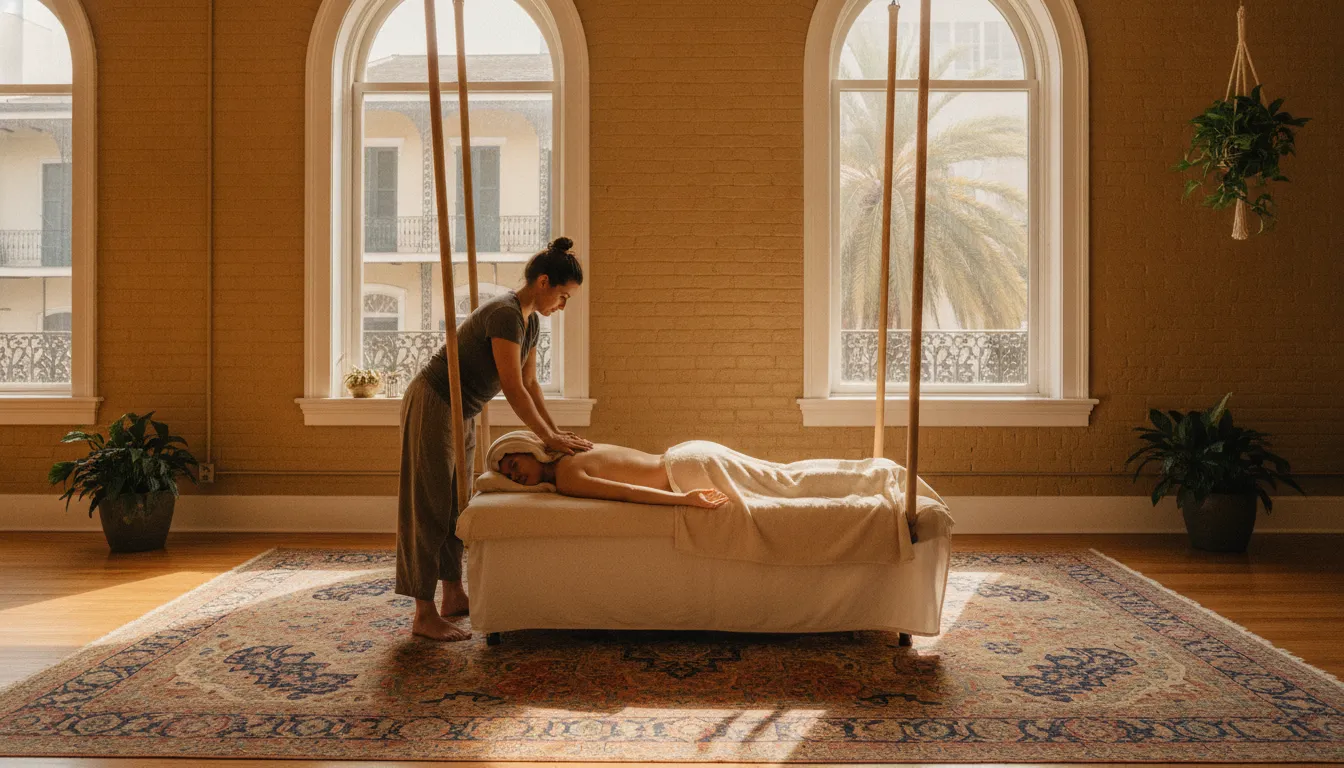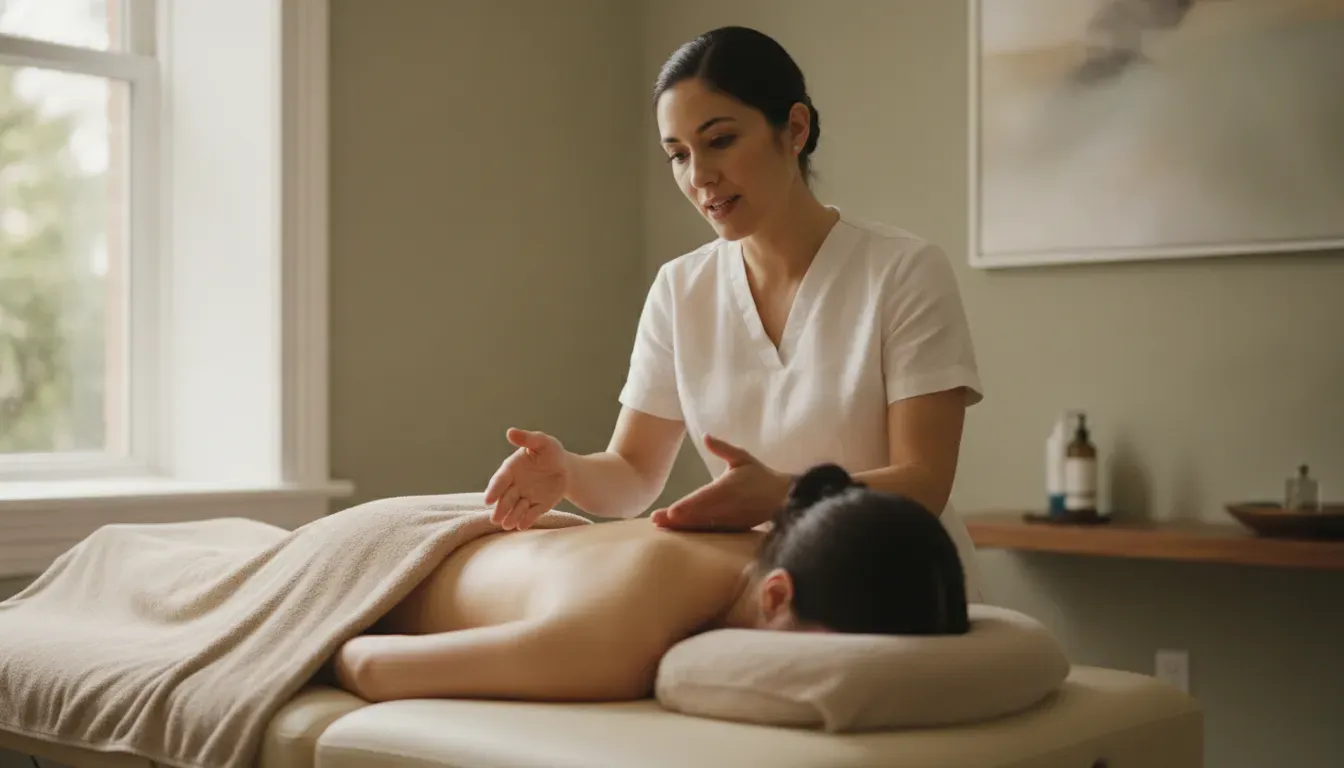

A therapist using their feet on your neck? It sounds a bit unusual, I know, but it’s one of the most effective ways to release that deep, stubborn tension. This is Ashiatsu, a specialized bodywork where therapists use overhead bars for balance and control. This allows them to apply their body weight with incredible precision. Instead of the poky feeling of thumbs or elbows, the foot delivers a smooth, gliding pressure that convinces tight muscles to relax. For an Ashiatsu massage, tight neck and shoulder muscles are met with a therapeutic force that encourages a profound, lasting release.
Key Takeaways
- Experience a different kind of deep tissue: Ashiatsu uses the therapist’s feet to apply broad, consistent pressure, which allows for a profound release of muscle tension without the sharp, poking sensation common in other deep tissue massages.
- Consider Ashiatsu for long-term neck issues: If you have chronic neck pain, persistent knots, or tightness from poor posture that traditional massages have not resolved, this technique’s unique approach may provide the lasting relief you need.
- Prepare for the best results: To make your session effective, hydrate well beforehand, communicate openly with your certified therapist about your pain points and pressure preferences, and have realistic expectations for post-massage soreness.
So, What Exactly Is Ashiatsu Massage?
If you’ve ever wished for a massage that could deliver deep, consistent pressure without the sharp discomfort of an elbow or thumb, you might be looking for Ashiatsu. With roots in traditional Asian bodywork, Ashiatsu is a unique barefoot massage technique. During a session, the therapist uses their feet to apply deep compression and long, gliding strokes that cover a large area of your body at once.
At Nola Bliss, this is one of our specialties. Our therapists use overhead bars for balance and support, allowing them to carefully control the amount of pressure they apply with their feet. This setup ensures you get a massage that is both incredibly deep and surprisingly gentle. It’s a fantastic option for anyone dealing with chronic muscle tension, especially in the back, hips, and legs, as it allows the therapist to sink into the muscle tissue more effectively than they could with their hands alone.
It’s More Than Just a “Barefoot Massage”
Ashiatsu is often called the art of barefoot massage, and for good reason. In this technique, the therapist uses their feet and body weight to deliver deep, broad, and consistent pressure. Instead of using hands and elbows, your therapist will use the soft, padded surfaces of their feet to work on your muscles. This allows for a much wider contact area, which helps distribute the pressure evenly and comfortably. The result is a deeply relaxing experience that feels less poky and more enveloping than a traditional deep tissue massage, making it a favorite for those who love firm pressure.
The History and Meaning of Ashiatsu
Ashiatsu isn’t a new trend; it has a rich history stretching back centuries. The practice has its origins in ancient bodywork from various parts of Asia, including Japan and China, where practitioners understood the healing power of using their feet. This wasn’t just about applying more pressure; it was a holistic approach rooted in the belief that the body can heal itself. By using the broad surface of the foot, therapists could deliver deep, sustained compression that traditional hand techniques couldn’t replicate, all while promoting a sense of balance and well-being. Over time, these ancient methods evolved into the modern, controlled practice we use today, where therapists are highly trained to use their body weight safely and effectively for a truly unique therapeutic experience.
Ashiatsu vs. Deep Tissue: What’s the Difference?
The most obvious difference between Ashiatsu and a traditional massage is the tool being used: feet instead of hands. While traditional techniques rely on hands, arms, and elbows, Ashiatsu uses the therapist’s feet to apply a deeper level of pressure than is usually possible with hands. A common misconception is that this must be painful. In reality, the opposite is often true. Many people find Ashiatsu Deepfeet Bar Therapy to be a gentler experience than a standard deep tissue massage because the foot’s broad surface feels more comfortable than a pointed elbow digging into a tight muscle. It’s the perfect blend of deep relief and soothing comfort.
A Combination of Powerful Therapies
Ashiatsu is more than just a deep massage; it’s a fusion of ancient wisdom and modern bodywork. The name itself comes from the Japanese words for “foot” (ashi) and “pressure” (atsu), hinting at its roots in therapies practiced for over 3,000 years. The magic lies in how it combines deep, compressive strokes with a gentle, soothing touch. By using their feet, a therapist can apply up to three times more pressure than with their hands, but because the foot’s surface is so broad, it feels less intense and more encompassing. This unique approach allows for a deep stretching and lengthening of your muscles, which helps improve flexibility and circulation for benefits that last long after you’ve left the table.
How Ashiatsu Massage Eases a Tight Neck
If you’ve ever had a traditional neck massage, you know the feeling of a therapist’s thumbs digging into a knot. While that can feel good, it sometimes doesn’t provide lasting relief. Ashiatsu massage takes a completely different approach. By using their feet, our therapists can deliver a type of pressure that’s uniquely suited to releasing the deep, stubborn tension that builds up in your neck and shoulders. It’s a game-changer for anyone dealing with chronic tightness.
Why Feet Can Deliver Better, Deeper Pressure
The secret to Ashiatsu’s effectiveness lies in the quality of the pressure. Instead of using thumbs or elbows, which can feel sharp and inconsistent, your therapist uses the broad, soft surface of their feet. This allows them to apply their body weight to deliver a deep, steady pressure that coaxes your muscles to relax. Think of it as a slow, melting sensation rather than a poking one. This consistent pressure is key for people with long-lasting neck and shoulder pain because it allows the nervous system to calm down and the muscle fibers to release without tensing up in defense.
Going Deeper Than Hands-On Massage Can
Because the foot provides a wider surface area, an Ashiatsu Deepfeet Bar Therapy session can reach muscle layers that are often inaccessible with hands alone. The pressure is distributed over a larger area, allowing the therapist to sink deeper into the tissue without causing discomfort. This broad, consistent pressure effectively targets the root of your neck pain, addressing the entire muscle group instead of just the surface-level knots. It’s a more holistic way to release the tension that can radiate from your neck into your upper back and shoulders, providing a more thorough and satisfying release.
Techniques Therapists Use for Neck Relief
During your session, your therapist will use a combination of specialized movements to address your specific needs. They use overhead bars for balance and control, ensuring every motion is precise and perfectly calibrated. You’ll experience long, gliding strokes that run the length of your neck and shoulder muscles, helping to elongate and stretch the tight tissue. Your therapist may also use deep compression techniques, using their heel or the ball of their foot to hold steady pressure on a particularly stubborn knot until it releases. This combination of flowing movements and targeted work makes it one of our most effective massage services for chronic neck issues.
Why Ashiatsu Works for Chronic Neck Pain
If you’ve been dealing with a stiff, aching neck for months or even years, you know that chronic pain requires an approach that gets to the root of the problem. This is where Ashiatsu massage truly shines. Its unique method of using deep, sustained pressure offers a powerful solution for long-term neck pain. The effectiveness of Ashiatsu Deepfeet Bar Therapy comes from its ability to release deeply held tension, improve muscle tissue health, and restore your body’s natural alignment. Let’s explore how this technique delivers such profound results.
The Magic of Sustained, Gliding Pressure
One of Ashiatsu’s biggest advantages is the quality of its pressure. Because therapists use their feet and body weight, they can apply deeper, more consistent pressure than with their hands. This allows them to sink into the dense layers of muscle and connective tissue in your neck and shoulders where chronic tension is often stored. Instead of the sharp feeling that can come with deep tissue work, Ashiatsu provides a broad, gliding pressure. This sustained contact encourages your muscles to relax and release gradually, without triggering the body’s natural tendency to tense up. It’s a more comfortable way to achieve deep release for long-standing knots.
Improving Your Body’s Natural Detox System
Chronic tension does more than just make your muscles feel tight; it can also slow down your body’s natural cleaning processes. When muscles are constantly contracted, it restricts blood flow and hinders the lymphatic system, which is responsible for clearing out metabolic waste from your tissues. The broad, deep strokes of an Ashiatsu massage are incredibly effective at stimulating circulation. This renewed blood flow brings fresh oxygen and nutrients to the affected areas while also encouraging the lymphatic system to flush away the waste products that contribute to inflammation and soreness. By improving this natural detoxification process, Ashiatsu not only releases the physical knots in your neck but also helps create a healthier environment for your muscle tissue to repair and recover, leading to more lasting relief.
How It Improves Blood Flow and Relaxes Muscles
Chronic neck pain often involves tight muscles with poor circulation, which traps waste products and prevents healing. The long, sweeping strokes of an Ashiatsu massage act like a pump, flushing out this stagnation and improving blood flow. This process helps break down stubborn knots and adhesions, those “sticky” spots that limit your flexibility. As circulation improves, your muscles become more pliable and relaxed. This not only eases immediate pain but also helps restore the overall health of the muscle tissue, making it more resilient. Better circulation is a core benefit of our massage services.
Lowering Stress Hormones Naturally
It’s no secret that chronic pain and stress are linked, often trapping you in a cycle that feels impossible to escape. When you’re in pain, your body releases stress hormones like cortisol, which in turn makes your muscles clench even more. This is where Ashiatsu massage can make a real difference. The deep, gliding pressure encourages your body to relax completely, a state where it can naturally lower stress hormones and slow your heart rate. This soothing effect on your nervous system gives your muscles permission to finally release that protective tension they’ve been holding onto. It’s more than just working out knots; it’s about creating a physiological shift that reduces stress and fosters a lasting sense of calm, a fundamental part of the therapeutic experience we aim for in every session.
Enjoy Lasting Relief and Better Movement
Ashiatsu massage does more than provide temporary relief; it helps create lasting change. By releasing deep-seated tension, this technique can help correct underlying issues like poor posture that contribute to chronic neck pain. When the muscles pulling your head and shoulders out of alignment finally relax, your body can return to a more natural position. This leads to a significant improvement in your range of motion. While one session can help, our experienced therapists find that regular treatments are key to truly healing and preventing the pain from returning, helping you move more freely long-term.
What Should I Expect an Ashiatsu Session to Feel Like?
If you’ve only ever had a traditional massage, you might be wondering what it feels like to have a therapist use their feet to work on your neck. It’s a common question, and the answer might surprise you. An Ashiatsu neck treatment is often described as a deeply relaxing and luxurious experience. Instead of the focused, sometimes sharp pressure you might feel from thumbs or elbows, the therapist’s foot provides a broad, consistent, and heavy pressure that feels both powerful and gentle at the same time.
Imagine a slow, gliding weight that melts into your tight neck and shoulder muscles, encouraging them to release without the poking sensation that can sometimes make you tense up. The therapist uses overhead bars for balance and support, giving them complete control over the amount of pressure they apply. This allows them to sink into the deeper layers of muscle tissue with a smoothness that hands simply can’t replicate. It’s a unique sensation that many people find more effective and more relaxing for stubborn neck tension.
The Sensation: Ashiatsu vs. Regular Massage
The most obvious difference between Ashiatsu and a traditional massage is the tool. While a traditional massage therapist uses their hands, forearms, and elbows, an Ashiatsu therapist primarily uses their feet. This changes the entire dynamic of the treatment. The foot is a larger, softer, and often stronger tool than an elbow or thumb. This allows for a much broader distribution of pressure, which can feel incredibly soothing on tight, sensitive neck muscles. Instead of a targeted, pointy pressure that digs into a knot, you’ll feel a deep, consistent compression that covers a wider surface area, encouraging the entire muscle group to relax and let go.
Like a “Giant Hand” at Work
Many people describe the sensation of Ashiatsu as feeling like a “giant hand” is working on their muscles, and it’s a perfect analogy. The broad, padded surface of the therapist’s foot delivers a smooth, gliding pressure that feels both powerful and incredibly gentle. This allows our therapists to sink deeper into the tissue without the sharp discomfort that can come from a thumb or elbow, making it an ideal choice for chronic neck and shoulder pain. This sustained, consistent pressure is key; it helps calm your nervous system and encourages muscle fibers to release gradually, without tensing up in defense. The result is a deeply relaxing experience that feels less poky and more enveloping than a traditional deep tissue massage, making it a favorite for anyone seeking effective relief from stubborn tension through Ashiatsu Deepfeet Bar Therapy.
Is It Supposed to Hurt? (Good vs. Bad Pain)
One of the biggest myths about Ashiatsu is that it must be painful because the therapist is using their full body weight. The opposite is actually true. Because the pressure is applied with the broad surface of the foot, it feels less invasive and is often perceived as less painful than a deep tissue massage using elbows. There’s a clear difference between the “good”, therapeutic ache of a muscle releasing and a “bad,” sharp pain. The goal of Ashiatsu Deepfeet Bar Therapy is to work with your body, not against it. Your therapist will communicate with you to ensure the pressure is just right, providing deep relief without causing discomfort.
A Step-by-Step Look at Your Appointment
During your Ashiatsu neck treatment, you’ll be comfortably positioned on a massage table. Your therapist will use overhead bars for balance, allowing them to skillfully apply and adjust pressure with their feet. You can expect to feel long, flowing, gliding strokes along your neck, shoulders, and upper back. The therapist may also use deep compression techniques, where they apply sustained pressure to specific tight spots to help them release. Communication is always important during any massage, so don’t hesitate to speak up if you want more or less pressure. The entire session is designed to be a deeply relaxing experience that leaves your neck feeling looser and more mobile.
Session Length and Therapist Preparation
Ashiatsu sessions are often scheduled for 75 or 90 minutes to give your therapist enough time to work deeply and methodically through the layers of muscle in your neck and back. Preparation is a two-way street. On our end, every Nola Bliss therapist is highly trained and certified, using overhead bars for balance to deliver precise, controlled pressure. To help them help you, the best thing you can do is arrive hydrated and be ready to communicate. Let your therapist know about your specific pain points and pressure preferences. This partnership ensures your session is perfectly tailored to your needs, making it a truly effective and relaxing experience.
Can Ashiatsu Help My Specific Neck Problem?
If you’re dealing with neck pain, you know it can stem from a variety of causes, from a single bad night’s sleep to years of built-up tension. While many types of massage can offer temporary relief, Ashiatsu provides a uniquely effective approach for several specific and persistent neck conditions. Its ability to deliver deep, consistent pressure makes it a powerful tool for releasing tightness that other methods might not reach. Let’s look at the common neck issues that respond especially well to this barefoot massage technique.
Finally Releasing Stubborn Knots and Aches
Do you have a deep, persistent knot in your neck or shoulder that never seems to go away? For this kind of long-lasting pain, Ashiatsu Deepfeet Bar Therapy can be a game-changer. Because the therapist uses their feet and body weight, they can apply much deeper and more sustained pressure than is possible with just hands or elbows. This allows them to sink into the deeper layers of muscle and fascia where chronic trigger points hide. The broad surface of the foot provides a pressure that is both deep and gentle, coaxing stubborn muscles to release without the sharp discomfort that can sometimes come with other deep tissue techniques.
Counteracting “Tech Neck” and Stress Tension
Hours spent hunched over a computer or looking down at your phone can create significant tension in your neck and shoulders. This is often made worse by daily stress, which causes us to unconsciously tighten these same muscles. Ashiatsu is fantastic for counteracting these effects. The long, gliding strokes of the therapist’s feet can cover the entire upper back and neck, soothing overworked muscles and calming the nervous system. This deep relaxation helps reduce stress and can also help correct poor posture by releasing the chronic tightness that pulls your head and shoulders forward. You’ll leave feeling looser, taller, and more at ease.
Soothing Tight Shoulders and Upper Back Pain
Neck pain is rarely an isolated issue. More often than not, it’s connected to tightness in the shoulders, chest, and upper back. A key benefit of Ashiatsu is its ability to treat these related areas comprehensively. Your therapist can use their feet to apply broad, consistent pressure across your entire trapezius muscle, from your neck down to your mid-back. They can also address the rhomboids between your shoulder blades and other muscles that contribute to neck strain. By treating the entire muscle group as a connected system, Ashiatsu addresses the root of the problem, not just the symptom, leading to more significant and lasting relief across all our massage services.
Addressing Other Common Conditions
While Ashiatsu is a fantastic solution for neck pain, its benefits extend throughout the entire body. The same principles that make it so effective for your upper body—deep, consistent pressure and long, gliding strokes—are just as powerful for addressing issues in the lower back, hips, and legs. Many of our clients find incredible relief from conditions like sciatica, chronic lower back pain, and even the persistent tightness that comes from sitting too long or working out hard. It’s a truly holistic treatment that recognizes how interconnected the body is, offering a comprehensive approach to pain relief that goes far beyond just one area.
From Sciatica to Tight Hamstrings
If you’ve ever experienced the sharp, radiating pain of sciatica, you know how debilitating it can be. Ashiatsu offers a unique way to address this by targeting the deep muscles of the hips and glutes, like the piriformis, which can compress the sciatic nerve. The therapist’s ability to apply sustained, broad pressure helps release these deep muscles more effectively and comfortably than pointed thumbs or elbows ever could. This same logic applies to chronically tight hamstrings. The long, sweeping strokes of an Ashiatsu Deepfeet Bar Therapy session can stretch and lengthen the entire back of the leg, from the glutes down to the knee. This helps improve flexibility and provides lasting relief for athletes, runners, or anyone who spends a lot of time sitting. It’s a powerful way to restore balance to your lower body.
Is Ashiatsu Massage Safe for Me?
Ashiatsu massage is a powerful and effective therapy, especially for deep-seated neck and shoulder tension. The broad, consistent pressure from the therapist’s feet can work wonders on tight muscles. However, because it involves such deep pressure, it’s not the right fit for every person or every condition. Your safety and comfort are always the top priority, so it’s important to understand when Ashiatsu is a great choice and when another type of massage might be a better option for you.
Think of it like any specialized treatment. While it offers incredible benefits, there are certain situations, known as contraindications, where it’s best to proceed with caution or choose a different path. This isn’t about limiting your options; it’s about making sure you get the most healing and positive experience possible from your session. A professional therapist will always conduct a thorough intake to discuss your health history and ensure the treatment is perfectly suited to your needs.
A Few Key Safety Precautions
While our therapists are experts at tailoring the pressure for your comfort, certain health conditions make Ashiatsu a no-go. This type of deep compression is generally not recommended if you are pregnant, have had recent surgery (especially within the last six months), or have conditions like osteoporosis, advanced diabetes, or high blood pressure that isn’t well-managed. It’s also best to avoid it if you have varicose veins, stents, or are currently taking blood thinners. If you fall into one of these categories, don’t worry. We offer wonderful alternatives, like a soothing prenatal massage for expectant mothers.
Important Contraindications to Know
This is why being completely open on your intake form and with your therapist is so important. The deep, gliding pressure of Ashiatsu is incredibly therapeutic, but it can be risky for individuals with certain health issues. Your safety always comes first, so we need to know about any conditions that might make deep pressure a bad idea. This includes things beyond the major contraindications, like recent injuries, skin infections, or even just feeling under the weather with a cold. Our goal is to give you a truly healing experience, and if Ashiatsu isn’t the right fit for you on a particular day, our therapists can always recommend another wonderful option from our full range of services to help you feel your best.
Who Should Talk to a Doctor First?
If you have a serious or chronic medical condition, it’s always a smart move to check with your doctor before booking an Ashiatsu session. This is especially true if you’ve had recent injuries, particularly to your neck or spine, or if you experience unexplained numbness or tingling. Your doctor knows your health history best and can give you the green light, ensuring that a deep tissue massage is a safe and beneficial choice for you. We want you to feel confident and relaxed, and a quick chat with your physician can provide that peace of mind. Our full menu of massage services offers plenty of options to discuss with your doctor.
Learning to Listen to Your Body’s Signals
Communication is absolutely essential during any massage, and especially during an Ashiatsu session. There’s a big difference between the “good hurt” of a muscle releasing and actual pain. You should never feel sharp, pinching, or unbearable discomfort. Your therapist is a highly trained professional who relies on your feedback to deliver the perfect amount of pressure. Never hesitate to speak up if something doesn’t feel right. Our Ashiatsu Deepfeet Bar Therapy specialists are dedicated to creating a session that is both effective and comfortable for you from start to finish.
Your First Ashiatsu Session: How to Prepare
If you’re trying Ashiatsu for the first time, you might be wondering what to do to get ready. A little preparation can go a long way in making your session as effective and comfortable as possible. Think of it as setting the stage for deep relaxation and relief. By taking a few simple steps before you even get on the massage table, you help your body and your therapist achieve the best results for your tight neck and shoulders.
Simple Steps to Take Before Your Appointment
The single most important thing you can do is hydrate. Seriously. Try to drink plenty of water for a couple of days leading up to your appointment and for a few days after. Well-hydrated muscle tissue is more pliable and responsive to deep pressure, which helps your therapist work more effectively. Staying hydrated also helps your body flush out metabolic waste released from your muscles during the massage. This can significantly reduce any post-session soreness. It’s a simple step, but it makes a world of difference in how you’ll feel during and after your treatment.
The Importance of Hydration
To get the most out of your Ashiatsu session, the best preparation is also the simplest: drink plenty of water. We recommend increasing your water intake for a couple of days before your appointment. When your muscle tissue is well-hydrated, it becomes more pliable and responsive, allowing your therapist to work more effectively into those deep layers of tension in your neck and shoulders. Think of it like trying to stretch a dry, brittle rubber band versus a new, flexible one. Afterward, continuing to hydrate helps your body flush out the metabolic waste that gets released from your muscles during a deep session. This simple step can significantly reduce post-massage soreness, helping you enjoy the full, lasting benefits of your Ashiatsu Deepfeet Bar Therapy.
How to Communicate With Your Therapist
Communication is everything. Your massage is a partnership between you and your therapist, and our team of highly trained professionals is here to listen. Before the session begins, be open about what’s going on with your neck. Point out the exact spots that hurt, describe the type of pain, and mention any activities that make it worse. During the massage, don’t hesitate to speak up. Let your therapist know if the pressure is perfect, too light, or too intense. Your feedback allows them to customize the treatment in real-time, ensuring you get the relief you came for without any unnecessary discomfort.
What to Realistically Expect from One Session
As with any deep tissue work, it’s normal to feel some soreness the next day. Think of it like the feeling after a really good workout. Your muscles have been worked in new and profound ways, and that tenderness is a sign that change is happening. The key is to relax and trust the process. An Ashiatsu massage feels different from a traditional one, but the deep, consistent pressure is incredibly effective for releasing chronic tension. Go in with an open mind, breathe through the session, and get ready to experience a new level of freedom in your neck and shoulders.
Aftercare: What to Do Post-Massage
Rest and Rehydrate to Maximize Benefits
The great work doesn’t stop when you leave the massage table. To get the most out of your session, your top priority is to hydrate. Drinking plenty of water after your massage helps your body flush out the metabolic waste that was released from your deep muscle tissues. This simple step can make a huge difference in reducing any next-day soreness. And if you do feel a bit tender the day after—similar to how you might feel after a challenging workout—know that it’s completely normal. This is a good sign! It means your muscles have been worked in profound ways and are beginning to release long-held patterns of tension. By prioritizing rest and rehydration, you help your body integrate the deep work of your Ashiatsu Deepfeet Bar Therapy, ensuring you enjoy the full, lasting benefits.
How Do I Find a Great Ashiatsu Therapist?
Finding the right massage therapist is always important, but it’s especially true for a specialized technique like Ashiatsu. Because the therapist uses their body weight to apply deep, gliding pressure with their feet, proper training is essential for both safety and effectiveness. You want to be in the hands, or rather, on the table, of someone who truly knows what they’re doing. A great Ashiatsu therapist can deliver incredible relief, so taking a few extra steps to find a qualified professional is well worth the effort.
Why Ashiatsu Certification Is a Must
First things first, make sure any therapist you consider is certified in Ashiatsu. This isn’t a modality that can be learned in a weekend workshop. It requires in-depth training and a deep understanding of anatomy and pressure application. Look for credentials from a reputable organization, such as a certification in Deepfeet Bar Therapy. Here in New Orleans, we take this training seriously; Nola Bliss is the only certified training center for Ashiatsu Deepfeet Bar Therapy on the entire Gulf Coast. A properly trained therapist will have completed extensive, hands-on coursework to master the art of barefoot massage, ensuring you get a safe and therapeutic session every time.
Finding a Qualified Practitioner in New Orleans
When you’re looking for a qualified practitioner in New Orleans, you’re in luck. The city has a high standard for therapeutic bodywork. Start by looking at a studio’s website. Do they specifically mention “Ashiatsu Deepfeet Bar Therapy” and talk about certification? A reputable studio will be proud of their team’s credentials. You should also check out the therapist bios. Look for practitioners who have dedicated their careers to this specific modality. At Nola Bliss, for example, you can learn about our dedicated team of highly trained specialists who are not only certified but have a true passion for this work. Reading reviews from other clients who have received Ashiatsu can also give you confidence in your choice.
Smart Questions to Ask Before You Book
Once you’ve found a certified therapist, don’t be shy about asking a few questions before you book. A confident and experienced practitioner will be happy to talk with you. You can ask where they received their training and how long they’ve been practicing Ashiatsu specifically. It’s also a great idea to ask how they approach working on sensitive areas like the neck. Their answer will give you a good sense of their expertise and whether their style is a good fit for you. The goal is to find a therapist you can trust, like the dedicated professionals on our team of experts, who are passionate about their craft and committed to your well-being.
Ashiatsu or Deep Tissue for Neck Pain?
When you’re dealing with a persistent ache in your neck, you want a solution that works. Both traditional massage and Ashiatsu can offer relief, but they go about it in very different ways. Understanding the key differences can help you choose the treatment that will finally address the root of your discomfort. Let’s break down how each technique compares when it comes to tackling neck pain.
Which One Delivers Better Results?
The main difference comes down to the tools: hands versus feet. A traditional deep tissue or Swedish massage uses hands, thumbs, and elbows to apply focused pressure. This is great for many issues, but sometimes it can feel sharp or may not reach the deepest layers of tension.
On the other hand, Ashiatsu Deepfeet Bar Therapy uses the therapist’s feet to deliver deep, broad, and consistent pressure. Because the foot is a larger tool, the pressure feels more distributed and can sink into muscles without the poking sensation of a thumb or elbow. This allows the therapist to effectively reach those stubborn, deep-seated knots in your neck and shoulders that hand-based techniques might struggle to release.
Is Ashiatsu the Right Choice for You?
If you feel like you’ve tried everything for your chronic neck pain with little success, Ashiatsu could be the right fit. It’s especially effective for those who have long-lasting tightness or feel that other massages just don’t go deep enough. If you’re someone who constantly asks for more pressure during a massage, you’ll likely appreciate the sustained, deep compression that Ashiatsu provides.
The best way to know for sure is to talk with a professional. An experienced therapist can listen to your concerns and help you decide. When you book a session, be open about your pain levels and what you hope to achieve. Our team of therapists is highly trained to customize your treatment, ensuring the pressure is both effective and comfortable for you.
Related Articles
Frequently Asked Questions
Will an Ashiatsu massage for my neck hurt? This is the most common question we get, and it’s a great one. The short answer is no, it shouldn’t hurt. While the pressure is deep, it’s also very broad and consistent because the therapist uses the soft surface of their foot. This feels more like a deep, melting compression than the sharp, poky feeling you might get from an elbow. Your therapist is in complete control using overhead bars and will communicate with you to find the perfect pressure that feels therapeutic and relieving, not painful.
Is it sanitary for the therapist to use their feet? Absolutely. We treat sanitation with the utmost seriousness. Our therapists follow a strict hygiene protocol, thoroughly scrubbing their feet and sanitizing them before every single session, just as they would with their hands. The linens on the massage table are always fresh for each client. You can rest assured that the practice is just as clean and professional as any traditional massage.
How can a foot effectively work on a smaller area like the neck? It might seem counterintuitive, but the foot is an incredibly versatile tool. Our highly trained therapists use different parts of their foot, like the heel or the ball, to apply precise pressure to specific knots and trigger points in your neck and shoulders. The overhead bars give them exceptional balance and control, allowing them to adjust the pressure and angle with expert precision to release tension exactly where you need it.
How often should I get an Ashiatsu massage for chronic neck pain? The ideal frequency really depends on your specific situation, including how long you’ve had the pain and what your daily activities are like. For long-standing issues, many clients find that starting with a session every one to two weeks helps create significant, lasting change. As you start to feel better and your mobility improves, you can transition to a maintenance schedule, perhaps once a month, to keep the tension from returning.
Will I be sore after the massage? It’s possible to feel some mild soreness the day after a deep session, much like you would after a good workout. This happens because the deep pressure has worked on muscles that were tight and holding tension for a long time. This feeling is temporary and a sign that your body is processing the therapeutic work. Drinking plenty of water after your session can help minimize any soreness and speed up your body’s recovery process.