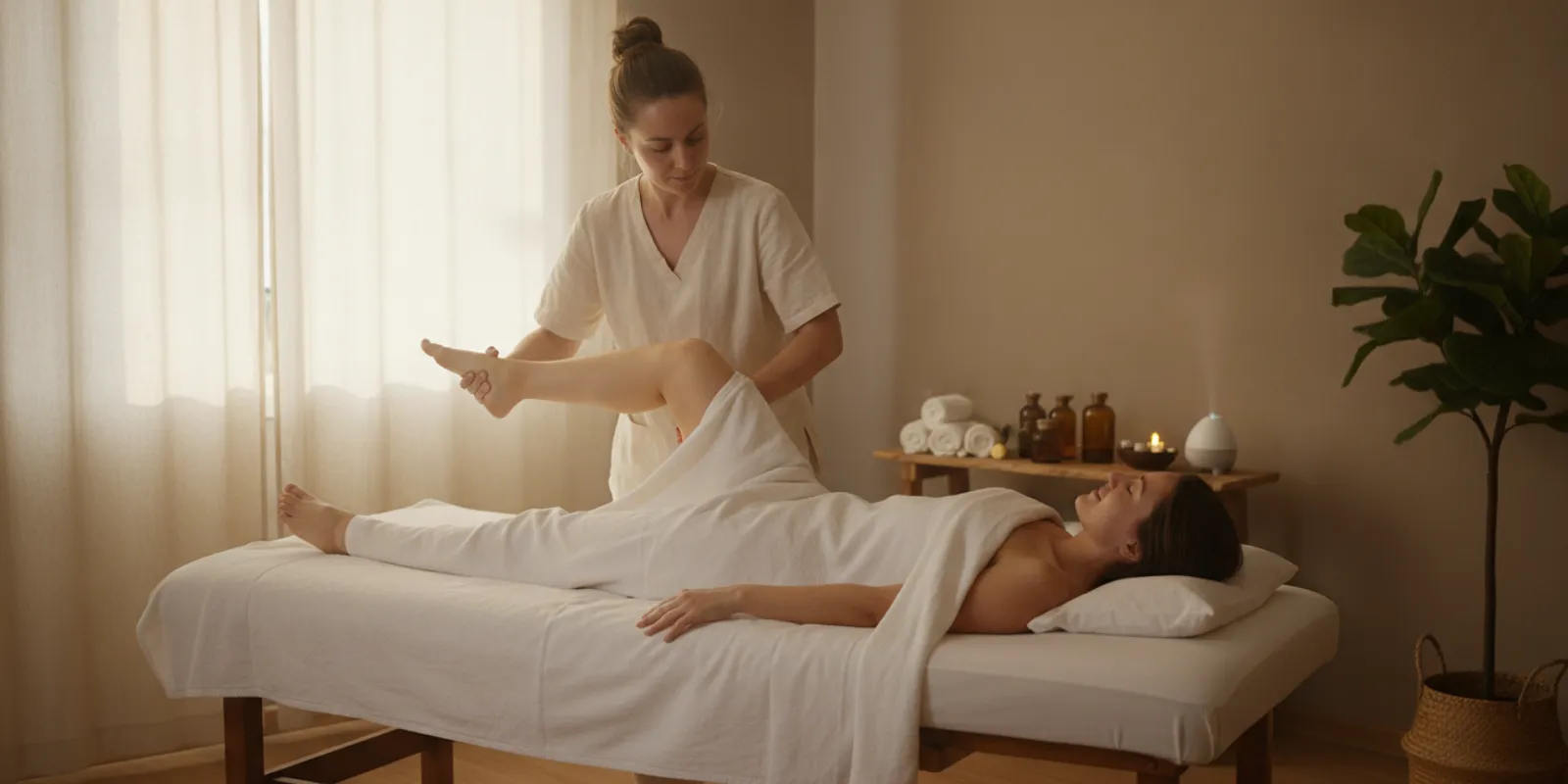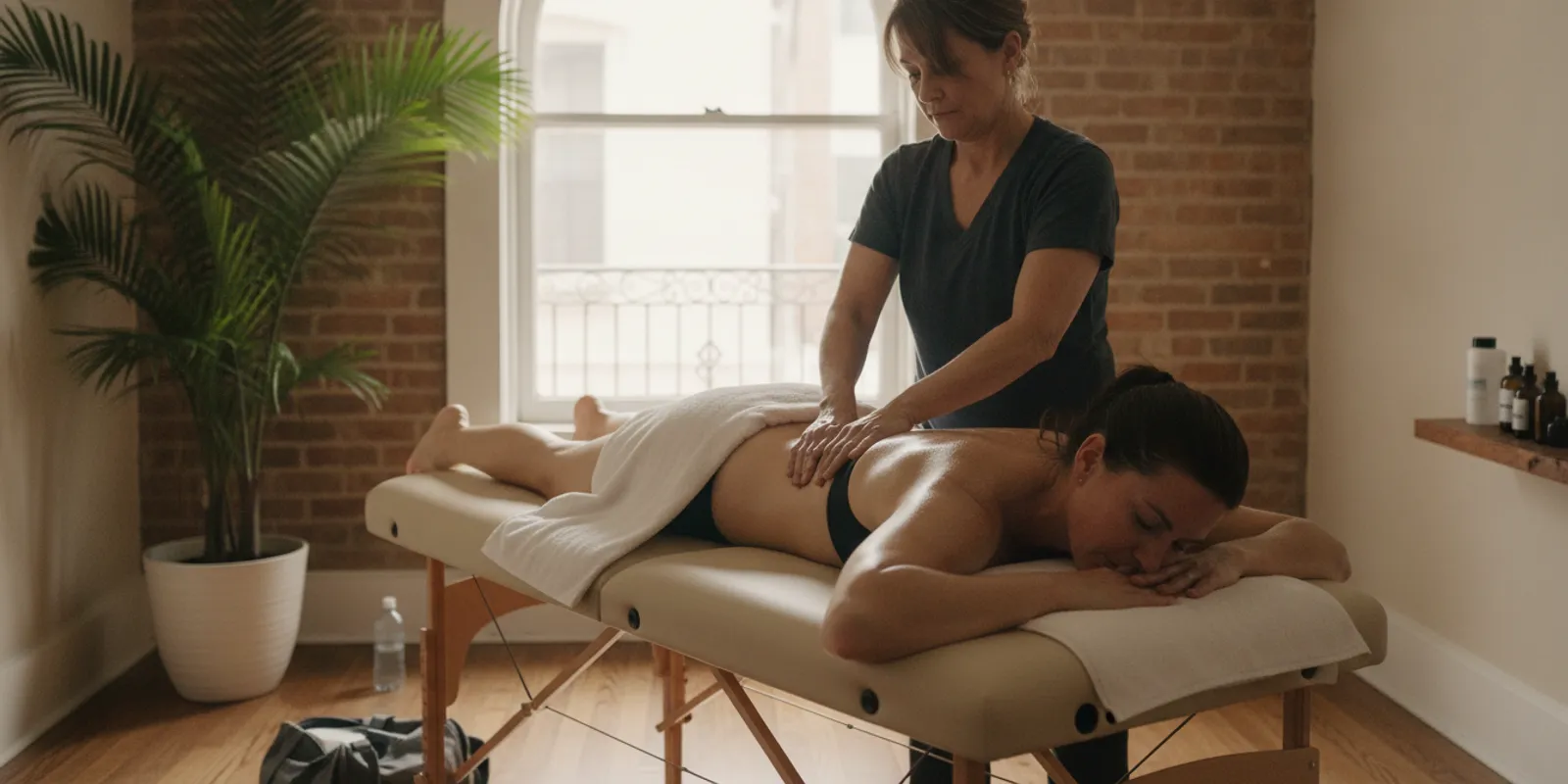
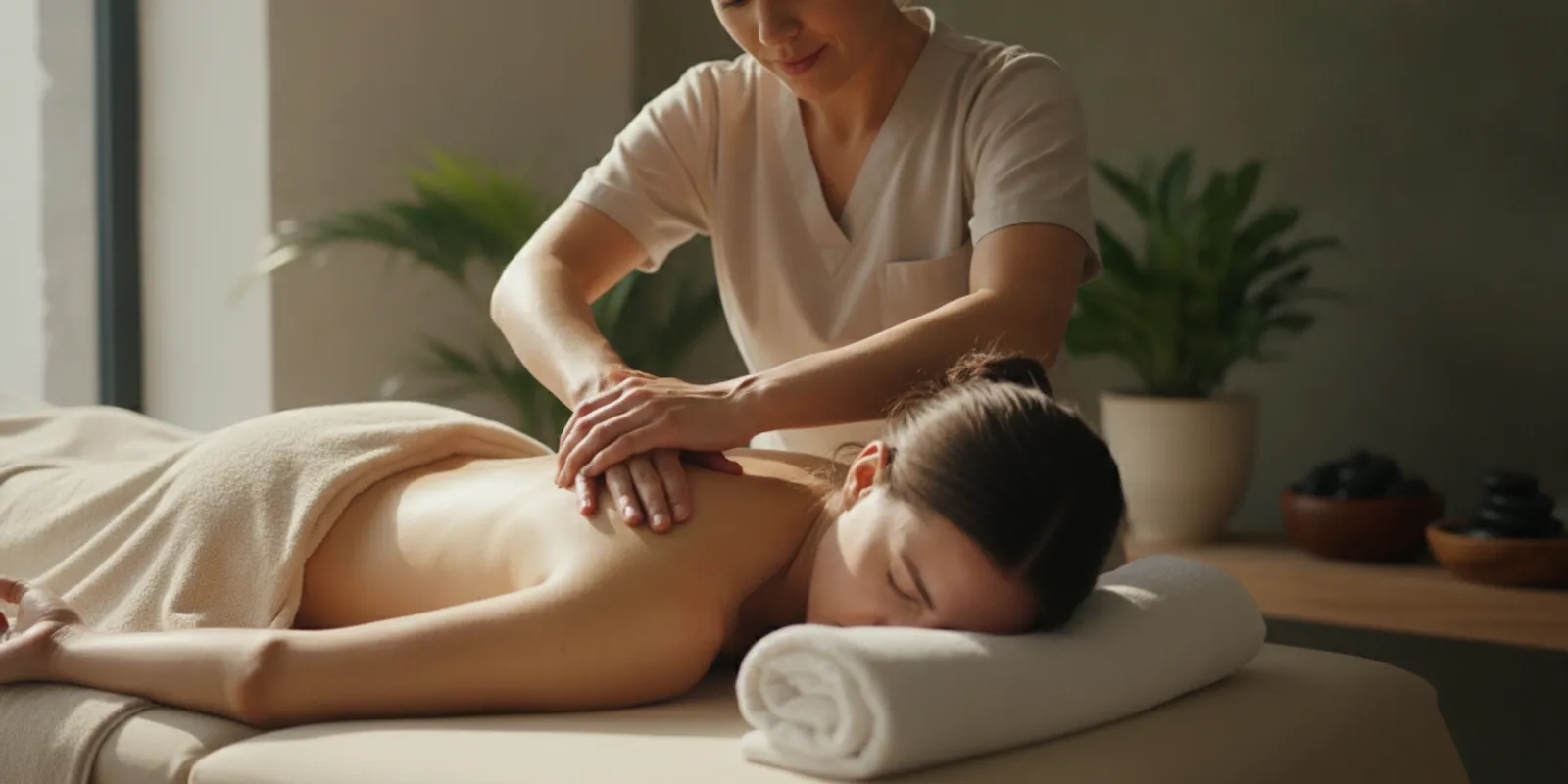
When a spot in your shoulder, neck, or back feels tight and tender, it is natural to look for relief. Massage for muscle knots may help reduce sensitivity and make movement feel easier for some people, but it is not a guaranteed fix for every cause of pain. Knowing what a session can and cannot do helps you choose a safe next step.
Ask about scheduling a massage
What do people mean by a muscle knot?
“Muscle knot” is a common, informal term for a localized area that feels tight, tender, or ropy. A clinician may use different terms depending on an examination, such as a tender point or trigger point. Feeling a lump or sore patch does not by itself identify what is happening in the tissue, and not every painful area is a muscle knot.
People often notice these areas around the neck, shoulders, upper back, or hips. The sensation can be local, or pressure on one spot may seem to spread discomfort nearby. Pain can also come from joints, nerves, an injury, or other causes, so persistent or unusual symptoms deserve more than self-diagnosis. A description such as “a tight band near my shoulder blade” is useful even if you do not know what to call it. You can describe the location and sensation without deciding what structure is responsible.
Why might muscle knots develop?
There is not always one clear cause. A sensitive tight area may appear alongside repeated or sustained positions, unfamiliar physical effort, stress-related muscle tension, or a period of reduced movement. Sleep, workload, training changes, and prior injuries can also shape how the body feels. These are possible contributors, not proof that any one habit caused a particular pain.
For example, a person who spends hours at a desk may notice shoulder tension, while someone who has recently increased lifting may feel soreness in a different area. In both cases, the sensation may settle as the body adapts, or it may continue for reasons that need assessment. A therapist can ask about the pattern and help determine whether massage is an appropriate comfort measure, but massage does not diagnose the source.
It can help to look for patterns rather than blame one posture or activity. Did the discomfort begin after a new task, a long trip, a change in exercise, or a stretch of poor sleep? Does it ease when you move, or does activity make it worse? These details do not prove a cause, but they make a conversation with a therapist or clinician more specific. If the pain is new after an injury, severe, or accompanied by other symptoms, do not assume a tight spot is the whole explanation.
How may massage for muscle knots help?
A massage therapist may use gradual, hands-on pressure around a sensitive area, along with broader work on nearby muscles. The aim is to support comfort and relaxation, not to force tissue into submission. Pressure should be adjusted to your feedback. More intensity is not automatically more effective, and sharp, burning, electric, or escalating pain is a reason to speak up and have the technique changed or stopped.
Research reporting on trigger-point massage has found changes in pressure pain thresholds after massage applications, but that does not establish a cure or guarantee a lasting result for every person. The National Library of Medicine’s summary on muscle knots describes findings about pressure pain thresholds. Cleveland Clinic also explains that direct pressure and massage may help loosen a tight area, while individual experiences vary. Read its overview of trigger point massage for general background.
Massage can be one part of a broader approach to managing discomfort. It is not a substitute for medical evaluation when symptoms are severe, worsening, unexplained, or associated with other concerning signs. If you have a health condition, recent injury, or questions about whether massage is suitable, check with a healthcare professional first.
What can a therapist do during a session?
A useful session starts with a conversation. Tell the therapist where you feel discomfort, when it began, what seems to change it, and whether you have had an injury or medical evaluation. Mention medications, relevant health conditions, and any areas that should not be touched. You can ask questions, request less pressure, or pause at any point.
The therapist may begin with broader, gentler contact before focusing on a tender spot. They may work around it rather than pressing directly on the most sensitive point, and may check in frequently. Depending on your goals and comfort, a session could include Swedish techniques, deeper pressure, or another approach. NOLA Bliss describes its massage services and its specialized Ashiatsu massage; the right approach depends on your preference and situation, not on a need to tolerate intense pressure.
Some clients prefer a focused session; others want attention to the surrounding area as well. A therapist may suggest changing position or adjusting the pressure based on your feedback. You remain in control of what feels acceptable. The goal is a comfortable, collaborative experience, not a test of how much discomfort you can withstand.
How to communicate during hands-on work
Useful feedback can be simple and immediate. You might say, “That is too much pressure,” “Please stay around the area,” or “I feel tingling rather than comfortable pressure.” You do not need to wait until a technique becomes intolerable. A therapist can reduce pressure, change the angle, broaden the contact, or stop working on that spot.
It is also reasonable to speak up if the sensation changes during the session. A pressure level that felt acceptable at first may become uncomfortable after a few minutes. Likewise, a tender spot may respond differently from the surrounding muscle. Frequent check-ins help keep the session aligned with your comfort rather than a preset idea of what the tissue should feel like.
What should you expect after massage?
People respond differently. You may feel more relaxed or notice easier movement, while tenderness can remain. Some mild, temporary soreness may occur after hands-on work, especially if the area was sensitive. Strong pain, new symptoms, or soreness that concerns you should not be treated as proof that the massage was effective.
Think of the outcome as a response to one session, not a promise of permanent change. Notice how you feel later that day and over the next day or two. If relief is brief or symptoms return, that does not mean you failed; it may mean the cause is ongoing or needs another kind of care. Discuss your experience with the therapist and consider a clinician’s advice when appropriate.
A practical way to assess your response is to compare a familiar activity before and after, without repeatedly testing the painful spot. For example, notice whether turning your head while getting dressed feels easier, or whether sitting through a routine task is more comfortable. Keep the comparison ordinary and gentle. A moment of reduced tenderness is useful information, but it does not tell you exactly why the pain occurred or guarantee that it will stay away.
If you experience a flare afterward, consider what changed and how intense it is. Avoid adding forceful self-massage or strenuous stretching to “undo” the soreness. If discomfort is mild and settles, you may simply choose comfortable movement and give the area time. If pain is severe, worsening, accompanied by weakness or numbness, or otherwise worrying, seek medical guidance rather than booking more pressure.
How do approaches to a tender area compare?
| Approach | What it involves | What to keep in mind |
|---|---|---|
| Gentle, broad massage | Comfortable strokes over a larger area | May suit people who want a gradual approach or find direct pressure too sensitive. |
| Focused pressure | Carefully adjusted pressure near a tender spot | Tell the therapist what you feel; pressure should remain tolerable and adjustable. |
| Self-care and movement | Comfortable movement, breaks from sustained positions, or gentle warmth if suitable | Avoid forcing painful stretches or pressing aggressively into a sore area. |
| Medical assessment | Evaluation by a qualified healthcare professional | Important for severe, unexplained, persistent, worsening, or concerning symptoms. |
These options are not mutually exclusive. A person might use gentle movement and adjust a workstation while arranging a massage, or seek medical evaluation first and ask whether hands-on work is appropriate. The point is to match the next step to the symptoms, not to treat every tender spot with the same technique. When choosing massage, the therapist should be willing to adapt or avoid an area rather than insist that a particular method is necessary.
What can you do between sessions?
- Change position regularly. If a posture seems to aggravate discomfort, take brief movement breaks and vary your position when practical. The aim is variety, not a perfect posture held rigidly all day.
- Use comfortable movement. Gentle activity within your tolerance may feel better than staying still, but stop anything that increases pain sharply. There is no need to push through a sudden or escalating symptom.
- Try warmth only if it feels appropriate. A comfortably warm compress may feel soothing for some people. Protect your skin and avoid heat where sensation is reduced or a clinician has advised against it.
- Keep track of patterns. Note when symptoms began, what affects them, and whether they are changing. This can help you explain the issue to a therapist or clinician.
- Avoid aggressive self-treatment. Forceful tools or repeated hard pressure can irritate an already sensitive area. Stop if symptoms worsen.
For a simple observation log, write down the date, the location, what you were doing when you first noticed it, and what changes the feeling. You might note whether it is local or travels, whether movement helps, and whether it interrupts sleep or normal tasks. Keep the notes descriptive rather than trying to label the condition. If you later seek care, a concise timeline is more useful than repeatedly probing the area to see whether it still hurts.
When should pain be evaluated by a medical professional?
Seek urgent medical help for sudden or severe symptoms, major injury, new weakness or numbness, difficulty breathing, chest pain, or other alarming changes. Contact a healthcare professional promptly if pain is worsening, does not improve, repeatedly returns, limits daily activity, or comes with fever, unexplained weight loss, or other symptoms that concern you. This list is not exhaustive; trust your judgment and seek advice when something feels wrong.
If you have a known medical condition, are recovering from surgery, or are unsure whether massage is suitable, ask your healthcare provider before booking. A massage therapist can adapt hands-on work within their role, but cannot replace diagnosis or treatment by a medical professional.
Pay attention to the overall pattern as well as the tender point. Pain that spreads, keeps returning, disrupts sleep, or limits normal movement may deserve assessment even if it feels like a tight muscle. The same is true when you cannot connect symptoms to a clear, short-lived strain or when the problem is not improving as expected. Do not wait for a massage appointment to address symptoms that feel urgent or alarming.
How can you prepare for a massage appointment?
Before the visit, be ready to describe the discomfort in plain terms: where it is, how long it has been present, what makes it better or worse, and whether it travels. Share relevant health information and explain your pressure preferences. You do not need to arrive with a diagnosis. If you have red-flag symptoms, seek medical advice rather than trying massage first.
Ask about the available techniques and what to expect from the session. NOLA Bliss offers therapeutic massage in downtown New Orleans; its about page provides studio background, and the contact page is the route for questions about arranging a visit. Visitors coming from nearby areas can review parking and access information before they travel.
A short checklist before you go
- Write down where the discomfort is and when it started.
- Recall any recent injury, change in activity, or health concern that may matter.
- Decide what pressure feels comfortable and which areas you want avoided.
- Ask questions about the approach before the session begins.
- Plan to speak up if the sensation changes or you want the therapist to stop.
Clear preferences help the therapist tailor the session, but they do not need to be complicated. You can arrive unsure of the exact technique you want. Focus on sharing what you have noticed and what outcome matters to you, such as feeling more comfortable during ordinary movement. If you are seeking a massage while visiting downtown, the Convention Center area information may help you plan the trip.
How can you make a careful next-step decision?
Start by separating two questions: whether your symptoms need medical attention, and whether massage might be a comfortable addition to your care. Urgent or concerning symptoms belong with a healthcare professional. If the symptoms are mild and you are considering massage for comfort, explain the pattern and ask how the therapist will adapt the session. You should never feel obliged to accept a technique that does not feel right.
It may help to set a modest, observable goal. Rather than expecting a knot to disappear permanently, you might hope for a more comfortable shoulder turn, easier relaxation, or a better understanding of what pressure suits you. Afterward, consider whether the change was helpful and how long it lasted. If the result does not meet your goal, revisit the plan instead of simply increasing pressure or assuming more sessions are automatically needed.
Choosing a therapist is also a conversation about boundaries. Ask whether the practitioner will check in, whether you can change your mind during the session, and what they recommend if a particular spot is too sensitive. A professional approach should allow for adjustments. If you are not comfortable with the plan, you can pause and decide on another option.
NOLA Bliss provides information about its massage services and appointment arrangements online. If you are deciding whether to book, you can contact the studio with questions and explain what you are hoping to address. That conversation is not a diagnosis; it is a way to clarify practical details and decide whether to arrange a visit.
Frequently asked questions about massage for muscle knots
Can massage break up a muscle knot?
Massage does not literally break apart a knot. It may help some people feel less sensitive or more comfortable, but results vary, and persistent pain may have another cause.
Should pressure on a knot hurt?
It may feel tender, but it should not be sharp, burning, electric, or intolerable. Tell the therapist right away so pressure can be changed or stopped.
How many sessions will I need?
There is no set number that fits everyone. The response depends on the cause of discomfort, your health, and your goals. Reassess how you feel rather than assuming a fixed course is necessary.
Can I massage a sore spot myself?
Gentle contact may feel comfortable, but avoid forceful or prolonged pressure. Stop if pain increases, and seek professional advice for persistent or concerning symptoms.
Contact NOLA Bliss about an appointment
Muscle knots can be frustrating, but a careful plan starts with listening to your symptoms, choosing tolerable care, and getting medical guidance when the situation calls for it.