If reaching overhead, turning to check behind you, or bending to tie your shoes feels more restricted than you would like, you may be wondering whether massage for flexibility could help. Massage can be one part of a broader mobility routine, but it is not a shortcut that permanently lengthens muscles. Hands-on work may help some people feel more comfortable moving; regular stretching and active movement let you practice the range you want to use. The best approach depends on your goals, preferences, and health history.
Ask about booking a massage session
What do flexibility and mobility mean in daily life?
Flexibility generally refers to how far a joint or group of joints can move. Mobility often describes how you use that movement with control to do a task. The ideas overlap, but they are not interchangeable. For example, you may be able to move a leg farther when it is supported than when standing on one leg. The first movement shows a range you can access with assistance; the second also calls for balance, strength, and coordination.
Many factors shape how movement feels. Joint structure, muscle strength, coordination, fatigue, activity level, comfort, and prior injury may all play a part. A sensation of tightness does not automatically mean a muscle is physically short. It can be a signal to pay attention, but it cannot by itself identify the cause. Massage is not a diagnostic exam and cannot determine why a joint feels restricted.
Start with a specific everyday goal rather than an abstract ideal of being flexible. You might want to turn your head more comfortably while driving, reach a shelf without bracing, or sit on the floor with less discomfort. Those goals focus on useful movement and comfort, not on achieving a particular shape or a dramatic stretch.
How may massage complement stretching and mobility habits?
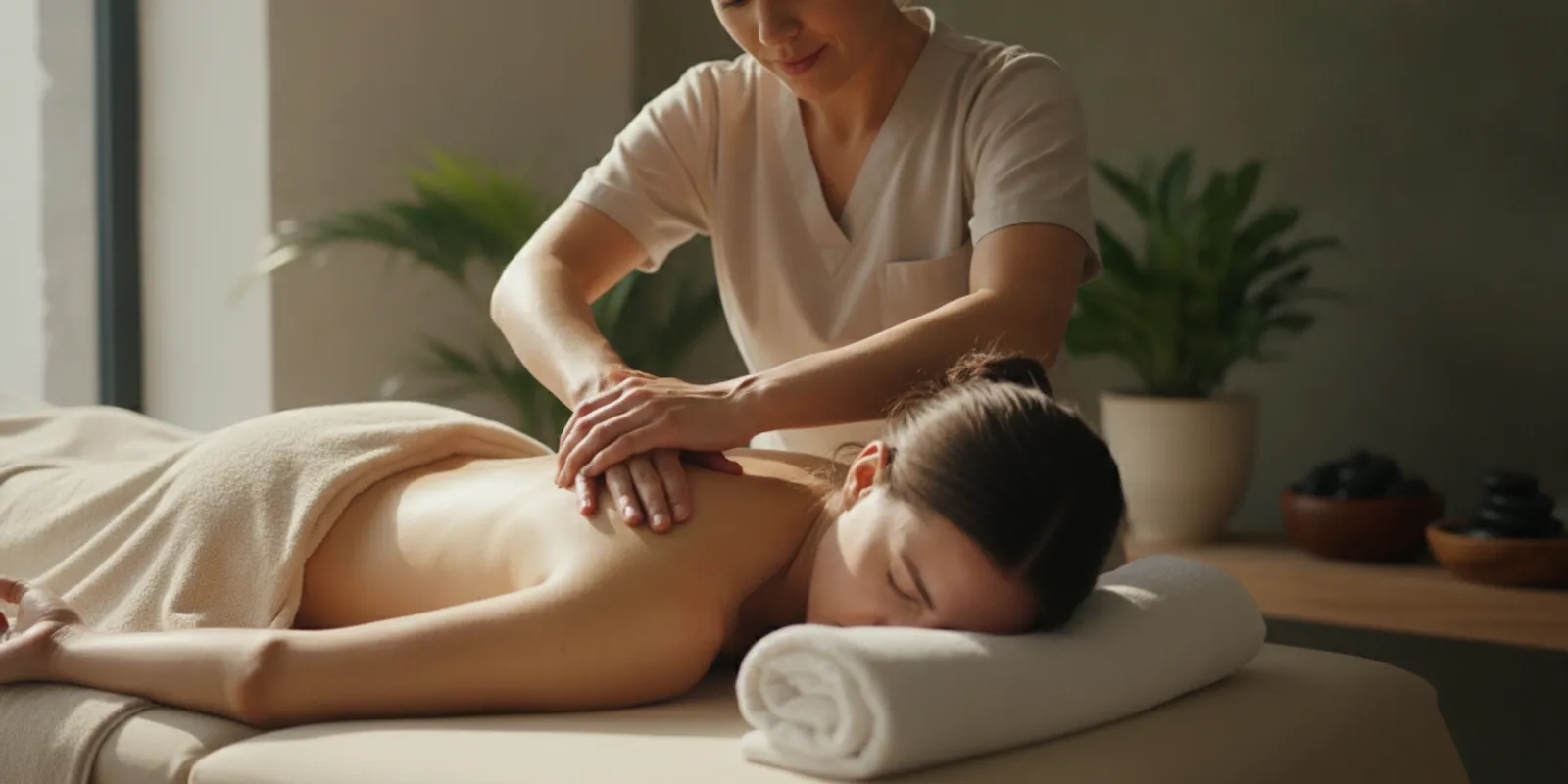
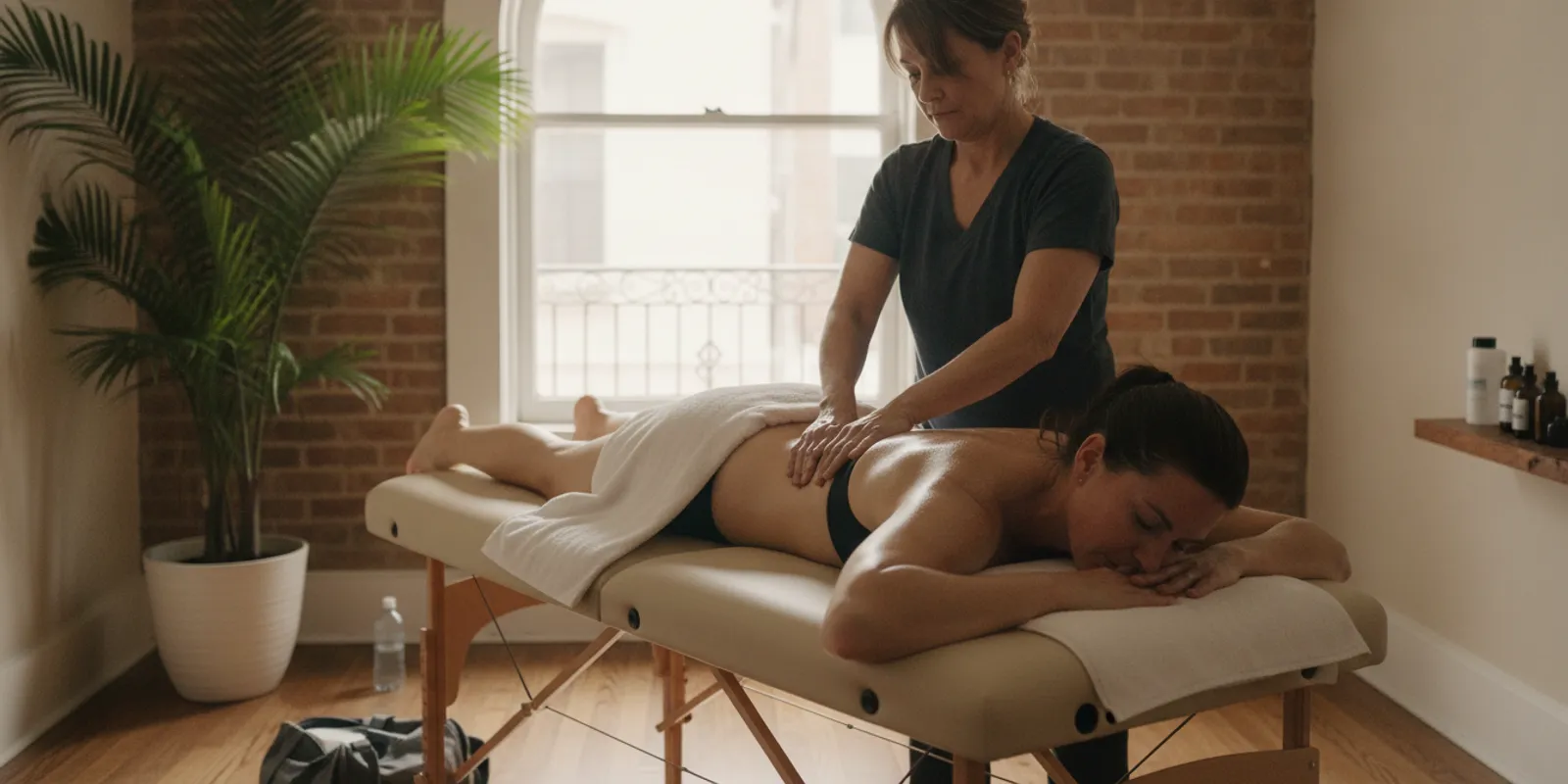
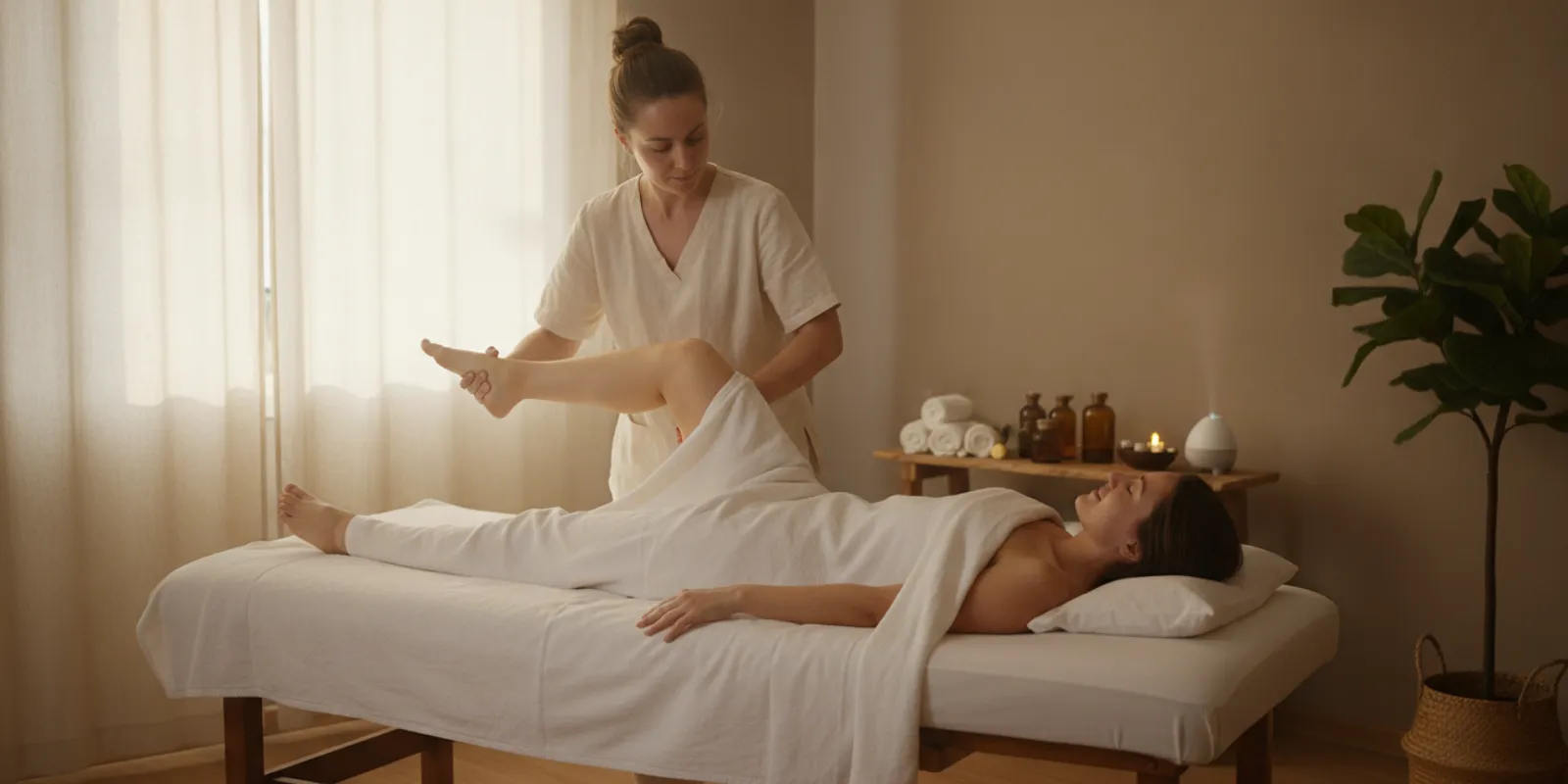
Massage involves hands-on work with soft tissues. Techniques and pressure vary according to the approach and the client’s preferences. Some massage practitioners may also include stretching techniques. The American Massage Therapy Association’s overview of isolated stretch therapy describes massage therapists using stretching to support mobility and movement. This describes a possible component of bodywork, not a promise that massage alone creates lasting flexibility or that one method suits everyone.
Some people may feel more relaxed or notice temporary ease after a session. That can make it more comfortable to explore a familiar movement, but it does not prove that tissue has permanently changed. You do not need to push farther because you have had a massage. Let comfort, control, and your own response guide what you do next.
Stretching and active mobility practice serve a different role: they give you a chance to rehearse the motion you want to use. Strength and coordination help you control that motion. Massage may fit alongside these habits if you find hands-on work helpful. One simple framework is to use ordinary movement throughout your week, add gentle movement practice for a specific goal, and consider massage as optional support rather than as the whole plan.
If you are comparing approaches, NOLA Bliss Massage lists its massage services, including Swedish and deep tissue massage as well as Ashiatsu. Technique and pressure should reflect your comfort and preferences; more intensity does not automatically mean more flexibility. You can ask questions about a session before deciding what feels appropriate.
What can you realistically expect from a session?
A useful conversation begins with your goal. Describe the movement that feels limited, when you first noticed the change, what seems to affect it, and whether you are already stretching or exercising. Mention relevant health concerns, recent injuries, or areas that feel painful or sensitive. That context can help the therapist understand what you are asking for and discuss whether the session should be adjusted.
During the session, hands-on massage may focus on areas related to the movement you described. If a stretch or movement is included, it should be introduced at a pace that feels manageable. A stretch can feel noticeable, but you should not have to brace, hold your breath, or endure sharp pain. Speak up if pressure, positioning, or range is uncomfortable. You can ask for less pressure, a smaller movement, a pause, or a different approach.
Afterward, you may feel relaxed or notice that a familiar movement seems easier. You may also feel no clear difference. Responses vary, and one session is not a dependable test of long-term change. Avoid judging success by how far you can force a stretch immediately after bodywork. Instead, notice how ordinary movement feels and whether you can return to your usual activities comfortably.
NOLA Bliss Massage describes its work as professional therapeutic massage. Its about page offers information about the studio, and you can check parking and access details before a visit. Share the goal you have in mind rather than assuming a particular technique or pressure level is required.
How do massage, stretching, and active mobility compare?
These options can have different roles in a routine. You do not have to choose only one, and no single combination fits everyone. Use the comparison as a way to think through what you want to practice and what kind of support may suit you. It is not a treatment prescription.
| Approach | What it involves | Possible role | Realistic expectation |
|---|---|---|---|
| Massage | Hands-on work with soft tissues; methods and pressure vary | May support comfort or relaxation around an area that feels tense | Individual responses vary; a session does not guarantee a lasting range change |
| Stretching | Moving into and holding or repeating a comfortable lengthening position | Lets you practice a particular range of motion | Keep the movement controlled and comfortable; do not force pain |
| Active mobility | Moving joints through a manageable range using your own control | Rehearses movements you want to use in everyday life or activity | Progress may be gradual; consistency is more useful than forcing one session |
| Strength and coordination practice | Using muscles to control a movement or position | Helps you work on using the range you can access with control | Choose activity that fits your ability and health needs |
Consider someone who feels stiff after sitting for a long time. They might stand, walk briefly, and move through a few familiar ranges during the day. If they enjoy hands-on care, they might also choose massage. Someone returning to a sport may have different movement demands and could benefit from a qualified exercise or health professional’s guidance. The question is not whether massage replaces movement practice, but whether it fits safely and usefully alongside the other steps that matter to that person.
How can you build a sustainable flexibility routine?
Begin with a routine small enough to repeat. Choose one or two movements connected to a real task rather than trying to stretch every muscle at once. Move smoothly, breathe normally, and stay in a manageable range. Stop if a movement brings sharp pain, numbness, tingling, or a feeling of instability. Those are reasons not to push through and may call for professional guidance.
- Name the functional goal. Write down the action you want to make more comfortable, such as reaching, turning, or getting down to the floor.
- Choose an easy starting point. Try a familiar movement that you can perform without strain. Keep the range modest at first.
- Practice under your own control. Active movement gives you a chance to use the range rather than only being moved into it.
- Pay attention to your response. Notice how the movement feels during practice and afterward, instead of chasing a target angle.
- Adjust when needed. If symptoms repeatedly worsen or your range changes unexpectedly, pause and ask an appropriate professional for advice.
For example, if turning to look over one shoulder is your goal, you could start by noticing how that ordinary movement feels without forcing it. Then, if it is comfortable, practice a few slow turns within an easy range, keeping your posture relaxed. Stop before you strain or compensate by moving your whole body. The exact movement and amount of practice should suit your ability; there is no universal number of repetitions or minutes that guarantees progress.
If you already have a plan from a physical therapist, clinician, or coach, follow their advice rather than adding a conflicting routine. You can make a brief note of what you tried and how it felt, then keep, adapt, or stop the activity based on your response. This is more useful than repeatedly testing your maximum range, which can turn a comfort goal into a contest with your body.
Be patient when comparing how a movement feels. Comfort can vary from day to day with activity, fatigue, stress, and other ordinary factors. One unusually easy or difficult day does not necessarily show whether a routine is working. Look for a broader pattern in function over time. If your goal relates to a sport, job, or recovery from an injury, a qualified professional can help tailor movement practice to that demand.
Massage timing is a personal choice. Some people prefer bodywork when they feel generally tense; others keep it separate from their movement practice. If you have a massage before activity, keep the activity appropriate to how you feel. A relaxed sensation is not a reason to attempt a demanding movement for which you have not prepared. After a session, return to gentle, familiar movements before increasing intensity.
How can you evaluate whether your approach is helping?
Use the everyday task you chose as your reference point. Before changing your routine, notice how the movement feels in ordinary conditions: Is it comfortable? Do you need to compensate or hold your breath? After practicing for a while, check the same movement without forcing its limit. A practical improvement might be that you can complete the task with less hesitation or discomfort. It does not have to mean a dramatic increase in range.
Keep the comparison simple. Try to observe the same movement in a similar setting, and consider whether your activity or comfort is different that day. You might write down a brief note once in a while, rather than repeatedly testing the range. If you feel worse, stop the activity and consider whether you need professional advice. If nothing seems to change, that does not mean you should push harder; you can adjust the goal, choose a more comfortable movement, or ask a qualified professional to help you decide what is appropriate.
Massage can be one part of this review, but the appointment itself is not a scorecard. Notice whether you felt comfortable during the session and how your usual movement feels afterward and over time. Keep what is useful, communicate what was not, and avoid treating a temporary sensation of ease as proof of a permanent change.
What should you tell your massage therapist?
Clear, practical information can make a session more comfortable. Explain the movement you care about, how long you have noticed the restriction, and whether you have had an injury, surgery, or health concern that could affect pressure or positioning. Mention any area that is painful or sensitive. Tell the therapist what pressure feels comfortable and speak up if that changes during the session.
You can ask what a proposed technique will involve before it begins. If stretching is offered, you can request a slower pace, a smaller range, or no stretching. You do not have to accept a technique simply because it is suggested. Consent and ongoing communication matter throughout the appointment.
If you are curious about Ashiatsu, review the studio’s Ashiatsu service information and ask whether that approach fits your preferences. A particular massage style is not required to pursue a flexibility goal. For general context about professional learning, the studio also shares information about massage workshops and continuing education; workshops are different from an individual treatment, so check the page for the format and intended audience.
If your movement concern includes the neck or back, you can also read NOLA Bliss Massage’s guide to back and neck massage. Use general reading as background, not as a way to diagnose a new or worsening symptom.
When should you seek medical guidance first?
Massage is not a substitute for medical evaluation. Check with a health professional before booking or beginning a new flexibility routine if you have a recent injury, unexplained or worsening pain, significant swelling, new weakness, numbness or tingling, a known condition that affects movement, or uncertainty about whether massage is suitable for you. Seek prompt care for urgent or severe symptoms.
It is sensible to stop a movement if symptoms get worse while doing it. Do not ask a therapist to work directly over an acutely injured or unusually painful area without appropriate guidance. A clinician can assess the cause of a limitation and advise whether massage, exercise, or another form of care is appropriate. If you have an established care plan, follow the recommendations of the professional who knows your situation.
If you are unsure what to ask about a session, you can contact NOLA Bliss Massage with your questions before arranging a visit. For current service options, review the massage services page and discuss your preferences directly.
Frequently asked questions about massage for flexibility
Can massage make you permanently more flexible?
There is no guarantee that massage will create a permanent flexibility change. Some people notice temporary ease or comfort, while movement habits and many individual factors also matter. Set expectations around comfort and function rather than a promised result.
Should massage hurt to help with flexibility?
No. A session should not require you to endure sharp pain or brace against pressure. Tell your therapist what you feel and ask for an adjustment, pause, or different approach. More intense pressure is not automatically more helpful.
Is massage or stretching better?
They do different things, so one is not universally better. Stretching provides a way to practice a range, while active mobility lets you control movement. Massage may complement these activities for some people, but it does not replace movement practice or clinical assessment when needed.
How often should I get a massage for flexibility?
There is no single schedule that fits everyone. Your preferences, response, goals, and health considerations matter. Discuss an approach that feels reasonable with your therapist and treat massage as optional support rather than the only part of a mobility routine.
Ask about a massage appointment
What is a sensible next step?
Choose one everyday movement you would like to make more comfortable, then practice it gently and with control. Massage may complement that effort if hands-on care suits your needs, but it is not a promise of lasting flexibility. Share your goal and relevant health information before a session, and seek medical advice when pain, injury, or uncertainty calls for it.