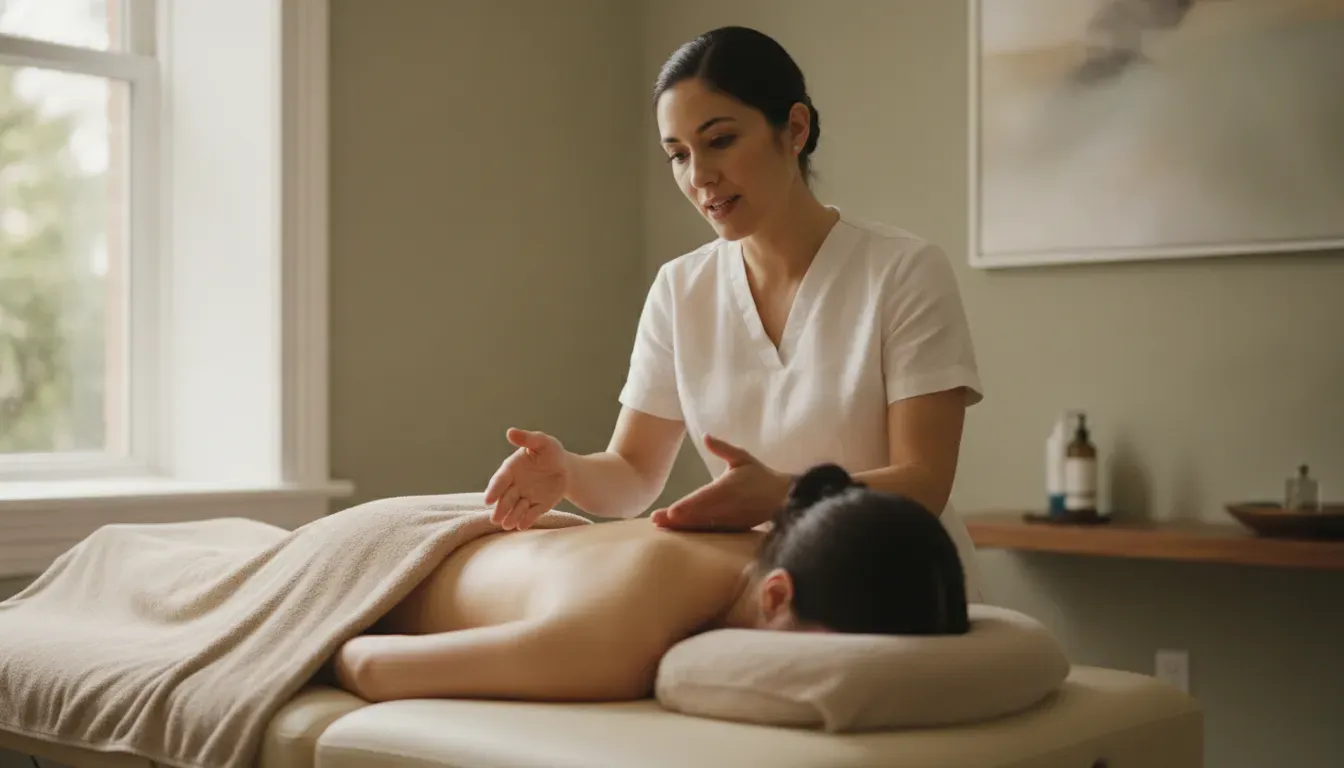

That stubborn knot in your back isn’t just a tight muscle; it’s often an adhesion, a band of painful, rigid tissue that can restrict movement and cause inflammation. To effectively treat it, you need a technique that can reach these deeper layers. A deep tissue massage for back pain isn’t about random, hard pressure. It’s a skillful application of specific methods like trigger point therapy and myofascial release, designed to break down these adhesions and restore proper blood flow. This guide will explain the science behind how these techniques work, helping you understand what’s happening on the table and why this approach provides such profound and lasting relief.
Key Takeaways
- Deep tissue is a targeted treatment, not a pain test: The goal is to release deep-seated muscle tension using firm, deliberate pressure. You should feel a productive “good hurt,” but never sharp pain—always speak up so your therapist can adjust the pressure for you.
- Your session’s success starts before and ends after the massage: Arrive well-hydrated to help your muscles respond better to the work, and plan for a day of gentle recovery afterward to help your body process the treatment and reduce soreness.
- Create a consistent plan for lasting results: A single massage provides relief, but regular sessions are the key to managing chronic back pain. Work with your therapist to establish a schedule that addresses your specific goals and maintains your progress over time.
What Is Deep Tissue Massage?
If you’re dealing with stubborn knots or chronic aches, especially in your back, a deep tissue massage might be exactly what you need. This therapeutic technique focuses on the deeper layers of your muscles and the connective tissue surrounding them, known as fascia. Unlike a massage purely for relaxation, the goal here is to address specific issues. Therapists use firm pressure and slow, deliberate strokes to release tension, break up scar tissue, and restore movement.
Think of it as a focused treatment for muscle pain and stiffness. It’s a popular choice for people recovering from injuries or managing ongoing conditions like lower back pain. By targeting those deep-seated problem areas, a deep tissue massage can help manage discomfort and improve your ability to move freely and without pain. It’s a powerful tool for getting your body back on track.
Deep Tissue vs. Swedish: What’s the Difference?
People often ask how deep tissue massage differs from the more familiar Swedish massage. The main distinction comes down to pressure and purpose. A Swedish massage uses lighter pressure with long, gliding strokes, primarily aimed at promoting overall relaxation and reducing general muscle tension. It’s a wonderful way to de-stress and unwind.
Deep tissue, on the other hand, uses more intense and focused pressure to target chronic pain and stiffness in the deeper layers of your muscles. While it can certainly be relaxing, its primary goal is therapeutic. Your therapist will work on specific knots and adhesions to relieve pain and improve your range of motion. At Nola Bliss, we offer both Swedish and deep tissue massages, and our therapists can help you decide which is best for your needs.
How Deep Tissue Works
The magic of deep tissue massage lies in its technique. Your therapist will use strong, steady pressure with slow, deep strokes that go across the grain of your muscles. This method helps break down adhesions—those “knots” you feel—which are bands of painful, rigid tissue that can block circulation and cause pain, inflammation, and limited movement.
By applying this focused pressure, the massage helps release that tightness. This process not only eases tension but also improves blood flow to the affected area. Better circulation brings more oxygen and nutrients to your muscles, which can reduce inflammation and speed up the healing process. It’s a targeted approach designed to create lasting change in your muscle tissue.
Common Myths About Deep Tissue Massage
Let’s clear up a common misconception: deep tissue massage does not have to be painful to be effective. Many people believe they need to grit their teeth through the entire session for it to work, but that’s simply not true. While you might feel some discomfort or a “good hurt” when the therapist works on a tight spot, you should never feel sharp or unbearable pain.
Another myth is that harder pressure always equals a better massage. The truth is, a successful deep tissue massage is about skill and precision, not just brute force. An experienced therapist knows how to apply the right amount of pressure to the right spots to release tension effectively. Open communication is key—always let your massage therapist know if the pressure is too much so they can adjust for your comfort.
How Deep Tissue Massage Helps Back Pain
If you’re dealing with a nagging ache or sharp pain in your back, you know how much it can disrupt your life. While many massages feel good, a deep tissue massage is specifically designed to address the root causes of your discomfort. By focusing on the deeper layers of muscle and connective tissue, this therapeutic approach does more than just provide temporary relief—it helps your body heal and regain function. It’s a powerful way to manage everything from a simple muscle strain to more persistent, chronic pain.
Relieve Pain and Speed Up Recovery
The primary reason people seek deep tissue massage for back pain is simple: it works. This technique involves slow, deliberate strokes and firm pressure to target the underlying layers of your muscles and the tissues surrounding them. This process helps release chronic muscle tension and knots, also known as adhesions, that are often the source of your pain. Studies have shown that deep tissue massage can significantly reduce pain for those with lower back issues and other chronic conditions. By increasing blood flow to the affected areas, it also helps reduce inflammation and delivers more oxygen and nutrients to your tissues, which can speed up the healing process.
Improve Your Flexibility and Motion
Back pain often comes with a frustrating side effect: stiffness that limits your range of motion. Simple movements like bending over to tie your shoes can become a challenge. Deep tissue massage is incredibly effective at breaking up scar tissue and adhesions that can make your muscles feel tight and restricted. As your therapist works to release this tension, you’ll notice an improvement in your flexibility. This not only helps you move more freely day-to-day but also plays a key role in recovering from injuries. By easing stiffness and restoring mobility, you can get back to your favorite activities with less pain and a lower risk of re-injury.
Reduce Stress and Tension
It’s no secret that physical pain and emotional stress are closely linked. When your back hurts, it’s easy to feel tense, anxious, and irritable. A deep tissue massage offers a way to address both at once. The focused, firm pressure can be deeply relaxing, helping to calm your nervous system and lower stress hormone levels. For many people, the sensation of a therapist working through deep-seated knots provides a profound sense of release. This allows you to not only find relief from your physical symptoms but also to truly relax and let go of the mental and emotional strain that often accompanies chronic pain.
Help Manage Chronic Conditions
For those living with long-term back issues, deep tissue massage can be an essential part of a comprehensive wellness plan. It’s often recommended for managing chronic conditions because it provides consistent, effective relief. Research has shown its benefits for people with conditions like fibromyalgia and even certain types of arthritis that affect the spine. By incorporating regular massage services into your routine, you can better manage your symptoms, reduce flare-ups, and maintain a higher quality of life. It’s a proactive way to care for your body and keep chronic pain from holding you back.
Key Deep Tissue Techniques for Back Pain
A great deep tissue massage isn’t just about applying firm pressure. It’s a thoughtful and precise approach where your therapist uses specific techniques to address the root causes of your back pain. Think of it as a toolkit; a skilled therapist knows exactly which tool to use for which problem area. They might spend time on a stubborn knot in your shoulder before moving to a broader technique to release tension along your entire spine. This targeted work is what separates a truly therapeutic massage from a general relaxation session. It’s about understanding the body’s interconnected systems and applying the right method to achieve lasting relief.
At Nola Bliss, our licensed massage therapists are experts in a variety of methods designed to release chronic muscle tension. They combine these techniques to create a customized session that targets your unique pain points. Understanding what’s happening on the table can help you relax into the treatment and communicate more effectively with your therapist. Let’s look at some of the core techniques you might experience during your deep tissue massage and how they work to bring you relief from nagging back pain.
Myofascial Release
You might not have heard of fascia, but it plays a huge role in how your body feels. It’s a thin web of connective tissue that wraps around every muscle and organ, holding everything in place. When you experience injury or chronic tension, this tissue can become tight and restricted, causing pain and limiting your movement. Myofascial release involves applying slow, sustained pressure to these tight areas. This gentle but firm pressure allows the fascia to stretch and unwind, releasing the tension that’s been pulling on your muscles. The goal is to restore elasticity and give your muscles the space they need to function properly, which can make a world of difference for back pain.
Trigger Point Therapy
If you’ve ever had a “knot” in your back that sends pain to another area when you press on it, you’ve found a trigger point. These are small, hyper-irritable spots in your muscle tissue that can cause significant discomfort and referred pain. Trigger point therapy involves applying direct, focused pressure to these knots. Your therapist will press on the spot and hold it for several seconds. While it might feel intense for a moment, this pressure signals the muscle to relax and release. It’s an incredibly effective way to deactivate these painful points, providing immediate relief and helping to break the cycle of chronic muscle pain.
Cross-Fiber Friction
Sometimes, back pain is the result of old injuries that have left behind scar tissue. This scar tissue can be rigid and can restrict movement, leading to stiffness and discomfort. Cross-fiber friction is a specific technique designed to address this. Your therapist will use their fingertips or thumb to apply deep, precise strokes back and forth across the muscle fibers, rather than along their length. This motion helps to break down adhesions and scar tissue, increase circulation to the area, and restore normal movement. It’s especially useful for treating tendon and ligament issues that contribute to persistent back pain.
Pin and Stretch
The pin and stretch technique is exactly what it sounds like and is fantastic for targeting specific, hard-to-reach muscles. Your therapist will use their hand or forearm to “pin” down one section of a muscle, holding it in place. Then, they will gently stretch the rest of the muscle away from that point. This can be done passively, where the therapist moves your body for you, or actively, where you participate by moving a limb yourself. This method creates a deep, focused stretch right where you need it most, helping to release tension, improve flexibility, and restore your full range of motion.
How to Prepare for Your Deep Tissue Massage
A great deep tissue massage experience starts before you even get on the table. Taking a few simple steps to prepare can make a world of difference, helping your body relax and allowing your therapist to work more effectively. Think of it as setting the stage for relief. When you arrive ready, you’re not just getting a massage; you’re actively participating in your own healing process.
Preparing for your session helps your therapist understand exactly what you need, ensuring every minute of your appointment is focused on your goals—whether that’s easing chronic back pain or just melting away stress. It also helps you feel more comfortable and in control of the experience. From knowing what to expect during the initial chat to understanding the importance of hydration, a little preparation ensures you get the maximum benefit from your treatment.
Your Initial Consultation
Your massage appointment will begin with a brief chat with your therapist. This isn’t just small talk; it’s a vital part of your treatment. Your therapist will ask about any specific areas of pain or tension, your health history, and what you hope to achieve from the session. Be open and honest. Point out exactly where it hurts, describe the type of pain, and mention any activities that make it worse. The more information you provide, the better your therapist can tailor the deep tissue massage to your unique needs. This conversation sets the foundation for a safe and effective session focused entirely on you.
What to Wear and Bring
A common question we get is, “What should I wear?” The simple answer is to come in comfortable clothing. For the massage itself, you’ll undress to your personal comfort level. Most people undress completely, but you can choose to leave your underwear on if you prefer. Your therapist will leave the room while you undress and get settled under a sheet on the massage table. Throughout the session, you will be professionally draped, and only the area being worked on will be uncovered. Your privacy and comfort are the top priorities. You don’t need to bring anything special—just yourself and a willingness to relax.
What to Do Before You Arrive
To get the most out of your massage, make sure you’re well-hydrated. Try to drink plenty of water in the 24 hours leading up to your appointment. Hydrated muscles are more pliable and easier for your therapist to work on, which can make the deep tissue work more effective and comfortable for you. It also helps your body flush out the metabolic waste that gets released from your tissues during the massage. It’s also a good idea to avoid eating a heavy meal or drinking alcohol right before you arrive. A light snack is fine, but you’ll be much more comfortable on the table if your body isn’t busy digesting a large meal.
Talk to Your Therapist
Communication shouldn’t stop after the initial consultation. During your massage, your therapist will check in with you about the pressure, but you should always feel empowered to speak up. Deep tissue massage involves firm pressure, but it should never be excruciating. There’s a difference between a “good hurt” that feels productive and sharp, unbearable pain. Only you know what that line feels like. If the pressure is too intense, just say so. Our highly trained therapists can easily adjust their technique to ensure you’re comfortable. Open communication is the key to a successful and beneficial massage experience.
What to Expect During and After Your Massage
A deep tissue massage is a powerful tool for relieving back pain, but knowing what to expect can help you relax and get the most out of your session. Your experience doesn’t end when you get off the table; the recovery process is just as important. From the pressure during your massage to the way you feel the next day, here’s a straightforward guide to your deep tissue experience. It’s all about working with your body to release tension, not fighting against it.
Finding the Right Pressure
The defining feature of a deep tissue massage is its firm, consistent pressure. Your therapist will use slow, deliberate strokes to reach the deeper layers of muscle and connective tissue where chronic knots and tension are stored. This isn’t about gritting your teeth through the entire session. The pressure should feel strong and purposeful, but always within your comfort zone. Open communication is key. Your therapist will check in with you, but you should always feel empowered to ask for more or less pressure to find that sweet spot where the muscle can release effectively.
Good Pain vs. Bad Pain: What to Feel
Let’s clear up a common myth: deep tissue massage does not have to hurt to be effective. The old “no pain, no gain” philosophy simply doesn’t apply here. You may feel some discomfort or a satisfying ache when your therapist works on a particularly tight knot—this is often called “good pain.” It’s a productive sensation that you can breathe through. However, you should never feel sharp, shooting, or unbearable pain. If you find yourself tensing up or holding your breath, that’s a signal that the pressure is too much. Always let your therapist know so they can adjust their technique.
How You’ll Feel Afterward
It’s completely normal to feel a bit sore for a day or two after a deep tissue massage. Think of it like the feeling you get after a good workout. Your muscles have been stretched and manipulated to break up adhesions, and this soreness is a sign that your body is healing and flushing out toxins. Along with the tenderness, many people also feel an immediate sense of relief, looseness, and increased range of motion. Once the initial soreness subsides, you should be left with a feeling of lasting relaxation and reduced pain in your back.
How to Handle Post-Massage Soreness
You can take a few simple steps to ease any post-massage tenderness and help your body recover. The most important thing is to drink plenty of water, which helps flush out the metabolic waste released from your muscles. A warm bath with Epsom salts can also do wonders for soothing sore muscles. If you have a particularly tender spot, applying a heating pad can help increase circulation and promote healing. Gentle stretching can also feel great, but listen to your body and don’t push it. These simple aftercare steps will help you fully enjoy the benefits of your massage services.
Get the Most Out of Your Massage
A great massage doesn’t end when you walk out the door. To truly reap the rewards of your deep tissue session, a little post-massage care can make all the difference. By incorporating a few simple habits into your routine, you can extend the feeling of relief, support your body’s recovery, and make your next massage even more effective. Think of it as teamwork between you and your therapist—they do the intensive work on the table, and you help maintain those results until your next visit. Here’s how you can keep the benefits going long after your appointment.
How Often Should You Get a Massage?
The ideal frequency for a massage really depends on your personal goals. Are you dealing with chronic pain, recovering from an injury, or simply managing everyday stress? For general wellness and to keep your muscles healthy, scheduling a professional massage every three to four weeks is a great rhythm. This consistency can help prevent tension from building up and keep you feeling your best. If you’re working through a specific issue like persistent back pain, your therapist might suggest more frequent sessions initially. The best approach is to chat with your therapist to create a massage schedule that’s tailored specifically to your body’s needs and your wellness goals.
Self-Care Tips for In-Between Sessions
It’s completely normal to feel a bit sore for a day or two after a deep tissue massage—it often means the therapist effectively addressed your tight spots. The most important thing you can do is listen to your body. If you feel any discomfort, don’t hesitate to talk to your therapist about it. This feedback is incredibly valuable and helps them adjust the pressure and techniques for your future sessions. In the days following your massage, avoid strenuous exercise and opt for gentle movement like walking. A warm bath with Epsom salts can also be a wonderful way to soothe any lingering tenderness and relax your muscles even further.
Stay Hydrated to Aid Recovery
This might be the most common piece of advice you’ll hear after a massage, and for good reason. Drinking plenty of water before and after your session is crucial for recovery. During a deep tissue massage, your therapist works to release metabolic waste trapped in your muscles. Proper hydration helps your body efficiently flush out these toxins, which can reduce post-massage soreness and help the beneficial effects last longer. Try to sip on water throughout the day of your appointment to ensure your muscles are well-hydrated and ready to repair, making your recovery smoother and faster.
Simple Stretches for After Your Massage
To prolong the benefits of your massage, incorporating some gentle stretching into your daily routine can work wonders. Your therapist just spent time lengthening and relaxing your tight muscles, and light stretching helps maintain that newfound flexibility. You don’t need a complicated routine—even five to ten minutes of simple stretches can help. Ask your therapist to recommend a few specific stretches that target your problem areas. For deep muscle tension or injuries, remember that massage is often one part of a larger treatment plan. Consistent sessions, combined with at-home care like stretching, will give you the best long-term results for your deep tissue massage.
Find a Qualified Therapist Safely
Finding the right massage therapist is just as important as choosing the right type of massage. You’re trusting someone with your body and your well-being, so it’s essential to find a professional who is not only skilled but also operates safely and ethically. A great therapist will listen to your needs, understand your health history, and create a session tailored specifically to you. This ensures you get the relief you’re looking for without any unnecessary risks.
Before you book an appointment, it’s worth doing a little homework. A qualified therapist will have proper licensing and certifications, which are usually displayed proudly. Reading reviews and asking for recommendations from friends or even your doctor can also point you in the right direction. Taking these extra steps helps guarantee your deep tissue massage is both a safe and incredibly effective experience. At Nola Bliss, we prioritize this by ensuring all our therapists are seasoned professionals dedicated to your care.
What to Look for in a Therapist
When searching for a massage therapist, credentials and experience are key. Look for someone who is a Licensed Massage Therapist (LMT), as this indicates they’ve met state-regulated training and ethical standards. Don’t be shy about asking about their specific experience with deep tissue massage or treating back pain. A confident, professional therapist will be happy to discuss their background. At Nola Bliss, we pride ourselves on having a team of highly trained and highly experienced LMTs who are passionate about their craft and dedicated to providing therapeutic, healing work.
When to Talk to Your Doctor
Your safety is the top priority. While deep tissue massage is beneficial for most people, it’s not suitable for everyone. It’s a good idea to talk to your doctor before getting a deep tissue massage if you have a history of blood clots, are taking blood thinners, have a bleeding disorder, or are undergoing cancer treatment. You should also check with your doctor if you have osteoporosis or any open skin wounds or infections. A quick conversation with your healthcare provider can give you the peace of mind to fully relax and enjoy your massage.
Is Deep Tissue Right for You?
Deep tissue massage is fantastic for targeting chronic muscle pain and tension, especially for those who are physically active or dealing with old injuries. However, if you’re simply looking to unwind and relieve mild stress, a classic Swedish massage might be a better fit. The key is to match the massage to your goals. If you want to work through stubborn knots and address deep-seated tension, deep tissue is your go-to. If you prefer lighter pressure and a more relaxing experience, opt for Swedish.
Spotting Red Flags
A deep tissue massage shouldn’t be a test of your pain tolerance. While the therapist works on tight, knotted areas, you might feel some intense pressure or discomfort—this is normal. However, you should never feel sharp, shooting, or unbearable pain. A major red flag is a therapist who ignores your feedback or tells you to just “breathe through it” when you’re in genuine pain. Your therapist should check in with you about the pressure and adjust it accordingly. You are always in control of your session, so never hesitate to speak up.
Create Your Long-Term Treatment Plan
Think of deep tissue massage not as a one-time indulgence, but as a vital part of your ongoing wellness strategy. While a single session can offer incredible relief, creating a long-term plan with your therapist is the key to managing back pain for good. This approach allows you to move beyond temporary fixes and address the root causes of your discomfort. A consistent plan helps retrain your muscles, break down chronic adhesions, and prevent pain from returning.
Working with a dedicated therapist ensures your treatment evolves as your body does. They can adjust techniques, pressure, and frequency based on your progress and feedback. This partnership is about more than just getting a massage; it’s about building a roadmap to a more comfortable, mobile, and pain-free life. By committing to a plan, you invest in your long-term health and well-being, ensuring the benefits of each session build upon the last. It’s a collaborative effort that puts you in control of your healing journey, with an expert guide to support you every step of the way.
Set Realistic Goals for Relief
The first step in any effective plan is knowing what you want to achieve. While deep tissue massage can significantly reduce pain for conditions like chronic lower back pain, it’s important to set clear and realistic goals with your therapist. Do you want to be able to sit through a workday without stiffness? Or maybe you want to get back to gardening or playing with your grandkids without that familiar ache.
Communicating these specific goals helps your therapist tailor each session to your needs. It also gives you a way to measure your progress. Instead of just hoping to “feel better,” you can track tangible improvements in your daily life. This focused approach makes your treatment more effective and helps you stay motivated on your path to lasting relief.
Decide on a Massage Schedule
Consistency is crucial for achieving long-term results. While the ideal frequency varies from person to person, establishing a regular massage schedule helps maintain muscle health and prevent pain from creeping back in. For acute pain, your therapist might suggest weekly sessions to start. For managing chronic tension or as a preventative measure, bi-weekly or monthly appointments might be a better fit.
Your therapist can recommend a schedule based on your initial assessment, your specific goals, and how your body responds to the first few treatments. A consistent routine can improve muscle flexibility and keep chronic issues at bay. Think of it like any other form of self-care—the more consistent you are, the more profound and lasting the benefits will be.
Track Your Progress
Paying attention to how your body feels between sessions is one of the most important things you can do. Do you notice a wider range of motion the day after your massage? Is the pain less intense when you wake up in the morning? Keeping a simple log of your pain levels, mobility, and overall feeling can provide valuable information.
Sharing this feedback with your therapist allows them to fine-tune your treatment. If a certain technique was particularly effective, they can incorporate it more. If you felt overly sore, they can adjust the pressure. This open line of communication is essential for a successful treatment plan, as it ensures each session is perfectly customized to what your body needs at that moment. Monitoring your response is key to adjusting your plan for the best results.
Maintain Your Results Over Time
The benefits of your massage don’t have to end when you leave the studio. Deep tissue work helps with long-term recovery by breaking up scar tissue and improving circulation, but simple habits can help you maintain these results. Your therapist might recommend specific stretches or self-care practices to do at home. Simple things like staying hydrated, being mindful of your posture, and taking short breaks to stretch during the day can make a huge difference.
Integrating these practices into your daily life supports the work done in your massage sessions. It empowers you to take an active role in your own wellness. By combining professional deep tissue massage with mindful self-care, you create a powerful, sustainable approach to managing back pain.
Related Articles
- Ashiatsu | Nola Bliss Massage Therapy
- Massage Services | Nola Bliss Massage Therapy
- Workshops | Nola Bliss Massage Therapy
- Home | Nola Bliss Massage Therapy
Frequently Asked Questions
Will a deep tissue massage fix my back pain in just one session? While you will likely feel significant relief after your first session, think of deep tissue massage as a process rather than a one-time fix, especially for chronic pain. One session can release a great deal of tension, but lasting change comes from consistently working to retrain your muscles and break down long-held patterns of tightness. We’ll work with you to create a plan that helps you achieve long-term results.
What if the pressure is too much for me? Please speak up! A great deep tissue massage should feel productive, not painful. You are always in control of your session, and our therapists are skilled at adjusting their pressure to meet your needs. There’s a big difference between a “good hurt” on a stubborn knot and genuine pain. We want your feedback so we can find that perfect balance for you.
I’m not sure if I need a deep tissue or Swedish massage. How do I choose? The best choice depends on your main goal. If you’re dealing with specific, persistent issues like knots, stiffness, or chronic pain, a deep tissue massage is designed to target those deeper layers of muscle. If your primary goal is to relax, de-stress, and soothe general muscle fatigue with lighter pressure, a Swedish massage is a wonderful option. You can also discuss your symptoms with your therapist when you arrive, and they can help you decide what’s best.
Is it normal to be sore the next day? Yes, it’s completely normal to feel some tenderness for a day or two after a deep tissue massage. Think of it like the soreness you feel after a really good workout. Your muscles have been worked on to release deep-seated tension, and this feeling is a sign that your body is healing. Be sure to drink plenty of water, and the soreness should fade, leaving you with less pain and more mobility than before.
Can I get a deep tissue massage as part of a couples massage? Absolutely! Our couples massages are designed so that each person can enjoy the specific treatment they need. If you want a deep tissue massage to work on your back pain, and your partner would prefer a relaxing Swedish massage, we can easily accommodate that. You can both get the customized experience you want while sharing the relaxing time together.