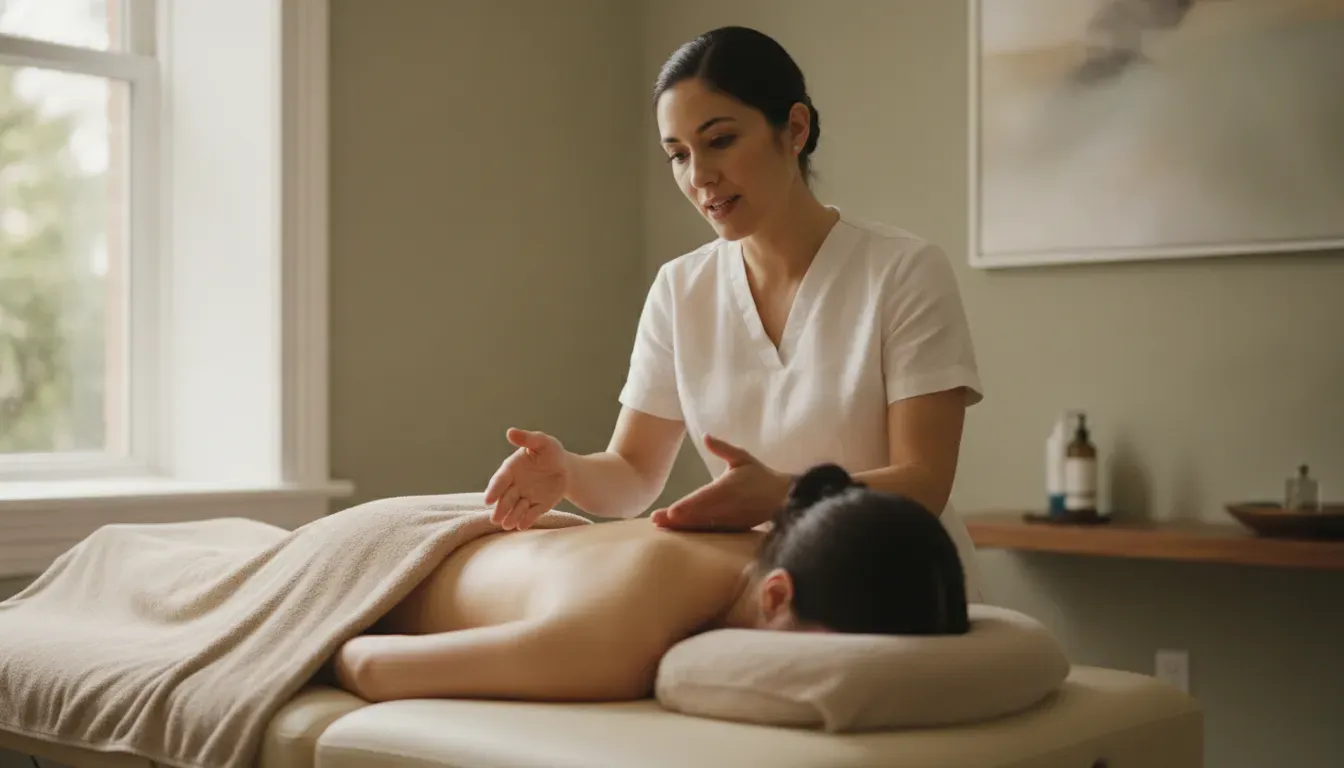

If you are asking, “is Ashiatsu massage safe,” the answer depends on far more than whether the technique feels powerful. When a massage uses the therapist’s feet to apply broad, weight-bearing pressure, a trained therapist should first discuss your goals, health history, current symptoms, and areas to avoid. During the session, they should use stable positioning, begin thoughtfully, check in with you, and adapt pressure when your body or feedback calls for a change.
Book an Ashiatsu consultation in New Orleans
For many healthy adults, Ashiatsu massage can be a safe option when a properly trained professional screens carefully, communicates clearly, and adjusts pressure to the client’s needs. Professional massage adverse events are relatively rare, but no technique is appropriate for every person or every situation. [Research review]
Ashiatsu differs from hand-based massage because the therapist’s feet can create deeper, broader contact. That can be a useful option for clients seeking a particular therapeutic experience, but it also makes certification, experience, and honest communication especially important. NOLA Bliss therapists average more than 10 years of experience, and the studio is a certified Ashiatsu DeepFeet Bar Therapy training center on the Gulf Coast. Before deciding whether this approach fits you, it helps to understand how a professional evaluates readiness and controls pressure.
Is Ashiatsu massage safe for most clients?
For many healthy adults, professional Ashiatsu can be a safe massage option when it is provided by a properly trained therapist who screens the client, explains the technique, and adjusts pressure throughout the session. It is not automatically appropriate for every person or every physical concern. A short, honest consultation helps determine whether barefoot, weight-bearing work fits your current needs.
Massage therapy generally involves manipulating the body’s soft tissues to support wellness or help manage a health condition, according to the National Center for Complementary and Integrative Health. Ashiatsu applies that hands-on principle through the therapist’s feet. The broader surface of the foot can create deeper, more distributed pressure than traditional hand-based massage. Because that pressure is delivered with the therapist’s body weight, certification, balance, positioning, and communication matter.
At NOLA Bliss Massage, Ashiatsu DeepFeet Bar Therapy is performed in a professional therapeutic setting. The studio’s therapists average more than 10 years of experience, and NOLA Bliss is the only certified Ashiatsu DeepFeet Bar Therapy training center on the Gulf Coast. Those details do not make the technique universally suitable, but they show why provider qualifications should be part of your safety check. Look for a therapist trained specifically in barefoot, weight-bearing methods rather than assuming that general massage experience is enough.
Research on professional massage therapy has found that adverse events are relatively rare when massage is conducted by trained practitioners, as summarized in this systematic review of massage-related adverse events. Rare does not mean impossible. A therapist should know about relevant injuries, recent procedures, medical conditions, medications, pregnancy, and areas of sensitivity before treatment begins. You should also be able to request less pressure, change position, pause, or stop at any point.
Professional Ashiatsu is different from using a self-massage device or attempting to recreate foot pressure at home. A device cannot observe your movement, assess tissue response, ask about discomfort, or immediately change technique based on your feedback. Self-use tools may have a place in a personal routine, but they are not a substitute for therapist-led assessment and controlled application. If you are unsure whether Ashiatsu is appropriate, ask about your specific circumstances before booking. Choose a lower-pressure or hand-based option when that is the more suitable starting point.
How does an Ashiatsu therapist control pressure and balance?
Safe Ashiatsu depends on more than the therapist standing above the table. It requires trained judgment, stable positioning, careful pressure control, and ongoing communication. Because Ashiatsu uses the therapist’s feet to create broader, deeper pressure than hand-based massage, the therapist must continually assess how your body is responding rather than apply the same intensity from start to finish.
How does training support pressure control?
Certification and experience matter especially in barefoot, weight-bearing bodywork. NOLA Bliss Massage is the only certified Ashiatsu DeepFeet Bar Therapy training center on the Gulf Coast, and its therapists average more than 10 years of experience. That background supports the precision needed to work with pressure while staying attentive to positioning, balance, and client comfort. You can learn more about Ashiatsu massage in New Orleans before deciding whether the service fits your goals.
A trained therapist also treats pressure as adjustable, not as a fixed feature of the modality. Guidance from the National Center for Complementary and Integrative Health explains that massage techniques should be selected according to a person’s needs and goals rather than treated as one-size-fits-all. In practice, that means your therapist considers the areas being addressed, your tolerance, relevant physical history, and the quality of your feedback.
Positioning is part of that assessment. A therapist may work with a broad surface of the foot in one area, then use a different stance or a smaller amount of weight elsewhere. They also need to remain aware of table position and body alignment as they move. These adjustments are individualized choices, not steps in a rigid formula, which is why a conversation before and during the session is so important.
What do the overhead bars do?
The overhead bars provide a stable support point while the therapist works above the table. They help the therapist maintain balance, shift weight with control, and change position without placing unnecessary force through the client’s body. The bars are not there to make the session feel more intense. They are part of the therapist’s positioning system, allowing movement to remain deliberate and measured.
If you want more detail about the mechanics, read about how Ashiatsu overhead bar therapy works. Understanding the support system can make the method feel less unfamiliar, particularly if you have only experienced hand-based massage.
How is pressure adapted during the session?
A responsible session begins gradually. The therapist can start with lighter contact, observe how the tissues and your breathing respond, and then adjust pressure or positioning as appropriate. They may change the angle of contact, move to a different area, reduce weight, or return to hand techniques when that better supports your comfort and goals. There is no need to tolerate discomfort to prove that you can handle Ashiatsu.
Communication remains part of the technique. Tell your therapist if pressure feels too strong, if a position creates strain, or if a previously comfortable area has become sensitive. A clear stop signal or simple request to reduce pressure gives the therapist useful information immediately. Honest feedback is not an interruption. It is how the therapist keeps the session individualized and helps answer the practical question, is Ashiatsu massage safe for you today?
Who should postpone Ashiatsu or ask a clinician first?
Ashiatsu uses therapist feet to apply broad, weight-bearing pressure, so an honest safety conversation matters before the session begins. If you are wondering, “is ashiatsu massage safe” for your situation, share relevant health information with the therapist rather than trying to decide from a general checklist. A licensed massage therapist can explain how the session may be adapted, while a qualified clinician can advise whether massage is appropriate for your condition.
When illness or infection is present
Postpone an appointment if you have a fever, acute illness, or symptoms that suggest you may be contagious. Your body may need rest and medical attention, and postponing also protects your therapist and other clients. Tell the studio if you have a contagious skin condition, unexplained rash, or another infection that could be spread through close contact. Do not assume that covering an affected area makes treatment appropriate.
When skin, bones, or injuries need protection
Open wounds, significant bruising, burns, or recently operated areas should not receive direct pressure. Recent surgery requires clearance from the treating clinician and clear instructions about areas to avoid. The same caution applies to an unstable injury, suspected fracture, or an injury that has not been evaluated. Ashiatsu is not a substitute for diagnosis or acute injury care. If a bone or joint feels unstable, wait until you have appropriate medical guidance.
People with severe osteoporosis or other conditions involving substantial bone fragility should ask their clinician before considering weight-bearing bodywork. The therapist may recommend postponing Ashiatsu or choosing a different approach, depending on the medical guidance and the areas involved. When in doubt, disclose the condition before booking.
When bleeding or clotting is a concern
Discuss any bleeding or clotting disorder with a clinician and your therapist before treatment. The same applies if you are taking medication that affects bleeding, have a history of problematic clots, or bruise unusually easily. Do not stop or change prescribed medication to prepare for massage. A therapist needs accurate information to make responsible decisions about pressure, positioning, and whether to proceed.
Pregnancy and high-risk medical situations
Pregnancy, especially when accompanied by complications or other high-risk considerations, calls for individualized guidance. Tell the therapist that you are pregnant and ask your prenatal care provider whether this type of bodywork is suitable. A specialized prenatal option may be more appropriate, or your care team may recommend waiting. The same disclose-first approach is important for serious heart, vascular, neurological, or other medical conditions. These examples are not an exhaustive list, and a general article cannot determine your eligibility.
Before booking, list diagnoses, recent procedures, current symptoms, and any areas that should be avoided. The therapist may ask follow-up questions or suggest a hand-based session instead. You should always be able to describe discomfort and request less pressure or a pause. If symptoms are new, severe, or unexplained, seek medical advice first.
What should you discuss before an Ashiatsu session?
A thoughtful consultation helps determine whether Ashiatsu is an appropriate choice and how the session should be adapted. This matters because Ashiatsu uses the therapist’s feet to deliver broader, deeper pressure than hand-based massage. Before scheduling Ashiatsu massage in New Orleans, be ready to describe your current needs honestly. You do not need to know the correct clinical terminology. Clear, practical details give a licensed massage therapist better information for planning a safe, comfortable session.
Mayo Clinic describes coordinated care and treatment planning between health care providers and certified massage therapists when massage is part of care for an injury or condition. That same spirit of disclosure is useful for specialized bodywork. Use this checklist as a starting point, then ask questions if anything is unclear:
- Explain your goals. Tell the therapist what brought you in, such as general relaxation, muscular tension, recovery from physical strain, or a desire to experience Ashiatsu. Share what you hope the session will feel like, while understanding that massage is not a guaranteed treatment for a medical condition. If your goal is focused pain or injury support, explain where the concern is located and how it affects movement or daily activity.
- Describe pain, injuries, and recent surgery. Mention current or recurring pain, sprains, strains, fractures, inflammation, open wounds, bruising, and any recent procedure. Include when the issue began and whether it is improving, worsening, or being treated by another professional. The therapist can then decide whether to modify the work, use a different approach, postpone the session, or suggest that you ask your clinician first.
- Review medications and bleeding concerns. Disclose medications or health conditions that may affect bleeding or bruising, along with any history of clotting problems. Do not stop or change medication to receive massage. If you are unsure whether a medication or diagnosis matters, ask your prescribing clinician and share the guidance with the therapist.
- Discuss pregnancy or other specialized circumstances. If you are pregnant, recently gave birth, managing a significant health condition, or under active medical care, say so before booking. Ask whether a tailored consultation or another massage option is more appropriate. Pregnancy and higher-risk situations should not be treated as routine Ashiatsu appointments.
- Identify sensitivity and areas to avoid. Tell the therapist about tender areas, numbness, ticklishness, skin sensitivity, scars, painful positions, and body regions you do not want worked. You can also discuss draping, positioning, and any personal boundaries before the session begins.
- State your pressure preference. Ashiatsu can feel broad and substantial, but pressure is not one-size-fits-all. Describe whether you prefer light, moderate, or firm work, and mention what has or has not felt comfortable during previous massages. The therapist should adjust the approach to your tolerance and physical condition.
- Agree on a stop signal. Decide how you will communicate during the session. You can say “less pressure,” “pause,” or “stop” at any point. Speak up immediately about sharp pain, dizziness, numbness, shortness of breath, anxiety, or any sensation that feels wrong. Ongoing communication is part of a professional session, not an interruption.
These conversations help you and your therapist decide whether Ashiatsu is a suitable fit and establish clear boundaries before the first movement begins. For additional medical guidance about massage planning, review Mayo Clinic’s massage therapy care information.
What can a first Ashiatsu session feel like?
Your first Ashiatsu session may feel unfamiliar at the beginning because the therapist uses the feet to create broad, deliberate pressure. Instead of the smaller contact points typical of hand massage, the work can feel steady and distributed across larger areas of the body. Pressure may range from moderate to deep, but it should remain purposeful and responsive to your comfort, goals, and physical history.
The session usually begins with positioning and a conversation about what you want from the treatment. Your therapist may ask about areas of tension, past injuries, recent procedures, sensitivity, and any regions that should be avoided. You will also discuss pressure preferences and how to communicate if something needs to change. Clear disclosure gives the therapist useful information for adapting the session safely.
Draping and positioning are part of the professional treatment, not details to overlook. You remain appropriately draped, while the therapist works only on the area being addressed. Overhead bars provide stability and help the therapist control movement while applying weight-bearing pressure. If you are curious about the equipment and technique, read this introduction to Ashiatsu DeepFeet Bar Therapy.
During the treatment, expect regular check-ins rather than a single pressure conversation at the start. Your therapist may ask whether the pressure feels comfortable, or you can offer feedback before being asked. Speak up if pressure feels sharp, pinching, overly intense, numb, or otherwise wrong for you. A deep sensation can be expected, but pain is not a requirement for a useful session. You can ask for less pressure, a different position, more support, or for an area to be skipped.
Afterward, you may notice ordinary awareness in the areas that received focused work. Some people describe feeling relaxed, while others simply notice that their muscles feel worked. Experiences vary, and no particular result or timeline should be promised. Pay attention to how you feel, follow any practical aftercare guidance your therapist provides, and contact a healthcare professional about symptoms that concern you. A first session is a collaborative process, so your observations are valuable throughout it.
Is Ashiatsu the right massage choice for your New Orleans visit?
The best choice depends on what you want from the session, how your body responds to pressure, and what you can comfortably communicate before and during treatment. Ashiatsu uses the therapist’s feet to create broader, deeper pressure than traditional hand-based massage. That experience can feel focused and grounding for some clients, while others may prefer the more localized control of hand-based work.
Safety starts with appropriate screening and a therapist who can adapt. Massage techniques and pressure should be matched to individual needs and goals rather than treated as one-size-fits-all. If you have an acute injury, recent surgery, bone fragility, a condition affecting bleeding, or a high-risk pregnancy, disclose it before booking and ask your clinician whether specialized massage is appropriate. When your health history is complex, a hand-based option may offer a more suitable starting point, or treatment may need to wait.
| Consideration | Ashiatsu | Hand-based massage |
|---|---|---|
| Pressure experience | Broad, sustained pressure from the therapist’s feet | More localized pressure with hands, forearms, or other techniques |
| Potential fit | Clients seeking a distinctive deep-pressure experience and comfortable with barefoot weight-bearing work | Clients who want familiar techniques or easier, highly specific pressure changes |
| Before treatment | Discuss health history, sensitivity, areas to avoid, and a clear stop signal | Discuss the same history and preferences so the therapist can tailor the session |
How should visitors choose while traveling?
Travel can add long walks, flights, convention hours, or unfamiliar physical demands. If you are unsure how your body will respond, choose the modality you can describe and adjust most comfortably. You do not need to prove that you can tolerate intense pressure. A session should remain collaborative, and speaking up is part of responsible care.
At NOLA Bliss Massage in Downtown New Orleans, licensed professionals average more than 10 years of experience. The studio is also the only certified Ashiatsu Deepfeet Bar Therapy training center on the Gulf Coast, according to its customer information. You can meet the NOLA Bliss team and review the available massage services before deciding. Read about Ashiatsu massage in New Orleans if you want to explore the specialty, then share your goals and concerns during scheduling.
Book your NOLA Bliss consultation and choose the right massage for your visit.
Frequently Asked Questions
Is Ashiatsu massage safe for most people?
It can be safe for many adults when performed by a properly trained, licensed massage therapist who screens your health history and adapts the pressure. Ashiatsu uses the therapist’s feet for broad, weight-bearing contact, so honest communication and appropriate technique matter. Ask questions before the session and disclose anything that could affect treatment.
Should Ashiatsu hurt?
Ashiatsu may feel more intense and expansive than hand-based massage, but pain is not the goal. Tell your therapist if the pressure feels sharp, excessive, or uncomfortable. They can reduce pressure, change positioning, avoid a sensitive area, or pause the work. Agree on a clear stop signal before treatment begins.
Can I receive Ashiatsu during pregnancy?
Do not assume Ashiatsu is appropriate during pregnancy. Tell the studio about your pregnancy and any related medical considerations before booking, then ask your prenatal care clinician whether this type of treatment is suitable. A specialized approach or another massage option may be more appropriate for your situation.
What health conditions should I mention before booking?
Share relevant injuries, recent surgery, open wounds, fractures, bone fragility, bleeding or clotting concerns, contagious illness, fever, medications, and areas of sensitivity. Acute or unstable conditions may require postponing treatment or getting medical guidance first. This checklist is not complete, so disclose anything that may affect pressure or positioning.
How does the therapist control Ashiatsu pressure?
The therapist assesses your goals, comfort, body position, and responses throughout the session. Overhead bars provide stability while the therapist adjusts weight distribution, contact, pace, and treated areas. Pressure should be individualized rather than treated as one-size-fits-all. Keep speaking up so the session remains within a useful, comfortable range.
Book an Ashiatsu Consultation in New Orleans
If you have questions about pressure, comfort, or whether Ashiatsu fits your needs, a conversation with a licensed massage therapist can help you choose a thoughtful next step. Share your goals, relevant health details, and any areas you want to avoid so the session can be discussed clearly and adapted appropriately.