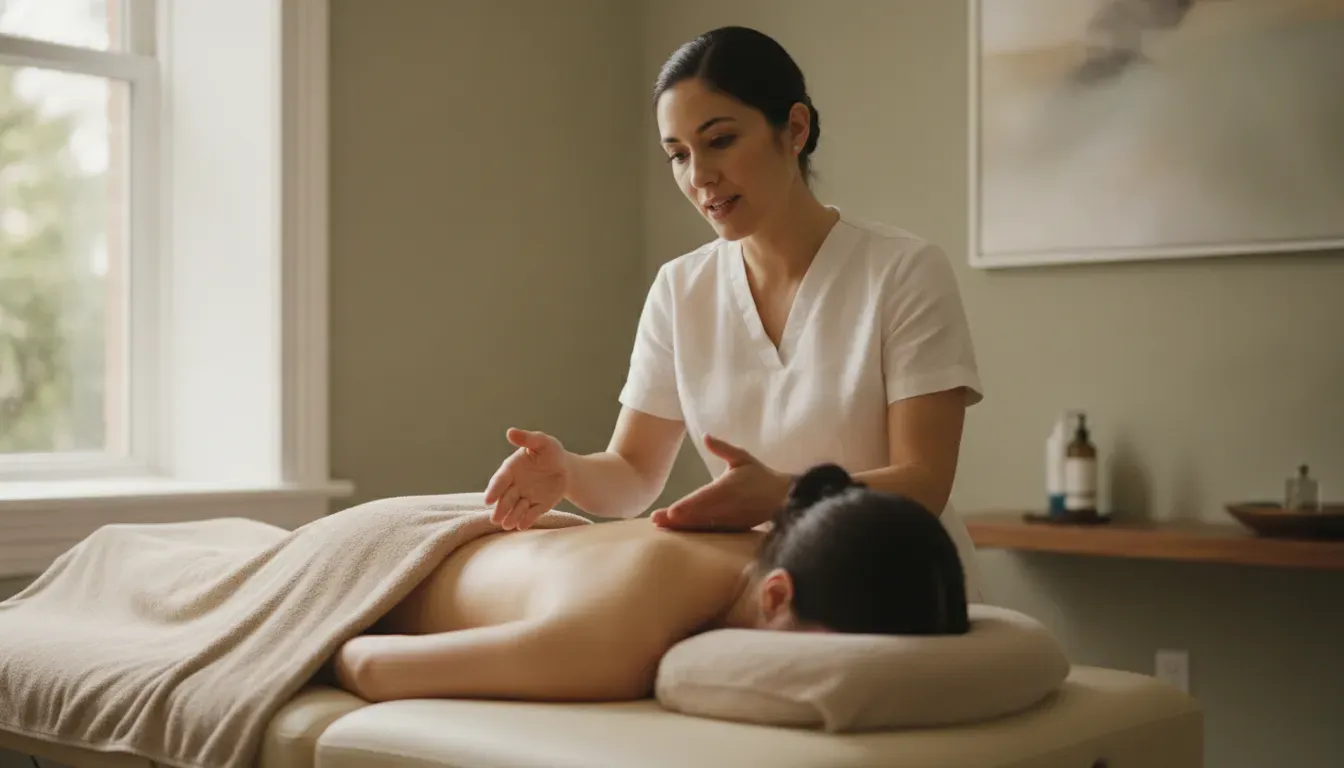

Your hands are your most valuable tools, and keeping them skilled is the key to a long and successful career. While you can learn theory from a screen, you can’t replicate the feel of a new technique without being physically present. This is why finding high-quality in person massage ceu classes washington state is so important for your professional development. These courses are where you get to practice on real people, receive immediate corrections from an instructor, and build the muscle memory needed to master your craft. It’s an investment that pays off with every client you see, leading to better results and greater confidence.
Key Takeaways
- Know Your Numbers: To keep your Washington license active, you need to complete 24 CE hours every two years. Make sure at least eight of those hours are from supervised, in-person training and at least four cover professional ethics and laws.
- Plan Your Learning Strategically: Use your in-person training time to refine hands-on skills and build your professional network. Reserve the convenience of online courses for non-tactile subjects like business practices, marketing, or science.
- Make Your Credits Count: Always confirm a class is NCBTMB-approved before you register to ensure it meets state requirements. After the class, keep your completion certificates organized in a dedicated folder for simple record-keeping and peace of mind.
What Are Washington’s Massage CEU Requirements?
Staying current in your practice is a huge part of being a successful massage therapist. Washington State agrees, which is why it has specific continuing education (CE) requirements to help you keep your skills sharp. Think of it less as a chore and more as a built-in opportunity for professional growth. It ensures every licensed therapist in the state maintains a high standard of practice. To keep your license active, you’ll need to follow a few key rules every two years. It’s all straightforward once you break it down, and planning ahead makes the process simple. Let’s walk through what you need to do.
The 24-Hour Rule
First, let’s talk about the total hours. Every two years, Washington requires licensed massage therapists to complete 24 hours of continuing education. This is your chance to explore new modalities, deepen your understanding of anatomy, or brush up on business practices. The two-year cycle gives you plenty of time to find courses that genuinely interest you and support your career goals, so you can plan without feeling rushed.
The 8-Hour Hands-On Requirement
While online learning is convenient, there’s no substitute for hands-on practice. Washington mandates that at least eight of your 24 CE hours must be in-person, supervised training. This is where you refine your technique, receive direct feedback from an instructor, and practice on other bodies. These hours are essential for mastering the physical skills that define our profession and are a critical part of maintaining high-quality client care.
The 4-Hour Ethics and Law Minimum
Being a great massage therapist is about more than just technique; it’s also about being a trusted professional. To support this, Washington requires a minimum of four CE hours dedicated to ethics and professional roles. These courses cover crucial topics like client communication, maintaining clear boundaries, and understanding the state laws that govern our practice. This training is fundamental to building a safe, respectful, and successful career.
Know Your Renewal Deadlines
Keeping track of your CE hours and renewal dates is key to a stress-free career. Your license renewal date is tied to your birthday, making it easy to remember. You must complete all 24 hours of CE before this date every two years. I recommend keeping a dedicated folder with your completion certificates in case you’re ever audited. You can always check your specific deadlines on the Washington State Department of Health website.
In-Person vs. Online CEUs: Which Is Right for You?
Deciding between in-person and online continuing education classes can feel like a big choice, but the good news is you don’t have to pick just one. In Washington, the best approach is usually a mix of both. Your state requirements are designed to ensure you stay well-rounded, with a portion of your hours dedicated to hands-on practice and another portion that can be completed more flexibly. The right balance for you depends on your learning style, what you want to achieve in your career, and your current schedule.
Think of it this way: in-person classes are where you refine your craft and connect with your community, while online courses offer the convenience to learn about other important aspects of your profession on your own time. This blended model allows you to get the best of both worlds. You can spend your valuable in-person time focusing on the skills that require direct supervision and tactile feedback, while using online learning for theoretical knowledge like ethics or business practices. This strategic approach not only helps you meet your requirements efficiently but also makes your learning experience more effective and enjoyable. Let’s look at the unique benefits of each format so you can build a CEU plan that truly supports your growth as a therapist.
Mastering Hands-On Skills
As a massage therapist, your hands are your most valuable tools. While you can learn theory from a screen, you can’t replicate the feel of a new technique without being physically present. This is why Washington requires at least eight hours of in-person, supervised training. It’s in these classes that you get to practice on real people, feel the nuances of the tissue, and understand the mechanics of a new modality. For advanced techniques like Ashiatsu Deepfeet Bar Therapy, this hands-on practice isn’t just beneficial; it’s essential for safely and effectively applying the work.
Getting Real-Time Instructor Feedback
One of the biggest advantages of an in-person class is having an expert instructor right there with you. They can watch your posture, check your pressure, and offer immediate corrections to help you refine your technique. This real-time feedback is invaluable. It helps you build muscle memory correctly from the start and ensures you’re not developing habits that could lead to injury for you or your client. This kind of personalized guidance from highly experienced therapists is what helps you move from simply knowing a technique to truly mastering it. Small class sizes, in particular, create a fantastic learning environment where you get the personal attention you need to thrive.
Building Your Professional Network
Working as a massage therapist can sometimes feel isolating, but in-person CEU classes are a perfect remedy. When you walk into that classroom, you’re surrounded by peers who share your passion for healing and are just as eager to learn. These classes are a natural place to build your professional community. The person you practice with could become a trusted colleague you call for advice, and the connections you make can lead to referrals and future collaborations. Investing in these relationships is just as important as the skills you learn, creating a support system that will enrich your entire career.
When Online Classes Make Sense
While nothing replaces hands-on learning, online courses have a valuable place in your continuing education plan. They offer incredible flexibility, allowing you to learn at your own pace and fit courses into your busy schedule. This format is ideal for subjects that don’t require physical practice, such as ethics, business management, marketing, or the science behind certain conditions. You can complete these required hours from the comfort of your home, saving you time and travel costs. Think of online CEUs as a convenient and efficient way to cover your non-tactile requirements, freeing up your in-person training time for what it does best: mastering hands-on skills.
What In-Person CEU Classes Can You Take?
Washington’s in-person CEU landscape is rich with opportunities to grow your skills, whether you want to refine your foundational techniques or branch out into a new specialty. The classes available go far beyond just meeting state requirements; they offer pathways to build a more effective, fulfilling, and successful practice. You can find courses that deepen your understanding of anatomy, introduce you to entirely new modalities, and strengthen the ethical framework of your business. This variety allows you to tailor your continuing education to your personal career goals and the specific needs of your clients, ensuring every hour you invest is a meaningful step forward.
Advanced Bodywork and Deep Tissue
Ready to take your deep tissue work to the next level? Advanced bodywork classes are perfect for honing the skills you use every day. These courses often focus on specific, tricky areas of the body, like the neck, hips, or hands, teaching you refined techniques to release tension more effectively. Instead of a general overview, you’ll learn precise strokes and approaches to address common client complaints with greater confidence and skill. This is your chance to move from good to great, providing the kind of targeted deep tissue or Swedish massage that turns first-time clients into loyal regulars. Mastering these advanced skills helps you stand out as a therapist who can truly tackle complex issues.
Specialty Modalities
If you’re looking to expand your practice and attract a new type of clientele, exploring a specialty modality is a fantastic move. Courses in areas like Craniosacral Therapy, Visceral Massage, or even Ashiatsu Deepfeet Bar Therapy can set you apart from other therapists in your area. Learning a specialized skill not only adds a valuable service to your menu but also re-energizes your own passion for the work. It allows you to connect with clients seeking specific, unique treatments that you are uniquely qualified to provide. Adding a specialty can become a cornerstone of your business, building your reputation as an expert in a niche field and giving you a powerful new way to help people heal.
Health Equity and Professional Ethics
The required ethics hours are more than just a box to check; they are the foundation of a trustworthy and sustainable practice. In-person classes on professional ethics, communication, and boundaries create a space for important discussions about the client-therapist relationship. These courses often cover Washington’s specific massage laws and explore vital topics like creating a safe and inclusive practice for people from all walks of life. By strengthening your understanding of these principles, you build a practice that not only operates with integrity but also makes every client feel respected and secure. This commitment to professionalism is what builds a truly great reputation and fosters long-term client trust.
Assessment and Treatment Courses
Do you want to be more confident in your ability to identify the root cause of a client’s pain? Assessment and treatment courses shift your focus from general relaxation to targeted therapeutic solutions. You’ll learn practical, hands-on methods for evaluating issues, such as identifying injured ligaments in the lower back or pelvis. These classes equip you with the skills to develop a clear and effective treatment plan, rather than just guessing at what might help. This clinical approach not only leads to better outcomes for your clients but also positions you as a knowledgeable practitioner who can methodically address their specific concerns. It’s about working smarter to provide more profound and lasting relief.
Where to Find In-Person CEU Classes in Washington
Finding the right in-person CEU class in Washington doesn’t have to be a chore. The state has a great mix of dedicated massage schools, training centers, and local networks that offer high-quality, hands-on courses. Whether you’re in Seattle or a more remote area, there are plenty of options to help you meet your requirements, sharpen your skills, and connect with fellow therapists. The key is knowing where to look. From large, well-known schools to smaller, specialized providers, you can find courses that fit your schedule, budget, and career goals. Let’s explore some of the best places to start your search.
Pacific Northwest School of Massage
A fantastic place to begin your search is the Pacific Northwest School of Massage (PNWSM). They offer a variety of continuing education classes specifically designed for licensed massage therapists. These courses are typically shorter and more flexible than their full programs, making them perfect for fitting into a busy schedule. Most of their hands-on CE classes are approved by the National Certification Board for Therapeutic Massage & Bodywork (NCBTMB), so you can be confident the hours will count toward your Washington state license renewal. They are also recognized by the American Massage Therapy Association (AMTA), which is another great mark of quality.
Therapeutic Training Center
If you’re looking for variety, the Therapeutic Training Center is hard to beat. They provide the largest selection of in-person CEU classes in the Pacific Northwest, with a major hub in Seattle. You can find courses on everything from deep tissue and craniosacral therapy to ethics and health equity. It’s a one-stop shop for fulfilling all your CEU needs. They also offer certification programs if you want to specialize further. A huge plus is that all the necessary equipment is provided for their in-person classes, so you can just show up ready to learn without worrying about bringing your own table or supplies.
Professional Associations and Local Networks
Don’t forget to check with professional groups and local networks in your area. These organizations are valuable resources for finding approved continuing education. The WA Massage Network, for example, is an excellent source of information on state requirements and class listings. According to state rules, you can fulfill your hours through local, state, national, or international CE classes, programs, or conferences. Tapping into your local massage community can uncover hidden gems and opportunities to learn from respected therapists right in your own backyard. These networks are especially helpful for finding courses that satisfy the 8-hour hands-on requirement.
National and Traveling CEU Providers
Your options aren’t limited to Washington-based schools. Many national and traveling instructors offer workshops and certification courses throughout the state. This is a great way to learn specialized techniques from leading experts without having to travel far. Keep an eye out for providers like the North Cascades Massage Connection in Bellingham or courses on the Neuofascial Approach with Michael Hamm. Local massage groups in areas like Bremerton and Kitsap often host these traveling educators. Following your favorite national instructors on social media or signing up for their newsletters can help you catch them when they come to town.
What to Look for in a CEU Provider
Choosing a continuing education provider is about more than just finding a class that fits your schedule. You’re investing your time and money into your career, so you want to make sure you’re learning from a reputable source that truly supports your growth. The right provider offers engaging courses, expert instruction, and a learning environment that helps you succeed. As you explore your options, keep these key factors in mind to find a provider that’s the perfect fit for you.
Confirm NCBTMB and State Approval
Before you even look at a course catalog, your first step should be to verify a provider’s credentials. For your hours to count toward your Washington state license renewal, the course must be approved. Most states, including Washington, recognize courses from providers approved by the National Certification Board for Therapeutic Massage & Bodywork (NCBTMB). Always double-check that a provider is not only NCBTMB-approved but also that the specific class you’re interested in is accepted by the Washington State Department of Health. This simple check protects your investment and ensures your hard work officially contributes to your license requirements. Think of it as due diligence that saves you from any headaches down the road.
Review Instructor Credentials
The quality of a class often comes down to the person leading it. A great instructor doesn’t just recite information; they share real-world wisdom and teach techniques you can apply to your practice immediately. Take some time to research the instructor’s background. How many years have they been practicing? What are their specialties? Look for instructors who are not only experts in their subject matter but are also passionate about teaching. A provider that is transparent about its team’s experience, like our own team of dedicated therapists at Nola Bliss, shows a commitment to quality. You want to learn from someone who is actively engaged in the field and dedicated to helping others master their craft.
Assess Class Size and Facilities
The learning environment plays a huge role in how much you get out of a hands-on course. Look for providers that prioritize a quality experience by keeping class sizes small. In a group of 8 to 10 students, you get more personal attention from the instructor, which is essential for mastering new hands-on techniques. It also gives you a better chance to ask questions and get direct feedback. Don’t forget to ask about the facilities. Does the provider supply all the necessary equipment, like massage tables, linens, and lotions? A provider that takes care of these details allows you to focus completely on learning, without the hassle of bringing your own supplies.
Look for Course Variety and Flexibility
A provider with a diverse course catalog is often a sign of a well-established and knowledgeable organization. It shows they have a deep understanding of the massage therapy field and are committed to offering a wide range of educational opportunities. Look for a provider that offers everything from advanced deep tissue techniques to specialty modalities like craniosacral therapy or Ashiatsu Deepfeet Bar Therapy. Having a variety of options allows you to find courses that not only meet your CEU requirements but also align with your personal career goals and interests. This flexibility helps you build a unique skill set that sets you apart in your practice.
How to Compare CEU Classes
With so many continuing education options available, choosing the right one can feel overwhelming. But not all classes are created equal. Taking a little time to compare your options ensures you invest your time and money in a course that genuinely benefits your practice and helps you grow as a therapist. Think about what you want to achieve, whether it’s mastering a new skill or refining an existing one, and use that goal to guide your search.
Evaluate Course Content
First, look closely at what the class actually covers. Are you just trying to check a box, or do you want to learn something that excites you and adds real value to your clients’ experience? Look for programs that offer specialized continuing education classes that align with your career goals. If you want to work with athletes, a sports massage course is a better fit than a general relaxation modality. Don’t overlook the course structure, either. Some providers offer shorter, more intensive workshops that are perfect for busy professionals, allowing you to gain a new skill without committing to a lengthy program. Make sure the content is relevant, engaging, and directly applicable to your work.
Check Instructor Qualifications
A knowledgeable and passionate instructor can make all the difference. Before you sign up, do a little research on who will be leading the class. Look for their biography on the provider’s website. How long have they been practicing massage? More importantly, how long have they been working with and teaching the specific modality you’re interested in? A good rule of thumb is to look for an instructor with at least a few years of experience teaching that subject. Their real-world expertise and ability to answer complex questions are what transform a good class into a great one. Checking instructor qualifications helps ensure you’re learning from a true expert in the field.
Assess Format and Location
Practical details like location and class format matter more than you might think. An in-person class is fantastic for hands-on learning, but a long commute can add unnecessary stress and expense. Look for providers with locations that are convenient for you. Some schools offer classes in multiple cities, giving you more flexible options. Also, consider the learning environment. Do you thrive in a small, intimate group where you can get lots of personal attention, or do you prefer the energy of a larger workshop? Choosing a class that fits your schedule and learning style will help you get the most out of the experience and walk away feeling confident in your new skills.
Read Reviews and Ask Your Peers
Course descriptions tell you what a provider wants you to know, but reviews and recommendations tell you what other therapists actually experienced. Before committing to a class, search for reviews on Google or the provider’s website. Pay attention to comments about the instructor’s teaching style, the quality of the hands-on practice, and the overall organization of the course. Don’t forget to tap into your professional network. Ask for recommendations in local massage therapist Facebook groups or chat with colleagues you respect. Reading reviews and getting firsthand accounts is one of the best ways to find high-quality classes and avoid any unpleasant surprises.
How Much Do In-Person CEU Classes Cost?
Investing in your skills is one of the best moves you can make for your career, but it’s also a financial one. Budgeting for your continuing education helps you plan ahead and choose courses without stress. The cost of in-person CEU classes can vary quite a bit, but understanding the typical price points and what influences them will help you find the right fit for your goals and your wallet. Let’s look at what you can expect to pay for hands-on training in Washington.
Typical Price Ranges
When you start searching for classes, you’ll notice a pretty wide range of prices. For multi-day workshops in Washington, you can generally expect to pay between $90 and $320. This price variation often reflects the length and depth of the course. A shorter, four-hour class on ethics or documentation will naturally fall on the lower end of that scale. On the other hand, a full weekend workshop dedicated to an advanced modality will be at the higher end. The key is to think about the value you’re getting, not just the price tag. A more expensive class might give you a new, in-demand skill that allows you to increase your own rates.
Factors That Affect Cost
Several things can influence the price of a CEU class. The instructor’s experience and reputation play a big role; learning from a leader in the field often comes at a premium. Class size is another factor, as smaller, more intimate classes that offer more one-on-one feedback may cost more than larger lectures. The topic itself also matters. A course on a highly specialized modality like Ashiatsu Deepfeet Bar Therapy might have a higher price because of the specific knowledge and equipment involved. Always check what’s included in the fee, like course materials, textbooks, or use of professional equipment, as that can also affect the overall value.
Finding Discounts and Reimbursements
Don’t be shy about looking for ways to save money on your education. Many CEU providers offer early bird discounts for registering a month or two in advance, so planning ahead can pay off. You might also find deals if you sign up for multiple classes with the same provider or get a discount as a repeat student. If you work for a spa, clinic, or massage studio, be sure to ask about reimbursement. Many employers are willing to invest in their staff’s training and may cover some or all of your CEU costs, especially if the new skills will benefit their business.
How to Ensure Your Credits Count
You’ve found the perfect class, cleared your schedule, and are ready to learn. But before you pay that registration fee, let’s talk about the administrative side of CEUs. It might not be the most exciting part of your professional development, but it’s absolutely essential. Taking a few simple steps to verify your classes and organize your records will ensure your hard work pays off and your license renewal process is smooth and stress-free. Think of it as the final, crucial step in completing your education.
Verify Approval Before Registering
The most important step you can take is to confirm a course is approved before you sign up. Imagine completing a weekend-long workshop only to find out the hours don’t count toward your renewal. To avoid this, check that the class is recognized by the National Certification Board for Therapeutic Massage & Bodywork (NCBTMB). Most states, including Washington, accept NCBTMB-approved courses. This simple check protects your investment of time and money. It ensures that the skills you’re learning will be officially recognized, helping you stay compliant and confident in your professional standing. Most providers will list their approval status clearly, but it never hurts to double-check yourself.
Organize Your Completion Records
Once you’ve finished a class, your job isn’t quite done. The Washington State Department of Health requires you to keep proof of your CEU credits in case you are ever audited. This means you need a reliable system for your records. Hold on to your certificates of completion, transcripts, or any official letters from your instructors. These documents should clearly show your name, the course title, the dates you attended, the number of credit hours, and the instructor’s name. I find it helpful to have a dedicated folder, both physical and digital, for all my CEU certificates. This way, if you ever need to provide proof, you’ll have everything organized and ready to go.
How to Plan and Register for In-Person CEU Classes
Once you’ve found the perfect CEU class, the next step is to handle the logistics. A little bit of planning can make the registration process and the class itself feel seamless and stress-free. Think of it as setting yourself up for a successful and enjoyable learning experience. By staying organized, you can focus on what really matters: absorbing new skills and connecting with your fellow massage therapists. Let’s walk through how to schedule your classes, book your spot, and prepare for the day.
Plan Your Schedule Around Deadlines
Don’t let your license renewal deadline sneak up on you. The best approach is to plan your continuing education well in advance. As a reminder, massage therapists in Washington need to complete 24 hours of CEUs every two years. A key part of Washington State’s CE requirements is that at least eight of those hours must be hands-on, in-person classes. Check your renewal date and work backward, giving yourself plenty of time to find and attend the courses that excite you most. Spreading your classes out over the two-year cycle is much less stressful than trying to cram them all in during the final few months.
Secure Your Spot Early
Popular in-person classes, especially those covering unique modalities or taught by well-known instructors, can fill up surprisingly fast. Registration is almost always required in advance, and waiting too long could mean missing out on your first-choice course. Once you find a class that aligns with your career goals, whether it’s an advanced deep tissue workshop or a certification in a specialty like Ashiatsu Deepfeet Bar Therapy, it’s a good idea to secure your spot. Many CEU providers have email newsletters that announce new schedules, so signing up is a great way to get a heads-up before classes sell out.
What to Bring and How to Prepare
You might be wondering if you need to haul your massage table across town, but you can relax. Most professional training centers provide all the major equipment you’ll need for hands-on work. For example, schools like the Therapeutic Training Center supply tables, linens, and lotions. Instead, focus on preparing yourself for a day of learning. Wear comfortable, professional clothing that you can move in easily. Pack a water bottle, some snacks, and a notebook and pen for any brilliant insights you want to remember. Getting a good night’s sleep beforehand and arriving with a curious and open mind will help you get the most out of the experience.
Grow Your Career Beyond CEU Requirements
Meeting your continuing education requirements is part of the job, but what if you saw it as more than just checking a box? Think of your CEUs as dedicated time to invest in yourself and your craft. It’s a chance to step away from your daily routine, get inspired, and add exciting new tools to your toolkit that can genuinely shape the future of your practice. This is your opportunity to go from simply maintaining your license to actively building a more fulfilling and successful career.
In-person classes are especially powerful for this. You’re not just watching a video; you’re in the room, practicing new techniques and getting immediate feedback. Learning a new specialty, like Ashiatsu Deepfeet Bar Therapy, can open up new career paths and help you refine the skills you use every day. This kind of hands-on learning means you can walk back into your treatment room with fresh confidence and new ways to help your clients.
Beyond the skills, these classes are an incredible opportunity to connect with other massage therapists. You get to share experiences, talk through challenges, and build a professional network of colleagues who get it. These connections can lead to referrals, collaborations, or simply a support system you can lean on throughout your career. It’s a reminder that you’re part of a larger, passionate community.
Ultimately, every new technique you master directly benefits your clients. When you expand your offerings, you can address a wider range of issues, leading to better results and happier, more loyal clients. By learning from NCBTMB-approved providers, you ensure your education is top-notch and that you stay current with best practices. This positions you as a dedicated, knowledgeable practitioner, turning a simple requirement into a cornerstone of a career you’re truly proud of.
Related Articles
Frequently Asked Questions
How do I know if a class is approved for my Washington license? The safest bet is to choose courses from providers approved by the National Certification Board for Therapeutic Massage & Bodywork (NCBTMB), as Washington’s Department of Health generally accepts these. Before you register, you can usually find the provider’s approval status on their website. If you’re ever unsure, it’s always a good idea to contact the provider directly to confirm the specific class is approved for Washington state credit.
Do all 24 hours of my CEUs have to be in-person classes? No, you don’t have to do all 24 hours in person. Washington requires that a minimum of eight hours must be from supervised, hands-on classes. For the remaining 16 hours, you have more flexibility. You can use that time for more in-person training or choose convenient online courses for subjects like business practices, science, or research.
Can I use a class I took out of state for my Washington renewal? Yes, you absolutely can. Washington allows credits from approved local, state, national, or even international programs. The key is not where the class is located, but that the provider and course meet the state’s standards. As long as the class is from a recognized provider, like one approved by the NCBTMB, the credits should be valid for your renewal.
What’s the easiest way to keep track of my completion certificates? I recommend creating a “CEU” folder on your computer and a physical one in your file cabinet. When you finish a class, immediately scan the paper certificate and save it to your digital folder with a clear name, like “2024_DeepTissue_8hours.pdf”. Then, place the original in your physical folder. This dual system ensures you have a backup and can easily access your records if you’re ever audited.
Do my ethics hours have to be completed in person? Your four required hours in ethics, professional roles, or state massage laws do not have to be completed in person. This is a great category of coursework to complete online, as it gives you flexibility and saves your valuable in-person training time for hands-on skills. You can find many excellent online courses that fulfill this requirement.