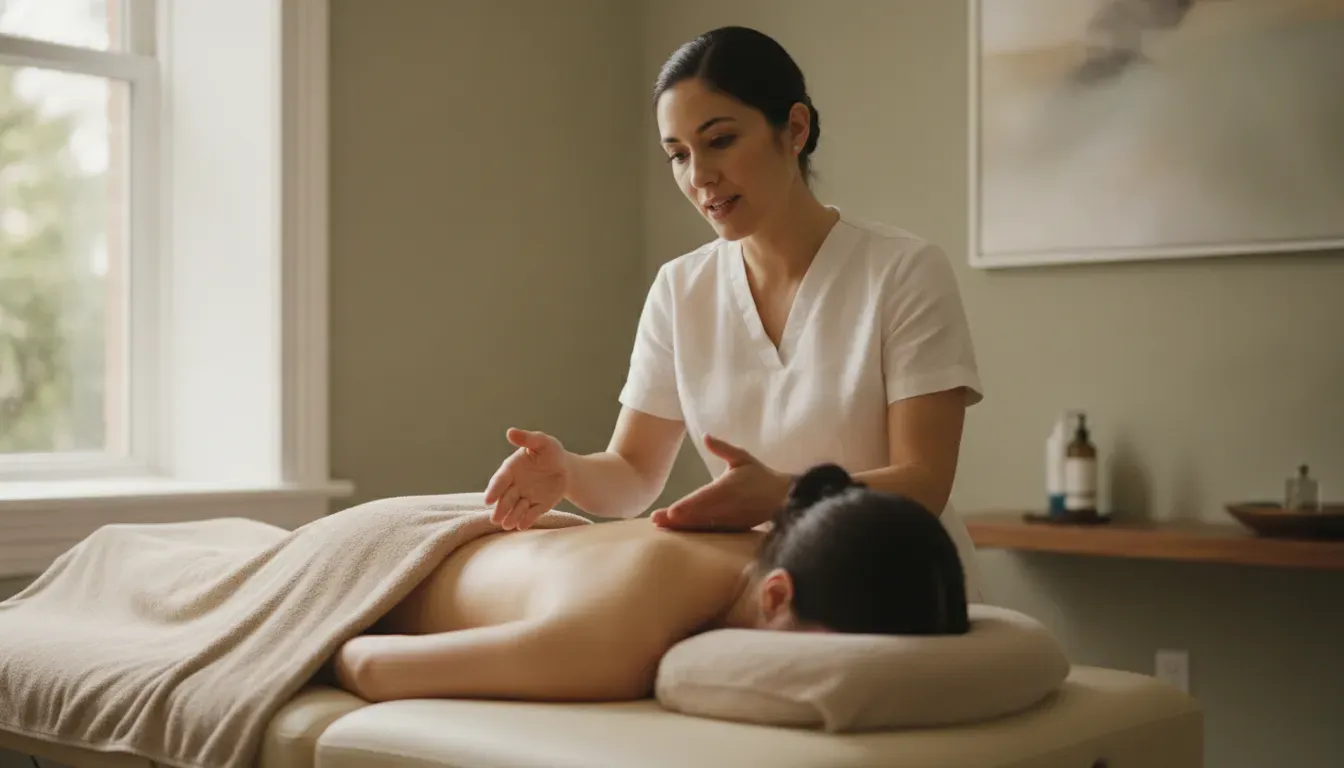

It’s frustrating to rub a sore shoulder all day, only to find the ache remains. Often, this is because the source of the problem isn’t where you feel the pain. Your body is an interconnected system, and tightness in your chest from slouching or an imbalance in your hips can cause your shoulder muscles to overwork and scream for help. A truly effective massage for tight shoulders requires a holistic approach. An expert therapist understands how to trace the pain back to its origin, addressing the root cause rather than just the symptom, which is the key to providing relief that actually lasts.
The persistent tightness you feel in your upper body isn’t just a simple muscle ache. It’s a complex issue involving overworked muscle fibers, restricted blood flow, and even your body’s hormonal response to stress. When your shoulders creep up toward your ears during a stressful day, your body is creating physical patterns that can lead to chronic pain, trigger points, and headaches. To find effective relief, it helps to understand what’s happening beneath the surface. This article breaks down the science behind your pain in simple terms and explains how a targeted massage for tight shoulders and neck can address these physiological problems, helping to release knots, reduce stress hormones, and promote genuine healing.
Key Takeaways
- Connect your habits to your pain: That persistent ache in your neck and shoulders often stems directly from your daily life, including things like poor desk posture and chronic stress. Recognizing these triggers is the first step to feeling better.
- View massage as a therapeutic solution: A professional massage is more than a luxury; it’s a powerful treatment that improves circulation, breaks down painful knots, and calms your nervous system. Specific modalities like Deep Tissue or Ashiatsu can target the deep-seated sources of your discomfort.
- Create a long-term wellness plan: To keep pain from returning, pair professional massages with consistent self-care. Small daily changes, such as creating an ergonomic workspace, taking movement breaks, and staying hydrated, will help you maintain the relief you feel after a session.
Why Are My Shoulders and Neck So Tight?
If you’ve ever felt that familiar, nagging ache in your neck and shoulders, you’re not alone. It’s one of the most common complaints we hear from clients. This tension can feel like a constant burden, making it hard to focus, sleep, or even just turn your head comfortably. The pain you feel is often a symptom of deeper issues that have been building up over time. Understanding the root causes is the first step toward finding real, lasting relief. Let’s look at the main reasons why your shoulders and neck are carrying so much tension.
The Many Causes of Shoulder Pain
Shoulder pain is rarely a simple issue with a single cause. While it can stem from an old injury or arthritis, the persistent ache many of us feel is often tied to daily habits like poor posture and stress, which create muscle imbalances. What’s more, the source of your pain might not even be in your shoulder; tension in your neck or back can refer pain directly to the shoulder joint. This is why a targeted massage is so effective. A skilled therapist understands this muscular network and can trace the discomfort back to its origin, addressing the true cause of your discomfort rather than just temporarily soothing the symptom.
Shoulder Pain Statistics
If your shoulders are aching, you are in very good company. Shoulder pain is one of the most common physical complaints, affecting people of all ages and lifestyles. It can make simple tasks like reaching for something on a high shelf, getting dressed, or even finding a comfortable sleeping position feel like a major challenge. This discomfort can stem from a sudden injury or develop gradually from repetitive motions and poor posture. Because it’s so prevalent, many people tend to ignore it or assume it’s just a normal part of aging or a busy life. But you don’t have to live with it. Recognizing how common this issue is can empower you to seek effective treatment instead of just pushing through the pain.
How Your Desk Job Affects Your Shoulders
Think about how much time you spend sitting: at a desk, in the car, or looking down at your phone. This modern lifestyle often leads to poor posture, where your head juts forward and your shoulders round. This position puts a tremendous amount of strain on your neck and upper back muscles. For every inch your head moves forward, it adds about 10 extra pounds of weight for your neck muscles to support. Over time, this causes muscle fatigue and tightness that can lead to chronic pain and stiffness. As Healthline explains, this tightness can make daily activities much harder than they need to be.
Why Stress Shows Up in Your Shoulders
Ever notice that your shoulders creep up toward your ears when you’re stressed? That’s your body’s natural fight-or-flight response kicking in. When you feel anxious or overwhelmed, your body releases stress hormones that cause your muscles to contract and tighten, preparing you for a perceived threat. The neck, shoulders, and jaw are common areas where people hold this tension. If you’re dealing with chronic stress, your muscles may stay in a semi-contracted state for long periods. This constant tension restricts blood flow and can lead to persistent soreness, knots, and even headaches.
The Source of Pain Isn’t Always Where You Think
It’s frustrating when you rub your shoulder all day, but the ache just won’t quit. Often, that’s because the real source of the problem isn’t where you feel the pain. Your body is a complex, interconnected system where tension in one area can show up as discomfort in another. That persistent knot in your shoulder might actually be a signal from a completely different muscle group that’s crying out for help. Understanding these connections is key to finding treatment that works. A skilled massage therapist knows how to trace the pain back to its origin, addressing the cause rather than just chasing the symptom.
How Tight Chest Muscles Affect Shoulders
Most of us spend our days with our arms in front of us—typing, driving, or scrolling on our phones. This lifestyle causes the muscles in your chest, known as the pectorals, to become short and tight. When your chest muscles are tight, they pull your shoulders forward and inward, rounding your posture and putting a huge strain on the muscles in your upper back and neck. The pain you feel in your shoulder blade could be your back muscles fighting a losing battle against the constant pull from the front. A truly effective therapeutic massage for shoulder pain won’t just focus on your back; it will also include work on your chest, neck, and even your biceps to release that forward pull and restore balance.
The Role of Your Back and Hips
The connections don’t stop at your chest. Your body works as a whole, and sometimes the tension in your shoulder can be traced all the way down to your hips. Large back muscles, like the latissimus dorsi (“lats”), connect your arms to your spine and pelvis, acting like a bridge between your upper and lower body. An imbalance or tightness in one hip can cause a subtle shift in your posture that forces your opposite shoulder to compensate, leading to strain and pain. This is why our experienced massage therapists take a holistic approach, assessing how different parts of your body influence each other to find the true source of your discomfort and provide lasting relief.
When Tightness Turns into Chronic Pain
The sharp pain or dull ache you feel is often just the “tip of the iceberg.” Beneath the surface, issues like muscle tension, trigger points (those tender “knots” you can feel), and tissue adhesions have likely been developing for a while. These problems don’t just appear overnight; they are the result of repetitive strain, old injuries, or ongoing stress. When muscles are overworked and don’t get a chance to recover, they can form these painful patterns. Addressing these underlying causes is key to breaking the cycle of pain, which is where our therapeutic massage services can make a significant difference.
How a Massage for Tight Shoulders Actually Works
When your neck and shoulders are tight, it can feel like you’re carrying the weight of the world. That constant ache can make it hard to focus, sleep, or just enjoy your day. While it’s tempting to think of massage as just a way to relax, it’s actually a powerful therapeutic tool that works with your body’s natural healing processes to provide lasting relief. A professional massage does more than just soothe sore spots; it creates real physiological changes that help your muscles recover and release tension.
The magic of a great massage lies in its ability to address the root causes of your pain. By applying skilled pressure and targeted techniques, a licensed massage therapist can improve your body’s circulation, break down stubborn knots, and even calm your nervous system. It’s a holistic approach that helps both your body and mind unwind. Understanding how these massage services work can help you appreciate the deep, restorative benefits you feel long after you’ve left the table. Let’s look at exactly what’s happening in your body during a therapeutic massage.
Improving Blood Flow to Heal Muscles
Have you ever noticed a warm, soothing sensation in your muscles during a massage? That’s a sign of increased circulation. When a therapist works on a tight area, the pressure helps to stimulate blood flow. This is incredibly important for muscle healing. Your blood acts as a delivery service, carrying fresh oxygen and vital nutrients to tired and damaged muscle tissues. This influx of resources helps your muscles repair themselves more efficiently. At the same time, improved circulation helps flush out metabolic waste products that can build up and cause soreness. A deep tissue or Swedish massage is especially effective at getting your blood moving, which reduces inflammation and helps your neck and shoulders feel loose and revitalized.
Breaking Down Painful Knots and Adhesions
Those hard, tender spots in your shoulders that feel like little pebbles are often called knots, or trigger points. These are tight bands of muscle fibers that can cause pain both in the immediate area and elsewhere in the body. Similarly, adhesions are areas where the fascia, the connective tissue surrounding your muscles, becomes stiff and stuck. This can restrict your range of motion and create chronic tension. A skilled therapist can use specific techniques to manually break down these knots and adhesions. This process releases the tension held deep within the muscle fibers, restoring flexibility and providing significant pain relief. Our unique Ashiatsu Deepfeet Bar Therapy is particularly good for this, as it allows for deep, consistent pressure that can release even the most stubborn knots.
Calming Your Nervous System to Ease Pain
The connection between stress and physical pain is undeniable. When you’re stressed, your body produces more of the hormone cortisol, which can increase muscle tension and sensitivity to pain. Massage therapy is an incredibly effective tool for lowering stress and its physical symptoms. The soothing, rhythmic pressure of a massage helps calm your nervous system and signals to your brain that it’s time to relax. This process encourages your body to release endorphins, which are natural pain-relieving chemicals that create a sense of well-being. The result is a powerful one-two punch: your cortisol levels drop, and your endorphin levels rise, leaving you feeling both mentally calm and physically comfortable. Sharing this experience with a couples massage can be an especially wonderful way to unwind.
Switching from “Fight or Flight” to “Rest and Digest”
Your body’s “fight or flight” response is a survival mechanism, but when it’s constantly triggered by daily stressors, your muscles pay the price. This heightened state, governed by the sympathetic nervous system, keeps your shoulders tense and ready for action. A massage acts as a powerful counter-signal. The consistent, soothing pressure tells your nervous system that the threat has passed and it’s safe to stand down. This allows your body to shift into the “rest and digest” state, managed by the parasympathetic nervous system. You’ll notice your breathing deepen, your heart rate slow, and your muscles finally begin to let go. It’s a profound reset that you can feel happening in real-time during any of our massage services.
How Massage Reduces the Stress Hormone Cortisol
This shift from “fight or flight” to “rest and digest” isn’t just a feeling—it creates measurable chemical changes in your body. When you’re stressed, your body floods with cortisol, a hormone that increases muscle tension and makes you more sensitive to pain. Massage therapy has been shown to significantly lower cortisol levels. As the therapist works to release physical tension, your brain gets the message to dial back its stress response. In its place, your body releases endorphins, which are natural pain-relievers and mood enhancers. This powerful combination—less cortisol, more endorphins—is why you leave a massage feeling not just physically looser, but also mentally clearer and more at ease. Adding Hot Himalayan Salt Stones can further enhance this process, deepening relaxation and promoting a sense of well-being.
Finding the Right Massage for Tight Shoulders
When you’re dealing with persistent tightness, a professional massage is one of the most effective ways to find real, lasting relief. While stretching and self-massage can help, a trained massage therapist can assess your specific issues and apply techniques that go far beyond what you can do at home. They understand the complex layers of muscle in the neck and shoulders and know how to release tension without causing more irritation. At Nola Bliss, our experienced therapists are dedicated to finding the right approach for you, whether you need deep, targeted work or a session focused on pure relaxation. We’ll talk with you about what you’re feeling and create a session designed to address the root cause of your discomfort.
When to Choose Deep Tissue for Chronic Knots
If you have stubborn knots that just won’t go away, a deep tissue massage is likely what you need. This technique uses slow, deliberate strokes and firm pressure to reach the deeper layers of muscle and connective tissue. It’s especially effective for chronic aches and pains. As one expert notes, “deep tissue massage is the best type of massage for neck and shoulder pain because it reaches the deeper muscles.” By targeting the source of your tension, a therapist can break down adhesions (those painful knots) and restore movement, helping you feel better long after you leave the table.
Ashiatsu: For When You Need Deep Pressure
For those who love deep pressure but find elbows and thumbs too pointy, Ashiatsu Deepfeet Bar Therapy is a fantastic alternative. In this unique massage, the therapist uses their feet to deliver broad, consistent pressure while using overhead bars for balance and support. This method allows for an incredibly deep yet comfortable massage. Ashiatsu provides “even, gliding pressure that penetrates deep into the muscles without discomfort.” This intense pressure is perfect for releasing tight, compressed muscles in the shoulders and back, offering a profound sense of relief that’s hard to achieve with other methods.
Swedish Massage for Gentle, All-Over Relaxation
Sometimes, neck and shoulder tension is a direct result of stress. When that’s the case, a Swedish massage can work wonders. While it’s known for being a gentler style, it’s a powerful therapy for stress relief. A Swedish massage “uses long, flowing strokes to promote relaxation and improve circulation,” which helps soothe sore muscles and calm your entire nervous system. By reducing stress hormones and easing your body into a state of rest, this classic massage can effectively melt away the tension you’re holding in your neck and shoulders, leaving you feeling refreshed and renewed.
Trigger Point Therapy to Target Specific Knots
Have you ever had a single, painful spot in your shoulder that just aches? That’s likely a trigger point. This therapy focuses on those tight, contracted muscle fibers that form from injury or overuse. A therapist applies direct, sustained pressure to these specific knots to encourage them to release. This technique can “effectively relieve pain by targeting specific knots and areas of tension.” Trigger point work is often incorporated into our other massage services to address particularly stubborn areas, providing focused relief exactly where you need it most.
Additional Techniques a Professional Therapist May Use
Beyond the well-known massage styles, a truly skilled therapist has a whole toolbox of specialized techniques they can weave into your session. These methods are designed to address specific issues like restricted movement or stubborn muscle guarding that don’t always respond to simple strokes. When you book a therapeutic massage, your therapist may incorporate these approaches to customize the treatment for your neck and shoulders. They listen not just to what you say, but to how your muscles respond under their hands, and adjust their technique to give you the most effective relief. This level of expertise is what separates a standard, one-size-fits-all massage from a truly healing experience tailored just for you.
Assisted Stretching
If your shoulders feel locked up and your neck has limited mobility, your therapist might incorporate assisted stretching into your session. This isn’t like the stretching you do on your own; it’s a guided process where the therapist supports your limbs and gently moves you into a deeper stretch than you could safely achieve alone. This technique is particularly beneficial for releasing chronically tight muscles and improving your overall flexibility. By carefully working to lengthen the muscles around the shoulder girdle and neck, your therapist can help restore your natural range of motion and alleviate the feeling of being “stuck,” making it a key part of our therapeutic massage services.
Compression and Wringing
During your massage, you might feel your therapist apply broad, firm pressure to your shoulders or use a gentle twisting motion. These are classic techniques known as compression and wringing. Compression uses sustained pressure to warm up the muscle tissue and improve blood flow, preparing the area for deeper work. According to experts at Physio.co.uk, this pressure also has a wonderful hormonal effect, helping your body reduce stress-inducing cortisol while releasing feel-good chemicals like serotonin and dopamine. This not only helps your muscles relax on a physical level but also calms your mind, making the entire experience more restorative.
Positional Release
For a knot that just won’t let go, sometimes the best approach isn’t more pressure, but a smarter one. Positional release is a gentle yet profound technique where the therapist moves your body into a position of maximum comfort, effectively “switching off” the spasming muscle. By holding this strain-free position for a minute or two, the nerve signals that are telling the muscle to stay tight are interrupted, allowing it to reset and relax from within. This process helps release tension held deep within the muscle fibers without the need for forceful manipulation, providing significant relief. It’s a testament to the advanced training and intuitive touch our dedicated therapists bring to every session.
DIY Relief: Self-Massage for Tight Shoulders
While nothing replaces the skilled hands of a professional massage therapist, you can manage tension between appointments with a few simple at-home techniques. Think of these methods as maintenance for your body, helping you address tightness before it becomes a bigger problem. When you need a quick fix after a long day at your desk, these self-care practices can make a world of difference. Combining gentle massage with targeted pressure and stretching gives you a well-rounded approach to keeping your neck and shoulders feeling their best.
Basic Kneading and Squeezing You Can Do Anywhere
One of the most intuitive ways to ease shoulder tension is through simple kneading. Sit in a comfortable, upright position and relax your shoulders. Take your right hand and reach across your body to the base of your neck on the left side. Gently squeeze the large muscle that runs along the top of your shoulder (your upper trapezius). Work your way from the neck out toward the shoulder, applying firm but gentle pressure. Hold each squeeze for a few seconds, breathe deeply, and release. This simple shoulder and neck massage helps increase blood flow and encourages tight muscles to relax. Repeat on the other side for balanced relief.
Specific Self-Massage Techniques
For those moments when you need immediate relief, these targeted self-massage techniques can be a lifesaver. They are designed to address the specific muscles that are most often responsible for neck and shoulder pain. By applying pressure to these key areas, you can help release knots, ease tension, and restore a sense of comfort and mobility. These exercises are simple enough to do at your desk, on the couch, or whenever you have a few minutes to spare.
Upper Trap Squeeze
You know that big, meaty muscle that connects your neck to your shoulder? That’s your upper trapezius, and it’s often the first to tense up when you’re stressed or hunched over a computer. To give it some relief, reach your right hand across your body and grasp the top of your left shoulder. Use your thumb and fingers to give the muscle a firm squeeze. Don’t just hold it there—the real magic happens with movement. While maintaining that pressure, slowly roll your shoulder forward and then backward a few times. You might feel some knots crunching under your fingers; that’s a sign you’re in the right spot. This combination of pressure and movement helps to manually release deep-seated tension. Breathe through it, and then switch sides, spending a minute or two on each shoulder.
Levator Scapulae Release
If you often get that sharp pain at the top of your shoulder blade, your levator scapulae muscle is likely the culprit. This muscle runs from your neck down to the top inside corner of your shoulder blade and gets tight from looking down at your phone. To find it, use the pointer and middle fingers of your right hand to feel for the upper corner of your left shoulder blade. The muscle you’re looking for is right there. Gently press into this spot and make small circles, searching for any particularly tender points. When you find a knot, hold steady pressure on it for up to a minute. Remember to breathe deeply the entire time, as this signals to your muscle that it’s safe to relax. Repeat on the other side to feel more even and open.
Suboccipital Release
Tension headaches often start not in your head, but in the tiny muscles at the base of your skull. These are your suboccipital muscles, and they work hard all day to support your head. When they get tight, they can refer pain up into your scalp. To release them, place your fingertips on the back of your neck, right where it meets your skull. You should feel two small hollows on either side of your spine. Gently press your fingers into these spots and tilt your head back slightly to increase the pressure. You can hold it steady or make small, slow circles. This area can be sensitive, so start with light pressure and gradually increase it as the muscles begin to relax. A minute of this can provide incredible relief from headache pressure.
Pec Minor Release
Shoulder pain isn’t always about your back; sometimes the problem is in the front. Your pectoral (chest) muscles, particularly the pec minor, can become short and tight from slouching, typing, or driving. This pulls your shoulders forward, creating that rounded posture and straining your back muscles. To counteract this, you need to release the front of your body. Find the pec minor muscle by feeling for the fleshy area on your chest just below your collarbone, toward your shoulder. Using the fingers of your opposite hand, apply firm, direct pressure to this spot. Hold it for 30 to 90 seconds, breathing deeply until you feel the muscle soften and release. Opening up your chest this way allows your shoulders to fall back into a healthier, more relaxed alignment.
How to Use a Tennis Ball on Stubborn Knots
For those stubborn, deep knots that feel out of reach, a tennis ball can be your best friend. This simple tool allows you to apply targeted pressure to trigger points, mimicking the effects of a deep tissue massage. To start, stand with your back against a wall and place the tennis ball between your shoulder blade and your spine. Gently lean back, using your body weight to apply pressure to the tight spot. You can roll the ball around by bending your knees or shifting your weight to find the exact source of tension. Hold the pressure for 20 to 30 seconds while breathing deeply. This technique is perfect for breaking up adhesions that cause persistent pain, but for truly chronic knots, a professional Ashiatsu Deepfeet Bar Therapy session can provide much deeper, lasting relief.
Other Massage Tools for Home Relief
Percussive Massage Guns
Beyond your own hands or a simple tennis ball, specialized gadgets can offer a more intense form of relief. Percussive massage guns have become incredibly popular for a reason. These powerful tools use rapid, targeted pulses to work deep into your muscle tissue. They are excellent for breaking up tight muscle fibers and flushing out lactic acid, especially in dense areas like the upper back and shoulders. Think of it as a jackhammer for your knots, but in a good way. While a massage gun can provide fantastic spot treatment for post-workout soreness or a particularly stubborn knot, it’s important to use it correctly and avoid bony areas or the front of your neck to prevent injury.
Heated Wraps and Acupressure Mats
Sometimes, the best relief comes from combining gentle pressure with soothing warmth. Heated shoulder wraps are designed to drape comfortably over your neck and traps, delivering consistent heat that helps relax muscles and make them more pliable. Many even include a gentle kneading function, giving you a two-in-one treatment. Another simple yet effective tool is an acupressure mat. These mats are covered in small plastic spikes that apply pressure to hundreds of points on your back and shoulders as you lie on them. This can help stimulate circulation and trigger the release of endorphins, your body’s natural pain relievers. If you find that heat is especially beneficial for you, consider adding our Hot Himalayan Salt Stones enhancement to your next professional massage for a deeply penetrating and mineral-rich warmth.
Simple Stretches to Enhance Your Relief
Stretching is the perfect partner to self-massage. After you’ve worked on loosening the muscles, gentle stretches help restore flexibility and prevent tightness from returning. A great place to start is with a simple neck stretch. While sitting or standing, slowly tilt your right ear toward your right shoulder until you feel a gentle stretch along the left side of your neck. Hold for 20 seconds, then repeat on the other side. You can also perform shoulder rolls by lifting your shoulders up toward your ears, then rolling them back and down. Incorporating a few stretches for tight shoulders into your daily routine helps strengthen the muscles and maintain mobility.
Tips for a Partner Shoulder Massage
Helping your partner unwind with a shoulder massage is a wonderful way to connect and provide immediate relief. While it doesn’t replace a professional session, a thoughtful at-home massage can ease surface tension and show you care. The key is to maintain open communication about pressure and use simple, safe techniques. With a few pointers, you can address tightness in their neck and shoulders, creating a relaxing moment for you both to share.
At-Home Techniques to Try
When giving a massage at home, the goal is to soothe, not strain. You don’t need complicated moves to be effective. Have your partner sit in a comfortable chair where you can easily stand behind them, giving you good leverage while they relax. Remember to check in frequently about the pressure you’re using—what feels good to one person might be too much for another. Focusing on a couple of basic, proven techniques can make a big difference in releasing tension.
Thumb Crawling
This technique is great for warming up the muscles across the tops of the shoulders. Stand behind your partner and place your thumbs on their shoulders, just outside the neck. Apply firm, steady pressure and “crawl” your thumbs outward toward the shoulder joints. Once you reach the edge, crawl them back toward the neck. Repeat this motion several times to help loosen the entire upper trapezius muscle.
Pin and Stretch
For a deeper release, this method combines pressure with movement. Use your fingers to apply sustained pressure to a tight spot on the muscle connecting the neck to the shoulder blade. While holding this pressure, ask your partner to slowly lift their arm up and out to the side, then lower it. This action lengthens the muscle while it’s compressed, helping to release knots more effectively.
Why a Professional Couples Massage Can Be More Effective
While at-home massages are a lovely gesture, they can only go so far. A professional therapist understands anatomy and can apply specific techniques that are impossible to replicate without training. For a truly restorative experience, a professional couples massage elevates the entire concept. Instead of one person working, you both get to relax and receive expert care simultaneously from licensed therapists in a serene environment. It transforms a simple back rub into a shared therapeutic journey, allowing you both to unwind and heal together.
How to Prevent Neck and Shoulder Pain for Good
While a great massage provides immediate relief, the secret to keeping neck and shoulder pain at bay lies in your daily routines. Think of your massage therapist as your partner in wellness. We can work out the deep-seated tension, but incorporating a few simple habits into your life will help you maintain that feeling of ease and prevent tightness from returning. These small adjustments can make a huge difference in your long-term comfort and mobility.
Set Up Your Workspace to Avoid Pain
If you spend hours at a desk, your workspace setup is a major factor in your neck and shoulder health. Poor posture is a leading cause of chronic tension, as hunching over a keyboard puts continuous strain on your muscles. To fix this, adjust your monitor so the top of the screen is at eye level. Your chair should support the natural curve of your lower back, and your feet should rest flat on the floor. Keep your keyboard and mouse close enough that your elbows can stay comfortably by your sides. A deep tissue massage can help correct existing postural strain and release the tight muscles that have developed over time.
Make Daily Stretches and Movement a Habit
Our bodies aren’t designed to stay in one position for hours. When you sit still, your muscles can shorten and tighten, leading to stiffness and pain. Set a reminder to get up and move for a few minutes every hour. A simple walk around the room can do wonders. Incorporate gentle stretches into your day, like slowly tilting your head from side to side or rolling your shoulders up and back. Stretching your shoulders regularly helps loosen and strengthen the muscles, preventing problems before they start. Think of it as essential maintenance for your body, just like your regular massage appointments.
The Simple Power of Hydration and Heat Therapy
Two of the simplest yet most effective habits for muscle health are staying hydrated and using heat. Your muscles need water to function properly, so be sure to drink plenty of water throughout the day. When you feel tension creeping in, apply a warm compress or take a warm shower to soothe the area. Heat helps increase blood flow, which relaxes tight muscles and promotes healing. For an even more therapeutic experience, you can add Hot Himalayan Salt Stones to your next massage. The gentle heat combined with targeted pressure provides a deeply relaxing treatment for stubborn knots.
Post-Massage Care and Recovery
The incredible feeling of relief you have after a massage doesn’t have to end when you walk out the door. The 24 hours following your session are a critical window for your body to process the therapeutic work and solidify the benefits. By taking a few simple steps, you can extend the positive effects of your massage, reduce any potential soreness, and help your muscles continue to heal. Think of post-massage care as the final, essential step in your treatment, ensuring you get the most out of your investment in your well-being.
What to Do After a Deep Tissue Massage
After an intense session like a deep tissue or Ashiatsu massage, your body needs a little extra care to recover. First and foremost, drink plenty of water. Your massage helped release metabolic waste from your muscle tissues, and staying hydrated helps your system flush it all out. You might feel some soreness, which is completely normal. To ease this, take a warm bath or use a heating pad to soothe your muscles. It’s also important to avoid any strenuous exercise for the rest of the day. Instead, opt for gentle movements and stretches, like slowly rolling your shoulders, to maintain your newfound flexibility. Giving your body this time to rest and integrate the work is key to making the benefits last.
How Often Should You Get Massages for Pain?
The ideal frequency of massage depends on your specific goals. If you’re working on a chronic pain issue, you might start with weekly sessions to get ahead of the pain cycle. As your muscles begin to release and your pain subsides, you can transition to a maintenance schedule of every two to four weeks. A professional massage is more than a luxury; it’s a powerful treatment that improves circulation, breaks down painful knots, and calms your nervous system. Regular sessions are a proactive way to manage pain and prevent tightness from returning. The best approach is to talk with your therapist, who can help you create a personalized plan based on your body’s response to our massage services.
When Should You Book a Professional Massage?
Knowing when to book a massage can be the difference between nipping pain in the bud and letting it become a chronic problem. While a massage is always a wonderful treat, it’s also a powerful tool for managing your physical health. Whether you’re dealing with a sudden ache or want to stay ahead of future issues, understanding the right time to seek professional help is key. Listening to your body’s signals can help you decide if you need immediate relief, preventative care, or if it’s time to address some warning signs.
For Immediate Relief from Acute Pain
If you wake up with a stiff neck that won’t turn or feel a sharp, nagging pain in your shoulder after a long day, it’s time for a targeted, professional massage. Acute pain is your body’s way of sending an SOS signal. A therapeutic massage can provide immediate relief by focusing on the source of the discomfort. For deep, persistent aches, a deep tissue massage is especially effective because it targets the underlying layers of muscle and connective tissue where tension is stored. A skilled therapist can work to release the specific muscles that are causing you pain, helping you feel better faster than if you just tried to wait it out.
As a Proactive Step for Long-Term Health
You don’t have to be in pain to benefit from a massage. Think of it like regular maintenance for your body, similar to exercise or healthy eating. Consistent massages can prevent the buildup of tension that leads to chronic pain in the first place. By scheduling regular sessions, you keep your muscles pliable, improve circulation, and manage everyday stress before it settles into your shoulders. This proactive approach is one of the best ways to maintain a healthy, pain-free body. Making massage a part of your wellness routine helps you stay on top of your physical and mental health, ensuring small issues don’t turn into bigger problems down the line.
Telltale Signs You Need to Book a Massage
Sometimes, your body sends clear signals that it needs attention. Neck and shoulder pain often results from issues that build up over time, like muscle tension and trigger points. If you experience recurring headaches, have a limited range of motion, or feel a constant, dull ache in your neck and shoulders, it’s a good idea to book an appointment. Another sign is if you find yourself constantly trying to stretch or rub a sore spot that never seems to go away. While massage is incredibly helpful, it’s also important to know when to see a doctor. If you have intense, lasting pain, muscle weakness in your arms, or other symptoms like a fever, consult a physician first.
Related Articles
Frequently Asked Questions
How often should I get a massage for chronic neck and shoulder pain? The ideal frequency really depends on your specific situation. If you’re dealing with long-term, persistent pain, you might find that coming in every two to four weeks initially helps break the cycle of tension. Once you start feeling significant relief, you can often transition to a maintenance schedule, perhaps once a month or every six weeks. The most important thing is to listen to your body and work with your therapist to create a plan that feels right for you.
I’m worried a deep massage will be painful. Should it hurt? This is a great question, and the simple answer is no, it shouldn’t hurt in a bad way. A deep tissue or Ashiatsu massage works on muscles far beneath the surface, so you will likely feel a satisfying, therapeutic intensity. However, there’s a big difference between productive pressure and sharp pain. You should always feel comfortable speaking up if the pressure is too much. Our therapists are experts at adjusting their technique to work right at your edge without crossing into discomfort.
What’s the difference between a Swedish and a deep tissue massage for shoulder pain? Think of it this way: if your tension is mostly caused by stress and you just feel generally tight and sore, a Swedish massage is perfect. It uses long, flowing strokes to promote relaxation and increase circulation, which helps soothe tired muscles. If you have specific, stubborn knots and a history of chronic pain, a deep tissue massage is designed to apply more focused pressure to release that deep-seated tension.
Can I still benefit from a massage if my pain isn’t severe? Absolutely. In fact, that’s one of the best times to get one. You don’t have to wait until you’re in serious pain to seek relief. Regular massages are a fantastic form of preventative care. They help manage everyday stress and address minor muscle tightness before it has a chance to build into a bigger, more painful problem. Think of it as essential maintenance that keeps your body feeling balanced and mobile.
Besides massage, what’s one simple habit I can start today to help my posture? One of the most effective changes you can make, especially if you work at a computer, is to adjust your monitor height. The top of your screen should be at or just slightly below eye level. This small adjustment prevents you from craning your neck down or jutting your head forward, which is a primary cause of strain on your neck and shoulder muscles. It’s a simple fix that can make a huge difference over time.