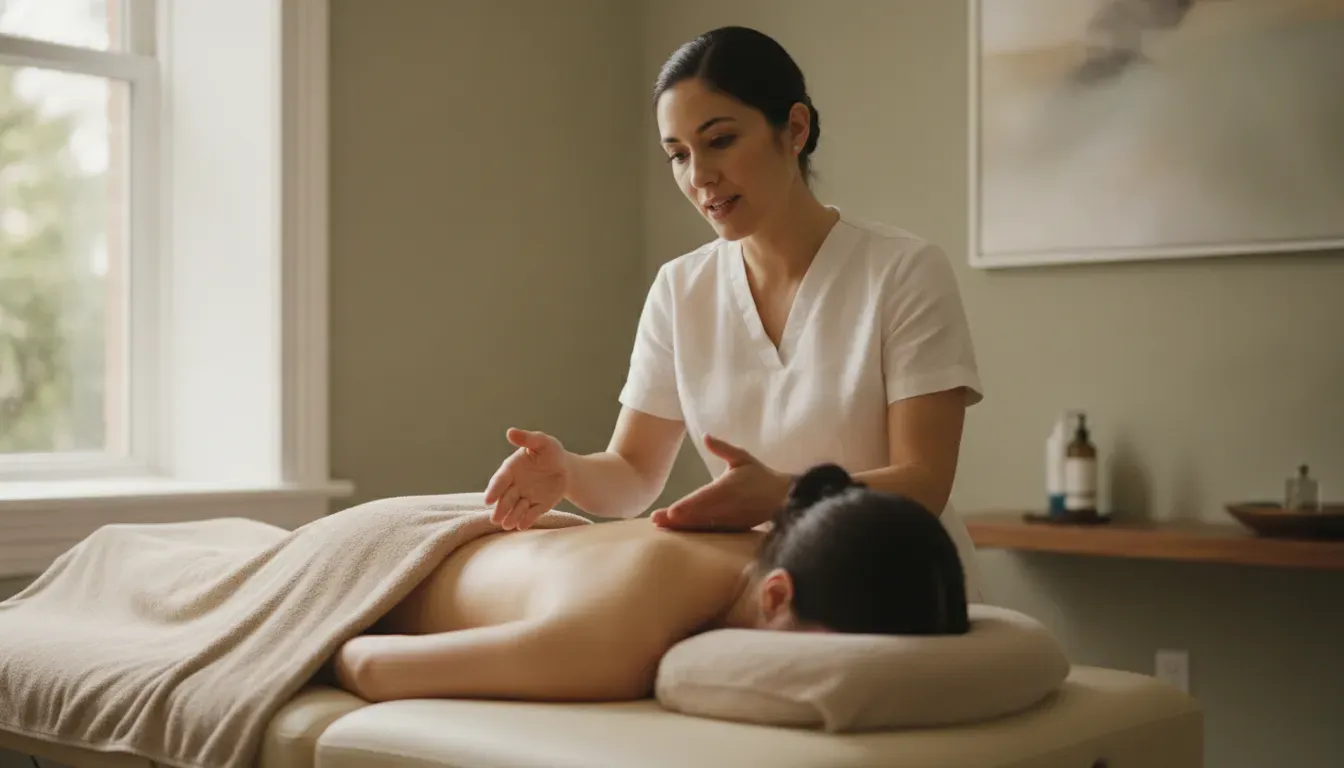

If you’ve ever told someone, “I carry all my stress in my shoulders,” you know exactly how physical emotional tension can be. That tightness across your upper back, those knots that feel like little rocks under your skin—it’s your body holding onto daily pressure. Left unchecked, this tension can lead to chronic pain, headaches, and stiff movement. While you can’t always eliminate stress, a targeted upper back massage is one of the best ways to manage its physical toll. It helps your muscles finally let go, sending a powerful signal to your mind that it’s okay to relax.
Key Takeaways
- Go Beyond a Temporary Fix: An upper back massage targets the root causes of your discomfort—from poor posture to built-up stress—by releasing deep muscle tension and improving circulation for lasting relief.
- Combine Professional and At-Home Care: While a licensed therapist offers the expertise to resolve complex knots, simple self-massage techniques are perfect for managing daily stiffness and maintaining your results between appointments.
- Consistency is the Key to Lasting Change: Treat massage as proactive maintenance rather than a one-time indulgence. Creating a regular schedule helps prevent tension from building up, keeping you flexible and pain-free long-term.
What Can an Upper Back Massage Do for You?
If you’ve ever felt that nagging ache between your shoulder blades or a tight, burning sensation across your shoulders, you know exactly where your upper back is—and how much trouble it can cause. This area is a common storage unit for physical and emotional stress, whether it comes from long hours hunched over a computer, a tough workout, or just the daily grind. An upper back massage is a treatment that focuses specifically on the muscles surrounding your upper and middle spine. It’s more than just a general back rub; it’s a targeted approach designed to address the unique muscles that support your neck, shoulders, and thoracic spine. Using a variety of hands-on techniques, a skilled therapist works to release built-up muscle tension, soothe soreness, and melt away stiffness. The goal is to improve blood flow to the area, which delivers a fresh supply of oxygen and nutrients to your muscles. This not only feels incredible in the moment but also helps keep your muscles healthy and resilient long after you leave the table. It’s an effective way to find relief and restore comfortable movement to your upper body.
Get to Know Your Upper Back Anatomy
You don’t need to be a doctor to understand where your pain is coming from. Your upper back is a complex network of muscles, and a few key players are often the source of discomfort. These include the upper trapezius, which runs from your neck to your shoulders (it’s the one that gets rock-hard when you’re stressed), and the rhomboids, located between your shoulder blades. Your therapist will also pay attention to the muscles around your scapula, or shoulder blade, and the levator scapulae, which runs up the side of your neck. Understanding this anatomy allows our licensed massage therapists to pinpoint the source of your pain and provide truly targeted, effective relief.
The Major Muscle Groups: Trapezius and Rhomboids
When you feel that familiar tension across your shoulders, you’re likely noticing the trapezius muscle. This large, diamond-shaped muscle covers your neck, shoulders, and mid-back, and it’s often the first to tighten up from stress or poor posture. A skilled therapist knows a little secret: to release the upper part of the trapezius, they often need to work on the lower part first. Tucked underneath are the rhomboids, the muscles connecting your shoulder blades to your spine, which is where you often feel those deep, persistent knots. A targeted deep tissue or Swedish massage focuses on smoothing out these major muscle groups, providing that immediate sense of relief and release you’re looking for.
Deeper Muscles: Erector Spinae and Serratus Posterior Superior
Beneath the surface, a whole other team of muscles is hard at work. The erector spinae group runs vertically along your spine, helping you stand up straight, while smaller muscles like the serratus posterior superior assist with breathing. These deeper muscles can be tricky to reach, but they often hold underlying tension that contributes to chronic pain. An experienced therapist uses specific techniques to access them. For example, by gently lifting and moving your shoulder blade, a therapist can work on the muscles hidden underneath, providing a more thorough and lasting release. This is where professional expertise truly makes a difference, as it requires a deep understanding of anatomy to address these less accessible sources of discomfort safely and effectively.
How Connected Muscles Affect Your Back
Pain is rarely an isolated issue. The muscles in your upper back, shoulders, and even your lower back are all part of an interconnected system. This means that tightness in your shoulders could be pulling on your neck and causing headaches, or that your upper back is overcompensating for tension in your lower back. If you’ve been trying to fix your upper back pain without success, it might be because the root of the problem is somewhere else. A great massage therapist understands this and will assess your posture and movement to see the bigger picture. They know that to truly resolve your upper back pain, they may need to address tension in connected areas for comprehensive, lasting relief.
How Massage Works to Ease Tension
So, how does a massage actually make you feel better? It works in a few powerful ways. First, it helps decrease tension by encouraging tight, contracted muscles to relax and let go. This alone can provide immense relief from that constant feeling of tightness. Second, massage promotes healing by increasing circulation. Better blood flow brings more oxygen and nutrients to your muscle tissues, helping them repair and strengthen. It also helps your lymphatic system flush out metabolic waste. Finally, all of this works together to decrease pain, whether it’s caused by an old injury, poor posture from sitting at a desk, or general overuse. A Deep Tissue or Swedish Massage is fantastic for addressing these exact issues and helping you feel like yourself again.
Why Your Upper Back Will Thank You for a Massage
An upper back massage is more than just a relaxing treat—it’s a powerful tool for your overall well-being. When a skilled therapist focuses on the muscles surrounding your shoulders, neck, and upper spine, they’re doing more than just rubbing away aches. They’re helping your body function better on multiple levels. From easing chronic pain to improving your posture and even calming your mind, the positive effects can be felt long after you leave the massage table. Let’s look at some of the key benefits you can expect.
Say Goodbye to Aches and Pains
So many of us carry tension in our upper back and shoulders, leading to persistent aches, stiffness, and knots. An upper back massage directly addresses this by working to release tight muscle fibers. Through targeted pressure and soothing strokes, your therapist can encourage deep relaxation in the muscles, easing the tightness that causes discomfort. This process helps with both sudden aches from a long day and the chronic pain that builds up over time. By improving muscle flexibility and reducing tension, a professional deep tissue or Swedish massage can provide significant and lasting relief.
Stand Taller with Better Posture
If you spend hours hunched over a computer or looking down at your phone, you’re probably familiar with the dreaded “desk slump.” This poor posture is often caused by tight, overworked muscles in your upper back and chest that pull your shoulders forward. A massage helps by loosening these specific muscles, making it easier for your body to return to a more natural, upright alignment. When your muscles are relaxed and flexible, standing and sitting straight feels less like a chore and more like second nature. Better posture not only looks more confident but also helps prevent future strain and pain.
Melt Away Stress and Find Your Calm
There’s a strong connection between your mind and your muscles, and the upper back is a common place for stress to settle. When you feel anxious or overwhelmed, your shoulders might creep up toward your ears without you even noticing. An upper back massage helps break this cycle. As the physical tension melts away, it sends a powerful signal to your brain to relax. Massage has been shown to increase the body’s production of “feel-good” hormones like serotonin and dopamine while lowering stress hormones like cortisol. This leaves you feeling calmer, clearer, and more centered both physically and mentally.
Improve Blood Flow and Speed Up Recovery
Effective massage techniques do wonders for your body’s internal transportation systems. The pressure applied during a session helps improve blood flow, which means more oxygen and vital nutrients can reach your muscle tissues. This enhanced circulation is key for helping muscles repair themselves and stay healthy. At the same time, massage stimulates the lymphatic system, which is responsible for clearing metabolic waste and toxins from your body. This process can reduce inflammation and support your body’s natural healing abilities, making it an excellent therapy for recovery. For a treatment that offers broad, consistent pressure to really get things flowing, consider Ashiatsu Deepfeet Bar Therapy.
Massage for Post-Surgery Recovery
Recovering from surgery isn’t just about healing at the incision site; it’s about helping your whole body get back on track. After a procedure, you’re often less active, which can lead to stiffness and tension, particularly in your upper back and shoulders. Once you have your doctor’s approval, a gentle massage can be an incredible tool for recovery. It works by relaxing tight muscles to ease post-operative pain and discomfort. More importantly, it supports your body’s internal healing mechanisms. By boosting the lymphatic system, massage helps reduce swelling and clear away waste products, which is crucial for a clean recovery. The improved circulation also brings a fresh supply of oxygen and nutrients to your tissues, helping them repair more efficiently. This gentle, therapeutic support can make a significant difference in how quickly and comfortably you bounce back.
Do You Need an Upper Back Massage? Signs to Look For
It’s easy to push through the day, ignoring the little aches and pains that crop up. We tell ourselves that the tightness between our shoulder blades is just a normal part of life. But that nagging discomfort is your body’s way of sending a signal—one that’s worth listening to. While any time is a good time for self-care, certain signs indicate that your upper back is in serious need of attention from a professional.
Recognizing these cues is the first step toward finding relief. Maybe you’re dealing with a persistent ache that just won’t quit, or perhaps you spend your days hunched over a computer. Stress can also manifest as tight, painful knots in your shoulders, while an active lifestyle can leave your muscles sore and in need of recovery. If any of these situations sound familiar, a targeted upper back massage could be exactly what you need to feel like yourself again. Let’s look at the key moments when booking a massage is less of an indulgence and more of a necessity.
When Stiffness and Aches Won’t Go Away
If you wake up feeling stiff or live with a constant, dull ache in your upper back, it’s time to stop ignoring it. This kind of chronic discomfort is more than just an annoyance; it’s a sign that your muscles are holding onto deep-seated tension. An upper back massage can be incredibly helpful for these sudden or persistent pains. By focusing on your specific problem areas, a skilled therapist can work to relax tight muscles, reduce tension, and improve your overall muscle flexibility. A professional massage service provides the targeted relief needed to address the root cause of your stiffness, helping you move more freely and without pain.
If You Spend Your Day Hunched Over a Desk
Many of us spend hours every day sitting at a desk, leaning toward a screen. This forward-hunching posture puts a tremendous amount of strain on the muscles in your upper back, neck, and shoulders, leading to tightness and pain. Over time, this can contribute to poor posture that persists even when you’re away from your desk. A therapeutic massage helps counteract these effects by loosening the overworked muscles and easing the tension that builds up from prolonged sitting. A Deep Tissue or Swedish Massage can be particularly effective, helping to reset your alignment and relieve the discomfort caused by your daily grind.
When Stress Shows Up as Knots in Your Back
Have you ever noticed that when you’re stressed, your shoulders seem to creep up toward your ears? Emotional and mental stress often manifests physically, creating tight, painful knots in the muscles of your upper back and neck. These knots, or trigger points, can be a major source of discomfort. Massage is a powerful tool for stress management because it helps your body relax on a physiological level. It can lower levels of the stress hormone cortisol while increasing the production of “feel-good” hormones like serotonin and dopamine. This helps ease the built-up tension in your muscles, leaving you feeling both mentally and physically lighter.
To Speed Up Your Post-Workout Recovery
Whether you’re a dedicated athlete or a weekend warrior, muscle soreness is a familiar part of an active lifestyle. Pushing your body during a workout creates tiny micro-tears in your muscles, and the resulting inflammation can leave you feeling stiff and sore. An upper back massage can be a game-changer for your recovery process. It helps relax tired muscles, reduce tightness, and improve healing by stimulating your lymphatic system to clear out waste products. For an especially deep recovery session, an intense modality like Ashiatsu Deepfeet Bar Therapy can work wonders, helping you get back to your routine faster and with less discomfort.
Which Massage Technique Is Right for Your Back Pain?
When it comes to upper back pain, there’s no one-size-fits-all solution. A licensed massage therapist has a whole toolkit of techniques to draw from, each designed to address pain in a different way. Depending on whether your pain is from stress, posture, or an old injury, your therapist might recommend a specific style or even blend a few together for a custom session. Understanding these techniques can help you communicate what you need and find the relief you’re looking for.
Swedish Massage for Gentle Relaxation
If you’re new to massage or just looking to unwind and soothe general soreness, a Swedish massage is a fantastic place to start. Think of it as a full-body reset. Your therapist uses light to firm strokes with their hands and fingers to warm up your muscles, making them more flexible and easing tightness. This gentle approach is incredibly effective for reducing tension and preparing your muscles for deeper work if needed. It’s the classic technique for promoting relaxation and improving circulation, leaving you feeling refreshed and balanced.
Deep Tissue Massage to Target Stubborn Knots
For those stubborn, persistent knots that just won’t go away, a deep tissue massage offers more targeted relief. This technique goes beyond the surface to address the deeper layers of muscle and connective tissue. Your therapist will use their knuckles, elbows, or thumbs to apply firm, sustained pressure on tight spots, especially around the shoulder blades where tension loves to hide. This method is designed to break down muscle adhesions (those painful knots) and relieve chronic pain, making it a go-to for anyone dealing with long-term stiffness or recovering from an injury.
Ashiatsu for the Deepest Pressure Imaginable
If you love deep pressure but want it to feel broad and consistent, you have to try Ashiatsu. This unique and powerful therapy is a specialty here at Nola Bliss. During an Ashiatsu massage, the therapist uses their feet to deliver deep, gliding pressure. With the help of overhead bars for balance, they can apply a profound and consistent pressure that’s hard to achieve with hands alone. This technique is incredibly effective for relieving deep-seated tension throughout the upper back, providing a uniquely satisfying and therapeutic experience for those who need serious muscle work.
Trigger Point Therapy to Release Tight Spots
Sometimes, the source of your pain is a single, tiny, hyper-irritable spot in a muscle—what’s known as a trigger point. Trigger point therapy is a highly focused technique designed to release these specific knots. A therapist applies direct, sustained pressure to the trigger point until the tension releases. This process helps to deactivate the knot and alleviate referred pain, which is when a trigger point in one area causes pain somewhere else. By increasing blood flow to the affected spot, this technique helps the muscle return to its normal, relaxed state.
A Deeper Look: How a Professional Therapist Works
A professional massage is a carefully choreographed sequence of techniques. It’s not just about rubbing sore muscles; it’s a systematic approach that respects your body’s anatomy. A licensed therapist understands how to prepare your muscles, release deep-seated tension, and create lasting change. They use a combination of foundational and advanced techniques, each with a specific purpose, to deliver a truly therapeutic experience. This methodical process is what separates a professional treatment from a simple back rub and is the key to unlocking genuine relief.
The Art of the Warm-Up: Palpation and Preparation
Before diving into deep work, a skilled therapist always starts with a warm-up. This crucial first step involves palpation—using their hands to feel the texture, temperature, and tension in your muscles. It’s a way for them to assess your unique needs and map out the problem areas. The warm-up phase uses gentle techniques to increase blood flow to the upper back, which warms the muscle tissue and makes it more pliable. This preparation not only makes the deeper work more effective but also ensures the entire experience is comfortable and safe, allowing your body to relax and accept the treatment.
Effleurage: Long, Gliding Strokes
The massage often begins with effleurage, which consists of long, gliding strokes applied with the whole hand. Your therapist will use these sweeping motions to apply oil or lotion and introduce their touch to your body. The strokes are typically directed toward the heart to support circulation and begin the process of warming the muscles. This technique is incredibly soothing and serves as a gentle introduction to the massage, calming your nervous system and preparing the superficial layers of muscle for the more focused work to come. It’s a foundational move in nearly every massage, especially a classic Swedish Massage.
Compressions: Warming Up the Muscles
Another key warm-up technique is compression. This involves the therapist using their palms or a soft fist to apply rhythmic pressure to large muscle groups across your upper back. Instead of gliding, this motion presses directly down into the muscle and then releases. This pumping action is excellent for increasing local blood flow and bringing warmth deep into the tissue. Compressions help to soften the muscles and provide a general sense of release before the therapist begins to address specific knots and tight spots. It’s an effective way to prepare the body for the deeper, more targeted work that follows.
Techniques for Releasing Deep Tension
Once your muscles are properly warmed and receptive, your therapist will transition to techniques designed to address the deeper sources of your discomfort. This is where the real therapeutic work begins. Using more focused pressure and specific movements, they can target the stubborn knots, adhesions, and chronic tension that cause pain and restrict movement. These methods are designed to work on the deeper layers of muscle and the surrounding connective tissues, providing relief that goes far beyond the surface. This is the part of the massage that truly resolves those persistent aches and pains.
Petrissage: Kneading Out the Knots
Petrissage is a classic massage technique that involves kneading, squeezing, and rolling the muscles. Using their palms, fingertips, or knuckles, the therapist lifts the muscle tissue away from the bone and works it in a circular or rhythmic motion. This action helps to release deep-seated tension, improve circulation within the muscle belly, and flush out metabolic waste. It’s particularly effective for breaking up the general tightness across the shoulders and between the shoulder blades, making it a cornerstone of any effective therapeutic massage for upper back pain.
Frictions: Breaking Down Adhesions
When you have a specific, stubborn knot, your therapist may use friction techniques. These are highly targeted movements, often using a thumb or fingertip to apply deep, focused pressure directly to the problem area. The therapist will use small circular or cross-fiber strokes to create friction against the muscle fibers. This helps to break down adhesions—bands of painful, rigid tissue—and realign the muscle fibers. This technique is essential for relieving the tension that comes from holding your shoulders up in elevation and is a key component in a truly effective deep tissue massage.
Myofascial Release and Skin Rolling
Sometimes, the tightness isn’t just in the muscle but in the fascia—the thin web of connective tissue that surrounds it. Myofascial release involves applying slow, sustained pressure to gently stretch and lengthen this tissue, which can feel incredibly freeing. Another technique, skin rolling, involves the therapist gently lifting and rolling the skin between their fingers and thumbs. This helps to loosen adhesions between the skin and the underlying muscle, improving flexibility and reducing that feeling of being “stuck” or stiff. Both techniques are fantastic for restoring mobility and easing tension.
Advanced Strategies for Lasting Relief
A truly great massage goes beyond just applying techniques; it involves a thoughtful strategy tailored to your body. Experienced therapists, like the dedicated professionals on our team, use their deep understanding of anatomy to work intelligently, ensuring the relief you feel on the table lasts for days and weeks to come. This involves working methodically through layers of muscle and sometimes incorporating gentle movement to enhance the effectiveness of the treatment. These advanced approaches are what turn a good massage into a truly transformative one, addressing the root cause of your discomfort for long-term results.
Working in Layers: From Superficial to Deep
An expert therapist never just jumps straight into deep pressure. Instead, they work in layers, starting with the muscles closest to the surface and gradually moving to the deeper ones beneath. This systematic approach allows the superficial muscles to relax and “get out of the way,” granting the therapist easier and more effective access to the deeper sources of tension. This method is not only more comfortable for you but also far more effective for creating lasting change. It respects your body’s natural response to pressure and ensures that the deep work is both productive and therapeutic.
Using Passive Movement to Enhance the Massage
To take the treatment a step further, a therapist might incorporate passive movement. This means they will gently move your arm or shoulder into different positions while working on the surrounding muscles. For example, by carefully lifting your arm and drawing your shoulder blade back, a therapist can gain much better access to the rhomboid muscles located between the scapula and the spine. This technique allows them to release muscles that are otherwise difficult to reach, providing a more comprehensive and effective treatment. It’s a sign of a therapist with a deep understanding of how the body moves.
How to Give Yourself an Upper Back Massage at Home
While nothing can replace the skilled hands of a professional massage therapist, sometimes you need relief right now. Whether you’re stuck at your desk or winding down at home, a few simple self-massage techniques can work wonders for tight, achy upper back muscles. These methods are perfect for maintaining comfort between your professional appointments and addressing flare-ups before they become a bigger problem. Using everyday items like a tennis ball or just your own hands, you can target knots and ease tension on your own schedule. Think of it as essential maintenance for your body.
Grab a Tennis Ball for Pinpoint Relief
A simple tennis ball is one of the best tools for getting into those hard-to-reach spots between your shoulder blades. To start, stand with your back against a wall and place the ball between your spine and your right shoulder blade. Lean into the wall to apply pressure, and gently move your body up, down, and side-to-side. This allows the ball to roll over your muscles, helping you find any specific knots or tight spots. When you find a tender area, pause and hold the pressure for about 30 seconds, breathing deeply until you feel the muscle start to release. This technique is a fantastic way to mimic the focused pressure of a deep tissue massage and can provide immediate relief.
Roll Out Tension with a Foam Roller
If you’re feeling general tightness across your entire upper back, a foam roller can help loosen everything up. Lie on the floor with the foam roller positioned horizontally under your shoulder blades. Bend your knees and place your feet flat on the floor for stability. You can either cross your arms over your chest or place your hands behind your head to support your neck. Using your legs, slowly roll your body up and down, moving the roller from the middle of your back to the top of your shoulders. This motion helps release tension across the muscles and can improve mobility in your thoracic spine. It’s a great way to warm up your muscles before stretching or to unwind after a long day.
Easy Self-Massage Techniques for Your Hands
You don’t need any special equipment to give your upper back some much-needed attention—your own hands can be incredibly effective. For a quick fix, reach your left hand over your right shoulder and find the large, fleshy muscle between your neck and shoulder (your trapezius). Squeeze the muscle firmly, then slowly shrug your shoulder up toward your ear. Hold for a few seconds, then relax your shoulder as you release your grip. Repeat this a few times before using your fingertips to apply firm, circular pressure to any knots you feel. Work your way from your shoulder up toward your neck, and don’t forget to switch sides. This is an easy and discreet way to find relief anywhere, anytime.
Add Heat and Stretching to Your Routine
To make your self-massage even more effective, start by warming up your muscles. Applying a heating pad or taking a warm shower for 10-15 minutes before you begin can relax tense muscles and improve blood flow. This makes the tissue more pliable and responsive to massage. After you’ve worked on your knots with a ball, roller, or your hands, follow up with some gentle stretches to lengthen the muscles and restore flexibility. Simple shoulder rolls, neck tilts (bringing your ear toward your shoulder), and chin tucks are all excellent choices. This combination of heat, massage, and stretching helps create lasting relief, much like how a Himalayan Salt Stone enhancement can deepen relaxation during a professional massage.
How to Give a Relaxing Upper Back Massage to a Partner or Friend
Offering a massage to a partner or friend is a wonderful way to show you care and help them unwind from a stressful day. While it’s not a substitute for the targeted work of a licensed therapist, a thoughtful at-home massage can provide incredible comfort and relaxation. The key is to focus on creating a calming experience rather than trying to fix deep-seated issues. With a little preparation and a few basic techniques, you can create a soothing escape that helps melt away tension and leaves them feeling cared for and refreshed.
Setting the Scene for Relaxation
The environment you create is just as important as the massage itself. Before you begin, transform the room into a sanctuary of calm. Keep the space comfortably warm so your partner doesn’t get chilled. Dim the lights and consider lighting a few candles with a scent they find relaxing, like lavender or chamomile. Playing some quiet, ambient music can also help quiet the mind and set a tranquil mood. The goal is to engage all the senses and send a clear signal that this is a time dedicated purely to relaxation, making it easier for them to let go of outside distractions and fully receive the benefits of your touch.
Essential Supplies to Gather
You don’t need a professional setup, but having a few key items on hand will make the experience much smoother and more comfortable. First, prepare a comfortable surface, like a bed or a mat on the floor. You’ll also want a clean sheet for them to lie on and a few towels—one to drape over areas you aren’t working on and another for cleaning up any excess oil. Speaking of oil, a quality massage oil or even baby oil is essential for helping your hands glide smoothly over the skin. Finally, have a pillow or a rolled-up towel ready to place under their ankles, which helps take the pressure off their lower back.
Basic At-Home Massage Strokes
You don’t need to be an expert to use a few effective massage strokes. Start with long, gentle strokes, known as effleurage, using your whole hands to glide up the back toward the heart. This warms up the muscles and is a great way to begin and end the massage. Next, you can introduce some kneading motions, or petrissage, using shorter, circular strokes with your palms or fingertips to address general tightness. For a more invigorating finish, you can try light, rhythmic tapping with your fingertips. These foundational techniques are the building blocks of a classic Swedish massage and are perfect for a relaxing at-home session.
Preparing Your Partner for the Massage
Communication and comfort are everything. Before you start, ask your partner to undress to their comfort level and give them privacy to get settled on the massage surface, lying face down. Make sure they know you’ll keep them covered with a sheet or towel. Check in with them about the room temperature and music. Once you’re ready to begin, let them know you’re starting and gently place your hands on their back. Most importantly, encourage them to speak up at any time if the pressure is too much or too little. A great massage is a partnership built on trust and open communication.
Pro vs. DIY: Which Massage Is Best for You?
While a quick self-massage at your desk can feel great, it’s a different world from a session with a licensed professional. Both have their place in your wellness routine, but understanding when to use each can make all the difference for your upper back pain. It comes down to expertise, technique, and knowing how to listen to what your body really needs.
Why Seeing a Professional Is Worth It
A licensed massage therapist brings a deep understanding of the human body to the table. They know how muscles, bones, and nerves connect and can pinpoint the source of your discomfort. Instead of just rubbing a sore spot, they use specific techniques like myofascial release and trigger point therapy to address the root cause of your pain. This expertise allows them to customize the session for your unique needs, whether you’re dealing with a sports injury or chronic stiffness from office work. Our team of therapists is trained to adjust pressure and technique, ensuring you get relief exactly where you need it most.
The Best Times for a DIY Massage
Self-massage is a fantastic tool for daily maintenance and managing minor aches between professional appointments. If you’re feeling stiff from sitting too long or have some general muscle soreness, simple at-home methods can provide immediate relief. Using a tennis ball against a wall to target knots between your shoulder blades or your own hands to knead tight neck muscles can help release tension. These self-massage exercises are perfect for addressing the effects of poor posture and everyday stress. Think of it as upkeep—a way to keep your muscles happy until your next professional session.
Know the Difference: “Good Pain” vs. “Bad Pain”
One of the biggest differences between a pro and an at-home massage is understanding pain. When a therapist works on a deep knot, you might feel a satisfying, intense pressure—that’s “good pain.” It’s a sign that the muscle is releasing. However, sharp, shooting, or unbearable pain is a red flag that something is wrong. A licensed therapist is trained to read your body’s cues and knows when to ease up. If you’re working on yourself or with a partner, it’s crucial to stop immediately if the pain feels wrong. This distinction is key to avoiding injury and is a primary reason why deep tissue work is best left to a professional.
Health and Safety: When to Consult a Doctor
While massage is a wonderful therapy for most people, safety always comes first. It’s important to know that in certain situations, massage can sometimes worsen existing medical issues. This is why it’s always a good idea to check with your doctor before booking an appointment if you have specific health concerns. Conditions like blood clots, spinal injuries, bleeding disorders, weakened bones, or heart problems require a doctor’s clearance. The same goes for temporary issues like a fever, open wounds, or infections. For expectant mothers, massage can be incredibly beneficial, but it’s essential to see a therapist trained in Prenatal Massage who knows how to keep both you and your baby safe and comfortable.
Special Considerations: Sensitive Areas to Approach with Care
A professional massage therapist understands that the body isn’t a uniform canvas; different areas require different approaches. Your upper back can handle deep pressure, but other spots need a more delicate touch. For example, a therapist will use lighter pressure on your lower back because, unlike your upper back, there are no ribs there to protect your internal organs. The neck is another area that requires expert care due to the sensitive arteries and nerves located there. This anatomical knowledge is a key reason why seeing a trained professional is so important. They know exactly how to navigate these areas safely to provide relief without risk, ensuring your massage experience is both effective and secure.
Your First Upper Back Massage: What to Expect
Walking into a massage studio for the first time can feel a little intimidating, but it doesn’t have to be. A professional massage is a partnership between you and your therapist, focused entirely on your well-being. Knowing what happens before, during, and after your session can help you relax and get the most out of the experience. From the initial chat about your goals to the simple aftercare steps you can take at home, every part of the process is designed to help you find relief. Think of your massage therapist as your guide to feeling better—they have the expertise, but you are always in control.
What Happens During Your Consultation
Your massage begins before you even get on the table. Your licensed massage therapist will start with a brief but important conversation to understand your needs. This is your time to share exactly what’s going on with your upper back. Do you have sharp pain near your shoulder blade? A dull ache from sitting at a desk? Let them know about your pain points, lifestyle, and any relevant health history. This conversation helps your therapist tailor the session just for you, choosing the right techniques to address your specific issues. They might suggest a focused deep tissue massage for stubborn knots or a more specialized approach like Ashiatsu for broad, consistent pressure.
Speaking Up: How to Communicate with Your Therapist
Communication is key throughout your entire session. Your therapist will likely check in with you about the pressure, but you should never hesitate to speak up. If the pressure is too light, too intense, or if something feels uncomfortable, let them know immediately. A good therapist wants your feedback to ensure the treatment is both effective and comfortable. There’s a difference between the “good pain” of a muscle knot releasing and a “bad pain” that is sharp or pinching. You are always in charge of your session, and a simple “a little less pressure, please” is all it takes. Your comfort and safety are the top priorities.
What to Do After Your Massage Session
The benefits of your massage don’t end when you walk out the door. Taking a few simple steps afterward can extend the relief and help your body recover. The most important tip is to drink plenty of water. Massage can release metabolic waste from your muscles, and staying hydrated helps flush it out of your system. It’s also a good idea to take it easy for the rest of the day—avoid any strenuous workouts or heavy lifting. You might feel a little sore the next day, much like after a good workout, which is completely normal. A warm bath can help soothe any lingering tenderness and allow you to fully enjoy the positive effects of your treatment.
How Often Should You Get an Upper Back Massage?
So, you’ve had a fantastic upper back massage and you’re feeling lighter and more relaxed. The big question now is: when should you come back? The honest answer is that there’s no one-size-fits-all schedule. The ideal frequency for your massages depends entirely on your body, your lifestyle, and what you want to achieve. Are you dealing with a recent injury, managing long-term stiffness from your desk job, or simply trying to keep stress in check?
Think of massage as part of your overall wellness plan, not just a sporadic treat. For some, a monthly session is the sweet spot for maintenance, while others might need weekly appointments to work through a specific issue. The key is to listen to your body and work with your therapist to find a rhythm that keeps you feeling your best. Let’s figure out what a good starting point looks like for you.
Matching Your Schedule to Your Pain Level
Your pain is your body’s way of communicating, and the message it’s sending can help determine your massage schedule. If you’re dealing with acute pain—say, you tweaked a muscle at the gym or slept in a weird position—you might benefit from more frequent sessions, like once or twice a week, until the immediate issue subsides. This helps address the inflammation and tension right away.
On the other hand, if you have chronic pain from sitting at a computer all day or from long-term stress, a consistent, regular schedule is your best bet. Starting with a massage every two to four weeks can help manage chronic tension and prevent knots from becoming a bigger problem.
Tips for Sticking to a Massage Routine
The greatest benefits of massage come from consistency. A single session feels great, but a regular routine is what creates lasting change. The best way to build this habit is to treat your massage appointments like any other important commitment in your calendar. Try booking your next session before you even leave the studio. When it’s already on your schedule, you’re more likely to follow through.
Building a relationship with a therapist you trust also makes a huge difference. When you work with the same person, they get to know your body and can track your progress over time. Be open and communicate with your therapist about what’s working and how you’re feeling between sessions. They can help you adjust your schedule to meet your wellness goals.
Using Massage for Maintenance vs. Acute Treatment
It’s helpful to think about your massage goals in two different categories: treatment and maintenance. If you’re coming in for treatment, you have a specific issue you want to resolve, like a stiff neck or a painful knot between your shoulder blades. For this, your therapist might recommend a series of focused sessions with specific techniques like Ashiatsu Deepfeet Bar Therapy to get you back on track.
Once your initial symptoms have improved, you can shift to a maintenance plan. This is all about being proactive. A monthly massage, for example, can help prevent tension from building up again, manage everyday stress, and keep your muscles flexible. This approach keeps small issues from turning into bigger problems, making it a powerful tool for long-term health and well-being.
Related Articles
Frequently Asked Questions
I have a lot of knots. Should a deep tissue massage for my upper back hurt? You should expect to feel a satisfying, intense pressure, but it should never be sharply painful. When a therapist works on a deep knot, you’ll likely feel a focused sensation that can be described as “good pain”—it’s the feeling of tension releasing. A professional therapist is trained to work within your comfort level and will check in with you. Always speak up if the pressure feels like too much; your feedback is essential for an effective and comfortable session.
Can I book a massage that only focuses on my upper back, neck, and shoulders? Absolutely. While many massages incorporate the full body to promote overall relaxation, you can always ask your therapist to dedicate the entire session to a specific area of concern. When you arrive, just let your therapist know during the initial consultation that you want to focus exclusively on your upper back, neck, and shoulders. They will tailor the entire session to address the tension and knots in that region.
How long of a session should I book to address my upper back pain? For targeted upper back work, a 60-minute session is a great starting point. This gives your therapist enough time to properly warm up the muscles and then focus on releasing the deeper knots and tension. If you have significant stiffness or want to address your upper back as part of a more comprehensive full-body massage, a 90-minute session is an even better choice.
I’m not sure which massage style is right for me. What should I book? You don’t have to be an expert to book the right massage. If you’re unsure, a great option is to book a Deep Tissue or Swedish Massage. When you arrive, you’ll have a consultation with your therapist where you can describe your pain and what you’re hoping to achieve. Based on that conversation, they will recommend the best techniques for you, whether it’s the targeted pressure of deep tissue or the unique, broad strokes of Ashiatsu.
Is it normal to feel sore after an upper back massage? It’s completely normal to feel some mild soreness the day after a deep tissue or focused upper back massage, similar to how you might feel after a good workout. This happens because the therapist has worked on muscles that were tight and holding tension. This feeling usually fades within a day or two. Drinking plenty of water after your session will help your body process the work and can minimize any next-day tenderness.