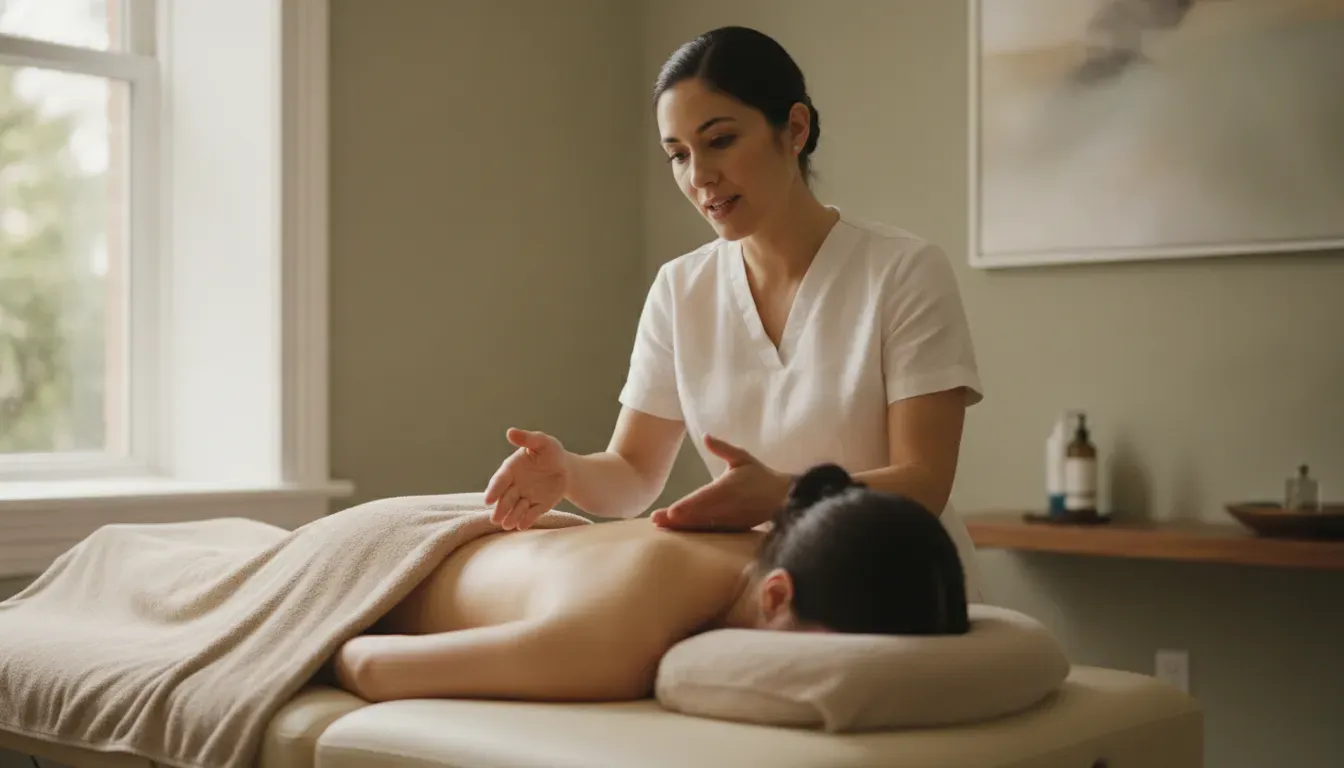

Not all pregnancy back pain is the same. You might be used to a dull, generalized ache in your lower back, but sciatica is different. It’s a sharp, burning, or tingling sensation that follows a clear path from your hip down the back of your leg, usually only on one side. This specific type of nerve pain requires a specific solution that goes beyond a simple back rub. A targeted prenatal massage for sciatica focuses on the root of the problem, often a tight piriformis muscle in your glutes that is compressing the nerve. This guide will explain the techniques professionals use to safely release this tension and provide lasting relief.
Key Takeaways
- Your pain has a physical cause: Pregnancy sciatica is a direct result of physical changes, including pressure from your growing uterus and shifts in your posture. This means that targeted physical therapies like massage can effectively address the root of the problem.
- Professional prenatal massage is a safe solution: A certified therapist uses specific, safe techniques like side-lying positioning and gentle muscle release to relieve nerve pressure. This provides targeted relief without posing any risk to you or your baby.
- Combine professional care with at-home habits: You can maintain your comfort between appointments by incorporating gentle stretches and simple self-massage techniques. However, always contact your doctor if you experience severe pain or sudden weakness.
What is Pregnancy Sciatica?
If you’re dealing with a sharp, shooting pain that starts in your lower back and runs down your leg, you might be experiencing sciatica. It’s a common complaint during pregnancy, and it happens when the sciatic nerve, the longest nerve in your body, gets irritated or compressed. As your baby grows, your uterus expands and can put pressure directly on this nerve, leading to that distinct and uncomfortable pain. While it can be a real pain (literally!), the good news is that there are effective ways to manage it. Understanding what’s happening in your body is the first step toward finding relief, and treatments like a specialized prenatal massage can make a world of difference.
What Does Pregnancy Sciatica Feel Like?
So, what does this pain actually feel like? Sciatica isn’t just a dull ache that you can ignore. Most women describe it as a sharp, burning, or shooting pain that travels along a clear path. It typically starts in your lower back or hip and radiates down the back of one of your legs, sometimes reaching all the way to your foot. This sensation occurs because the sciatic nerve is being pinched or aggravated by your changing body. The intensity can range from a mild, nagging annoyance to severe discomfort that makes it hard to find a comfortable position, whether you’re sitting, standing, or trying to sleep.
Key Symptoms to Watch For
Not sure if what you’re feeling is sciatica? It can sometimes be confused with general lower back pain, but sciatica has some tell-tale signs. You’ll typically only feel these symptoms on one side of your body. Keep an eye out for:
- A sharp, shooting pain that begins in your lower back or buttock and travels down the back of your leg.
- Numbness, tingling, or a “pins and needles” feeling in your leg, foot, or toes.
- Noticeable muscle weakness in the affected leg or foot.
- Pain that gets worse after you sit or stand for a while.
- Difficulty walking, standing up from a chair, or finding a comfortable resting position.
What Causes Sciatica During Pregnancy?
If you’re dealing with the sharp, shooting pain of sciatica, you’re probably wondering what’s causing it. While it can be incredibly uncomfortable, sciatica during pregnancy is often a temporary issue caused by the amazing changes your body is going through to grow your baby. It’s not just one thing, but a combination of factors that put pressure on that long sciatic nerve. Understanding these root causes is the first step toward finding relief, which is where a targeted prenatal massage can make a world of difference. Let’s look at the three main culprits behind pregnancy-related sciatica.
Pressure from Your Growing Uterus
As your baby grows, so does your uterus. It expands from the size of a pear to the size of a watermelon, which is an incredible feat! However, this growth means it can start to press on surrounding structures in your pelvis and lower back. One of those structures is the sciatic nerve. Think of it as a simple space issue. Your growing baby and uterus can put direct pressure on the nerve, compressing it and triggering those tell-tale symptoms of pain, tingling, or numbness that run down your leg. This pressure often gets more intense as you move into the third trimester.
Changes in Your Posture and Weight
Your body is a master of adaptation. As your belly grows, your center of gravity shifts forward. To keep your balance, you naturally adjust your posture, often by arching your lower back and leaning back slightly. This new curve, combined with the extra weight you’re carrying, puts a lot of strain on your lower back muscles and spine. This postural stress can easily lead to tightened muscles that pinch the sciatic nerve. While many women experience general back pain during pregnancy, the specific, radiating pain of sciatica is a unique challenge caused by these significant physical changes.
The Role of Pregnancy Hormones
Pregnancy hormones are powerful, and one, in particular, plays a big role here: relaxin. As its name suggests, relaxin works to soften and loosen your ligaments and joints, especially around the pelvis, to prepare your body for childbirth. While this is essential for delivery, it can also lead to instability in your pelvic joints, particularly the sacroiliac (SI) joint. When these joints become less stable, surrounding muscles, like the piriformis in your glutes, can tighten up to compensate. Since the sciatic nerve runs right underneath (and sometimes through) the piriformis muscle, this tightness can directly compress the nerve and cause sciatica.
How Prenatal Massage Safely Eases Sciatica
When you’re dealing with the sharp, radiating pain of sciatica, the idea of a massage might sound like pure bliss. But is it safe during pregnancy? The answer is a resounding yes, as long as it’s performed by a therapist trained in prenatal care. A professional prenatal massage is more than just a relaxing treat; it’s a targeted therapy designed to address the specific aches of pregnancy, including sciatica. It’s a safe and effective way to find relief without medication.
By using modified techniques and proper side-lying positioning with supportive pillows, a skilled therapist can safely work on the muscles of your lower back, hips, and glutes to relieve the pressure that’s irritating your sciatic nerve. The goal is to reduce muscle tension, improve circulation, and calm your nervous system, all of which contribute to significant pain relief. It’s a gentle yet effective way to manage your symptoms and find comfort as your body changes. Instead of just masking the pain, this approach addresses the muscular imbalances that often cause it in the first place, helping you feel better both during and after your session.
Relieve Tension in Key Muscles
During pregnancy, your shifting center of gravity and the extra weight you’re carrying can cause the muscles in your lower back, hips, and glutes to become tight and overworked. This tension can put direct pressure on the sciatic nerve, leading to that familiar shooting pain. A prenatal massage therapist uses light to medium pressure to carefully release these specific muscles, particularly the piriformis, which is often the main culprit. By easing this tension, the massage creates more space around the nerve, which can dramatically reduce your pain and improve your mobility.
Improve Circulation and Reduce Swelling
Have you noticed your ankles and feet are more swollen than usual? This common pregnancy symptom, called edema, can sometimes contribute to nerve compression. Prenatal massage is fantastic for encouraging healthy blood flow throughout your body. The gentle, rhythmic strokes help move excess fluid away from your joints and back toward your heart, which can reduce swelling. This improved circulation also delivers more oxygen and nutrients to your sore, tired muscles, helping them relax and recover more efficiently. This process not only eases discomfort in your limbs but also supports overall muscle health, which is crucial for managing sciatica.
Calm Your Nervous System
Constant pain can put your body in a state of high alert, activating your “fight or flight” stress response. Massage therapy does the opposite; it helps switch on your parasympathetic nervous system, also known as the “rest and digest” state. This shift lowers your heart rate, deepens your breathing, and reduces the production of stress hormones like cortisol. As your body relaxes on a neurological level, your perception of pain can decrease, providing a much-needed mental and physical break from the discomfort of sciatica.
Busting Prenatal Massage Myths
One of the biggest concerns we hear from expectant mothers is whether massage is safe for the baby. It’s a valid question, but the idea that prenatal massage is unsafe is a myth. When performed by a certified therapist who understands the unique needs of a pregnant body, massage is incredibly safe and beneficial. Our licensed massage therapists are highly trained in prenatal techniques, including proper positioning and which areas to avoid. You can relax knowing you and your baby are in expert hands.
Professional Massage Techniques for Sciatica Relief
When you’re dealing with sciatica during pregnancy, a professional massage is about more than just relaxation. A licensed therapist who specializes in prenatal care uses specific techniques to safely target the source of your pain. They understand the changes your body is going through and know exactly how to apply pressure to relieve tension without causing harm. These methods focus on releasing the tight muscles that are pressing on your sciatic nerve, improving circulation, and giving you some much-needed comfort. It’s a focused, therapeutic approach designed to make your pregnancy journey a little smoother.
A trained professional won’t just give you a generic massage. They will assess your specific situation and tailor the session to your needs. They know which muscles, like the piriformis and glutes, are often the primary culprits and how to work on them effectively without putting any stress on you or your baby. This level of expertise means you’re not just getting a temporary fix; you’re getting a treatment that addresses the underlying cause of your discomfort. It’s about using expert knowledge of anatomy and pregnancy-safe practices to provide real, lasting relief so you can better enjoy this special time.
Why Side-Lying Positioning is Key
If you’ve ever had a professional prenatal massage, you know that side-lying is the go-to position, and for good reason. Lying on your side takes all the pressure off your growing abdomen and major blood vessels, ensuring you and your baby are safe and comfortable. A skilled therapist will use pillows and bolsters to support your head, belly, and legs, keeping your spine perfectly aligned. This position not only provides stability but also gives your therapist easy access to your back, hips, and glutes, which are the key areas for treating sciatica pain. It’s the safest and most effective way to get relief.
Gently Working the Glutes and Piriformis
The piriformis muscle, a small muscle located deep in your buttocks, is often the main culprit behind sciatica. When it gets tight, it can press directly on the sciatic nerve. A professional massage therapist will use gentle, sustained pressure to carefully release tension in the piriformis and surrounding glute muscles. Instead of aggressive deep tissue work, they might use their forearms, knuckles, or a soft fist to slowly sink into the muscle, encouraging it to relax. This targeted approach helps calm the irritated nerve and can provide immediate relief from that nagging, radiating pain.
Applying Safe Pressure to the Lower Back
Many people worry about having their lower back touched during pregnancy, but a trained therapist knows how to do it safely. They avoid deep pressure directly on the spine and instead focus on the muscles supporting it. A common technique involves using the heel of the hand or a soft fist to make small, circular motions along the edges of your sacrum, the triangular bone at the base of your spine. This method helps release tightness in the lower back and pelvis, improves blood flow to the area, and feels incredibly soothing without putting any risk on your baby.
Professional Care vs. At-Home Techniques
While at-home remedies like using a tennis ball or gentle stretches can offer temporary relief, they can’t replace the expertise of a professional. A certified prenatal massage therapist has a deep understanding of anatomy and can pinpoint the exact muscles causing your discomfort. They can provide a level of precision and care that’s difficult to achieve on your own or with a partner. For lasting and safe management of sciatica and pregnancy, working with a professional ensures you’re addressing the root cause of the problem while keeping you and your baby completely safe.
Safe At-Home Techniques for Sciatica Relief
While nothing replaces the skilled hands of a professional massage therapist, managing sciatica pain between appointments is key to staying comfortable. These at-home techniques can provide temporary relief and complement the work you do with your therapist. The most important rule is to listen to your body. If anything causes sharp pain or discomfort, stop immediately.
Think of these methods as your personal toolkit for easing aches and releasing tension. They are gentle, safe for pregnancy, and designed to target the muscles that contribute to sciatic nerve pain. From simple stretches to using everyday objects for self-massage, these strategies can help you feel more in control of your comfort. Always check with your doctor or a licensed prenatal therapist before trying a new technique to make sure it’s the right choice for you and your pregnancy. Consistent, gentle self-care can make a world of difference in how you feel day-to-day.
Use a Tennis Ball for Targeted Pressure
A simple tennis ball can be a fantastic tool for working out tight spots in your glutes and lower back. To get started, you can try a self-massage with a tennis ball by placing it between your back and a wall. Lean into the ball and gently roll it around the tender areas, applying as much pressure as feels good. This allows you to control the intensity and target the exact source of your discomfort. As your pregnancy progresses, using a wall for support is much safer and more comfortable than lying on the floor. This technique helps release the piriformis muscle, which often tightens and presses on the sciatic nerve.
Try Safe Foam Rolling Exercises
If you have a foam roller, you can use it to gently loosen the muscles in your hips and glutes. Sit on the foam roller with your feet flat on the floor. Carefully lean your weight onto the affected hip, crossing that leg over the opposite knee if it feels comfortable. From there, slowly roll back and forth to massage the area. This movement can be incredibly effective for releasing the piriformis muscle. Remember to move slowly and breathe deeply. If you don’t have a foam roller, a tennis ball can also work for this exercise while seated on a firm chair.
Practice Gentle Stretches
Incorporating a few gentle stretches into your daily routine can help maintain flexibility and relieve muscle tension that contributes to sciatica. Focus on movements that open up your hips and lengthen your hamstrings without putting any strain on your belly. Some of the most effective stretches for pregnancy sciatica include the seated piriformis stretch, where you cross one ankle over the opposite knee and gently lean forward. Child’s Pose and gentle cat-cow stretches are also wonderful for releasing lower back tension. Avoid any deep twists or stretches that cause a pulling sensation in your abdomen.
Apply Heat and Use Supportive Pillows
Applying gentle heat can soothe tight muscles and offer immediate comfort. Use a heating pad on a low setting against your lower back or hip for about 10 to 15 minutes. Always place a towel between the heating pad and your skin to prevent burns. This is a great ritual to do before bed to help you relax. Additionally, how you sleep matters. Using supportive pillows to maintain proper alignment can prevent sciatic pain from flaring up overnight. Try sleeping on your side with a pillow between your knees and another under your belly to support your lower back and hips.
Massage Techniques to Avoid During Pregnancy
While a prenatal massage is one of the best ways to find relief from sciatica and other pregnancy discomforts, it’s not the same as a standard massage. Your body is going through incredible changes, and certain techniques that are perfectly safe otherwise should be avoided to protect you and your baby. The key is working with a therapist who has specialized training in prenatal care. They understand the anatomy and physiology of pregnancy and know exactly how to modify their techniques for your safety and comfort. This ensures you get all the benefits of massage without any of the risks.
Pressure Points to Steer Clear Of
You may have heard that pressing certain points on the body can induce labor. While the evidence is more traditional than clinical, certified prenatal massage therapists are trained to avoid these specific acupressure points as a precaution. These points are primarily located around the ankles, feet, and hands. A knowledgeable therapist will steer clear of applying deep, sustained pressure to these areas. This is a perfect example of why seeking a professional with specialized training is so important. They can confidently address your aches and pains while carefully avoiding any area that could pose a risk.
Restrictions on Deep Tissue Work
Although sciatica can create deep, intense pain, a traditional deep tissue massage is not recommended during pregnancy. Your blood volume increases significantly when you’re pregnant, which can raise the risk of blood clots in the legs. The intense pressure of deep tissue work could potentially dislodge a clot. Instead of deep, sharp pressure, your therapist will use modified techniques that are still incredibly effective for relieving muscle tension. The goal is always relaxation and release, not causing more pain. A skilled therapist can work on your glutes and lower back to ease sciatic pain without applying dangerously deep pressure.
Unsafe Positions to Avoid
Proper positioning is crucial for a safe and comfortable prenatal massage. After the first trimester, you should never lie flat on your back during a massage. This position can put pressure on a major vein called the vena cava, which can reduce blood flow to your baby. Lying on your stomach is also off-limits for obvious reasons. The safest and most comfortable position is lying on your side, supported by plenty of pillows and cushions. Our licensed massage therapists are experts in creating a supportive nest of pillows that takes all the pressure off your joints and allows you to fully relax.
How Often Should You Get a Prenatal Massage?
Finding the right massage schedule during pregnancy is all about listening to your body and working with a therapist who understands your unique needs. While there’s no one-size-fits-all answer, establishing a regular routine can make a world of difference for managing sciatica and other pregnancy-related discomforts. Think of it as a consistent, supportive tool in your wellness toolkit. Regular sessions not only address aches as they arise but can also help prevent them from becoming more severe. A consistent schedule helps your body adapt to its rapid changes, keeping your muscles relaxed and your mind at ease.
A Trimester-by-Trimester Guide
During your first trimester, you might be dealing with fatigue and morning sickness. A massage once a month can be a wonderful way to manage stress and ease into your pregnancy. As you enter the second trimester, your body starts changing more noticeably, and this is when sciatica and lower back pain often appear. Increasing your sessions to every two or three weeks can help manage these new aches. By the third trimester, your body is working its hardest. Weekly or bi-weekly massages can provide significant relief from sciatic pain, reduce swelling, and help you prepare for labor.
Adjusting Your Schedule as You Progress
The trimester guide is a great starting point, but the most important rule is to pay attention to what your body is telling you. Some weeks, you might feel fantastic, while others, a sciatica flare-up might have you counting down the minutes until your next appointment. A flexible approach is key. If you’re experiencing intense discomfort, you might benefit from more frequent sessions. If you’re feeling good, a monthly massage might be perfect for maintenance. A skilled therapist will help you create a personalized Prenatal Massage plan that adapts with you as your pregnancy progresses.
Combining Professional Massage with Self-Care
To get the most out of your professional massages, it’s helpful to build a simple self-care routine at home. Think of it as extending the benefits of your session throughout the week. Gentle daily stretches, especially for your hips and lower back, can keep muscles from tightening up. Using a warm compress on sore spots can also provide immediate relief. When you sleep, try placing a pillow between your knees to keep your hips aligned and take pressure off your sciatic nerve. These small habits complement the work your therapist does, making your professional massage services even more effective.
When to See a Professional for Sciatica
While at-home stretches and self-care can provide some relief, there are times when you need the hands of a professional. A licensed massage therapist with prenatal training can offer targeted, safe, and effective relief that you simply can’t achieve on your own. They understand the complexities of the pregnant body and can address the root muscular causes of your sciatica without putting you or your baby at risk.
However, it’s also important to know the difference between discomfort that massage can help and symptoms that require a doctor’s attention. Your massage therapist is a partner in your wellness journey, but your doctor should always be your first call for any serious medical concerns. Knowing when to reach out to each professional is key to a safe and comfortable pregnancy. Let’s walk through what to watch for and how to find the right therapist for your needs.
Red Flags: When to Call a Doctor
Your safety and your baby’s safety are the top priorities. While sciatica during pregnancy is typically muscular and not harmful, certain symptoms can signal a more serious problem that needs immediate medical attention. Massage is not the right tool for these situations.
You should contact your doctor right away if you experience very bad pain that feels unmanageable, any loss of control over your bladder or bowels, or significant weakness or loss of feeling in one or both of your legs. These symptoms are rare, but they could point to a more serious issue that needs to be diagnosed by a physician. Always listen to your body and don’t hesitate to call your doctor or midwife if something feels wrong.
Why to Choose a Licensed Prenatal Therapist
One of the biggest myths out there is that massage during pregnancy is risky. The truth is, when performed by a trained and certified therapist, a prenatal massage is incredibly safe and beneficial. A therapist with specialized prenatal training understands the anatomical changes your body is going through. They know which areas to focus on, which to avoid, and how to position you safely and comfortably with supportive pillows and bolsters. They can effectively release the tight glute and piriformis muscles pressing on your sciatic nerve without posing any risk to you or your baby, offering relief you can trust.
What to Look For in Your Massage Therapist
Not all massage therapists are equipped to work with pregnant clients, so it’s important to do a little research before you book. When seeking relief from sciatica, you want someone with specialized training in prenatal massage. This ensures they understand the unique needs and contraindications associated with pregnancy.
Before scheduling an appointment, feel free to ask the studio if their therapists are certified in prenatal massage. You can also ask about their experience working with clients who have sciatica. A confident and knowledgeable response is a great sign that you’re in good hands. At Nola Bliss, our dedicated team includes highly experienced therapists who have devoted their careers to mastering these specialized skills.
Related Articles
Frequently Asked Questions
Will a massage for sciatica hurt, especially since I’m already in pain? That’s a completely valid concern. The goal of a prenatal massage for sciatica is to relieve your pain, not add to it. A trained therapist will use gentle, sustained pressure to encourage tight muscles to release, rather than forcing them with painful pressure. Communication is key, so your therapist will check in with you to ensure the pressure is comfortable and effective. You are always in control of the session.
Is it safe to get a massage for sciatica during my first trimester? Yes, it is safe to receive a massage from a certified prenatal therapist at any point in your pregnancy, including the first trimester. Many women find that massage helps with the stress and general aches of early pregnancy. Our therapists are highly trained in the specific needs of every trimester and use techniques that ensure both you and your baby are safe and comfortable.
How is a prenatal massage for sciatica different from a regular deep tissue massage? A prenatal massage is a specialized service that prioritizes safety. While it can feel deep and therapeutic, it avoids the intense, sharp pressure of a traditional deep tissue massage, which is not recommended during pregnancy due to an increased risk of blood clots. Instead, your therapist will use modified techniques, proper side-lying positioning with supportive pillows, and a deep understanding of pregnancy anatomy to release the specific muscles causing your sciatic pain.
How soon can I expect to feel relief from my sciatica pain after a massage? Many women feel a significant reduction in pain immediately after their session, while for others, the full relief sets in over the next day as the muscles relax and inflammation decreases. The most lasting results come from consistency. Regular massages can help keep the muscles from tightening up again, providing more sustained comfort as your pregnancy progresses.
What should I do if the pain comes back between my massage appointments? It’s common for some discomfort to return as your body continues to change. Between professional sessions, you can use the at-home techniques we discussed, like gentle stretching or using a tennis ball against a wall to release tight spots in your glutes. Applying a warm compress can also be very soothing. These simple practices can help manage your symptoms and extend the benefits of your massage.