
A massage performed with feet might sound strange, but it’s one of the most powerful therapies for stubborn back pain. It’s called Ashiatsu. A trained therapist uses their body weight and the broad surface of their feet to deliver deep, consistent pressure that hands and elbows just can’t match. Many call it the deepest, most luxurious massage you can get. If you need relief that goes beyond the surface, you’re in the right place. Discovering how ashiatsu massage helps release chronic tension and lengthen your spine is the key to finding lasting comfort.
Key Takeaways
- Ashiatsu provides deep pressure without the discomfort: Instead of sharp elbows or thumbs, your therapist uses the broad surface of their feet to deliver consistent, deep pressure that feels both powerful and incredibly soothing.
- It effectively relieves back pain by stretching the spine: The long, gliding strokes help lengthen tight muscles and create space between vertebrae, which can release compressed nerves and address the root cause of chronic tension.
- A certified therapist is crucial for a safe experience: Proper training ensures your therapist uses overhead bars for balance and control, allowing them to precisely tailor the pressure to your body for a safe and therapeutic massage.
So, What Is Ashiatsu Massage?
If you’ve ever wished for a massage that could deliver deep, consistent pressure without the sharp poke of an elbow, you might be ready to try Ashiatsu. It’s a unique and luxurious style of bodywork where the therapist uses their feet to perform the massage. While it might sound unusual at first, it’s one of the most effective ways to relieve deep-seated muscle tension, especially for those who carry a lot of stress in their back, shoulders, and hips. It’s often described as the “deepest, most luxurious massage on the planet.”
At Nola Bliss, we specialize in this incredible technique, which we call Ashiatsu Deepfeet Bar Therapy. It’s a deeply relaxing experience that combines the soothing, broad strokes of a Swedish massage with the intensity of a deep tissue session. Instead of using hands, thumbs, and elbows, your therapist uses the soft, padded surfaces of their feet to apply pressure. This allows for a level of depth and consistency that’s hard to achieve with hands alone. It’s a fantastic option for anyone dealing with chronic pain, athletes needing muscle recovery, or those who simply love a truly deep massage that doesn’t feel painful.
A Modern Take on an Ancient Practice
While using feet for massage has roots in ancient cultures across Asia and Africa, the Ashiatsu we practice today is a refined, Westernized version. At Nola Bliss, our therapists use overhead bars for balance and support, allowing them to apply their body weight with precision. This setup enables long, gliding strokes that help lengthen tight muscles and create space between your vertebrae. The broad surface of the foot delivers deep pressure that feels more comfortable than a sharp elbow, improving blood flow and flushing out tension without any ‘pokey’ feeling. This modern approach makes our Ashiatsu Deepfeet Bar Therapy a safe, luxurious, and incredibly effective treatment for chronic pain.
Understanding the “Foot Pressure” Technique
The name itself gives you a clue about its origins. “Ashiatsu” is a Japanese term that literally translates to “foot pressure,” with “ashi” meaning foot and “atsu” meaning pressure. This isn’t a new trend; it’s an ancient form of massage that has been practiced for centuries to address chronic pain and promote healing. The core idea is that the foot, being a larger and often stronger tool than the hand, can deliver broad, flowing pressure that feels both deep and incredibly soothing. A skilled therapist uses their entire foot, from the heel to the toes, to glide over your muscles, melting away tension and encouraging your body to relax completely.
What Makes Ashiatsu Different?
The biggest difference you’ll notice is the quality of the pressure. While a traditional deep tissue massage uses thumbs, knuckles, and elbows to target specific knots, Ashiatsu uses the therapist’s body weight and the broad surface of their feet. This foot-based method allows for much deeper and more even pressure than you can get with hands. It reaches deep muscle layers and tissues, helping to release tightness without the sharp, sometimes uncomfortable, sensation of a smaller tool. The strokes are long, smooth, and flowing, which helps to lengthen and stretch tight muscles in a way that feels both therapeutic and incredibly relaxing.
Ashiatsu with Overhead Bars vs. Floor Ashiatsu
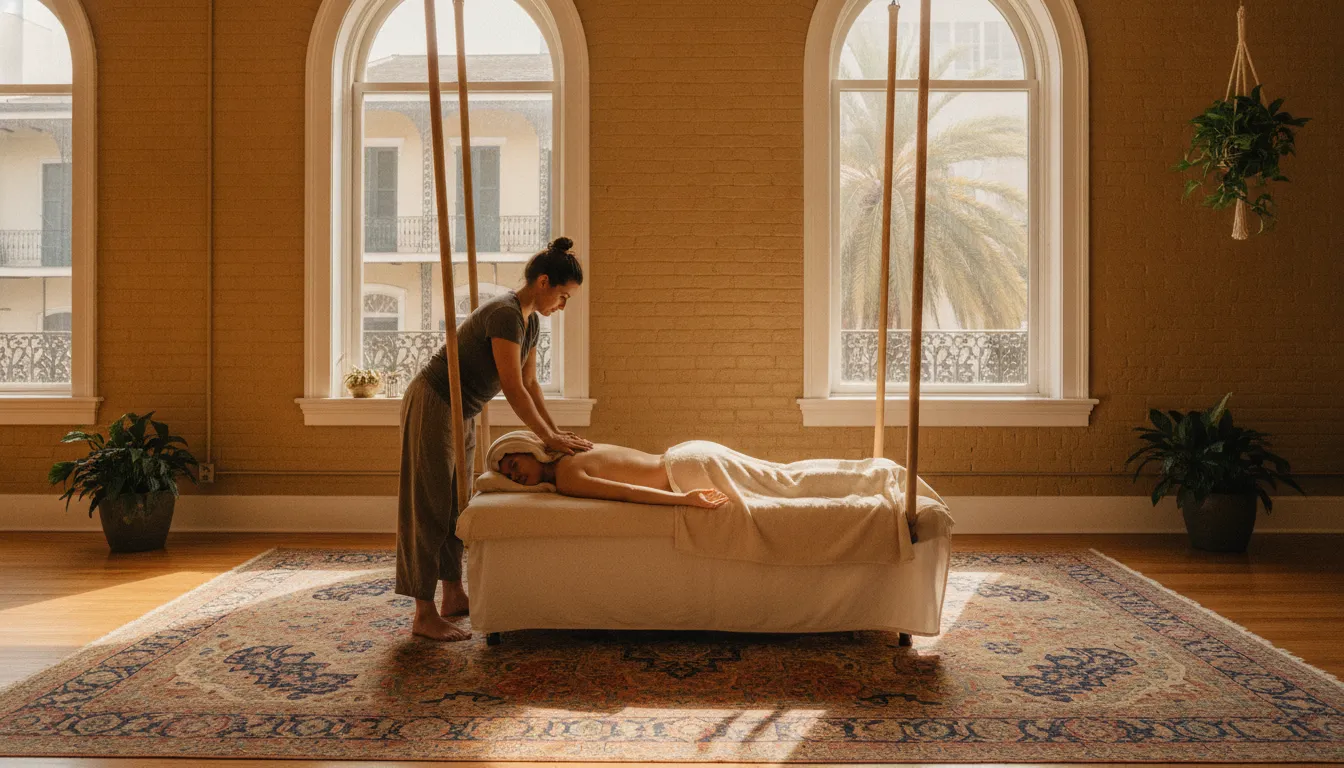
When you picture Ashiatsu, you should imagine a therapist gracefully holding onto overhead bars for support. This is the method we use at Nola Bliss, and it’s essential for providing a safe and effective treatment. The bars allow your therapist to maintain perfect balance and control, so they can adjust the pressure with incredible precision. They use their body weight to deliver long, flowing, gravitational strokes, ensuring the pressure is both deep and consistently applied. This setup is what makes Ashiatsu Deepfeet Bar Therapy so effective. While some forms of Ashiatsu are performed on a floor mat, the overhead bar system allows for a much greater range of motion and deeper, more therapeutic strokes that can truly lengthen the spine and release chronic tension.
Benefits for the Massage Therapist
Ashiatsu isn’t just amazing for the client; it’s also a game-changer for the massage therapist. Performing traditional deep tissue massage day after day can take a serious toll on a therapist’s hands, wrists, and shoulders. Ashiatsu offers a more sustainable way to practice, allowing the therapist to use their body weight and the strength of their legs to deliver pressure. This prevents the repetitive strain and burnout that can shorten careers. A therapist who isn’t in pain themselves can be more present, focused, and effective during your session. It’s one reason our dedicated team can continue to provide such high-quality, powerful treatments for years, channeling their passion for healing directly into your massage.
Why Therapists Use Overhead Bars for Balance
When you picture Ashiatsu, you might imagine someone simply walking on your back, but the reality is far more controlled and precise. Our massage therapists use a set of parallel bars mounted on the ceiling directly above the massage table. These bars are essential for both safety and technique. Therapists hold onto the overhead bars to maintain their balance and carefully control the amount of pressure they apply. This setup allows them to add or subtract weight with incredible precision, ensuring the massage is perfectly tailored to your comfort level. The bars give them the stability to deliver slow, deep, and even pressure exactly where you need it most.
How Can Ashiatsu Massage Help Your Back Pain?
If you’re dealing with persistent back pain, you know how frustrating it can be to find lasting relief. Ashiatsu massage offers a unique approach that gets to the root of muscle tension in a way other therapies can’t. Instead of using hands and elbows, your therapist uses their feet to deliver long, flowing, and deeply compressive strokes. This method isn’t about random “walking on your back”; it’s a highly skilled technique that uses gravity and body weight to achieve incredible results.
The magic of Ashiatsu Deepfeet Bar Therapy lies in its ability to apply consistent, deep pressure across large muscle groups. This helps to release chronic tension, stretch shortened muscles, and improve circulation without the sharp discomfort that can sometimes come with traditional deep tissue work. By using overhead bars for balance and control, your therapist can tailor the pressure perfectly to your needs, ensuring a massage that is both profoundly effective and wonderfully relaxing. Let’s look at exactly how this technique works to soothe your back pain.
Delivering Deep, Consistent Pressure
One of the biggest differences you’ll notice with Ashiatsu is the quality of the pressure. Because the therapist uses the broad surface of their foot, the pressure is distributed evenly over your muscles. This method allows for very deep muscle work without the sharp, poking feeling you might get from a thumb or elbow. For back pain, this is a game-changer. Instead of targeting one tiny trigger point at a time, your therapist can address entire muscle groups at once, encouraging them to release and relax. This broad, consistent compression feels incredibly grounding and is highly effective at melting away widespread tension in the back, shoulders, and glutes.
Using Gravity to Lengthen Your Muscles
Ashiatsu therapists are masters of using gravity as a tool. By using their body weight, they can create long, gliding strokes that stretch and lengthen tight muscle fibers and fascia. Imagine your spine gently decompressing as the muscles along it are elongated. This process helps create space between your vertebrae, which can relieve pressure on nerves and discs that contribute to back pain. The long, deep strokes, often helped by gravity, feel both therapeutic and restorative. This stretching action not only provides immediate relief but also helps improve your posture and flexibility over time, making you less prone to future pain.
Reaching the Deepest Muscle Layers
Chronic back pain often stems from tension held in the deepest layers of your muscle tissue. Ashiatsu is exceptionally good at reaching these deep muscles to release stubborn knots and adhesions. The sustained pressure helps to stimulate blood flow, improving circulation and promoting the delivery of fresh oxygen and nutrients to your muscles. This enhanced circulation is vital for healing, as it helps flush out metabolic waste and reduce inflammation that can cause pain. By addressing the root cause of the tension, our massage services can provide significant and lasting relief from even the most persistent back issues.
What Are the Benefits of Ashiatsu for Back Pain?
When you’re dealing with persistent back pain, you want relief that goes beyond the surface. Ashiatsu massage offers a unique set of benefits because of its deep, consistent pressure. It’s more than just a relaxing experience; it’s a therapeutic approach that can address the root causes of your discomfort. From improving circulation to releasing years of built-up tension, this technique can help you find lasting relief and get back to feeling like yourself.
Improve Circulation and Reduce Inflammation
Think of your circulatory system as a delivery service for your muscles. When muscles are tight and knotted, it creates traffic jams, slowing down the delivery of oxygen and nutrients needed for repair. The deep, gliding strokes of an Ashiatsu massage help clear these blockages. This improved blood flow speeds up the healing process by flushing out metabolic waste and reducing inflammation in sore tissues. Better circulation means your back muscles get the resources they need to recover more quickly, helping to ease that constant, nagging ache.
Enhancing Lymphatic Drainage
Your lymphatic system is like your body’s internal cleanup crew, responsible for clearing out waste and toxins. When this system gets sluggish, you might experience swelling or a general feeling of heaviness. The long, sweeping strokes of an Ashiatsu massage are incredibly effective at stimulating lymphatic flow. The deep, consistent pressure helps to manually push lymphatic fluid through your system, encouraging it to drain more efficiently. This process not only helps reduce swelling and puffiness but also flushes out the metabolic byproducts that can contribute to muscle soreness and inflammation. By giving your lymphatic system a helping hand, our expert therapists support your body’s natural detoxification process, a key part of healing and feeling your best.
Release Chronic Muscle Tension
If you have stubborn knots that never seem to go away, Ashiatsu might be the solution you’ve been looking for. Because the therapist uses their feet and body weight, they can apply broad, consistent pressure that reaches the deepest layers of muscle tissue. This technique effectively releases the chronic tension and trigger points that often cause back pain. Unlike the sometimes sharp pressure from an elbow or thumb, the therapist’s foot provides a deep, soothing compression that coaxes tight muscles to let go without causing discomfort.
Addressing Stiffness and Old Scar Tissue
Over time, chronic tension or old injuries can lead to the buildup of scar tissue, also known as adhesions. These fibrous bands can make your muscles feel stiff and restricted, limiting your range of motion and contributing to that feeling of being “stuck.” The powerful, gliding strokes of an Ashiatsu massage are particularly effective at addressing this. The sustained, deep pressure works to slowly stretch and break down these adhesions, helping to restore elasticity to your muscle tissue. This process not only relieves stiffness but also improves your overall flexibility, allowing you to move more freely and with less pain. It’s a way of encouraging your body to heal and let go of old patterns of holding.
Increase Your Flexibility and Range of Motion
Back pain often leaves you feeling stiff and restricted. The long, flowing strokes used in Ashiatsu don’t just relieve tension; they also gently stretch and lengthen your muscle fibers. This is especially effective for the large muscle groups of the back. By elongating these muscles, the massage can significantly enhance your flexibility and improve your overall range of motion. You’ll likely find it easier to bend, twist, and move through your day without that familiar feeling of tightness holding you back.
A Special Note for Athletes: Stretching the IT Band
Athletes, this one’s for you. If you’re a runner, cyclist, or anyone who regularly pushes their body, you’re likely familiar with the misery of a tight IT band. That thick band of tissue along the outside of your thigh can be a real source of discomfort, but Ashiatsu massage is particularly effective for this issue. The deep, long strokes help to effectively stretch and lengthen muscles, which can enhance your flexibility and reduce the risk of injury. This sustained pressure also improves circulation, delivering fresh oxygen and nutrients to your muscles, which is crucial for optimal recovery. By helping to release stubborn knots and adhesions, Ashiatsu can help you move better and train without the discomfort that often accompanies rigorous activity.
Manage Stress and Alleviate Pain
The connection between stress and pain is undeniable. Stress causes your muscles to tense up, which can create or worsen back pain. In turn, being in constant pain is incredibly stressful. Ashiatsu helps break this cycle. The deep, rhythmic pressure is profoundly relaxing, helping to lower stress hormones and calm your nervous system. This holistic approach doesn’t just address the physical symptoms in your back; it also supports your mental well-being, creating a sense of peace that allows your body to truly heal. All of our massage services aim to provide this kind of comprehensive relief.
Reported Improvements in Sleep and Focus
The benefits of an Ashiatsu massage often extend far beyond your time on the table. When your body finally lets go of chronic tension and your nervous system gets a chance to reset, your mind reaps the rewards, too. Many people find they experience a significant improvement in their quality of sleep after a session. This deep, restorative rest happens because the profoundly relaxing pressure helps lower stress hormones, allowing you to drift off more easily and stay asleep longer. As a result, it’s common for clients to report better focus and mental clarity in the days following their massage. When you’re not constantly distracted by pain and stress, your mind is free to concentrate on what truly matters.
Is Ashiatsu Right for Your Back Pain?
Ashiatsu massage offers incredible relief for many people, but it’s not a one-size-fits-all solution. Understanding if you’re a good candidate is the first step toward finding lasting relief. Your body, lifestyle, and specific health conditions all play a role in determining whether this deep, compressive massage is the right choice for you. Let’s walk through who benefits most from Ashiatsu and when it might be best to consider a different approach.
Who Is a Good Candidate for Ashiatsu?
You might be a perfect match for Ashiatsu Deepfeet Bar Therapy if you’re dealing with persistent muscle tightness and pain. This technique is especially beneficial for athletes looking to recover from intense training and for anyone with a desk job who carries tension in their neck, shoulders, and back. If you feel like regular massages just don’t go deep enough to address your discomfort, Ashiatsu’s broad, consistent pressure can make a world of difference. It’s also a fantastic option for individuals experiencing high levels of stress, as the deep, gliding strokes promote profound relaxation and help calm the nervous system.
When to Skip an Ashiatsu Massage
While Ashiatsu is a powerful therapy, its deep pressure isn’t suitable for everyone. It’s important to avoid this type of massage if you are pregnant. Instead, we offer a specialized Prenatal Massage designed to safely address the aches and pains of pregnancy. You should also steer clear of Ashiatsu if you have osteoporosis, as the pressure could be too intense for fragile bones. Other conditions like recent injuries, certain heart conditions, or uncontrolled high blood pressure may also be contraindications. Your safety is our top priority, so if you have any health concerns, it’s always best to consult with your doctor before booking a session.
Recent Surgeries and Implants
If you’ve recently had surgery or have any type of implant, it’s important to be cautious when considering an Ashiatsu massage. The deep, compressive force is fantastic for muscles, but it can be too much for areas that are still healing. As a general guideline, you should wait at least six weeks after any surgery before getting this type of bodywork. For breast implants, the waiting period is longer—typically around nine months—to ensure everything has settled properly. This also applies to other implants like pacemakers or artificial joints. Always be transparent with your massage therapist about your surgical history. Your safety is the top priority, and we can help you determine if Ashiatsu is the right fit or suggest a gentler alternative to support your well-being.
Back Conditions That Respond Best to Ashiatsu
Ashiatsu is often considered a game-changer for those suffering from chronic back pain. Its ability to apply deep, sustained pressure allows the therapist to reach the root causes of long-term discomfort in a way that traditional massage sometimes can’t. This makes it highly effective for conditions involving deep muscle tension, such as sciatica, scoliosis-related pain, and general lower back tightness. The long, gliding strokes help to stretch the spine and release compressed nerves. If you’re dealing with stubborn knots or conditions like fibromyalgia, the consistent pressure of Ashiatsu can provide significant, lasting relief by soothing tight muscles and improving overall mobility.
A Note on Bulging Discs
If you’re dealing with the specific pain of a bulging disc, the idea of deep pressure might seem counterintuitive. However, when performed by a skilled therapist, Ashiatsu can be incredibly beneficial. The technique’s power lies in its ability to deliver deep, sustained pressure that addresses the root causes of your discomfort. By using their feet, our therapists apply broad, flowing strokes that release the tight muscles surrounding your spine. This deep work also stimulates blood flow, which is crucial for healing. Improved circulation helps flush out metabolic waste and reduce inflammation in the affected tissues, offering a path toward alleviating the pain from a bulging disc.
Moreover, the long, gliding strokes of an Ashiatsu massage help to gently stretch and lengthen those tight muscle fibers and fascia. This creates more space between your vertebrae, which can decompress the spine and relieve pressure on the affected disc and surrounding nerves. For many people suffering from chronic back issues, this spinal decompression provides significant relief. It’s why Ashiatsu is often considered a game-changer for chronic conditions, including bulging discs, offering a unique approach to releasing muscle tension that other therapies might not be able to match.
What to Expect During Your First Ashiatsu Session
If you’ve never had an Ashiatsu massage, you might be curious about what the experience is actually like. It’s normal to have questions, especially when you hear the therapist will be using their feet. Rest assured, an Ashiatsu session is a deeply relaxing and therapeutic experience designed with your comfort and safety in mind. From the moment you walk into our studio, our goal is to make you feel at ease. We’ll guide you through the process, making sure you’re comfortable and informed every step of the way. Let’s walk through what you can expect during your first appointment, from the setup of the room to the massage itself.
The Studio Setup and Safety Features
When you enter the treatment room, you’ll notice it looks similar to a standard massage room but with one key difference: a set of parallel bars securely mounted on the ceiling above the massage table. These bars are not for acrobatics; they are an essential tool for your therapist. They use the overhead bars for balance and support, allowing them to gracefully control the amount of pressure they apply with their feet. This setup ensures the entire session is safe and precise. Our team of therapists is highly trained in this modality, so you can relax knowing you are in skilled and careful hands.
How to Ask for the Right Amount of Pressure
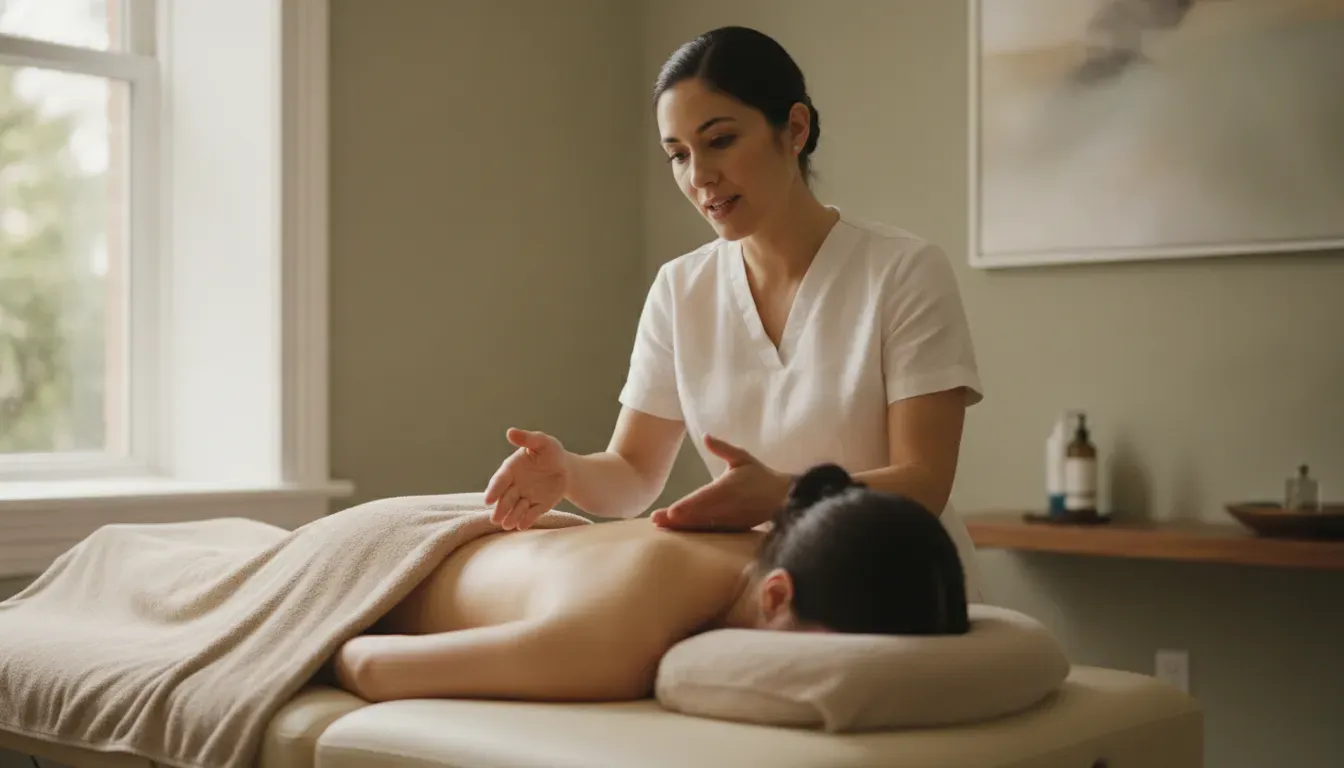
Just like any other massage, communication is key. Before the session begins, your therapist will talk with you about your specific needs, any pain points you’re experiencing, and your pressure preferences. An Ashiatsu massage is completely customizable. Your therapist can adjust the depth and intensity to suit your comfort level, from light, gliding strokes to deep, therapeutic pressure. Throughout the massage, we encourage you to provide feedback. If you want more or less pressure at any point, just say the word. Your comfort is our top priority during your Ashiatsu Deepfeet Bar Therapy session.
A Step-by-Step Look at the Massage
Once you’re comfortably settled on the massage table, your therapist will begin the session. Using lotion or oil, they will use their clean, bare feet to apply long, flowing, and deep strokes to your back, legs, and shoulders. Because the foot provides a much broader surface than a thumb or elbow, the pressure feels deep without being sharp or pokey. Many clients describe it as a “deep tissue massage without the discomfort.” The therapist uses gravity and their body weight to deliver consistent pressure that helps release tight muscles, soothe knots, and create a sense of profound relaxation.
Session Length and What to Wear
An Ashiatsu session typically lasts between 60 and 90 minutes, giving your therapist ample time to work through layers of muscle tension with those long, flowing strokes. When it comes to what to wear, the most important thing is your comfort. You will be professionally draped with a sheet throughout the massage, with only the area being worked on exposed. Most clients choose to undress completely or leave on their underwear. The choice is entirely yours, and your therapist will ensure your privacy and comfort are respected at all times, allowing you to fully relax and enjoy your Ashiatsu Deepfeet Bar Therapy experience.
How to Prepare for Your Massage
To get the most out of your session, a little preparation can go a long way. The most important step is to focus on hydration. Try to increase your water intake for a few days leading up to your appointment. Well-hydrated muscles are more pliable and responsive to deep tissue work, which helps your therapist release tension more effectively. It also prepares your body to flush out the metabolic waste that gets stirred up during a deep massage. Arriving a few minutes early also helps, giving you a moment to breathe, relax, and transition from the hustle of your day before your session begins.
Aftercare: What to Do Post-Session
What you do after your massage is just as important as how you prepare. Continue to drink plenty of water for a day or two following your session. This is crucial for helping your body flush out the toxins released from your muscle tissues, which can help minimize any post-massage soreness. It’s normal to feel a little tender, similar to how you might feel after a good workout, but this should fade quickly. Most importantly, listen to your body. Take it easy, avoid strenuous activity for the rest of the day, and allow yourself to enjoy the deep sense of relaxation. If you have any questions, our experienced therapists are always here to help.
Common Ashiatsu Myths, Debunked
Ashiatsu is an incredible therapy for back pain, but because it’s so different from traditional massage, a few misconceptions have popped up. Let’s clear the air and separate fact from fiction so you can feel confident about trying this amazing technique.
Myth: Ashiatsu Is Painful
The thought of a therapist using their feet might bring to mind intense, painful pressure, but that couldn’t be further from the truth. While the pressure in an Ashiatsu Deepfeet Bar Therapy session is deep, it’s also broad and gliding. The foot provides a wider surface area than a thumb or elbow, so the pressure feels consistent and soothing, not sharp or poky. Your therapist uses overhead bars to control their weight, ensuring the pressure is perfectly tailored to your comfort level. Many clients find it to be a deeply relaxing experience that melts away tension without the discomfort sometimes associated with deep tissue work.
Myth: The Therapist Just Walks on Your Back
This is one of the most common myths we hear. An Ashiatsu session is not an uncontrolled walk on your back. In reality, it’s a highly skilled and precise technique. Your therapist uses overhead bars for balance and support, giving them complete control over how much weight and pressure they apply. This setup allows them to glide smoothly along muscle groups, using their feet as sensitive tools to address knots and tension. It’s a carefully choreographed flow that requires extensive training, which is why our dedicated team undergoes specialized certification.
Myth: It’s Less Precise Than Using Hands
It’s easy to assume that feet can’t be as precise as hands, but a well-trained Ashiatsu therapist can be incredibly specific. They use different parts of their feet, like the heel, arch, or ball, to apply targeted pressure to exact trigger points and muscle fibers. The advantage is that they can deliver that deep, specific pressure over a larger surface area, which helps the muscles release more gently and effectively. This technique allows your therapist to address specific issues with a level of depth that can be difficult to achieve with hands alone, all while feeling wonderfully seamless and relaxing for you.
Ashiatsu vs. Other Massages for Back Pain
When you’re dealing with back pain, choosing the right type of massage can feel overwhelming. While many therapies offer relief, Ashiatsu provides a unique and powerful approach. Let’s compare it to more common massage styles to help you decide which one is the best fit for you.
Ashiatsu vs. Deep Tissue Massage
Many people seeking relief from back pain wonder about the difference between Ashiatsu and a traditional deep tissue massage. While both aim to target deeper layers of muscle, the method is what sets them apart. A deep tissue massage uses thumbs, knuckles, and elbows to apply focused pressure. This can sometimes feel sharp or pointy.
In contrast, Ashiatsu Deepfeet Bar Therapy uses the therapist’s feet to deliver broad, consistent, and deep pressure. This allows for long, flowing strokes that can stretch tight muscles and release tension across a wider area. Many find this pressure to be more comfortable yet more effective, making it a game-changer for chronic back pain. It’s designed to reach the root causes of your discomfort in a way that hands and elbows simply can’t.
Comparing Pressure and Sensation
Let’s talk about how each massage actually feels. During a traditional deep tissue massage, the therapist uses smaller tools—like thumbs and elbows—to work on tight spots. This can sometimes feel sharp or pokey, especially when they’re focused on a stubborn knot. Ashiatsu offers a completely different sensation. Because the therapist uses the broad, soft surface of their foot, the pressure is distributed evenly over your muscles, allowing for incredibly deep work without the discomfort. Many people describe it as a powerful yet soothing pressure. This broad, consistent compression feels grounding and is highly effective at melting away widespread tension, making the entire Ashiatsu massage feel profoundly relaxing even as it targets your deepest muscle layers.
Ashiatsu vs. Swedish Massage
If you’re familiar with a classic Swedish massage, you know it’s all about relaxation. It uses long, gliding strokes with the hands to ease surface-level tension and improve circulation. It’s a wonderful choice for de-stressing, but it may not provide the deep relief needed for persistent back pain.
Ashiatsu, on the other hand, is a completely different experience. Often called “barefoot massage,” it’s a specialized therapy where a trained practitioner uses their feet to apply deep, compressive strokes. This technique allows the therapist to use their body weight to sink into the muscle tissue, providing a level of depth that’s hard to achieve with hands alone. If your goal is to address long-lasting knots and tightness, Ashiatsu offers a more intensive and targeted approach than a typical Swedish massage.
The Versatility of Ashiatsu Pressure
A common misconception is that Ashiatsu is only about intense, deep pressure. While it’s incredibly effective for that, its true strength lies in its versatility. A highly trained therapist uses the overhead bars to expertly manage their body weight, allowing them to tailor the pressure from moment to moment. This means they can deliver long, flowing strokes for general relaxation or sink deeply into muscle tissue to release stubborn knots, all within the same session. Because the therapist uses the broad, soft surface of their foot, even the deepest work feels like a consistent, soothing compression rather than a sharp, poking sensation. This adaptability makes Ashiatsu Deepfeet Bar Therapy an ideal choice for almost anyone, whether you need powerful relief from chronic pain or simply want a deeply restorative massage.
How Often Should You Get an Ashiatsu Massage?
The ideal frequency for Ashiatsu massage really depends on your personal goals and the severity of your back pain. If you’re dealing with severe or chronic pain, you might benefit from more frequent sessions at the beginning, perhaps once a week or every other week. This helps your body adapt and allows the therapist to make significant progress on releasing deep-seated tension.
For general maintenance and preventing future flare-ups, a session every two to four weeks is often a great rhythm. This schedule helps keep your muscles loose and your body in alignment. The best approach is to talk with your therapist. They can assess your condition and recommend a treatment plan tailored to your needs. Listening to your body is key, and our team is here to help you find the right schedule for lasting relief from all our massage services.
Why Your Therapist’s Training Matters
When you’re looking for relief from back pain, the last thing you want is a treatment that makes it worse. That’s why, when it comes to Ashiatsu, your therapist’s training is everything. This isn’t a technique someone can learn from a weekend workshop or a YouTube video. It’s a sophisticated modality that requires in-depth knowledge of anatomy, physiology, and the specific mechanics of using body weight for therapeutic pressure. An untrained practitioner can easily apply pressure incorrectly, potentially causing discomfort or even injury.
A properly trained Ashiatsu therapist has invested significant time and effort into mastering this art form. They understand how to use the overhead bars for perfect balance, allowing them to glide smoothly and apply consistent, broad pressure that you simply can’t get from hands or elbows. They know how to adjust their weight to suit your body’s needs, ensuring the experience is both safe and deeply effective. Choosing a therapist with specialized certification isn’t just a preference; it’s a necessity for getting the incredible back pain relief that Ashiatsu can offer.
Why Specialized Certification Is Non-Negotiable
Ashiatsu requires a skill set that goes far beyond standard massage therapy education. Even seasoned therapists need specialized training to learn how to use their feet with the same sensitivity and intelligence as their hands. This certification process teaches them how to perform specific strokes, understand contraindications, and become proficient in the art of barefoot massage. In fact, many therapists are initially skeptical, thinking their feet can’t be as specific as their hands, but proper training proves otherwise. As the only certified training center for Ashiatsu on the Gulf Coast, we see firsthand how this education transforms a therapist’s ability to provide profound, lasting relief.
How Training Ensures Safety and Proper Technique
One of the biggest myths about Ashiatsu is that the therapist is simply walking on your back. Nothing could be further from the truth. A core component of Ashiatsu Deepfeet Bar Therapy is the use of overhead bars. These bars aren’t just for balance; they are essential for control. Your therapist uses them to anchor and leverage their body weight, allowing them to add or subtract pressure with incredible precision. This ensures every movement is deliberate, controlled, and completely safe. This focus on proper technique is what allows the therapist to deliver deep, healing pressure without ever causing sharp or uncomfortable pain.
How to Find a Qualified Ashiatsu Therapist
When searching for an Ashiatsu massage, don’t be shy about asking questions. Inquire about a therapist’s certification, where they trained, and how long they’ve been practicing this specific modality. Look for studios that feature Ashiatsu as a specialty, not just another item on a long menu of services. A truly qualified therapist will be proud to share their credentials. Our team is composed of dedicated, highly experienced therapists who have devoted their careers to this powerful healing art. When performed by a skilled professional, Ashiatsu can be far superior for pain management than conventional massage, helping you find the relief you’ve been looking for.
Related Articles
Frequently Asked Questions
I like deep pressure, but I’m worried Ashiatsu will be painful. Does it hurt? This is a very common concern, but you can relax. While Ashiatsu provides incredibly deep pressure, it’s designed to be soothing, not painful. Because your therapist uses the broad, soft surface of their foot, the pressure feels consistent and distributed, like a deep compression that melts tension away. It lacks the sharp or pokey sensation you might sometimes feel from a thumb or elbow in a traditional deep tissue massage. Of course, communication is always important, and your therapist will check in with you to ensure the pressure is perfect for your comfort level.
Is the therapist just walking on my back? Not at all. Ashiatsu is a highly controlled and sophisticated technique that requires extensive training and skill. Our therapists use a set of overhead bars for balance and support, which allows them to precisely manage their body weight and control every movement. This setup ensures they can apply the perfect amount of pressure exactly where you need it most. It’s more like a graceful, flowing dance than a walk, with every stroke delivered safely and intentionally.
This might be a weird question, but are the therapist’s feet clean? It’s not a weird question at all; it’s a great one. Your comfort and safety are our top priorities. Just as a therapist would thoroughly wash their hands before a traditional massage, our Ashiatsu practitioners perform a detailed foot-cleansing ritual before every session. You can rest assured that their feet are impeccably clean and sanitized before they ever touch the massage table.
The blog post talks a lot about back pain, but can Ashiatsu help with tension in other areas? Absolutely. While Ashiatsu is a game-changer for back pain, its benefits extend to the entire body. The long, gliding strokes are fantastic for releasing tightness in the hips, glutes, and hamstrings. It’s also wonderful for soothing tension in the neck and shoulders, especially for those who spend a lot of time at a desk. The broad pressure can address large muscle groups in a way that feels both comprehensive and deeply effective.
How do I choose between a Deep Tissue massage and an Ashiatsu massage? Think about the kind of pressure you enjoy and the issues you’re facing. If you have specific, small knots that you want a therapist to target with a thumb or elbow, a traditional deep tissue massage might be a great fit. However, if you’re dealing with widespread, chronic tension and feel like you can never get a massage that’s deep enough, Ashiatsu is likely the perfect choice. It provides a deeper, more consistent pressure over a larger area, which many people find to be more effective and relaxing for long-term pain relief.
Our Commitment to Ashiatsu Excellence at Nola Bliss
At Nola Bliss, our passion for Ashiatsu runs deep. We specialize in this technique because we’ve seen its incredible power to provide deep pressure without the discomfort of sharp elbows or thumbs. Our therapists are not just practitioners; they are masters of using gravity as a tool, delivering long, gliding strokes that lengthen tight muscles and bring profound relief. This commitment to excellence is why we became the only certified training center for Ashiatsu Deepfeet Bar Therapy on the Gulf Coast. We believe that proper training is crucial for a safe and therapeutic experience, ensuring every therapist can use the overhead bars to precisely tailor the pressure for your body. When you book with us, you’re choosing a team that has dedicated their careers to perfecting this healing art.