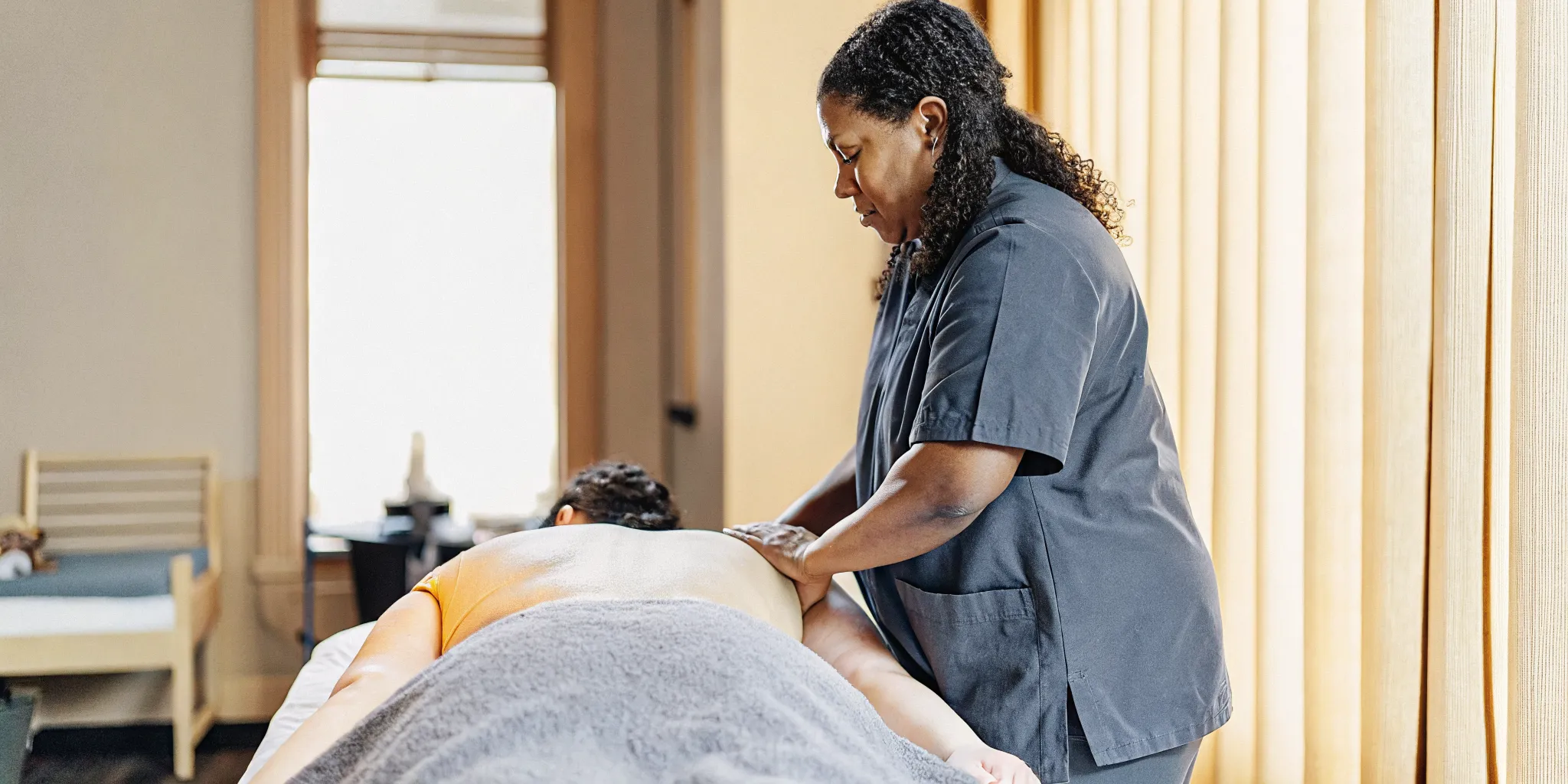

Your deep tissue clients always want more pressure. You dig in with your hands and elbows, but it’s never quite enough, and it leaves your body aching. What if you could deliver the deepest, most luxurious massage of their lives—without the strain? That’s the magic of Ashiatsu. By using your feet and the power of gravity, you provide a deep, consistent compression that feels incredible. It’s the game-changing skill that saves your body and finally gives clients the experience they’ve been searching for. If you’re ready to master this art, our hands-on Ashiatsu training Gulf Coast course will teach you everything you need to know.
Key Takeaways
- Protect Your Body and Your Business: Ashiatsu training is a smart investment in your long-term health as a therapist, allowing you to deliver deep pressure without straining your hands and wrists. This specialized skill also sets you apart, attracting clients willing to pay for a premium, effective treatment.
- Give Clients the Deep Work They Crave: Ashiatsu allows you to provide the intense, consistent pressure many clients want, but in a way that feels more luxurious and less invasive than traditional deep tissue. The broad surface of the foot ensures a deep, soothing experience without any sharp or uncomfortable sensations.
- Prioritize Hands-On, Safety-Focused Training: Your success with Ashiatsu depends on learning from experienced instructors in a hands-on setting. A quality program will focus heavily on safety protocols, proper body mechanics, and correct equipment installation, giving you the confidence to practice effectively.
What is Ashiatsu? A Guide for Massage Therapists
If you’re a massage therapist looking to add a powerful, career-saving modality to your practice, Ashiatsu training is an incredible path to consider. It’s more than just a new technique; it’s a completely different way to approach deep tissue work that benefits both your clients and your own body. Ashiatsu training teaches you how to use your feet and body weight to deliver deep, consistent, and luxurious pressure.
This modality involves using parallel bars installed above the massage table for balance and support, allowing you to apply precise, gravity-assisted strokes. Proper training is essential because it covers everything from body mechanics and safety protocols to the specific strokes that define this unique therapy. It’s a physically demanding but deeply rewarding skill that can set you apart in the industry and attract clients seeking profound relief from pain and tension.
Where Did Ashiatsu Come From?
Ashiatsu, which translates from Japanese to “foot pressure,” has roots in various cultures across Asia and India dating back thousands of years. The modern version you’ll learn in training was developed in the United States and adapted for the massage table. The core idea remains the same: using the feet to perform a deep compression massage. By using your body weight and the broad surface of your feet, you can provide a deep tissue experience that feels both powerful and incredibly soothing. It’s a modality born from ancient wisdom and refined for the modern therapy room, offering a timeless solution for chronic muscle tension.
From Ancient Monks to Modern Practice
The practice of using feet for massage wasn’t invented in a modern spa; it has a rich history stretching back thousands of years. Healers and monks across Asia and India originally developed these techniques, understanding that the foot could provide a broader, deeper, and more consistent pressure than hands ever could. They used their body weight to work on clients lying on floor mats, often holding onto ropes or bamboo shoots for balance. This ancient wisdom was rooted in holistic healing, aiming to release deep-seated tension and restore the body’s natural flow of energy. It was a powerful and effective method born from necessity and a deep understanding of human anatomy.
The transition to the modern therapy room happened when these ancient methods were rediscovered and refined for contemporary practice. The most significant evolution was the development of overhead bars, which provide the therapist with stability and control. This innovation allows for precise, gravity-assisted strokes that are both safe for the therapist and incredibly effective for the client. Today’s Ashiatsu Deepfeet Bar Therapy combines the profound pressure of its ancient roots with the safety and precision of modern equipment. This blend of old and new ensures that clients receive a deeply therapeutic experience that feels luxurious, not painful, effectively addressing chronic muscle tension in a way that honors its historical origins.
Why Your Clients Will Love Ashiatsu
For clients, the benefits are immediate and profound. Ashiatsu can deliver significantly deeper pressure than a traditional hands-on massage, but without the sharp, poky feeling that can sometimes accompany deep tissue work. The broad, soft surface of the foot spreads the pressure evenly, making it feel more comfortable and relaxing. This unique approach is what makes Ashiatsu Deepfeet Bar Therapy so effective for chronic back pain, tight hips, and sciatica. For you, the therapist, Ashiatsu is a game-changer. It saves your hands, wrists, and shoulders from the strain of deep tissue work, helping you have a longer, healthier career.
The Power of Deeper Pressure
Ashiatsu offers a unique advantage in delivering deep pressure without the discomfort often associated with traditional deep tissue techniques. Instead of using pointed elbows or thumbs that can feel sharp, you use the broad, soft surface of your foot. This allows you to provide a consistent, deep compression that feels both powerful and incredibly soothing. This characteristic makes Ashiatsu an ideal choice for clients seeking profound relief from chronic muscle tension while ensuring a truly relaxing experience. It’s the perfect way to give your clients the significant pressure they crave in a way that feels luxurious and effective, not invasive.
More Than Muscle Relief: Holistic Benefits
The benefits of Ashiatsu extend far beyond just muscle relief. The long, gliding strokes help to elongate the spine and stretch tight muscles, which can significantly improve posture and flexibility over time. This deep, full-body compression also stimulates the circulatory and lymphatic systems, helping to flush metabolic waste and reduce inflammation. On a deeper level, the sustained pressure can activate the parasympathetic nervous system, which promotes a state of “rest and digest.” This helps lower stress hormones and induces a profound sense of calm, making Ashiatsu a truly holistic treatment for both body and mind.
Your Ashiatsu Safety and Equipment Checklist
Like any advanced modality, Ashiatsu requires a strong focus on safety for both you and your client. A core part of your training will center on using the essential equipment correctly. This includes the overhead bar system, which you’ll use for balance and to moderate the amount of pressure you apply. You’ll also need a high-quality, structurally sound massage table that can handle the additional weight and dynamic movement. Reputable training programs emphasize strict equipment standards and safety protocols to minimize risk. You’ll learn proper body mechanics, how to safely get on and off the table, and how to communicate with your client to ensure they are comfortable throughout the session.
Ashiatsu vs. Shiatsu: Clearing Up the Confusion
It’s easy to get Ashiatsu and Shiatsu mixed up, especially since both names sound similar and originate from Japanese terms. However, they are distinct modalities. Ashiatsu, meaning “foot pressure,” is a modern Western style of barefoot massage that draws from ancient Eastern techniques. In a session, the therapist uses overhead bars for support while applying deep, gliding pressure with their feet. This approach combines ancient wisdom with a contemporary understanding of anatomy and physiology, creating a unique deep tissue experience. It’s specifically designed to be performed on a massage table, using gravity to achieve unparalleled depth and consistency in every stroke.
Shiatsu, on the other hand, means “finger pressure.” It is a traditional Japanese form of bodywork based on the principles of Chinese medicine. A Shiatsu session is typically performed on a mat on the floor with the client fully clothed. The practitioner uses fingers, thumbs, palms, and sometimes even knees and feet to apply pressure to specific points along the body’s energy meridians. While it can be a deep and therapeutic experience, its focus is more on balancing energy flow through acupressure and assisted stretching, rather than the long, sweeping compression strokes that define Ashiatsu massage.
Client Safety First: Ashiatsu Contraindications
While Ashiatsu offers incredible benefits, its intensity means it isn’t suitable for everyone. A crucial part of any professional training is learning to identify contraindications to ensure client safety. A thorough intake and screening process is the first step in any responsible massage practice. For Ashiatsu, this is especially important due to the deep pressure involved. For example, this modality might not be safe for clients who are pregnant or nursing, have uncontrolled high blood pressure, are taking blood thinners, or have had surgery within the last year. Other conditions like herniated discs, severe inflammatory diseases, or a compromised immune system also require caution.
As a therapist, being well-versed in these contraindications protects both your client and your practice. It’s your professional responsibility to determine if a client is a good candidate for this specific type of work. If a client isn’t suited for Ashiatsu, you can guide them toward other beneficial treatments. Offering a range of massage services ensures you can still meet their therapeutic needs safely and effectively, whether it’s with a traditional Swedish massage or a targeted deep tissue session using your hands.
The Ashiatsu Experience: A Guide for Your Clients
If you’re explaining Ashiatsu to a new client, it’s helpful to frame it as the ultimate deep tissue massage. Many people who love deep pressure find that traditional methods using hands, forearms, or elbows can sometimes feel sharp or pointy. Ashiatsu solves this problem entirely. The key is the therapist’s use of their feet. The broad, soft surface of the foot spreads pressure evenly across the muscle tissue, allowing for a deep and powerful massage that feels incredibly comfortable and relaxing. This technique allows the therapist to deliver significantly deeper and more consistent pressure without the discomfort that can sometimes accompany other forms of deep tissue work.
This unique application of pressure is what makes Ashiatsu so effective for releasing chronic tension, improving posture, and alleviating pain from conditions like sciatica. It provides a luxurious, full-body experience that can elongate the spine and open up tight joints in a way that’s difficult to achieve with hands alone. For clients who feel like they can never get enough pressure, Ashiatsu is often the perfect answer they’ve been searching for. It’s a transformative therapy that leaves them feeling both deeply worked and profoundly relaxed.
Walking Through a Typical Session
When a client arrives for their first Ashiatsu session, they can expect an experience that feels both familiar and unique. A typical session lasts between 60 and 90 minutes. The client will be on a sturdy, comfortable massage table, and the therapist will use oil or lotion to allow for smooth, gliding strokes. Just like in other massages, the client will be professionally draped with a sheet for privacy and warmth. However, the draping might be slightly more open than in a classic Swedish massage to allow for long, uninterrupted strokes that can run the full length of the body, from the shoulders down to the feet.
Above the table, the client will see a set of parallel bars, which the therapist uses for balance and to carefully control the amount of pressure applied. This setup ensures the client receives the perfect amount of weight for their needs, making the session both safe and effective. The therapist communicates throughout the session to ensure the pressure is comfortable, creating a customized experience. It’s a seamless flow of movement that makes even a couples massage with Ashiatsu feel synchronized and deeply therapeutic for both individuals.
Our Commitment to Sanitation and Customization
One of the first questions clients have about Ashiatsu often relates to hygiene, and it’s a valid concern to address. Professionalism and cleanliness are paramount in this modality. You can assure your clients that sanitation is a top priority; therapists perform a meticulous scrubbing of their feet, just like a surgeon would with their hands, before and after every single massage. This is a non-negotiable standard in the industry and a core tenet of our practice at Nola Bliss. We want every client to feel completely comfortable and confident in the cleanliness of their treatment environment.
Beyond hygiene, every session is tailored to the individual. Communication is essential, and each massage is designed to fit what the client needs on that particular day. The therapist will check in about pressure and comfort, but clients should always feel empowered to ask for adjustments at any time during the massage. The goal is to provide profound relief, and that can only happen when the treatment is a collaborative effort between therapist and client. Our team of dedicated therapists is committed to creating a personalized experience that addresses each client’s unique goals for their session.
After the Massage: Essential Aftercare Tips
The therapeutic work doesn’t end when the client gets off the table. Proper aftercare is essential for maximizing the benefits of an Ashiatsu session and preventing any post-massage soreness or injury. Because the deep compression strokes create so much length and flexibility in the muscles, especially along the spine, the body is more pliable and susceptible to strain immediately following the treatment. It’s crucial to advise clients on what to do—and what not to do—to protect their newly relaxed muscles and prolong the positive effects of the massage.
First, advise them on what to avoid for the next 24 hours. This includes lifting heavy objects, engaging in strenuous exercise or contact sports, and sitting for long periods in a hard, unsupportive chair. It’s also wise to limit alcohol consumption. Instead, encourage them to drink plenty of water to help flush out metabolic waste released from the muscles. A warm bath with Epsom salts can also help soothe any residual tenderness and further relax the body. Gentle stretching is encouraged, as it helps maintain the newfound flexibility and space created during the session.
Where to Find Ashiatsu Training on the Gulf Coast
Choosing where to get your Ashiatsu certification is a big decision that will shape your practice for years to come. The Gulf Coast has a few different options, each with its own approach to teaching this incredible modality. Whether you prefer an immersive, hands-on workshop or a self-paced online course, it’s important to find a program that matches your learning style and career goals. The right training will not only teach you the techniques but also give you the confidence to apply them safely and effectively, helping you build a thriving practice and provide amazing results for your clients. Let’s look at what makes the training at NOLA Bliss unique and how it compares to other programs in the region.
Why Train at NOLA Bliss?
If you’re looking for an in-person, comprehensive training experience, you’ve found it. NOLA Bliss is the only certified training center for Ashiatsu Deepfeet Bar Therapy on the entire Gulf Coast. Our program is built around direct, hands-on instruction from expert therapists who use these skills every single day in our own studio. Over an intensive two-day course, you’ll learn the full-body posterior and anterior strokes needed to perform a complete Ashiatsu session. We keep our classes small to ensure you get personalized feedback and can perfect your form under the watchful eye of a seasoned instructor. This isn’t just about learning strokes; it’s about mastering the art of barefoot massage with confidence and precision.
Exploring Other Gulf Coast Training Programs
Of course, NOLA Bliss isn’t the only place to learn Ashiatsu. Several organizations offer training across the Gulf Coast, with some providing different formats to fit various needs. You can find self-paced eLearning programs that allow you to study from home, using written materials and streaming videos to cover the curriculum. These online courses offer great flexibility if you can’t travel or need to fit your studies around a busy schedule. Other providers, like Barefoot Trainer’s Ashiatsu, focus on making training more affordable, opening the door for more therapists to learn this modality. These options are worth considering if your budget or schedule requires a different approach than an in-person workshop.
Bar vs. Floor: Exploring Ashiatsu Styles
When you start looking into Ashiatsu, you’ll quickly see two main styles mentioned: bar and floor. The techniques and strokes are almost identical, but the setup is what sets them apart. Bar Ashiatsu, which is what we specialize in and teach at NOLA Bliss, uses an overhead bar system for support. This allows you to work on a client who is comfortably on a standard massage table. Floor Ashiatsu, on the other hand, is performed with the client on a mat on the floor, and the therapist uses stools or low bars for balance. While both methods deliver that incredible, deep compression clients love, the bar system provides a level of stability and control that many therapists prefer for a professional setting. It allows for smooth, gliding strokes and precise pressure application, making it a fantastic addition to any established massage practice.
NOLA Bliss vs. Other Programs: A Comparison
So, how do you choose? Think about how you learn best. While online courses provide flexibility, they can’t replace the immediate feedback of an in-person instructor who can correct your posture, pressure, and flow in real time. For a technique as physical and nuanced as Ashiatsu, hands-on guidance is invaluable for ensuring both your safety and your client’s. At NOLA Bliss, our immersive training is designed to build muscle memory and confidence in a supportive, professional environment. You’ll leave not just knowing the strokes, but feeling them. While other programs have their merits, our certified, hands-on course is designed to turn you into a skilled and confident Ashiatsu practitioner, ready to help your clients.
What to Expect in Your Ashiatsu Course
Deciding to learn Ashiatsu is a huge step forward in your massage therapy career. It’s a chance to learn a powerful modality that can save your hands and deliver incredible results for your clients. But what does the training actually involve? It’s more than just learning to walk on people’s backs. A quality Ashiatsu course is a comprehensive, hands-on experience designed to make you a confident and competent practitioner. From the moment you walk in, you’ll be immersed in the art and science of barefoot massage. You’ll learn the history, the theory, and most importantly, the precise techniques for applying deep, consistent pressure safely. Let’s walk through what you can expect from your training, from the prerequisites to the final certification.
How to Prepare for Your Ashiatsu Course
Before you can hang from the ceiling bars, there are a few things you’ll need. Because Ashiatsu is a specialized form of massage, most training programs require you to be a licensed massage therapist or have a similar professional bodywork certification. This prerequisite ensures that all students have a solid foundation in anatomy, physiology, and professional ethics. Think of it as building on the core knowledge you already have. Some training centers may also look for a certain amount of hands-on experience. The goal is to make sure you’re prepared for the physical and technical demands of the modality, setting you up for success from day one.
What You’ll Learn (And When)
A foundational Ashiatsu course is typically an intensive, multi-day workshop. Over two or three days, you’ll learn a full-body routine covering both posterior and anterior strokes. The curriculum is designed to be immersive, blending theory with plenty of hands-on practice. You’ll learn how to use your body weight effectively, maintain balance while using the overhead bars, and apply different foot techniques to address specific muscle groups. You’ll spend a significant amount of time on the table, both giving and receiving massages. This allows you to feel the work from the client’s perspective and get direct feedback from your instructor as you practice on your classmates. It’s a fast-paced and incredibly rewarding experience.
Putting Safety First in Your Practice
Safety is the cornerstone of any reputable Ashiatsu training program. You’ll learn that this modality is incredibly safe for both the client and the therapist when performed correctly. A major part of your training will focus on proper body mechanics to protect your own body and prevent falls. You’ll also learn about equipment standards, from the type of massage table that can withstand the extra weight to the correct installation of the overhead bar system. Instructors emphasize how to screen clients, communicate effectively during the session, and modify pressure to ensure a safe and therapeutic experience. You’ll leave the course feeling confident in your ability to provide this deep, luxurious massage without compromising on safety.
How to Earn Your Certification
At the end of your training, you’ll be ready to demonstrate your new skills. Earning your certification typically involves passing a practical evaluation where you perform the Ashiatsu routine on an instructor or fellow student. This isn’t about being perfect; it’s about showing that you can apply the techniques safely and effectively. Once you successfully complete the course, you’ll receive a certificate that officially recognizes you as an Ashiatsu practitioner. Many programs are also NCBTMB-approved, meaning you’ll earn valuable continuing education credits that help you maintain your state massage license. This certification is your ticket to adding this incredible service to your menu and taking your practice to the next level.
How Much Does Ashiatsu Training Cost?
Making any new investment in your career requires a clear understanding of the costs involved. Ashiatsu training is no different. From the course itself to the equipment you’ll need, it’s smart to map out your budget from the start. The good news is that there are options for every price point, and the potential for a significant return makes it a worthwhile investment in your future as a massage therapist. Let’s look at the key financial components you’ll need to consider.
What Your Tuition Covers
The cost of Ashiatsu training can vary quite a bit depending on the program’s length, location, and format. You can find intensive, multi-day workshops as well as flexible online courses. For example, some in-person training courses for licensed therapists can start at around $250. If you prefer to learn from home, you can find comprehensive Ashiatsu home study programs that range from about $400 to over $1,000. These often include NCBTMB-approved certification, allowing you to earn continuing education credits while you learn a new skill.
How to Budget for Ashiatsu Equipment
Your biggest initial investment after tuition will be your equipment. To practice Ashiatsu safely and effectively, you need a sturdy, high-quality massage table and overhead bars for support. Many training centers use specific tables, like Earthlite’s ‘Spirit’ model, because they meet rigorous safety standards. When you’re planning your budget, remember to account for the cost of a professional-grade table and the installation of your bar setup. This equipment is fundamental to your practice, so it’s an area where you don’t want to cut corners. You can find more details in the FAQs at training centers.
Flexible Payment Options to Get You Started
Many training providers understand that coming up with the full cost upfront can be a challenge. That’s why they often offer payment plans or other financial arrangements to make the training more accessible. Some programs might have a small annual renewal fee to maintain your certification, which is much more manageable than a large recurring expense. You may also find that once you’ve completed an initial course, you can access additional training at a discounted rate. Don’t hesitate to ask potential training centers about their payment options—they want to help you succeed.
Is Ashiatsu Training a Good Investment?
While there are upfront costs, Ashiatsu training can pay for itself quickly. By adding this specialized modality to your services, you set yourself apart from other therapists in your area. Clients are often seeking unique and effective treatments, and Ashiatsu fits that description perfectly. This specialization can lead to higher demand for your services and the ability to charge a premium rate. Investing in your skills can revitalize your career, attract a new base of clients, and ultimately provide a fantastic return on your initial investment.
What Ashiatsu Certification Means for Your Career
Adding a new modality to your practice is a big step, and Ashiatsu is one that can truly reshape your career path. It’s more than just learning a new technique; it’s about investing in your skills, protecting your long-term health as a therapist, and opening up new opportunities to help your clients. Before you get started, it’s important to understand the professional requirements and benefits that come with this powerful form of bodywork. From licensing to liability, getting these pieces in place ensures you can build a successful and sustainable practice.
Does Ashiatsu Fit Within Your State License?
First things first, you need to be a licensed massage therapist to practice Ashiatsu. Since Ashiatsu is a specialized form of massage, it falls under the same state regulations designed to protect the public and ensure a high standard of care. Each state has its own set of rules, so it’s a good idea to be familiar with your local massage therapy board’s requirements. Think of your Ashiatsu certification as an advanced credential that you add to your existing license. This not only keeps you compliant but also builds trust with clients, showing them you’re a dedicated professional committed to safe and effective practices.
Get Your CE Credits with Ashiatsu Training
One of the great things about professional development is that it often helps you meet your licensing renewal requirements. Most high-quality Ashiatsu training programs are approved to provide continuing education (CE) credits. This means while you’re learning an incredible new skill that can attract more clients, you’re also checking off the CE hours needed to keep your license active. Before enrolling, just confirm with the training provider that their course is recognized by your state’s massage therapy board. It’s a fantastic way to make your educational investment work twice as hard for your career.
Do You Need to Update Your Liability Insurance?
As a massage therapist, you know how important liability insurance is for protecting you and your practice. When you add a new modality like Ashiatsu, it’s crucial to make sure your coverage extends to it. Practicing any form of massage without the proper training and certification can create serious legal and financial risks. Once you complete your certification, contact your insurance provider to let them know you’ve added Ashiatsu to your services. They can update your policy, ensuring you have peace of mind and are fully protected while delivering the deep, therapeutic work your clients will love.
Where Can Ashiatsu Take Your Career?
Ashiatsu can be a complete game-changer for your career. Specializing in this unique modality helps you stand out in a crowded market and attract clients seeking deep, consistent pressure that’s hard to achieve with hands alone. This specialization often allows you to charge a premium for your services, giving you a great return on your training investment. Even better, using your body weight and feet instead of your hands, wrists, and shoulders can reduce strain and extend your career. By offering Ashiatsu Deepfeet Bar Therapy, you join an elite group of therapists providing one of the most effective massages available.
Launch Your Ashiatsu Practice
Finishing your certification is a huge accomplishment, but it’s also just the beginning. Now comes the exciting part: integrating Ashiatsu into your practice and sharing this incredible modality with your clients. Launching a new service can feel like a big undertaking, but you can set yourself up for success by breaking it down into a few key steps. It’s all about creating the right environment, gathering the proper tools, setting a fair price, and letting people know about your new skills.
Think of this as the final phase of your training. You’ve mastered the techniques, and now you’re building the foundation for a thriving Ashiatsu practice. This is your chance to create a unique experience that will keep clients coming back and telling their friends. By thoughtfully setting up your space and your business strategy, you’re not just offering another service—you’re building a reputation as a skilled specialist. Let’s walk through exactly what you need to do to get your Ashiatsu practice off the ground and start helping clients in a powerful new way.
Your Ashiatsu Room Setup Guide
Your treatment room is the first thing a client experiences, so it needs to feel safe, professional, and serene. For Ashiatsu, this means ensuring your space is properly equipped for the modality. The most critical element is the overhead bar system, which must be professionally installed to guarantee your safety and your client’s. The room should have enough space for you to move freely around the table and along the bars. Beyond the structural setup, focus on creating a relaxing ambiance. Think soft lighting, calming music, and a clutter-free environment. Your goal is to create a space where clients can fully let go and trust in your care, knowing they are in a well-prepared environment designed for this specific therapy.
Must-Have Ashiatsu Equipment
Investing in the right equipment is non-negotiable for a safe and effective Ashiatsu practice. Your standard massage table might not be up to the task. You’ll need a high-quality, exceptionally sturdy table, like an Earthlite ‘Spirit’ massage table, that can handle the additional weight and dynamic pressure of this modality. Alongside your professionally installed bars, you’ll need clean, comfortable linens and a good quality lotion or cream that provides the right amount of glide without being too slippery. Don’t forget stool options for seated and transitional work. High equipment standards are a huge part of the safety involved with this technique, protecting both you and your client.
How to Price Your Ashiatsu Services
Pricing your Ashiatsu sessions requires a balance between covering your costs and reflecting the value of this specialized service. Start by researching what other therapists in your area charge for advanced modalities. Because Ashiatsu requires significant training and equipment investment, you should price it as a premium service—typically higher than a standard Swedish or deep tissue massage. Consider your own experience level and the demand in your market. You might offer an introductory rate to encourage your first few clients, but be sure your standard pricing reflects your expertise. You can find examples by looking at the massage services offered by established studios to get a feel for competitive rates.
Guiding Clients on Session Frequency
Once your clients feel the difference Ashiatsu makes, they’ll want to know how often they should return. This is your chance to educate them and build a consistent schedule. For general maintenance and well-being, a monthly session is a great recommendation. However, for clients dealing with chronic issues like persistent back pain, sciatica, or tight hips, you might suggest a more frequent plan, such as every two weeks, until they notice significant improvement. Explain that the deep, consistent pressure of Ashiatsu therapy is uniquely effective for these conditions, making regular sessions a key part of their recovery and long-term relief. This guidance helps them understand the value of the treatment and establishes you as a knowledgeable therapist they can trust.
Attract Your First Ashiatsu Clients
Once you’re set up, it’s time to spread the word. Start with your existing client base—they already trust you. Send an email announcing your new certification and offer them a special introductory price to try Ashiatsu. Update your website and all professional online profiles to feature your new skill prominently. Consider writing a blog post or creating a short video explaining what Ashiatsu is and who can benefit from it. Visuals are powerful, so professional photos of your setup can also help. Leveraging online platforms for marketing is a great way to reach a broader audience and establish yourself as an expert in this unique and effective modality.
A Simple First Step: Marketing to Current Clients
Your current clients are the perfect audience to launch your Ashiatsu practice with. They already trust your hands, so they’ll be more open to trusting your feet. Think about your regulars, especially those who are always asking for more pressure during their deep tissue massages. These are the ideal people to introduce to this new modality. You can frame it as a service you’ve learned specifically to better meet their needs. This approach not only helps you build your Ashiatsu experience but also makes your clients feel seen and valued, strengthening your professional relationship.
When you talk about it, focus on the unique feeling. Explain that Ashiatsu delivers that deep, consistent pressure they love, but without any of the sharp or poky sensations that can sometimes come with elbow or thumb work. Describe it as a more luxurious and encompassing form of deep tissue. You can say, “It provides the deepest pressure you’ve ever felt, but it feels incredibly soothing because the pressure is so broad.” This helps them understand the profound experience of Ashiatsu Deepfeet Bar Therapy. Offering a small introductory discount is a great way to encourage them to give it a try.
How to Choose the Right Training Program
Deciding to train in Ashiatsu is a major step forward in your massage therapy career. It’s an investment of your time, energy, and money, so you want to be sure you’re choosing a program that sets you up for success. Not all training is created equal, and the quality of your education will directly impact your confidence, technique, and ability to attract clients.
Think of this as finding a partnership. You need a program with a solid curriculum, an instructor who inspires you, and a structure that fits your life. Taking the time to research your options will pay off immensely, ensuring you learn the modality safely and effectively. When you find the right fit, you’ll walk away not just with a new skill, but with the passion and expertise to build a thriving Ashiatsu practice. Let’s break down the key things to consider when making your choice.
5 Signs of a High-Quality Training Program
A great Ashiatsu program should have a clear, comprehensive curriculum. Look for courses that cover full-body routines, including both posterior and anterior strokes. A quality program will teach you the “how” and the “why” behind each movement, ensuring you understand the anatomy and kinesiology involved. It should also place a heavy emphasis on safety—for both you and your client. This includes proper body mechanics, contraindications, and how to adjust pressure. The best training will give you plenty of hands-on time to practice and receive feedback, so you can build muscle memory and refine your technique before working with your own clients.
Questions to Ask Your Potential Instructor
Your instructor is your guide, so their experience is incredibly important. Look for a teacher who is not only certified to teach Ashiatsu but is also an active practitioner. Someone who works with clients regularly will have real-world insights and practical advice that you just can’t get from a textbook. A passionate instructor is dedicated to sharing the benefits of Ashiatsu Deepfeet Bar Therapy and is committed to their students’ success. Don’t be afraid to read their bio, look at their credentials, and see what past students have to say. A great teacher will make you feel supported and excited to learn.
Finding a Training Schedule That Fits Your Life
As a working massage therapist, your time is valuable. The right training program will respect that by offering a schedule that fits your life. Some therapists prefer an immersive, multi-day workshop that allows them to focus completely, while others might need a more flexible, self-paced option. Many modern programs offer a hybrid approach, combining online learning modules with in-person, hands-on training. This allows you to study theory at your own pace and then come together for practical application. Consider your learning style and personal commitments to find a format that will help you absorb the material without feeling overwhelmed.
Why a Gulf Coast Location is a Major Plus
Where you choose to train can have a big impact on your experience. Training at a well-established studio or a dedicated Ashiatsu training center often means you’ll be learning in a professional environment designed specifically for this modality. For therapists on the Gulf Coast, finding a local program can save you significant time and money on travel and accommodations. Being part of a local training community also gives you a network of peers to connect with long after the course is over. Choosing a convenient, reputable location makes the entire process smoother and more enjoyable, letting you focus on what really matters: mastering your new skills.
Still Have Questions About Ashiatsu Training?
Thinking about adding Ashiatsu to your practice is a big step, and it’s natural to have questions. It’s a powerful modality that can completely change the way you work and how your clients feel. Many therapists are drawn to Ashiatsu because it offers a way to provide incredible deep tissue work without the usual wear and tear on their own bodies—a true career-saver for many. But before you commit to a training program, you want to be sure it’s the right move for your career and that you’re prepared for the learning curve.
You might be wondering if you have the right physical build, what the classes are actually like, or if your current clients will even be interested in this type of massage. These are all valid and important questions. We get it, because we’ve been there. As a certified training center for Ashiatsu, we’ve guided many therapists through this exact process, from their first curious inquiry to their final certification. We’ve heard every question and concern in the book. Will I be able to balance? Is it hard to learn? How quickly can I start making my investment back? We believe that a well-informed therapist is a successful one. So, let’s walk through some of the most common questions massage therapists have before they sign up for training. Our goal is to give you the clarity you need to decide if this exciting path is for you.
Am I a good candidate for Ashiatsu?
If you are a licensed massage therapist, you’re already a great candidate. Ashiatsu is an advanced specialization, so a solid foundation in massage therapy is the most important prerequisite. This isn’t a modality for beginners to the field; it’s a way for established professionals to expand their skills. Beyond your license, you should have good balance and be comfortable using your body weight to apply pressure. The training will teach you the proper body mechanics, but starting with a good sense of your own physicality is a definite plus. Our team of therapists comes from diverse backgrounds, but we all share a passion for therapeutic bodywork.
The Weight Question: A Guideline for Therapists
Many therapists wonder if they have the “right” body type for Ashiatsu, and that question often comes down to weight. The good news is, it’s less about your specific weight and more about the dynamic between you and your client. As a guideline, the technique works best when the therapist is about 50 to 100 pounds lighter than the client. This isn’t a strict rule, but a principle that helps you maintain control and balance while using gravity to your advantage. This control is what allows you to deliver pressure up to three times deeper than a hands-on massage, all while protecting your own body. As our guide to Ashiatsu training explains, this modality helps prevent the injuries that can shorten a therapist’s career, making it a smart investment in your long-term health.
What is the learning process like?
Ashiatsu training is an immersive experience. You’ll learn how to use your feet to deliver full-body posterior and anterior strokes, all while safely supporting yourself with overhead bars. Most programs, including ours, combine hands-on practice with detailed instruction. You can expect to learn specific protocols, safety measures, and how to adapt the pressure for different clients. Some training programs offer self-paced online modules with video and written instruction, while others focus on intensive, in-person workshops. The goal is to make you feel confident and competent in providing a full Ashiatsu Deepfeet Bar Therapy session from start to finish.
Will my clients enjoy this modality?
Your clients who love deep tissue work will be thrilled. Ashiatsu allows you to deliver what can feel like three times the pressure of a traditional hands-on massage, but without the pointed discomfort that can sometimes come with elbows and thumbs. The broad surface of the foot provides a deep, consistent, and soothing pressure that feels incredible. It’s perfect for clients with dense muscle tissue, athletes, or those who simply crave a deeper level of relaxation and release. Offering a unique and effective service like this is a fantastic way to keep your clients coming back for more and to attract new ones looking for something different.
How will this training affect my career?
Adding Ashiatsu to your list of massage services can be a game-changer. First, it sets you apart. Being a certified Ashiatsu therapist places you in a smaller group of specialists, which can attract new clients and justify a premium price point. Second, it’s a career-saver. Relying on your feet and body weight significantly reduces the strain on your hands, wrists, and shoulders. This can help prevent burnout and repetitive stress injuries, allowing you to have a longer, healthier career. It’s an investment in your skills that pays off for both you and your clients for years to come.
Related Articles
- Ashiatsu | Nola Bliss Massage Therapy
- Workshops | Nola Bliss Massage Therapy
- Massage Services | Nola Bliss Massage Therapy
- About Us | Nola Bliss Massage Therapy
Frequently Asked Questions
Do I need to be a certain weight or have a specific body type to do Ashiatsu? Not at all. One of the biggest misconceptions is that you need to be a certain size to be effective. Quality Ashiatsu training is all about learning proper body mechanics and how to use gravity to your advantage. The techniques teach you how to moderate your pressure and apply your body weight skillfully, regardless of whether you are 120 pounds or 200 pounds. It’s about control and technique, not brute force or size.
How does Ashiatsu actually help extend a therapist’s career? It completely changes the physical demands of your job. Instead of relying on the small, vulnerable joints in your hands, wrists, and thumbs to deliver deep pressure, you use your entire body weight through your feet. This shifts the workload to your large, strong leg muscles and stable hip joints. By letting gravity do most of the work, you dramatically reduce the risk of repetitive strain injuries and burnout that end so many massage careers prematurely.
Is Ashiatsu safe for every client? While it’s an incredibly effective modality, it isn’t suitable for everyone. Just like any other form of massage, there are contraindications. You would generally avoid Ashiatsu for clients who are pregnant, have had recent surgery, have breast implants, or have certain medical conditions like osteoporosis or uncontrolled high blood pressure. A huge part of any certified training program is dedicated to teaching you how to screen clients thoroughly to ensure the session is both safe and therapeutic.
What’s the real difference between learning online versus in-person? Online courses offer great flexibility, which can be a huge plus for a busy therapist. However, for a modality as physical and nuanced as Ashiatsu, nothing can replace hands-on instruction. An in-person instructor can give you immediate, real-time feedback on your posture, balance, and pressure. They can physically adjust your form to ensure you are working safely and effectively, which is something you simply can’t get from a video.
How difficult is it to install the overhead bars in my treatment room? Setting up your bars is a critical step that needs to be done correctly for safety. It’s not a simple DIY project; the bars must be securely anchored into the ceiling joists to support your body weight. Most therapists hire a professional contractor or a skilled handyman to handle the installation. Your training program can usually provide specific guidelines and resources to make sure the process is straightforward and done right.