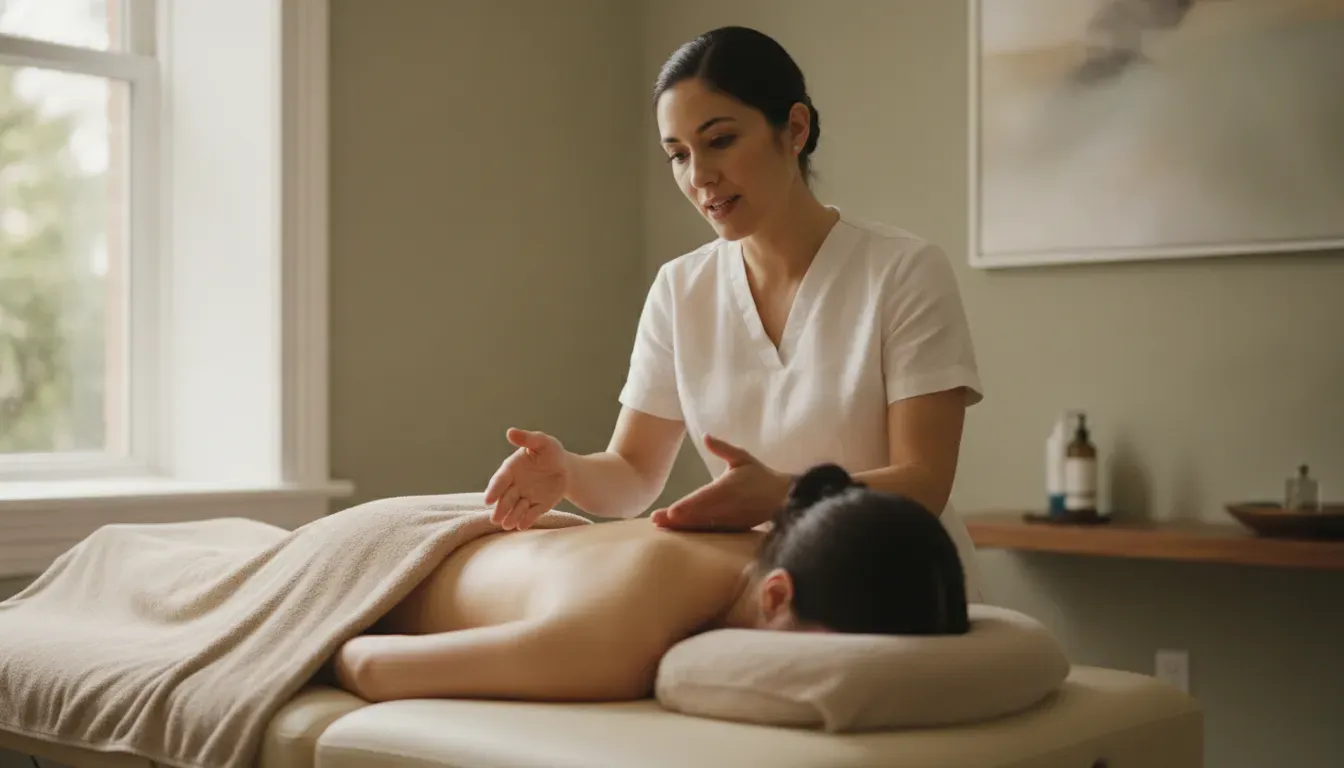

We’ve all heard the advice to “sit up straight,” but it’s rarely that simple. If you’ve spent years slouching, trying to force your shoulders back feels unnatural and exhausting. Here’s the secret: it’s not a lack of willpower. The real problem is the tight, overworked muscles in your chest, neck, and back physically pulling you forward. A targeted massage for posture gets to the root of the issue, releasing those stubborn knots and re-educating your body. This guide will show you how it can make good alignment feel effortless and natural again.
Key Takeaways
- Massage Directly Targets the Source of Slouching: It works by releasing the specific, overworked muscles in your neck, chest, and back that physically pull your body forward. This creates the foundation for your body to return to its natural, comfortable alignment.
- Pair Massage with Exercise for Long-Term Success: Massage loosens tight muscles, making it easier to move correctly. Following up with simple strengthening exercises for your core and back builds the support system needed to hold your new, improved posture in place.
- Lasting Change Requires Consistency and Awareness: While one massage provides relief, regular sessions are needed to retrain muscle memory. Lasting results come from combining this professional care with mindful daily habits, like adjusting your workspace and incorporating simple stretches.
Understanding Posture and Its Effects
Posture is much more than just standing up straight—it’s the foundation of your body’s overall health and movement. When your body is properly aligned, everything from your muscles and joints to your breathing and digestion functions more efficiently. However, modern life, with its long hours of sitting and screen time, often pulls us into positions that cause strain, pain, and long-term problems. Understanding what good posture looks like, recognizing the common types of misalignment, and knowing how it affects your health are the first steps toward making a positive change.
What Good Posture Looks Like
Good posture is your body’s ideal alignment, where your bones and joints are stacked to minimize stress on supporting muscles and ligaments. Think of it as a state of natural balance, not a rigid, forced position. When you’re standing correctly, an imaginary straight line should connect your ears, shoulders, hips, knees, and ankles. This alignment allows your body to function efficiently, preventing certain muscle groups from overcompensating for others. It’s about finding a relaxed yet stable center that you can maintain whether you’re sitting at your desk, walking through the Warehouse District, or waiting for your streetcar. Achieving this makes movement feel easier and reduces unnecessary wear and tear on your body.
The Spine’s Natural Curves
The secret to this effortless balance lies within your spine. Your spine isn’t meant to be perfectly straight; it has three gentle, natural curves located in your neck, mid-back, and low back. According to health experts, good posture is all about maintaining these curves without exaggeration. When they are properly supported, your head rests easily over your shoulders, and your shoulders align directly over your hips. This brilliant structure is designed to absorb shock from daily movements like walking and running, allow for flexibility, and distribute your body weight evenly. This prevents strain from concentrating in one area, which is often the source of chronic pain.
Static vs. Dynamic Posture
It’s helpful to think about posture in two different contexts: static and dynamic. Static posture is how you hold yourself when you aren’t moving—for example, when you’re sitting, standing, or sleeping. Dynamic posture, on the other hand, is your body’s alignment while you are in motion, such as when you’re walking, bending over, or exercising. Both are equally important for your long-term health. Consistently poor static posture, like slouching at a computer all day, often translates into poor dynamic posture. This misalignment during movement can significantly increase your risk of injury, turning a simple workout or daily task into a source of pain.
Common Types of Poor Posture
Most of us don’t have perfect posture, and over time, our bodies can settle into specific patterns of misalignment. These patterns are typically the result of our daily habits, from staring down at a phone to sitting in an unsupportive chair for hours on end. Recognizing your specific postural tendency is the first step toward correcting it. The most common types involve an exaggeration or flattening of the spine’s natural curves, which leads to that all-too-familiar discomfort in the neck, shoulders, and back. Let’s look at a few of the most prevalent postural issues.
Kyphotic Posture (Rounded Shoulders)
Often called “tech neck” or “computer hunch,” kyphotic posture is defined by rounded shoulders that are pulled forward, causing the upper back to curve excessively. This creates a hunched-over appearance and places a tremendous amount of strain on the neck and upper back muscles. If you spend a lot of your day leaning over a desk or looking down at a screen, this pattern might feel familiar. As the Cleveland Clinic explains, this forward head position can add significant weight and pressure to your spine. It develops from an imbalance where the muscles in your chest become tight and short, while the muscles in your upper back become overstretched and weak, pulling you further out of alignment.
Lordotic Posture (Arched Lower Back)
Lordotic posture, sometimes known as “swayback,” involves an exaggerated inward curve of the lower back. This alignment pushes your stomach forward and your buttocks backward, creating a distinct arch in your lumbar spine. This posture is common in people who sit for long periods, as this can weaken the core and glute muscles that are essential for stabilizing the pelvis. Building strong core muscles is crucial for supporting the lower back and maintaining a neutral pelvic position. The constant arching places significant pressure on the vertebrae in your lower back, often leading to chronic pain and discomfort.
Flat Back Posture
Just as the name suggests, flat back posture occurs when the natural, gentle curve in your lower back flattens out. This can make your spine appear straight from the side and often causes you to lean slightly forward from the hips. While it might sound less problematic than an exaggerated curve, a flat back significantly reduces your spine’s ability to absorb shock. This means the stress from walking and other movements is transferred directly to your discs and joints instead of being cushioned by the natural spinal curve, which can lead to pain in the lower back and legs.
How Poor Posture Affects Your Health
The consequences of poor posture extend far beyond a simple ache or a slumped appearance. When your body is consistently out of alignment, it creates a domino effect that can impact your physical and even mental well-being. Your muscles are forced to work harder in a state of constant tension, your joints can wear down unevenly, and your internal organs can even become compressed. Over time, what starts as minor discomfort can evolve into chronic pain and a range of other health issues that limit your ability to move freely and enjoy your life.
From Aches and Pains to Breathing Problems
The most immediate effect of poor posture is often pain. Chronic neck, shoulder, and back pain are classic symptoms, as your muscles strain to hold your head and spine in an unnatural position, which can also trigger tension headaches. But the impact doesn’t stop there. A slumped posture can compress your diaphragm, restricting your ability to take deep, full breaths. It can also affect your digestive system by putting pressure on your stomach and intestines. A therapeutic massage, particularly a deep tissue massage, can directly address the specific muscle tension causing these issues, offering relief from pain and helping to restore proper function.
Impact on Flexibility, Balance, and Confidence
When your bones and muscles are not properly aligned, your body simply can’t move as it was designed to. This can lead to decreased flexibility and a restricted range of motion in your joints, making everyday movements feel stiff and difficult. Your sense of balance can also be compromised, as your body’s center of gravity is shifted from its natural point. Beyond the physical limitations, poor posture can affect your confidence and how you present yourself. Research shows a strong link between posture and mood, and standing tall projects an image of confidence and energy. Correcting your posture isn’t just about feeling better physically; it’s about moving with more freedom and self-assurance.
Can Massage Therapy Actually Fix Your Posture?
If you spend your days hunched over a computer or looking down at your phone, you’ve probably felt the effects of poor posture: a stiff neck, sore shoulders, and a nagging ache in your lower back. These issues happen because our bodies adapt to the positions we hold most often, causing some muscles to become tight and strained while others grow weak. The good news is you don’t have to accept this as your new normal. Massage therapy is a powerful and effective way to counteract the daily grind and guide your body back into a healthier, more comfortable alignment.
By releasing muscle tension, re-educating your body’s holding patterns, and improving your overall awareness, a skilled massage therapist can help you stand taller and move with more ease. It’s not just about temporary relief; it’s about creating lasting change that supports your long-term well-being.
How Massage Works to Realign Your Body
Think of your body as a system of pulleys and levers. When one muscle group gets too tight, it pulls on your skeleton, forcing you out of alignment. This is why you might find yourself slouching or rounding your shoulders without even realizing it. Massage therapy directly addresses this because it relaxes and loosens the muscles that have become sore and contracted from poor posture.
When a therapist applies targeted pressure, it signals these overworked muscles to let go. As the tension melts away, your body can settle back into its natural, pain-free position. Our experienced therapists are trained to identify these specific areas of tightness and gently coax them into a state of release, setting the foundation for better alignment.
The Physiological Effects of Massage
On a physiological level, massage creates a cascade of positive changes that allow your body to realign itself. The therapist’s hands-on techniques stimulate circulation, causing blood vessels to widen and increasing blood flow to your muscles. This rush of oxygen-rich blood helps warm and soften tissues that have become stiff and contracted from daily stress. As this happens, chronically tight muscles in your neck, shoulders, and back are encouraged to release their grip, which in turn reduces pain. When you aren’t in constant discomfort, your body can stop guarding itself and finally settle into a more natural, balanced posture. A deep tissue massage is especially effective for this, as it targets the deeper layers of muscle and connective tissue where postural strain is often held.
Retraining Your Muscles for Lasting Alignment
Correcting your posture isn’t a one-and-done deal. Your muscles have developed a “memory” from holding certain positions for years, and it takes time to create new, healthier habits. This is where consistent massage therapy comes in. Regular massages allow your therapist to address your unique pain patterns and begin the process of re-educating your muscles to improve your body mechanics.
Over time, this therapeutic work helps break the cycle of tension and encourages your muscles to adopt and maintain proper alignment. A deep tissue massage, for example, can work into the deeper layers of muscle and fascia to release chronic patterns. It’s a gradual process of reminding your body what it feels like to be balanced and aligned.
How Massage Helps You Tune Into Your Body
It’s hard to fix a problem you’re not aware of. Many of us slouch without a second thought until we feel the ache that follows. Massage helps bridge this gap by improving your proprioception, or your sense of where your body is in space. By relaxing tight muscles, increasing blood flow, and stimulating nerves, massage makes you more tuned in to your body’s signals.
This heightened awareness makes it easier to notice when you’re falling into old habits, allowing you to self-correct throughout the day. When you can feel the difference between a slumped posture and an aligned one, you’re empowered to make better choices for your body. This mind-body connection is a key part of making your posture improvements last long after you leave the massage table.
The Real-World Benefits of Massage for Posture
A therapeutic massage does more than just help you relax—it’s a powerful tool for actively realigning your body. Poor posture isn’t simply a bad habit; it’s often the result of deep-seated muscle imbalances. When you spend hours sitting at a desk, looking down at your phone, or even sleeping in an awkward position, some muscles become chronically tight and overworked while others grow weak and underused. This muscular tug-of-war pulls your skeleton out of its natural alignment, leading to stiffness, pain, and that familiar slump.
A skilled massage therapist can pinpoint and address these specific imbalances. By applying targeted pressure, they can release the tight muscles in your chest, neck, and shoulders that pull you forward. This process helps restore balance to your muscular system, allowing your body to return to a more natural and efficient posture. It’s a foundational step in retraining your body to stand taller and move with greater ease, long after your session is over.
Relieve Tension and Restore Your Body’s Balance
The first step to improving your posture is releasing the muscles that are holding you in a slump. When you’re constantly hunched forward, your chest and neck muscles shorten and tighten, pulling your entire upper body out of alignment. Massage therapy directly targets this problem by relaxing and loosening these sore, overworked muscles. Once that chronic tension is released, your body can settle back into a more natural, pain-free posture. It’s about creating muscular balance so your body isn’t constantly fighting itself just to stand up straight. Our various massage services are designed to address these specific areas of tension.
Increase Your Flexibility and Range of Motion
Releasing muscle tension is just the beginning. To truly maintain good posture, your body needs to be able to move freely. Massage works on the soft tissues—muscles, tendons, and ligaments—to improve your overall flexibility and joint mobility. By loosening the tissues around your shoulders, spine, and hips, a massage can significantly increase your range of motion. This newfound freedom makes it physically easier to sit up straight and pull your shoulders back without feeling stiff or restricted. When your body can move the way it’s meant to, good posture becomes your default setting, not something you have to constantly force.
Ease Aches, Pains, and Inflammation
Let’s be honest: poor posture often hurts. That nagging lower back pain, the tension headaches that creep up in the afternoon, and the persistent stiffness in your neck are frequently direct results of postural strain. Massage helps by loosening tight muscles and increasing joint movement, which takes a significant amount of stress off your body. This process can reduce pain and calm inflammation in overworked areas. For even deeper relief, an enhancement like our Hot Himalayan Salt Stones can further soothe sore tissues and melt away posture-related discomfort.
Better Circulation Means Faster Healing
Correcting posture is also about helping your muscles heal from the daily grind of chronic strain. A professional massage increases blood flow, delivering a fresh supply of oxygen and nutrients to your tired, tight muscles. This helps them repair and recover more quickly. At the same time, massage encourages the flow of lymph, which is part of your body’s natural cleansing system. This process helps reduce swelling and clear out metabolic waste from your tissues. Better circulation creates a healthier environment for your muscles, making them more resilient and better equipped to support a tall, aligned posture.
What Are the Best Types of Massage for Posture?
When it comes to improving your posture, the “best” massage is the one that fits your specific needs. Whether you have deep knots from desk work or general tension causing you to slouch, the right technique can help your body find its natural alignment. Here are a few of the most effective massage styles that can help you stand taller and feel better.
Deep Tissue Massage for Stubborn Knots
If you’re dealing with chronic aches and stubborn knots, a deep tissue massage is a powerful choice. This technique focuses on the deeper layers of muscle and connective tissue. Your therapist uses slow strokes and firm pressure to target and release adhesions that pull your body out of alignment. By breaking up this tension, deep tissue massage helps restore normal movement and relieve the pain that contributes to poor posture. It’s an intense but highly effective way to address long-standing postural problems and find lasting relief.
Ashiatsu for Deep, Consistent Pressure
For a truly unique experience, consider Ashiatsu Deepfeet Bar Therapy. In this massage, the therapist uses their feet to deliver deep, broad, and consistent pressure. Using overhead bars for balance, they apply long, gliding strokes that are perfect for lengthening the tight muscles along your spine and hips. This technique is incredibly effective for releasing tension in the large muscle groups that often cause postural imbalances. If you love deep pressure but find elbows too pointed, Ashiatsu offers a deeper, more comfortable release that can create lasting change in your alignment.
Swedish Massage for Gentle Realignment
Swedish massage isn’t just for relaxation—it offers powerful benefits for posture, too. This classic style uses long, flowing strokes and kneading to release tension in the outermost layers of your muscles. By calming your nervous system and easing overall muscle tightness, a Swedish massage gently encourages your body back into a more balanced alignment. It’s an excellent choice if you’re new to massage or if your poor posture is driven by stress-related tension. It proves you don’t always need intense pressure to achieve significant results.
Myofascial Release to Free Up Connective Tissue
Sometimes, the problem isn’t the muscle, but the fascia—the connective tissue that surrounds every muscle and bone. When fascia becomes tight and restricted from injury or inflammation, it can pull your body out of alignment. Myofascial release is a technique that applies gentle, sustained pressure to these tight spots, allowing the tissue to elongate and release its grip. This restores mobility and relieves pain by addressing the underlying restrictions that other types of massage might miss. It’s a subtle yet profound approach to helping your body find true structural balance.
Sports Massage for Active Individuals
If you lead an active lifestyle, whether you’re a dedicated athlete or a weekend warrior, the repetitive motions from your favorite activities can create specific muscle imbalances. Think of the constant forward hunch of a cyclist or the one-sided rotation of a golfer’s swing. A sports massage is designed to address these exact issues. It goes beyond general relaxation to pinpoint and release the overworked muscles that pull your body out of alignment, helping to restore balance and improve your overall body mechanics. By increasing flexibility and enhancing your range of motion, this targeted approach not only supports faster recovery but also helps you maintain a more powerful and efficient posture, reducing your risk of injury. Our therapists can customize any of our massage services to focus on your unique needs as an active individual.
Which Massage Techniques Fix Common Posture Problems?
When you think about poor posture, you probably picture specific issues like a hunched back or a forward-jutting head. These common problems are often caused by tight, overworked muscles pulling your body out of its natural alignment. The good news is that a skilled massage therapist can use specific techniques to target these problem areas directly. By focusing on the muscles that contribute to issues like “tech neck” or lower back pain, massage can release tension and gently guide your body back toward a healthier, more comfortable posture. A customized massage session is one of the most effective ways to address the root muscular causes of your postural habits.
Finally Fixing That “Tech Neck”
If you spend a lot of time looking down at a phone or computer screen, you’re probably familiar with “tech neck.” This forward head posture puts a tremendous strain on the muscles in your neck and upper back, leading to stiffness and pain. Massage therapy helps by relaxing and loosening the specific muscles that have become sore and tight from holding your head in that unnatural position. Techniques used in a Deep Tissue or Swedish massage can release the tension in your neck, shoulders, and upper back. As these muscles relax, your body can more easily return to its natural, pain-free alignment with your head resting comfortably above your spine.
Say Goodbye to Slumped Shoulders
Slumped or rounded shoulders are another common result of our modern lifestyles, especially for those who sit at a desk all day. This posture typically involves tight chest muscles and overstretched, weakened upper back muscles. Massage therapy is fantastic for addressing this imbalance. By using techniques that lengthen and release the tight pectoral muscles across your chest, a therapist can help “open up” your front body. This makes it easier for your shoulders to roll back into a more natural position. By also addressing the tension in your upper back, massage helps improve your overall mobility and makes you more aware of when you start to slump.
Relieving That Nagging Lower Back Strain
Persistent lower back pain is often linked to poor posture, whether it’s from slouching in a chair or standing with an overly arched back. These positions cause certain muscles, like your hip flexors and lower back extensors, to become chronically tight as they work overtime to keep your body upright. This constant tension can lead to painful knots and stiffness. A therapeutic massage can provide incredible relief by focusing on these overworked muscles. For deep, consistent pressure that can effectively release tight hip flexors and lumbar muscles, Ashiatsu Deepfeet Bar Therapy is an especially powerful option. It helps restore balance to your pelvis and takes the pressure off your spine.
Using Trigger Point Therapy to Target Knots
Have you ever felt a specific, painful “knot” in your shoulder or back? That’s likely a trigger point—a small, tight band of muscle that can cause pain both at the site and in other areas of the body. These knots are common in muscles that are strained by poor posture. Trigger point therapy involves applying direct, sustained pressure to these spots to encourage them to release. Regular massage allows a therapist to address your unique pain patterns and essentially re-educate your muscles for better alignment. By releasing these knots, you not only get relief from pain but also help the muscle function properly again, which is essential for making long-term postural improvements.
Do You Need a Massage for Your Posture? (Signs to Look For)
We all know we should sit up straight, but life often gets in the way. Between long hours at a desk, looking down at our phones, and the general stress of daily life, it’s easy for our posture to take a backseat. But what starts as a little slouching can lead to bigger issues over time. If you’ve ever wondered if your posture is the real reason behind your aches and pains, you’re not alone. Recognizing the signs and understanding the causes is the first step toward standing taller and feeling better.
Physical Signs That Your Posture Needs Help
Your body has a way of telling you when something is off. The most common sign of poor posture is persistent neck and back pain, but the symptoms don’t stop there. You might also experience frequent headaches, shoulder tension, or even jaw pain. Because poor posture can compress your internal organs, you might notice issues with digestion or find it harder to take a deep breath. These physical cues are your body’s request for help. Listening to them and seeking out therapeutic massage services can be a powerful way to start addressing the root cause of your discomfort and begin the process of realigning your body.
Are Your Daily Habits Hurting Your Posture?
Our modern lives are filled with habits that can strain our posture. Think about your typical day: hunching over a laptop, craning your neck to look at your phone, or even carrying a heavy bag on one shoulder. These repetitive motions cause certain muscles to tighten and shorten while others become weak and overstretched. Over time, this creates an imbalance that pulls your body out of its natural alignment, leading to knots and chronic tightness. A Deep Tissue or Swedish Massage can directly target these overworked muscles, helping to release the tension built up from your daily routine and remind your body what proper alignment feels like.
Beyond the Desk: Other Posture Pitfalls
It’s easy to point the finger at your desk job, but postural strain comes from many parts of your life. Think about the hours you spend looking down at your phone, the way you hold a child on one hip, or even sleeping in an awkward position night after night. These seemingly harmless habits create the same muscular tug-of-war as slouching in a chair: some muscles become chronically tight while others grow weak and underused. This imbalance pulls your body out of its natural alignment, creating patterns of tension that feel normal over time. Addressing these habits requires more than just trying to stand up straight; it involves targeted therapeutic work to release those deep-seated patterns, which is where our various massage services can help.
Why You Shouldn’t Ignore Muscle Imbalances
If you feel like you’re constantly fighting against your own body to stand up straight, it’s time to address the underlying muscle imbalances. When muscles are chronically tight, they can’t function properly. Massage therapy helps by relaxing and lengthening these tense muscles, which increases blood flow and makes it easier for you to engage them correctly. For deep, consistent pressure that can effectively address these imbalances, many people find relief with Ashiatsu Deepfeet Bar Therapy. While massage is a key part of the solution, lasting change comes from combining it with gentle strengthening and stretching. A skilled therapist can help you identify which areas need the most attention.
Myths About Massage for Posture, Busted
When it comes to using massage to fix your posture, there are a lot of ideas floating around. It’s easy to get tangled up in misinformation that can either set unrealistic expectations or scare you away from trying something that could genuinely help. Let’s clear the air and talk through some of the most common myths. Understanding the truth about how massage works can help you approach your posture goals with confidence and a realistic plan for success.
Myth #1: It’s a One-Time Fix
Wouldn’t it be amazing if one massage could instantly undo years of slouching? While a single session will definitely leave you feeling more relaxed and aware of your alignment, lasting posture correction is a process. Think of it less like a magic wand and more like personal training for your muscles. As the Cleveland Clinic notes, regular massages allow a therapist to address your unique pain patterns and gradually re-educate your muscles. Consistent sessions help your body learn and maintain better mechanics, turning that temporary post-massage bliss into your new normal. It’s about building on progress, one appointment at a time.
Myth #2: It Has to Hurt to Work
The old saying “no pain, no gain” has unfortunately made its way into the world of massage, but it simply isn’t true. The belief that a massage must be painful to be effective is one of the biggest misconceptions out there. While a deep tissue massage works into deeper muscle layers and can feel intense, it should never be excruciating. A skilled therapist communicates with you and works within your comfort level to release tension. In fact, when your body is fighting against pain, your muscles tense up, which is the opposite of what you want. Effective massage can be gentle and still produce incredible results for your posture.
Myth #3: Massage Is the Only Solution You Need
Massage is a powerful tool for improving posture, but it works best as part of a team effort. Relying on massage alone without addressing the root causes of your poor posture—like how you sit at your desk or a lack of core strength—is like mopping the floor while the sink is still overflowing. Massage therapy is fantastic for releasing tight muscles and improving circulation, but as one spa points out, skipping regular sessions or other healthy habits means your posture might not improve as you’d hope. Combining your massage appointments with targeted stretches, strengthening exercises, and better daily habits creates a comprehensive approach that delivers real, lasting change.
Can Massage Alone Really Correct Poor Posture?
It’s the big question: can a great massage single-handedly fix years of slouching? While massage is an incredibly powerful tool for posture correction, it works best as part of a bigger plan. Think of it as the essential first step that makes all other efforts more effective. It prepares your body for change by releasing the tight, overworked muscles that are pulling you out of alignment. This creates a clean slate, allowing you to build new, healthier habits on a foundation of relaxed muscle tissue.
Understanding Massage’s Role in Your Posture Plan
When your muscles are constantly tight from sitting at a desk or looking down at your phone, they essentially get “stuck” in that shortened position. Massage therapy directly addresses this by loosening and relaxing those sore, contracted muscles. As the tension melts away, your body gets a chance to return to its natural, pain-free alignment. Our therapeutic massage services are designed to release this chronic tension in the neck, shoulders, and back. By easing this strain, massage gives your body the freedom it needs to stand taller, making it a crucial part of any posture improvement plan.
Why a Team Approach to Posture Works Best
While massage is fantastic for releasing tight muscles, lasting posture correction requires a team approach. Poor posture is a habit, often developed over many years. This creates muscle imbalances where some muscles are overworked and tight, while others become weak and underused. Massage is your go-to for the tight muscles, but you also need to strengthen the weaker ones to maintain proper alignment. For real, long-term change, combine regular massage with targeted strengthening exercises, stretching, and a conscious effort to adjust your daily movements. This holistic strategy ensures you’re addressing the root cause, not just the symptoms.
Other Therapies That Support Your Massage
To get the most out of your posture-focused massage, pair it with other supportive practices. Regular stretching is a perfect partner to massage; it helps maintain the flexibility and range of motion your therapist works to restore. Simple stretches for your chest, shoulders, and hips can prevent muscles from tightening up again between sessions. You can also incorporate mindfulness to become more aware of your body’s position throughout the day. Our experienced therapists can often suggest specific stretches or habits to focus on after your session, helping you build a routine that supports a healthier posture for good.
Structural Integration (Rolfing)
Beyond working on muscles, some types of bodywork focus on a different target: your fascia. Fascia is the web of connective tissue that wraps around every muscle and organ in your body, kind of like a full-body stocking. When you hold a poor posture for a long time, this tissue can become stiff and restricted, essentially “locking” you into that slumped position. Structural Integration, also known as Rolfing, is a specialized technique that works to release and realign this fascial network. By applying slow, deep pressure, a practitioner can improve how your body moves and help it return to a more natural, efficient posture. It’s a systematic approach to rebalancing your entire structure from the inside out.
Joint Mobilization Techniques
Sometimes, the key to better posture isn’t just in the muscles, but in the joints they connect to. If the joints in your spine are stiff, it can be physically difficult to stand up straight, contributing to a hunched-over look. Joint mobilization is a technique where a therapist gently moves your joints through their natural range of motion, and sometimes slightly beyond. This isn’t about forceful cracking or popping; it’s a subtle and controlled movement designed to increase mobility and reduce stiffness. By improving how your spinal joints move, this technique can alleviate the stiffness and pain that often accompany poor posture, making it easier for your body to find and maintain a more upright alignment.
Making Your Massage More Effective with Exercise and Stretching
Think of your massage therapist as a skilled mechanic who realigns your body, releasing tension and correcting imbalances. But once you leave the studio, it’s up to you to maintain that good work. Pairing your massage sessions with a consistent routine of exercise and stretching is the key to making those posture improvements last. Massage loosens tight muscles and creates new possibilities for movement, while targeted exercises strengthen the muscles needed to hold your body in a healthier alignment.
This combination is where the real magic happens. Your massage makes it easier to perform exercises with the correct form, and the exercises reinforce the positive changes from your massage. It’s a powerful cycle that helps you build strength, increase flexibility, and retrain your body to stand tall and move with ease. By taking an active role in your posture plan, you’re not just treating the symptoms—you’re building a stronger, more resilient foundation for the long haul. A deep tissue massage can release the chronic tension, and your follow-up routine will keep it from coming back.
Exercises to Strengthen Key Posture Muscles
To hold yourself in a better posture, you need a strong support system. That’s where targeted exercises come in. When your core, back, and shoulder muscles are weak, they can’t properly support your spine, leading to slouching and strain. By focusing on these key areas, you build the muscular endurance needed to maintain proper alignment throughout the day. Simple exercises like planks and bridges are fantastic for strengthening your core, which acts as a natural corset for your torso. Rows and shoulder blade squeezes help pull your shoulders back and down, counteracting the forward slump from sitting at a desk. Consistently working these muscles helps lock in the benefits of your massage.
Body Awareness Practices like Yoga and Tai Chi
Beyond building strength, it’s also about building awareness. Practices like yoga and tai chi are excellent for developing this mind-body connection. They teach you to pay close attention to your body’s alignment and how it feels to stand tall versus how it feels to slump. This deepens the body awareness that massage initiates, making it easier to self-correct your posture throughout the day. You start to notice the subtle shifts into old habits and can gently guide yourself back to a healthier position, making the benefits of your massage last much longer.
The Best Stretches to Complement Your Massage
While strengthening is about building support, stretching is about creating freedom. Massage is incredible for releasing knots and tight fascia, but daily stretching helps maintain that newfound flexibility. When you combine stretching with massage, you can more effectively correct muscle imbalances and increase your overall range of motion. For example, if you have rounded shoulders, your chest muscles are likely tight. Gentle chest openers, like the doorway stretch, can help lengthen those muscles, making it easier to keep your shoulders back. Similarly, neck stretches can relieve the tension that contributes to “tech neck.” Think of stretching as the daily maintenance that keeps your body feeling open and mobile between your massage appointments.
Putting It All Together: Your Personal Posture Plan
The most effective approach to improving posture is a holistic one. Your personal plan should be a combination of professional massage, strengthening exercises, and daily stretching. Start by talking with your massage therapist. They can identify your specific patterns of tension and suggest exercises and stretches that will be most beneficial for you. From there, you can build a simple, sustainable routine. This doesn’t have to be complicated—even 10-15 minutes a day can make a huge difference. Your plan should also include mindful practices and small ergonomic adjustments to your workspace. By creating a comprehensive plan, you empower yourself to take control of your posture and well-being.
What to Expect from Your Posture Correction Massage
Booking a massage to work on your posture is a fantastic step toward feeling better in your body. It’s more than just a typical relaxation session; it’s an active partnership between you and your massage therapist. The goal is to identify the root causes of your slouching or discomfort and create a plan to bring your body back into a more natural, comfortable alignment. From the moment you walk in, the focus will be on understanding your unique patterns and using targeted techniques to release tension, retrain muscles, and help you stand taller long after you leave the table.
Before You Start: The Initial Assessment
Your session will begin with a conversation. Think of it as a strategy session for your body. Your therapist will ask about your daily routine, any aches or pains you experience, and what your posture goals are. A good massage therapist does more than address temporary aches; they work to understand your pain patterns and help re-educate your muscles for better long-term alignment. This initial chat helps them create a customized session that targets the specific muscles contributing to your posture problems. Our dedicated team is trained to listen carefully and assess your needs before the hands-on work begins.
What to Expect During the Session
During the massage, your therapist will use specific techniques to address the muscle imbalances that lead to poor posture. This usually involves releasing muscles that have become short and tight (like your pecs and hip flexors) while bringing awareness to muscles that have become weak and overstretched (like your upper back muscles). Massage therapy helps improve posture by making your muscles less tight, your joints less stiff, and increasing your overall range of motion. Depending on your needs, your therapist might use Deep Tissue techniques to work out stubborn knots or the broad, consistent pressure of an Ashiatsu massage to achieve deep, lasting release.
After the Massage: Your Next Steps
The work doesn’t stop once your massage is over. Your therapist will likely give you some simple “homework” to help you maintain your results. This could include specific stretches, gentle strengthening exercises, or small adjustments to your workspace ergonomics. Stretching combined with massage therapy is a powerful way to correct muscle imbalances, reduce your risk of injury, and relieve chronic pain. These recommendations are designed to be easy to incorporate into your daily life and will empower you to take an active role in your posture journey. Think of your therapist as your posture coach, giving you the tools you need to succeed between sessions.
Managing Post-Massage Soreness
It’s completely normal to feel a bit tender or sore the day after a massage, especially if your therapist worked on deep, chronic knots. Think of it like the feeling you get after a really good workout—it’s a sign that your muscles have been challenged and are now in the process of repairing and realigning. This soreness happens because the massage has increased blood flow and started to release long-held tension, waking up muscles that may have been dormant. This is a positive signal that your body is responding to the treatment and beginning its journey back to a healthier posture.
To ease any discomfort, make sure to drink plenty of water, which helps flush out the metabolic waste released from your tissues. A warm bath with Epsom salts can also work wonders for soothing tired muscles. Gentle movement, like a short walk, can also help prevent stiffness. Most importantly, listen to your body. This newfound awareness is part of the process, helping you manage any tenderness and tune into how your posture is changing. The soreness should fade within a day or two, leaving you feeling more open and aligned.
How Often Should You Get a Massage for Posture?
Correcting long-held posture habits takes time and consistency. While you’ll likely feel a significant improvement after just one session, lasting change comes from regular appointments. When you skip sessions, you might find that the benefits begin to fade as old patterns of tension creep back in. Your therapist will work with you to create a treatment schedule that makes sense for your body and your goals. This might mean coming in more frequently at the beginning to build momentum, then spacing out your appointments for maintenance once you start to see and feel a real difference in how you hold yourself.
How to Maintain Your Good Posture After a Massage
A great massage can feel like hitting the reset button on your posture. You walk out of the studio feeling taller, lighter, and more aligned. But how do you hold onto that feeling? The key is to integrate small, mindful habits into your daily life. Your massage therapist does the heavy lifting to release tension and realign your muscles, but the work you do between appointments is what makes those changes stick. Think of it as a partnership: your therapist sets the foundation for better posture, and your daily habits reinforce it.
Lasting results don’t come from a single session; they come from consistency. This means being more aware of how you sit, stand, and move throughout your day. It involves making simple environmental changes and incorporating gentle movements to support your body’s new alignment. By taking these proactive steps, you can prevent old patterns from creeping back in and ensure that the benefits of your massage extend for weeks, not just days. The goal is to make good posture your new normal, not just a temporary fix. Here’s how you can protect your investment and maintain your progress long after you’ve left the massage table.
Simple Ergonomic Changes for Your Desk and Home
Your environment plays a huge role in your posture. Making a few simple ergonomic adjustments at your desk can prevent you from undoing all the good work from your massage. Start by positioning your computer monitor at eye level to keep your neck in a neutral position. Adjust your chair so your feet are flat on the floor and your lower back is supported. Beyond the office, pay attention to how you hold your phone—lifting it to your face instead of craning your neck down can make a world of difference. These small changes reduce daily strain on your muscles, helping them stay relaxed and properly aligned.
Detailed Tips for Sitting Correctly
The goal of good sitting posture isn’t to be rigid and stiff; it’s to support your spine’s three natural curves. When you sit, aim to keep your feet flat on the floor with your knees at a roughly 90-degree angle, directly over your ankles. Scoot your hips back so they touch the back of the chair. Instead of forcing yourself to sit perfectly upright, try leaning back just a little to take some pressure off your lower back. Keep your shoulders relaxed and down, not hunched up by your ears. This position helps maintain those natural curves without straining your muscles, making it a sustainable habit rather than a constant effort.
How to Stand for Better Alignment
When you stand, think about creating a tall, stable line from your head to your heels. Start by putting most of your weight on the balls of your feet, keeping your feet about shoulder-width apart. Gently pull your stomach in to engage your core muscles—this provides crucial support for your lower back. Let your arms hang naturally at your sides and keep your shoulders pulled back and down. Finally, imagine a string pulling the crown of your head toward the ceiling to keep your head level. After a massage has released chronic tension, your body can settle into this natural, pain-free posture much more easily.
How to Keep Making Progress Between Sessions
Think of your massage as the catalyst for change and your at-home routine as the follow-through. Your therapist can release tight muscles, but strengthening the opposing muscles is what keeps your body in balance. Incorporating a few simple exercises and stretches into your day can target the muscles responsible for holding you upright. Gentle movements like chest openers, shoulder rolls, and pelvic tilts can increase mobility and prevent stiffness from setting in. Pairing this routine with regular massage services creates a powerful combination that corrects muscle imbalances and helps you feel better for longer.
Actionable Daily Habits for Lasting Change
Your massage therapist does the heavy lifting to release tension and realign your muscles, but the work you do between appointments is what makes those changes stick. Lasting results come from combining professional care with mindful daily habits that retrain your muscle memory. Think of it as a partnership: your therapist sets the foundation for better posture, and your daily actions reinforce it. This doesn’t have to be complicated. Try setting a timer to get up and walk around every hour, or do a quick check-in on your posture while waiting in line. Simple stretches, like rolling your shoulders back and down or gently tucking your chin, can counteract the forward slump of desk work. Consistency is what matters most; these small, repeated actions teach your body a new, healthier way to hold itself.
Self-Massage for At-Home Relief
For targeted relief between your professional sessions, you can use simple tools to manage tension at home. A foam roller is great for your back, while a tennis or lacrosse ball works wonders on tight spots in your shoulders and glutes. These self-massage techniques help loosen the specific muscles in your neck, shoulders, and back that often get stiff from poor posture, allowing your body to move more freely. Think of this as maintenance that helps preserve the flexibility and range of motion your therapist works to restore. You can find many simple tutorials online that show you how to use these tools safely and effectively. Paired with regular stretching, self-massage is a perfect way to keep your muscles happy and support your posture goals.
Don’t Let Stress Ruin Your Posture
Have you ever noticed that you hunch forward when you’re stressed or anxious? It’s a common physical response. Your shoulders creep up toward your ears, your chest tightens, and before you know it, you’re slouching. This creates a frustrating cycle where emotional stress leads to physical tension, which can cause pain and even more stress. Regular massage is an incredible tool for breaking this pattern. A therapeutic Deep Tissue or Swedish Massage doesn’t just address the physical knots; it also helps calm your nervous system. By releasing the tension held in overworked muscles, you can stand taller and feel more resilient, both physically and mentally.
Related Articles
Frequently Asked Questions
How many massages will it take to fix my posture? While you’ll likely feel more open and aligned after your very first session, think of posture correction as a process rather than a one-time fix. Years of slouching create deep-seated muscle habits that take time to change. Consistent massage allows your therapist to address these chronic patterns and gradually retrain your body. Most people see significant, lasting improvement by combining regular sessions with better daily habits.
I’m worried a posture-focused massage will be painful. Does it have to hurt to work? Absolutely not. While a deep tissue or Ashiatsu massage can feel intense as the therapist works on stubborn knots, it should never be truly painful. In fact, pain can cause your muscles to tense up, which is the opposite of what we want to achieve. A skilled therapist will always work within your comfort level and communicate with you to ensure the pressure is effective but not unbearable. The goal is release, not resistance.
With options like Deep Tissue and Ashiatsu, how do I know which massage is right for me? The best way to know for sure is to talk with your therapist about your specific issues. As a general guide, if you have specific, stubborn knots in your neck and shoulders, a Deep Tissue massage can provide targeted relief. If you enjoy deep, consistent pressure over broad areas like your back and hips, Ashiatsu is a fantastic choice for lengthening tight muscles. If you’re new to massage or your tension is more stress-related, a Swedish massage can be a wonderfully effective and gentle starting point.
What can I do between appointments to keep from slouching again? Your massage sets the stage for better posture, but your daily habits are what make it stick. The most important things you can do are to be more aware of your body and to incorporate simple movements into your day. Try setting a reminder to get up and stretch your chest and shoulders every hour. You can also focus on strengthening your core and upper back muscles, which act as your body’s natural support system. Your therapist can suggest a few specific stretches that are perfect for your needs.
Can massage really help with specific issues like “tech neck” or slumped shoulders? Yes, this is exactly what therapeutic massage is designed to address. “Tech neck” and slumped shoulders are caused by specific muscles in your neck and chest becoming chronically tight, pulling your head and shoulders forward. A skilled therapist can target these exact muscles, releasing the tension that holds you in that slumped position. This allows your body to settle back into a more natural and comfortable alignment.