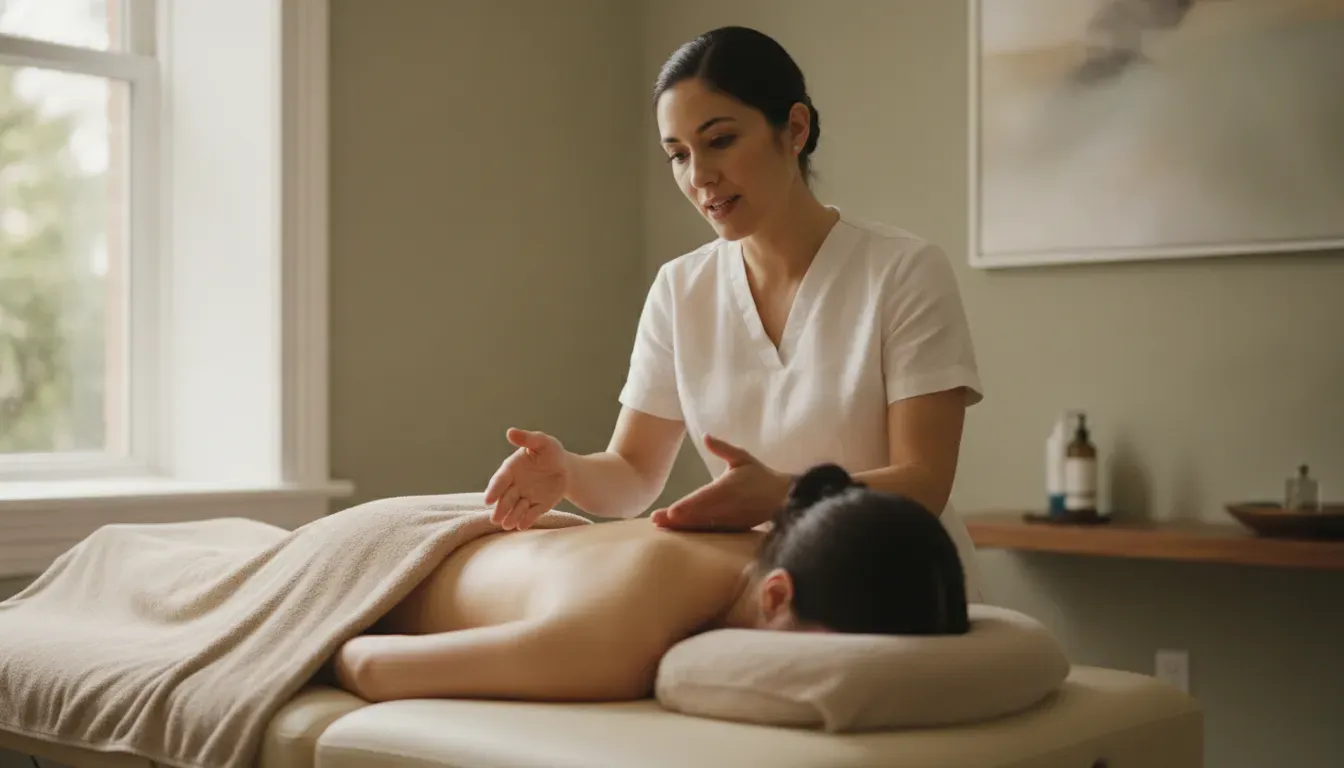

When your lower back is screaming for relief, choosing the right massage is everything. It’s not just about relaxation; it’s about finding a real solution that works. Deep tissue massage uses knuckles and elbows to zero in on those specific, stubborn knots. Then there’s Ashiatsu, or barefoot massage, which uses the feet to apply broad, gliding pressure that soothes entire muscle groups. The choice between deep tissue ashiatsu isn’t about which is better, but which is better for your specific pain. Let’s break down the differences so you can book your next session with confidence.
Key Takeaways
- Choose deep tissue for pinpoint pain and Ashiatsu for widespread aches: Deep tissue uses focused pressure from hands and elbows to work on specific knots, while Ashiatsu provides broad, deep compression with the therapist’s feet to soothe larger areas like the entire lower back.
- Consider Ashiatsu for deep relief with less soreness: While deep tissue is highly effective, its targeted pressure can sometimes leave you sore. Ashiatsu’s gliding foot pressure delivers powerful results with less irritation, making it a great choice if you want to avoid next-day tenderness.
- Customize your session for more effective results: Your relief is a team effort. Talk to your therapist about your specific goals, and ask about combining techniques or adding enhancements like CBD or hot stones to create a treatment perfectly suited to your body’s needs.
What is Deep Tissue Massage?
If you’ve ever dealt with a stubborn knot in your back or persistent muscle tightness, you’ve probably heard about deep tissue massage. This therapeutic technique is designed to address chronic pain and tension by focusing on the deeper layers of your muscles and connective tissues. Unlike a Swedish massage that prioritizes relaxation with light, gliding strokes, a deep tissue massage gets straight to the source of your discomfort.
Your massage therapist uses slow, deliberate strokes and focused pressure to target adhesions, which are the rigid bands of tissue that cause pain and limit your movement. By breaking up these adhesions, the massage helps restore normal muscle function and relieve pain. It’s an incredibly effective method for anyone struggling with postural problems, repetitive strain injuries, or ongoing muscle tension from stress or physical activity. Think of it as a focused reset for your body’s most overworked areas.
How It Reaches Your Deepest Muscle Layers
To reach the deep layers of muscle and fascia, your therapist will use their knuckles, forearms, and even elbows to apply concentrated pressure. The movements are slower and more intense than in other types of massage. This allows the therapist to work through the superficial muscles to reach the underlying structures where chronic tension is often stored.
This technique is especially effective for lower back pain because it can precisely target and release the specific muscles that are causing problems. By applying sustained pressure and working against the grain of the muscle fibers, a deep tissue massage helps break down painful knots and encourages better blood flow to the affected area, which supports healing and reduces inflammation.
Deep Tissue Myths: Does It Have to Hurt?
One of the biggest misconceptions about deep tissue massage is that it has to be painful to work. While the pressure is firm and you might feel some discomfort when the therapist works on a tight spot, it should never be unbearable. A good rule of thumb is that you should be able to breathe comfortably through the pressure. If you find yourself tensing up or holding your breath, let your therapist know immediately.
Effective deep tissue work is a partnership between you and your therapist. Open communication ensures the pressure is just right for your body, creating a therapeutic experience that feels productive, not punishing. You might feel a little sore the day after, similar to how you’d feel after a good workout, but the ultimate goal is lasting relief.
What is Ashiatsu Massage?
If you’ve never heard of Ashiatsu, you’re in for a treat. Often called “barefoot massage,” this technique is a unique and luxurious experience where a highly trained therapist uses their feet to deliver deep, consistent pressure. It’s a practice with ancient roots, refined into a modern therapy that provides some of the deepest, most relieving pressure you can find. During the session, your therapist holds onto overhead bars for balance and support, allowing them to use their body weight to apply smooth, gliding strokes along your back, legs, and shoulders.
This method is especially effective for tackling widespread tension and lower back pain. Instead of using thumbs or elbows to dig into sore muscles, the therapist’s feet can cover a much broader area at once. This creates a sensation of deep, flowing compression that coaxes muscles to release without the sharp discomfort some people associate with traditional deep tissue work. At Nola Bliss, our therapists are not only skilled in this modality, but we are also the only certified training center for Ashiatsu Deepfeet Bar Therapy on the Gulf Coast, so you can trust you’re in expert hands (and feet).
The Ancient Roots of a Modern Technique
The concept of using feet for massage might sound modern, but it’s a practice with a rich history. The name “Ashiatsu” is Japanese for “foot pressure,” and the technique itself draws from ancient healing traditions across Asia that have been practiced for thousands of years. This time-tested method of healing has been refined into the modern therapy you can experience today. Therapists now use overhead bars for balance, allowing them to apply their body weight with precision and control. This evolution combines ancient wisdom with modern ergonomics, creating a massage that delivers deep, consistent pressure to release tension without the pointed discomfort that can sometimes come from elbows or thumbs. It’s a perfect blend of history and innovation, designed for profound relief.
Using Feet for Deep, Consistent Pressure
The secret to Ashiatsu’s effectiveness lies in gravity. By using the overhead bars for support, the therapist can lean into the massage, channeling their body weight through their feet to create a deep and consistent pressure that hands alone simply can’t replicate. This allows for long, sweeping strokes that warm and lengthen tight muscles, encouraging them to release. The therapist can easily adjust the pressure to suit your needs, from gentle and relaxing to intensely deep, ensuring the entire experience is both therapeutic and comfortable. It’s a full-body approach that feels incredibly grounding and effective.
Why Ashiatsu Feels So Different
The main difference you’ll notice with Ashiatsu is the quality of the pressure. Because the foot is broader and softer than a thumb or elbow, it distributes pressure more evenly across your muscles. This means you get all the benefits of a deep massage without the sharp or poky sensations that can sometimes cause you to tense up. The result is a deep, gentle compression that feels both powerful and soothing. Ashiatsu massage goes deeper by inviting the muscles to relax, making it a slow, grounded, and intentional therapy that helps decompress the spine and stretch your entire body.
Deeper Pressure Without the Sharpness
When you’re dealing with intense lower back pain, you want pressure that goes deep enough to make a difference, but not so sharp that it makes you flinch. This is where Ashiatsu truly shines. While deep tissue massage uses elbows and thumbs to target knots, that focused pressure can sometimes feel intense or even poky. Ashiatsu, on the other hand, uses the broad, soft surface of the foot to deliver a deep, rolling compression. This allows your therapist to apply significant weight and achieve a profound muscle release without the “ouch” factor. The result is a powerful barefoot massage that encourages your muscles to let go, rather than brace against the pressure, making it an ideal choice for deep relief without any sharp discomfort.
Deep Tissue vs. Ashiatsu: How Do They Compare?
While both deep tissue and Ashiatsu are fantastic for lower back pain, they feel very different and work in unique ways. One uses precise, targeted pressure, while the other offers a broader, deeper approach. Understanding these differences is the key to choosing the perfect massage for your needs and getting the relief you’re looking for. Let’s break down how they stack up against each other.
What Does Each Massage Feel Like?
The most immediate difference you’ll notice is how the pressure feels. A deep tissue massage uses fingers, knuckles, and elbows to apply focused pressure. This allows your therapist to dig into specific tight spots. The sensation can be intense, but it should always feel productive, not painful.
In contrast, Ashiatsu Deepfeet Bar Therapy uses the therapist’s feet to deliver long, gliding strokes. Because the foot provides a broader surface, the pressure feels more distributed and less “pointy.” Many people find they can tolerate much deeper pressure with Ashiatsu because it feels more like a comforting, heavy weight than a sharp tool.
The Ashiatsu Experience: From Feet to Balance Bars
So, what does an Ashiatsu session actually look like? When you walk into the room, you’ll notice two parallel bars securely mounted to the ceiling above the massage table. These bars are the therapist’s secret weapon for balance and control. They aren’t for acrobatics; they allow your therapist to gracefully support themselves as they use their body weight to apply pressure with their feet. This setup lets them deliver long, flowing strokes with remarkable precision. They can adjust the depth of the massage in an instant, ensuring the pressure is always perfect for you. It’s this combination of gravity and skill that makes an Ashiatsu massage so uniquely effective for melting away tension across large muscle groups.
How Each Technique Targets Muscles Differently
Think of deep tissue as a spotlight. It’s incredibly effective for targeting a specific, stubborn knot in your lower back or shoulder. Your therapist can use their hands and elbows with precision to work on that exact spot until it releases. If you can point to one area and say, “It hurts right here,” deep tissue is an excellent choice.
Ashiatsu, on the other hand, is more like a floodlight. It’s designed to treat large muscle groups all at once. This makes it ideal for addressing widespread tension, like the kind that builds up in your back, glutes, and hips from sitting at a desk. It works on the entire chain of connected muscles, providing a comprehensive release that’s hard to achieve with smaller tools.
What to Expect for Post-Massage Soreness
What happens after the massage is just as important as the massage itself. Because deep tissue involves such intense, focused work, it’s common to feel some soreness for a day or two afterward. This is completely normal and a sign that your muscles are beginning to heal and repair.
One of the biggest benefits of Ashiatsu is that it typically causes very little, if any, post-massage soreness. The broad, consistent pressure helps lengthen and stretch muscles without irritating them. Most people walk away from an Ashiatsu session feeling immediate relief and a sense of openness, making it a great option if you want deep work without the potential for next-day tenderness.
Which Massage Is Right for Your Lower Back Pain?
Choosing between massage styles can feel overwhelming, especially when all you want is relief from nagging lower back pain. The good news is that both deep tissue and Ashiatsu are fantastic options, but they approach the problem from different angles. One uses precise, targeted pressure, while the other offers broad, deep compression. The best choice for you often comes down to the specific type of pain you’re feeling and what your body responds to best.
Think about your discomfort for a moment. Is it a sharp, specific point you can press on, maybe from a recent injury or a stubborn knot? Or is it a broader, more general ache that spreads across your lower back, perhaps into your hips and glutes? Understanding this distinction is the key to picking the massage that will give you the most effective and lasting relief. We’ll walk through a few common scenarios to help you identify which technique is the right fit for your body. Our goal is to help you book your next appointment with confidence, knowing you’ve chosen the best path to feeling better.
If You Have Sharp, Localized Pain
If you can point to a specific, tender spot in your lower back and say, “It hurts right here,” a deep tissue massage is likely your best option. This type of pain often comes from a stubborn muscle knot, also known as a trigger point, or a recent minor injury. A deep tissue massage allows your therapist to use their fingers, knuckles, and elbows to apply focused, firm pressure directly to that problem area. This targeted approach is designed to break up adhesions and release the deep-seated tension that’s causing that sharp, localized feeling, helping to restore movement and reduce pain right at the source.
If You Have Chronic Tension or a Strain
When your lower back pain feels more like a widespread, dull ache that spreads across your back and maybe into your hips and glutes, Ashiatsu is an incredible choice. This kind of discomfort is often caused by chronic tension from sitting for long periods or an acute strain from a sudden movement. An Ashiatsu massage is often better for this because the therapist uses their feet to deliver broad, gliding strokes that work on entire muscle groups at once. This technique also provides a gentle stretching and decompression of the spine, which can be especially helpful for relieving pressure on discs and soothing widespread muscular tightness.
For Aches from Work or Workouts
If your back pain comes from using your body a lot, whether you’re an athlete, a nurse on your feet all day, or a construction worker, Ashiatsu can provide profound relief. The therapist uses their full body weight to deliver deep, consistent pressure that sinks into large, overworked muscles without the sharp or poky feeling that can sometimes accompany deep tissue work. This makes it perfect for soothing the entire length of your back, hips, and legs. The broad, heavy strokes of an Ashiatsu session can flush out metabolic waste, reduce muscle soreness, and help your body recover more efficiently from intense physical activity or a demanding job.
Perfect for Athletes and Runners
Athletes and runners, listen up. If you’re constantly pushing your body to its limits, you need a recovery method that’s just as powerful. This is where Ashiatsu truly shines. It offers some of the deepest pressure possible, which is perfect for working through dense, athletic muscles in your legs, glutes, and back. The long, gliding strokes from the therapist’s feet help flush out metabolic waste that builds up during intense training, which can reduce soreness and speed up your recovery time. Instead of just targeting one small knot, Ashiatsu addresses entire muscle chains at once, providing a comprehensive release that’s hard to match. Plus, the technique gently stretches your body and decompresses the spine, counteracting the impact of high-intensity workouts and helping you stay in top form.
Important Safety Considerations (Contraindications)
When to Avoid Ashiatsu Massage
While Ashiatsu offers incredible benefits, it’s not the right fit for every body. Your safety is always the top priority, so there are a few important situations where this type of deep pressure should be avoided. For instance, if you’ve had recent surgery, especially on your back, abdomen, or joints, the pressure could disrupt the delicate healing process. It’s best to wait until you are fully recovered. Similarly, individuals with severe osteoporosis, a condition that makes bones brittle, should steer clear of this modality. The deep, gliding pressure, while wonderful for muscles, could pose an unnecessary risk to fragile bones. It’s always better to choose a lighter-pressure massage in these cases.
Additionally, certain circulatory conditions, like deep vein thrombosis (blood clots) or significant varicose veins, are also contraindications. Experts advise that deep pressure could potentially be harmful in these situations. This is why open communication with your massage therapist is so crucial—it’s the foundation of a safe and effective treatment. A professional therapist will always conduct a thorough intake to understand your health history. Think of it as a partnership. By sharing your full health picture, you empower your therapist to tailor the session specifically to you, ensuring you get all the benefits without any of the risks. Never hesitate to voice a concern; it’s the key to a truly healing experience.
Why Choose Deep Tissue for Your Lower Back?
If your lower back pain feels less like a general ache and more like a specific, nagging problem, a deep tissue massage might be exactly what you need. This technique is designed to be a focused, therapeutic treatment. It’s not about broad, relaxing strokes; instead, your therapist uses firm pressure and slow, deliberate movements to reach the deeper layers of muscle and connective tissue, or fascia. Think of it as a detailed tune-up for the muscles that are causing you the most trouble.
A deep tissue massage is particularly effective for lower back issues because it can precisely target the source of your discomfort. Whether you’re dealing with a persistent knot from sitting at a desk all day or stiffness from an old injury, this method allows your therapist to zero in on problem areas. By breaking up scar tissue and adhesions that can restrict movement and cause pain, a deep tissue session helps restore normal function and provides significant relief. It’s an ideal choice when you’re looking for a powerful, results-oriented approach to feel better.
Finally Release Those Stubborn Knots
We’ve all felt them: those tight, tender spots in our muscles that just won’t seem to go away. These are often called muscle knots, or trigger points, and they are a common cause of lower back pain. Deep tissue massage is one of the best ways to address them. Your therapist uses specialized techniques like strong, sustained pressure and deep circular movements to manually break up these knots. This process releases the built-up tension in the muscle fibers, helping to alleviate the pain and discomfort that radiates from these specific points.
Find Lasting Relief from Chronic Pain
When you’re dealing with chronic lower back pain, you want more than just a temporary fix. Deep tissue massage is designed to provide lasting results by addressing the underlying causes of your discomfort. While the intensity is higher than a Swedish massage, the goal is to release long-held patterns of tension. By breaking down adhesions and realigning the deeper layers of muscle tissue, this technique can help correct postural issues and relieve the chronic strain that leads to persistent pain. It’s a therapeutic investment in your long-term well-being.
Improve Your Mobility and Blood Flow
Stiff, painful muscles often suffer from poor circulation, which slows down the healing process. Deep tissue massage helps solve this problem by stimulating blood flow to the targeted areas of your lower back. This increased circulation delivers more oxygen and nutrients to your muscles, which helps reduce inflammation and repair damaged tissue. As the tight bands of tissue are released, you’ll also notice a significant improvement in your mobility and range of motion. Everyday movements become easier and less painful, helping you get back to your routine.
Can Deep Tissue Massage Affect Blood Pressure?
It might surprise you, but the benefits of a deep tissue massage extend beyond your muscles. Research shows that massage therapy can positively impact your cardiovascular health by helping to lower blood pressure. As your therapist applies deep, sustained pressure, it does more than just release muscle tension—it also signals your nervous system to relax. This calming effect helps reduce stress hormones like cortisol, which are often linked to high blood pressure. In fact, studies confirm that regular massage can lower both systolic and diastolic readings. So, while you’re enjoying the relief in your lower back, your body gets a much-needed break from stress, which benefits your heart, too.
Why Choose Ashiatsu for Your Lower Back?
If you’re dealing with persistent lower back pain, you might feel like you need the most intense pressure possible to find relief. While deep tissue massage is a powerful tool, Ashiatsu Deepfeet Bar Therapy offers a unique and incredibly effective alternative. This technique uses the therapist’s body weight and feet to deliver deep, broad, and consistent pressure that can feel both incredibly deep and wonderfully soothing.
Ashiatsu, which translates to “foot pressure,” allows your therapist to use gravity to their advantage, holding onto overhead bars for balance and control. This setup enables them to provide long, gliding strokes that can release tension in a way that hands and elbows simply can’t. For many people with lower back issues, from chronic tightness to acute strain, this method provides profound relief without the sharp, targeted pressure that can sometimes feel too intense. It’s a fantastic option if you love deep work but want a more comfortable and comprehensive experience that addresses large muscle groups all at once. The broad, consistent pressure is often described as a “deep-tissue-meets-Swedish” sensation, making it a perfect fit for anyone seeking serious results without the discomfort.
Gently Decompress and Stretch Your Spine
One of the standout benefits of Ashiatsu for lower back pain is its ability to gently decompress the spine. As your therapist glides along the muscles surrounding your vertebrae, their long, flowing strokes help to elongate and stretch your back. This creates space between the spinal discs, which can relieve pressure on nerves and reduce the compression that often contributes to pain. It’s a subtle, therapeutic stretch that feels incredible and encourages your spine to return to a more natural alignment. This gentle traction is especially helpful for anyone who sits for long periods or deals with stiffness from disc-related issues.
Address More Muscles in a Single Session
Imagine the difference between the pressure from an elbow and the pressure from a foot. The therapist’s foot can cover a much larger surface area, allowing for a broader and more evenly distributed pressure. This often feels less “pointy” and more encompassing, making even very deep work feel more tolerable and relaxing. For your lower back, this means the therapist can address the entire muscle group in one smooth, continuous stroke. This approach is not only highly efficient but also helps to release tension across the entire region, from your mid-back down to your glutes, providing a more complete sense of relief in a single session.
Get Maximum Relief with Less Soreness
A common concern with deep massage is the potential for next-day soreness. This is where Ashiatsu truly shines. Because the pressure is applied with a broader tool (the foot), it tends to be less invasive to the muscle tissue. The result is deep, lasting relief with significantly less soreness during or after the treatment. Many clients report feeling immediate relief and improved mobility right after their session. If you’re looking for the therapeutic benefits of a deep massage without the potential for post-session tenderness, Ashiatsu is an excellent choice among our massage services.
Improve Posture and Lymphatic Flow
Poor posture isn’t just about slouching; it can contribute to pain and even hinder your body’s natural processes. The long, gliding strokes of an Ashiatsu massage are fantastic for postural correction because they address entire muscle groups at once. By releasing chronic tension across your back, shoulders, and glutes, the massage encourages your body to settle back into a more natural alignment. This comprehensive approach helps to gently decompress and elongate the spine. At the same time, this deep, flowing pressure stimulates your lymphatic system. This helps your body flush out metabolic waste and reduce inflammation, which not only aids in muscle recovery but also supports your overall health. By improving both posture and circulation, you get benefits that extend far beyond the massage table.
How to Choose Between Deep Tissue and Ashiatsu
Deciding between a deep tissue massage and an Ashiatsu session can feel like a tough choice, especially when you just want relief. The truth is, there’s no single right answer. The best massage for you depends entirely on your body, your pain, and what you hope to achieve. Think of it less as a competition and more as choosing the right tool for the job. Both are powerful therapeutic techniques, but they go about their work in very different ways.
While both can address deep-seated tension, the experience and approach are distinct. One uses precise, targeted pressure from smaller tools like thumbs and elbows, while the other offers broad, sweeping compression from the therapist’s feet. Understanding these differences is key to picking the session that will best meet your needs and leave you feeling incredible. The best first step is always to have a conversation with your massage therapist, who can give you a personalized recommendation. But understanding your own preferences and goals beforehand will help you make a confident choice. This guide will walk you through the key questions to ask yourself, so you can select one of our massage services that will leave you feeling your best.
What’s Your Pain and Pressure Tolerance?
First, let’s talk about how you experience pain and pressure. While both are forms of deep work, the sensation is completely different. A deep tissue massage uses smaller tools like thumbs, knuckles, and elbows to apply direct, focused pressure. This is great for targeting specific, stubborn knots. However, this pinpoint pressure can sometimes feel intense or sharp.
Ashiatsu, on the other hand, uses the therapist’s feet to apply broad, consistent pressure. Because the foot is a larger tool, the pressure feels more distributed and is often described as a deep, luxurious compression. Many people find they can tolerate much deeper work with Ashiatsu because it doesn’t have that “poky” feeling, making it both deeply effective and incredibly relaxing.
What Are Your Goals for Massage?
What are you hoping to get out of your session? If you have a sharp, localized pain that you can point to with one finger, a deep tissue massage might be your best bet. It’s ideal for addressing specific injuries or releasing a single muscle that’s causing trouble. The goal is targeted, precise work on a known problem area.
If your pain is more widespread, like a dull ache across your entire lower back that radiates into your hips and legs, Ashiatsu Deepfeet Bar Therapy is an excellent choice. It’s perfect for tackling chronic tension from sitting at a desk or for decompressing the spine. The long, gliding strokes can cover large muscle groups efficiently, providing a broad release that helps lengthen and stretch your entire back.
What to Expect During Your First Session
Walking into your first massage appointment, especially when you’re dealing with pain, can feel a little uncertain. But knowing what’s ahead can help you relax and get the most out of your session. Whether you’ve chosen a deep tissue massage or are trying Ashiatsu for the first time, our goal is to make you feel comfortable, heard, and cared for from the moment you arrive. We’ll walk you through everything, so all you have to do is focus on feeling better.
How to Prepare for Your Appointment
A little preparation can make a big difference in your massage experience. First, try to arrive hydrated. Drinking water before your appointment helps your muscles respond better to the massage work, regardless of which technique you choose. It’s also helpful to arrive about 10 minutes early to fill out a brief intake form without feeling rushed. This is your time to decompress, so give yourself a calm start. Before you come in, think about your goals for the session. Where does it hurt? What makes it feel better or worse? Having this in mind will help your therapist create a session tailored just for you.
How to Talk to Your Massage Therapist
This is your massage, and your comfort is our top priority. Our licensed massage therapists are here to listen. Before the session begins, we’ll talk with you about your pain, pressure preferences, and any specific areas you want us to focus on or avoid. Communication throughout the session is essential because the therapist needs your feedback to work at the right depth. If the pressure is too much or not enough, please speak up. The same goes for the room temperature or the music. Your feedback helps us make your experience perfect.
What Happens During and After Your Massage
Once you’re in the treatment room, your therapist will step out to let you undress to your comfort level and get settled on the massage table. During the massage, you will be professionally draped at all times. As you experience the session, you’ll notice the pressure consistency differs significantly between Ashiatsu and deep tissue. After your massage, it’s normal to feel a little sore for a day or two, similar to how you might feel after a good workout. This is a sign your muscles have been effectively treated. To help with recovery, continue to drink plenty of water and consider a warm Epsom salt bath later.
How to Get the Most From Your Massage
Choosing between deep tissue and Ashiatsu is a great first step, but your journey to feeling better doesn’t have to end there. Once you’re on the table, a few simple strategies can help you get even more relief from every session. Think of these as ways to customize your experience, ensuring you walk out feeling your absolute best. From targeted enhancements to long-term planning, here’s how to make your massage work harder for you.
Consider Add-Ons like CBD or Salt Stones
A little something extra can make a big difference. Adding an enhancement to your massage is a simple way to address specific concerns like inflammation or deep-seated tension. For instance, incorporating CBD oil can help soothe sore muscles and reduce inflammation, making it a perfect partner for a deep pressure massage. If your muscles are especially tight, consider adding Hot Himalayan Salt Stones. The gentle heat from the stones helps your muscles relax more quickly, allowing your therapist to work more effectively on those stubborn knots without needing to apply excessive force.
Work with Your Therapist on a Treatment Plan
While a single massage can provide immediate relief, the real magic happens with consistency. Think of massage as part of your ongoing wellness routine, not just a sporadic treat. Working with your therapist to create a long-term treatment plan allows them to track your progress and understand your body’s unique patterns. This is especially important for chronic issues like lower back pain. Regular sessions help retrain your muscles, improve your posture over time, and manage pain before it becomes debilitating. A consistent schedule ensures that each massage builds on the progress of the last, leading to more significant and lasting results.
Can You Combine Deep Tissue and Ashiatsu?
You don’t always have to stick to just one modality. For complex or persistent pain, a hybrid approach can be incredibly effective. Talk to your therapist about combining techniques within a single session. For example, you could start with the broad, gliding strokes of Ashiatsu Deepfeet Bar Therapy to warm up the muscles and release general tension across your back. Then, your therapist can switch to a more focused deep tissue massage to target specific, stubborn knots. This customized approach gives you the best of both worlds, addressing both widespread tightness and localized trigger points for more comprehensive relief.
Related Articles
Frequently Asked Questions
Does a deep tissue massage have to be painful to work? Absolutely not. While deep tissue massage involves firm pressure, it should never be unbearable. A good therapist works with your body, not against it, and you should always be able to breathe comfortably. Think of it as a “good hurt” that feels productive. If you find yourself tensing up or holding your breath, that’s a sign to speak up so your therapist can adjust the pressure.
I’m still not sure which one to choose. What should I do? That’s a very common question. The best first step is to talk with a professional. When you book your appointment, you can ask for your therapist’s recommendation based on the type of pain you’re experiencing. We can have a quick chat before your session begins to help you decide which modality will give you the best results for your specific needs.
Which massage is better if I don’t like sharp, pointy pressure? If you want deep work but dislike the focused sensation of a thumb or elbow, Ashiatsu is the perfect choice for you. Because the therapist uses their feet, the pressure is distributed over a much broader area. This creates a feeling of deep, heavy compression that is incredibly effective at releasing tension without any of the sharp or poky feelings some people associate with traditional deep tissue massage.
How often should I get a massage for chronic lower back pain? For chronic pain, consistency makes all the difference. While one massage can provide significant relief, regular sessions help manage pain and address underlying tension patterns for more lasting results. Many people with persistent back issues find that a massage every two to four weeks is ideal. Your therapist can work with you to create a treatment schedule that fits your body’s needs.
Can I get an Ashiatsu or deep tissue massage if I’m pregnant? Due to the deep and specific pressure involved, neither deep tissue nor Ashiatsu is recommended during pregnancy. However, we offer a wonderful prenatal massage that is specifically designed to safely address the aches and pains that come with carrying a baby. This service uses gentle, supportive techniques to ensure both you and your baby are comfortable and safe.