
The work we do is incredibly rewarding, but it can also be physically demanding. It’s easy to fall into a routine and lose some of the spark that drew you to this profession. This is where the right massage continuing education can be transformative. Stepping into a classroom for a hands-on course reignites that passion. You’ll learn new skills, connect with fellow therapists, and discover body-saving techniques that can extend your career. It’s a powerful investment in your longevity, your business, and your love for the healing arts.
Key Takeaways
- Choose Hands-On for New Techniques: While online courses are great for theory, in-person training is the best way to master physical skills. You get real-time feedback from an instructor and build the muscle memory needed to practice safely and confidently.
- Do Your Homework to Find a Quality Course: Look beyond the course description; vet the instructor’s real-world experience, read reviews from fellow therapists, and pick a class that directly supports the niche you want to build.
- Always Verify CEU Approval: Before you commit your time and money, make sure the course is approved by your state’s licensing board. This simple step guarantees your hard work will count toward your license renewal and saves you from future headaches.
What Is Hands-On Massage Continuing Education?
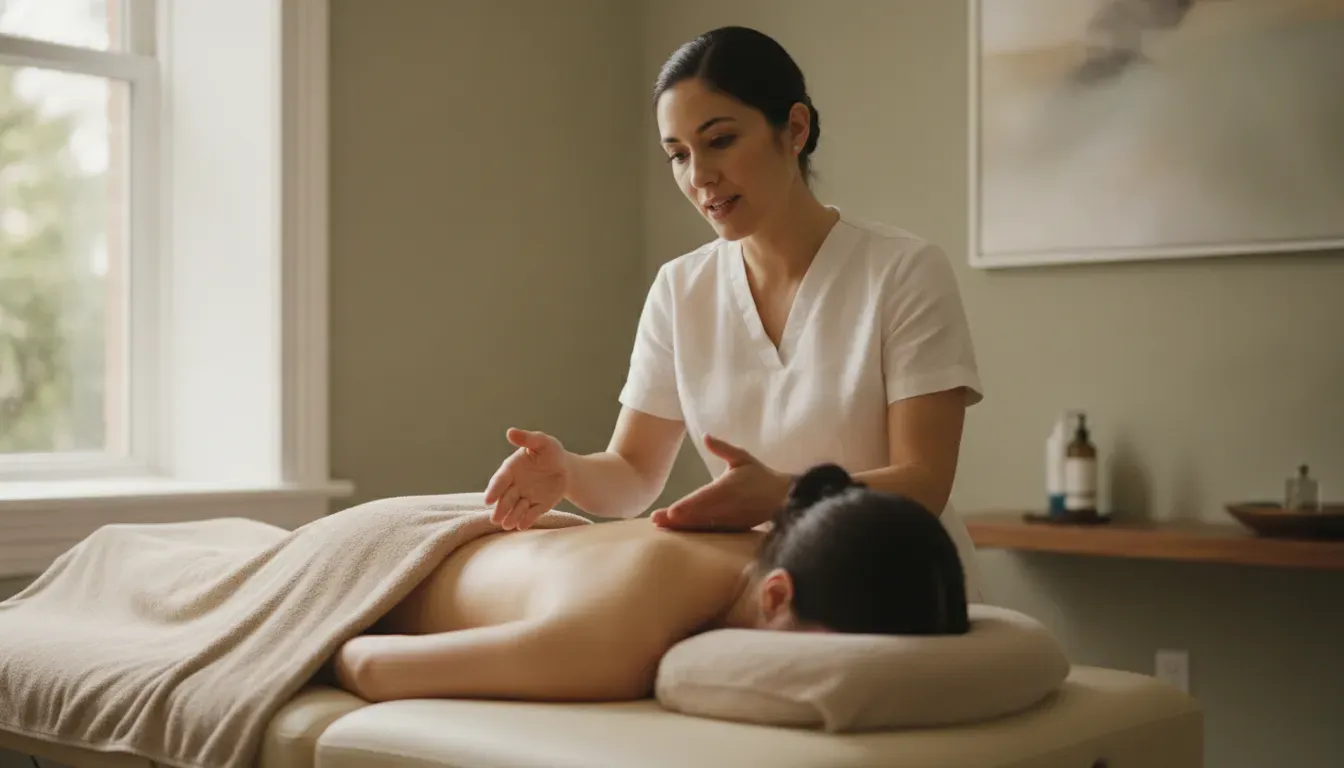
As a massage therapist, your hands are your most valuable tools. Hands-on continuing education courses are designed to sharpen those tools through practical, real-world training. Unlike courses that focus only on theory, these in-person workshops allow you to learn by doing. You get to feel the techniques, practice new modalities, and refine your skills with direct experience. It’s the difference between reading a recipe and actually cooking the meal.
These courses provide a dynamic learning environment where you can move beyond textbooks and videos. You’ll work directly with instructors and fellow therapists to master new skills, from subtle adjustments in your Swedish massage to entirely new modalities like Ashiatsu Deepfeet Bar Therapy. This type of training is essential for any skill you’ll use your hands, or feet, for. It’s the only way to get direct feedback and build the muscle memory you need to practice safely and effectively. While fulfilling your CEU requirements is important, the true value of hands-on training is in the confidence and competence you bring back to your massage table, which ultimately benefits every client you work with.
Hands-On vs. Online CE: Which Is Right for You?
Online courses offer undeniable convenience and are often more budget-friendly. They can be great for learning theory, ethics, or business skills. However, when it comes to learning a physical technique, nothing compares to being in the room. In-person courses offer direct, immediate feedback from an experienced instructor who can correct your posture, adjust your hand placement, and guide your movements.
While hands-on classes may have a higher price tag, think of it as an investment in the quality of your work. You’re paying for an experience that a screen simply can’t replicate. If you know you learn physical skills best by doing, an in-person course is the most effective path forward. To truly absorb a new technique, it helps to avoid common CE pitfalls by choosing the format that best suits your learning style.
What to Expect During Your Hands-On Training
A hands-on course is an active, engaging experience. You won’t be sitting in a lecture hall for hours. Instead, you can expect a small class size where you’ll pair up with other therapists to practice techniques on each other. This setup is invaluable because it allows you to both give and receive the work, giving you a 360-degree understanding of the modality.
The instructor will demonstrate a technique and then walk around the room to provide individual guidance as you practice. This is your chance to ask questions and refine your skills in real-time. This immediate feedback loop is crucial for building correct muscle memory, ensuring you can perform the techniques safely and effectively on your own clients. It’s a collaborative and supportive environment focused on practical application.
The Benefits of Choosing In-Person Training
While online courses offer flexibility, there’s a reason hands-on training remains the gold standard for massage therapists. Our work is deeply tactile; it’s a craft built on touch, pressure, and human connection. Some skills simply can’t be learned from a screen. Choosing an in-person course is an investment in your career, giving you practical experience that deepens your confidence and refines your technique. It’s about more than just earning credits; it’s about honoring your commitment to providing the best possible care for your clients and growing as a professional.
When you’re in the room with an instructor and fellow therapists, you’re in a dynamic learning environment. You can ask questions as they arise, feel the techniques on your own body, and practice on others under expert supervision. This immersive experience helps solidify new skills in a way that watching videos alone cannot. From learning a complex new modality like Ashiatsu Deepfeet Bar Therapy to perfecting your deep tissue strokes, hands-on training ensures you leave with skills you can immediately and safely apply in your practice. It’s the difference between knowing the steps and truly understanding the dance. This is where you translate theory into tangible ability, building the confidence that shines through in every session you give.
Get Real-Time Feedback from Experts
One of the biggest advantages of in-person training is having an expert instructor right there with you. They can watch your body mechanics, check your hand placement, and offer real-time corrections. This direct feedback is invaluable. An instructor can gently adjust your posture to prevent strain or guide your hand to show you the precise pressure needed for a specific technique. This kind of personalized guidance helps you avoid developing bad habits and ensures you’re performing the modality safely and effectively. You simply can’t get that level of detailed, practical feedback from a pre-recorded video.
Build Muscle Memory You Can’t Get Online
Massage is a physical skill, and building muscle memory is key to mastering it. For any technique you perform with your hands, feet, or forearms, a hands-on course is the best way to develop the intuitive flow that clients notice. Repetitive, supervised practice helps embed the movements into your body until they become second nature. You learn to feel the subtle changes in tissue and respond instinctively. This is how you develop a confident, effective touch. An in-person class provides the dedicated time and space to practice on different body types, helping you build the muscle memory needed to adapt your massage services to any client who walks through your door.
Network with Other Massage Therapists
Working as a massage therapist can sometimes feel isolating, but continuing education courses are a fantastic way to build your professional community. In a hands-on class, you’re surrounded by peers who share your passion for healing. You can exchange tips, discuss challenges, and find support from others who truly understand your work. These connections often last long after the course ends, creating a valuable network for referrals and advice. Being part of a dedicated team of therapists, even for a weekend, can leave you feeling inspired, refreshed, and more connected to your profession.
Exploring Your Hands-On Course Options
Once you start looking, you’ll find a huge variety of hands-on courses designed to help you grow as a therapist. The best path for you depends entirely on your career goals and the clients you hope to serve. Do you want to carve out a specific niche, refine a modality you already love, or move into a more clinical role? Answering that question is the first step. Hands-on training generally falls into a few key categories, from workshops that introduce you to a new specialty to advanced courses that deepen your existing knowledge. Let’s explore some of the most common options available.
Master a Specialized Technique
If you want to build a unique practice that stands out, specialized technique workshops are your best bet. These courses are designed to help you develop a niche and attract a specific type of clientele. Think about the clients you enjoy working with most and what services would truly benefit them. You could learn a technique like Hot Himalayan Salt Stones to add a luxurious and therapeutic touch to your sessions. Other popular specializations include prenatal massage, sports massage for local athletes, or geriatric massage. Choosing a workshop in a specific area allows you to market yourself as an expert and become the go-to therapist for that service in your community.
Ashiatsu Deepfeet Bar Therapy
If you’re looking for a modality that will truly set you apart, Ashiatsu is a powerful choice. This technique involves using your feet and body weight to deliver deep, consistent pressure, all while holding onto overhead bars for balance and support. It’s a game-changer for career longevity, as it saves your hands, wrists, and shoulders from the repetitive strain of deep tissue work. Clients often describe the sensation as luxurious and deeply therapeutic, making it perfect for those who need intense work without the discomfort of pointed elbows or thumbs. As the only certified training center for Ashiatsu on the Gulf Coast, we’ve seen how mastering Ashiatsu Deepfeet Bar Therapy can transform a therapist’s practice, offering profound results for clients while protecting your own body for a long and healthy career.
Go Deeper with Advanced Modality Training
Advanced modality training is for therapists who want to take their existing skills to the next level. Instead of learning something completely new, you’ll go deeper into a modality you already practice. For example, if you offer deep tissue, an advanced course could teach you more intricate techniques for releasing chronic tension. These courses help you refine your touch, improve your body mechanics, and achieve better results for your clients. Training in a complex modality like Ashiatsu Deepfeet Bar Therapy can set you apart and allow you to offer a powerful, deep, and pain-free experience that clients can’t find just anywhere. Excelling in a specific modality makes your work more effective and fulfilling.
Specialize in Therapeutic and Medical Massage
For therapists interested in the clinical side of massage, therapeutic and medical courses offer a path toward working with specific health conditions. These programs focus on evidence-based techniques for pain management, injury rehabilitation, and chronic illness support. You can study modalities like myofascial release, trigger point therapy, or manual lymphatic drainage. This type of training helps you understand the body on a deeper level and work confidently on clients with complex needs. A strong foundation in deep tissue massage is often a prerequisite for these advanced courses. This path can also open doors to collaborating with other healthcare professionals, such as chiropractors, physical therapists, and physicians.
Hands-On vs. Online CE: How to Decide
Deciding between an in-person workshop and an online class can be a tough call. Both have their place in your professional development, but they offer very different experiences. To make the best choice for your career, you need to think about the specific skills you want to learn, your budget, and what your state licensing board requires. Let’s break down the key factors to help you decide.
What Online-Only Training Can’t Teach You
Online courses are incredibly convenient, letting you learn from anywhere. But for a profession that’s all about touch, they have their drawbacks. In-person, hands-on courses offer direct feedback and practical experience you just can’t get from a screen. An instructor can physically guide your posture, correct your hand placement, and help you feel subtle tissue changes. This immediate, tactile learning helps you truly master a new technique and apply it confidently with your clients. While watching a video is helpful, it can’t replace the experience of being in the room.
Understanding Online Course Logistics
Course Bundles and Assessments
When you explore online CE options, you’ll often find course bundles, which can be a smart and cost-effective way to meet your requirements. These packages group several courses together, offering a comprehensive learning experience that covers multiple topics for a single price. For example, you might find a bundle that provides all the hours you need for your state’s renewal. Before purchasing, always confirm the courses are approved by your state board and organizations like the NCBTMB. At the end of each course, you’ll typically take a short online assessment to demonstrate your understanding. Once you pass, you’ll receive your certificate of completion, proving you’ve earned your credits.
Account and Access Period Rules
The logistics of online courses are usually straightforward, but it’s important to read the fine print. Once you purchase a course, you’ll generally have a set period to complete it, which is often one year from the date of purchase. This gives you plenty of flexibility to learn at your own pace without feeling rushed. After you successfully pass the final assessment, you can typically download your completion certificate immediately. Make sure to save a digital and even a physical copy for your records. Most licensing boards require you to retain these certificates for several years, so it’s a good habit to keep them organized and accessible in case you’re ever audited.
Does Hands-On Training Fit Your Budget?
Let’s talk about money. Hands-on courses often have a higher price tag when you factor in tuition, travel, and time away from your practice. It’s easy to see that cost and opt for a cheaper online alternative. However, it’s better to think of it as an investment in your skills and business. Continuing Education Units are a vital part of your professional growth. A quality hands-on course can equip you with a specialized modality, like Ashiatsu, that allows you to attract new clients and charge a premium, providing a return on your investment for years.
Typical Course Costs and Discounts
Course costs can be all over the map, depending on the topic, length, and format. You might find an online bundle offering over 20 CE hours for around $55, which is great for covering basic requirements on a budget. On the other hand, a specialized, in-person workshop can range from $100 for a four-hour class to $500 or more for a multi-day training, like those offered at some massage schools. Don’t forget to look for ways to save. Many providers offer discounts for alumni or early registration, so it pays to plan ahead. While the price of an advanced certification can seem steep, remember you’re investing in a skill that can significantly increase your income and set your practice apart.
Finding Free Massage Continuing Education
While most high-quality, hands-on courses come with a fee, you can find free or low-cost options to supplement your learning. A great place to start your search is the CE Registry from the Federation of State Massage Therapy Boards (FSMTB). It’s a tool that helps you find courses that meet their quality standards. However, the most important step is to always verify with your state’s licensing board to ensure they will accept the credits before you enroll. Professional organizations and even some massage product companies also occasionally offer free webinars, which can be a good source of information, though they may not always count toward your CE hours. Just be sure to do your due diligence.
Making Sure Your CEUs Count
Before you sign up for any course, the first thing you should do is check your state’s rules. Many state boards have specific requirements for how you can earn your CEUs. They might limit the number of hours you can earn through online courses, requiring a certain percentage to come from live, hands-on training. You need to know exactly when your license is up for renewal and what’s needed to maintain it. Always use strategy to select continuing education by confirming that a course is approved by your state board before you spend any money. This simple step can save you a lot of headaches.
How to Find a Quality Hands-On Massage CE Program
Investing in your skills is one of the best moves you can make for your career, but not all continuing education courses are created equal. Finding a program that truly delivers on its promises requires a bit of research. When you’re spending your hard-earned money and valuable time, you want to walk away with new skills you can immediately put into practice. Taking a few extra steps to vet a program beforehand ensures your investment pays off, leaving you feeling confident and inspired instead of disappointed. Think of it as applying the same care in choosing a course as you do in treating your clients.
Vet Your Instructor: What to Look For
The quality of a hands-on course often comes down to the person leading it. Look for an instructor who doesn’t just teach the material but has deep, practical experience in the field. An instructor’s credentials should go beyond a basic certification; find out how long they’ve been practicing and if they specialize in the modality they’re teaching. You want to learn from someone who has dedicated their career to the craft. Reading feedback from other massage therapists who have taken the course can also give you honest insight into the instructor’s teaching style and the overall quality of the class.
Examples of Instructor Credentials
When you’re reviewing an instructor’s bio, look for more than just “Licensed Massage Therapist.” Strong credentials might include being an NCBTMB Approved Provider for Continuing Education, which shows they meet a national standard for quality. Check how many years they’ve been practicing the specific modality they teach. For instance, if you’re taking an Ashiatsu course, you want an instructor who has not only mastered the technique over many years but is also certified to teach it. Here at Nola Bliss, we’re proud to be the only certified Ashiatsu training center on the Gulf Coast because we believe in learning from true specialists. These are the kinds of details that help you find a quality program that truly respects your investment.
Is the Program Accredited?
To ensure your hard work counts toward your license renewal, it’s crucial to find courses that are approved by recognized organizations in the massage therapy industry. Your state licensing board is the ultimate authority on what it accepts for CEUs, so always start there. National bodies like the NCBTMB also provide directories of approved providers, which is a great resource for finding reputable programs. Accreditation is a sign that a course has been reviewed and meets specific educational standards, so you can feel confident that the content is relevant, professional, and valuable for your practice.
Using CE Registries and Reporting Services
Keeping track of your continuing education is essential for license renewal, and thankfully, there are tools to make it easier. The Federation of State Massage Therapy Boards (FSMTB) offers a CE Registry that helps you find quality continuing education courses. Every course listed meets their high standards, so you know you’re looking at reputable options. The most important step, however, is to always double-check that the course you pick is approved by your specific state licensing board. This simple verification ensures your hard work will officially count toward your renewal and saves you from any future headaches.
To make life even simpler, some platforms streamline the reporting process. CEBroker is a popular system used by many state boards, and some course providers will automatically report your completed CE hours for you. This takes the paperwork off your plate so you can focus on learning rather than administrative tasks. Regardless of how your hours are reported, it’s a good practice to keep your own records of all completed CE courses for at least five years. This keeps you organized and prepared in case your licensing board ever has questions or conducts an audit.
Why Class Size and Practice Time Matter
When it comes to learning a new hands-on skill, practice and direct feedback are everything. While in-person courses often have a higher price tag than online options, the practical experience is invaluable. When choosing a hands-on course, consider the class size and the amount of practice time offered. A smaller group usually allows for more personalized instruction and one-on-one time with the instructor, giving you the chance to refine your technique. A course that prioritizes ample practice time ensures you build the muscle memory needed to confidently offer a specialized technique to your own clients.
Where to Find Reputable Hands-On Massage Courses
Finding a high-quality, hands-on course is the most important part of your continuing education plan. But with so many options out there, how do you find a program that’s truly worth your time and money? The key is to know where to look. Instead of getting lost in endless internet searches, you can focus your efforts on a few reliable sources that are known for quality instruction. The best places to find reputable courses are typically through professional organizations, local massage schools, and major industry conferences. Each of these avenues offers unique benefits, whether you’re looking for a course that’s been pre-vetted by a national board, a convenient workshop close to home, or an immersive learning experience surrounded by your peers. By starting your search in these places, you can feel confident that you’re investing in education that will genuinely advance your skills, meet your licensing requirements, and help you better serve your clients. This approach saves you time and ensures the techniques you learn are sound, safe, and effective, which is exactly what you need to build a thriving practice and a reputation for excellence.
Professional Organizations & Training Centers
Your first stop should be the major professional organizations in our field. Groups like the American Massage Therapy Association (AMTA) maintain lists of approved CE providers, which takes a lot of the guesswork out of your search. You can trust that these courses have been vetted for quality. Additionally, look for specialized training centers that focus on a specific modality. For example, Nola Bliss is the only certified Ashiatsu Deepfeet Bar Therapy training center on the Gulf Coast, offering in-depth, hands-on instruction for therapists looking to master this advanced technique.
Nola Bliss Massage Ashiatsu Training
If you’re ready to master a modality that can save your body and transform your practice, our Ashiatsu training is the perfect next step. As the only certified training center for Ashiatsu Deepfeet Bar Therapy on the Gulf Coast, we offer an immersive, hands-on experience focused on practical application. Our courses are designed to help you build correct muscle memory through extensive practice and personalized feedback in a small-group setting. Learning Ashiatsu is an investment in your career longevity, allowing you to offer a powerful, deep-compression massage without straining your own body. You’ll leave with the confidence and skill to attract new clients seeking a truly unique therapeutic experience.
Local Massage Schools & Workshops
Don’t overlook the resources in your own backyard. Local massage schools are a fantastic source for continuing education workshops. Since you don’t have to travel, these courses are often more affordable and easier to fit into your schedule. They provide the same crucial hands-on practice and direct instructor feedback that is essential for learning. Before you sign up, just be sure to confirm that the course meets your state’s specific licensing renewal rules. A quick search online for massage schools in your area will usually show you a calendar of their upcoming CEU opportunities.
Industry Conferences & Events
If you want to immerse yourself in learning and connect with peers, attending an industry conference is an excellent choice. These events bring together top educators from across the country, all in one place. You can find workshops on everything from therapeutic massage to niche specialties, allowing you to explore new interests and deepen your existing skills. It’s a great way to knock out a significant portion of your required CEU hours in a single weekend while getting inspired by the wider massage therapy community.
How to Choose the Right Course for You
With so many courses available, picking the right one can feel overwhelming. The key is to think strategically about your career path and what you hope to achieve. Finding the best course isn’t just about checking a box for your license renewal; it’s an investment in your skills, your business, and your passion for healing. By focusing on a few key areas, you can confidently choose a program that truly serves you and your clients for years to come.
See What Other Therapists Are Saying
Marketing materials can make any course sound amazing, but the most honest feedback comes from therapists who have already been there. Reading reviews from your peers gives you a real-world look at the instructor’s teaching style, the balance of lecture versus practice, and the overall value of the training. Look for detailed testimonials on the provider’s website, in professional massage therapy forums, or in social media groups. This firsthand information is invaluable for choosing high-quality training and avoiding a disappointing experience where you don’t get enough hands-on time.
Align Your CE with Your Career Goals
The most rewarding continuing education will directly support the practice you want to build. Think about the clients you love working with and the services you want to be known for. If you’re passionate about helping expectant mothers, a prenatal massage certification is a clear choice. If you want to offer powerful, deep tissue work that saves your hands, exploring a modality like Ashiatsu is a smart move. Choosing courses that align with your niche makes you a more specialized, sought-after therapist and ensures your educational investment pays off by attracting your ideal clients.
Is This Course Approved for CEUs?
Before you put down a deposit, do one final, crucial check: confirm the course is approved for continuing education units in your state. Licensing requirements vary, so what’s accepted in one state may not be in another. Most reputable providers are approved by the NCBTMB and will state this clearly, but it’s always wise to double-check with your state’s massage therapy board. Taking the time to strategically select your education ensures your hard work and financial investment will officially count toward your license renewal, saving you a major headache down the road.
Fulfilling Your Massage CEU Requirements
Choosing a great hands-on course is exciting, but you also need to make sure it checks all the right boxes for your license renewal. Keeping your credentials current is a non-negotiable part of being a professional therapist. It shows your commitment to the craft and protects your ability to practice. The process can feel a bit administrative, but breaking it down into a few simple steps makes it completely manageable. Let’s walk through exactly what you need to do to ensure every course you take counts toward your continuing education requirements.
Know Your State’s Renewal Rules
First, you need to know your state’s specific rules. Every state board has its own renewal cycle, deadlines, and required number of CEU hours. Some states may also have specific requirements for hands-on versus online hours or mandate courses in topics like ethics. The best way to stay on top of this is to go directly to the source: your state’s massage therapy licensing board website. Knowing these details well in advance helps you plan your education strategically and avoid any last-minute stress or potential lapses in your license.
Specific CE Hour and Subject Requirements
Beyond the total number of hours, many states get specific about the subjects you need to study. It’s not enough to just take any course; you often have to fulfill requirements in particular areas. For example, massage therapists in Michigan must complete 18 CE hours every three years, and within that, at least two hours must be in ethics and one hour in pain and symptom management. This is why you’ll often see providers offering specific course bundles designed to meet a state’s unique requirements in one package. This is a perfect illustration of why you need to read your state’s rules carefully to ensure every credit you earn is one you can actually use.
Other Mandatory Training for Licensure
On top of your standard CE hours, some states also require separate, mandatory training on specific public health topics. These aren’t always part of the typical CEU count and can be easy to miss if you’re not looking for them. Continuing with our Michigan example, all licensed health professionals must complete implicit bias training for each year of their license cycle. There is also a one-time requirement for human trafficking awareness training. These types of mandatory training are becoming more common across the country, so be sure to check if your state has any similar requirements to avoid any surprises when it’s time to renew.
How Are CE Course Hours Calculated?
Once you know how many hours you need, it’s helpful to understand how they’re counted. Typically, one continuing education unit (CEU) or credit hour equals one hour of classroom instruction. So, a weekend workshop that runs for 16 hours will usually provide 16 CEUs. When you’re looking at courses, the provider should clearly state the number of credit hours you’ll receive upon completion. This allows you to choose courses that not only interest you but also efficiently help you meet your requirements. It’s all about finding that balance between passion and practicality.
Common Rules for Earning Credits
While every state has its own renewal requirements, you’ll find that many share some common rules. For example, you generally can’t carry over extra CE hours to your next renewal period, and you won’t get credit for taking the same class more than once. Some states even limit how many hours you can complete in a single day. It’s also common for boards to require a certain number of hours in specific subjects, like ethics or pain management. The most important rule of all? Keep your completion certificates in a safe place for at least four years. You’ll need them as proof if your board ever conducts an audit, and having them organized will save you a ton of stress.
State Licensing vs. National Certification Hours
You’ll often see courses advertised as “NCBTMB-approved.” The National Certification Board for Therapeutic Massage and Bodywork (NCBTMB) is a highly respected national board for massage therapy, and its approval is a great sign of a quality course. However—and this is critical—NCBTMB approval does not automatically guarantee that your state board will accept the hours for license renewal. Your state licensing board is the ultimate authority. While many states do accept NCBTMB-approved courses, some have their own specific requirements. Always confirm with your state board that a course will be accepted *before* you spend your time and money on it.
Getting the Right Documentation for Your License
After you complete a course, you must get the proper documentation. This is your proof of completion, and you’ll need it if your state board ever audits you. Reputable providers will issue a formal certificate with your name, the course title, the date, the instructor’s name, their provider number, and the number of CEUs earned. Remember that introductory courses covering topics from your initial massage training generally don’t qualify as continuing education. To be safe, always confirm that a course offers acceptable course content for CEUs and that you’ll receive a certificate before you sign up.
Related Articles
Frequently Asked Questions
Is hands-on training really necessary if my state allows online CEUs? Even if your state board allows you to fulfill all your requirements online, it’s wise to invest in hands-on training. Our profession is built on touch, and some skills simply cannot be mastered through a screen. In-person courses give you the direct feedback and supervised practice needed to build true confidence and competence, which ultimately leads to better results and happier clients. Think of it as honoring your craft, not just meeting a minimum requirement.
Hands-on courses are expensive. How can I justify the cost? It helps to think of a quality hands-on course as a long-term investment in your business, not just an expense. While the upfront cost is higher, you are paying for personalized instruction and practical skills that can set your practice apart. Learning a specialized modality allows you to attract new clients and potentially charge more for your services, providing a return on your investment for years to come.
What’s the difference between a specialized workshop and advanced modality training? A specialized workshop is designed to help you learn a new niche, like prenatal massage or hot stone therapy, allowing you to attract a specific type of client. Advanced modality training, on the other hand, is for deepening your knowledge in a technique you already practice. For example, you might take an advanced course to perfect your deep tissue skills or master a complex modality like Ashiatsu.
What is the most important step to take before signing up for any course? Before you spend any money, your first and most important step is to confirm that the course is approved for continuing education credits by your state’s massage therapy licensing board. Requirements can vary significantly from one state to another. A quick check on your board’s website will ensure your time and financial investment officially count toward your license renewal.
I feel like I’m not learning enough from online videos. Will a hands-on course actually help? Yes, absolutely. That feeling is common because videos can’t replicate the experience of being in the room. A hands-on course solves this by providing an instructor who can physically guide your posture, correct your hand placement, and help you feel the techniques on your own body. This immediate, personalized feedback is crucial for building correct muscle memory and developing the intuitive touch that makes a great therapist.
Record-Keeping Timelines
Once you’ve earned your certificate, your job isn’t quite done. It’s crucial to keep your CE certificates for at least four years in case of an audit. State licensing boards can request proof of your completed coursework at any time, and having your documents in order will save you a massive headache. Think of it as your professional paper trail. I recommend creating a dedicated digital folder on your computer or cloud storage where you save a PDF of each certificate as soon as you receive it. If you prefer physical copies, a simple binder works just as well. This small organizational habit ensures you can quickly provide documentation and prove your commitment to continuing education without any last-minute panic.
Understanding Course Logistics and Policies
When you’re browsing for courses, especially online ones, always take a moment to read the fine print. It’s common for providers to set a time limit on access. For example, you might find that you have one year from the day you buy the courses to finish them. This policy isn’t meant to rush you; it simply ensures that the educational material stays current and relevant. Before you purchase, look for details about the course access period, refund policies, and whether extensions are available. Understanding these logistics upfront helps you plan your learning schedule effectively and ensures you get the full value out of your investment without any surprises.
Common Questions in the Massage Profession
What is the difference between a CMT and an LMT?
This is a question that comes up all the time, and the distinction is important. A CMT, or Certified Massage Therapist, typically refers to someone who has completed a certification program from a specific school or organization. It shows you’ve met that institution’s standards. An LMT, or Licensed Massage Therapist, has met the legal requirements set by a state licensing board to practice professionally. This usually involves completing a certain number of training hours, passing a national exam like the MBLEx, and passing a background check. While “CMT” signifies training, “LMT” is the credential that allows you to legally practice in most states. Always check your state’s specific terminology, as being a licensed professional is the foundation of a safe and successful practice.