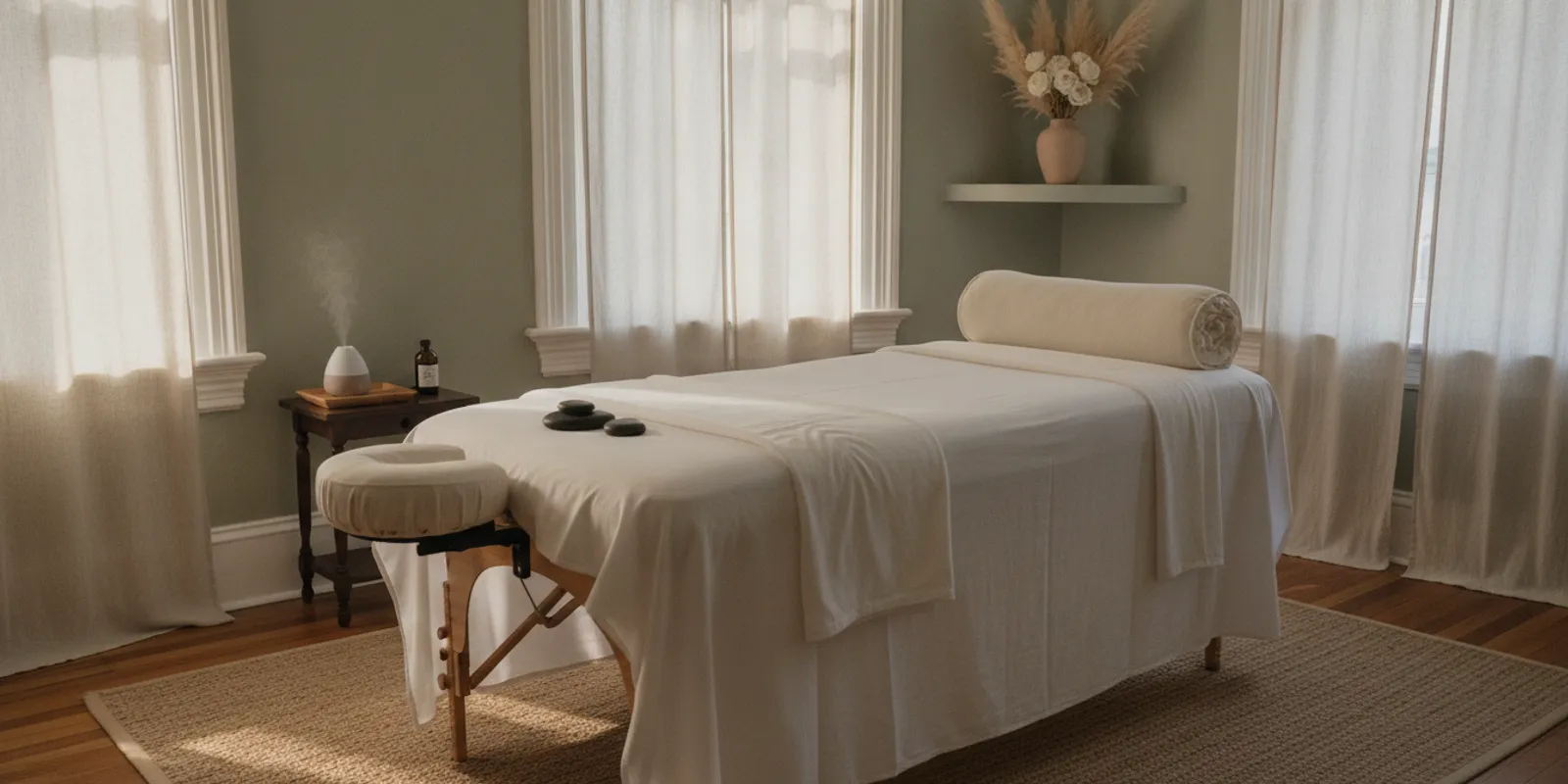

Massage for Crohn’s disease is best approached as an optional comfort-focused service, not a treatment for the disease. If you are considering a session, think about how you feel that day, ask your healthcare team about personal safety concerns, and tell the therapist what positions or areas may be uncomfortable. Symptoms and needs differ from person to person, so a flexible plan matters more than a particular technique.
Ask about planning a massage session
What can massage realistically offer someone with Crohn’s disease?
Crohn’s disease is a chronic inflammatory bowel disease. Massage does not cure it, control intestinal inflammation, or replace medication, monitoring, or advice from a gastroenterology team. Treat an appointment as a wellness service that some people may find relaxing or helpful for ordinary muscle tension. Do not expect it to change the course of the disease or resolve a digestive symptom.
There is no universal response to massage. One person may feel comfortable lying on a table on one day and want to cancel on another. Abdominal discomfort, fatigue, urgency, a recent procedure, or simply not wanting to be touched can all change what feels manageable. You do not have to justify a decision to postpone or stop.
A document titled Physical Therapy For Crohns Disease discusses manual therapy, including massage and joint mobilization, in relation to pain, mobility, and tension. That is not a reason to treat massage as Crohn’s care or to assume that a particular technique is suitable for you. Decisions about your disease and its treatment belong with your healthcare professionals.
Massage therapists work with muscles and soft tissues; they do not diagnose Crohn’s or assess its complications. For information about the studio’s background, see the NOLA Bliss Massage about page. For personal medical decisions, rely on your own care team rather than a massage appointment or an online article.
How should you decide whether to book?
Start with your current condition, not with an assumption that you should keep a previously planned appointment. Ask yourself whether you feel well enough to travel, use the restroom as needed, lie down, and remain comfortable for the expected time. Consider if the ordinary pressure of lying face down or on your back would be acceptable. If any answer is uncertain, you can ask questions before you book or wait until another day.
If you have active or worsening symptoms, a recent operation or procedure, a known complication, or a concern about whether massage is appropriate, contact your healthcare professional first. A clinician who knows your health history can give individualized guidance. A massage therapist cannot medically clear you, and the therapist should not be asked to make that decision.
| Situation | Practical choice | Useful question or next step |
|---|---|---|
| You feel stable and comfortable with everyday activity | You may consider asking about a gentle, adaptable session | Can we agree on position, pressure, areas to avoid, and a pause signal? |
| You have a flare or feel too unwell to travel or lie comfortably | Consider postponing; contact your clinician if you need medical advice | Should I wait, and what guidance should I follow about my symptoms? |
| You recently had a procedure or have a complication | Ask your treating professional before arranging massage | Are there restrictions on timing, pressure, or position? |
| You are unsure what a new or changing symptom means | Seek medical guidance instead of using massage to test it | Does this symptom need evaluation or other care? |
| You feel medically stable but are not comfortable with touch today | Decline, shorten, or reschedule the appointment | What option makes me feel most at ease right now? |
The table is a planning aid, not a medical screening tool. If symptoms are severe, worsening, or concerning, contact a medical professional. Seek urgent care for an emergency or for symptoms your clinician has told you need immediate attention. Do not delay medical assessment in order to attend a massage appointment.
What should you ask your healthcare team?
You do not need to ask for a blanket approval if you have no reason to think massage would be a concern. But personal advice is especially useful when your health situation has changed or your care team has given restrictions. Keep the question specific and practical. For example, ask whether there are limits on pressure, position, timing after a procedure, or contact near an area that is painful or healing.
- “Given my current symptoms and health history, is there any reason I should avoid massage for now?”
- “Are there positions or areas that I should avoid because of my condition or recent care?”
- “If I feel worse on the appointment day, what should I do?”
- “Are there warning signs that mean I should seek medical care rather than attend?”
These questions are not a substitute for a clinician’s assessment. They help you get advice that applies to your circumstances. If you receive guidance or restrictions, share only the practical parts the massage therapist needs to know, and do not feel pressured to disclose more medical detail than you want.
How can you explain sensitivity before a session?
A useful conversation can be brief. Tell the therapist that you have Crohn’s disease and describe what may affect the appointment: sensitive areas, positions that feel uncomfortable, a need to change position, or the possibility that you may need a break. You can explain a boundary without explaining your full medical history. For example: “Please do not work on my abdomen, and check in before changing pressure.”
Before the appointment begins, agree on how you can pause or end the session. You may use a simple verbal request such as “pause,” or ask the therapist to check in at a set point. Make clear that a pause is not a problem and that you may change your mind. You can also ask what will happen if you need to get up or use the restroom.
- Name any areas you want left untouched, including the abdomen if that is your preference.
- Describe pressure in ordinary terms: light, moderate, or none in a particular place.
- Ask whether side-lying, a supported position, or position changes are possible.
- Say whether you would like the therapist to check in before working near a sensitive area.
- Agree that you can pause, reposition, shorten the appointment, or stop at any time.
If you would rather discuss your needs before arriving, use the studio’s contact page to ask about the conversation and appointment logistics. You can review the studio’s massage service options, but the listed service names do not determine what is medically suitable for you. Describe your preferences and ask what can be adjusted before making a choice.
How should you choose pressure and positioning?
Comfort should guide the session. Deep pressure is not necessary for massage to feel worthwhile, and pressure should not be pushed through pain. If you choose to proceed, you can request light pressure, ask that the abdomen be avoided, and ask for check-ins. A request to reduce pressure or stop is enough; you do not need to wait for a certain threshold of discomfort.
Position matters as much as pressure. Face-down positioning may not suit someone with abdominal tenderness or bloating, and remaining in one position may become uncomfortable. Ask whether side-lying or support with pillows is possible. If the position still does not feel right, change it or stop. Do not continue just because the session has started or because you selected a particular service in advance.
At NOLA Bliss Massage, available approaches include different massage services. A technique described as deep or intensive is not automatically a better choice. For instance, Ashiatsu involves a distinct style of massage; its description on the Ashiatsu massage page can help you understand the service, but it cannot determine whether it fits your health needs. Ask about a gentler option or a different focus if that is what feels appropriate. You can also read the studio’s general back and neck massage guide for an example of how to discuss areas of focus, while keeping Crohn’s-related medical questions with your clinician.
How can you plan the appointment around an unpredictable day?
Build flexibility into the plan. If you are scheduling ahead, ask what to do if symptoms change before the appointment. Keep the appointment details handy so you can contact the studio rather than feeling obligated to attend when you are unwell. You can check contact and booking information before the day and review the site’s parking and access details so travel is easier to plan.
On the day, take a moment before leaving to check how you feel. Can you travel without undue strain? Do you expect to be able to get into and out of the massage position? Would it be easier to have a shorter session, keep clothing and restroom needs in mind, or reschedule? These are practical considerations, not a test you have to pass. If your condition has changed in a way that worries you, prioritize medical advice.
At arrival, repeat any essential boundary even if you shared it earlier. You might say, “I am comfortable with a gentle session, but please avoid abdominal work. I may need to pause.” Confirm the position you prefer and the signal you will use to stop. A clear plan gives both you and the therapist a shared understanding, while leaving room to change it.
If you are visiting New Orleans and arranging several activities, avoid making a massage the one fixed commitment you must keep regardless of how you feel. The studio’s information for visitors near the Convention Center may help with location planning. Travel convenience does not make a session medically appropriate, though; make the decision based on your health and comfort on the day.
What should you do during and after a session?
During the session, keep communicating. If pressure feels too strong, ask for less. If a position becomes uncomfortable, ask to adjust it. If you notice pain, nausea, dizziness, or a strong increase in discomfort, speak up and stop the work. You can end the appointment without finishing the planned time. The therapist’s role is to respond to your boundaries, not to persuade you to continue.
Afterward, notice how you feel without treating the session as a measure of Crohn’s activity. A relaxed feeling is not proof that inflammation has changed, and discomfort is not something you need to interpret alone. Take the time you normally need to transition and follow the guidance you already have from your care team. If you develop symptoms that concern you, contact a medical professional.
It may help to make a brief note for yourself: what position felt comfortable, whether the pressure was acceptable, whether you needed a break, and whether you would change anything next time. This is a practical record of your preferences, not a way to track or diagnose the disease. If the session did not feel right, that is a valid reason not to repeat it.
When should you skip massage and seek clinical care?
Skip the appointment and seek appropriate medical guidance if you feel acutely unwell, have severe or worsening pain, or experience symptoms that concern you. Follow any instructions your clinician has already given for urgent symptoms. Massage cannot evaluate abdominal pain or identify a Crohn’s complication, and trying a session should not delay care.
It is also reasonable to postpone when you are exhausted, cannot find a comfortable position, feel uneasy about touch, or simply do not want an appointment. Those are sufficient reasons. You can reconsider when you feel ready or when you have received the guidance you need. If you are uncertain whether the issue is a medical concern or a comfort preference, address the medical uncertainty with your healthcare professional first.
How do common choices compare?
There is no single “Crohn’s massage” that fits everyone. The useful comparison is between choices you can discuss, not between promises of medical results. Use the options below to frame a conversation with the therapist and your clinician where needed.
| Choice to discuss | What it may mean for the appointment | What to clarify first |
|---|---|---|
| Gentle, general massage | A lower-pressure approach focused on comfort and areas you select | Which areas are comfortable, and how will pressure be checked? |
| Focused work on a specific area | Attention is directed to a requested body area, such as the shoulders or back | Is the area comfortable to touch, and are there nearby areas to avoid? |
| Abdominal work | Touch near the abdomen, which may be sensitive or unwelcome | Do not assume it is appropriate; check with your clinician if uncertain, and decline it if you prefer |
| Different or supported positioning | Side-lying, modified positioning, or a change during the session if available | Can the studio accommodate the position, and can you adjust it at any time? |
| Postpone or cancel | No massage session that day | Choose this when you feel unwell, uncertain, or simply not comfortable proceeding |
These options are not a prescribed treatment plan. If you are considering a specialized or more intense technique, ask what it involves and whether it can be adapted. You can choose a different service, request a conservative approach, or decide not to book. There is no requirement to tolerate pressure or touch that does not feel right.
How can you make a careful next-step decision?
Use three checks: medical guidance, comfort today, and a clear conversation. First, ask your healthcare professional about individual concerns when symptoms, a recent procedure, or a complication make the answer uncertain. Second, decide whether travel and positioning feel manageable today. Third, agree with the therapist on areas to avoid, pressure, position, and how to pause or stop.
If all three checks support proceeding, you may choose a session with modest expectations: relaxation or attention to ordinary muscle tension, not Crohn’s treatment. If one of the checks is unresolved, wait or ask another question. You are allowed to reschedule, alter the plan once you arrive, or stop midway through.
For a first visit, focus on practical questions rather than searching for a technique that claims to address the disease. Review current visit information if relevant to planning, and contact the studio with questions about appointment arrangements. The decision to attend remains yours and should reflect both your comfort and any medical advice you have received.
Discuss your comfort needs before booking
Frequently asked questions about massage for Crohn’s disease
Can massage treat Crohn’s disease?
No. Massage does not cure or treat Crohn’s disease and should not replace prescribed treatment, monitoring, or contact with your healthcare team. It may be considered as an optional wellness service for comfort if appropriate for your circumstances.
Is abdominal massage appropriate for Crohn’s disease?
There is no one answer for every person. You can ask that the abdomen be avoided, and you should not accept work there if it feels uncomfortable. Ask your clinician before considering abdominal work if you have active symptoms, a complication, a recent procedure, or any safety concern.
Can I get a massage during a flare?
A flare may affect travel, positioning, energy, or comfort with touch. Consider postponing and ask your healthcare professional what is appropriate for your situation. Do not use massage instead of seeking care for concerning symptoms.
What should I tell the massage therapist?
Share the practical details that affect comfort: areas to avoid, preferred pressure and position, whether you may need breaks, and how you will signal to pause or stop. You can keep private medical details private unless you choose to share them.
Should I ask my doctor before booking?
Ask your healthcare professional when you have active or changing symptoms, a recent surgery or procedure, a complication, or uncertainty about safety. They can give advice based on your individual history; a massage therapist cannot provide medical clearance.
A thoughtful plan puts medical guidance and your comfort first. If you decide to explore massage, communicate openly, keep expectations realistic, and remember that you can change your mind at any point.