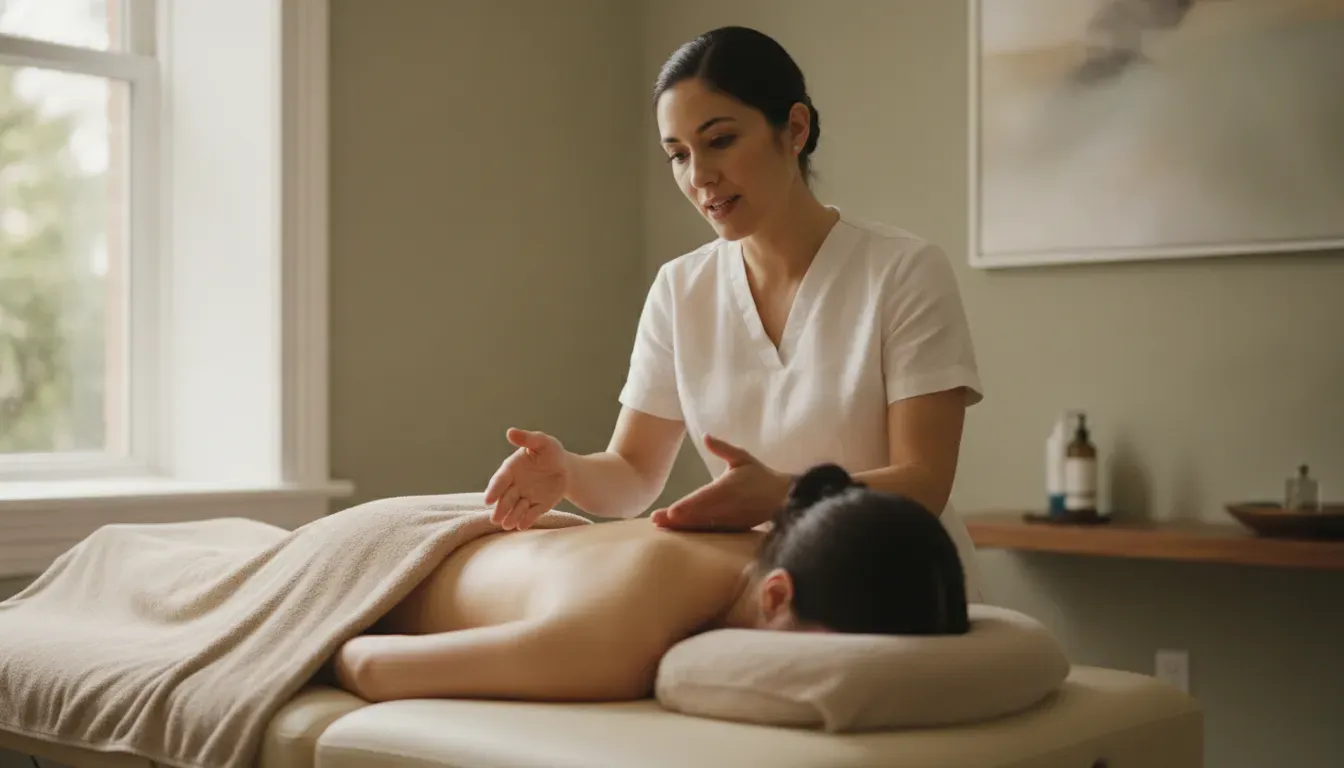

It often starts subtly—a dull ache or a slight twinge when you reach for something. Before you know it, that minor annoyance has become a frustrating limitation that impacts your daily life. This is the reality of frozen shoulder, a condition that can make you feel trapped in your own body. But you don’t have to simply wait it out. A professional massage for frozen shoulder can be a crucial part of your recovery plan, offering natural pain relief and helping you reclaim your range of motion from the stiffness.
Key Takeaways
- Targeted massage is a key part of recovery: Professional techniques like deep tissue and myofascial release work directly on the stiff tissues and adhesions causing your pain, helping to improve mobility and reduce inflammation.
- Your therapist’s experience is crucial: Seek out a professional with specific training in therapeutic modalities and a history of treating shoulder conditions to ensure you get safe, effective care that aids your healing.
- Think of massage as a team player: For the best results, combine professional massage with a doctor’s diagnosis and a consistent physical therapy or stretching routine to support a more complete recovery.
So, What Exactly Is Frozen Shoulder?
If you’ve ever felt a deep, persistent ache in your shoulder that slowly robs you of your ability to move your arm freely, you might be dealing with frozen shoulder. Officially known as adhesive capsulitis, this condition happens when the connective tissue surrounding your shoulder joint—the capsule—becomes thick, stiff, and inflamed. This tightening restricts movement, making it feel as though your shoulder is “frozen” in place. It’s more than just a simple strain; it’s a frustrating condition that can interfere with everything from getting dressed to reaching for a glass on the top shelf.
Frozen shoulder typically develops slowly and can be incredibly painful, especially in the beginning. While the exact cause isn’t always clear, it often appears after a period of immobilization, like following an injury or surgery. The good news is that it usually gets better over time, and targeted therapeutic massage services can play a significant role in managing the pain and speeding up your recovery by addressing the stiffness directly.
How Frozen Shoulder Develops Over Time
Frozen shoulder doesn’t happen overnight; it progresses through distinct phases. The first is the “freezing” stage, where a dull ache slowly intensifies, and your range of motion becomes noticeably limited. This is when you might start struggling with simple tasks like reaching behind your back. Next is the “frozen” stage, where the sharp pain may actually decrease, but the stiffness and tightness peak, making movement extremely difficult. Finally, the “thawing” stage begins, and your mobility gradually returns. This entire cycle can last a long time, often from 18 to 24 months. Throughout this process, therapeutic techniques like deep tissue massage can help manage the pain and encourage the stiffened tissues to release, supporting a smoother recovery.
The 3 Stages: Freezing, Frozen, and Thawing
Frozen shoulder doesn’t happen overnight. It progresses through three distinct stages, each with its own set of challenges.
- Freezing Stage: This initial phase is often the most painful. You’ll notice a gradual onset of pain, and with it, your shoulder’s range of motion starts to become limited. This stage can last anywhere from a few weeks to several months.
- Frozen Stage: During this stage, the sharp pain may begin to lessen, but the stiffness gets worse. Your shoulder’s mobility becomes severely limited, making daily activities difficult. This period typically lasts for several months.
- Thawing Stage: Finally, you’ll enter the thawing stage, where your range of motion slowly begins to improve. The stiffness starts to resolve, and you gradually regain your ability to move your shoulder. This recovery phase can be lengthy, sometimes taking from six months up to two years.
Typical Timelines for Each Stage
Frozen shoulder doesn’t follow a strict schedule, but it does move through a predictable pattern. Knowing the general timeline for each phase can help you mentally prepare for the recovery process and understand why patience is so important. While everyone’s experience is different, the progression generally looks like this:
- Freezing Stage: This is when the pain and stiffness first set in, gradually getting worse. You’ll notice a progressive loss of your shoulder’s mobility. This initial phase can last anywhere from a few weeks to several months.
- Frozen Stage: During this period, the sharp pain might start to subside, but the stiffness often peaks. Your shoulder will feel incredibly tight, making many daily tasks a real challenge. This stage typically lasts for several months.
- Thawing Stage: This is the final recovery phase where your range of motion slowly but surely begins to return. It’s often the longest stage, taking anywhere from six months to two years for a full recovery. Throughout this journey, therapeutic massage can be a valuable tool for managing discomfort and encouraging mobility.
How Frozen Shoulder Limits Your Daily Movement
The pain and stiffness of frozen shoulder can have a major impact on your daily life. Simple, everyday movements you once took for granted—like brushing your hair, fastening a seatbelt, or reaching behind your back—can become difficult or even impossible. The pain, often described as a dull ache deep in the shoulder, can worsen at night and disrupt your sleep. As the condition progresses, the loss of mobility becomes the primary issue. This isn’t just a minor inconvenience; it’s a progressive problem that requires a proactive approach to manage. Our dedicated team of therapists understands how to work with these limitations to help ease your discomfort and support your journey back to full movement.
Common Symptoms and Complications
The most obvious symptoms of frozen shoulder are the persistent ache and the frustrating loss of movement. But the effects don’t stop there. The constant pain can radiate from your shoulder down your arm and often gets worse at night, making it difficult to find a comfortable sleeping position and leading to fatigue. This combination of pain and stiffness can create a ripple effect, leading to secondary issues. You might start compensating by overusing your other arm or changing your posture, which can cause strain in your neck and upper back. Over time, these complications can become just as problematic as the initial shoulder issue, making a proactive approach essential for a full recovery.
Muscle Atrophy From Lack of Use
When you stop using your arm to avoid pain, the muscles around your shoulder joint naturally begin to weaken and shrink. This is known as muscle atrophy. It’s a classic “if you don’t use it, you lose it” scenario. While the primary issue with frozen shoulder is the stiff joint capsule, muscle atrophy adds another layer of difficulty to your recovery. Even after the capsule begins to “thaw” and your range of motion improves, you’ll be left with weakened muscles that need to be carefully rebuilt. This is where targeted therapeutic massage can be incredibly beneficial. By helping to manage pain and improve circulation, a professional deep tissue massage can make movement more tolerable, which in turn helps reduce the severity of muscle atrophy and supports a stronger, more complete healing process.
What Causes Frozen Shoulder?
If you’re dealing with a stiff, painful shoulder, you’ve probably been wondering how this happened. Frozen shoulder, known in the medical world as adhesive capsulitis, occurs when the capsule of connective tissue surrounding your shoulder joint thickens and tightens, restricting its movement. It’s a frustrating condition because the exact trigger isn’t always clear, and it can feel like it came out of nowhere. One day you’re reaching for something on a high shelf, and the next, a sharp pain stops you in your tracks, followed by a gradual loss of motion.
While the root cause can be a mystery, we do know that certain factors can make you more likely to develop it. Think of it less as a single event and more as a perfect storm of circumstances involving your health history, age, and even your daily habits. It’s not something you did wrong; it’s often a combination of things that line up to create inflammation and stiffness in the joint. Understanding these contributing factors is the first step toward finding the right path to recovery. Below, we’ll explore some of the most common culprits behind that painful, locked-up feeling, so you can get a clearer picture of what might be going on with your shoulder.
Prevalence and Statistics
If you’re dealing with this, it might feel isolating, but frozen shoulder is surprisingly common. The condition affects about one in 20 people, so you are far from alone in this experience. It typically appears in individuals between the ages of 40 and 60, and for reasons that aren’t entirely clear, women are more likely to develop it than men. The recovery timeline can be lengthy, sometimes taking up to two years for a full return to normal function, which underscores the importance of being patient and proactive. Understanding these statistics can help normalize what you’re going through; it’s a recognized medical condition with a distinct pattern, not just a random, unexplainable pain.
Health Conditions That Increase Your Risk
Your overall health plays a significant role in your risk of developing frozen shoulder. Certain medical conditions can make you more susceptible, particularly if you have diabetes. People with diabetes are much more likely to experience this painful shoulder stiffness. Another major risk factor is prolonged immobility, often following a shoulder injury, a broken arm, or surgery. When you’re forced to keep your shoulder still for a long time—say, in a sling—the connective tissues can tighten up. Demographics also play a part; the condition is most common in people between the ages of 40 and 60, and it affects women more often than men.
How Your Age and Lifestyle Play a Role
Beyond specific medical diagnoses, your age and daily activities can contribute to frozen shoulder. The condition typically affects people between 40 and 70 years old. Lifestyle factors are also key. It can be triggered by repetitive overhead movements that cause swelling and inflammation over time. On the flip side, a sedentary lifestyle can be just as problematic. In fact, one of the most common causes is simply not moving your shoulder for a long time, which is why it’s so frequently seen after an injury or surgery. Maintaining gentle, regular movement is crucial for keeping your shoulder joint healthy and mobile as you age.
How Massage Therapy Can Help You Heal
When you’re dealing with the constant ache and frustrating stiffness of a frozen shoulder, finding effective relief is a top priority. While rest is important, a passive approach isn’t always enough. Therapeutic massage is a hands-on strategy that can play a significant role in your recovery by directly addressing the underlying issues within the shoulder joint. A skilled therapist uses specific techniques to ease pain, restore movement, and help your body heal more efficiently. By working with the muscles, tendons, and connective tissues, massage provides a targeted approach that supports your journey back to a full range of motion and a pain-free life. It’s not just about feeling good for an hour; it’s about creating lasting change in the tissues that are causing the problem.
Calm Inflammation and Improve Circulation
One of the biggest hurdles with a frozen shoulder is the inflammation and poor circulation within the tight joint capsule. When movement is limited, blood flow slows down, which hinders your body’s natural healing process. Massage therapy directly counters this by manually stimulating blood flow to the affected area. As your therapist works on the muscles around your shoulder, they help increase circulation, bringing a fresh supply of oxygen and vital nutrients to the damaged tissues. This process also helps flush out waste products and reduce the swelling that contributes to pain and stiffness, creating a better environment for healing and helping you regain function.
Release Scar Tissue and Adhesions
The defining characteristic of a frozen shoulder is the formation of adhesions—bands of stiff, scar-like tissue—within the shoulder capsule. These adhesions are what physically block your shoulder’s movement, making simple tasks feel impossible. Targeted massage techniques are designed to manually break down this restrictive tissue. Modalities like Ashiatsu Deepfeet Bar Therapy or deep tissue massage apply slow, deliberate pressure to release these adhesions and lengthen shortened muscles. This isn’t about applying painful force; a professional therapist works carefully to create real change in the tissue while staying within your comfort level, gradually restoring flexibility and freeing the joint.
Find Natural, Drug-Free Pain Relief
While pain medication can offer temporary relief, it often just masks the symptoms without addressing the root cause of the immobility. Massage therapy offers a powerful, natural way to manage pain. By easing muscle tension and breaking down adhesions, massage directly reduces the physical sources of your discomfort. At the same time, the therapeutic touch stimulates the release of endorphins, your body’s own natural painkillers, which creates a sense of well-being. Many people find that regular deep tissue or Swedish massage can reduce their reliance on medication and provide more sustainable relief as they work to restore their shoulder’s mobility.
Retrain Your Nervous System to Stop “Guarding” the Joint
When you’re in pain, your nervous system instinctively tells your muscles to tighten up around the sore spot. This is called “guarding,” and it’s your body’s natural defense mechanism to prevent further injury. With a frozen shoulder, however, this protective response can become counterproductive, creating a cycle of pain and stiffness. The main goal of therapeutic massage is to teach your nervous system that it can relax this constant state of alert. Through skilled, intentional touch, a therapist can help retrain this response, sending signals to your brain that movement is safe. This process helps break the pain-tension cycle, allowing the muscles to release their grip and paving the way for improved mobility.
Effective Massage Techniques for Frozen Shoulder
When you’re dealing with the stiffness and pain of a frozen shoulder, the right kind of massage can make a world of difference. A skilled therapist can use specific techniques to target the tight muscles and connective tissues around your shoulder joint, helping to ease discomfort and gradually restore your range of motion. The best approach often combines a few different methods, tailored to what your body needs at that moment. Here are four effective massage techniques our therapists often use to help clients find relief.
Deep Tissue Massage for Intense Knots
If you’re picturing someone digging an elbow into your shoulder with all their might, let’s reframe that. True deep tissue massage is about precision, not just pressure. It involves slow, deliberate strokes that work on the deeper layers of your muscle and connective tissue. For a frozen shoulder, this technique is incredibly effective at breaking down scar tissue and adhesions that restrict movement. Your therapist will work carefully to release chronic tension around the shoulder capsule, always staying within your comfort level. The goal isn’t to cause pain but to create lasting change in the tissues, helping your shoulder move more freely.
Myofascial Release to Target Connective Tissue
Think of fascia as a thin web of connective tissue that wraps around every muscle and organ in your body. When you have an injury or inflammation, this web can become tight and restricted, pulling on your muscles and limiting movement. Myofascial release is a technique that applies gentle, sustained pressure to these tight spots. This allows the fascia to stretch and unwind, relieving the tension that contributes to a frozen shoulder. By addressing the fascial system, your therapist can help improve your shoulder’s flexibility and reduce the pulling sensation that makes movement so difficult. It’s a key part of a comprehensive therapeutic massage.
Swedish Massage for Gentle Relief
Sometimes, a gentler approach is exactly what’s needed, especially during the most painful stages of a frozen shoulder. A Swedish massage uses long, flowing strokes, kneading, and circular movements to relax the entire body. While it’s lighter than deep tissue, it’s fantastic for reducing overall muscle tension in your neck, back, and shoulders. This technique also improves blood flow to the affected area, which can help reduce inflammation and promote healing. By calming your nervous system and soothing sore muscles, a Swedish massage provides significant pain relief and makes it easier to tolerate the more targeted work your shoulder may need.
Trigger Point Therapy to Release Tight Spots
Have you ever felt a small, specific knot in a muscle that’s incredibly tender to the touch? That’s a trigger point, and it can refer pain to other parts of your body. With a frozen shoulder, you likely have several trigger points in the muscles of your shoulder, neck, and upper back that are contributing to your pain and stiffness. Trigger point therapy involves applying direct, focused pressure to these knots to encourage them to release. Your therapist will locate these specific spots and work to deactivate them, which can immediately lessen your pain and improve your shoulder’s mobility. It’s a targeted technique that provides powerful relief.
Passive Mobilization for Gentle Movement
When your shoulder is locked up and painful, the thought of moving it can be intimidating. That’s where passive mobilization comes in. This technique involves your therapist gently and carefully moving your arm and shoulder for you. You simply relax while they guide your joint through a safe range of motion. The goal isn’t to force movement but to slowly and carefully encourage the joint to remember how to move. This gentle stretching helps to reduce stiffness, improve circulation, and gradually increase your flexibility without you having to actively engage the sore muscles. It’s a safe and effective way to reintroduce movement to the joint, helping to break the cycle of pain and immobility.
Targeting Key Muscles for Relief
A frozen shoulder isn’t just an issue within the joint capsule; it affects the entire network of muscles surrounding it. As you guard against pain and limit your movement, these muscles can become incredibly tight, shortened, and full of knots. A therapist with experience in treating shoulder conditions knows that providing real relief means looking beyond the immediate site of pain. They will focus on releasing tension in the specific muscles that are pulling on the joint and restricting its movement. By methodically working on these key areas, they can help restore balance to your shoulder girdle, which is essential for regaining mobility and reducing your discomfort.
The Rotator Cuff Muscles
Deep within your shoulder are the rotator cuff muscles—a group of four muscles that stabilize the joint and allow you to lift and rotate your arm. With frozen shoulder, muscles like the infraspinatus and subscapularis become tight and develop painful trigger points. Releasing these deep muscles is crucial for restoring proper shoulder function. A skilled therapist will use precise techniques to access and relieve tension in the rotator cuff without causing further irritation to the inflamed joint capsule. This targeted work helps to directly address the source of the stiffness, allowing for more freedom of movement.
Surrounding Muscles: Lats, Traps, and Pecs
The muscles of your shoulder don’t work in isolation. When one area is compromised, other larger muscles in your back, chest, and neck often step in to compensate, becoming overworked and tight in the process. Your trapezius (traps), latissimus dorsi (lats), and pectoral muscles are common culprits. Tight pecs can pull your shoulder forward, while tense traps can lead to neck pain and headaches. A comprehensive therapeutic massage will address these surrounding muscle groups to ensure your entire upper body can relax, which takes significant strain off the affected shoulder joint and supports a more complete recovery.
Can You Try Self-Massage at Home?
While nothing can replace the skilled hands of a professional, you can absolutely use self-massage to manage discomfort between your appointments. Think of it as supportive care—a way to gently soothe tight muscles and maintain some mobility. At-home techniques can provide temporary relief, but it’s important to remember that a licensed massage therapist has the deep anatomical knowledge to safely address the adhesions and inflammation causing your frozen shoulder.
The key to effective self-massage is to be gentle. Your goal is to calm the overworked muscles surrounding the shoulder joint, not to force movement or aggressively break up tissue. Pushing too hard can increase inflammation and set your recovery back. Listen to your body’s signals and focus on what feels relieving, not painful. When you’re ready for a more targeted and therapeutic approach, a deep tissue massage with a trained professional can make a world of difference.
Safe Self-Massage Techniques to Try
The best place to focus your efforts is on the muscles that surround the shoulder joint, which often become tight and sore from compensating for the lack of movement. Don’t be afraid to gently work on the muscles of your upper back, chest, and arm.
Using the fingers of your opposite hand, gently rub and knead your sore shoulder and upper arm. Focus on any spots that feel particularly tender, applying steady, gentle pressure. As you massage, try to slowly and carefully move your affected arm a little bit. This combination of pressure and movement can help ease tension. Remember to breathe deeply and stop immediately if you feel any sharp or shooting pain.
Targeting Key Acupressure Points for Relief
Acupressure is a technique that involves applying firm pressure to specific points on the body to ease pain and tension. You can try this at home to target shoulder discomfort. Two key acupressure points for shoulder pain are easy to find.
The first is located on the upper arm, in the depression just below the outer tip of your shoulder. The second is on the back of your shoulder, just below the bony ridge of your shoulder blade. Using your thumb or fingers, apply steady, firm pressure to each point for about 30 to 60 seconds. Don’t press so hard that it’s painful, but you should feel a distinct pressure.
Using Simple Tools like a Tennis Ball or Foam Roller
Sometimes, your own hands can’t quite reach the spots that need attention. Simple tools like a tennis ball or foam roller can be incredibly helpful. To release tension around your shoulder blade, place a tennis ball between your back and a wall. Gently lean into it and roll the ball around to massage tight muscles.
A foam roller can be great for releasing the muscles under your arm. Lie on your side with the foam roller placed in your armpit and gently roll back and forth for up to a minute. These at-home massage techniques can help soothe soreness, but always move slowly and stop if you feel any sharp pain.
Using Heat and Cold Therapy Effectively
Alternating between heat and cold can be a simple yet powerful way to manage your shoulder pain at home. Think of heat as your tool for preparation. Applying a heating pad or taking a warm shower before you stretch can help loosen and relax the tight muscles around the joint, making movement a little easier and more comfortable. For instance, incorporating something like our Hot Himalayan Salt Stones into a professional massage uses targeted heat to help relax muscles before deeper work begins. Cold therapy, on the other hand, is your go-to for relief after activity or during a pain flare-up. An ice pack or a cold roller ball can help numb the area and reduce inflammation, making the sharp pains more tolerable.
Helpful Stretches to Improve Mobility
While it might seem counterintuitive to move a painful shoulder, gentle stretching is one of the most important things you can do to support your recovery. The goal of stretching is to gradually increase your muscle flexibility and lengthen the tight connective tissues that are restricting your joint. This helps restore your range of motion over time. Consistency is more important than intensity. Performing a few gentle stretches several times throughout the day will be far more effective than one aggressive session. The following exercises are a great starting point for encouraging your shoulder to move more freely again.
Pendulum Swing
To perform the pendulum swing, find a table or counter you can lean on for support. Lean forward slightly, letting your sore arm hang straight down toward the floor. Relax your shoulder and gently swing your arm forward and backward about 10 times. Then, swing it side-to-side 10 times. Finally, move it in small circles, both clockwise and counter-clockwise, for 10 repetitions each. Let gravity do most of the work here; the movement should be small and gentle.
Towel Stretch
For this stretch, you’ll need a small towel. Hold one end of the towel behind your back and grab the other end with your other hand, so it’s in a vertical position. Use your healthy arm to gently pull the towel upward, which will raise your affected arm up your back. You should feel a stretch but no sharp pain. Hold the position for a few seconds, then relax. Repeat this movement about five times, trying to pull a little higher each time as your shoulder allows.
Cross-Body Stretch
You can do this stretch while sitting or standing. Bring your affected arm across your chest, placing your hand on your opposite shoulder. Use your other hand to gently press on your sore elbow, guiding it closer to your body to deepen the stretch across the back of your shoulder. Hold this position for a few seconds, making sure to keep your shoulder relaxed and down, away from your ear. Release and repeat this stretch about five times.
Stretching Best Practices
The golden rule of stretching a frozen shoulder is to be gentle. You should only stretch to the point where you feel a light pull or tension—never push into sharp pain. Forcing a movement can increase inflammation and set your recovery back. It’s also a great idea to consult with your doctor or a physical therapist before starting any new stretching routine. They can confirm that these exercises are right for you and ensure you’re performing them correctly for your specific condition.
What to Expect from a Professional Massage
Walking into a massage studio for a therapeutic issue like a frozen shoulder is different from a typical relaxation massage. Your session is a targeted treatment designed to address a specific physical problem. A professional therapist will approach your condition with a structured plan, focusing on restoring function and providing relief. The entire experience is a collaborative effort between you and your therapist, built on assessment, consistent treatment, and open communication. It’s a process focused on healing, so it’s helpful to know what the journey looks like from your first appointment onward.
Your First Appointment: Assessment and Planning
Your first session will start with a conversation. Your massage therapist will ask about your symptoms, pain levels, what movements are difficult, and any relevant medical history. They may also perform a gentle physical assessment to understand your current range of motion. This initial step is crucial because a frozen shoulder requires a specific approach. A trained professional creates a treatment plan tailored to you, ensuring the techniques used are safe and effective. Applying the wrong kind of pressure or movement can make the injury worse, which is why working with an experienced therapist is so important for a successful recovery.
How Often Should You Get a Massage?
One of the most common questions is how many sessions it will take to feel better. The honest answer is that recovery takes time and patience. A frozen shoulder can sometimes take months or even longer to fully resolve. Based on your initial assessment, your therapist will recommend a treatment schedule. You might start with more frequent sessions, perhaps weekly, to manage acute pain and inflammation. As your mobility improves, you may transition to bi-weekly or monthly appointments for maintenance. Consistency is the key to making progress, as each session builds on the last to gently break down adhesions and restore movement.
Why Communication with Your Therapist Is Key
Your feedback during the massage is one of the most valuable tools for your recovery. This is a partnership, and your therapist relies on you to share what you’re feeling. Always let them know if the pressure is too much, too little, or just right. Point out areas that are particularly sensitive or where the technique feels especially helpful. This open line of communication allows the therapist to adjust their approach in real-time, ensuring the treatment is both comfortable and effective. Don’t hesitate to speak up—your input helps customize the session to meet your exact needs and leads to better results.
How to Choose the Right Massage Therapist
When you’re dealing with the pain and stiffness of a frozen shoulder, finding the right massage therapist is one of the most important steps you can take. This isn’t the time for a generic, one-size-fits-all massage. You need a professional who understands the specific challenges of this condition and can act as a true partner in your recovery. The right therapist will do more than just work on your shoulder; they will assess your stage of recovery, listen to your feedback, and develop a treatment plan tailored to your needs.
Choosing a therapist is about finding someone with the right blend of knowledge and hands-on skill. A practitioner who is simply trained in general relaxation techniques may not have the anatomical understanding to safely and effectively treat adhesive capsulitis. In fact, applying the wrong kind of pressure or movement can aggravate the inflammation and set your progress back. To ensure you’re in good hands, focus on two key areas: their training and their direct experience with shoulder injuries. This careful selection process will give you the best chance at finding lasting relief and restoring your mobility.
Look for Therapists with Specialized Training
A therapist with specialized training in therapeutic or medical massage will have a deeper understanding of anatomy, kinesiology, and pathology. They know that frozen shoulder involves a complex interaction of the joint capsule, muscles, and connective tissues. This knowledge allows them to use precise techniques that target adhesions and reduce inflammation without causing further irritation. As experts note, applying the wrong techniques can lead to more injury.
Look for therapists who have certifications in modalities like myofascial release, trigger point therapy, or orthopedic massage. These specialties focus on relieving pain and correcting musculoskeletal issues. At Nola Bliss, our dedicated team of therapists has devoted their careers to the practice of therapeutic massage, ensuring you receive knowledgeable and effective care.
Prioritize Experience with Shoulder Injuries
Beyond formal training, nothing replaces hands-on experience. A therapist who has successfully treated clients with frozen shoulder and other complex shoulder conditions will have a more intuitive and effective approach. They understand the nuances of how the condition progresses and know how to adapt their techniques for each stage, from the initial “freezing” phase to the “thawing” phase.
An experienced therapist knows that the problem isn’t just in the joint capsule; it also involves the surrounding muscles that have become tight and overworked from compensating for the lack of movement. Don’t hesitate to ask a potential therapist about their experience treating frozen shoulder specifically. A confident and skilled practitioner will be happy to discuss their approach. Finding someone familiar with a range of therapeutic massage services ensures they have the tools to help you heal.
What Massage Can (and Can’t) Do for Frozen Shoulder
Massage therapy can be a game-changer when you’re dealing with the pain and stiffness of a frozen shoulder. It provides significant relief, improves your range of motion, and helps you feel more like yourself again. However, it’s important to see it as a powerful component of your recovery, not a standalone cure. Frozen shoulder, or adhesive capsulitis, is a complex condition involving the tightening and thickening of the connective tissue capsule surrounding your shoulder joint.
While a skilled therapist can work wonders on the muscles and fascia around the joint, massage alone doesn’t fully resolve the inflammation within the capsule itself. Think of it this way: massage is fantastic at treating the symptoms and secondary effects, like muscle tension and pain, which makes it easier to heal. For a complete recovery, massage works best when integrated into a broader treatment plan that may include physical therapy, targeted stretching, and guidance from your doctor. This team approach ensures you’re addressing the issue from every angle, giving you the best possible path to getting your mobility back.
Why Massage Is One Part of Your Recovery Plan
A comprehensive treatment plan for frozen shoulder is all about synergy. While the joint capsule is the primary problem area, the muscles surrounding your shoulder also need serious attention, and that’s where massage truly shines. Your therapist can focus on releasing tension in the rotator cuff, deltoids, and upper back muscles that have become tight and painful from compensating for the lack of joint movement. This not only provides immediate relief but also makes it easier to perform the therapeutic exercises your physical therapist prescribes.
Unlike pain medications, which can mask symptoms without addressing the root cause of immobility, a therapeutic massage actively works to improve circulation and tissue health. When combined with professional medical advice and a consistent stretching routine, massage helps create an environment where your body can heal more effectively.
Setting Realistic Goals for Your Recovery
Patience is your best friend when recovering from a frozen shoulder. This condition doesn’t develop overnight, and it won’t disappear after a single massage session. Full recovery takes time—sometimes up to two years. The good news is that a consistent treatment plan can significantly speed up that timeline. Without proper management, the stiffness and pain can persist, impacting your daily life for far longer than necessary.
Committing to regular massage sessions and your home care exercises is key. Each session builds on the last, gradually breaking down adhesions and restoring flexibility. It’s a process of making steady, incremental progress. By setting realistic expectations and celebrating small victories—like being able to reach a little higher or sleep more comfortably—you can stay motivated on your journey back to full, pain-free movement.
Important Precautions to Keep in Mind
While therapeutic massage is an incredibly effective tool for managing frozen shoulder, a smart approach is just as important as the treatment itself. Your body is sending you clear signals, and a successful recovery depends on listening to them. Pushing through sharp pain or rushing the healing process can easily lead to setbacks. It’s crucial to work with your body, not against it. This means understanding when to apply certain techniques, when to rest, and how to think about your long-term shoulder health. Keeping a few key precautions in mind will ensure your path to recovery is as smooth and safe as possible.
When to Avoid Deep Tissue Massage
More pressure isn’t always the solution, especially during the early, painful “freezing” stage of frozen shoulder. If your shoulder is highly inflamed, swollen, or in a lot of pain, a deep tissue massage is not the right approach. Applying intense, direct pressure to an already irritated joint capsule can make the inflammation worse and increase your pain. A skilled therapist will recognize this immediately and adjust their technique. They might use gentler Swedish strokes or myofascial release to soothe the surrounding muscles and improve circulation without aggravating the primary problem area, saving the deeper work for when your shoulder is ready for it.
The Right Time for Strengthening Exercises
It’s natural to want to get your strength back, but jumping into exercises too soon can do more harm than good. The first priority in treating frozen shoulder is to calm the inflammation and restore your range of motion. According to physical therapists, you should avoid trying to strengthen the muscles around your shoulder too early in the process. Attempting to build strength while the joint is still stiff and painful can cause the muscles to tighten even more or lead to other injuries. Think of it as a sequence: first, use massage and gentle stretches to regain mobility, and then, once movement is less painful, introduce strengthening exercises to rebuild support around the joint.
The Risk of Recurrence
Once you’ve recovered from a frozen shoulder on one side, you’ll want to do everything you can to avoid a repeat performance. Unfortunately, if you get frozen shoulder in one shoulder, you have a higher chance of developing it in the other one down the line. This makes prevention a key part of your long-term plan. Continuing with a maintenance routine is crucial for keeping both of your shoulders healthy and mobile. This might include regular therapeutic massage to keep the muscles loose and flexible, along with a consistent stretching program. Staying proactive is the best way to maintain your hard-won mobility and reduce the risk of facing this frustrating condition again.
When Is It Time to See a Doctor?
While massage is an incredible tool for managing the symptoms of a frozen shoulder, it’s important to remember that it’s one part of a comprehensive approach to healing. Your massage therapist is a key player on your wellness team, but a doctor should be your first stop for a proper diagnosis. Getting a clear understanding of what’s happening inside your shoulder joint is the most critical step toward getting better. A medical professional can rule out other potential issues and create a safe, effective treatment plan tailored to you.
At Nola Bliss, our licensed therapists are highly trained to work within their scope of practice and are happy to collaborate with your healthcare providers. We believe in a team approach to your health, ensuring you get the safest and most effective care possible.
Warning Signs That Require a Doctor’s Visit
It’s time to schedule a doctor’s appointment if your shoulder pain is persistent and significantly impacts your daily activities. If you find yourself unable to perform simple tasks like brushing your hair, reaching for a seatbelt, or lifting a grocery bag without significant pain, don’t wait. Frozen shoulder is a specific medical condition caused by inflammation and thickening of the capsule surrounding your shoulder joint, and it requires a formal diagnosis. A doctor will assess your symptoms, test your range of motion, and may order imaging like an X-ray or MRI to get a complete picture. This ensures you’re treating the right problem from the start.
Other Treatments to Pair with Massage Therapy
Once you have a diagnosis, your doctor will likely recommend physical therapy as the cornerstone of your recovery. For more stubborn cases, they might suggest other medical interventions. The good news is that therapeutic massage works in harmony with these treatments. While physical therapy focuses on specific exercises to restore movement, a professional deep tissue massage can address the muscular side of the issue. It helps release tension in the overworked muscles around your shoulder, which can make your physical therapy sessions more productive and less painful. By improving circulation and easing muscle tightness, massage creates a better environment for your shoulder to heal.
Related Articles
Frequently Asked Questions
Will a massage for a frozen shoulder hurt? A therapeutic massage designed to help a frozen shoulder should not be a painful experience. The goal is always relief, not to cause more discomfort. A skilled therapist will communicate with you throughout the session to ensure the pressure is effective but stays within your comfort level. The work is precise and intended to release tension and break down adhesions, not to force your shoulder into painful positions.
How many massage sessions will I need to fix my frozen shoulder? Recovery from a frozen shoulder is a gradual process, so it’s best to think of massage as a consistent part of your healing plan rather than a one-time fix. While you should feel some relief after your first appointment, lasting improvement in your range of motion comes with regular sessions. Your therapist will work with you to create a treatment schedule that supports your recovery, which may start with weekly sessions and become less frequent as your shoulder thaws.
Is it okay to get a massage during the painful “freezing” stage? Yes, massage can be very beneficial during the initial “freezing” stage. The focus during this phase is less on aggressive stretching and more on pain management. Your therapist will use gentle techniques to soothe the inflamed tissues, improve circulation to the area, and release tension in the overworked muscles around your shoulder, neck, and back. This can provide significant relief when the pain is at its worst.
Do I have to get a deep tissue massage, or are there gentler options? You absolutely do not have to get a deep tissue massage if it doesn’t feel right for you. While deep tissue is excellent for addressing adhesions, a great therapist has multiple tools to draw from. Depending on your pain levels and the stage of your condition, a gentler Swedish massage might be used to reduce inflammation and calm your nervous system, or myofascial release can be used to gently address the tight connective tissue.
Besides massage, what else should I be doing for my shoulder? Massage is a powerful part of your recovery, but it works best as part of a team approach. It’s essential to follow the advice of your doctor and physical therapist. The gentle stretches and exercises they recommend are crucial for restoring your range of motion. Think of your massage sessions as the therapy that makes it easier and less painful to do that important homework.
Medical Procedures
While massage is an incredible tool for managing the symptoms of a frozen shoulder, it’s important to remember that it’s one part of a comprehensive approach to healing. Your massage therapist is a key player on your wellness team, but a doctor should be your first stop for a proper diagnosis. Once you have a diagnosis, your doctor will likely recommend physical therapy as the cornerstone of your recovery. For more stubborn cases, they might suggest other medical interventions, such as corticosteroid injections to reduce pain and inflammation or, in rare instances, surgical procedures to loosen the joint capsule. This medical guidance provides the foundation for your recovery, ensuring all other therapies are safe and effective.
Complementary Therapies
A comprehensive treatment plan for frozen shoulder is all about synergy. While the joint capsule is the primary problem area, the muscles surrounding your shoulder also need serious attention, and that’s where massage truly shines. Therapeutic massage works in harmony with medical treatments. While physical therapy focuses on specific exercises to restore movement, a professional deep tissue massage can address the muscular side of the issue. By releasing tension in the overworked muscles of the rotator cuff, back, and chest, massage can make your physical therapy exercises more effective and less painful, helping you get back to feeling like yourself again.