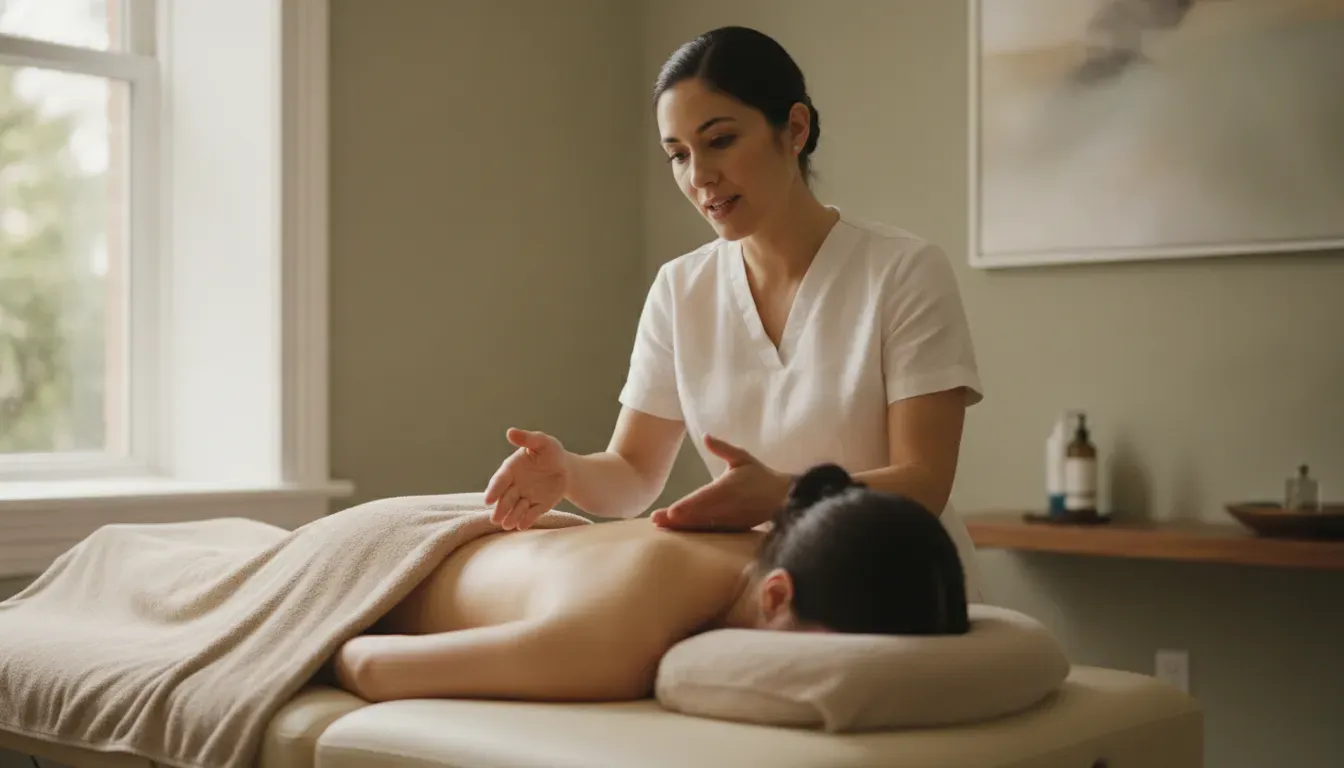

That persistent tightness in your shoulders? The one that makes them feel like permanent earrings? It’s more than a nuisance—it’s your muscles forgetting how to relax, leading to stubborn knots and chronic aches. While stretching and hot baths offer a moment of peace, they rarely fix the root cause. A professional massage for muscle tension is designed to do exactly that. It’s a targeted treatment that releases deep tightness, improves circulation, and calms your nervous system. This guide will show you which techniques provide lasting relief, so you can finally let those shoulders drop.
Key Takeaways
- Recognize the Root of Your Pain: Muscle tension is more than just a feeling of tightness; it’s your body’s physical response to factors like stress and poor posture. Acknowledging persistent aches or limited mobility as a signal for professional help is the first step toward finding real relief.
- Match the Massage to Your Muscle Needs: A one-size-fits-all approach doesn’t work for muscle tension. While a Swedish massage is great for general stress, chronic pain and deep knots require targeted therapies like Deep Tissue or Ashiatsu to effectively release them.
- Make Massage a Sustainable Practice: Lasting relief comes from consistency, not a single session. Combining regular professional massages with simple at-home care, like stretching and heat therapy, creates a powerful routine that prevents tension from building back up.
So, What Is Muscle Tension, Really?
Ever feel like your shoulders are permanently attached to your ears? Or maybe you have a nagging ache in your lower back that just won’t quit. That persistent tightness is muscle tension, and it’s more than just a feeling. It’s a physical state where your muscle fibers become stiff, rigid, and stay partially contracted, even when you’re trying to relax. Think of it like a muscle that has forgotten how to fully let go.
In more technical terms, this is sometimes called “hypertonicity,” which simply means the muscle has too much tone or tension while at rest. Instead of being soft and pliable, the muscle feels hard and unyielding to the touch. This constant state of contraction can restrict blood flow, which means less oxygen and nutrients get to the muscle tissue. This can slow down healing and lead to a buildup of metabolic waste, which in turn causes more pain and inflammation. Over time, this can limit your range of motion and create a cycle of discomfort. It’s your body’s way of signaling that something is out of balance. Whether it’s from stress, posture, or physical strain, understanding what’s happening beneath the surface is the first step toward finding relief through therapeutic massage services.
What’s Causing Your Muscle Tension?
Muscle tension can sneak up on you for a variety of reasons, and it’s often a combination of factors. One of the biggest culprits is emotional stress. When you’re anxious or overwhelmed, your body goes into a “fight or flight” mode, causing your muscles to clench up as a protective reflex.
Poor posture is another common cause, especially if you spend hours hunched over a desk or a phone. Overuse from repetitive movements or an intense workout can also lead to micro-tears in the muscle. As your body heals, it can form adhesions—what we often call “knots”—that make the muscle feel tight and painful. Even a lack of movement can be a problem, as muscles that aren’t stretched regularly can shorten and become stiff over time.
Muscle Imbalances
Sometimes, the problem isn’t just one tight muscle but the relationship between opposing muscle groups. Muscle imbalance happens when some muscles around a joint are too strong or too weak compared to others, leading to tightness and discomfort. For example, if you sit at a desk all day, your chest muscles can become tight and shortened while your upper back muscles become weak and overstretched. This imbalance pulls your shoulders forward, creating that familiar hunched posture and persistent tension in your neck and upper back. A skilled massage therapist can identify these patterns and use targeted techniques to release the overworked, tight muscles, which helps restore balance and alleviate the strain on your body.
Lack of Flexibility
Flexibility is about more than just being able to touch your toes; it’s crucial for healthy muscle function. If your muscles aren’t flexible, they can’t stretch to their full length, which makes them more likely to get tight and injured. When muscles are chronically tense, their tissues become less pliable and more rigid. Massage therapy directly addresses this by increasing circulation and warming the muscle tissue. As muscles warm up, their tissues become more elastic, allowing them to relax, loosen, and let go of built-up tension and stiffness. This process not only feels great but also helps improve your overall range of motion, making it easier to move freely and without pain. Regular therapeutic massage is an effective way to maintain that suppleness.
Key Signs of Muscle Tension
You might think muscle tension is obvious, but it can show up in ways you don’t expect. The most common sign is, of course, localized pain and discomfort, from a dull ache to a sharp, persistent pain. You might also notice stiffness or a reduced range of motion, like being unable to turn your head fully or touch your toes.
Beyond the aches, tension can cause recurring headaches, especially if the tightness is in your neck and shoulders. Some people experience muscle cramps, vertigo, or even a sense of anxiety and irritability tied to their physical discomfort. If any of this sounds familiar, it’s a clear signal from your body that it’s time to address the underlying tension, perhaps with a targeted deep tissue or Swedish massage.
How Massage Therapy Works to Relieve Muscle Tension
When your shoulders feel like they’re permanently attached to your ears or your lower back is screaming after a long day, a massage can feel like a miracle. But it’s not magic—it’s science. Massage therapy is a powerful tool for relieving muscle tension because it works on multiple levels, addressing the physiological and neurological factors that keep your muscles tight and sore. It’s a systematic approach to healing that helps your body and mind shift from a state of stress to a state of relaxation.
By applying skilled pressure and movement, a professional massage therapist can increase circulation, break down painful knots, and calm your nervous system. This encourages your muscles to release their grip, easing pain and restoring mobility. Think of it as a reset button for your overworked muscles, helping them return to their natural, relaxed state. Whether you’re dealing with tension from sitting at a desk, a tough workout, or the general stress of life, understanding how massage works can help you appreciate the profound relief it offers.
What’s Happening to Your Muscles During a Massage?
So, what’s actually happening to your muscles during a massage? It starts with your nervous system. Gentle, sustained pressure sends signals to your brain that it’s safe to relax, shifting you out of the “fight-or-flight” response and into a “rest-and-digest” state. This calming effect reduces stress hormones like cortisol, which is a major contributor to muscle tension. As your nervous system unwinds, your muscles follow suit. This is why you often feel a sense of deep relaxation that goes beyond just the physical touch. As experts note, massage therapy promotes healing and can significantly improve your body’s ability to recover and repair itself.
The Science Behind the Relief
Beyond the immediate feeling of relief, there are concrete physiological changes happening in your body during a massage. The techniques used by a skilled therapist are designed to interact with your muscular, nervous, and circulatory systems to produce lasting results. It’s a combination of neurological distraction, improved blood flow, and increased tissue flexibility that works together to break the cycle of pain and tension. Understanding these mechanisms can help you appreciate why a professional massage is so much more effective than simply resting or stretching on your own. It’s not just about feeling good in the moment; it’s about creating a healing environment within your body.
Understanding the Gate Control Theory of Pain
One of the key ways massage helps is by essentially outsmarting your pain signals. According to the Gate Control Theory of Pain, your spinal cord has a neurological “gate” that can either block pain signals or allow them to pass through to the brain. When you experience muscle pain, that gate is wide open. As noted by researchers at Harvard Health, therapeutic massage can help “close the pain gate” by creating competing sensations like pressure and warmth. These new signals travel to the brain faster than the pain signals, effectively running interference and reducing the amount of pain you perceive. This is why the targeted pressure of a deep tissue massage can make a chronic ache seem to melt away.
Increasing Vasodilation and Tissue Elasticity
Massage also works by physically changing the state of your muscle tissue. The friction and pressure from massage techniques increase circulation to the targeted areas, a process known as vasodilation. This widening of the blood vessels brings a fresh supply of oxygen-rich blood to your tight muscles, which helps flush out metabolic waste products that contribute to soreness. According to experts at Physio.co.uk, this process increases muscle temperature and makes tissues more elastic. This newfound flexibility allows the therapist to work more deeply to release stubborn knots and adhesions, restoring your range of motion and helping the muscle return to a relaxed, healthy state.
What the Research Says About Massage for Pain
The benefits of massage for pain relief aren’t just anecdotal; they’re backed by scientific research. Studies have consistently shown that massage therapy is an effective treatment for various types of musculoskeletal pain. For example, one study found that regular hand massages not only reduced hand pain but also improved grip strength, sleep quality, and even lessened feelings of anxiety and depression. This highlights how targeted therapy can have a positive ripple effect on your overall well-being. As we say at Nola Bliss, massage therapy is a powerful tool because it addresses the physiological and neurological factors that keep your muscles tight. Whether you need the broad, gliding strokes of a Swedish massage for general relaxation or the deep, consistent pressure of Ashiatsu for chronic tension, the goal is to facilitate your body’s own healing processes.
Better Blood Flow for Faster Healing
Have you ever noticed a warm, soothing sensation during a massage? That’s a sign of increased circulation. The kneading and gliding strokes of a massage encourage fresh, oxygenated blood to flow into your muscles while helping to flush out metabolic waste products that cause soreness. This improved blood flow is crucial for healing. It delivers the nutrients your muscle tissues need to repair themselves and reduces inflammation. This process “helps the muscle fibers relax and loosen up.” This is why techniques like a classic Swedish massage are so effective for general tension and promoting an overall sense of well-being.
Saying Goodbye to Painful Knots and Adhesions
Those stubborn, painful knots you feel in your neck, shoulders, and back are often trigger points or adhesions. Adhesions are bands of rigid tissue that can form when muscles are chronically tight or injured, causing pain and restricting movement. A skilled massage therapist can use specific techniques to manually break down these adhesions and release the trigger points. By applying direct, sustained pressure, they can realign the muscle fibers and restore flexibility. This is where more intensive modalities like deep tissue massage or Ashiatsu shine, as they are designed to reach those deeper layers of muscle and connective tissue to provide lasting relief.
Why “No Pain, No Gain” Is a Myth
Many people believe that for a massage to be effective, it has to hurt. This is one of the biggest myths in massage therapy. While deep tissue work can feel intense, it should never be excruciatingly painful. In fact, too much pressure can cause your muscles to tense up even more as a protective response—the exact opposite of what you want. The goal is to work with your body, not against it. A professional therapist knows how to apply the right amount of pressure to release tension without causing damage. True therapeutic massage can loosen and stretch tightened tissue and reduce swelling, all while keeping you within your comfort zone. Communication is key, so always speak up if the pressure is too much.
What Are the Best Massages for Muscle Tension?
When you’re dealing with tight, sore muscles, walking into a massage studio can feel a bit overwhelming. With so many options, how do you know which one will actually give you the relief you need? The truth is, different types of massage are designed to address different kinds of tension. Some use broad, relaxing strokes to soothe general stress, while others apply focused pressure to work out stubborn knots that have been bothering you for weeks.
Understanding the key differences can help you choose the right treatment for your body. Whether you’re looking for intense relief from chronic pain or a gentle session to unwind, there’s a massage style that’s perfect for you. Let’s look at some of the most effective options for melting away muscle tension.
Tackling Chronic Pain with Deep Tissue Massage
If you have chronic aches and pains, a deep tissue massage might be exactly what you need. This technique focuses on the deeper layers of muscle and connective tissue. Your therapist will use firm pressure and slow, deliberate strokes to target areas of tension. The goal is to relieve tight muscles by breaking up scar tissue and releasing stubborn knots. It’s especially helpful for issues like a stiff neck, sore shoulders, or lower back pain. A deep tissue massage increases blood flow to your muscles, which helps reduce inflammation and promote healing, leaving you with greater flexibility and less discomfort.
Need Intense Pressure? Try Ashiatsu
For those who feel like a regular massage just doesn’t go deep enough, Ashiatsu is a game-changer. In this unique therapy, the massage therapist uses their feet to deliver deep, consistent pressure while using overhead bars for balance and support. This technique allows for a much broader and deeper pressure than hands or elbows can provide, making it incredibly effective for releasing chronic muscle tension. Ashiatsu Deepfeet Bar Therapy is perfect for people with dense muscle mass or anyone who simply loves intense pressure. It feels like a deep, gliding massage that can soothe even the most overworked muscles.
Finding Total Relaxation with Swedish Massage
Think of a Swedish massage as the classic choice for relaxation and stress relief. This style uses long, flowing strokes, gentle kneading, and circular movements to ease surface-level tension and improve circulation. While it’s gentler than a deep tissue massage, it’s highly effective for soothing the nervous system and melting away the stress of a busy week. If you’re new to massage or just want to unwind and address mild muscle soreness, a Swedish massage is an excellent option. It promotes a sense of calm and well-being, leaving you feeling refreshed and restored.
Zeroing In on Knots with Trigger Point Therapy
Have you ever had a specific, painful “knot” in your muscle that just won’t go away? That’s likely a trigger point, and this therapy is designed to release it. Trigger point therapy involves applying direct, sustained pressure to these tender spots. This pressure temporarily cuts off circulation to the area, and when it’s released, fresh blood flows in, flushing out toxins and helping the muscle relax. This technique is often incorporated into a deep tissue or Swedish massage to address specific problem areas. It’s a fantastic way to get targeted relief from localized pain and restore normal muscle function.
Sports Massage for Peak Performance
If you’re active, whether you’re training for a marathon or just love your weekend yoga class, a sports massage can be a powerful part of your routine. It’s a more intense and targeted approach designed to support your body through the demands of physical activity. This type of massage focuses on soft tissues to warm up your muscles, making them more flexible and improving your range of motion. By relieving muscle tightness before it becomes a problem, sports massage helps prepare your body for peak performance and aids in a quicker recovery afterward. It often incorporates techniques from deep tissue or Ashiatsu to address specific muscle groups that are working the hardest, helping you stay active and injury-free.
Using Massage for Pre-Event Preparation
Getting a massage before a big event—like a race, a game, or even a physically demanding trip—can give you a competitive edge. A pre-event massage is typically shorter and more stimulating than a relaxation massage. The goal is to prepare your body for activity by increasing blood flow and flexibility in the specific muscles you’ll be using. This targeted approach helps reduce muscle tension and increase elasticity, which can significantly lower your risk of injury. It’s like a dynamic warm-up for your muscles, ensuring they are primed and ready to perform at their best when it counts.
Remedial Massage for Targeted Healing
When you’re dealing with a specific injury or a persistent pain that won’t go away, a remedial massage offers a path to healing. Unlike a general relaxation massage, this is a therapeutic treatment focused on solving a particular problem. A therapist will assess your body to pinpoint the source of your discomfort—whether it’s in the surface muscles or deeper connective tissues. They then use targeted techniques to stretch and loosen tight muscles, improve circulation, and restore proper function. It’s a systematic approach to help your body recover from issues like sciatica, carpal tunnel, or chronic postural strain, making it an essential tool for long-term relief and rehabilitation.
Massage Techniques That Actually Relieve Tension
Ever wonder what your massage therapist is actually doing to make you feel so much better? It’s not magic—it’s a combination of skilled, specific techniques designed to target tension from every angle. A professional therapist layers these methods to customize your session, ensuring your muscles get exactly what they need to release and recover. Let’s look at a few of the most common and effective techniques our therapists use to melt away tightness and restore your body’s balance.
Effleurage: Warming Up Your Muscles
Think of this as the warm-up for your muscles. Effleurage involves the long, gliding strokes your therapist uses at the beginning of a session. This technique is essential for preparing your body for deeper work. It gently increases circulation and starts to relax the tissue, making it a foundational part of any great Swedish or deep tissue massage. It’s the perfect way to ease into the massage, calm your nervous system, and let your body know it’s time to let go of the day’s stress.
Petrissage: Kneading Out Stubborn Knots
Once your muscles are warmed up, it’s time to address those stubborn knots. Petrissage is a kneading technique where the therapist lifts, squeezes, and rolls the muscle tissue. This action helps to break down adhesions—those tight, painful bands you feel in your shoulders or back—and improves the muscle’s elasticity. It’s incredibly effective for releasing built-up tension and is a key component in massages aimed at both relaxation and therapeutic relief. This is where the real “working out” of the knots begins, flushing out toxins and restoring healthy muscle function.
Myofascial Release: Freeing Up Tight Tissues
Sometimes, tension isn’t just in the muscle itself but in the web of connective tissue surrounding it, called fascia. Myofascial release involves applying gentle, sustained pressure to stretch and release these restrictions. It might not feel as intense as deep tissue work, but it’s incredibly powerful for restoring movement and alleviating widespread tightness. This approach helps to address restrictions throughout the body, improving your overall alignment and addressing the root cause of chronic discomfort. It’s a subtle but profound technique for long-term relief.
Compression and Friction for That Deep-Down Relief
For deep-seated tension, your therapist will use compression and friction. Compression involves applying firm, rhythmic pressure to a specific area, which helps soften the tissue. Friction uses deep, circular or cross-fiber strokes to break down scar tissue and adhesions that cause pain and limit movement. These techniques are the cornerstones of a deep tissue massage, as they penetrate the deeper layers of muscle to provide lasting relief from chronic tightness. It’s an intense but highly effective way to restore flexibility and ease pain.
Skin Rolling to Release Fascia
If you’ve ever felt like your skin is “stuck” to the muscle underneath, skin rolling is the technique designed to fix that. Your therapist will gently lift a section of your skin and roll it between their fingers, creating a small wave that moves across the tense area. This motion generates friction, which warms up the underlying muscle and fascia—the connective tissue that encases your entire muscular system. According to experts, this technique helps to separate these layers, which can become adhered due to inactivity or injury. By freeing up the fascia, skin rolling reduces stiffness and improves blood flow, making it an excellent way to prepare the body for deeper, more focused work on the muscle itself.
Deep Strokes to Stretch and Lengthen
For muscles that feel chronically short and tight, deep, gliding strokes are essential for creating lasting change. This technique involves applying firm, sustained pressure along the length of the muscle fibers, effectively stretching them in a way you can’t achieve on your own. It’s a core component of therapies like deep tissue massage and is particularly powerful in an Ashiatsu session, where the therapist’s feet can deliver broad, consistent pressure. The goal is to manually lengthen the muscle, which reduces pain and increases flexibility. This method is especially beneficial for large muscle groups in the back and legs that hold onto tension from poor posture or repetitive strain, helping them return to a more relaxed and natural state.
Your First Massage for Muscle Tension: What to Expect
If you’ve never had a professional massage before, the idea might feel a little intimidating. But don’t worry—the entire experience is designed to be relaxing and restorative. Knowing what happens from the moment you walk in the door can help ease any nerves and let you focus on what matters: feeling better. From the initial chat with your therapist to post-session care, here’s a simple breakdown of what your appointment will look like.
The Pre-Massage Chat: What We’ll Cover
Your massage experience begins with a brief, confidential conversation with your therapist. This is your chance to share what brought you in, whether it’s a nagging pain in your shoulder, overall stress, or preparation for a marathon. You’ll discuss your health history, current concerns, and goals for the session. A great massage therapist does more than just work on sore spots; they listen to you to understand your pain patterns and help improve your body’s mechanics over time. This initial chat ensures the session is tailored specifically to you and sets the foundation for a truly therapeutic experience with our dedicated team.
Speaking Up: How to Get the Massage You Need
Communication doesn’t stop after the initial consultation. During your massage, your feedback is essential. It’s important to communicate openly with your massage therapist about your specific areas of tension and discomfort. Is the pressure too light or too deep? Is the room temperature comfortable? Do you want them to spend more time on a particular area? Please speak up! This is your time, and our goal is to make it as effective and comfortable as possible. Your therapist will check in with you, but you should always feel empowered to voice your needs at any point during your session.
What Happens During the Massage Itself
After your consultation, your therapist will leave the room so you can undress to your comfort level and lie down on the massage table, covering yourself with the sheet and blanket provided. Throughout the session, you will be professionally draped, meaning only the area being worked on will be uncovered. Your therapist will use various techniques to release stress, soothe muscles, and alleviate pain. Depending on the type of massage you’ve chosen, like a Deep Tissue or Swedish Massage, they will use different strokes, pressures, and movements to target muscle tension and promote deep relaxation. Your only job is to breathe and let go.
Post-Massage Care: What to Do Next
When your massage is complete, your therapist will quietly leave the room, allowing you to get up slowly and get dressed. It’s common to feel deeply relaxed or even a bit lightheaded, so take your time. After your session, it’s a good idea to drink plenty of water to help your body process the work that was done and flush out any metabolic waste released from your muscles. Your therapist may also offer personalized recommendations, such as simple stretches or the use of heat at home, to help you maintain the benefits of your massage long after you leave our studio.
Important Safety Considerations: When to Avoid Massage
While massage is a fantastic tool for healing and relaxation, it’s not always the right choice for every person or every situation. Your safety and well-being are the top priorities, and a professional massage therapist is trained to recognize when a massage could do more harm than good. Certain health conditions or even temporary issues can make massage risky. This is why the pre-session consultation is so important—it’s a crucial step to ensure the treatment is tailored to your body’s specific needs at that moment. Being open and honest about your health history allows your therapist to make informed decisions and, if necessary, modify the session or recommend that you wait until it’s safer to proceed. Think of it as a partnership in your wellness journey, where clear communication ensures you get the best and safest care possible.
Health Conditions and Contraindications
In the world of massage, a “contraindication” is simply a term for a condition or situation where massage should be avoided. Some are total contraindications, meaning you should not get a massage at all. This includes things like having a fever, a contagious illness, or being under the influence of drugs or alcohol. Your body is already working hard to fight off the illness, and a massage can sometimes exacerbate your symptoms. It’s crucial to avoid massage treatments when you have any kind of infection to prevent spreading it and to allow your body to heal properly. If you have a serious medical condition, like severe osteoporosis or a history of blood clots, it’s always best to check with your doctor before booking an appointment.
Anatomical Areas to Avoid During Massage
Sometimes, a massage is perfectly safe for you overall, but there are specific areas of your body that your therapist will need to avoid. These are known as local contraindications. For example, if you have a recent injury, an open wound, a rash, or varicose veins, your therapist will work around that area to prevent further irritation or damage. The same goes for areas with blood clots, as massage pressure could potentially dislodge them. This is why a thorough assessment for contraindications is a standard part of any professional massage. Pregnancy is another key consideration; while prenatal massage is incredibly beneficial, it requires a therapist with specialized training who knows which areas to avoid and how to position you safely to protect both you and your baby.
When Should You See a Professional Massage Therapist?
It’s one thing to know you have muscle tension, but it’s another to know when it’s time to call in a professional. While self-care has its place, there are moments when a foam roller just won’t cut it. A licensed massage therapist has the anatomical knowledge and hands-on skill to address the root cause of your discomfort, providing relief that lasts longer than a hot bath. Let’s look at the signs that it’s time to book an appointment.
Is It Time to Call a Professional?
If you’re trying to remember the last time your shoulders didn’t feel like rocks, that’s a major sign. Persistent muscle tightness that doesn’t go away with stretching or rest is your body’s way of asking for help. Other clear indicators include recurring tension headaches, pain that disrupts your sleep, or stiffness that limits your range of motion. If you find yourself constantly shifting at your desk or avoiding certain activities because of discomfort, it’s time to seek professional massage. A skilled therapist can provide targeted relief that helps you get back to feeling like yourself again.
Chronic vs. Acute Tension: What’s the Difference?
It’s helpful to know what kind of tension you’re dealing with. Think of acute tension as a short-term visitor—it might show up after a tough workout, a stressful day, or sleeping in an odd position. It’s annoying, but it usually resolves on its own. Chronic tension is the roommate who overstays their welcome. It’s long-term tightness caused by things like poor posture, repetitive movements at work, or an old injury. While a gentle massage can soothe acute tension, chronic issues often require a more focused approach, like a deep tissue massage, to release deeply held patterns of tightness.
Why a Professional Therapist Makes All the Difference
A great massage is so much more than just a temporary feel-good experience. While any massage can feel relaxing, a session with a truly professional therapist is a therapeutic investment in your well-being. They do more than just address aches; they work to understand your pain patterns, assess your posture, and help re-educate your muscles for better long-term function. Unlike a generic spa treatment, a therapeutic massage is tailored to your specific needs. Our highly trained and experienced therapists are dedicated to creating lasting change, not just offering a quick fix.
Common Massage Myths, Busted
One of the biggest myths about massage is that its benefits are only skin-deep, simply relaxing the muscles. The truth is, massage therapy does so much more. It works on multiple systems in the body, helping to stretch tightened connective tissues (fascia), improve circulation to bring oxygen to your cells, and encourage lymphatic drainage to reduce swelling. Another common misconception is that a massage has to be painful to be effective. While deep tissue work can be intense, it should never be unbearable. A good therapist will always work within your comfort level to release tension effectively and safely.
How Often Should You Get a Massage for Muscle Tension?
Figuring out the right massage schedule isn’t about finding a magic number—it’s about listening to your body and understanding your goals. Whether you’re dealing with a nagging knot from sitting at a desk all day or recovering from an injury, the ideal frequency depends entirely on your unique situation. For some, a weekly session is necessary to manage acute pain, while for others, a monthly massage is the perfect way to maintain a sense of balance and prevent tension from building up. The key is to think of massage not as a one-time fix, but as a vital part of your ongoing wellness routine. A skilled therapist can work with you to create a personalized plan that addresses your specific needs, helping you feel your best long-term.
Finding the Right Massage Schedule for You
If you’re dealing with acute pain or a specific injury, you’ll likely benefit from more frequent sessions at the beginning. Coming in once a week or every other week can help break the pain cycle, reduce inflammation, and speed up your recovery. For chronic tension—that persistent tightness in your neck, shoulders, or lower back from daily stress or poor posture—a consistent schedule is crucial. Starting with a deep tissue massage every two to four weeks can make a significant difference. This allows your therapist to address deep-seated knots and begin retraining your muscles to relax. As you start to feel better, you can adjust the frequency to a maintenance schedule that works for you.
Why More Frequent Sessions Can Be More Effective
Think of massage like exercise. A single session feels great, but the real, lasting changes come from consistency. When you get massages regularly, you’re not just getting temporary relief; you’re actively breaking the pain cycle. Each session builds on the last, allowing your therapist to work on deeper layers of tension instead of just tackling the surface-level tightness that has built up over weeks. This consistent work helps to relieve tight muscles by improving blood flow and making tissues more elastic over time. It essentially retrains your muscles to maintain a more relaxed state, preventing that familiar tightness from creeping back in so quickly. This approach turns massage from a simple treat into a powerful tool for long-term wellness.
How to Build a Consistent Massage Routine
Once you’ve addressed the immediate pain, the focus shifts to prevention. Think of this as the maintenance phase for your body. Regular massage therapy helps your therapist learn your body’s unique patterns of tension and address them before they become painful problems. This consistent work helps re-educate your muscles, improve your posture, and increase your overall body awareness. For most people looking to manage everyday stress and prevent tension from returning, a massage every four to six weeks is a great goal. This rhythm is often enough to keep your muscles pliable and your mind clear, making it a sustainable and powerful part of your self-care practice.
Pairing Massage with Other Therapies
Massage therapy works incredibly well as part of a larger wellness plan. If you’re seeing a doctor, physical therapist, or chiropractor for an injury or chronic condition, massage can complement that care beautifully. It helps by increasing blood flow to injured areas, softening tight muscles so other treatments are more effective, and even improving the flow of lymph fluid to reduce swelling. Always let your massage therapist know about any other treatments you’re receiving. This allows them to tailor your session to support your health goals and communicate effectively with your other care providers if needed, ensuring you get the most comprehensive and effective results.
How to Manage Muscle Tension Between Massages
While nothing quite compares to the healing touch of a professional massage therapist, what you do between sessions plays a huge role in managing muscle tension. Think of it as teamwork: we help release deep-seated knots and chronic tightness, and you can help maintain that progress at home. Integrating a few simple self-care practices into your routine can make a world of difference, helping you stay more flexible, comfortable, and in tune with your body’s needs.
These at-home techniques aren’t meant to replace professional treatment, especially for chronic pain or injuries. Instead, they are powerful tools for daily maintenance. By taking just a few minutes each day to stretch, apply heat, or perform some light self-massage, you can prevent minor stiffness from turning into a major issue. This proactive approach helps extend the benefits of your professional massages and empowers you to take an active role in your own wellness journey. Below are a few of our favorite, easy-to-implement strategies for keeping your muscles happy and relaxed.
Simple Stretches for Tight Muscles
Consistent, gentle stretching is one of the best ways to maintain flexibility and ease the muscle tension that builds up from daily activities like sitting at a desk or even just stress. Focus on major muscle groups that tend to get tight, such as your neck, shoulders, lower back, and hamstrings. The key is to move slowly and hold each stretch for 20-30 seconds without bouncing, which can cause injury. Making stretching a part of your morning or evening routine can create a lasting habit. A few minutes of mindful movement can help improve your posture and keep your body feeling open and limber between your massage appointments.
Using Heat Therapy to Soothe Soreness
Applying gentle heat is a simple yet incredibly effective way to soothe sore, tight muscles. Warmth helps increase blood circulation to the targeted area, which can reduce stiffness and calm your nervous system. You can use a heating pad, a warm towel, or take a relaxing bath with Epsom salts to get the benefits. Applying heat for about 15-20 minutes before you stretch can also help your muscles relax further, allowing for a deeper and more effective stretch. It’s a perfect way to wind down after a long day and give your body a bit of the care it deserves.
Your Guide to Foam Rolling for Tension Relief
A foam roller can be your best friend for working out everyday kinks and tightness at home. This technique, known as self-myofascial release, involves using your body weight to roll over a foam cylinder, applying gentle pressure to your muscles. It’s fantastic for addressing tightness in your IT bands, quads, calves, and upper back. By slowly rolling back and forth over a tender area, you can help break up small knots and improve tissue flexibility. Just be sure to use proper form to avoid putting pressure on your joints or lower back.
When to Stop DIY and See a Pro
At-home care is wonderful for maintenance, but it’s important to recognize when you need professional support. If you’re dealing with persistent pain that doesn’t improve, have a limited range of motion, or feel knots that you just can’t release on your own, it’s time to see a professional. A licensed massage therapist has the anatomical knowledge and specialized skills to address the root cause of your tension safely and effectively. Listening to your body is key. When home remedies aren’t cutting it, booking one of our therapeutic massage services can provide the targeted relief you need.
Making Your Massage Even More Effective
You’ve booked your appointment and are counting down the minutes. But getting the most out of your massage starts before your therapist even enters the room. A few simple steps and thoughtful additions can transform a great massage into an incredible one, helping you find deeper relief from muscle tension. By preparing your body and mind and considering enhancements that target your specific issues, you can extend the benefits of your session long after you leave.
Try Hot Stones for Deeper Relaxation
If you want to melt away tension, consider adding hot stones to your massage. This technique uses smooth, heated stones to ease muscle stiffness. The gentle heat helps to increase blood flow and allows your therapist to work more deeply into the muscle tissue without intense pressure. At Nola Bliss, we use Hot Himalayan Salt Stones, which are packed with minerals that can help lightly exfoliate and nourish your skin. This enhancement is perfect for anyone whose muscles feel especially tight or who just wants an extra layer of soothing warmth and relaxation.
Can CBD Help with Inflammation and Pain?
For targeted relief from soreness and inflammation, a CBD enhancement might be exactly what you need. CBD is a non-psychoactive compound known for its powerful anti-inflammatory properties. When applied topically during a massage, it can help calm irritated nerve endings and soothe aching muscles. The Mayo Clinic Health System suggests that combining CBD with massage may improve the treatment’s overall effectiveness for pain. It’s a fantastic option if you’re dealing with chronic pain or just need extra help releasing stubborn knots. You can add this enhancement to any of our massage services to get more relief where you need it most.
How to Prep for Your Best Massage Ever
Your massage experience begins before you arrive. To get the best results, it’s important to come prepared. First, make sure you’re well-hydrated by drinking plenty of water throughout the day; this helps your muscles respond better to massage techniques. Arriving 10-15 minutes early allows you to unwind and fill out any forms without feeling rushed. Most importantly, be ready to communicate with your therapist. Think about what areas are bothering you and what level of pressure you prefer. As the American Massage Therapy Association notes, clear communication is key to a successful session that addresses your specific needs.
How to Choose the Right Massage Therapist
Finding the right massage therapist is a lot like finding a trusted doctor or hairstylist—it’s a personal decision, but the right fit can make all the difference. When you’re dealing with persistent muscle tension, the person you choose to work with is key to getting real, lasting relief. A great massage therapist doesn’t just provide a temporary fix for sore muscles; they partner with you to understand your pain patterns and help your body find its way back to balance.
The connection you have with your therapist matters. You need to feel comfortable enough to communicate openly about your needs, your pain levels, and what feels right for your body. This partnership is built on trust and expertise. So, how do you find that perfect match? It starts with knowing what to look for, what to ask, and how to identify a therapist whose skills align with your specific goals for tension relief. Taking a little time to choose wisely ensures every session is a step toward feeling your best.
Checking for the Right Qualifications and Experience
First things first: always make sure your massage therapist is licensed and has completed their training at an accredited school. This is the baseline for safety and professionalism. Beyond the basics, look for a therapist with a deep understanding of the body. A truly effective therapist knows anatomy and physiology and can see how your posture and daily habits contribute to your muscle tension. They should be more of a partner in your wellness journey than just someone going through the motions. The dedicated therapists at Nola Bliss, for example, have devoted their careers to the practice, bringing years of focused experience to every session.
Good Questions to Ask Your Future Therapist
Don’t be shy about asking a few questions before you book. A good therapist will be happy to talk about their work. This conversation helps you gauge their expertise and see if their approach is right for you.
Here are a few things you might ask:
- How long have you been practicing?
- What massage techniques do you specialize in?
- What is your approach to treating chronic neck and shoulder tension?
- How do you customize a session based on a client’s needs for that day?
Their answers will give you a sense of their experience and whether their style aligns with what you’re looking for.
Why Finding a Tension Relief Specialist Matters
For a specific issue like chronic muscle tension, it helps to find someone who specializes in it. While a general relaxation massage is wonderful, deep-seated knots often require more targeted techniques. Look for therapists with advanced training in modalities like deep tissue massage, myofascial release, or trigger point therapy. For intense, deep pressure that’s hard to achieve with hands alone, Ashiatsu Deepfeet Bar Therapy is an incredibly effective option. A specialist will have the right tools and knowledge to address your specific type of tension and provide more significant, lasting relief.
Related Articles
Frequently Asked Questions
I’m worried a massage for muscle tension will be painful. Should it hurt? This is such a common concern, and the short answer is no, a therapeutic massage should not be excruciating. While treatments like deep tissue massage can feel intense at times, think of it as a “good hurt”—a productive pressure that releases tension, not a sharp or unbearable pain. In fact, if the pressure is too intense, your muscles will instinctively tense up to protect themselves, which is the opposite of what we want. A skilled therapist will always work within your comfort zone and communicate with you to find the perfect pressure for your body.
With so many options, how do I choose the right type of massage for my tension? Choosing the right massage really comes down to your specific needs and pressure preference. If you’re looking for overall relaxation and relief from everyday stress, a Swedish massage is a wonderful place to start. For chronic knots and deep-seated tightness in your neck, back, and shoulders, a deep tissue massage provides more targeted pressure. And if you feel like you need the deepest pressure possible to get relief, Ashiatsu Deepfeet Bar Therapy is an incredible option that allows for intense, consistent pressure that hands simply can’t match.
How long will I feel the benefits after my massage? The relief you feel from a massage can last for several days, but the long-term benefits come from consistency. A single session can work wonders for acute soreness or a stressful week. However, for chronic tension that has built up over months or years, think of massage as part of an ongoing wellness plan. Regular sessions help re-educate your muscles, improve your posture, and prevent that deep tension from returning, which is why many people find a monthly massage to be a great maintenance routine.
What’s the real difference between a deep tissue massage and Ashiatsu? While both are fantastic for deep tension, the main difference is in how the pressure is applied. In a deep tissue massage, your therapist uses their hands, forearms, and elbows to apply focused, intense pressure to specific knots and tight areas. With Ashiatsu, the therapist uses their feet and overhead bars for balance, allowing them to deliver a much broader, deeper, and more consistent pressure across large muscle groups. It’s perfect for those who have dense muscles or feel that traditional deep tissue work is never quite deep enough.
Is it okay to get a massage for general stress, or do I need to have a specific ‘problem’ area? You absolutely do not need to have a specific injury or chronic pain to benefit from a massage. In fact, one of the best times to get a massage is when you’re feeling overwhelmed or stressed. Tension from stress often settles in our muscles, particularly in the neck and shoulders, long before it becomes a painful “problem.” A relaxing Swedish massage can help calm your nervous system and release that built-up tension, making it a powerful tool for mental and physical well-being.