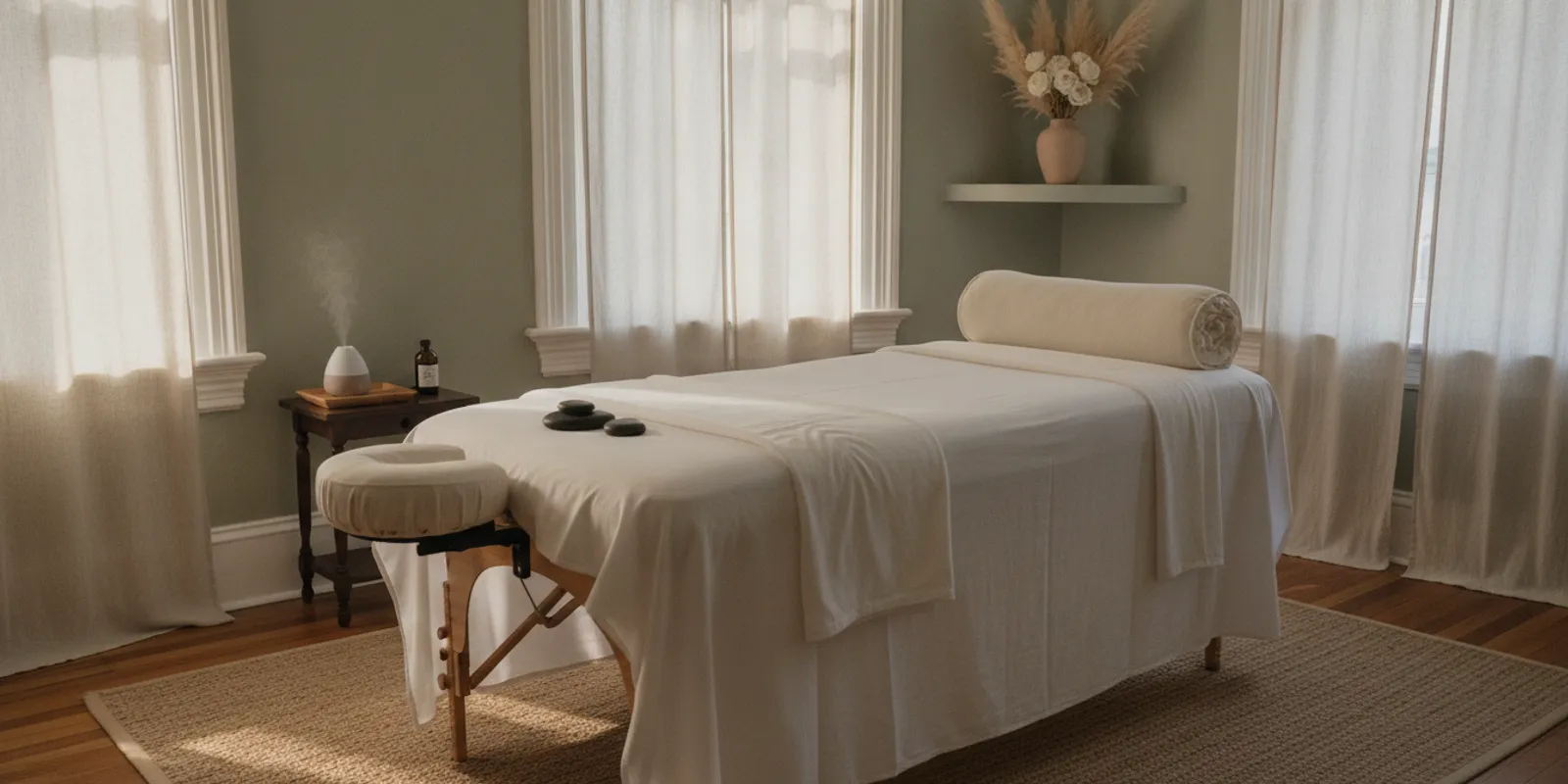

Finding a massage for people with disabilities should begin with your preferences, not assumptions about what your body can or cannot do. A useful first step is a direct conversation about access, transfers, positioning, sensory needs, communication, and what you want from the session. You decide what information to share and which accommodations matter.
Contact NOLA Bliss to discuss your needs
What makes a massage experience feel accessible?
Accessibility is individual. One client may want a clear route from the entrance to the treatment space. Another may need extra time to transfer, a particular position, quieter conversation, or a way to pause without explaining. Someone else may not need any changes to a typical session. A diagnosis alone cannot tell a therapist what will feel comfortable or useful.
It can help to think of accessibility as a conversation about the whole visit, rather than a single feature of the room. Consider how you will arrive, move through the space, communicate during the massage, and leave afterward. If you are comparing services, review the massage services available and ask the business which options can be discussed or arranged. Do not assume an accommodation is available until it has been confirmed.
Massage may be a form of relaxation or supportive self-care for some people, but it is not a substitute for medical care or rehabilitation. Research and guidance about massage and disability cover a wide range of people and circumstances. An article from the Natural Health Practitioners of Canada discusses massage therapy in the context of developmental disabilities, while the St. Ann Center’s discussion of massage and disability offers another perspective. Neither replaces individualized advice from a clinician familiar with your health.
How can you communicate your needs before booking?
You do not have to provide a complete medical history to ask an access question. Share only what is relevant to planning the visit, and choose the communication method that works for you. That might be a phone call, email, an online message, or help from a support person if you want one involved. If a business cannot answer a question immediately, ask who can follow up and when.
Specific, practical requests are often easier to answer than a general question such as “Are you accessible?” For instance, you might ask whether there is a step at the entrance, whether there is room to maneuver a mobility device, or whether a support person may accompany you. These are questions to ask, not assumptions about NOLA Bliss’s facilities or policies. NOLA Bliss is in the Warehouse District of Downtown New Orleans and offers free downtown parking; contact the studio to confirm what arrival and access arrangements fit your needs.
Before you reach out, jot down the few details that matter most. You could mention:
- How you prefer to communicate, including whether you need written information or extra time.
- Whether you use a wheelchair, walker, cane, or another mobility aid, if that affects the route or room setup.
- Whether you need help with a transfer, and what assistance you do or do not want.
- Positions that are comfortable, uncomfortable, or not possible for you.
- Sensory preferences, such as low conversation, gentle lighting, reduced scent, or a predictable sequence.
- Any health consideration you think may affect massage, and whether you have guidance from a health professional.
You can set a boundary, too: “I would rather not discuss my diagnosis, but I can tell you what positioning works for me.” A respectful exchange should focus on the practical information needed to plan safely and comfortably. If a question feels intrusive, you can ask why it is needed, decline to answer, or decide whether you want to continue the conversation.
What should you ask about transfers and mobility?
Transfers are personal. Some clients transfer independently; others use a lift, have assistance from a companion, or prefer to remain in their own mobility device. Do not assume that a client wants or needs hands-on help. The client should guide any assistance, and a therapist should not attempt a transfer unless it is agreed upon and within their ability and the setting’s procedures.
Ask about the route and setup before the appointment if those details affect your access. Useful questions may include whether the entrance and route are step-free, how wide the pathways and doorways are, whether the treatment space can accommodate your device, and whether there is a place to keep it close. You can ask about bathroom access and the time allowed for arrival and changing, too. Get answers to the specific details that determine whether the visit is workable for you.
If you plan to transfer to a massage table, discuss what you can do independently and what support, if any, you want. Ask whether the table height can be adjusted or whether another arrangement can be considered. These are not guaranteed features; confirm directly before booking. If a transfer is tiring, painful, or unsafe for you, say so. You may choose to remain in your chair, change the plan, or skip the session.
If you use a caregiver or support person, decide whether you want them involved in the conversation or present during the session. You may also prefer private time with the therapist. Your choice can be different at each visit. For a broader view of services and how to get in touch, see more about NOLA Bliss Massage, then contact the studio with your specific questions.
How can positioning be adapted to your comfort?
There is no single position that works for every body. Some people are comfortable lying face down or face up. Others prefer side-lying, seated positioning, or a modified arrangement with pillows or supports. You might need to avoid pressure on an area, keep a joint in a certain position, or adjust your position during the session. Tell the therapist what has worked before, but remember that you can change your mind.
Talk through position options before the massage begins. You can ask what alternatives may be possible if lying on the table is uncomfortable. Discuss how you will signal that you want to reposition, and whether you would like the therapist to check in at specific points. If speech is difficult or you would rather not speak, agree on a simple signal beforehand, such as raising a hand. A clear pause signal means you do not need to justify stopping.
Support pillows, bolsters, blankets, or other props may be helpful for some clients, but availability varies. Ask what is on hand and whether you can bring your own support item. If you use braces, prostheses, orthoses, or other equipment, decide with the therapist what should stay on or come off. You should never feel pressured to remove equipment or adopt a position that does not feel right.
Skin sensation, circulation, muscle tone, pain, fatigue, and involuntary movement can affect what touch or pressure feels like. A sensation that seems mild to one person can be uncomfortable or difficult to detect for another. Explain any areas where you have reduced sensation, heightened sensitivity, spasms, or other concerns if you want those areas considered. Ask for lighter pressure, no work on a specific area, or a shorter session if that better fits your comfort.
Which sensory and communication preferences can you discuss?
A comfortable session is not only about pressure. Sound, light, scent, temperature, touch, and the amount of conversation can all shape the experience. You might want a quiet room, an explanation before the therapist changes position, or less unexpected touch. You may prefer more conversation and frequent check-ins. There is no correct preference.
Describe preferences in a way that is easy to act on. “Please tell me before you touch or move me,” “I prefer little conversation,” or “Please check before changing pressure” gives a clear instruction. If you are sensitive to fragrance, ask what products are used and whether an unscented option is available; do not assume a particular product is offered. If changes to lighting, music, or room temperature matter, ask what can be adjusted before you schedule.
Predictability can also help. You might want to know the order of steps, what clothing is needed, or when the therapist will leave the room. Ask for an explanation in advance and request that the therapist pause before beginning a new area. If you communicate through an interpreter, communication device, written notes, or a companion, tell the business what would make the conversation easier. Your chosen method should be respected as part of planning.
How do you compare possible accommodations?
Use this checklist as a planning tool, not as a claim that every studio offers every feature. Ask the questions that affect you, and confirm the answers with the business before you travel.
| Planning area | Question to ask | What to confirm |
|---|---|---|
| Arrival and route | Can I get from the entrance to the treatment space along a route that works for me? | Steps, thresholds, doorways, distance, and any help available. |
| Mobility device | Can my device stay nearby, and is there room to position it? | Space in the room and a safe place for the device. |
| Transfer | Can I remain in my chair or use my preferred transfer plan? | What the studio can accommodate and who is responsible for any assistance. |
| Positioning | Can we discuss side-lying, seated, or supported positioning? | Available table or room setup, supports, and any limitations. |
| Sensory preferences | Can we adjust scent, light, sound, temperature, or conversation? | Which adjustments are possible and what products are used. |
| Communication | Can I use written instructions, a device, an interpreter, or a companion? | How to share preferences and check understanding before the session. |
| Health considerations | Is there anything about my condition that means I should ask my clinician first? | Whether the therapist needs relevant information and whether rescheduling is wiser. |
Notice not only whether your questions get answered, but how. A clear, respectful response gives you information to decide. If a requested adjustment is not possible, ask whether another option exists. It is also fine to choose a different service or postpone rather than accept a setup that does not feel safe.
How can you prepare for the appointment?
After you have discussed access and decided to book, make a short plan for the day. Keep your essential preferences somewhere easy to refer to, such as a note on your phone. Include the name or contact details of the person you spoke with, any arrangements they confirmed, and the questions that still need answers. This is especially useful if making several calls or repeating information is tiring.
Think about what will make arrival manageable. You may want to allow extra time for travel, parking, entering the building, or moving from one space to another. Ask whether you should arrive early and whether that time is included in your appointment. If you rely on a mobility device, support person, interpreter, or communication aid, consider what you want close at hand during the session. Make plans according to your needs; there is no universal checklist.
It may also help to decide ahead of time how you want the session to begin. Would you rather talk through the plan before changing clothes? Do you want instructions one step at a time? Would it be easier to have the therapist ask before every change, or to agree on a few check-in points? Share those preferences before the hands-on portion starts. A clear plan can reduce uncertainty, but it should remain flexible if something feels different once you are there.
Set a few personal limits in advance if that feels useful. You might decide which areas are off limits, what kind of pressure you are comfortable trying, and what signal you will use to stop. You can also plan a low-demand option, such as shortening the session or postponing if travel or fatigue takes more out of you than expected. Choosing not to continue is a valid outcome, not a failure to follow through.
On the day, let the therapist know if anything has changed since your first conversation. You do not need to explain more than you want. Confirm the key details again, ask for clarification if the setup differs from what you expected, and take time to decide whether to proceed. If the agreed arrangement is not available, you can ask about an alternative, reschedule, or leave. Your consent applies throughout the visit, not only at the time of booking.
When should you check with a health professional?
Disability describes many different experiences, and the same diagnosis can affect people differently. In some situations, a clinician who understands your health history can help you decide whether massage is appropriate, what areas or pressure to avoid, and whether any precautions apply. Consider checking before you book if you have a new or unexplained symptom, a recent injury or surgery, fragile or vulnerable skin, altered sensation, a medical device, or a condition that affects bone strength, circulation, or clotting.
This list is not a complete screening guide, and it does not mean massage is automatically unsuitable. It is a reminder to get individualized advice when you are uncertain. If a medical professional gives you limits or recommendations, share only the parts that are useful for planning the session. A therapist can adapt the massage only within their training and the practical limits of the service.
Stop or pause if you feel unwell, experience unexpected pain, or want the session to change. You can ask for less pressure, a different position, a break, or an end to the massage at any time. Massage should remain your choice. It should not be presented as a cure for a disability or as a replacement for treatment.
What can you expect when you book with NOLA Bliss?
NOLA Bliss Massage offers therapeutic massage in Downtown New Orleans, including Ashiatsu massage and other options described on its services page. A service description cannot answer every accessibility question, so contact the studio before choosing a session if you need to discuss mobility, positioning, sensory preferences, or another accommodation. Be specific about what you need confirmed.
For example, you could say: “I’m interested in a massage, and I’d like to check whether the route and room can work with my wheelchair. I prefer to stay seated and need the therapist to explain before touching me. Could we discuss what is possible?” You can adjust that script to share only the details you choose. Ask whether any proposed arrangement is confirmed and what to expect when you arrive.
If you are visiting downtown, include practical arrival questions in the same conversation. NOLA Bliss lists contact and location information and has a page about free parking. Confirm details that matter to your trip directly with the studio, including whether the route from parking works for you. A parking option alone does not establish that every part of a visit is accessible.
Ask about access and plan your visit
Frequently asked questions
Do I need to tell a massage therapist my diagnosis?
You can share what is relevant to the session without disclosing a diagnosis. Explain practical needs such as positions to avoid, sensory preferences, or areas where you want no pressure. If a health detail may affect safety, consider discussing it with a qualified clinician and the therapist as needed.
Can I bring a caregiver or support person?
You may ask whether a support person can accompany you and decide how involved you want them to be. Confirm arrangements with the studio in advance. You can also choose private time if that is your preference.
What if I cannot lie on a massage table?
Ask whether seated, side-lying, or another supported position may be possible, and describe what is comfortable for you. Options depend on the setting, equipment, and therapist’s ability to provide the arrangement, so confirm before booking. You do not have to accept a position that does not work for you.
Can I change or stop the massage once it starts?
Yes. You can ask to pause, adjust pressure, change positions, skip an area, or end the session. Agreeing on a simple signal before the massage can make it easier to communicate quickly.
Does massage treat a disability?
No single massage can be described as a treatment or cure for disability broadly. Some people seek massage for relaxation or comfort, but effects vary, and massage does not replace medical care. A disability-focused massage overview describes different massage approaches; discuss personal health questions with a clinician who knows your situation.
An accessible massage starts with being heard and having meaningful choices. Ask what you need to know, confirm the details that matter, and choose only the plan that feels right for you.