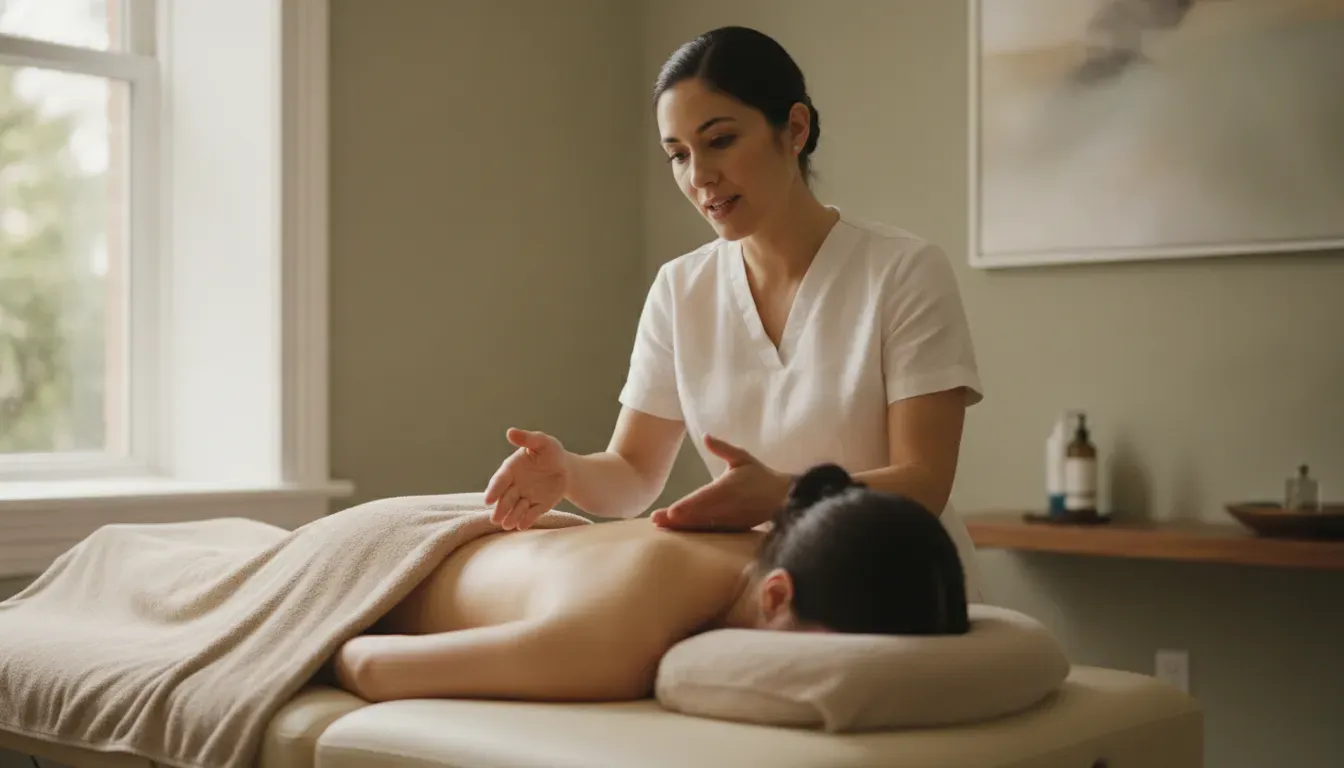

That nagging ache in your shoulder doesn’t have to ruin your time in New Orleans. Whether you’re a local dealing with work stress or a visitor sore from travel, that sharp pinch can stop you in your tracks. Pushing through the discomfort isn’t the answer. A targeted massage for shoulder pain is a powerful tool for genuine, lasting relief. Our skilled therapists focus on releasing the deep tension from daily life or injury, helping you understand the cause and getting you back to feeling your best.
Key Takeaways
- Understand Your Pain’s Origin: Effective relief starts with knowing the cause, whether it’s from desk posture, an old injury, or overuse. A professional therapist can help identify the source and create a targeted treatment plan instead of just addressing the symptoms.
- Choose Techniques That Target the Problem: A simple rubdown won’t fix chronic shoulder pain. Therapeutic techniques like deep tissue, trigger point therapy, and Ashiatsu are designed to release deep-seated knots, reduce inflammation, and improve your range of motion for lasting results.
- Make Your Relief Last with Self-Care: Extend the benefits of your professional massage by incorporating simple at-home care. Using a tennis ball for trigger points, gentle stretching, and heat therapy can help you manage discomfort between sessions and prevent future flare-ups.
What’s Causing Your Shoulder Pain?
If you’re dealing with a nagging ache or sharp pain in your shoulder, you are far from alone. It’s one of the most common complaints we hear from clients, and for good reason. Your shoulder is the most mobile joint in your body, but that incredible range of motion comes at the cost of stability, making it prone to injury and strain. The pain can stem from a sudden injury or develop slowly over time from daily habits you might not even notice.
Understanding the root cause is the first step toward finding real relief. Whether you’re an athlete, a desk worker, or just someone trying to get through the day without wincing, pinpointing the source of your discomfort helps you and your massage therapist create a plan that actually works. Let’s look at some of the most frequent culprits behind shoulder pain.
The ‘Desk Slump’: How Posture Causes Pain
That constant hunching over a computer or phone does more than just strain your neck. It forces your shoulders to round forward, tightening the muscles in your chest and overstretching the ones in your upper back. This imbalance puts a huge amount of stress on your rotator cuff and surrounding tissues. Over time, this poor posture can lead to chronic tension, knots, and persistent pain that radiates from your neck down into your shoulder blades. A therapeutic deep tissue massage can be incredibly effective at releasing this built-up tension and helping to correct those postural imbalances.
From the Gym to the Garden: Overuse Injuries
From a weekend tennis match to your regular weightlifting routine, athletic activities are a common source of shoulder issues. Sudden injuries, like a dislocation or tear, are obvious causes. However, repetitive overuse is often the more subtle problem. Activities that involve a lot of overhead motion—like swimming, painting, or even construction work—can lead to inflammation and micro-tears in the muscles and tendons. This repetitive strain can result in conditions like tendonitis or bursitis, causing persistent pain and weakness. Addressing these issues early with targeted massage can help prevent them from becoming chronic problems.
That Deep Ache: Could It Be Your Rotator Cuff?
Your rotator cuff is a group of four muscles and their tendons that surround the shoulder joint, keeping the head of your upper arm bone firmly in its socket. It’s essential for lifting and rotating your arm. Injuries to the rotator cuff are extremely common, ranging from mild inflammation (tendonitis) to partial or complete tears. Another frequent problem is shoulder impingement, where the tendons get pinched between the bones of the shoulder. This often causes pain when you lift your arm to the side or overhead. Our experienced therapists are skilled in various massage services designed to address these specific issues.
When Your Shoulder Feels ‘Stuck’: Frozen Shoulder Explained
Frozen shoulder, medically known as adhesive capsulitis, is a frustrating condition where the shoulder joint becomes incredibly stiff and painful to move. It can feel like your shoulder is literally “frozen” in place, making simple tasks like brushing your hair or reaching for something on a shelf nearly impossible. It happens when the connective tissue surrounding the joint thickens and tightens. While the exact cause isn’t always clear, it can develop after an injury or period of immobility. Gentle, targeted massage combined with stretching can be a key part of treatment, helping to gradually restore your range of motion and reduce pain.
Who Gets Frozen Shoulder?
This condition doesn’t just happen to anyone. Frozen shoulder typically affects people between the ages of 40 and 70, a time when you might be juggling a career, family, and other responsibilities, making it easy to dismiss early signs of stiffness. While it can occur in anyone, it’s more common in women and individuals with certain medical conditions like diabetes. If you fall into this age range and start noticing a gradual loss of motion in your shoulder accompanied by a dull, aching pain, it’s worth paying attention to. Ignoring it can lead to a much longer and more difficult recovery process down the road.
Common Causes and Why Movement Matters
So, what causes your shoulder to “freeze” up? It often happens when you stop using the joint normally, perhaps after an injury or surgery. This lack of movement can cause the connective tissue capsule surrounding the joint to thicken and tighten, severely restricting your range of motion. Your natural instinct when something hurts is to stop moving it, but with frozen shoulder, that’s the worst thing you can do. The less you use your shoulder, the stiffer it becomes, creating a frustrating cycle of pain and immobility. Gentle, consistent movement is crucial to prevent the condition from worsening and to begin the healing process.
The Road to Recovery
The path to thawing a frozen shoulder requires patience, as it can take several months to fully recover. However, therapeutic massage can be a significant part of your treatment plan. A professional massage service helps by relaxing the tight, compensating muscles around the shoulder, reducing tension, and improving blood flow to the area. This can effectively decrease pain and make it easier to perform the gentle stretches needed to regain mobility. Before starting any new treatment, it’s always best to talk with your doctor. Once you have their guidance, our experienced therapists can work with you to create a plan that supports your recovery and helps you get back to your life.
Massage Techniques That Actually Relieve Shoulder Pain
When your shoulder aches, it can feel like it affects everything you do. Finding the right kind of relief is key, and that’s where a targeted, professional massage comes in. A skilled massage therapist has a whole toolkit of techniques designed to address the specific cause of your discomfort, whether it’s a stubborn knot from hunching over a computer or deep-seated tension from an old injury. It’s not about just rubbing the sore spot; it’s about understanding the complex network of muscles in your shoulder, neck, and back to release tension and restore movement.
The best approach is always a personalized one. Your therapist will talk with you about your pain to determine which methods will be most effective. Some techniques use slow, intense pressure to reach deep layers of muscle, while others focus on gentle, relaxing strokes to improve circulation and soothe general soreness. By combining different massage services, a therapist can create a session that not only feels good but also promotes genuine, long-lasting healing. Below are some of the most effective and trusted techniques for alleviating shoulder pain.
Deep Tissue Massage: For Intense Knots
If you’re dealing with chronic tightness or specific problem areas, a deep tissue massage can be a game-changer. This technique involves using slow strokes and deep, firm pressure to target the inner layers of your muscles and connective tissues. It’s especially effective for breaking down scar tissue and releasing the stubborn muscle knots that often contribute to shoulder pain. By increasing blood flow to the affected area, a deep tissue massage helps reduce inflammation and promotes healing. While the pressure is more intense than a classic Swedish massage, the goal is to relieve pain, not cause it. The result is often a significant improvement in your shoulder’s range of motion and a welcome release from long-held tension.
Trigger Point Therapy: Targeting Specific Sore Spots
Have you ever felt a tight, painful knot in your shoulder that sends a shooting pain elsewhere, maybe up your neck or down your arm? That’s likely a trigger point. These are small, hyper-irritable spots in the muscle that can cause pain both at their location and in other parts of the body. Trigger point therapy focuses on identifying and deactivating these points. A therapist applies direct, sustained pressure to the knot until the muscle releases. This technique is incredibly precise and can provide immediate relief by getting to the root cause of your pain, making it a powerful tool for addressing issues like frozen shoulder and chronic headaches stemming from shoulder tension.
The Hidden Cause: The Infraspinatus Trigger Point
One of the most common yet overlooked sources of shoulder pain is a trigger point in the infraspinatus muscle, located on the back of your shoulder blade. This sneaky spot can create a deep, nagging ache that you might feel in the front of your shoulder or even down your arm, making it difficult to pinpoint the true cause. According to health researchers at PainScience, this specific muscle knot is a frequent but surprising culprit behind shoulder pain and stiffness. A skilled therapist can apply targeted pressure to this area to release the knot and provide significant relief. This approach is particularly valuable for those with conditions like frozen shoulder, where gentle, focused massage combined with specific stretches can help restore your range of motion and reduce discomfort.
Swedish Massage: A Gentler Approach to Relief
Think of a Swedish massage as the foundation of therapeutic relaxation. While it’s known for being gentle and soothing, it’s also highly effective for relieving mild to moderate shoulder pain. This technique uses long, gliding strokes, kneading, and circular motions to relax tense muscles and improve blood circulation. By easing overall muscle tension, a Swedish massage can help reduce inflammation and calm the nervous system. It’s an excellent choice if your shoulder pain is related to stress or general stiffness rather than a specific injury. It helps your body unwind, which in turn allows your shoulder muscles to let go of the tightness they’ve been holding onto.
Myofascial Release: Releasing Connective Tissue
Sometimes, the source of shoulder pain isn’t just in the muscle but in the fascia—the thin web of connective tissue that wraps around every muscle in your body. When fascia becomes tight or restricted, it can pull on your muscles and limit your movement, creating a feeling of being “stuck.” Myofascial release is a technique that applies gentle, sustained pressure to these restricted areas. For shoulder pain, a therapist might gently move your arm in various directions while applying pressure to the tissue around your shoulder blade and joint. This helps to loosen the fascia, restore mobility, and relieve that persistent, nagging ache.
Ashiatsu: When You Need Deeper Pressure
For a truly deep and consistent pressure that can tackle even the most severe shoulder tension, Ashiatsu Deepfeet Therapy is an incredible option. In this unique modality, the therapist uses their feet to deliver long, gliding, deep strokes, using overhead bars for balance and support. This allows for a much broader and deeper pressure than can be achieved with hands or elbows, making it perfect for releasing chronic tension in the large muscles of the back and shoulders. The weight of the therapist’s body creates a push-pull-stretch effect on the muscles that feels both intensely therapeutic and deeply relaxing. It’s an amazing way to address deep-seated pain and tightness across the entire shoulder girdle.
Why Get a Professional Massage for Shoulder Pain?
While self-massage can offer some temporary relief, nothing compares to the targeted, therapeutic work of a professional. A licensed massage therapist has a deep understanding of anatomy and can identify the root cause of your discomfort, whether it’s from poor posture, an old injury, or stress. They use specific techniques to release tension in ways you simply can’t on your own. Investing in a professional massage is an investment in effective, lasting relief and your overall well-being.
What the Research Says About Massage for Shoulder Pain
The benefits of a professional massage aren’t just anecdotal—they’re backed by science. Extensive research confirms that massage therapy is a highly effective treatment for shoulder pain. For instance, a major review of 15 different studies concluded that massage significantly reduces shoulder pain and improves overall function. It works by targeting the deep layers of muscle and connective tissue to ease the tension causing your discomfort. This process releases stubborn knots, or trigger points, and improves blood flow to the area, which helps speed up healing. The evidence makes it clear that a professional massage is a reliable path not just to temporary relief, but to long-term recovery.
Better Blood Flow for Faster Recovery
When your shoulder muscles are tight and knotted, it can restrict blood flow, slowing down your body’s natural healing process. A professional massage, especially a deep tissue massage, applies focused pressure that stimulates circulation. This increased blood flow delivers more oxygen and nutrients to the injured tissues, which helps reduce inflammation and repair damage more efficiently. Think of it as clearing a traffic jam in your body, allowing healing resources to get exactly where they need to go. Better circulation means faster recovery and less lingering pain.
Finally Melt Away Stubborn Knots
That persistent, nagging pain in your shoulder is often caused by trigger points—tiny, hyper-irritable knots in your muscle tissue. These knots can be tough to find and release on your own. Our experienced massage therapists are trained to locate these specific points and use skilled techniques to gently coax them into releasing. By breaking down these adhesions and scar tissue, a professional massage can alleviate the direct source of your pain, easing the chronic tension that contributes to stiffness and discomfort.
Regain Your Full Range of Motion
Shoulder pain doesn’t just hurt; it limits you. Simple tasks like reaching into a cabinet or putting on a jacket can become difficult. Massage therapy directly addresses the muscle tightness that restricts your movement. By relaxing the muscles and connective tissues around the shoulder joint, a targeted massage can significantly improve your flexibility and restore your normal range of motion. You’ll leave feeling looser and more mobile, making it easier to get back to your daily activities without that familiar twinge of pain.
Find Pain Relief Without Pills
Relying on pain medication can mask symptoms without addressing the underlying problem, and it often comes with unwanted side effects. Massage therapy offers a powerful, natural alternative for pain management. It encourages your body to release endorphins, which are natural pain-relieving chemicals. By directly treating the muscle and tissue dysfunction causing the pain, a professional massage provides relief that is both immediate and long-lasting. It’s a holistic approach that supports your body’s ability to heal itself without relying on pills.
It’s Not Just Physical: Lower Your Stress, Too
It’s no secret that stress often settles in our neck and shoulders. This physical tension can create a cycle where stress causes pain, and pain causes more stress. A professional massage is one of the most effective ways to break this cycle. The calming environment and therapeutic touch help lower cortisol levels, your body’s primary stress hormone. This not only eases the physical tension in your shoulders but also promotes a state of deep relaxation that benefits your mental and emotional health, contributing to your overall sense of wellness.
How to Safely Self-Massage for Shoulder Pain at Home
While nothing replaces the skilled hands of a professional massage therapist, you can absolutely use some at-home techniques to manage shoulder pain between your appointments. Think of it as homework that helps you get the most out of your professional sessions. These methods are perfect for easing general muscle tightness, addressing flare-ups, and providing temporary relief when you can’t get to the studio. The most important rule is to listen to your body—massage should feel like a “good hurt,” not sharp or searing pain. If something hurts badly, stop immediately. You don’t need a lot of fancy equipment; simple tools like a tennis ball or a foam roller, or even just your own hands, can be incredibly effective. By learning to address your own trigger points and tight spots, you become more aware of your body’s patterns and can communicate more effectively with your therapist during your next visit. These techniques are your allies for day-to-day maintenance, helping you feel better and extend the benefits of your next professional massage. Below, we’ll walk through a few safe and simple ways to care for your shoulders at home.
Use a Tennis Ball to Target Knots
This is a fantastic way to target those hard-to-reach knots in your upper back and shoulder blades. Find a tennis ball (or a similar-sized massage ball) and stand with your back against a wall. Place the ball between the wall and your shoulder blade, avoiding direct pressure on your spine. Gently lean back and use your legs to roll the ball around until you find a tender spot. Once you’ve found a knot, hold steady pressure for about 30 seconds while breathing deeply. You should feel the muscle start to release. This technique is a simple way to apply your own trigger point therapy at home.
Choosing the Right Tool
A standard tennis ball is a great starting point because its surface has enough give to be gentle on most people. If you find it’s too soft for a stubborn knot, you can try a lacrosse ball for more intense pressure. It’s much firmer and can get deeper into the muscle tissue, but be sure to ease into it to avoid bruising. The best tool is always the one that feels right for your body on any given day. Sometimes, all you need is your own hand to apply pressure to the front of your shoulder or your upper trapezius muscle. While there are many different massage balls out there, starting with these simple options is an effective way to manage tension without buying special equipment.
Foam Rolling for Shoulder Release
A foam roller is another great tool for shoulder relief, especially for the muscles around your armpit and rib cage that often get tight from desk work. To start, lie on your side on the floor. Place the foam roller under your armpit and extend your arm over your head. Use your feet to gently roll your body back and forth, moving the roller down the side of your torso. Keep the movements slow and controlled, pausing on any spots that feel particularly tight. This helps release the latissimus dorsi and serratus anterior muscles, which play a big role in shoulder mobility and can be a hidden source of discomfort.
Easy Self-Massage You Can Do Anywhere
You don’t need any special equipment to give yourself an effective shoulder massage. Using your opposite hand, gently knead the muscles on top of your shoulder, near your neck (your upper trapezius). Use your fingertips and thumb to apply firm but gentle pressure, working through any knots you find. You can also target the front of your shoulder where your pectoral muscles connect. For an even better release, try slowly and gently moving your sore arm through its range of motion as you massage the area. A little massage lotion or oil can help your hand glide more smoothly over the skin.
The Trapezius Pinch
The trapezius is that large muscle that spans from your neck out to your shoulders, and it’s notorious for holding tension. For quick relief, use your opposite hand to reach across your body and firmly pinch the tight, fleshy area between your neck and shoulder. Apply steady pressure for 20 to 30 seconds while taking slow, deep breaths. You can also gently tilt your head away from the side you’re pinching to deepen the stretch. This simple move directly targets a common source of tension headaches and shoulder stiffness, making it a perfect technique to use while sitting at your desk or waiting in traffic.
The Armpit Squeeze
It might sound a bit strange, but the muscles just below your armpit can be a hidden source of shoulder pain and restricted movement. To address this often-neglected area, reach your opposite hand under your arm to squeeze the thick muscles along the edge of your shoulder blade. These are your teres major and minor muscles, which help rotate your arm. Hold firm pressure on any tender spots you find until you feel the knot begin to soften and release. Releasing these muscles can significantly improve your shoulder’s mobility and ease that deep, nagging ache in the back of your shoulder.
The Pectoral Release
If you spend a lot of time hunched over a keyboard or phone, your chest muscles are likely tight, pulling your shoulders forward and causing pain. To counteract this, you can perform a pectoral release. Place the fingertips of your opposite hand on your upper chest, just inward from the ball of your shoulder. Gently press into the muscle and make small, circular motions. This targets the pectoralis minor, a muscle that, when tight, can contribute to shoulder impingement. Releasing this tension helps your shoulders relax back into a more natural alignment, providing relief and improving your posture.
Simple Stretches to Complement Your Massage
After you’ve worked on loosening the muscles, it’s important to follow up with some gentle stretching to help restore flexibility and length. One of the best and simplest stretches is the cross-body arm stretch. Bring your affected arm straight across your chest and use your other arm to gently pull it closer to your body until you feel a stretch in the back of your shoulder. Hold for at least 30 seconds, making sure to breathe deeply and avoid bouncing. Remember, stretching should never be painful. These gentle movements can help maintain mobility and prevent future tightness.
Pendulum Swing
This is a great starting point, especially if your shoulder is very stiff. Stand and lean forward slightly, placing your good hand on a table for support. Let your sore arm hang straight down. Gently swing the arm forward and backward, then side to side, and finally in small circles. The key is to let gravity do the work and keep your shoulder muscles relaxed. This gentle movement helps to loosen the joint and improve mobility without straining it.
Hand-Behind-Back Stretch
This stretch targets flexibility and can be a bit more intense, so listen to your body. Stand up straight and place the hand of your affected arm behind your back, as if you were reaching for your opposite pocket. Use your other hand to gently grasp the wrist or forearm and pull it further across your back and toward the opposite hip. You should feel a stretch in the front and side of your shoulder. Hold for 30 seconds, and remember not to force the movement if you feel any sharp pain.
Towel Stretch
Grab a dish towel or a small hand towel for this one. Hold one end of the towel and drape it over your good shoulder so it hangs down your back. With your affected arm, reach behind your back and grab the other end of the towel. Now, use your good arm to gently pull the towel upward, which will raise your sore arm up your back. This is an excellent way to improve your shoulder’s internal rotation. Hold the stretch for 30 seconds, relax, and repeat a few times.
Umbrella Push
For this exercise, sit in a chair and hold a long umbrella or a cane in front of you with both hands, keeping your elbows bent at a 90-degree angle. Use your good arm to gently push the umbrella horizontally, which will move your affected arm outward, away from your body. Keep the elbow of your sore arm tucked close to your side throughout the movement. This is a great way to stretch the shoulder muscles and improve your external rotation. Push only until you feel a gentle stretch.
Tips for Getting the Most Out of Your Massage
A great massage is a partnership between you and your therapist. To make sure you get the most significant and lasting relief, there are a few simple things you can do before, during, and after your session. Think of it as setting the stage for healing. A little preparation helps your muscles relax more deeply, and proper aftercare extends the benefits of the therapeutic work long after you’ve left the table. These small steps can make a huge difference in your results, helping you manage pain more effectively and feel better for longer.
Warm Up Your Muscles First
Showing up to your appointment with warm, relaxed muscles can make your massage significantly more effective. When your muscles are cold and tight, your therapist has to spend more time just getting them to loosen up. You can give them a head start by taking a warm shower or bath right before you leave for your appointment. The heat increases blood flow and makes the muscle tissue more pliable and receptive to deep work. This simple step allows your therapist to get to the deeper layers of tension more quickly, which means you get more relief from your time on the table.
Best Practices for Self-Massage
When you’re working on your own shoulders at home, the most important rule is to listen to your body. The goal is to find a “good hurt,” not sharp, shooting pain. If you feel a tight, painful knot that sends an ache up your neck or down your arm, that’s likely a trigger point. Using a tennis ball for these spots, along with gentle stretching and heat therapy, can help you manage discomfort between sessions. Apply sustained pressure to a knot for about 30 seconds, breathing deeply, until you feel it start to release. Never push so hard that you’re tensing up or holding your breath—that’s counterproductive. Gentle, consistent self-care is the key to preventing future flare-ups.
After Your Professional Massage
What you do after your massage is just as important as the massage itself. The first and most crucial step is to drink plenty of water. Massage releases metabolic waste from your muscle tissues, and hydrating helps your body flush it all out. You might feel a little sore the next day, which is completely normal, especially after a deep tissue massage. You can use an ice pack to reduce any inflammation or a heating pad to soothe lingering tenderness. Gentle stretches will also help keep your muscles loose and flexible. Remember that the benefits are cumulative; getting regular massages can help manage pain over time and support your long-term recovery.
Your First Shoulder Massage: What to Expect
Walking into a professional massage studio for the first time can feel a little mysterious, but it’s a straightforward process designed entirely around you and your comfort. Knowing what happens from start to finish can help you relax and get the most out of your session. A therapeutic massage isn’t just about the time spent on the table; it’s a collaborative experience between you and your therapist. It begins with a conversation, moves into a personalized treatment, and ends with a plan to help you maintain that feeling of relief long after you leave.
First, We’ll Talk: The Consultation
Your appointment will start with a brief chat with your massage therapist. This is your time to share what’s been going on. Are you dealing with a dull ache from sitting at a desk, a sharp pain from a weekend warrior injury, or just general tightness from stress? Shoulder pain is incredibly common, affecting most of us at some point, so don’t hesitate to share the details. Your therapist will ask about your pain levels, lifestyle, and what you hope to achieve. This conversation is crucial because it helps our dedicated team of therapists pinpoint the source of your discomfort and ensure your massage is both safe and effective.
Creating a Plan Just for You
Based on your consultation, your therapist will create a treatment plan just for you. They’ll recommend the best techniques to address your specific issues, whether that’s a Deep Tissue Massage to work through stubborn knots or our signature Ashiatsu therapy for broad, consistent pressure. During the massage, they will focus on the affected areas of your shoulder, neck, and upper back, using slow strokes and sustained pressure to release tight muscles and break down scar tissue. Your therapist will check in with you about the pressure to make sure you’re always comfortable. The goal is to increase blood flow and improve your range of motion, not to cause more pain.
What to Do After Your Massage
The benefits of your massage don’t have to end when you walk out the door. Your therapist will give you simple, actionable advice to help you prolong the relief. This often includes drinking plenty of water to help your body flush out toxins released from your muscles during the session. They might also suggest gentle stretches to maintain flexibility or recommend using a heat pack or ice at home to soothe any residual soreness. It’s important to listen to your body and rest if you need to. For long-term relief, consider making massage a regular part of your wellness routine. Consistent massage services can help prevent future pain and keep your shoulders feeling their best.
How Often Should You Get a Massage for Shoulder Pain?
Figuring out the right massage schedule for your shoulder pain isn’t a one-size-fits-all situation. The best frequency really depends on what you’re dealing with. Are you experiencing a sudden, sharp pain from a recent injury, or is it a dull, persistent ache that’s been bothering you for months? Your goals also play a big role. Are you looking for immediate relief, long-term management, or proactive prevention? Listening to your body and working with your massage therapist will help you find the perfect rhythm for healing and maintaining your shoulder health. Let’s break down some general guidelines based on your specific needs.
For Sudden, Acute Pain
When you’re dealing with acute shoulder pain—that sharp, sudden kind that often comes from a new injury or overdoing it at the gym—more frequent sessions can make a big difference. Initially, you might find that coming in once or even twice a week helps to calm things down. The goal here is to reduce inflammation, release the intense muscle tightness, and address any trigger points that are causing referred pain. A focused deep tissue massage can work wonders by applying slow, deliberate strokes to break down adhesions and restore movement. As the pain subsides, you and your therapist can gradually space out your appointments.
For That Lingering, Chronic Ache
If your shoulder pain is a long-term issue you’ve been managing for months or years, consistency is your best friend. For chronic conditions, a regular massage every two to four weeks is often the sweet spot. This steady schedule helps manage your symptoms, prevent painful flare-ups, and improve your shoulder’s overall function over time. Regular massage increases blood flow to the area, which supports healing and improves your mobility. Techniques like our Ashiatsu Deepfeet Bar Therapy are especially effective for chronic pain, as the deep, consistent pressure can release deep-seated tension that other methods might not reach.
To Keep the Pain from Coming Back
Maybe you’ve recovered from a shoulder injury and want to keep it from coming back, or perhaps your desk job leaves your shoulders feeling tight and you want to stay ahead of the pain. In these cases, a maintenance massage is a fantastic proactive tool. Scheduling a session once a month or every six weeks can help maintain your shoulder health, keep your muscles pliable, and address minor tension before it becomes a major problem. Think of it as preventative care for your body. By exploring different massage services, you can find the right fit for your routine and keep your shoulders feeling great for the long haul.
Add-Ons for Deeper Shoulder Pain Relief
A targeted massage is one of the best things you can do for shoulder pain, but sometimes you need a little extra help to release stubborn tension. If you’re dealing with chronic tightness or a particularly painful knot, a few key enhancements can deepen your relief and extend the benefits of your session. These add-ons work with your massage to soothe inflammation, relax muscles on a deeper level, and help your body heal more effectively. Think of them as a way to give your shoulder the focused attention it deserves.
When you book your appointment, talk to your therapist about what you’re experiencing. They can recommend the right additions to your treatment plan. Simple enhancements often make a significant difference in how you feel both on and off the table, helping you get back to moving freely and without pain. From the penetrating warmth of hot stones to the inflammation-fighting power of CBD, these options can transform your massage into a highly targeted and effective treatment for shoulder pain.
Add Warmth with Himalayan Salt Stones
If you’ve never experienced a hot stone massage, you’re in for a treat. Using Hot Himalayan Salt Stones takes this therapy to another level. The smooth, heated stones are used by your therapist to massage your shoulders, allowing the warmth to penetrate deep into the muscle tissue. This heat helps release tight muscles and increases blood flow to the area, which is essential for healing. Beyond the heat, these stones contain dozens of trace minerals that can be absorbed through the skin, helping to reduce inflammation and create a profoundly relaxing experience. The benefits of Himalayan salt stone massage make it a fantastic choice for anyone with persistent shoulder stiffness.
Ask About Adding CBD Oil
You’ve likely heard about the benefits of CBD, and it’s an incredibly effective tool when integrated into massage therapy. When applied topically, CBD oil can help reduce inflammation and soothe pain directly at the source. For shoulder pain caused by inflammation, like tendonitis or arthritis, adding CBD to your massage can provide significant relief. It works with your body’s endocannabinoid system to calm discomfort without any psychoactive effects. Combining the physical manipulation of a deep tissue or Swedish massage with the anti-inflammatory properties of CBD creates a powerful treatment that helps your muscles relax more completely. You can request CBD as an enhancement to most massage services.
Alternating Heat and Cold for Inflammation
Alternating between heat and cold is a time-tested method for managing muscle pain, and it works wonders for shoulders. Heat therapy, often applied with warm packs, helps relax and loosen tissues while stimulating blood flow to the area. This is great for relieving general stiffness and preparing the muscles for deeper massage work. Cold therapy, on the other hand, is excellent for reducing inflammation and numbing the sharp pain associated with an acute injury or flare-up. Your massage therapist may incorporate this into your session, or you can use this technique at home between appointments to maintain your progress and manage discomfort effectively.
When to See a Doctor Instead of a Massage Therapist
As much as we believe in the power of a great massage, it’s important to know that it isn’t the right solution for every type of shoulder pain. Your health and safety are the top priorities, and sometimes, that means checking in with a doctor before booking a massage appointment. A skilled massage therapist can do wonders for muscle-related issues, but certain symptoms can point to a problem that needs a medical diagnosis first.
Think of it this way: a massage therapist helps your body heal, but a doctor first figures out exactly what needs healing. If you’re dealing with a serious injury or an underlying medical condition, getting a proper diagnosis is the first step. Our therapists are trained to recognize when massage might not be appropriate and will always refer you to a physician if they suspect your pain is outside their scope of practice. Listening to your body and knowing when to seek medical advice is a key part of your wellness journey.
Warning Signs You Shouldn’t Ignore
Before you book a massage, take a moment to check in with your body. If you experience sudden, severe pain without any obvious injury, it’s best to call your doctor. Other red flags include pain accompanied by fever, chills, or unexplained weight loss. Notice any significant swelling, redness, or warmth around the shoulder joint? That’s another sign to seek a medical opinion. Also, pay attention to pain that doesn’t change or worsen when you move your shoulder. This could indicate the source of the problem isn’t in the shoulder muscle itself and needs a doctor’s evaluation.
Numbness or Tingling
If your shoulder pain comes with a side of numbness, pins-and-needles, or a tingling sensation that runs down your arm, it’s a signal to pause and listen closely to your body. These feelings often point to nerve involvement, which is different from a simple muscle knot. As noted by medical experts, conditions like a herniated disc in your neck or thoracic outlet syndrome can compress the nerves that travel to your shoulder and arm, creating that tingling sensation. Because these symptoms can indicate a more serious underlying issue, it’s crucial to get an evaluation from a doctor. A proper diagnosis will ensure that massage is a safe and appropriate step in your recovery plan, rather than something that could potentially aggravate the problem.
Could It Be More Than a Muscle Knot?
Sometimes, shoulder pain is a symptom of an issue elsewhere in the body. This is known as referred pain, and it’s a clear signal to see a doctor. For example, problems with your neck, lungs, or even your gallbladder can manifest as pain in your shoulder area. While it’s not common, it’s why getting a clear diagnosis is so important. A physician can run the necessary tests to rule out any serious conditions and ensure you’re getting the right treatment for the actual source of your discomfort. Don’t try to guess—let a medical professional give you a clear answer.
If Massage Isn’t Helping
You’ve been getting regular massages and doing your stretches, but the shoulder pain just isn’t getting better. If your pain lingers for weeks and starts to interfere with your daily life—like making it hard to get dressed, reach for something on a shelf, or sleep comfortably—it’s time to see a doctor. Persistent pain that doesn’t respond to treatment could signal an underlying issue that massage alone can’t resolve, such as a torn rotator cuff or arthritis. A doctor can provide an accurate diagnosis and create a treatment plan, which may very well include therapeutic massage as part of a broader strategy.
How to Choose the Right Massage Therapist
Finding the right massage therapist is the most important step in getting effective relief for your shoulder pain. Not all massages are the same, and the person you trust to work on your body should have the right skills and experience. Think of it like hiring any other professional—you want someone who understands your specific problem and has a proven track record of helping people with similar issues. A great therapist will listen to you, understand the anatomy of the shoulder, and apply the right techniques to address the root cause of your pain, not just provide a temporary fix. Taking a few extra minutes to vet your options will make all the difference in your healing journey and ensure you feel safe, comfortable, and confident that you’re in good hands.
Are They Qualified? Check Their Credentials
First things first, always make sure your massage therapist is licensed. In Louisiana, this means they are a Licensed Massage Therapist (LMT), which guarantees they’ve completed extensive training from an accredited program and passed a national exam. This is your baseline for safety and professionalism. A proper license ensures your therapist has a deep understanding of anatomy, physiology, and contraindications, so they know how to help you without causing further harm. Don’t be shy about asking to see credentials or looking them up online. Here at Nola Bliss, our entire team is composed of highly experienced, licensed professionals dedicated to the art of healing.
Do They Specialize in Pain Relief?
Once you’ve confirmed they are licensed, look for a therapist with specific experience treating shoulder pain. A general relaxation massage is lovely, but it may not be enough to resolve deep-seated knots or mobility issues. You want someone who is skilled in therapeutic modalities. Look for experience in techniques like deep tissue massage, trigger point therapy, or even Ashiatsu. A therapist who has pursued advanced training demonstrates a commitment to their craft and is better equipped to handle complex issues. Experience matters because they’ll have a better intuitive sense of what’s happening in your muscles and how to release the tension effectively.
Questions to Ask Before Your First Appointment
Before you commit to an appointment, have a quick chat with the therapist or the studio. A good therapist will be happy to answer your questions. This is your chance to gauge their expertise and see if they’re a good fit for you.
Here are a few key questions to ask:
- What is your experience working with clients who have shoulder pain?
- What techniques do you typically use to address shoulder issues?
- How do you customize a session based on a client’s specific symptoms?
Their answers should give you a clear idea of their approach and whether it aligns with your needs. This simple conversation can help you feel confident in your choice and set you up for a successful, pain-relieving massage.
Related Articles
Frequently Asked Questions
Will a deep tissue massage for my shoulder be painful? This is a common concern, and the short answer is that it shouldn’t be. A therapeutic massage, even a deep one, is meant to relieve pain, not create it. You’ll likely feel a firm, focused pressure as your therapist works on stubborn knots and tight muscles. We call this a “good hurt”—it feels productive and relieving. Your therapist will communicate with you throughout the session to ensure the pressure is just right for you. The goal is to release tension, and that requires working deeply, but it should always stay within your comfort level.
How do I know which type of massage is right for my shoulder pain? You don’t have to figure that out on your own. Your appointment will always start with a conversation with your therapist about what you’re feeling. Based on whether your pain is from chronic desk posture, a sports injury, or general stress, they will recommend the best approach. They might suggest a Deep Tissue massage for specific knots, Ashiatsu for broad and deep pressure, or a combination of techniques. The most effective treatment is a personalized one, and we’ll work with you to create a plan that directly addresses your needs.
What should I expect to feel the day after my shoulder massage? It’s normal to feel a little bit of muscle soreness the day after a deep tissue or therapeutic massage, similar to how you might feel after a good workout. This happens because your therapist has worked on muscles that were tight and holding tension. This feeling is temporary and a sign that your body is healing. You’ll also likely notice a significant increase in your range of motion and a decrease in the specific pain you came in with. Drinking plenty of water after your session will help minimize any soreness.
Can I still get a massage if I have a diagnosed shoulder injury, like a rotator cuff tear? In many cases, yes, massage can be a very beneficial part of your recovery plan for a diagnosed injury. However, it’s essential to get clearance from your doctor first. Once you have the go-ahead, be sure to tell your therapist about your specific diagnosis. They can then adjust their techniques to work safely around the injured area, focusing on releasing tension in the surrounding muscles that may be overcompensating and contributing to your pain.
How is Ashiatsu different from a regular deep tissue massage for shoulders? While both are fantastic for deep-seated tension, the application is very different. In a traditional deep tissue massage, the therapist uses their hands, forearms, and elbows to apply focused pressure. With Ashiatsu, the therapist uses their feet and body weight to deliver long, gliding, deep strokes while holding onto overhead bars for balance. This allows for a broader, more consistent, and often deeper pressure that can release tension across the entire shoulder girdle and back in a way that feels incredibly therapeutic and encompassing.