Choosing a massage school in New Orleans is about more than finding a convenient class schedule. The right program should help you build safe hands-on skills, understand the work, and map a realistic route from training to professional practice. Compare the curriculum, supervised practice, instructor experience, total cost, and the steps you will need to verify before enrolling.
Ask about massage training and workshops
Massage school New Orleans options: what should you compare first?
Start by asking each school for the same core information in writing. A tour or a polished brochure can be useful, but a direct comparison makes differences easier to see. Look for details about class hours, hands-on practice, instructor qualifications, student support, completion requirements, and the full amount you may pay.
Make a shortlist of programs that fit your schedule and goals, then confirm their current status and any applicable Louisiana requirements through the appropriate state or local authorities. Do not assume that a program is approved, that one credential is accepted everywhere, or that graduation alone qualifies you to practice. Ask the school to identify the relevant official sources and confirm important requirements independently before paying a deposit.
To keep comparisons fair, use the same questions for every program and note the date you received each answer. Separate facts you can document, such as a calendar or fee sheet, from impressions such as a welcoming tour. Then mark anything you still need to verify with an official source. This simple process can keep an attractive brochure or an early verbal assurance from outweighing missing information.
| What to compare | Questions to ask | Why it matters |
|---|---|---|
| Curriculum and hours | What topics are taught, how are hours counted, and what must I complete? | Shows the scope and structure of the education. |
| Hands-on instruction | How much supervised practice is included, and how is feedback given? | Practical skills need coached practice, not just reading or demonstrations. |
| Faculty | Who teaches each subject, and what relevant practice or teaching experience do they have? | Helps you understand the perspective and support available in class. |
| Schedule and format | Which classes are in person, and what happens if I miss a session? | Lets you assess whether you can attend and complete the program. |
| Total cost | What is included, and what additional expenses should I budget for? | Prevents a headline tuition figure from obscuring the full commitment. |
| Next steps | What documentation or exams may be required after graduation? | Helps distinguish program completion from authorization to practice. |
How can you assess the curriculum and hours?
Request a course outline rather than relying on a list of promotional phrases. A thoughtful massage education should explain what students study, how classroom instruction relates to practice, and how progress is evaluated. Ask about anatomy and physiology, professional boundaries, communication, client comfort, and how students learn to adjust their approach responsibly. The school should be able to describe its curriculum clearly and explain which learning objectives are assessed.
Look for a logical connection between topics. For instance, ask how a lesson on body structures connects to later practical work, and how instruction addresses communication before, during, and after a session. Ask whether assessment includes written work, demonstrations, practical evaluations, or a combination. You are not looking for a guarantee that every graduate will have the same strengths; you are checking that the school can describe what students are expected to learn and how instructors determine whether they are progressing.
Ask how many hours are devoted to supervised, hands-on practice, and how those hours are recorded. Clarify whether demonstrations, independent study, and practice sessions count differently. Find out whether students practice with peers, receive instructor observation, and have opportunities to repeat a technique after feedback. A total-hour figure alone does not tell you how much individual coaching or practical experience you will receive.
Be cautious about treating an hours figure from another state or school as a Louisiana rule. For example, a South Dakota government research document describes at least 500 hours of education in the context it discusses. That is not, by itself, evidence of a Louisiana licensing requirement. Confirm the current rules that apply to your circumstances with Louisiana’s relevant licensing authority.
Local options can have different purposes as well. Delgado Community College describes its massage therapy certificate as covering knowledge, hands-on skills, and professional training on its Massage Therapy Program page. Use program pages as a starting point for questions, then ask the school to clarify current admissions, course, schedule, and completion details directly.
How much hands-on training is enough?
There is no useful way to judge a school by a single number without context. Ask what students actually do during practice and how instructors maintain a respectful, professional learning environment. A school should explain how practice is structured, what supervision looks like, and how students learn to respond to comfort, pressure preferences, and boundaries.
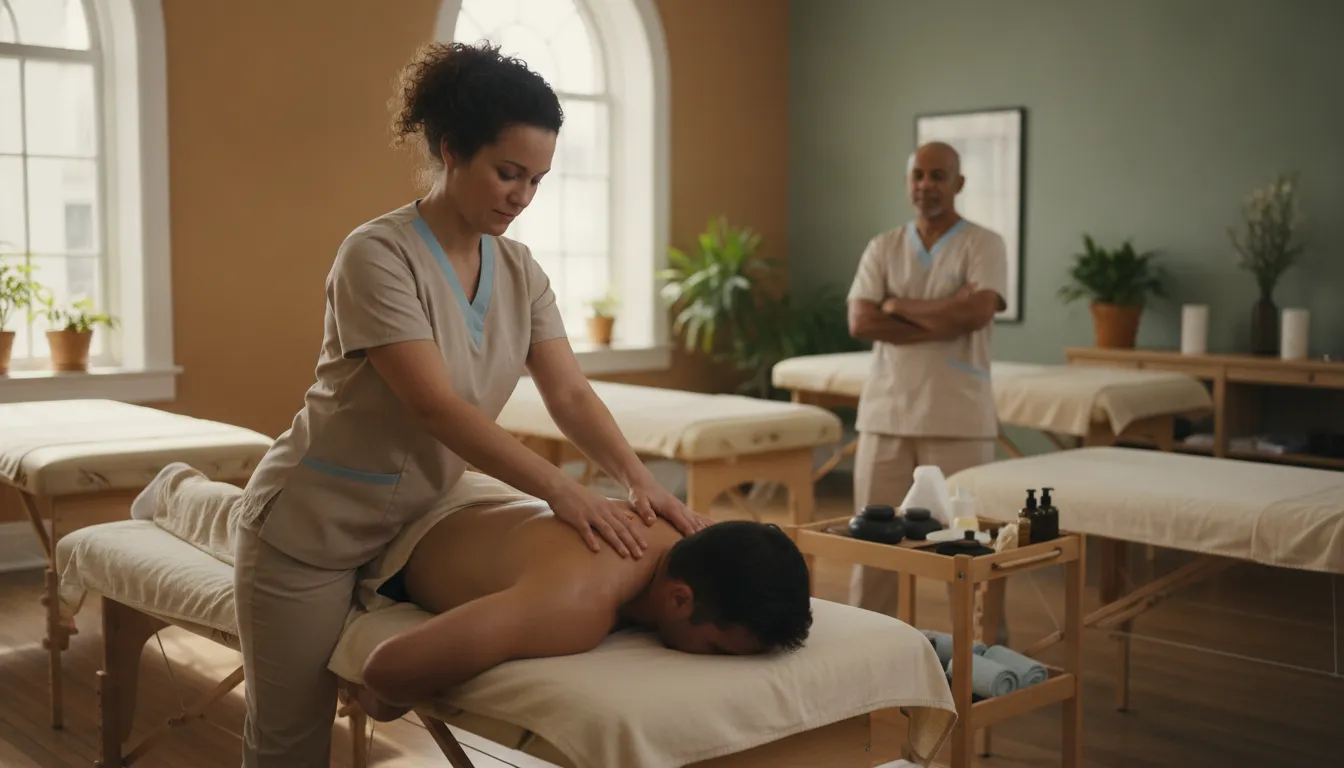
- Observe a class if possible. Notice whether students receive specific coaching rather than only watching demonstrations.
- Ask about feedback. Find out how often instructors observe individual technique and how students work on areas that need improvement.
- Clarify practice expectations. Ask what participants are expected to wear, how consent is handled, and whether students can raise a concern or opt out of a particular practice activity.
- Ask about evaluation. Learn how practical skills are assessed and what happens if a student needs additional practice.
If a school allows a visit, watch the learning process rather than judging the room by appearance alone. Do students have enough time to take turns practicing? Can they ask questions without disrupting the lesson? Does the instructor correct positioning or technique in a clear, respectful way? Ask how students progress from a basic demonstration to practice with more independence. These are concrete indicators of whether practical sessions are organized for learning.
The point is not to look for one preferred technique or a promise of instant mastery. It is to see whether the school has a clear, supervised process for developing foundational skills and professional judgment. If the answers are vague, ask for details before enrolling.
What should you ask about instructors?
Ask who will teach the courses you care about and what experience they bring to those subjects. Relevant questions include how long instructors have taught, how their professional background connects to the curriculum, and who is available when students need help outside class. Also ask whether the person giving you enrollment information is the same person who can answer academic questions.
Experience matters, but it is not a substitute for clear teaching. Look for instructors who can explain why a skill is taught, demonstrate it in understandable steps, and give students constructive feedback. Ask how the program responds when a student struggles with a technique or needs clarification on a concept. The way a school answers can reveal how accessible its support may be.
You can also ask about class size and how much individual attention a student can reasonably expect during practical sessions. A small group may make it easier to receive direct feedback, but the important point is the actual teaching arrangement, not the label. Ask who supervises practice, whether students can request a review, and how the program communicates a concern about progress. If instructors rotate, find out how lesson continuity is maintained.
For a sense of the distinction between professional massage services and education, you can review NOLA Bliss Massage’s about page and its information about massage workshops and continuing education. Training offerings vary, so contact the provider to confirm what is currently available and whether it matches your educational goals.
How should you compare the total cost?
Compare the full cost of completing a program, not just tuition. Request an itemized estimate and ask what is included. Depending on the program, potential expenses may include application or registration fees, required supplies, books, uniforms, practice materials, examination or assessment fees, and any costs associated with completing missed coursework. Do not assume an item is included unless the school confirms it.
Ask when payments are due, what happens if you withdraw, and whether there are additional charges if you need to repeat a course or extend your studies. If financial aid or a payment plan is advertised, ask for the eligibility rules, exact terms, and the person who can explain them. Keep written copies of tuition schedules and policies so you can compare them accurately.
For example, one school might quote tuition and list books and supplies separately, while another might combine more items in its estimate. Put each expense into the same categories before deciding. Ask whether required equipment must be purchased through the school, whether there are optional purchases, and whether fees are due even if you withdraw. If a potential cost depends on attendance or performance, ask how it is calculated rather than treating it as a fixed amount.
When comparing two programs, consider what the cost buys: scheduled instruction, access to practice facilities, instructor feedback, student advising, and a clear completion plan. The lowest advertised price may not represent the lowest total cost if required expenses are excluded. Conversely, a higher price is not proof of better instruction. Evaluate the details, then decide whether the whole commitment is manageable.
How do you check a program’s fit and requirements?
First, identify your goal. You may be exploring massage as a career, seeking a structured foundation before further study, or looking for a particular technique or continuing-education experience. A full professional program and a short workshop are not interchangeable. Confirm exactly what a course is designed to provide, and do not treat a workshop certificate as a substitute for any required professional education or authorization.
Next, check the schedule against your real life. Ask how often classes meet, whether attendance is mandatory, how clinical or practice hours are arranged, and how students make up absences. If you work or have caregiving commitments, ask for a sample calendar and the program’s policy for interruptions. A realistic plan is more valuable than an appealing start date you cannot sustain.
Map the schedule against a typical week before you enroll. Include travel time, study time, work, and family responsibilities rather than counting only hours in class. If the program has daytime and evening options, ask whether the same courses are offered in both formats and whether moving between cohorts is possible. Clarify how a missed class affects progress and whether a make-up session is guaranteed, limited, or subject to an additional fee.
Before making a decision, verify the program and professional requirements using official sources. Ask the school to point you to the current Louisiana rules, and then confirm them yourself with the relevant government office. Questions to resolve include what education is accepted, what examinations or documentation may apply, whether any background or renewal requirements exist, and whether requirements differ based on the type of work you plan to do. Treat verbal assurances as a prompt to verify, not as a replacement for official guidance.
Keep a short record of your verification: the official agency or office, the page or rule consulted, and the date you checked it. Requirements can change, so a saved note helps you revisit the right source if your enrollment or graduation timeline is long. If school materials use terms such as approved, licensed, certified, or eligible, ask what each term means in that specific context and whether an independent authority confirms it.
For questions about NOLA Bliss Massage’s own training information, begin with its Ashiatsu service information and workshops page; ask directly whether a listed offering is intended for professional massage therapists, students, or another audience. These pages describe the business’s offerings, not a complete list of New Orleans schools or a licensing authority.
What are useful questions to ask on a school visit?
Bring the same questions to every school so you can compare answers side by side. If a staff member cannot answer a regulatory question, ask which official source you should consult rather than relying on a guess.
- Can I review the current course outline, calendar, attendance policy, and completion requirements?
- How are theory hours and supervised hands-on hours divided and documented?
- How many students are typically in a practice group, and how do instructors give individual feedback?
- Who teaches anatomy, practical skills, and professional topics?
- What is the complete estimated cost, including required supplies and potential additional fees?
- What support is available if I miss class, need extra help, or need to pause my studies?
- What do graduates need to do next, and where can I verify current state requirements?
- Can I speak with an advisor or observe a class before I make a commitment?
Take notes on specific answers, not just impressions. If a school promises that graduates are automatically eligible to practice, ask for the exact official rule supporting that statement. If you are comparing career outcomes, ask what information is available about graduates and how the school collects it; do not rely on unsupported placement claims.
After each visit, write a brief recap while the details are fresh. Record what the school answered, what it promised to send, and what remains unverified. A simple comparison sheet can have one row per program and columns for training hours, supervised practice, schedule, instructor access, itemized cost, written policies, and official requirements to check. Add a confidence note beside each answer: documented, explained verbally, or still unknown. That makes it easier to see whether a school is genuinely responsive and where follow-up is needed.
Massage school New Orleans fit: how can you choose the right option?
Use your shortlist to rank the factors that matter most: verified program status, depth of supervised practice, instructor access, schedule, cost, and a clear path to your next step. Eliminate programs that will not provide basic written information or that blur the line between completing a course and meeting professional requirements. For the remaining options, revisit your goals and decide which offers the best fit for the time and resources you can commit.
It can help to sort requirements into must-haves and preferences. A workable schedule, clear documentation, and an understandable completion plan may be essential; a particular commute or class format may be a preference. If two programs appear close, contact both with the same outstanding questions and compare the clarity of their responses. There is no need to rush a decision just because an enrollment date is approaching; first make sure you understand the commitment and what comes after graduation.
People looking for hands-on client care rather than professional education can compare massage services in New Orleans instead. Prospective students interested in a particular technique can learn more about Ashiatsu at NOLA Bliss, while recognizing that a service description is not a substitute for a school curriculum or licensing guidance.
Contact NOLA Bliss Massage with a training question
Frequently Asked Questions
How do I find a massage school in New Orleans?
Search for current local programs, then verify details directly with each school and confirm applicable professional requirements with the relevant Louisiana authority. Compare curriculum, supervised practice, instructors, total cost, schedule, and completion steps before enrolling.
Does finishing a massage course mean I can practice?
Not necessarily. Course completion and authorization to practice are separate questions. Verify the current requirements that apply in Louisiana through official sources, and ask each program to explain how its curriculum relates to those requirements.
Should I choose a program based on its total hours?
Use hours as one comparison point, not the only one. Find out what the hours include, how much is supervised hands-on practice, how progress is assessed, and whether the program meets the requirements that apply to your intended path.
Is a massage workshop the same as a full school program?
No. A workshop may focus on a limited topic or continuing education, while a professional program has a broader curriculum and its own completion requirements. Ask the provider what a specific course is intended to qualify you to do, and verify any licensing implications independently.
Make your decision with clear information
A strong choice starts with written details and independent verification. Compare what you will learn, how you will practice, who will teach you, and what the full commitment involves before choosing a massage education path in New Orleans.