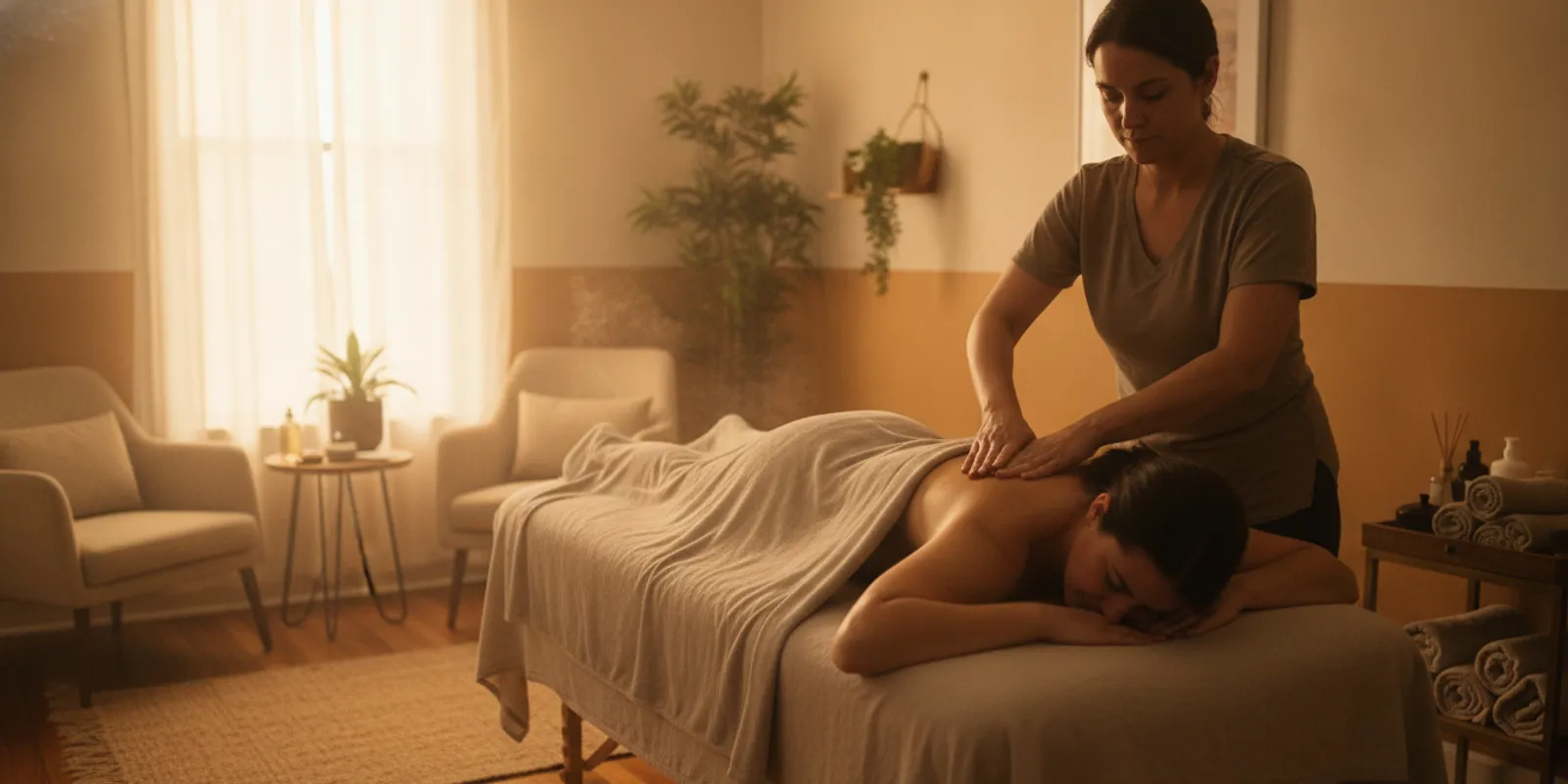
If you are looking into massage for anxiety relief, you may be wondering whether a session can help you feel calmer and whether it is the right kind of support for you. Massage can offer a quiet, structured period of rest and physical comfort, but it is not a guaranteed treatment for anxiety or a substitute for mental health care. Knowing what to expect can help you decide whether to try it and how to make the session feel manageable.
Ready to explore massage for anxiety relief? Book an appointment with NOLA Bliss Massage.
What can massage for anxiety relief realistically do?
Anxiety can affect both thoughts and the body. Some people notice tension in their shoulders or jaw, restlessness, or difficulty settling down. A massage session may give you time away from everyday demands, focused attention to areas of physical tension, and a calm setting in which to rest. Those experiences can feel supportive, but they do not establish that massage treats an anxiety disorder or addresses its causes.
Research has examined massage in relation to anxiety, but the evidence should be read with care. The American Massage Therapy Association summarizes research on massage and mental health; this is background information, not an individual treatment recommendation (AMTA overview of massage research and mental health).
Think of massage as a possible comfort and relaxation practice, not a stand-alone mental health plan. If you are already receiving care, you can ask your clinician whether adding massage makes sense for your circumstances. A massage therapist can discuss the session and adjust the hands-on work, but should not diagnose anxiety or advise you to stop prescribed care.
If you are comparing massage styles for general stress, the guide to massage for stress relief covers that broader choice. This article stays focused on anxiety-related comfort, communication, and realistic limits.
How might a session feel different when you are anxious?
There is no single anxiety response. One person may welcome quiet and stillness; another may feel uneasy being in a room with a new person or lying face down. Being touched can also bring up discomfort, memories, or a sense of vulnerability. These are valid reasons to ask questions, set limits, change position, or decide not to continue.
A useful session is not one where you force yourself to relax. It is one where you can communicate and retain choice. You can ask what areas will be worked on, request less pressure, ask about clothing and draping expectations, or ask to pause. You do not need to explain personal history or disclose more than is relevant to your comfort and safety.
If the studio environment itself is a concern, ask about practical details in advance. NOLA Bliss Massage is an appointment-only therapeutic massage studio in Downtown New Orleans. Its about page offers more background on the studio. You can also review the massage services page before deciding whether to book.
Which massage approach may feel comfortable?
Pressure and technique matter, but they are not a test of how much you can tolerate. A gentle, steady approach may feel more comfortable to someone who wants quiet relaxation. Another person may prefer focused work on a specific area of muscle tension. The best starting point is the pressure and pace that feel acceptable to you, not the most intense option.
| Approach to discuss | What to consider |
|---|---|
| Gentle or relaxation-focused massage | May suit someone who wants a slower pace and lighter, comfort-oriented pressure. |
| Swedish massage | Can be adapted around the areas and pressure you prefer; ask how the session will feel. |
| Focused or deeper-pressure work | Concentrated pressure is not automatically more effective or more relaxing. Start with what feels acceptable. |
| Massage with a companion | A shared appointment may help some people feel more at ease. Ask whether it fits your needs. |
These are conversation starters, not medical recommendations. The massage services page describes available massage options. If you are considering more focused pressure, review the studio’s Ashiatsu massage information and ask about the style before choosing; a stronger technique is not necessarily the best fit when your main goal is to feel calm. Before choosing, consider whether the pressure itself is likely to feel reassuring or demanding, and whether you would prefer work across a broad area or attention to one spot. If you are not sure, ask the therapist to describe the feel of the technique in plain language. You can request a lighter approach or a different service; choosing a style is not a commitment to tolerate discomfort.
Some people prefer to have a trusted person nearby. NOLA Bliss offers couples massage, which may be worth asking about if a shared appointment feels right to you. You can also choose an individual appointment or wait until you feel ready. There is no requirement to book a particular format.
What should you discuss before the appointment?
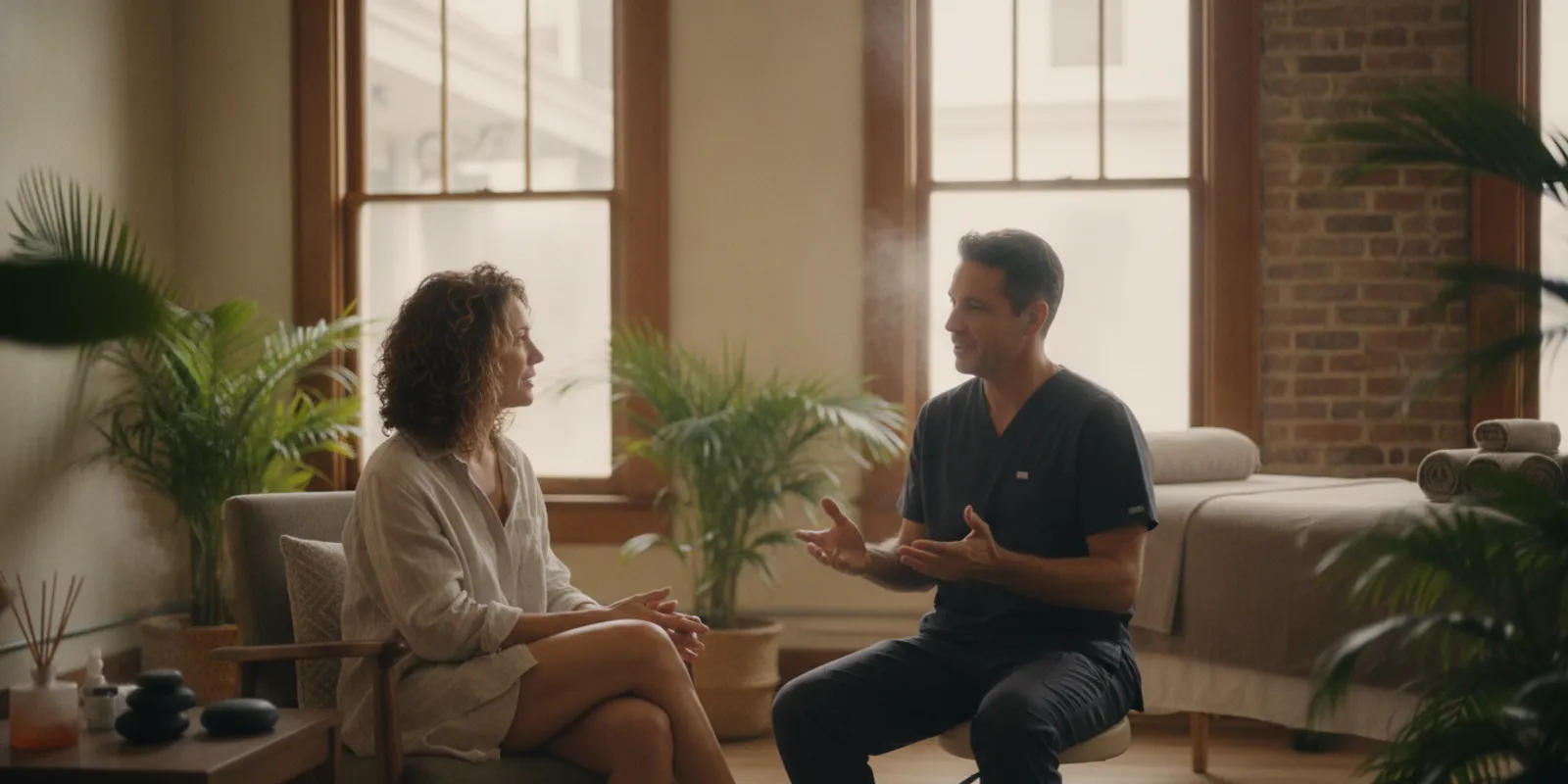
A brief conversation before the session can make expectations clearer. You can keep it simple and share only what will help the therapist work within your boundaries. You do not need to arrive with a perfect explanation of what you are feeling. A simple statement such as “I feel nervous about trying massage” or “I prefer lighter pressure and quiet” gives the therapist useful direction. If speaking face to face feels difficult, consider asking your questions when you contact the studio or writing down a few preferences in advance. You can share more if you choose, but the purpose is to make the session comfortable and safe, not to explain or defend your anxiety. Consider mentioning:
- That you are feeling anxious about the appointment, if you want the therapist to know.
- Any areas you do or do not want touched, and whether there are positions that feel uncomfortable.
- Your preferred pressure, pace, and whether you would like the therapist to check in during the session.
- Any relevant health conditions, recent injury, sensitivity, or other concern that could affect massage. If you are unsure whether massage is appropriate, ask a healthcare professional first.
- Whether you would prefer less conversation, an explanation before each change, or a pause if you raise a concern.
You can also ask about basic logistics, such as how long the appointment lasts, what to expect when you arrive, and how the session is arranged. If getting downtown is part of your stress, check the studio’s information about free parking for downtown appointments before you leave. A little planning may remove avoidable uncertainty, even though it cannot guarantee how you will feel.
How can you make the session feel more manageable?
Give yourself permission to make small adjustments. Before the appointment, choose one or two things that would help you feel more in control, such as knowing how to ask for a pause or starting with lighter pressure. During the session, notice whether your breathing, muscles, or thoughts feel more settled, unchanged, or less comfortable. You do not have to analyze every sensation; simply use what you notice to decide whether you want a change. Afterward, make room for your own response. Some people feel relaxed, some feel no clear difference, and some decide massage is not for them. None of those reactions means you did anything wrong. These practical steps can help you keep control of the experience:
- Choose a realistic goal. Instead of expecting anxiety to disappear, aim for something specific, such as taking a quiet break or easing tension in one area.
- Ask questions before you arrive. Knowing the basic process may reduce uncertainty. Contact the studio if you need clarification about the service or appointment details.
- Arrive with enough time. Rushing can add pressure. Plan travel and parking so you are not trying to make up time at the last minute.
- Start with a comfortable pressure level. You can always ask for a change, but you do not have to start with intense work.
- Use clear, simple requests. “Lighter pressure,” “please avoid that area,” and “I need a pause” are enough. You do not need to apologize for a boundary.
- Notice how you feel afterward. Rest, drink water according to your usual needs, and give yourself time before judging whether the experience was useful. Your response may vary from one visit to another.
If you would rather attend with someone you trust, ask whether a shared appointment is available and whether it fits your needs. If not, you can ask a friend to accompany you to the area or check in with you afterward. Choose the arrangement that gives you a sense of agency.
How can you decide whether the experience was useful?
Try to evaluate the appointment against the modest goal you set, rather than asking whether it “fixed” anxiety. For example, if your goal was a quiet break, you might consider whether the setting felt manageable, whether you could communicate, and whether your body felt more comfortable afterward. If you hoped to ease shoulder tension, notice whether that area feels different without assuming that any short-term change will last. These observations can help you choose what to do next, but they are not a diagnosis or a measure of whether an anxiety condition is improving.
If difficulty sleeping is part of what brings you to massage, you can also read the practical guide to massage for sleep. Sleep concerns and anxiety can overlap, but they are not the same question.
You may find it useful to jot down a few neutral notes after the visit: what felt comfortable, what you would change, and whether you would choose the same pressure or session format again. Keep the notes practical and brief. If the appointment felt overwhelming, you can decide not to repeat it, or ask questions before considering another session. If it felt pleasant but anxiety continues to disrupt your life, treat those as separate facts: you can appreciate a calming experience and still seek mental health support. You are not obligated to continue massage to prove that you gave it a fair chance.
When should you pause or talk with a clinician first?
Massage is not appropriate for every situation, and it should not delay care. Talk with a healthcare professional before booking if you have a health condition or recent injury that could make massage risky, if you are uncertain about physical symptoms, or if a clinician has advised you to avoid particular kinds of bodywork. Be candid about relevant concerns so the session can be considered safely.
If anxiety is persistent, worsening, interfering with work or daily life, or difficult to manage, a mental health professional or healthcare provider can help assess your needs and discuss evidence-based options. The National Institute of Mental Health overview of anxiety disorders explains why professional assessment matters. Massage may be a complement if appropriate, but it is not a replacement for assessment, therapy, or medication prescribed by a clinician.
Seek urgent medical help if you are in immediate danger, may harm yourself or someone else, or have severe or alarming symptoms. A massage appointment is not the right response to a crisis. If you are unsure what level of support you need, contact a qualified healthcare provider or local emergency service.
What questions should you ask before choosing?
Before making an appointment, make sure you understand what you are choosing. Ask whether the session can be adapted to lighter pressure, whether you can request changes at any time, and what happens if you want to stop. You might also ask how much time is spent on the areas you care about and whether the style you are considering involves firm pressure.
Notice how the answers make you feel. Clear, respectful communication matters more than finding a technique with a particular label. You can compare options on the services page, and contact the studio if you need details to make an informed choice. The NOLA Bliss Massage website also provides a starting point for exploring the studio’s offerings.
Ready to choose your next step? Book a NOLA Bliss Massage appointment.
Frequently asked questions about massage and anxiety
Can massage stop an anxiety attack?
Massage is not a dependable way to stop an anxiety attack, and it may not feel comfortable during an episode. If symptoms are severe, new, or frightening, seek appropriate medical support. If you experience recurring episodes, discuss them with a healthcare or mental health professional and plan support for times when they occur.
Should I choose a deep tissue massage for anxiety?
Not necessarily. Deep pressure is not automatically more calming or more effective. If you are unsure, ask about pressure and techniques before booking, and choose an option that allows you to speak up and request changes. A lighter approach may be a more comfortable starting point for some people.
Do I have to talk during the massage?
No. You can tell the therapist whether you prefer quiet or occasional check-ins. You should still speak up about pain, discomfort, pressure, or a need to pause. You are not required to explain why a boundary matters to you.
How often should I book massage for anxiety relief?
There is no schedule that is right for everyone, and massage should not replace care from a qualified clinician.
A regular appointment is not proof that anxiety is improving, just as one session that feels calming does not mean ongoing symptoms no longer need attention. If you are considering repeated sessions, think about whether each visit feels welcome and useful, whether it fits your finances, and whether it supports rather than displaces other care. You can stop or change your plan at any time.
If your anxiety is changing or becoming harder to manage, make a separate appointment with a clinician instead of relying on massage frequency to address it. If you find a session supportive and want to return, consider your comfort, budget, and other care needs, and ask a healthcare professional for guidance when anxiety is affecting your wellbeing.
If massage feels like a supportive option for you, book your appointment with NOLA Bliss Massage.
What is the safest next step?
Massage may offer a restful, body-focused pause for some people, but results and comfort vary. Start with your own boundaries, ask practical questions, and choose gentle support rather than expecting a session to solve anxiety. If you are ready to explore an appointment, contact the studio first or talk with your healthcare professional about whether massage fits your broader care plan.