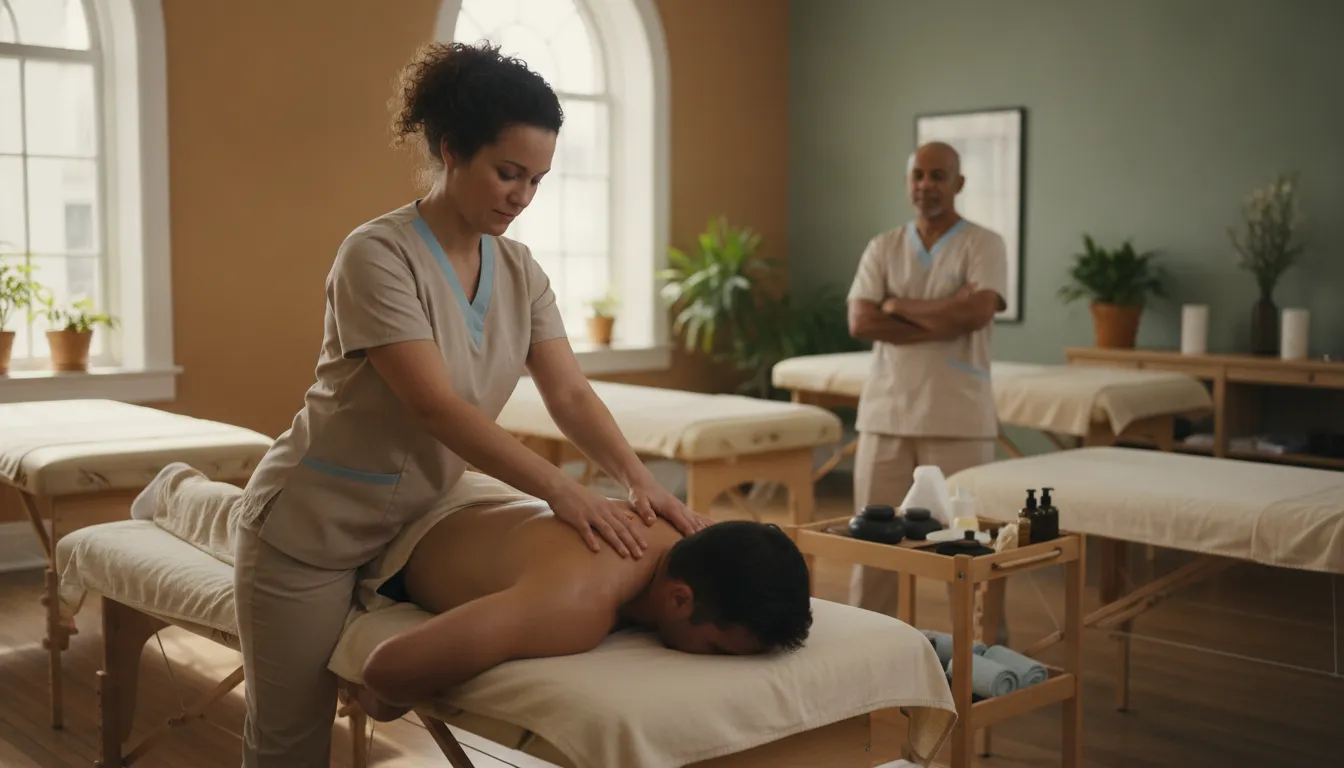
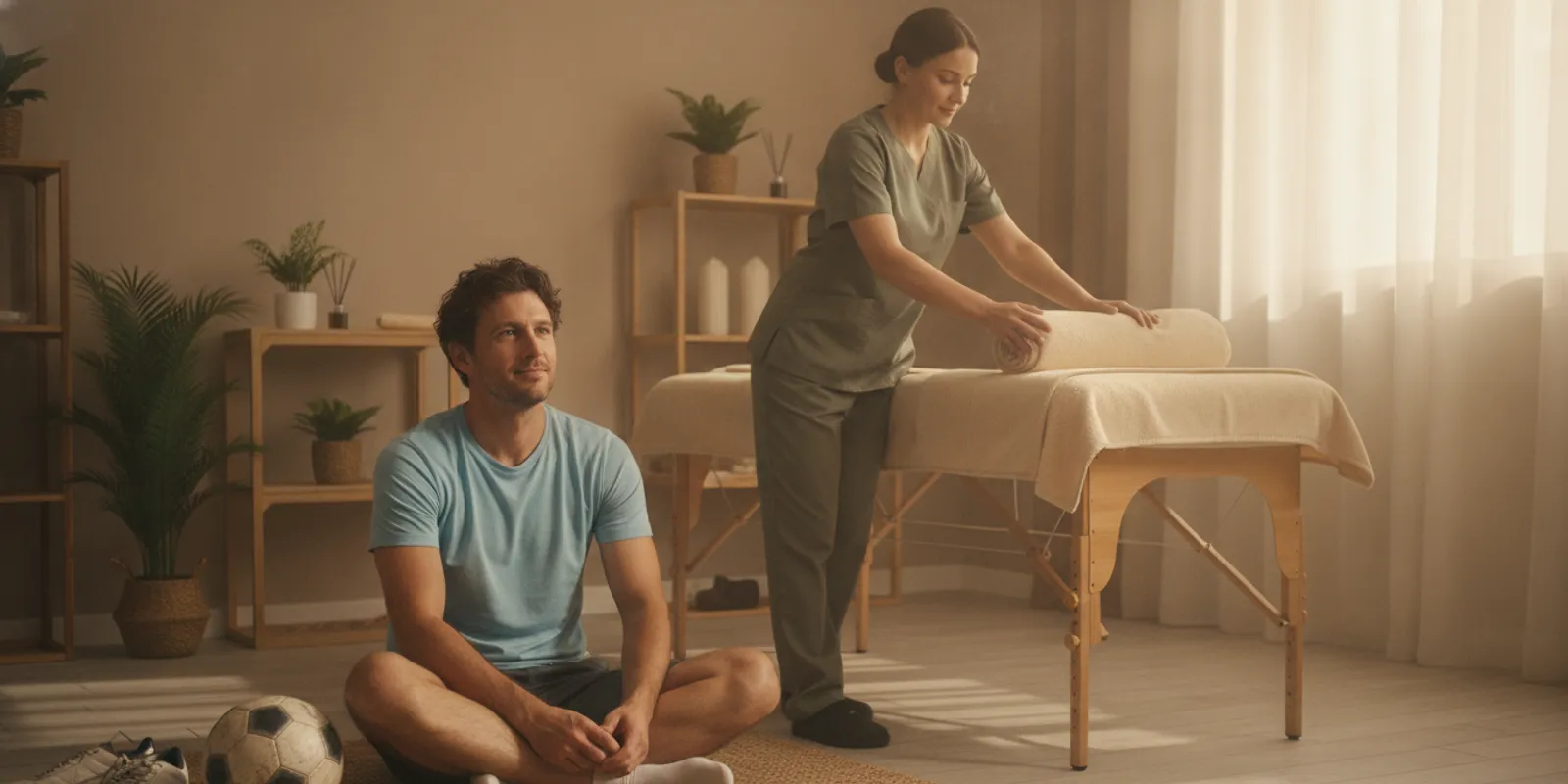
Massage for soccer players can be one part of a thoughtful recovery routine, but it is not a shortcut to fitness or a substitute for treating an injury. Soccer asks players to sprint, stop, turn, kick, and repeat; the right timing and intensity depend on the week’s training load, the player’s response, and whether symptoms suggest something more than ordinary muscle fatigue.
Ask about scheduling a massage
What can massage realistically do for soccer players?
Soccer places varied demands on the body. A match may include bursts of acceleration, deceleration, changes of direction, and long periods of lower-intensity movement. Training adds its own load, especially when practices, strength work, and games are close together. Massage may offer a period of relaxation and help some people feel less muscle tension or soreness. Research reviews discuss sports massage as a possible recovery and preparation tool, while also showing that its effects should not be confused with a guaranteed improvement in performance or injury prevention.
A review in the Journal of Athletic Training describes proposed roles for sports massage in preparation, performance, and rehabilitation, but it does not make massage a replacement for training or clinical care. A review in the Ochsner Journal examines massage after exercise and perceived recovery. Taken together, these sources support a measured expectation: individual responses vary, and a massage can complement, not replace, sleep, appropriate nutrition, hydration, progressive training, and medical evaluation when needed. Read the review of massage in sports performance and rehabilitation and see the review on massage after exercise.
Think of a session as an opportunity to address comfort and relaxation, not as a way to erase a hard week or prepare an injured player to compete. A massage therapist can work with your preferences and comfort level; a physician or other qualified healthcare professional should assess new, persistent, or concerning symptoms. If you are comparing approaches, start with the studio’s overview of massage services in New Orleans and consider which style matches your goals and pressure preferences.
It also helps to separate what you hope to feel from what you need to do next. A player might want to relax after a demanding match, or feel more comfortable before returning to routine training. Neither goal means a therapist can determine whether a muscle, tendon, ligament, or joint is injured. Massage is not a diagnostic test. If your main question is whether you can safely play, get guidance from an appropriate healthcare professional rather than using how a session feels as a return-to-play decision.
How should massage fit into a soccer training cycle?
Plan around the whole training week rather than treating every game or practice the same. The closer you are to a demanding session, the more important it is to be clear about your goal. A lighter, familiar session may feel different from deeper work, and trying an unfamiliar approach immediately before a match leaves little time to learn how your body responds.
| When in the cycle | Possible goal | Practical planning point |
|---|---|---|
| Several days before a match | Address general tension and make room for rest | Choose a time that leaves a buffer before high-intensity training; keep the pressure comfortable. |
| The day before or match day | Relaxation, if massage is already familiar and feels helpful | Avoid experimenting with a new technique or unusually intense pressure. Massage is not a performance guarantee. |
| After a match or hard practice | Settle down and support a broader recovery routine | Consider how tired or sore you feel. Gentle work may suit some people; skip massage over a suspected injury. |
| During a lighter training period | Explore longer-term comfort and muscle tension patterns | Use the time to communicate what feels useful and assess how you respond before returning to a heavy week. |
The table is a planning framework, not a medical protocol. The massage approach, session timing, and pressure should be adjusted to the person and the demands of the week. An American Massage Therapy Association article on event-day sports massage also discusses how massage plans may differ around competition; its context is useful for thinking about timing, not a promise that a session will change results. Explore the AMTA discussion of event-day sports massage.
To make the framework practical, sketch your next seven days before you choose a time. Mark matches, demanding practices, strength sessions, travel, and rest days. Then consider how you typically feel after each type of activity. If a session is new to you, avoid placing it immediately before the event you care most about. If you already know that a comfortable massage helps you relax, you can still keep the goal modest and leave room to respond to how your body feels.
For example, a player with a match Saturday and a light recovery day Sunday may prefer to discuss an appointment early in the following week, when there is more time to notice the response. A player with two matches in four days may decide that extra rest and familiar recovery habits are the priority. These are planning examples, not universal prescriptions; the right choice depends on the schedule, personal preference, and whether any symptoms need clinical attention first.
In a build-up or heavy training block
During a period of rising workload, pay attention to cumulative fatigue. A player might schedule massage on a lighter day, or after the most intense field work, rather than placing an unfamiliar or uncomfortable session right before sprinting and cutting. Tell the therapist what training is coming up and what feels tired. If a movement consistently causes sharp or worsening pain, that is not a cue to ask for harder pressure; it is a reason to stop and consider medical advice.
It can help to note patterns for a week or two. Write down which sessions leave you generally tired, where you feel broad muscle soreness, and whether that sensation settles with rest. This simple record can make your conversation more specific: “Both legs feel generally heavy the morning after practice” is different from “one point in my thigh hurts every time I accelerate.” The record does not diagnose a problem, but it can help you describe its timing and trend.
Between matches
With a short turnaround, keep the purpose modest. Some players prefer a gentle session for relaxation, while others would rather prioritize rest and familiar recovery habits. Do not assume that a more intense massage is more effective. If a session leaves you unusually sore or changes how you move, allow time to recover and reconsider timing or pressure next time.
Consider the whole turnaround, not just the calendar gap. Long travel, limited sleep, a hard practice between fixtures, and the length of time spent playing all influence how ready you feel. A massage appointment should not crowd out sleep or create another obligation when rest is what you need. If you are unsure, a conservative choice is to defer an unfamiliar session until the schedule is less demanding.
In the off-season or a lighter week
A reduced-load period can make it easier to try a different massage approach, because there is less pressure to perform the next day. Start by describing your activity level, any areas of concern, and the amount of pressure that feels acceptable. For a general explanation of a deeper-pressure option, see NOLA Bliss’s deep tissue massage information; deeper pressure is a preference, not a requirement for sports recovery.
Which areas may need attention after soccer?
Players often notice general tightness after repeated running, kicking, and directional changes. Depending on the person, they may ask about calves, thighs, glutes, hips, or the back. That list is not a diagnosis: soreness in one of these areas does not identify its cause, and discomfort around a joint or bone should not automatically be treated as ordinary muscle tension.
- Calves: Running and repeated push-offs can leave the lower legs feeling tired. Report cramping, marked swelling, or localized pain rather than asking a therapist to work through it.
- Thighs and glutes: Sprinting, kicking, and changes of pace can make these muscles feel worked. Explain whether the feeling is broad post-exercise soreness or a sudden, specific pain.
- Hips and groin: Cutting and kicking load the area, but new groin pain, weakness, or limited movement deserves caution. Massage should not be used to rule out a strain or other injury.
- Back and neck: These areas can feel tense for many reasons, including daily posture and training. NOLA Bliss has a general guide to back and neck massage; persistent pain, numbness, or symptoms after a collision call for clinical assessment.
Where a player feels tired can vary with the role, session, and individual movement habits, so avoid treating a position as a checklist for massage. A goalkeeper, for example, may describe a different set of demands after repeated dives than a field player describes after sustained running. Even within a position, the same player’s needs can change from week to week. Use the conversation to identify what you actually feel rather than assuming a standard routine will suit every soccer player.
Be specific when describing what you feel. “My left calf feels generally tired after practice” gives a different picture from “I felt a pop, and now I cannot push off.” Tell the therapist where the sensation is, when it began, what movement changes it, and whether it is improving or worsening. Share relevant injuries, recent procedures, health conditions, or medication concerns so the therapist can determine whether adapting or postponing the session is appropriate.
Pressure is also personal. You can ask for lighter work, ask the therapist to stop, or decline work on an area. A comfortable session should not require you to brace, hold your breath, or tolerate sharp pain. If a particular style is of interest, NOLA Bliss provides information about Ashiatsu massage; technique choice should reflect comfort, goals, and suitability rather than the assumption that the strongest pressure is best.
There is no need to arrive with a precise anatomical label or a proposed treatment plan. Plain-language details are useful: point to the area, say whether the feeling is broad or pinpointed, explain what movement brings it on, and mention whether it began suddenly or gradually. If you are not sure whether you should receive massage, explain that uncertainty before the appointment. A therapist can discuss whether to adapt or defer a session, while a clinician is the right person to assess a suspected injury.
When should you seek medical assessment instead of massage?
Massage is not the right first response to every ache. Stop activity and seek prompt medical attention for serious symptoms such as inability to bear weight, substantial swelling, a visible deformity, severe or rapidly worsening pain, or a suspected fracture. After a head impact, confusion, fainting, severe headache, vomiting, or other concerning symptoms require urgent medical evaluation. Follow local emergency guidance when symptoms are severe.
Arrange assessment by an appropriate healthcare professional for pain that is sharp, persistent, recurring, worsening, or limiting normal movement; for a sudden injury with a pop or loss of function; or for numbness, tingling, unexplained weakness, unusual warmth or redness, or symptoms that do not settle as expected. This list is not exhaustive. A clinician can evaluate the cause and advise whether massage is appropriate, and when it is safe to return to training.
In particular, do not use massage as a way to test whether an injury has healed or to quiet pain long enough to play. Symptoms can fluctuate, and temporarily feeling looser does not establish that tissue is ready for sprinting, tackling, or cutting. Return-to-sport decisions should be based on suitable clinical guidance and the player’s recovery, not on whether pressure feels tolerable during a massage.
A collision or fall can also produce symptoms that are not obvious immediately. If you notice worsening pain, swelling, reduced range of motion, or difficulty using a limb after the session or later that day, pause training and seek advice rather than trying to solve it with a second appointment. When symptoms feel urgent or severe, use emergency services. For less urgent but persistent concerns, contact a qualified healthcare professional who can examine you.
Avoid massage over a suspected acute injury, open wound, or area of unexplained swelling until you have been advised it is safe. Do not use a session to mask pain so that you can play. If you have a diagnosed condition, a recent operation, or a specific concern about whether massage is suitable, ask your treating clinician and tell the massage therapist before the session. The studio’s about page offers information about NOLA Bliss and its therapeutic massage focus; it does not replace individualized medical advice.
How can you get more from a massage appointment?
A useful appointment starts with a clear, realistic goal. You might say that your legs feel generally tight after two practices, that you have a match tomorrow, or that you would like a relaxing session without intense pressure. The therapist can discuss what is feasible and you can agree on areas and pressure. If pain becomes sharp or uncomfortable during the session, speak up immediately.
- Share the week’s schedule. Mention recent matches, hard training, and the next session or game, especially if it is soon.
- Describe sensations accurately. Distinguish broad muscle tiredness from a sudden injury, localized pain, tingling, or weakness.
- Set a pressure boundary. Explain what feels comfortable and remember that you can request a change at any point.
- Allow time to notice your response. Do not schedule an unfamiliar, intense session immediately before an important game.
- Keep other recovery basics in view. Massage does not replace adequate rest, sensible workload progression, or professional assessment when symptoms warrant it.
You can make the conversation easier by preparing a short recap: what you did recently, what is coming up, what area you want to discuss, and what kind of pressure you prefer. If there is a specific painful movement, explain it rather than asking the therapist to recreate it. The goal is to give enough context for a comfortable, appropriate session, not to persuade someone to work through a symptom that should first be assessed.
For practical details about the studio and arranging an appointment, visit the NOLA Bliss contact page. If you are coming from a practice or staying downtown, review free parking information before your visit. NOLA Bliss is an appointment-based therapeutic massage studio in the Warehouse District; confirm current availability directly rather than assuming a last-minute time is open. You can also review the NOLA Bliss website for a general introduction to the studio.
Contact NOLA Bliss to discuss an appointment
Frequently asked questions about massage for soccer players
Should I get a massage the day before a soccer match?
It depends on your experience and the type of session. If you already know that a gentle massage feels comfortable, you may choose it for relaxation. Avoid testing a new technique or unusually intense pressure immediately before a match, and do not expect massage to guarantee better performance.
Is deep tissue massage better for soccer recovery?
Not necessarily. More pressure is not automatically more effective, and pressure should never be painful or used to work through an injury. Explain your goal and comfort level, and choose an approach that fits rather than assuming deeper is always better.
Can massage prevent soccer injuries?
No massage session can promise injury prevention. Appropriate conditioning, gradual training progression, rest, and attention to symptoms matter. Massage may be one optional part of a recovery routine, but it does not replace those measures or medical care.
Is it okay to get a massage when I am sore?
General post-exercise soreness is different from sharp pain, swelling, loss of function, or a sudden injury. If symptoms are significant, worsening, or unclear, seek medical guidance before booking. Tell the therapist about any soreness and ask for an approach that stays comfortable.
What should I do if a massage makes pain worse?
Stop the session or ask for a change if pain becomes sharp or uncomfortable. If symptoms persist, worsen, or interfere with movement, consult a healthcare professional rather than scheduling more intense work.
What is a sensible next step?
Build massage around your actual training calendar, choose a comfortable approach, and keep expectations realistic. If you have a possible injury or unexplained symptoms, get medical advice first; if your goal is general relaxation or muscle comfort, discuss your schedule and preferences with a massage therapist before you book.