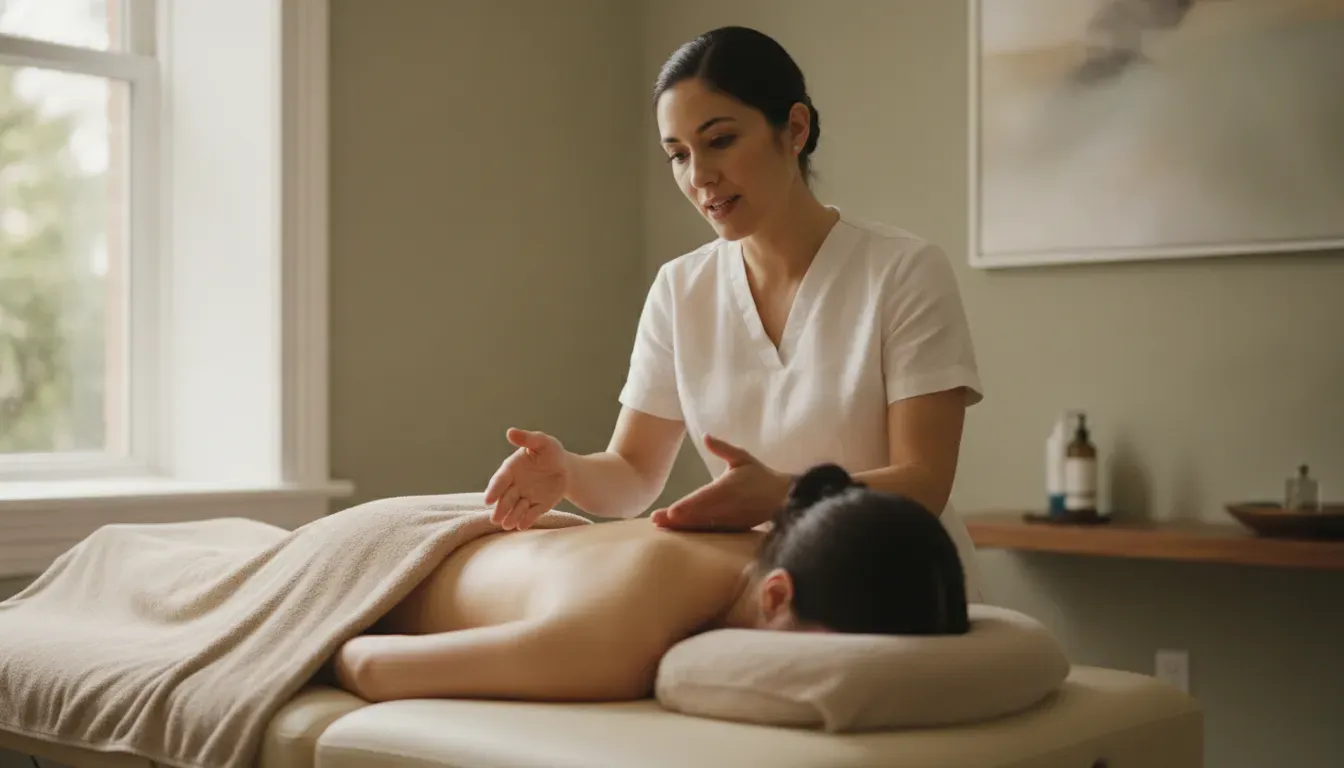

Back pain during pregnancy is rarely just about your back. The discomfort often creates a frustrating cycle, leading to stress, anxiety, and sleepless nights, which in turn can make the pain feel even worse. Finding true relief means addressing more than just the physical symptoms. You need a solution that calms your nervous system, eases muscle tension, and helps you get the restorative sleep your body craves. This is where the holistic benefits of a professional pregnancy massage for back pain truly shine. We’ll explore how this therapeutic practice works to soothe your body and mind, helping you break the pain-stress cycle and feel more balanced and comfortable.
Key Takeaways
- Massage directly counteracts pregnancy-related strain: Your back hurts due to hormonal changes, weight gain, and a shifting posture. Prenatal massage provides targeted relief by soothing overworked muscles, improving circulation, and prompting your body to release natural, pain-relieving endorphins.
- Prioritize safety with professional guidance: Before booking a massage, get approval from your doctor. It is also essential to choose a therapist certified in prenatal care, as they have the expertise to position you safely and use appropriate techniques for every stage of your pregnancy.
- Make massage a regular part of your routine: Once you’re in the second trimester, consistent massage can significantly reduce pain and improve sleep. Whether you go monthly or weekly, each session is customized with supportive pillows and gentle techniques to meet your body’s changing needs.
Why Does Your Back Hurt During Pregnancy?
If you’re dealing with a nagging ache in your back, you are far from alone. Back pain is one of the most common complaints during pregnancy, but that doesn’t mean you just have to live with it. Understanding what’s causing the discomfort is the first step toward finding relief. Your body is going through an incredible transformation, and most of the strain comes down to three key factors: hormonal shifts, natural weight gain, and a new center of gravity. Knowing how these changes affect your body can help you find the right support, including specialized prenatal massage designed to ease this specific type of discomfort.
How Hormones and Ligaments Play a Role
Early in your pregnancy, your body starts producing a hormone called relaxin. Its job is to loosen the ligaments and joints in your pelvic area to prepare your body for childbirth. While this is essential for delivery, it can also affect the ligaments that support your spine. As these supportive tissues become more lax, your lower back and pelvic joints can become less stable. This instability means your back muscles have to work much harder to support your posture and carry the extra weight, which often leads to muscle fatigue, strain, and soreness.
Adjusting to Weight Gain and New Posture
Lower back pain is incredibly common, affecting a majority of expectant mothers. As your baby grows, your body naturally gains weight to support the pregnancy. Most of this weight is concentrated in your abdomen, which puts additional pressure on your lower back muscles and spine. To compensate for the forward pull of your growing belly, you might find yourself unconsciously arching your lower back and leaning back slightly. This change in posture, while a natural adjustment, can significantly strain your back muscles and contribute to persistent aches and pains.
Your Changing Center of Gravity
As your pregnancy progresses, the weight of your growing baby shifts your body’s center of gravity forward. To keep your balance and avoid tipping over, your body instinctively adjusts your posture. You’ll likely find yourself leaning back, which increases the curve in your lower spine and tightens your back muscles. This constant compensation places a heavy load on your back, as your muscles work overtime to keep you upright and stable. This shift is gradual, but the cumulative effect can lead to significant strain, fatigue, and discomfort in your lower back.
How Pregnancy Massage Eases Back Pain
When you’re dealing with the persistent ache of pregnancy back pain, you want relief that is both effective and safe for you and your baby. A professional prenatal massage is one of the best ways to find that comfort. It works by addressing the root causes of your discomfort on multiple levels, from tight muscles to the stress that keeps you up at night. By using specialized techniques, a trained therapist can help your body relax, heal, and adapt to the incredible changes it’s going through. Let’s look at exactly how massage provides this much-needed relief.
Release Muscle Tension and Improve Circulation
During pregnancy, your lower back and hip muscles work overtime to support your growing belly, often becoming tight and strained. Prenatal massage directly targets these overworked muscles, gently encouraging them to relax and release built-up tension. This process also improves circulation throughout your body. Better blood flow delivers more oxygen and nutrients to your muscles and tissues, which helps reduce inflammation and soreness. It can also help minimize swelling in your legs and feet, another common pregnancy symptom. This combination of muscle release and enhanced circulation provides immediate relief and supports your body’s overall well-being.
Produce Natural, Pain-Relieving Endorphins
One of the most amazing benefits of massage is its ability to work with your body’s own chemistry. The simple power of therapeutic touch prompts your brain to release endorphins, which are natural chemicals that act as the body’s painkillers. These endorphins create a sense of well-being and can significantly decrease your perception of pain. Studies have shown that regular massage can lower back pain, leg pain, and anxiety in pregnant women. Tapping into this natural pain-management system is a wonderful, drug-free way to feel better both physically and emotionally during your pregnancy.
Reduce Stress for Better Sleep
Back pain and stress often go hand in hand, creating a frustrating cycle that can make getting a good night’s sleep feel impossible. When you’re in pain, your body produces more cortisol, the stress hormone, which can make you feel anxious and on edge. A soothing prenatal massage helps calm your nervous system, lowering cortisol levels and promoting deep relaxation. By easing both physical discomfort and mental stress, massage sets the stage for more restful sleep. Waking up feeling refreshed can improve your mood and give you the energy you need to enjoy this special time.
Is Prenatal Massage Safe? What You Need to Know
It’s completely normal to have questions about what’s safe for you and your baby during pregnancy. The great news is that prenatal massage is not only considered safe but is also highly recommended by medical professionals for its many benefits. The key is to work with a licensed therapist who has specialized training in prenatal care and to keep an open line of communication with your doctor.
When performed correctly, massage can be a wonderful way to manage the aches and pains that come with carrying a child. A certified therapist understands the changes your body is going through. They know which areas to focus on, which to avoid, and how to position you safely and comfortably at every stage of your pregnancy. Taking a few simple precautions ensures your massage experience is relaxing, therapeutic, and perfectly safe.
When to Postpone Your Massage
While massage is safe for most pregnancies, there are certain situations where it’s best to wait. Your health and your baby’s health are the top priorities. You should postpone your massage appointment if you are experiencing conditions like preeclampsia, placenta previa, severe or unexplained swelling, or deep vein thrombosis (DVT). It’s also wise to hold off if you’ve had any recent vaginal bleeding. A professional massage therapist will always conduct a thorough intake to screen for these issues, but it’s important for you to be aware of them, too. They will also know to use gentle pressure on your legs and to completely avoid firm massage on your belly.
Getting Your Doctor’s Go-Ahead
Before you book your first prenatal massage, it’s always a good idea to have a quick chat with your doctor or midwife. This is especially important if you have a high-risk pregnancy or any other underlying health concerns. Your healthcare provider knows your medical history best and can give you personalized advice and peace of mind. Think of it as a team effort. When your doctor, your massage therapist, and you are all on the same page, you can relax knowing you’re in good hands. This simple step ensures your massage therapist can tailor the session specifically to your needs.
Debunking Common Prenatal Massage Myths
You may have heard some conflicting information about prenatal massage, so let’s clear a few things up. One common myth is that massage isn’t safe during the first trimester. The truth is, a massage from a properly trained therapist is safe throughout your entire pregnancy. A certified professional understands how to adjust their techniques for each trimester. Another misconception is that massage could somehow harm the baby. In reality, the opposite is true. When you are relaxed and your stress levels are low, it creates a healthier environment for your baby to grow. The therapeutic touch is gentle and focused on your muscles, not the baby.
What to Expect from a Professional Prenatal Massage
If you’ve never had a prenatal massage, it’s natural to wonder what the experience will be like. A professional session is all about ensuring your safety and comfort while addressing those pregnancy-related aches and pains. Your therapist will start with a detailed conversation about your health, your pregnancy, and any specific areas of discomfort you’re feeling. This isn’t a one-size-fits-all service; the entire massage is tailored to your body’s unique needs. From the techniques they use to the way you’re positioned on the table, every detail is designed to provide relief and relaxation for you and your baby.
Gentle Relief with Swedish Massage
The foundation of most prenatal massages is the Swedish massage technique. Think long, gliding strokes and gentle kneading designed to soothe sore muscles and calm your nervous system. This approach is perfect for pregnancy because it eases muscle tension without deep pressure. It’s a safe way to find relief from lower back pain, reduce stress, and improve circulation. The CDC even suggests massage before trying prescription pain medicines. A gentle Swedish massage can relax those tight back muscles and help you get the restful sleep you need.
Targeting Deep Tension with Myofascial Release
While prenatal massage is gentle, it can still address deep-seated tension. For those stubborn knots in your lower back or hips, your therapist may use techniques like myofascial release. This method focuses on stretching and loosening the fascia, the connective tissue that surrounds your muscles. By applying slow, sustained pressure, the therapist can release tightness that contributes to chronic pain. It’s a highly effective way to target deep tissue tension without the intensity of a traditional deep tissue massage, making it a safe and valuable tool for managing pregnancy-related back pain.
Staying Comfortable with Pillows and Bolsters
Forget lying on your stomach or flat on your back. During a prenatal massage, your comfort is paramount. The standard and safest position is lying on your side, supported by a strategic arrangement of pillows and bolsters. This setup supports your growing belly and keeps your spine in a neutral, comfortable alignment. A pillow between your knees also helps take pressure off your hips and lower back. This carefully cushioned position allows you to fully relax while giving your therapist easy access to the muscles in your back, neck, and shoulders that need the most attention.
Important Areas Your Therapist Will Avoid
A certified prenatal massage therapist is an expert in pregnancy anatomy and knows exactly which areas and techniques to avoid. They will never perform deep abdominal massage or use aggressive techniques that could affect circulation, especially for clients with certain health conditions in their third trimester. They are also trained to avoid specific pressure points on the ankles and wrists that are believed to be connected to uterine contractions. This specialized knowledge is why it’s so important to see a professional. You can relax completely, knowing you are in safe, experienced hands that prioritize the well-being of you and your baby.
Try These At-Home and Partner Massage Techniques
While a professional massage is ideal, you don’t have to wait for your next appointment. These simple at-home and partner techniques can make a world of difference for an aching back. They are perfect for easing tension between your prenatal massage sessions and managing discomfort on your own terms.
Quick Self-Massage for Instant Relief
For moments when you need immediate relief, a quick self-massage works wonders. While sitting or standing, reach one hand behind you to the opposite side of your lower back. Use your palm to apply long, gentle strokes from your mid-back down toward your tailbone. The key is light, soothing pressure. This isn’t about working out deep knots, but encouraging muscles to relax and easing surface tension. Listen to your body and do what feels good.
Partner Massage 101: Tips for Success
A partner massage is a great way to connect and ease pregnancy pains. Communication is everything; your partner should always ask how the pressure feels. It’s best to avoid deep pressure on the back during pregnancy. Have the expecting mom sit backward in a chair, leaning on a pillow for support. The partner can use their palms to gently rub the lower back. For deeper relaxation, try breathing in sync. It makes a difference.
Simple Tennis Ball Techniques
When your hands get tired, tennis balls can be a lifesaver. Place two inside a long sock and tie a knot to keep them together. This simple tool is perfect for targeting sore spots. Stand with your back against a wall, placing the tennis balls at your lower back. Gently bend your knees to roll the balls up and down, applying steady pressure to the muscles on either side of your spine. You control the intensity to find the perfect amount of pressure.
How to Do Hip Squeezes and Sacrum Pressure
Two effective techniques a partner can perform are hip squeezes and sacral pressure. For a hip squeeze, have the pregnant person stand and lean forward. The partner places their hands on her hips and gently squeezes inward for 30 seconds to relieve pelvic tension. For sacral pressure, locate the sacrum (the flat bone at the base of the spine). The partner uses their palm to apply gentle, steady pressure directly to this area to counteract back pain.
When Is the Best Time to Get a Prenatal Massage?
Timing is everything, and that’s especially true when it comes to prenatal massage. While a massage can be a wonderful way to find relief during pregnancy, knowing when to schedule your appointments can help you get the most out of the experience safely. The ideal time depends on where you are in your pregnancy journey, as your body’s needs change with each trimester. It’s always best to have a conversation with your doctor before booking, but here’s a general guide to help you plan.
What to Know About the First Trimester
The first trimester is a time of rapid development for your baby, and it’s also when the risk of miscarriage is highest. Because of this, many massage therapists are cautious about performing massages during the first 12 weeks. While there’s no evidence that a gentle massage causes problems, most practitioners, including our team, prefer to err on the side of caution. We always recommend getting your doctor’s approval before scheduling a massage during this time. Once you have the green light, we can proceed with techniques that are safe for you and your baby.
Adapting Massage for the Second and Third Trimesters
Once you enter the second trimester, it’s a great time to make massage a regular part of your routine. Your body is adjusting to carrying more weight, which often leads to backaches and sore hips. A professional prenatal massage is one of the safest and most effective ways to manage this discomfort. We adapt every session to your changing body, using comfortable side-lying positions with plenty of pillows for support. Gentle Swedish massage strokes are used to soothe sore muscles, improve circulation, and give you some much-needed relaxation as you move closer to your due date.
How Often Should You Get a Massage?
How often you get a massage is entirely up to you, your budget, and how your body feels. Some expecting mothers find that a monthly massage is perfect for managing general aches and stress. Others, especially those in the third trimester dealing with significant back or hip pain, might benefit from sessions every week or two. Regular massage helps keep your muscles flexible and can lead to better sleep and less anxiety. The key is to listen to your body. Consistent sessions can make a big difference in your overall comfort throughout your pregnancy.
When to Call a Professional
While at-home massage can provide wonderful, temporary relief, nothing compares to the skill and knowledge of a professional massage therapist. When you’re pregnant, your body has unique needs, and working with someone who understands them is crucial for both your safety and comfort. A professional can identify the root cause of your back pain and use specialized techniques to provide lasting relief. They create a secure, relaxing environment where you can truly let go, knowing you’re in expert hands. Think of it as an essential part of your prenatal self-care routine, not just a luxury.
Red Flags: When to Call Your Doctor
Your safety and your baby’s safety always come first. While prenatal massage is generally very safe, there are certain situations where it’s best to hold off. It’s important to get clearance from your doctor before booking a massage, especially if you have a high-risk pregnancy. Key contraindications include conditions like preeclampsia, placenta previa, deep-vein thrombosis, or any recent unexplained swelling or bleeding. If you experience any of these symptoms, please contact your doctor immediately. A professional massage therapist will always ask about your health history to ensure a massage is appropriate for you, so being open and honest is key to a safe and relaxing session.
Why a Certified Prenatal Therapist Matters
Not all massage therapists are trained to work with pregnant clients. A certified prenatal massage therapist has advanced training in how to safely address the aches and pains of pregnancy. They understand how to position you comfortably with pillows and bolsters to support your growing belly and take pressure off your lower back. They also know which techniques and pressure levels are safe and which areas of the body to avoid. This specialized knowledge ensures you get all the benefits of a prenatal massage without any of the risks. It’s the difference between a good massage and a truly therapeutic, worry-free experience.
How to Find the Right Massage Therapist
When looking for a therapist, don’t be shy about asking questions. Your comfort and peace of mind are what matter most. Ask the studio if their therapists are certified in prenatal massage and how much experience they have working with expectant mothers. A reputable studio will be happy to share this information with you. You want to find a therapist who listens to your needs and makes you feel completely at ease. At Nola Bliss, our dedicated team includes highly experienced therapists who are passionate about providing safe and effective care throughout your pregnancy journey.
Related Articles
Frequently Asked Questions
How is a prenatal massage different from a regular massage? A prenatal massage is tailored specifically to the needs of an expecting mother. The biggest differences are positioning and technique. Instead of lying on your stomach, you’ll be comfortably supported on your side with pillows and bolsters. A certified therapist also uses modified techniques, like gentle Swedish strokes, and avoids deep pressure on certain areas, such as your abdomen and legs, to ensure the entire experience is safe and relaxing for you and your baby.
Is it really safe to get a massage during the first trimester? While a gentle massage from a trained professional is considered safe at any stage, many therapists and doctors recommend waiting until the second trimester to be extra cautious. The most important thing you can do is talk to your doctor first. Once you have their approval, a therapist with prenatal certification can provide a safe and soothing massage, but that doctor’s note is key for everyone’s peace of mind.
What if I have a high-risk pregnancy? Can I still get a massage? This is a question only your doctor or midwife can answer. Your safety is the top priority, so you must get their clearance before booking an appointment. If they give you the green light, be sure to communicate all the details to your massage therapist. A certified professional will know how to adapt the session to your specific needs, but they will always require your doctor’s approval first.
Will I have to lie on my side for the entire massage? Yes, lying on your side is the standard and safest position for a prenatal massage, especially after the first trimester. It might sound limiting, but a skilled therapist uses a system of pillows and cushions to support your belly, back, and legs so you feel completely weightless and comfortable. This position takes all the pressure off your lower back and allows the therapist to effectively work on your sore muscles.
How often should I schedule a prenatal massage? The best frequency really depends on how you feel and what your budget allows. Many women find a monthly massage is perfect for managing general aches and stress. However, as you get into the third trimester, you might find that more frequent sessions, perhaps every one or two weeks, provide more consistent relief from back pain and help you sleep better. The key is to listen to your body.