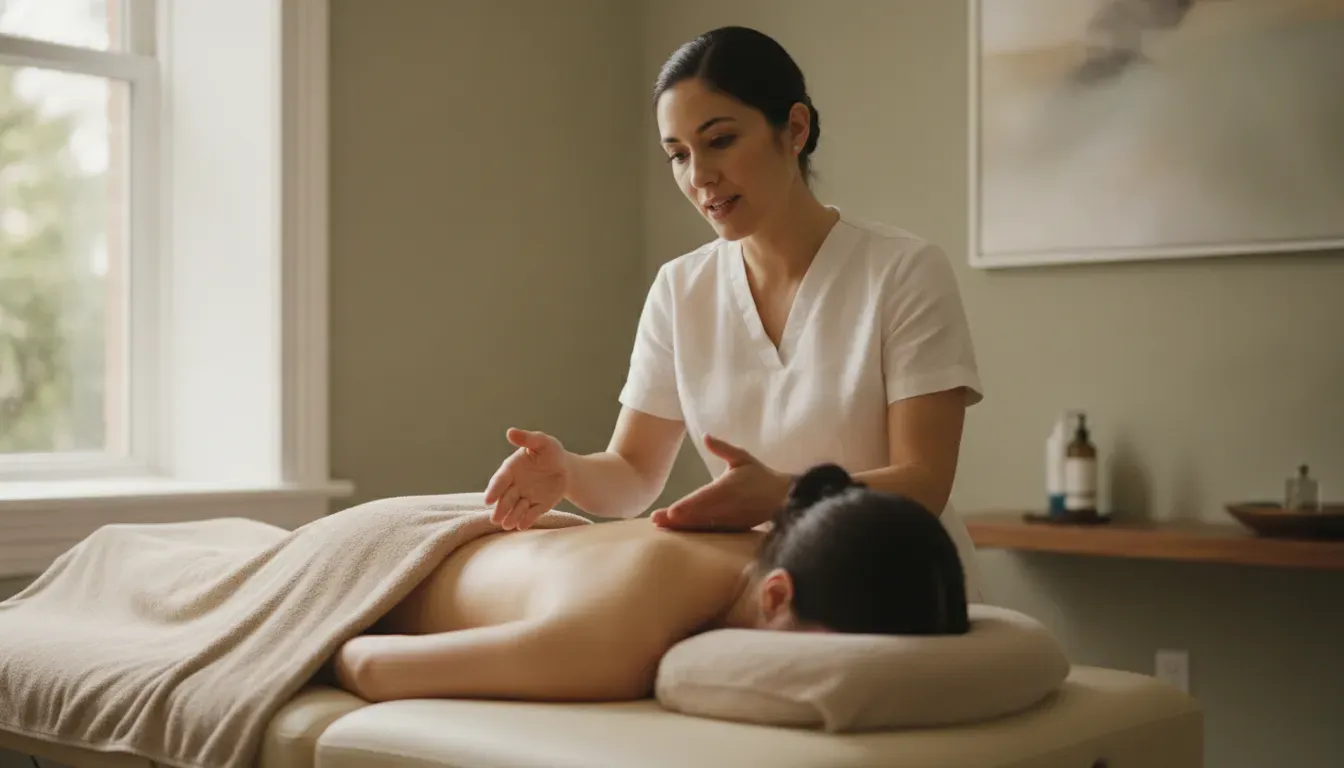
Heated stones can make tight muscles more receptive before deeper massage work begins. The steady warmth suits clients who want relaxation without relying on intense pressure.
Add a Himalayan Salt Stone Enhancement to Your Next Massage
What is a hot stone massage? It is a therapeutic session in which a massage therapist places heated stones on the body and uses them as massage tools. The warmth helps muscles relax, making this treatment appealing for clients who want soothing heat, relief from stubborn tension, or less intense pressure. Research describes heated-stone massage as using warmth to stimulate muscles and ligaments before massage for relaxation and potential relief from chronic musculoskeletal pain. Results vary by person. At NOLA Bliss, the related option is a Himalayan Salt Stone Massage enhancement, which adds warm, mineral-rich pink salt stones to any massage.
Before choosing an enhancement, it helps to understand the treatment behind the warmth. We will start with “What is a hot stone massage?” then explain who may enjoy it and where NOLA Bliss’s Himalayan salt stones fit. The path begins with
What is a hot stone massage?
Hot stone massage is a hands-on massage that adds smooth, heated stones to the session. Instead of relying on hands alone, the therapist uses steady warmth alongside familiar massage strokes. The heat is meant to support relaxation and ease muscle tension.
How the stones are used
Smooth heated stones are the main feature of the session. Their rounded surfaces allow broad, even contact without sharp edges pressing against the skin. Before contact, the therapist checks each stone and makes sure its warmth feels comfortable.
Some stones may rest on selected areas of the body for a short time. In this placement method, the stones provide still, focused warmth while the therapist works elsewhere. They are not simply left in place for the full massage.
The therapist may also hold a stone and glide it over the muscles as a massage tool. This method combines pressure, movement, and heat in the same stroke. A published study on heat-stone massage describes using heated stones to stimulate muscles and ligaments before massage for relaxation.
Traditional hot stone and Himalayan salt stone
Traditional hot stone massage often refers to a session built around smooth heated stones. A Himalayan salt stone session uses shaped salt stones instead. Both approaches add warmth, but the stone material and the feel against the skin differ.
At NOLA Bliss, Himalayan salt stones are offered as an enhancement that can be added to a massage. They are not presented as a standard hot stone session under a new name. Readers choosing between them can review Himalayan salt stone and hot stone differences before booking.
The enhancement brings warm salt stones into a session that still follows the selected massage style. This matters because the stones support the massage rather than replace skilled hands-on work. NOLA Bliss also provides more detail about its Himalayan Salt Stone Massage option.
What the experience feels like
A hot stone session should feel warm, steady, and controlled. The therapist may switch between hands, still stones, and gliding stones as the session moves across the body. Pressure and heat should stay within a comfortable range.
Clear feedback is part of the process because each person senses heat in a different way. Tell the therapist at once if a stone feels too warm or if an area needs less pressure. The therapist can then adjust the method without disrupting the rest of the massage.
What does hot stone massage do for your body?
Warmth that helps the body settle
Hot stone massage pairs skilled massage work with steady, soothing warmth. Heated stones may rest on the body or move with the therapist’s hands. This warmth can help tense-feeling areas soften, so the massage feels calm and less forceful.
The heat does not replace hands-on work. Instead, it supports a slower pace and helps the therapist work with tight areas without relying only on firm pressure. The result is often a session that feels focused, yet still restful.
A calmer massage experience
Many people choose hot stone massage because the warmth makes it easier to settle into the session. The steady heat can feel grounding after travel, long workdays, or time spent in one position.
Research on heat-stone massage describes the method as using heated stones to stimulate muscles and ligaments, followed by massage for relaxation. The study also notes its potential role in chronic musculoskeletal pain care. These findings are promising, but they do not mean the service treats a medical condition. Read the heat-stone massage study for the researchers’ full findings.
The pace also matters. A therapist can pause over tense-feeling areas, use the stones during massage strokes, and shift their approach as your body responds. This gives the session a steady flow rather than making heat the sole focus.
Focused comfort for tense-feeling muscles
A therapist can use warmth around areas that feel overworked or stiff, then adjust the hands-on massage to your comfort. Hot stones may make moderate pressure feel more effective. They can also suit people who want warmth without an intense deep-tissue session.
Traditional hot stone work and salt stone work share a focus on warmth, but the stones provide different experiences. Our guide explains hot stone versus Himalayan salt stone guide. At NOLA Bliss Massage, Himalayan Salt Stone is an enhancement that can be added to any massage.
Speak up if a stone feels too warm or if an area needs less pressure. Clear feedback helps the therapist shape a comfortable session around how your body feels that day.
How does a hot stone massage work?
A hot stone massage blends steady heat with hands-on massage. The therapist may rest warm stones on the body or glide them over the skin. Research describes the method as using heated stones to stimulate muscles and ligaments, followed by massage for relaxation. This basic process helps explain how heated stone massage works.
Before the stones are used
The session starts with a short consultation. Your therapist asks about tension, sensitive areas, recent injuries, health concerns, and your goals for the visit. This conversation helps shape the massage and shows where heat may or may not feel right.
Next, the therapist warms and checks the stones before they touch your skin. The stones should feel soothing, never sharp or painfully hot. You can ask for less heat, lighter pressure, or a different approach at any point.
The session, step by step
The exact flow varies with your needs, but most sessions follow a calm and simple sequence:
- Discuss comfort and goals. Tell your therapist where you hold tension and whether you have used heated stones before.
- Settle onto the massage table. Your therapist keeps you covered and uncovers only the area being worked on.
- Test the heat. The therapist checks each stone and may let you confirm that its warmth feels comfortable.
- Place or glide the stones. Some stones may rest on covered areas. Others become smooth tools that move across the skin.
- Blend heat with massage. The therapist uses hands-on strokes between or alongside the warm-stone work. Pressure can change by area.
- Adjust through feedback. Speak up if a stone feels too warm, an area feels tender, or you want less pressure.
Placement and gliding serve different roles. A resting stone offers steady warmth in one spot. A moving stone lets the therapist pair warmth with flowing massage strokes across a broader area.
Comfort and stone choices
Clear feedback keeps the session comfortable. Heat should not cause pain, and stronger pressure is not required for the massage to feel useful. Your therapist can remove a stone, let it cool, or continue with hands-only work.
Stone type can also shape the experience. Traditional hot stone work and Himalayan salt stone work use warmth in different ways. Our guide explains Himalayan salt stone comparison when choosing an approach.
After the heated work, the therapist may return to regular massage strokes and check how each area feels. The pace stays unhurried, with time for adjustments. The result is a coordinated session built around warmth, touch, and ongoing communication.
Hot stones vs. Himalayan salt stones
Traditional hot stone massage and Himalayan salt stone massage both pair skilled bodywork with steady warmth. The main difference is the stone itself and the feel it creates. Basalt is the conventional choice, while Himalayan salt stones offer a mineral-rich pink salt surface and a distinct sensory experience.
Two approaches to heated stone work
In traditional hot stone work, a therapist uses smooth basalt stones as warm tools during massage. Their steady heat can make tense areas feel more at ease before focused hands-on work. Research describes heat-stone massage as using heated stones to stimulate muscles and ligaments, followed by massage for relaxation. That basic process is outlined in a published heat-stone massage study.
Himalayan salt stones bring warmth through smooth, hand-carved pieces of pink salt. Their textured surface and mineral-rich appearance make the session feel different from one built around basalt. The stones are still part of the massage, not a cure or detox treatment.
| Point of comparison. | Traditional basalt hot stones. | Himalayan salt stones. |
|---|---|---|
| Stone material. | Smooth volcanic basalt. | Mineral-rich pink salt. |
| Role in massage. | Conventional heated stone approach. | Add-on enhancement to massage. |
| Surface feel. | Dense and smooth. | Smooth with a distinct salt-stone texture. |
| Main experience. | Steady warmth during bodywork. | Steady warmth with a different sensory feel. |
| Best fit. | Guests seeking classic hot stone work. | Guests curious about a specialized enhancement. |
The NOLA Bliss enhancement
At NOLA Bliss Massage, Himalayan salt stones are offered as an add-on enhancement to a massage. This means they can shape part of the session without replacing the therapist’s core approach. Guests can explore the studio’s Himalayan Salt Stone Massage details before choosing the enhancement.
The salt stones are not simply basalt stones in another color. Their material, surface, and visual character create a separate experience. Your therapist can still adjust pressure and pace around your comfort and goals. The stones add warmth while the therapist remains in control of the hands-on work.
Choosing between the stones
Choose basalt when you want the familiar answer to what is a hot stone massage: smooth heated stones paired with hands-on work. Choose Himalayan salt stones when you want warmth plus a distinct salt-stone feel. Neither choice needs exaggerated wellness claims to be useful.
If you are unsure, think about whether you want a classic method or an enhancement with a different material. You can also review the differences between Himalayan salt stones and hot stones before booking. Share heat sensitivity, skin concerns, and pressure preferences with your therapist so the session can be adjusted.
Book a Massage With Warm Himalayan Salt Stones
Who might enjoy a hot stone massage?
People who prefer warmth with measured pressure
Hot stone massage may suit people who find steady warmth calming and want a gentler path into hands-on bodywork. The therapist uses heat alongside lighter-to-moderate pressure, then adjusts both based on your comfort. This approach can feel more inviting than firm pressure alone.
Heat is not just a cozy extra. A published review describes heat-stone massage as using heated stones to stimulate muscles and ligaments before massage for relaxation. The same review notes its potential role in care for chronic muscle and joint pain. You can read the hot stone massage review for more context.
This option may be a good fit when your shoulders, back, or legs feel tense, but you do not want intense pressure. It also works well for people who tend to feel chilly during a session. Tell your therapist if you want less heat, more pressure, or a different focus.
Visitors and locals with tired muscles
New Orleans invites long days on foot. After walking through the French Quarter, attending a convention, or exploring museums, warm stones can make a slower session feel welcome. A therapist can focus on the legs, feet, back, or other areas that feel tired.
Locals may choose this style during stressful weeks or when desk work leaves the neck and shoulders tense. It can also suit anyone who wants relaxation without treating the session as a standard spa visit. The goal is thoughtful, therapeutic care shaped around how your body feels that day.
- Tourists seeking a calm break after a full day of walking.
- Convention guests with tired legs, backs, or shoulders.
- Downtown professionals carrying stress or desk-related tension.
- Regular massage clients who want to add steady warmth.
Couples and Downtown appointments
Hot stone and Himalayan salt stone enhancements are also available during Couples Massage. Each person can discuss pressure, warmth, and focus areas with their therapist. That makes the shared appointment flexible, even when partners have different needs.
NOLA Bliss Massage is in the Warehouse District of Downtown New Orleans, near hotels, offices, and key visitor areas. Same-day availability can help when plans change, while free downtown parking makes arrival simpler for local clients. Before booking, compare warm stone massage options if you are choosing between the two.
When should you check before booking?
Health concerns to share first
Hot stone massage adds steady heat to hands-on massage, so a short health check helps protect your comfort. Research describes the heated stones as a way to stimulate muscles and ligaments before massage. That helps explain why heat-stone massage differs from massage without heat.
Check with a healthcare professional before booking if you have a medical concern that may affect how your body handles heat or pressure. This is also wise if you are pregnant or have a history of blood clots. Your healthcare professional can help you decide whether hot stones are a sound choice for you.
Skin, heat, and pressure concerns
Tell your massage therapist about significant inflammation, open wounds, active skin conditions, or areas that should not be touched. The therapist needs to know about numbness or reduced heat sensitivity, too. These issues can make it harder to judge whether a stone feels too warm.
Uncontrolled blood pressure concerns also call for a check with a healthcare professional before your session. The same applies to any recent procedure, injury, illness, or new symptom that makes you unsure. A massage therapist can adjust a session, but cannot diagnose a condition or replace medical advice.
What to tell your therapist
Share relevant concerns before the session starts, even if a healthcare professional has cleared you for massage. Give clear details about areas to avoid and how you respond to heat. If you are choosing between stone types, review salt stone and hot stone differences before booking.
- Mention pregnancy, a blood clot history, blood pressure concerns, or any other condition that may affect the session.
- Point out inflammation, skin irritation, wounds, bruises, numb areas, and spots that should receive less pressure.
- Speak up at once if a stone feels too hot, the pressure hurts, or your comfort changes.
A good session should never require you to tolerate painful heat. Your feedback helps the therapist change the stone temperature, use fewer stones, avoid an area, or switch techniques. When there is doubt, pause and get guidance before booking.
Booking a hot stone-inspired massage in New Orleans
NOLA Bliss offers a Himalayan Salt Stone enhancement for guests seeking a hot stone-inspired massage in New Orleans. The enhancement can be added to any massage rather than booked as a separate session. It brings steady warmth into the therapist’s hands-on work while keeping the massage focused on your stated needs.
Choosing the enhancement
When booking, select your preferred massage and add the Himalayan Salt Stone Massage enhancement. This option uses heated salt stones instead of the basalt stones often linked with traditional hot stone massage. Your therapist can explain how the stones fit into the selected session.
Heated-stone work is paired with massage, not used as a stand-alone replacement for hands-on care. Research describes heat-stone massage as heated-stone stimulation of muscles and ligaments followed by massage for relaxation. The full study abstract is available through PubMed.
Planning your session
Use the booking notes to share where you hold tension and what kind of pressure you prefer. Mention any concerns about heat before the session starts. This gives the therapist clear information for planning the massage and checking your comfort as the session moves forward.
If you are choosing between salt stones and a classic approach, read Himalayan salt stone vs. hot stone massage before booking. The comparison helps set clear expectations without treating the two options as identical. You can then choose the enhancement based on the experience you want.
Downtown appointment details
Reserve Your Himalayan Salt Stone Massage Enhancement
The studio is in the Warehouse District of Downtown New Orleans. That location works well for local residents, downtown professionals, convention guests, and visitors staying near the French Quarter. Free downtown parking removes the need to search for a paid space before the appointment.
Same-day appointments may be available when the schedule allows. Booking online shows the current appointment options and gives you dedicated session time. Himalayan Salt Stones can also be added when booking a couples massage, so both guests can plan their sessions together.
Frequently Asked Questions
When should someone avoid a hot stone massage?
People with reduced heat sensation, open wounds, active inflammation, or conditions that worsen with heat should avoid hot stone massage unless a qualified clinician approves it. Tell your massage therapist about medications, recent surgery, pregnancy, blood clot history, or other health concerns before the session. They can help determine whether heat is appropriate or suggest a non-heated massage instead.
What type of stones are used in hot stone massage?
Traditional hot stone massage commonly uses smooth basalt stones because they hold heat well. Therapists may place them on the body or use them as massage tools. Himalayan salt stones are a different heated-stone option made from pink salt. Both provide steady warmth, but their material and surface feel differ.
How are stones heated for hot stone massage?
Massage stones should be warmed in a professional water heater, not in a microwave or other dry-heating device. WebMD notes that heating water should stay between 110 and 130 degrees F, with the stones fully covered. The therapist checks each stone’s temperature before contact and adjusts or removes it if the warmth feels uncomfortable.
Can Himalayan salt stones be added to another massage?
At NOLA Bliss, Himalayan salt stones can be added to any massage service. This enhancement uses warmed pink salt stones rather than the basalt stones often associated with traditional hot stone massage. It is a practical option for clients who want steady warmth during their chosen therapeutic session. Ask about the Himalayan Salt Stone Massage enhancement when booking so the studio can confirm availability.
Ready to add soothing warmth to your massage?
Waiting to address built-up tension can let discomfort keep interrupting your work, travel, rest, and the activities that matter to you. Starting now gives you a clear date to pause, relax, and discuss the pressure and warmth that suit your comfort. Adding heated Himalayan salt stones lets you choose focused warmth within a massage planned around your goals and preferences.
Ready to make time for relief instead of putting it off? Scheduling today also means you can plan ahead rather than waiting until tension disrupts another busy week. Book your massage with a Himalayan Salt Stone enhancement to reserve dedicated time for care, warmth, and a calmer start to the days ahead.