
Persistent muscular pain often requires deeper pressure than a therapist can safely deliver with their hands. Barefoot massage solves this problem by using gravity and overhead bars to provide deep, consistent therapy. Yet the success of your session depends on the training of your provider.
Highly trained ashiatsu massage therapists must meet strict standards of education, licensing, and practice to perform this barefoot work safely. This style uses ceiling bars and gravity to apply deep pressure, so therapists must master special body movements to keep you safe. A skilled therapist should complete an approved program like Deepfeet bar training to learn precise foot placement and pressure control. According to the National Center for Complementary and Integrative Health (NCCIH), state licensing rules vary. Because of this, checking for certified training is the best way to find a truly skilled provider. Working with a certified expert ensures that your session relieves muscle tension without risking any injury.
Book your ashiatsu massage session with a certified therapist online
Many guests want to know how barefoot massage works and why it is so effective for chronic muscle pain. To prepare for your first session, understanding the question, What Is Ashiatsu Massage Therapy?, is the perfect place to start. The path begins with:
What Is Ashiatsu Massage Therapy?
A barefoot deep-tissue method
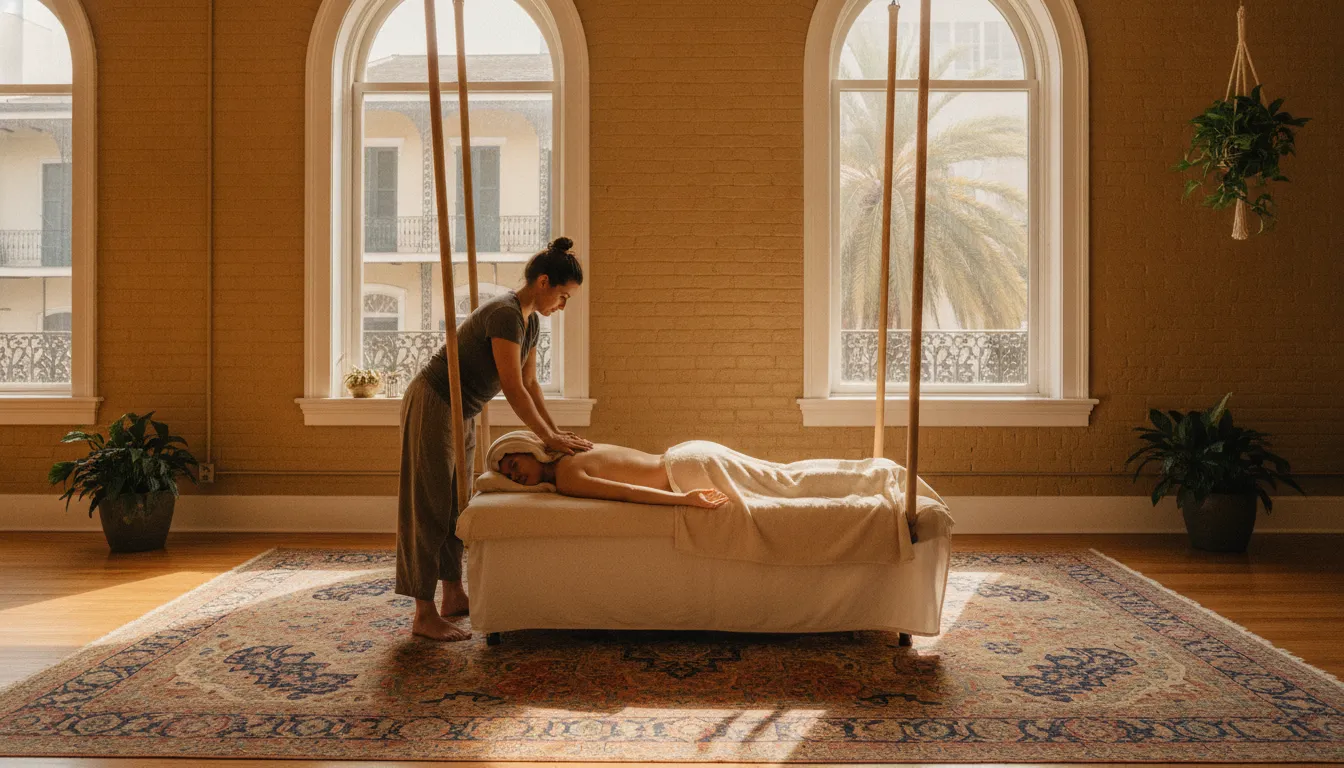
Ashiatsu is a deep, therapeutic bodywork style. During a session, ashiatsu massage therapists apply firm pressure to your body using their bare feet instead of their hands. To do this safely, the therapist holds onto wooden bars attached to the ceiling for balance and support. This setup allows the therapist to stand directly over you and glide smoothly along your back.
By using the feet, therapists can give long, broad strokes that feel very smooth. Standard hand-held treatments often use sharp thumbs or elbows, which can hurt. In contrast, the sole of the foot gives a wide, smooth surface that covers more area at once. This broad contact makes even the deepest pressure feel pleasant and soothing.
Deep pressure through gravity
One of the biggest benefits of this method is the intense, deep pressure it offers. Classic deep-tissue work relies on the strength of a therapist’s hands, wrists, and shoulders. Over time, these small joints can get tired or sore. Ashiatsu solves this problem by using the natural pull of gravity to apply steady weight. It protects the therapist’s body while giving you a better session.
Because of this, gravity enables ashiatsu therapists to deliver up to three times deeper pressure than standard hands-on work. The overhead bars allow therapists to shift their body weight precisely. They can increase or decrease the force on your muscles simply by adjusting their grip on the bars. You get the deep relief you need without the pain of a therapist pressing hard with their thumbs.
Relief for deep muscular tension
Ashiatsu is more than a relaxing spa treat. It offers a deeply therapeutic and remedial way to heal. This barefoot style is great for guests who need strong pressure to ease deep muscle tension. If you have chronic lower back pain, this therapy can help. It stretches tight muscles and soothes stubborn aches. The broad pressure works wonders on thick muscle groups.
When looking for professional bodywork, checking a practitioner’s credentials is a smart first step. According to the National Center for Complementary and Integrative Health, formal licenses and certificates provide clear information about a practitioner’s professional qualifications. At NOLA Bliss Massage, our expert ashiatsu massage therapists have the deep skills to keep you safe. Our team is ready to help you find lasting relief.
Why Does Training and Certification Matter for Ashiatsu Massage Therapists?
Ashiatsu is a deep and helpful barefoot massage. But because it uses deep pressure, you must find a therapist with the right skills. Getting proper training is the only way to make sure a session is safe. This is why learning about therapist training is so vital for every guest.
How Licensure Works in Different States
Massage laws are not the same everywhere you go. According to the National Center for Complementary and Integrative Health, there is no single national system to approve these providers. Instead, state boards must decide what credentials therapists need to work in their area. This means a license in one state might not mean the same thing in another state.
Because of this, state rules for a massage license can vary a lot. Some states may need a person to graduate from an approved program or meet national standards. Others look at training hours, pass exams, or ask for continuing education. Knowing these state rules can help you ask the right questions before you book your next visit.
Why National Certification Matters
To build trust, many therapists seek national certification. Certification can be required for licensure or serve as another path. To get certified, a therapist must meet strict training and practice standards. It also helps guests find professionals who have gone through deep study and passed hard exams.
But a basic license does not always guarantee that a therapist is qualified to perform deep barefoot bodywork. Guests should look for specialized training that matches the specific service they want. When you choose a therapist, you should ask about their specific training background. This is the best way to make sure your provider has the skills needed to help you feel better.
Specialized Safety Standards for Ashiatsu
Ashiatsu is a highly focused style of bodywork. The therapist stands on the table and uses sturdy overhead bars to balance their body. Because they use their feet, they can deliver deep pressure to sore muscles. This means that ashiatsu requires specialized training and certification for safe, professional practice.
Therapists must learn how to control their weight and use the bars safely during a session. They also need to study the anatomy of the back and legs to apply pressure to the right muscles. When looking for care, you should search for clinics that meet high standards for qualified ashiatsu massage therapists. Working with certified experts keeps you safe and helps you get the most out of your session.
Proper training also protects the body health of the therapist. It teaches them how to stand and move without putting stress on their own joints. This allows them to offer deep work for many years. It makes the treatment safer and more helpful for both the therapist and the guest.
How Do You Choose a Qualified Ashiatsu Massage Therapist?
Finding the right care starts with checking the skills of your therapist. Because barefoot work uses deep weight and gravity, you must make sure your provider is fully trained. If you want a safe session, you need to know how to screen your options. Our guide will help you select the best therapist for your body.
Look for active state licenses
Licenses and certificates tell us about the qualifications of our health providers. You should always ask to see these papers before your first visit. You can learn more about how licenses and professional qualifications work from federal health guides. There is no set national system to license complementary health workers in the United States. State governments must decide what rules a therapist must meet to work in that area. For deep barefoot massage, checking these state standards is a key first step.
Verify training and hands-on skill
To find the right therapist, you should follow a simple check. These steps will help you confirm that your provider has the right training. When you search, keep these five points in mind to ensure a safe and helpful visit.
- Verify active state licenses and certificates. State rules to get a massage license vary a lot. A state may require a person to graduate from an approved program or pass a national exam. Sometimes, a national certificate is the first step to get a license. These papers show if a therapist meets the standards to practice in your state.
- Confirm specific barefoot training hours. Deep barefoot work is not taught in basic massage schools. Therapists must take extra classes to learn how to use their feet safely. Ask if they completed a full training program that covers both theory and physical technique. This extra study is needed to specialize in deep work.
- Look for a certified training pedigree. Top schools like Deepfeet teach therapists how to use overhead bars and gravity to apply deep pressure. A certified path ensures the therapist learned how to stand and balance safely. Choosing a provider with this clear background protects your body from harm.
- Ask about years of hands-on work. While paperwork is key, a license is not a promise of great skill. You should ask how many years of hands-on work a therapist has. An experienced therapist knows how to adjust their pressure for your comfort. At NOLA Bliss Massage, our ashiatsu massage therapists bring deep skill and practice to each session.
- Book a physical consult and intake. A skilled therapist will assess your needs and health history before your session starts. This talk lets you share your pain points and ask about their style. A true expert will listen to your goals to make sure the work fits your body.
Make an informed choice for your care
When you choose a massage therapist, taking time to check these details ensures a safe and therapeutic experience. Skilled barefoot therapists know how to use their weight to ease your deep muscle tension without causing pain. Checking their background helps you feel confident when you step onto the table. Making an informed choice is the best way to get the healing results you want.
The Deepfeet Bar Training Difference
The gold standard of barefoot therapy
Deep barefoot massage requires great skill. Therapists use their feet to apply pressure. A proper certification path involves a full training program that covers both theory and technique. The National Center for Complementary and Integrative Health (NCCIH) notes that clear credentials show if a provider has the right skills. Proper training for ashiatsu massage therapists is key to keeping guests safe. This training system uses overhead bars. The bars are bolted to the ceiling. They let the therapist balance and control their weight. This ensures they apply the perfect amount of pressure to your muscles.
Gulf Coast expertise at NOLA Bliss
Sara Albee founded NOLA Bliss Massage. She is the only certified Deepfeet instructor on the Gulf Coast. Also, NOLA Bliss is the only certified Ashiatsu Deepfeet Bar Therapy training center in the region. Local therapists come here to learn from the best. We offer live classes and specialized workshops for hands-on learning. This makes our team highly skilled. Our training center helps raise the bar for local care. Guests get the best treatment because our therapists learn directly from an expert.
Understanding body mechanics and safety
Why do overhead bars matter so much? They are not just for balance. The bars allow therapists to use gravity to deliver deep pressure safely. This protects the therapist’s body from strain. Proper body mechanics mean they can do deep tissue work for years without injury. Without this training, barefoot work is risky for both guest and provider.
Trained versus casual therapists
How do you spot a great therapist? Many people think any massage license is enough, but that is not always true. Ashiatsu differs from standard table work. It requires specialized tools and strict focus on safety. A deeply trained provider offers a much better session than a casual practitioner. The table below compares the two approaches to show the difference.
| Comparison Area | Deepfeet Trained Therapist | Casual Practitioner |
|---|---|---|
| Overhead-bar training | Requires double overhead bars and secure ceiling mounts for complete balance. | May use single bars, wall bars, or no bar support at all. |
| Certification path | Completed a full certification program covering theory and hands-on technique. | Learned from brief video lessons or quick weekend classes. |
| Continuing ed | Attends regular continuing education workshops to keep skills sharp. | Receives no regular training after starting basic work. |
| Years experience | Often averages over ten years of hands-on practice in the field. | Often has under one year of barefoot massage work. |
| Body-mechanics discipline | Uses precise body mechanics to protect joint and spine health for decades. | Puts heavy strain on their own body, leading to early fatigue. |
Why Do Body Mechanics Matter in Skilled Ashiatsu?
Classic deep tissue massage can be hard on a worker’s body. Many massage workers face wrist, hand, and shoulder strain after only a few years of hands-on work. But barefoot massage offers a smart way to work. By using overhead wooden bars, a therapist can support their own weight and use their feet to give deep pressure without hurting their own joints.
How Overhead Bars Support the Body
Overhead bars are key to this style. They allow the therapist to hold onto the bars for balance and control, meaning they do not have to push with their hands. Instead, they use the pull of gravity to sink deep into tense muscles. Guests get the deep-tissue relief they need without the sharp pain of thumbs or elbows.
By standing on the table, the therapist uses their own weight as a tool. They can apply deep, broad strokes using the arches and soles of their feet. This pressure is much wider than what a hand or wrist can give. This creates a smoother path to muscle relief for each guest.
Protecting Therapist Health for Better Care
Long-term health is vital for massage workers, and our studio cares deeply about how our team moves. We use smart body habits to make sure our staff can do deep work for many years. This focus on body habits allows our team to perform deep tissue work indefinitely. The National Center for Complementary and Integrative Health notes that proper credentials show a therapist’s qualifications to give safe care.
The NOLA Bliss Standard of Mastery
To perform this style safely, a therapist needs specialized training that you cannot learn in a weekend. Because our expert ashiatsu massage therapists average ten or more years of work, they have mastered these complex body habits. This deep skill is why they can deliver deep pressure with ease. When you book with us, you are in safe, highly skilled hands that bring true expertise to every session.
We know that true mastery takes time and practice. Each session is tailored to your body’s specific needs and comfort level. Our team uses their feet with the same precision that others use their hands. This high level of skill is what makes a qualified therapist stand out.
Questions to Ask Before Your First Ashiatsu Session
Before booking, take a few minutes to talk with your therapist. This short talk ensures a safe, helpful visit. While certificates and diplomas on the office wall tell us about a therapist’s professional qualifications, they do not tell the whole story.
A state license or certificate is not always a guarantee of being qualified to do this deep work. Barefoot style is active and needs special care, so you must choose your therapist with care.
Choosing a skilled therapist
To get the best care for pain, you should talk with the therapist about their training. Expert ashiatsu massage therapists will always welcome your questions. They want to make sure you feel safe and ready before your session starts.
A good talk also builds a strong bond of trust before you get on the table. This trust lets you relax and enjoy the deep work.
Guided screening steps
Using a clear list of questions helps you check a therapist’s training and safety rules. You will learn about their background and how they handle deep pressure. These questions will help you find the best match for your wellness needs. Here is a simple list of steps to help guide your talk:
- How long have you done barefoot massage? Asking about hands-on time helps you find therapists with a lot of practice who have worked with many guests.
- Are you trained in a special method? Look for therapists trained in known systems like Deepfeet Bar Therapy, which teaches safe overhead bar use to protect your body.
- What continuing education do you take? Good therapists always update their skills and take regular classes to keep their license active and stay sharp.
- How do you adjust pressure for my body? A skilled therapist will explain how they use gravity and the bars to change their weight for your comfort.
- What safety and health checks do you perform? Proper intake checks are needed to find any health issues and make sure barefoot work is safe for you.
Frequently Asked Questions
What is Ashiatsu massage therapy?
Ashiatsu is a barefoot massage method. The therapist stands on the table and uses overhead bars for balance. They use their feet to apply deep, smooth pressure to your back and limbs. Gravity helps the therapist give a deeper massage than they can with just their hands. It helps relax tight muscles and ease deep pain.
How do I find qualified ashiatsu massage therapists?
To find qualified ashiatsu massage therapists, look for state licensing and proper training certificates. You can check their training at the National Center for Complementary and Integrative Health website to see what state laws need. Ask if they went to a certified school like Deepfeet. Good therapists should have a license and special training in barefoot work to keep you safe.
Is Ashiatsu massage better than deep tissue?
Ashiatsu can feel much better than regular deep tissue if you want strong pressure. A therapist can use their feet to give up to three times more pressure than with their hands. The feet also have a larger surface, which makes the deep strokes feel smoother and less painful. It is highly effective for thick muscles and deep tension.
How much does an Ashiatsu massage session cost?
An Ashiatsu session usually costs about the same as a traditional deep tissue massage. The price often ranges from ninety to one hundred and fifty dollars per hour. This cost depends on where you live and the therapist’s skill level. Since it needs special overhead bars and advanced training, some studios may charge a small fee for this specialty service.
Ready to Book an Ashiatsu Session with Our Certified Therapists?
Living with deep muscle tension only drains your daily power, makes simple movement painful, and can lead to long term stiffness if you ignore it. Setting up a session today prevents further muscle strain, saves you from daily aches, and starts your path to safe physical relief without any delay. Our space in the Warehouse District also offers free parking, where our expert ashiatsu massage therapists deliver custom care that fits your own wellness goals.
Are you ready to book your next barefoot deep tissue session? You can quickly book an ashiatsu session with certified therapists online to schedule your own visit and find true, lasting relief with us today.