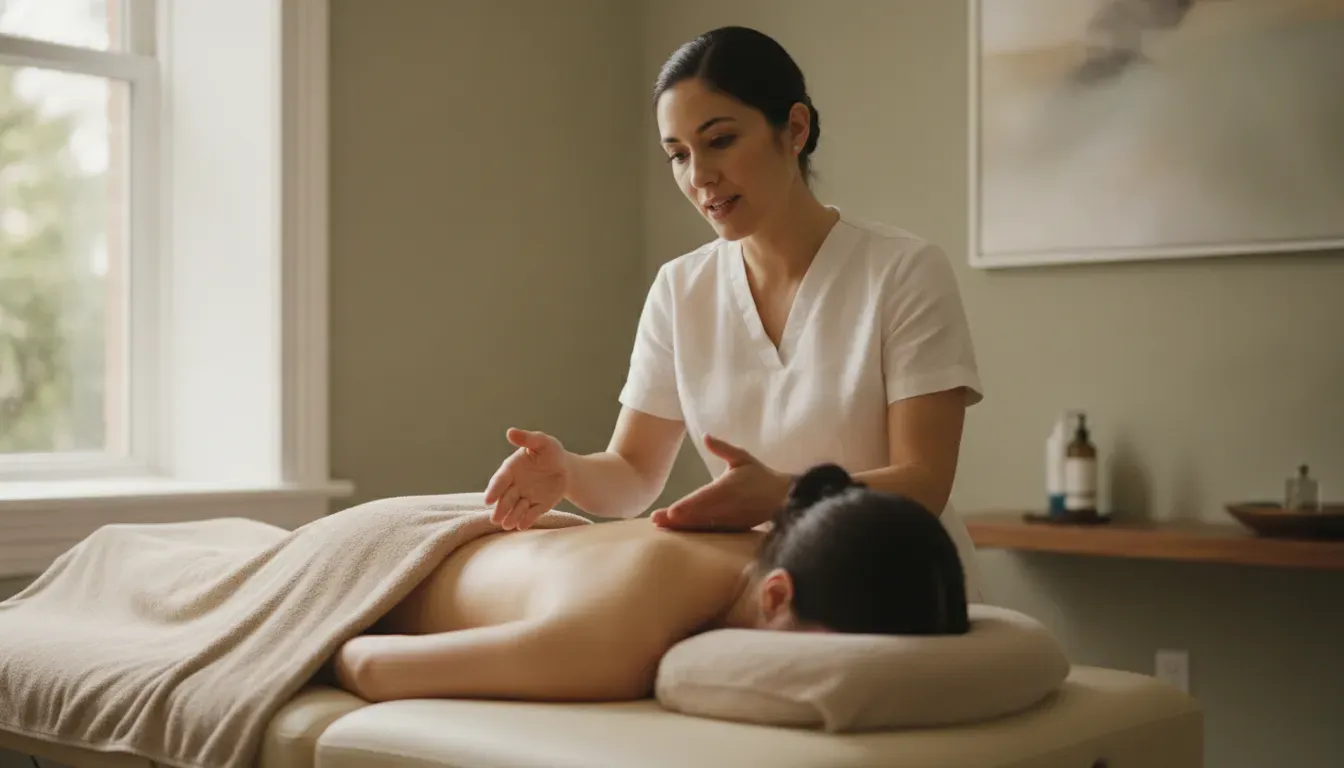

You may have heard whispers about Ashiatsu, the massage where the therapist uses their feet. It sounds intriguing, but how does it actually work for something as delicate as neck pain? And how does it stack up against a classic like deep tissue? This is the central question in the ‘ashiatsu massage vs deep tissue neck’ debate. While deep tissue uses hands and elbows for focused pressure, Ashiatsu uses broad, gliding foot strokes for a uniquely deep yet gentle experience. This article will demystify this incredible technique, explaining exactly how it provides profound relief and helping you decide if it’s the right solution for your chronic tension.
Key Takeaways
- Ashiatsu offers deep pressure without the pointed feeling: This technique uses the therapist’s feet for broad, gliding strokes, offering deep relief that feels compressive instead of sharp. It’s a great choice if you want intense work without the discomfort of elbows or thumbs.
- Deep tissue targets specific knots, while Ashiatsu soothes general aches: Use deep tissue for its precision on stubborn trigger points you can pinpoint. Choose Ashiatsu to address widespread stiffness and postural strain that affects your entire neck and shoulder area.
- When in doubt, talk to your therapist: You don’t need to be an expert to get the right massage. Explain your pain and goals to your therapist, and they will guide you to the best treatment, which might even be a blend of both styles.
What Is Ashiatsu Massage?
If you’ve never heard of Ashiatsu, the concept might sound a little wild. It’s a style of massage where the therapist uses their feet to deliver long, flowing, and deeply relaxing strokes. Often called “barefoot massage,” this technique is anything but random. Our therapists use overhead bars for balance, allowing them to apply the perfect amount of pressure with incredible precision. Ashiatsu Deepfeet Bar Therapy provides some of the deepest, most consistent pressure you can find, making it especially effective for chronic tension in the neck and shoulders.
How Ashiatsu Relieves Neck Pain
The secret to Ashiatsu’s effectiveness for neck pain lies in how the pressure is applied. Instead of the pointed pressure from a thumb or elbow, the therapist’s foot provides a broad, smooth surface. This distributes the pressure evenly, allowing your muscles to relax and accept the deep work without tensing up. It feels less invasive and often more comfortable than traditional deep tissue, even though the pressure can be much deeper. This approach is perfect for melting away the stubborn tension that builds up in the neck and upper back, providing relief that feels both comprehensive and gentle.
Key Ashiatsu Techniques for the Neck
During an Ashiatsu session, your therapist will use long, gliding strokes that can run from the base of your skull all the way down your back. For your neck specifically, they use the heel or ball of the foot to carefully knead and compress the large trapezius muscles and the smaller muscles along your cervical spine. By using gravity and their own body weight, they can sustain a steady, deep pressure that encourages tight muscles to lengthen and release. This technique is fantastic for relieving the compression that contributes to chronic stiffness and headaches.
Your First Ashiatsu Session: What to Expect
It’s normal to be curious about what your first Ashiatsu session will feel like. You’ll be comfortably situated on a massage table, just like with any other massage. Your therapist will be above you, using parallel bars on the ceiling for balance as they gently apply pressure with their clean, soft feet. Most people describe the sensation as a deep, sinking compression that is profoundly relaxing, not painful. It’s a unique feeling that avoids the sharpness of more targeted work, making it one of our most popular massage services for clients seeking serious relief without the usual discomfort.
What Is Deep Tissue Massage?
If you’ve ever complained about a stubborn “knot” that just won’t go away, you’ve probably been told to get a deep tissue massage. This therapeutic technique is a classic for a reason. It involves slow, firm strokes that reach beyond the surface muscles to target the deeper layers of muscle and the connective tissue surrounding them, called fascia. The goal isn’t just to relax you; it’s to release chronic patterns of tension in the body. Think of it as a focused effort to break up scar tissue and adhesions that can cause pain and limit your movement.
A deep tissue massage is especially helpful for long-lasting muscle tension, whether it’s from a past injury, poor posture, or repetitive strain. Your therapist will use their hands, knuckles, forearms, and even elbows to apply sustained pressure. It’s a common misconception that deep tissue has to be painful to be effective. While the pressure is firm, a skilled therapist will work with you to find a level that is productive without being unbearable. It’s all about communicating with your therapist to make sure the work is both effective and comfortable for you.
How Deep Tissue Targets Neck Pain
When it comes to neck pain, deep tissue massage shines because of its precision. Instead of providing general, broad pressure, your therapist can zero in on the specific knots and tight bands of muscle that are causing your discomfort. This targeted approach allows them to apply firm, consistent pressure directly to the problem area. You might feel a more intense, localized sensation when they hit a trigger point, but this is a sign that the technique is working to release that deep-seated tension. It’s this focused work that makes deep tissue so effective for relieving the sharp, concentrated pain often felt in the neck and shoulders.
Key Deep Tissue Techniques for the Neck
To address neck pain, a massage therapist uses a variety of hands-on techniques. They will use their fingers and thumbs to strip along individual muscle fibers, applying pressure to release tightness. Knuckles and even elbows may be used to apply sustained pressure to particularly dense knots, helping to break them up and restore healthy blood flow to the area. The pressure is intentionally firm to strong, as the goal is to reach those deeper layers of soft tissue where chronic pain often resides. This methodical approach is essential for releasing the tension that contributes to neck stiffness and discomfort.
Ashiatsu vs. Deep Tissue: Which Is Better for Your Neck?
Deciding between massage styles can feel like a big choice, especially when you’re dealing with persistent neck pain. Both Ashiatsu and deep tissue massage are fantastic for relieving deep-seated tension, but they go about it in very different ways. Understanding these differences is the key to picking the service that will give you the exact relief you’re looking for. It’s not about which one is universally “better,” but which one is better for you and your specific needs right now. Let’s compare them side-by-side so you can make an informed decision for your next appointment.
How the Pressure Feels Different
The most immediate difference you’ll notice is the sensation of the pressure itself. A traditional deep tissue massage uses thumbs, knuckles, and elbows to apply focused pressure. This can feel sharp and specific. In contrast, Ashiatsu Deepfeet Bar Therapy uses the therapist’s feet. Because the foot provides a much broader surface area, the pressure feels deep yet distributed. Think of it as the difference between someone pressing a single finger into your muscle versus using their entire palm. Ashiatsu delivers that deep pressure without the poky or sharp feeling you might associate with intense bodywork, making it a uniquely comfortable experience.
Comparing Intensity and Comfort
When it comes to intensity, both methods can go deep. However, your comfort level might vary. With a deep tissue massage, the targeted pressure from an elbow or thumb can sometimes create a sharp, localized discomfort as it works on a knot. Many people love that “hurts so good” feeling, but it can be intense. Ashiatsu often feels more tolerable even at the deepest levels of pressure. Because the weight is spread out, your muscles can relax into the pressure more easily instead of guarding against it. This allows the therapist to sink in and provide profound relief without you having to brace for impact.
Broad Relief vs. Targeted Work
Your type of neck pain can also point you toward the right massage. Deep tissue is excellent for its precision. If you have a specific, stubborn knot in your trap or at the base of your skull that you can point to, a therapist can use their hands and elbows to zero in on that exact spot. Ashiatsu, on the other hand, is incredible for addressing widespread tension and pain that affects a larger area. If your entire neck and shoulders feel tight and achy, the long, gliding strokes from the therapist’s feet can cover that whole region with consistent, deep pressure, offering a more holistic sense of release.
What to Expect After Your Massage
The post-massage feeling is another important factor. Because deep tissue involves such focused, intense work on specific muscle fibers, it’s common to feel a bit of soreness for a day or two afterward. This is totally normal, like the feeling after a good workout. Ashiatsu, however, typically causes less post-session soreness. The broad, compressive pressure flushes the muscles without the same level of friction and intensity on one single spot. Many clients report feeling more immediate relief and less tenderness the next day, which can be a big plus if you have a busy schedule.
Matching the Massage to Your Neck Pain
Not all neck pain is the same, so the right massage for you depends on what’s causing the ache. Are you dealing with a dull, constant tension, or a sharp, specific knot? Understanding your symptoms is the first step to choosing the treatment that will bring you the most relief. Let’s look at a few common scenarios and see whether Ashiatsu or deep tissue is the better fit for your needs.
For Tension Headaches and General Stiffness
If your neck and shoulders feel tight and that tension creeps up into your head, you need broad, consistent pressure to help everything relax. This is where Ashiatsu Deepfeet Bar Therapy truly shines. The long, gliding strokes from the therapist’s feet create a gentle stretching effect on your spine and surrounding muscles. This approach helps your nervous system calm down, allowing your body to accept deep pressure without tensing up against it. The result is improved blood flow and a release of the widespread stiffness that often leads to tension headaches, leaving you feeling looser and more at ease.
For Stubborn Knots and Trigger Points
Sometimes, the problem isn’t general stiffness, but a specific, painful knot that just won’t quit. It might be a spot in your shoulder that you’re always trying to rub or a trigger point that sends pain shooting up your neck. For this kind of targeted issue, a deep tissue massage is your best bet. Using fingers, knuckles, and elbows, your therapist can apply focused pressure to pinpoint and break up these tight bands of muscle and scar tissue. This technique is excellent for getting right to the source of the problem, improving circulation to the area, and providing lasting relief from those persistent, nagging knots.
For “Tech Neck” and Posture Issues
Hours spent hunched over a laptop or looking down at your phone can create a unique kind of pain often called “tech neck.” This isn’t just a neck issue; it’s a posture problem that affects your entire upper body. Because this tension is widespread, Ashiatsu massage is an incredibly effective solution. The broad, deep pressure is perfect for addressing the large muscle groups along the spine, shoulders, and upper back that become tight from prolonged sitting. By releasing this chronic, full-body tension, Ashiatsu helps counteract the effects of poor posture and provides comprehensive relief that a more targeted massage might miss.
Why Choose Ashiatsu for Neck Pain?
If you’re dealing with persistent neck pain, you might feel like you need the most intense pressure possible to find relief. While deep tissue is a fantastic tool, Ashiatsu offers a unique approach that can be incredibly effective for neck issues. It combines deep, consistent pressure with a gentle touch, providing a different kind of therapeutic experience. For many people, this unique combination is the key to finally easing chronic neck tension and stiffness. Let’s look at a few reasons why Ashiatsu might be the perfect choice for your neck.
Get Deep Pressure Without the Poking
One of the biggest advantages of Ashiatsu is its ability to deliver deep pressure without the sharp or poky feeling that can sometimes accompany deep tissue massage. Instead of using elbows or thumbs, your therapist uses the broad, soft surface of their feet. This allows them to spread the pressure evenly across your neck and shoulder muscles. The result is a deep, melting sensation that encourages your muscles to release without tensing up in response. This makes Ashiatsu Deepfeet Bar Therapy an excellent option if you crave deep work but find the pointed pressure of traditional techniques uncomfortable, especially in the sensitive neck area.
Enjoy Gentle Spinal Decompression
Ashiatsu offers a benefit that deep tissue generally doesn’t: gentle spinal decompression. As the therapist uses long, gliding strokes along your back and neck, their body weight creates a subtle tractioning effect. This can help gently stretch your spine and create more space between the vertebrae in your neck. For anyone suffering from compression due to poor posture or conditions like “tech neck,” this feeling of elongation can bring immense relief. It’s a slow, gravitational pull that helps lengthen tight muscles and ease pressure on the nerves branching out from your cervical spine, promoting better alignment and greater comfort.
Find Long-Lasting, Comprehensive Relief
Because Ashiatsu uses broad, flowing strokes, it can address entire muscle groups at once, treating the interconnected patterns of tension in your neck, shoulders, and upper back as a whole system. This comprehensive approach often leads to relief that feels more integrated and lasts longer. Another major plus is that Ashiatsu typically doesn’t leave you feeling sore the next day. The pressure is deep but distributed gently, so it works through tension without causing the micro-trauma that can lead to post-massage tenderness. You get all the benefits of a deep massage while leaving your session feeling relaxed and refreshed. Exploring different massage services can help you find the perfect fit for your body’s needs.
Why Choose Deep Tissue for Neck Pain?
While Ashiatsu offers broad, gliding pressure, a deep tissue massage is all about focus. Think of it as the specialist’s tool for neck pain. If you have specific, nagging spots that just won’t quit, deep tissue provides the detailed, methodical work needed to address them directly. It’s an excellent choice for tackling chronic tension, stubborn knots, and pain that feels deeply rooted in the muscle. Your therapist works layer by layer to find and release the source of your discomfort.
Pinpoint and Release Specific Problem Spots
The magic of deep tissue lies in its precision. If you can point to the exact spot on your neck that’s screaming for attention, this is the massage for you. Using slow, firm strokes, your therapist applies concentrated pressure with their thumbs, knuckles, and forearms to reach the deeper layers of muscle and the connective tissue surrounding them. This technique is perfect for zeroing in on those tight, painful knots, or trigger points, that cause so much grief. It’s less about a full-body flow and more about a targeted mission to release specific areas of tension.
Break Up Scar Tissue and Adhesions
Ever wonder what a “knot” actually is? It’s often a bundle of tight muscle fibers, scar tissue, or adhesions (bands of painful, rigid tissue) that can form after an injury or from chronic poor posture. Deep tissue massage is designed to break up these formations. The firm, sustained pressure helps to separate and realign the fibers, which improves blood flow, increases flexibility, and reduces the pain signals being sent to your brain. Releasing these adhesions is key to restoring normal movement and finding lasting relief from that persistent neck ache.
Get Quicker Relief for Acute Pain
When you wake up with a sudden, sharp crick in your neck or are dealing with a recent flare-up, deep tissue can often provide more immediate results. Because it’s so effective at targeting the source of acute pain, many people feel a significant sense of relief right away. You might feel a bit sore for a day or two afterward, similar to how you’d feel after a good workout. This is a positive sign that the massage has effectively worked on your troubled muscles. Our expert therapists can adjust the pressure to ensure the treatment is both effective and comfortable for you.
How to Choose the Right Massage for You
Deciding between Ashiatsu and Deep Tissue doesn’t have to be complicated. The best massage for you depends entirely on your body, your pain, and what you hope to achieve. Think of this as your personal guide to making a confident choice. By considering a few key factors, you can walk into your appointment knowing exactly what to ask for to get the relief you need.
Assess Your Pain Tolerance
Let’s be honest: everyone’s definition of “good pain” is different. Your comfort level is a major factor in choosing the right massage. If you tend to tense up or find sharp pressure uncomfortable, you’ll likely prefer Ashiatsu. The broad, consistent pressure from the therapist’s feet feels deep without being poky, allowing your muscles to relax into the strokes.
On the other hand, if you crave intense, targeted work on a specific knot and can handle the focused pressure of knuckles or an elbow, a Deep Tissue massage might be exactly what you need. It’s less about your overall tolerance for pain and more about what kind of pressure feels most effective and therapeutic to you.
Identify Your Type of Neck Pain
Take a moment to notice how your neck actually hurts. Can you point to one specific, sharp spot that’s causing all the trouble? If so, Deep Tissue is excellent for zeroing in on that trigger point and encouraging it to release. The precise techniques are designed to work on a micro-level, targeting the exact source of a localized problem.
If your pain feels more like a widespread ache that’s hard to pinpoint, Ashiatsu Deepfeet Bar Therapy is probably a better fit. The long, gliding strokes cover a much larger surface area, helping to soothe the entire muscle group from your neck down into your shoulders and back. This approach is perfect for relieving diffuse tension and general stiffness.
Define Your Relief Goals
What are you hoping to walk away with after your session? If you’re dealing with a new or acute injury, like a crick in your neck you woke up with, Deep Tissue can provide quicker, more immediate relief by directly addressing the problem area. It’s great for breaking up fresh adhesions and restoring mobility fast.
For chronic pain that’s been lingering for months or even years, Ashiatsu often provides more profound, long-term results. Its full-body approach helps address underlying postural patterns that contribute to neck pain, making it an excellent choice for maintenance and preventing future flare-ups. It works to create lasting change rather than just a temporary fix.
When to Talk to Your Therapist
You don’t have to have all the answers before you get on the table. The single most important step is communicating with your massage therapist. Our team is made up of highly experienced professionals who have dedicated their careers to the art of healing. Be open about your pain levels, where it hurts, and what you’re hoping to accomplish.
A great therapist will listen to your concerns, assess your situation, and recommend the best approach for your unique needs. They may even suggest a combination of techniques to give you the most effective treatment possible. Your therapist is your partner in wellness, so never hesitate to start a conversation.
Can You Combine Ashiatsu and Deep Tissue?
Yes, you absolutely can. In fact, combining these two modalities can be a powerful way to address complex neck pain. Think of it as getting the best of both worlds: the broad, compressive relief of Ashiatsu and the focused, specific work of deep tissue. This approach allows a therapist to create a truly dynamic session tailored to your body’s unique needs, addressing both widespread tension and stubborn, individual knots.
A session might begin with Ashiatsu Deepfeet Bar Therapy to warm up the large muscles of your back, shoulders, and neck. The long, gliding strokes from the therapist’s feet cover a lot of ground, easing overall tension and gently decompressing the spine. This initial phase prepares your body for more targeted work, making the muscles more pliable and receptive. Once the area is warmed up, your therapist can switch to traditional deep tissue massage techniques, using their hands, knuckles, or forearms to zero in on the specific trigger points and adhesions causing you the most trouble.
This combined approach often makes the deep tissue portion feel more effective and less jarring, as the muscles are already in a relaxed state. The key to a successful blended session is working with a skilled therapist who can assess your condition and determine the right balance of techniques. When you book your appointment, be sure to discuss your pain patterns and goals. A customized session that integrates both Ashiatsu and deep tissue might be the perfect solution for finding lasting neck pain relief.
Find Your Neck Pain Solution in New Orleans
Choosing between different types of massage can feel like one more thing to figure out when you’re already dealing with neck pain. But you don’t have to have all the answers before you book your appointment. The most important step is simply deciding to get help, and our team in New Orleans is here to guide you the rest of the way. Whether you’re a local resident or visiting our vibrant city, finding lasting relief is entirely possible.
As you’ve learned, the choice often comes down to your personal preference and the kind of pain you’re experiencing. If you’re looking for deep, consistent pressure that covers a wide area without the pointed intensity of elbows or thumbs, our Ashiatsu Deepfeet Bar Therapy is an incredible solution. It’s perfect for easing widespread stiffness and tension. On the other hand, if you have specific, stubborn knots that you can point to, a classic deep tissue massage allows your therapist to zero in on those problem spots with precision.
The best part is, you don’t have to make this decision alone. Our dedicated team of therapists has devoted their careers to the art and science of massage. When you come in for your session, you’ll have time to talk about what’s bothering you. Your therapist will listen, assess your needs, and recommend the approach that will give you the best results. They might even blend techniques to create a customized session just for you.
Your path to a pain-free neck starts here. You can explore all of our massage services and book the appointment that feels right for you. Let us take care of the details, so you can focus on what matters most: feeling better. We look forward to helping you find relief and relaxation at our downtown studio.
Related Articles
Frequently Asked Questions
I’m still not sure which massage to book. What’s the best way to decide? You don’t have to be the expert, that’s what we’re here for. The best thing you can do is book the service that sounds most appealing to you and plan to arrive a few minutes early. You’ll have time to talk with your therapist about your neck pain, your preferences, and your goals for the session. They will listen and help you confirm your choice or suggest a different approach that might be more effective for your specific needs.
Is Ashiatsu massage safe for the neck area? Yes, it is very safe when performed by a properly trained and certified therapist. Our therapists use overhead bars for complete control over their balance and the amount of pressure they apply. The use of the foot provides a broad, soft surface that distributes pressure evenly, which is often gentler on the delicate structures of the neck than the pointed pressure from an elbow or thumb.
Will I be sore after my massage? It’s possible, but it depends on the massage you choose. With deep tissue, it’s common to feel some soreness for a day or two, similar to how you might feel after a challenging workout. This happens because the therapist is doing focused work to break up stubborn knots. Ashiatsu, however, typically causes less post-session tenderness because the broad, compressive pressure flushes the muscles without the same friction on one specific spot.
Does one massage provide longer-lasting relief than the other? The longevity of the relief really depends on the source of your neck pain. For a specific, acute knot, the targeted work of a deep tissue massage can provide very quick and lasting results. For chronic, widespread tension caused by posture or stress, Ashiatsu often provides more profound, long-term change because it addresses the entire pattern of tension in your back, neck, and shoulders.
Can I request a combination of Ashiatsu and Deep Tissue in one session? Absolutely. A blended session is a fantastic way to get the benefits of both modalities. A therapist might start with the long, flowing strokes of Ashiatsu to warm up the large muscle groups and prepare your body for deeper work. Then, they can switch to using their hands for more targeted deep tissue techniques on any specific knots that need extra attention. Just mention your interest when booking or talking with your therapist.