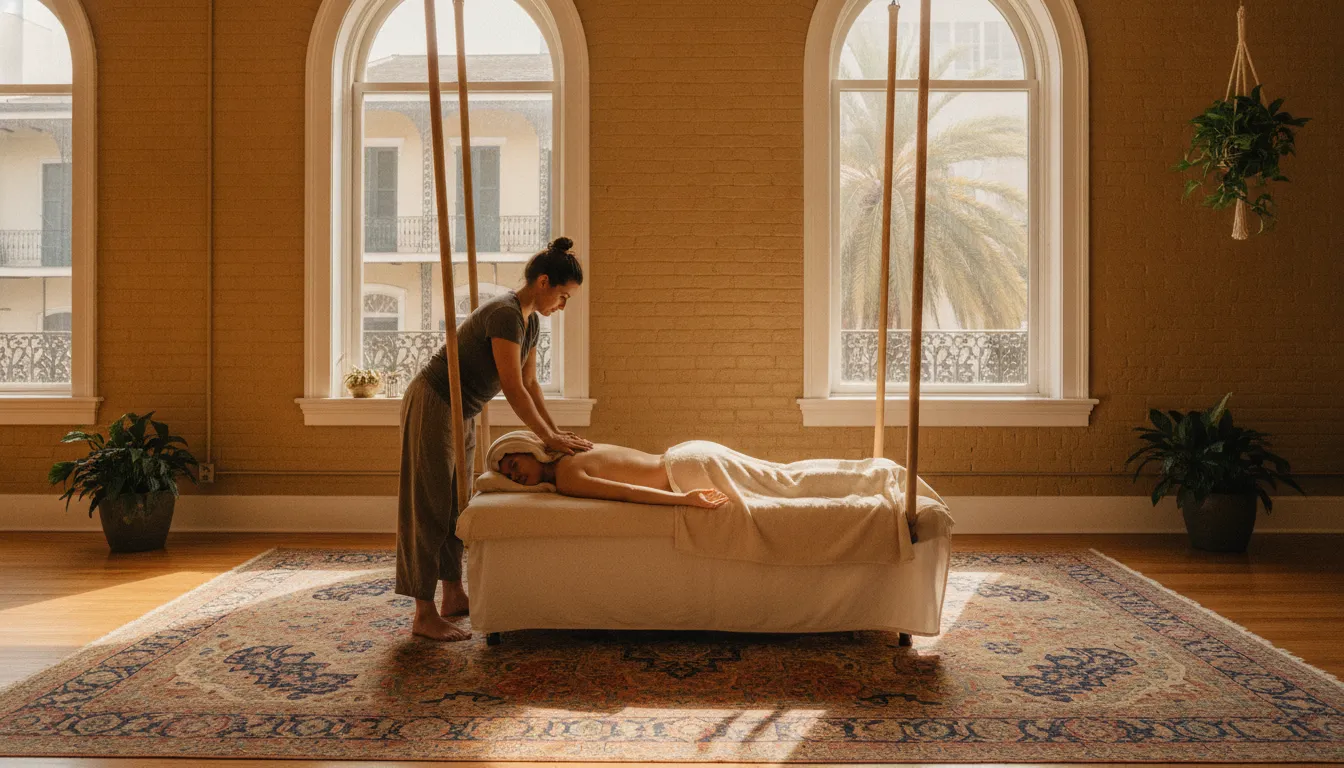

Heard of a massage where the therapist uses their feet? It sounds a little wild, but it might be exactly what your tight muscles have been craving. This is Ashiatsu massage, a sophisticated form of bodywork rooted in ancient traditions. Using overhead bars for balance, your therapist applies their body weight to deliver long, gliding, and deeply compressive strokes with their feet. This method provides a level of consistent, deep pressure that hands simply can’t match. It’s a game-changer for anyone dealing with chronic pain or who just loves a truly deep massage without the pointy elbows.
Key Takeaways
- Experience Deep Pressure Without the Discomfort: Ashiatsu uses the therapist’s feet and gravity to deliver a broad, consistent pressure that feels like a deep, gliding weight, making it a perfect alternative if you find the sharp elbows of traditional deep tissue work to be too intense.
- Effectively Address Chronic Pain and Muscle Recovery: The long, sweeping strokes are incredibly effective at decompressing the spine to relieve back pain and at flushing out metabolic waste from large muscle groups, which helps athletes and active individuals recover more quickly.
- Professional Training is Non-Negotiable: This is a highly specialized technique, so it’s essential to choose a therapist with a reputable certification. Always communicate your pressure preferences and health history to ensure a safe and effective session tailored to your needs.
So, What Is Ashiatsu Massage, Really?
If you’ve ever wished for a massage that could deliver deep, consistent pressure without the sharp discomfort of an elbow or thumb, you might be ready for Ashiatsu. It’s a unique and luxurious therapy where a highly trained massage therapist uses their feet to perform the massage. While standing on the table, they hold onto overhead bars for balance and support, allowing them to apply broad, gliding pressure that feels incredible. This technique isn’t just a novelty; it’s a sophisticated method that uses gravity to provide one of the deepest, most relaxing massages you can experience.
Tracing Ashiatsu’s Ancient Roots
The name “Ashiatsu” gives you a clue to its technique: in Japanese, ashi means foot and atsu means pressure. While the practice has roots in ancient cultures across Asia, modern Ashiatsu has been refined into a safe and effective therapeutic art. The therapist uses their clean, soft feet to apply long, flowing strokes that cover a large area of your body at once. This approach allows for deep compression that can soothe tight muscles and release tension in a way that traditional hand-based massage sometimes can’t. It’s a perfect blend of ancient wisdom and modern bodywork, creating a truly distinct therapeutic experience.
From Ancient Practice to Modern Therapy
Barefoot massage has been part of healing traditions for over 3,000 years, but the Ashiatsu you’ll experience today is a highly refined, modern therapy. The key difference is the introduction of overhead bars, which give the therapist the stability to stand on the table and use their body weight with incredible precision. This setup allows them to adjust the pressure perfectly to your needs, from light and flowing to deeply compressive. It’s this brilliant innovation that transformed an ancient art into a safe, controlled, and profoundly therapeutic practice.
This modern approach is a win-win. For therapists, using their body weight is much easier on their bodies than relying on hands and elbows, helping them avoid strain and enjoy long careers. For you, this means you get a massage with unmatched depth and consistency. The broad surface of the foot delivers long, flowing strokes that can effectively relieve chronic muscle tension and decompress the spine, all without the sharp, poking feeling sometimes found in traditional deep tissue work.
What’s the Deal with the Overhead Bars?
The overhead bars are the secret to a great Ashiatsu massage. They aren’t just for show—they are an essential tool that gives your therapist complete control. By holding onto the bars, the therapist can maintain perfect balance while adjusting the amount of pressure they apply with precision. This setup allows them to use their body weight to sink deeply into muscle tissue or lighten their touch as needed, all while moving gracefully along your back, legs, and shoulders. This system ensures your safety and comfort, turning the massage into a seamless, flowing dance of deep pressure that you can fully relax into.
Why Your Therapist’s Training Matters
Because Ashiatsu involves the therapist using their body weight, proper training isn’t just important—it’s critical. A therapist needs specialized certification to perform this massage safely and effectively. An untrained practitioner could apply pressure incorrectly, leading to discomfort or even injury. At Nola Bliss, our therapists have completed extensive Ashiatsu training to master the specific techniques required for this modality. This ensures they know how to use the bars for control, apply pressure correctly, and tailor the session to your body’s specific needs, guaranteeing a safe, effective, and deeply healing massage every time.
The Rigors of Certification
Ashiatsu is much more than just walking on someone’s back; it’s a precise modality that requires extensive education. Since the therapist uses their full body weight, proper training is absolutely critical for your safety. A therapist needs specialized certification to learn how to apply deep, gliding pressure while avoiding sensitive structures and bony areas. This rigorous process covers detailed anatomy, contraindications, and mastering the use of the overhead bars to control every movement. An untrained practitioner could apply pressure incorrectly and cause discomfort or even injury, which is why we ensure every therapist on our team is highly trained and certified. It’s the only way to guarantee your session is both profoundly effective and completely safe.
Ensuring a Safe Setup: Bar Installation
The therapist’s training is only half of the safety equation; the other half is the physical setup of the room. The overhead bars are an essential tool, giving the therapist the stability to move gracefully and apply pressure with precision. These bars must be professionally installed directly into the ceiling joists to safely support the therapist’s weight and movement. Reputable Ashiatsu training programs even include instruction on proper bar installation to ensure a secure environment. When you see a solid, permanent bar setup in a massage studio, it’s a clear indicator of professionalism and a commitment to safety. This allows you to let go of any worries and fully immerse yourself in the deep relaxation of the massage.
Ashiatsu from the Therapist’s Perspective
While Ashiatsu feels incredible to receive, it’s also a revolutionary technique from the therapist’s point of view. For many massage professionals, this modality is more than just another service to offer—it’s a way to deepen their practice, connect more effectively with clients, and preserve their own physical well-being. Understanding why therapists love Ashiatsu gives you a deeper appreciation for the skill and intention behind every session. It’s a physically demanding profession, and this technique offers a sustainable way for therapists to continue doing the healing work they are passionate about for years to come.
A Career-Saving Modality
A career in massage therapy can take a physical toll. Years of relying on hands, thumbs, and elbows to deliver deep pressure can lead to repetitive strain injuries and burnout. Ashiatsu offers a brilliant solution by shifting the work from the smaller, more vulnerable joints to the entire body. By using their feet and body weight, therapists can deliver consistent, deep pressure without fatiguing. This allows them to work smarter, not harder, preserving their own bodies while providing an exceptional massage. For the dedicated therapists who have devoted their careers to healing, this modality is often a game-changer, allowing them to have a long and fulfilling practice.
The Power of Bodyweight Mechanics
The grace and control of an Ashiatsu session are made possible by smart body mechanics. The overhead bars provide stability, allowing the therapist to precisely adjust pressure by distributing their body weight. This isn’t just “walking on your back”; it’s a highly controlled technique where the therapist glides over muscles with a broad, comfortable pressure that hands can’t replicate. Because proper training is so critical, a certified therapist knows how to apply this pressure safely and effectively, avoiding sensitive areas and customizing the depth to your needs. This level of expertise ensures you receive all the benefits of a deep, compressive massage without any of the discomfort, making Ashiatsu Deepfeet Bar Therapy a truly unique experience.
How Does Ashiatsu Massage Actually Work?
If you’ve only ever had a traditional hands-on massage, the idea of a therapist using their feet might sound a little unusual. But once you understand the mechanics behind it, you’ll see why this technique is so effective for deep, lasting relief. Ashiatsu isn’t about random pressure; it’s a highly controlled and therapeutic art form that uses gravity and body weight to your advantage. Let’s walk through how it all comes together.
It’s All in the Feet: The Ashiatsu Technique
The name “Ashiatsu” gives you a perfect clue to what it’s all about—in Japanese, “ashi” means foot and “atsu” means pressure. In this massage, your therapist uses their clean, soft feet to apply long, gliding strokes to your body. This isn’t a new trend; the practice has roots stretching back centuries in Asia. By using the broad surface of the foot, the therapist can deliver a unique style of bodywork that feels completely different from a typical massage. It’s a specific, highly skilled technique designed to work on your muscles in a new and powerful way.
More Than Just Feet: A Whole-Body Approach
Ashiatsu is so much more than just a massage with feet; it’s a comprehensive approach to bodywork. Your therapist uses gravity and their own body weight to deliver pressure that is both deep and incredibly smooth. Because the foot provides a much broader surface than a thumb or elbow, the pressure feels less intense and poky, allowing your muscles to relax into the work instead of tensing up against it. This technique is a sophisticated method for achieving profound relaxation and muscle release. It’s a full-body experience designed to melt away tension from your head to your toes, making it one of the most effective and luxurious Ashiatsu massages you can get.
Incorporating Assisted Stretching
One of the standout features of Ashiatsu is the inclusion of assisted stretching. While applying those long, gliding strokes, your therapist can also use their feet to gently stretch and lengthen your muscles in ways that are difficult to achieve with hands alone. This is especially beneficial for your back. The long, sweeping movements help decompress the spine, creating space between the vertebrae and relieving pressure on pinched nerves. These strokes also improve circulation, flushing metabolic waste from large muscle groups, which can significantly speed up recovery for athletes or anyone with an active lifestyle.
Letting Gravity Do the Heavy Lifting
The secret to Ashiatsu’s incredible depth is gravity. While holding onto overhead bars for balance and control, your therapist uses their own body weight to apply pressure. This allows for a much deeper and more consistent compression than a therapist can achieve with just their hands and arms. Because the foot is a larger, softer tool than a thumb or elbow, this deep pressure is spread out over a wider area. The result is a deep, therapeutic massage that works the muscle tissue without the sharp or poky feeling that can sometimes come with traditional deep tissue massage.
Broader Strokes for Deeper Relief
One of the biggest advantages of using feet for massage is the sheer surface area. A foot can cover large muscle groups like your back, glutes, and hamstrings with a single, sweeping stroke. This makes the massage feel incredibly fluid and encompassing, as if a warm wave is washing over your muscles. This ability to apply broad, consistent pressure helps to lengthen and stretch tight muscles more efficiently. Your therapist can address multiple muscle layers at once, encouraging your body to release tension and find a deeper state of relaxation.
Is Ashiatsu Massage Safe?
It’s completely normal to wonder if Ashiatsu is safe. The answer is a resounding yes, especially when performed by a certified professional. The overhead bars are key—they aren’t just for show. Your therapist uses them to maintain perfect balance and precisely control the amount of weight and pressure applied at all times. At Nola Bliss, our licensed massage therapists have undergone extensive, specialized training to master this modality. Every movement is intentional and focused on your comfort, ensuring you get all the therapeutic benefits of Ashiatsu Deepfeet Bar Therapy in a safe, controlled environment.
Why You’ll Love Ashiatsu Massage
Ashiatsu is more than just a deep massage; it’s a unique therapeutic experience that offers a wide range of benefits for both your body and mind. From relieving deep-seated tension to improving your athletic performance, here’s a closer look at what makes this ancient practice so powerful.
Deep Pressure Without the Pointy Elbows
If you love the results of a deep tissue massage but find the sharp pressure of elbows and thumbs a bit much, Ashiatsu is for you. This technique delivers incredibly deep compression using the therapist’s feet, which allows the pressure to be distributed over a much wider surface area. The result is a deep, consistent, and flowing pressure that feels less invasive and more comforting. Instead of a pokey sensation, you’ll experience a smooth, gliding weight that coaxes your muscles to release. It’s the perfect way to get the profound, therapeutic benefits you’re looking for without the discomfort that can sometimes accompany other deep tissue work.
How Broader Pressure Feels Gentler
It might seem strange that a massage using the therapist’s full body weight could feel gentle, but it all comes down to the surface area. Think about the difference between someone poking you with a finger versus pressing on you with their whole palm—the finger feels sharp, while the palm feels broad and comforting. Ashiatsu operates on this same principle. Instead of using pointy elbows or thumbs to dig into knots, the therapist uses the wide, soft surface of their foot. This allows them to apply deep, consistent pressure that spreads across large muscle groups, like your back and legs, in a single, flowing stroke. This encompassing pressure feels less like an intrusion and more like a warm, heavy wave, allowing your muscles to release without the wince-inducing sharpness that can sometimes come with traditional deep tissue techniques.
Improve Your Circulation and Flexibility
The long, sweeping strokes of an Ashiatsu massage do more than just feel amazing—they work wonders for your circulatory system. This deep, gliding pressure encourages better blood flow, which helps deliver fresh oxygen and nutrients to your muscles. This process is key for flushing out metabolic waste that can cause soreness and stiffness, especially after a tough workout. By improving circulation, Ashiatsu not only helps your muscles recover faster but also contributes to greater flexibility and an improved range of motion. You’ll leave feeling less constricted and more open, with a renewed sense of ease in your body.
A Gentle Way to Decompress Your Spine
Many of us carry tension in our backs, leading to compressed vertebrae and discomfort. Ashiatsu offers a unique and gentle way to address this. As your therapist uses their feet to apply pressure along the muscles flanking your spine (the paraspinals), it encourages your back to lengthen and stretch. This creates a subtle traction effect, allowing for gentle decompression between the vertebrae. It’s a fantastic way to relieve pressure on your spinal discs and nerves without any harsh adjustments. This benefit is a core component of our Ashiatsu Deepfeet Bar Therapy and a major reason why clients with back pain find it so effective.
Find Relief from Stress and Chronic Pain
The power of Ashiatsu extends beyond just physical relief; it has a profound effect on your nervous system. The deep, sustained pressure helps shift your body out of its high-alert “fight or flight” mode and into a state of deep relaxation. This calming effect is incredibly helpful for melting away stress and anxiety. For those dealing with chronic pain, Ashiatsu can be a true breakthrough. It allows the therapist to work on the deepest layers of muscle and connective tissue to release long-held tension patterns. This can help break the cycle of pain and provide lasting relief that you can truly feel.
Enjoy Longer-Lasting Results
Because Ashiatsu provides such a deep and thorough treatment, its positive effects often stick around longer than those from a standard massage. The intense, gliding pressure works deeply into your muscle tissue, improving blood flow and the movement of lymph fluid throughout your body. This enhanced circulation is fantastic for your overall health, as it helps flush out toxins and deliver vital nutrients where they’re needed most. This means you’re not just getting temporary relief from soreness; you’re supporting your body’s natural healing processes. You’ll likely find that the feeling of openness and relaxation from your Ashiatsu session stays with you for days, making it a truly effective form of bodywork.
Improve Your Posture and Sleep
If you spend a lot of time sitting at a desk or looking down at your phone, your posture probably feels the strain. Ashiatsu can help by gently encouraging your spine to lengthen and decompress. As the therapist glides their feet along the muscles on either side of your spine, it creates a subtle traction that can relieve pressure between your vertebrae. But the benefits don’t stop there. This deep, sustained pressure also has a powerful calming effect on your nervous system, helping to shift your body out of a high-stress “fight or flight” state and into one of deep relaxation. This profound sense of calm can make it much easier to fall asleep and enjoy a more restorative night’s rest, helping you wake up feeling refreshed and aligned.
Why Ashiatsu Is a Game-Changer for Athletes
Athletes constantly push their bodies to the limit, and effective recovery is crucial for performance. Ashiatsu is a game-changer for anyone with an active lifestyle. The technique is incredibly efficient at treating large muscle groups like the glutes, hamstrings, quads, and the entire back. The deep, consistent pressure helps to release tight muscles, break up adhesions, and speed up muscle recovery. By improving flexibility and reducing soreness, Ashiatsu can help you train harder and reduce your risk of injury. It’s a powerful tool for maintaining your body and staying at the top of your game, whether you’re a professional athlete or a weekend warrior.
Targeting Common Athletic Issues like IT Band Syndrome
Let’s talk about one of the most frustrating issues for runners and cyclists: IT Band Syndrome. That tight, painful sensation on the outside of your knee is often caused by a thick band of connective tissue, the iliotibial (IT) band, becoming inflamed from overuse. Traditional massage can struggle to effectively address this stubborn area, but Ashiatsu excels here. The long, deep strokes from the therapist’s feet can stretch and lengthen the entire muscle chain along the side of your leg, from your hip to your knee. This approach doesn’t just target the point of pain; it addresses the root cause by releasing tension in the large surrounding muscles like the glutes and quads, providing more comprehensive and lasting relief.
Your First Ashiatsu Session: What to Expect
If you’re curious about Ashiatsu but a little nervous about what it entails, you’re not alone. The idea of a massage therapist using their feet can seem unusual at first. But I promise, it’s one of the most deeply relaxing and effective treatments you can experience. Let’s walk through exactly what happens before, during, and after your session so you can feel completely at ease and ready to unwind.
How to Prepare for Your Appointment
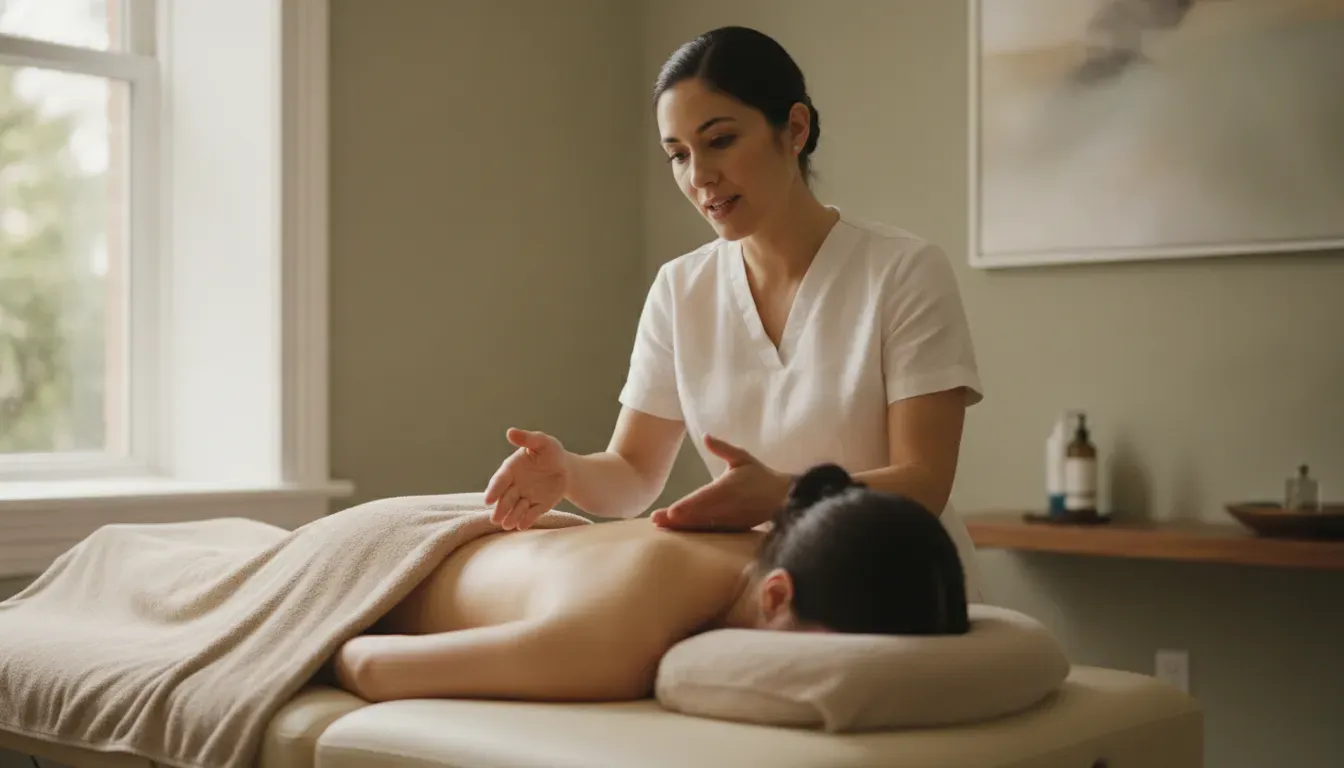
Preparing for an Ashiatsu massage is much like getting ready for any other massage. The most important thing you can do is hydrate well by drinking plenty of water the day of your appointment. This helps your muscles respond better to the treatment. You’ll undress to your comfort level and lie on the massage table, securely draped under a sheet, just as you would for a traditional Swedish or deep tissue massage. Our therapists use high-quality massage cream or oil to ensure the strokes are smooth and comfortable. Before you get on the table, take a moment to chat with your therapist about any areas of concern, pain points, or your pressure preferences. Open communication is key to a great experience.
A Step-by-Step Guide to Your Session
Once you’re settled on the table, your therapist will begin. They will use overhead bars for balance and support, allowing them to apply precise, consistent, and deep pressure with their feet. This isn’t just “walking on your back”; it’s a highly skilled technique. The broad surface of the foot delivers a deep, gliding compression that feels incredibly luxurious and covers a wider area than hands or elbows can. The goal of Ashiatsu Deepfeet Bar Therapy is to lengthen and stretch your muscles and spine without the sharp or pointy discomfort that can sometimes come with deep tissue work. You should feel a deep sense of release, not pain.
Understanding the Draping Process
Your comfort and privacy are always the top priority, and that starts with proper draping. Just like with any other professional massage, you will be securely covered by a sheet and blanket throughout your entire session. The main difference you might notice with Ashiatsu is that to allow for those long, flowing strokes along your back and legs, your therapist may need a slightly wider drape. This means a little more of your side might be exposed at times, but rest assured, all private areas remain completely and securely covered. It’s standard to undress completely for this type of deep work, but the most important rule is to undress only to your personal comfort level. Your therapist is a professional dedicated to creating a safe space, so never hesitate to communicate your needs or concerns at any point during your treatment.
Common Ashiatsu Myths, Busted
Let’s clear up a few things. The biggest myth is that Ashiatsu is painful or unsafe. In reality, it was specifically designed to deliver deep pressure safely. Because the therapist’s weight is supported by the overhead bars, they have complete control over how much pressure is applied. Another misconception is that it’s just a back massage. Ashiatsu is a full-body treatment that can address your legs, glutes, and arms, too. Our therapists are not just skilled; they are highly trained and certified professionals who have dedicated their careers to the art of massage. They understand anatomy and how to use this technique to bring you relief and relaxation.
What to Do After Your Ashiatsu Massage
After your session, you’ll likely feel incredibly relaxed and maybe even a little taller from the spinal decompression. To get the most out of your massage, continue to drink plenty of water throughout the day. This helps flush out any metabolic waste released from your muscles. You might feel some mild soreness, similar to how you’d feel after a good workout—that’s completely normal and a sign that your muscles have been worked effectively. A warm Epsom salt bath later in the evening can help soothe any tenderness. Take it easy for the rest of the day and allow your body to integrate the work it has received.
Is Ashiatsu Massage Right for You?
Ashiatsu is a powerful and deeply therapeutic massage, but its intensity means it isn’t the perfect fit for every single person or situation. Understanding if you’re a good candidate can help you get the most out of your session and ensure a safe, comfortable experience. Whether you’re an athlete, someone dealing with chronic pain, or just a fan of deep pressure, it’s worth exploring if this unique therapy aligns with your wellness goals. Let’s walk through who benefits most from Ashiatsu and when a different type of massage might be a better choice.
Who Benefits Most from Ashiatsu?
If you’re someone who regularly gets deep tissue massages and still feels like you need more pressure, Ashiatsu could be exactly what you’re looking for. It’s ideal for individuals with dense muscle mass or those who find the pointed pressure from elbows and thumbs in traditional deep tissue work to be uncomfortable. The therapist uses their feet and the force of gravity to deliver broad, consistent, and deep compression that can feel both intense and incredibly soothing. This technique allows for a level of depth that’s hard to achieve with hands alone, making Ashiatsu Deepfeet Bar Therapy a fantastic option for anyone craving a truly profound massage experience.
Important Health and Safety Considerations
Your safety is always the top priority. Because Ashiatsu involves very deep pressure, there are a few health conditions where it’s not recommended. If you have uncontrolled high blood pressure, varicose veins, or any acute inflammatory conditions, you should avoid this type of massage. It’s also not suitable for individuals who have had recent surgeries, are currently pregnant, or have osteoporosis. If you have any serious medical conditions, it’s always best to have a chat with your doctor before booking an appointment. We want to make sure the therapy you choose is helpful, not harmful, and there are wonderful alternatives like a gentle prenatal massage if Ashiatsu isn’t right for you at this time.
Additional Contraindications to Be Aware Of
Beyond the major health conditions we just covered, there are a few other situations to keep in mind. It’s very important to tell your therapist if you have breast implants, as they will need to modify the technique to ensure your comfort and safety. The deep pressure of Ashiatsu is also not recommended if you are taking blood thinners, have a history of blood clots, or are actively undergoing cancer treatment. The same applies to any contagious skin conditions, open wounds, or recent injuries like fractures or severe sprains. The most important thing is to be open and honest on your intake form. Our professional therapists are trained to review your health history and will always prioritize your well-being, suggesting a different approach if Ashiatsu isn’t the safest choice for you.
The Athlete’s Secret to Faster Recovery
Athletes and anyone with an active lifestyle often find Ashiatsu to be a game-changer for recovery and performance. The long, gliding strokes from the therapist’s feet can cover large muscle groups like the hamstrings, quads, and back more efficiently than hands. This deep compression helps to increase circulation, which flushes out metabolic waste and brings fresh, oxygenated blood to tired muscles. The result is reduced muscle soreness and improved flexibility. Whether you’re a weekend warrior or a dedicated athlete, incorporating Ashiatsu into your routine can help keep your body in peak condition and support faster recovery after tough workouts. You can explore all of our massage services to build the perfect recovery plan.
Can Ashiatsu Help Your Chronic Pain?
For those dealing with chronic pain, especially in the neck, shoulders, and back, Ashiatsu can offer significant relief. The sustained, deep pressure is highly effective at releasing stubborn knots and melting away long-held tension that contributes to persistent pain. The technique also helps to gently decompress the spine by elongating the muscles that run along it, creating space between the vertebrae. This can be particularly beneficial for people with sciatica or general back stiffness. Unlike the sometimes sharp feeling of a thumb or elbow, the broad surface of the foot provides a deep, consistent pressure that feels less invasive and more comforting, allowing your nervous system to relax fully.
When to Choose a Different Type of Massage
Ashiatsu is an intense experience, and it might not be the best starting point if you’re new to massage or sensitive to pressure. If the idea of deep compression sounds like too much, you’ll likely be more comfortable with a different approach. A classic Swedish massage offers a lighter touch focused on relaxation, while a traditional deep tissue or Swedish massage can provide targeted relief without the full-body weight of Ashiatsu. It’s always a good idea to listen to your body. Starting with a more conventional massage can help you gauge your pressure preferences and work your way up to more intense therapies when you feel ready.
Ashiatsu vs. Traditional Massage: What’s the Difference?
If you’re looking for a massage that goes beyond the surface, you’ve likely come across both Ashiatsu and traditional deep tissue massage. While both aim to relieve tension and pain, they use very different approaches to get there. Think of it as the difference between a targeted tool and a wider, smoother one. Understanding how they compare can help you choose the perfect session for what your body needs right now. Let’s break down the key distinctions in pressure, technique, and overall experience.
How Does the Pressure Actually Feel?
The most noticeable difference is how the pressure feels. In a traditional massage, your therapist uses their hands, forearms, and sometimes elbows to apply pressure. This can feel pointed and specific, which is great for zeroing in on small, tight knots. With Ashiatsu Deepfeet Bar Therapy, the therapist uses their feet. This allows for a much broader, more consistent, and deeper pressure. Instead of a sharp point, the sensation is often described as a deep, flowing wave of compression that envelops the muscle. It’s an incredibly deep massage without the poky feeling that can sometimes accompany deep tissue work.
Hands vs. Feet: A Look at Technique and Coverage
Technique is what truly sets these two styles apart. A traditional massage therapist works directly over you, using their body weight to apply pressure through their hands and arms. In an Ashiatsu session, your therapist stands on the table, using parallel bars on the ceiling for balance and control. This setup allows them to use gravity to their advantage, sinking into muscles with their body weight through their feet. Because the foot is larger and softer than an elbow or thumb, it can cover more ground more efficiently. This makes Ashiatsu especially effective for large muscle groups like the back, glutes, and hamstrings, providing a uniquely deep and consistent experience.
Which One Is Right for Your Body?
The “better” massage really depends on your goals and preferences. If you have specific, small knots in areas like your neck or shoulders that need detailed attention, a Deep Tissue or Swedish Massage might be the ideal choice. However, if you crave intense, deep pressure across large areas of your body but find the sharpness of elbows uncomfortable, Ashiatsu is a fantastic alternative. It works the deepest layers of muscle and connective tissue, making it a game-changer for chronic lower back pain, sciatica, and overall muscle tightness. Many people find it delivers profound, lasting relief that traditional methods can’t quite match.
Comparing the Comfort and Sensation
It’s a common myth that a massage has to hurt to be effective. While traditional deep tissue can have moments of “good pain,” Ashiatsu is known for delivering deep compression without the discomfort. Because the pressure is distributed through the entire foot, it feels less invasive and is often described as surprisingly gentle for how deep it is. The goal is always to work with your body, not against it. A skilled therapist, whether using hands or feet, will communicate with you to ensure you’re comfortable. The broad, gliding strokes of Ashiatsu help lull your nervous system into a state of deep relaxation, making the entire session feel both therapeutic and incredibly soothing.
Not All Ashiatsu Training Is Created Equal
When you’re trusting someone to use their body weight and feet to massage you, their training isn’t just important—it’s everything. Ashiatsu is a highly specialized skill that requires a deep understanding of anatomy, precise technique, and a strong focus on safety for both the client and the therapist. A properly trained practitioner knows how to apply deep, consistent pressure without causing pain or injury. This is why we take training so seriously at Nola Bliss. Not all certifications are created equal, and knowing where your therapist trained can give you peace of mind. Here are some of the most respected institutions that set the standard for Ashiatsu education.
DeepFeet Bar Therapy
When it comes to Ashiatsu, DeepFeet is widely considered the leading authority in barefoot massage training. Their comprehensive courses are the gold standard, focusing meticulously on safety protocols, proper body mechanics, and the therapeutic application of Ashiatsu techniques. Therapists who complete DeepFeet training are equipped with the skills to perform this unique massage with confidence and precision. Because Nola Bliss is the only certified DeepFeet training center on the Gulf Coast, you can be sure our therapists are held to the highest possible standard. We don’t just practice Ashiatsu; we help set the benchmark for excellence in our community.
International School of Shiatsu
The International School of Shiatsu offers a more holistic approach, integrating Ashiatsu into a broader curriculum of bodywork. Their training emphasizes the connection between body mechanics and the flow of energy, which is fundamental to both Shiatsu and Ashiatsu. By teaching Ashiatsu within this wider context, the school provides therapists with a well-rounded education that deepens their understanding of the body as a whole. This approach helps practitioners deliver a more intuitive and effective massage, making it another highly respected name in the world of advanced bodywork education.
Barefoot Masters
As the name suggests, Barefoot Masters is another institution that specializes in Ashiatsu training. Their programs are designed to build a therapist’s proficiency and confidence in using their feet to deliver powerful deep tissue massage. A major focus of their curriculum is hands-on (or rather, feet-on) application, ensuring that practitioners have plenty of practical experience before they begin working with clients. This emphasis on real-world practice helps create skilled therapists who can apply techniques effectively and safely, making Barefoot Masters a reputable choice for specialized Ashiatsu education.
American Institute of Alternative Medicine
The inclusion of Ashiatsu in the curriculum at schools like the American Institute of Alternative Medicine shows just how much this therapy has gained recognition within the broader wellness community. By offering Ashiatsu alongside other massage techniques, AIAM acknowledges its value and effectiveness as a therapeutic modality. This institution is committed to providing students with a comprehensive education in a variety of alternative therapies. Seeing Ashiatsu taught in this setting confirms its legitimacy and its place as a respected and powerful form of treatment for pain, stress, and muscle tension.
Nola Bliss Massage: A Gulf Coast Training Center
We don’t just offer Ashiatsu at Nola Bliss—we live and breathe it. Our commitment to this incredible therapy goes so deep that we’ve become the only certified DeepFeet training center on the entire Gulf Coast. This means we’re not just a place to receive an amazing massage; we’re a hub for excellence where other therapists come to learn from the best. For you, this is the ultimate assurance of quality. Our therapists are held to the highest standards because they train and practice in an environment dedicated to mastering this art form. When you book an Ashiatsu Deepfeet Bar Therapy session with us, you’re choosing a practitioner who is deeply invested in their craft and committed to providing a safe, effective, and truly transformative experience.
Ready to Try Ashiatsu Massage?
If the idea of a deep, gliding massage that melts away tension sounds like exactly what you need, you might be ready to book your first Ashiatsu session. Taking the next step is simple, but it helps to know what to look for in a therapist and how to get the most out of your experience. Planning ahead ensures your introduction to this unique therapy is relaxing, restorative, and everything you hoped for. Here’s how to get started.
How to Find a Qualified Ashiatsu Therapist
Finding the right therapist is the most important step. Because Ashiatsu involves the therapist using their body weight to apply pressure with their feet, specialized training is non-negotiable. This isn’t a technique someone can just pick up; it requires a deep understanding of anatomy and specific skills to ensure the massage is both safe and effective. Look for a therapist certified in a recognized modality like Ashiatsu Deepfeet Bar Therapy. A certified professional has been trained to use the overhead bars for support and to deliver consistent, controlled pressure that works with your body, not against it. Don’t hesitate to ask about a therapist’s credentials—a great practitioner will be happy to share their qualifications.
How Often Should You Get an Ashiatsu Massage?
How frequently you should get an Ashiatsu massage depends entirely on your goals. If you’re working through chronic pain or a specific injury, you might benefit from weekly sessions to start. This consistency can help retrain your muscle patterns and provide cumulative relief. For general wellness and stress management, a session every two to four weeks is a great way to maintain flexibility and keep tension at bay. One of the best things about Ashiatsu is how the pressure is distributed. Because the therapist uses the broad surface of their foot, the deep compression feels less intense than the pointed pressure of an elbow, allowing your body to relax into the treatment without feeling sore afterward.
Get the Most Out of Every Session
To make your Ashiatsu massage as effective as possible, a little planning goes a long way. First, be sure to hydrate well before and after your appointment, as massage can release metabolic waste from your muscles. During the session, remember that communication is key. While your therapist is skilled at reading your body’s response, you are the ultimate expert on what you’re feeling. Speak up if you need the pressure adjusted. The goal is for the massage to feel deep and effective, but never painful. Afterward, try to give yourself some time to relax instead of rushing back to a hectic schedule. This allows your body to fully integrate the work that was done.
Can You Combine Ashiatsu with Other Therapies?
Ashiatsu is a powerful standalone therapy, but it also pairs beautifully with other treatments to enhance your results. The deep relaxation it provides can create a perfect foundation for other wellness practices. For an even more luxurious experience, consider adding enhancements to your session. Incorporating Hot Himalayan Salt Stones can help soothe muscles and add minerals to your skin, while CBD oil can deepen your sense of calm and reduce inflammation. You can even share the experience with a partner by booking an Ashiatsu couples massage. Combining therapies allows you to create a customized wellness plan that addresses your specific needs from head to toe.
Related Articles
- Ashiatsu | Nola Bliss Massage Therapy
- Massage Services | Nola Bliss Massage Therapy
- About Us | Nola Bliss Massage Therapy
- Workshops | Nola Bliss Massage Therapy
- Home | Nola Bliss Massage Therapy
Frequently Asked Questions
Is it sanitary to have a massage with someone’s feet? Absolutely. Therapists treat their feet with the same care and attention they give their hands. Before your session begins, your therapist performs a thorough cleansing and sanitizing ritual. Throughout the massage, their feet will only touch the clean sheet and the high-quality massage cream or oil applied to your skin, never the floor.
Will the therapist be putting their entire body weight on me? No, and this is a common misconception. Your therapist uses the overhead bars for balance and support, which gives them complete control over how much pressure is applied. They can skillfully adjust their weight to provide the perfect amount of deep, gliding pressure for your comfort level, ensuring the experience is therapeutic and never overwhelming.
I love deep tissue, but hate the sharp elbow feeling. Is Ashiatsu a good alternative? Yes, this is one of the main reasons people fall in love with Ashiatsu. It delivers that deep, satisfying pressure you crave without the sharp or poky sensation that can come from an elbow or thumb. Because the foot has a broad, soft surface, the pressure feels more like a consistent, heavy wave that coaxes your muscles to release, making it a fantastic alternative for deep tissue fans.
Can I get an Ashiatsu massage on areas other than my back? Of course. While Ashiatsu is famous for its incredible back work, it is a full-body massage. The long, flowing strokes are highly effective on large muscle groups like your glutes, hamstrings, and quadriceps. Your therapist will tailor the session to address your specific areas of tension from your shoulders all the way down to your calves.
Are there any reasons I shouldn’t get an Ashiatsu massage? Your safety is the top priority, and because Ashiatsu involves very deep pressure, it isn’t suitable for everyone. We don’t recommend it if you are pregnant, have had recent surgery, have uncontrolled high blood pressure, or have conditions like osteoporosis. If you have any serious health concerns, it’s always a good idea to check with your doctor before booking your session.