
As a massage therapist, your hands are your livelihood. But the constant strain on your wrists, shoulders, and back can lead to burnout or even career-ending injuries. What if you could give the deepest, most luxurious massage of your client’s life without sacrificing your own body? That’s the power of Ashiatsu. This barefoot massage technique lets you use gravity and your body weight to deliver consistent, deep pressure that hands simply can’t replicate. It’s a game-changer for therapists seeking longevity. That’s why so many are seeking out Ashiatsu training workshops—to build a healthier, longer, and more fulfilling career.
Key Takeaways
- Protect your body for a longer career: Ashiatsu uses your body weight and gravity to deliver deep pressure, saving your hands, wrists, and shoulders from the repetitive strain that often leads to burnout.
- Invest in the right equipment from the start: Your practice is only as safe as your setup. A professional massage table with a high dynamic weight rating and a properly installed overhead bar system are essential for protecting both you and your clients.
- Choose a training program that builds real confidence: Look for a certification course that combines foundational knowledge with extensive hands-on practice to ensure you leave with the skills and CEUs needed to effectively incorporate Ashiatsu into your practice.
What is Ashiatsu Massage?
If you’ve ever wished for a massage that could deliver deep, consistent pressure without the sharp discomfort of an elbow or thumb, you’re going to love Ashiatsu. In Japanese, “ashi” means foot and “atsu” means pressure, which perfectly describes this unique modality. Ashiatsu is a luxurious and therapeutic form of barefoot massage where a trained therapist uses their feet to perform deep, gliding strokes across your body.
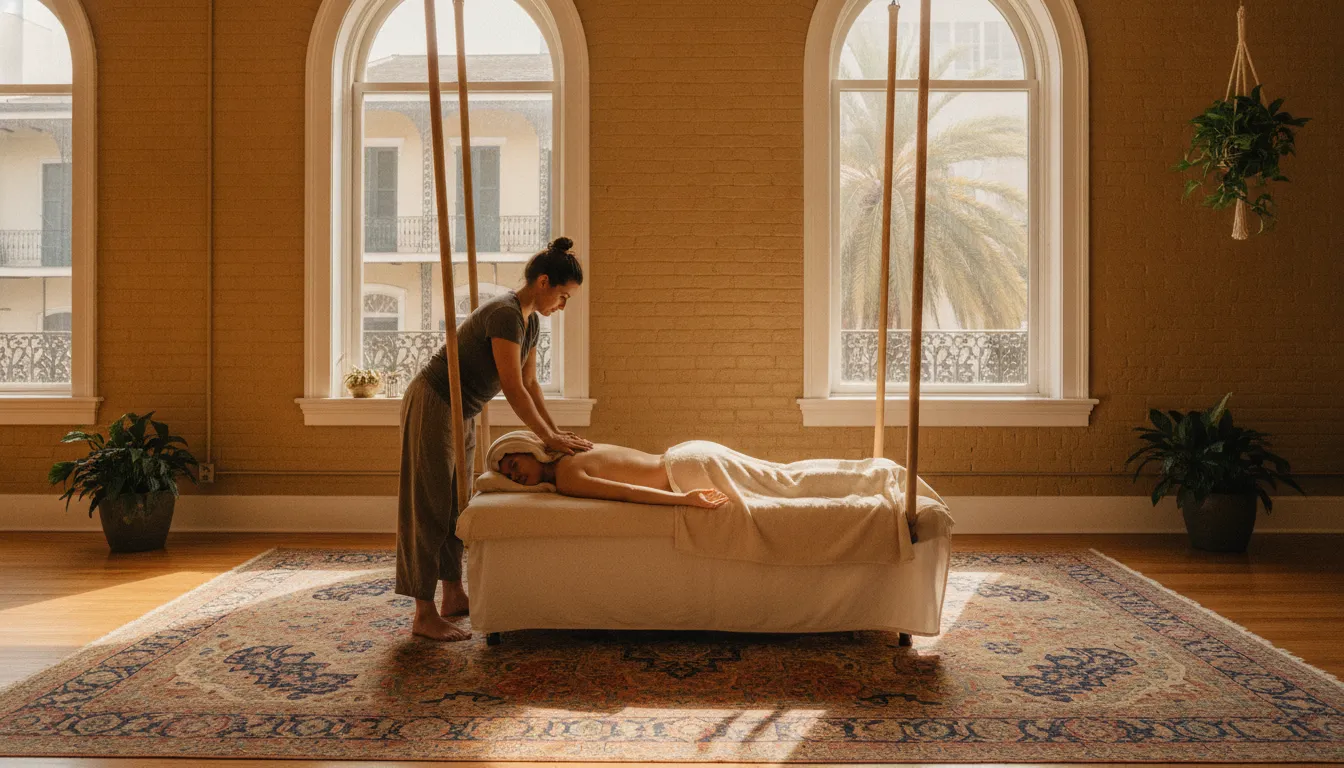
Don’t picture someone simply walking on your back. This is a highly refined and controlled technique. Therapists use overhead bars for balance and support, allowing them to skillfully apply their body weight and gravity to deliver pressure that is both deep and incredibly smooth. The broad, soft surface of the foot can cover more ground and contour to the body in a way that hands simply can’t. This creates a sensation of “liquid deep tissue,” melting away muscle tension and chronic pain. It’s one of the most effective ways to achieve profound relaxation and relief, making it a standout among therapeutic massage services. Whether you’re an athlete with tight hamstrings or someone who carries stress in their shoulders, the sustained pressure of an Ashiatsu session can feel transformative.
Why Therapists and Clients Both Love Ashiatsu
One of the most compelling aspects of Ashiatsu is that it’s a win-win for everyone. For massage therapists, it’s a career-saver. The physical demands of traditional deep tissue massage can lead to repetitive strain injuries in the hands, wrists, and shoulders. By using their feet and body weight, therapists can provide deep, effective work for hours without putting stress on their own bodies. This sustainable approach allows them to have a long, healthy career doing what they love.
For clients, the benefits are just as significant. The therapist’s foot provides a broader, more comfortable tool for deep tissue work. This allows for a deeper, more consistent pressure that can release tight muscles and fascial adhesions more effectively and with less soreness. The long, flowing strokes are also deeply relaxing to the nervous system, making Ashiatsu Deepfeet Bar Therapy an ideal treatment for anyone seeking serious relief from chronic pain or stress.
Benefits for the Therapist
For massage therapists, Ashiatsu is more than just another technique—it’s a pathway to a longer, healthier career. The physical demands of traditional deep tissue can be grueling, but Ashiatsu uses your body weight and gravity to deliver deep pressure, saving your hands, wrists, and shoulders from the repetitive strain that often leads to burnout. By using your feet and body weight, you can provide deep, effective work for hours without putting stress on your own body. This shift from muscular force to balanced, gravitational pressure is a complete game-changer. Learning this modality is a smart investment in your professional future, allowing you to serve clients better and for longer. As the only certified Ashiatsu training center on the Gulf Coast, we are passionate about helping fellow therapists build sustainable and fulfilling careers.
The Client Experience
From the client’s perspective, receiving an Ashiatsu massage is a uniquely luxurious and effective experience. The therapist’s foot provides a broader, more comfortable tool for deep tissue work, allowing for a deeper, more consistent pressure that can release tight muscles and fascial adhesions more effectively and with less soreness. The broad, soft surface of the foot can cover more ground and contour to the body in a way that hands simply can’t, creating a sensation of deep, flowing pressure rather than the pointed feeling of an elbow or thumb. This sustained pressure can feel truly transformative, melting away chronic tension and calming the nervous system. It’s an ideal treatment for anyone seeking serious relief, from athletes with stubborn knots to individuals with persistent back pain who haven’t found success with other massage therapies.
The Ancient Roots of a Modern Massage
While it might seem like a new trend, barefoot massage has roots in ancient cultures across Asia and India. For centuries, practitioners have understood the power of using their feet to heal and relax the body. These early forms were often practiced on a floor mat, with the therapist using ropes or bamboo for balance.
Today’s Ashiatsu has evolved into a sophisticated and standardized practice. The modern modality, particularly the use of overhead bars, brings a new level of safety, control, and precision to this ancient art form. It combines the wisdom of traditional techniques with a contemporary understanding of anatomy and physiology. As a certified training center on the Gulf Coast, we are proud to carry on this tradition, teaching therapists how to blend ancient healing with modern bodywork to deliver an unparalleled massage experience.
The Modern History of Ashiatsu
The transition from ancient, floor-based techniques to the modern, bar-supported modality we see today happened thanks to pioneers in the Western massage world. In the 1990s, a massage therapist named Ruthie Hardee was instrumental in developing and trademarking what we now know as Ashiatsu Deepfeet Bar Therapy. After studying various forms of barefoot massage, she saw the incredible power of using the feet for deep tissue work but also realized it needed a safer, more controlled system. Her introduction of overhead bars was a total game-changer. This innovation allows therapists to anchor themselves, giving them perfect balance and the ability to adjust the depth and pressure of their strokes with amazing precision. It transformed a powerful, ancient concept into a standardized, safe, and highly effective therapeutic practice that is now taught in certified centers, ensuring quality and consistency for clients everywhere.
Where to Find Ashiatsu Training on the Gulf Coast
Once you’ve decided to learn Ashiatsu, the next step is finding a training program that fits your career goals and learning style. The Gulf Coast offers several options, each with a unique approach to teaching this incredible modality. Choosing the right workshop is a big decision—it’s an investment in your skills, your body, and your clients’ well-being. You’ll want to look at everything from the curriculum and certification process to the instructors’ experience and passion for the work. A great training program doesn’t just teach you the strokes; it gives you the confidence and anatomical knowledge to practice safely and effectively for years to come.
Why Train at NOLA Bliss Massage?
When you’re looking for training on the Gulf Coast, NOLA Bliss Massage stands out. We are the only certified training center for Ashiatsu Deepfeet Bar Therapy in the entire region. We offer Barefoot Trainer’s Ashiatsu, a curriculum known for providing the highest level of education while keeping prices accessible for working therapists. Our goal is to share the incredible benefits of Ashiatsu Deepfeet Bar Therapy with as many massage therapists as possible because we’ve seen firsthand how it can transform a career and a client’s health. Our instructors are passionate, experienced practitioners dedicated to helping you succeed and build a practice you love.
A Look at Ashiatsu Training Centers in the Region
As you explore your options, you’ll find training centers across the Gulf Coast, from Florida to Texas. Some programs offer intensive two-day courses that cover full-body posterior and anterior routines, designed to get you practicing quickly. Others focus on creating passionate barefoot massage practitioners with a deep appreciation for anatomy. When comparing, consider what’s most important for your professional growth. Look into the lineage of the Ashiatsu being taught, the instructor’s hands-on (or feet-on!) experience, and whether the program provides ongoing support. The right fit will equip you with the tools to become a confident and knowledgeable specialist in your field.
Finding a Workshop Schedule That Works for You
Ashiatsu training isn’t one-size-fits-all. You can find a variety of formats to match your schedule and how you learn best. Many therapists thrive in multi-day, in-person workshops that offer immediate feedback and hands-on practice. If your schedule is tight, some programs offer self-paced eLearning options with comprehensive video and written instruction that covers everything taught in a live class. For those who aren’t ready to commit fully, an introductory course can be a great way to get a feel for barefoot massage. This allows you to decide if you want to pursue a full certification before making a larger investment.
Are You Ready for Ashiatsu Training?
Before you jump into an Ashiatsu workshop, it’s a good idea to understand what’s needed to set yourself up for success. This isn’t about being a world-class athlete, but there are some key physical and equipment considerations to keep in mind. Getting these basics sorted out first means you can focus all your energy on learning the techniques and providing an incredible massage experience for your clients. It’s all about being prepared so you can practice safely and effectively for years to come.
Physical Prep and Equipment Essentials
Let’s talk about strength. To perform Ashiatsu safely, you’ll need a solid foundation of upper body strength and core stability. A good benchmark is being able to support your body weight with straight arms for about 15 seconds. This isn’t to test your limits, but to ensure you can comfortably hold yourself on the overhead bars and apply pressure with control. Beyond your own physical readiness, your equipment is just as crucial. You’ll need a professional, high-quality massage table that is specifically rated to handle the dynamic weight of both you and your client. This is a non-negotiable for practicing Ashiatsu Deepfeet Bar Therapy safely.
Mastering Ashiatsu Safety Protocols
Safety is the absolute top priority in any massage practice, and Ashiatsu is no exception. The most critical piece of your setup is your massage table. It must be able to support your weight, the weight of your heaviest potential client, and then some, to create a safe buffer. Always check the manufacturer’s dynamic weight rating before purchasing or using a table for Ashiatsu. The other key safety feature is the overhead bar system. These bars are your lifeline, providing the stability and balance you need to move gracefully and apply pressure correctly. A secure, properly installed bar system is essential for protecting both you and your client from injury.
Core Guidelines for Your Practice
Once you have the right gear, it’s all about how you use it. Proper body mechanics are at the heart of Ashiatsu and are a major focus during training. Learning how to use your body weight effectively not only delivers a fantastic deep-tissue massage but also protects your own body from strain and fatigue—a huge win for career longevity! Your instructor will guide you through using the bars for support, allowing you to leverage gravity instead of muscle. You’ll also learn gentle stretches and relaxation techniques to keep your body prepared for the work. Think of it as learning a new dance where balance, posture, and fluid movement are key to a beautiful performance.
How Much Does Ashiatsu Training Cost?
Investing in new skills is one of the best moves you can make for your career, and Ashiatsu training is no exception. While it requires a financial commitment, understanding the costs upfront helps you plan accordingly. Let’s break down what you can expect to invest in your journey to becoming an Ashiatsu practitioner, from the workshop tuition itself to the essential equipment you’ll need to get started.
Breaking Down Workshop and Training Fees
The cost of an Ashiatsu workshop can vary quite a bit, depending on the length and depth of the course. You’ll find that foundational, multi-day classes typically range from a few hundred to over $750. This tuition generally covers your hands-on instruction, comprehensive training manuals, and the continuing education units (CEUs) you need for your license renewal. When you’re comparing programs, look at what’s included in the price. A higher-priced workshop might offer more hours of hands-on practice or a more in-depth curriculum, which is a valuable long-term investment. At NOLA Bliss, we focus on providing a thorough Ashiatsu Deepfeet Bar Therapy education that prepares you for success.
Understanding Course Pricing
As you compare different Ashiatsu workshops, look beyond the sticker price to see what you’re truly getting for your investment. A higher-priced course often reflects more value, such as a more comprehensive curriculum, smaller class sizes for personalized attention, or additional hours of hands-on practice. Your tuition fee typically covers the core components: the in-person instruction from an experienced teacher, a detailed training manual you can reference for years to come, and the continuing education units (CEUs) required for your license renewal. A quality program is an investment in your career, equipping you with the confidence and skill to successfully offer Ashiatsu Deepfeet Bar Therapy and build a sustainable practice.
How to Save on Your Training: Discounts & Payment Plans
Don’t let the initial price tag keep you from pursuing your goals. Many training centers understand that this is a significant investment and offer ways to make it more manageable. It’s always a good idea to ask about payment options when you inquire about a workshop. Some schools may require a deposit to secure your spot, with the remaining balance due closer to the start date. You might also find early-bird registration discounts, which can save you a nice chunk of change just for planning ahead. If you’re thinking of training with a colleague, ask about group rates, too. Being proactive and asking these questions can make the financial side of things much less stressful.
Your Guide to Investing in Equipment
Beyond the workshop tuition, you’ll need to budget for the proper equipment. The most critical piece is the overhead bar system, which is essential for providing Ashiatsu massage safely and effectively. These systems can be permanently installed in your ceiling or come in portable setups if you need more flexibility. Some home-study courses even bundle starter equipment with their training materials. Your instructor is your best guide here; they can recommend reputable suppliers and help you choose the right setup for your space and budget. Prioritizing high-quality, professionally installed bars is non-negotiable—it’s a matter of safety for both you and your clients.
DIY Equipment Options
While it can be tempting to look for DIY solutions to save on initial costs, your Ashiatsu setup is not the place to cut corners. The safety of you and your client depends entirely on the structural integrity of your equipment. A professional massage table must have a high dynamic weight rating to support both of you, and your overhead bars need to be installed securely enough to handle constant, shifting weight. A homemade or improperly installed system introduces a serious risk of equipment failure, which could lead to severe injury and liability. Investing in professionally manufactured and installed equipment is essential for meeting the safety standards required to practice Ashiatsu Deepfeet Bar Therapy with confidence and peace of mind.
What You’ll Learn: A Look Inside the Curriculum
So, what exactly happens inside an Ashiatsu training workshop? It’s a fair question. You’re investing your time and money, and you want to know what skills you’ll walk away with. A well-structured curriculum is designed to take you from a curious practitioner to a confident Ashiatsu therapist. It’s a deep dive into a new modality, building your abilities layer by layer. The focus is on creating a sustainable practice for you and a profoundly effective treatment for your clients. You’ll learn how to perform a full-body session that addresses common client complaints while preserving your own energy and physical health.
Most certified training programs follow a logical progression. You’ll start with the absolute basics—understanding the equipment, proper sanitation, and the core principles of using your feet as massage tools. From there, you’ll learn how to apply pressure safely and effectively, using your body weight and the overhead bars for balance and support. The curriculum covers a complete sequence of strokes for the entire body, ensuring you can offer a comprehensive Ashiatsu Deepfeet Bar Therapy session. It’s not just about memorizing moves; it’s about understanding the anatomy and body mechanics that make this work so powerful. You’ll leave feeling prepared to bring a whole new level of therapeutic massage to your practice.
From Basic Strokes to Advanced Techniques
Your training begins with the fundamentals. You’ll learn the foundational strokes for the posterior and anterior body, covering every major muscle group from the neck and shoulders down to the legs and feet. The instructor will guide you through each movement, showing you how to apply broad, consistent pressure that feels incredible to the client. You’ll practice gliding, compressing, and stretching techniques, mastering the art of using your feet with precision and control. The goal is to build a strong foundation so you can confidently perform a full-body Ashiatsu massage and adapt your techniques to meet individual client needs.
Mastering Safety and Body Mechanics
One of the biggest draws of Ashiatsu for therapists is its career-extending potential. A huge part of your training will focus on mastering body mechanics to ensure you can provide deep, therapeutic massage with zero wear and tear on your own body. You’ll learn how to use the overhead bars for stability and leverage, allowing gravity to do the work instead of your muscles. This protects your hands, wrists, and shoulders from the repetitive strain that can lead to burnout. The emphasis on safety—for both you and your client—is paramount. You’ll learn proper draping, contraindications, and how to maintain control and balance at all times, ensuring a secure and professional experience with guidance from expert trainers.
Why Hands-On Practice is Non-Negotiable
You can watch videos all day, but nothing replaces the value of hands-on practice with real-time feedback. In-person workshops provide a supportive environment where you can apply what you’re learning on other students under the watchful eye of an experienced instructor. This immediate correction and guidance is what builds true confidence and skill. You’ll have the chance to both give and receive the work, which is invaluable for understanding how the strokes feel from the client’s perspective. This practical experience is essential for mastering the flow and pressure of a session, ensuring you’re ready to add these new massage services to your menu as soon as you complete your training.
Comprehensive Course Topics
A quality Ashiatsu training program is designed to build your skills from the ground up. You’ll start with the essentials, like proper foot sanitation and how to communicate with your client about this new modality. The curriculum will then guide you through a full-body routine, covering both the front and back of the body. You’ll learn specific strokes to address common problem areas like the shoulders, hips, and legs. The focus is always on practical application, ensuring you understand not just the “how” but the “why” behind each movement. By the end of the course, you’ll have the knowledge to confidently perform a complete Ashiatsu Deepfeet Bar Therapy session that provides deep relaxation and therapeutic relief for your clients.
Marketing Your New Skills
Once you’re certified, it’s time to let your clients know about your amazing new offering. Marketing Ashiatsu is all about highlighting its unique benefits. You can explain how the broad, consistent pressure from the feet provides a “liquid deep tissue” experience without the discomfort of pointy elbows or thumbs. Frame it as a premium service—because it is. This specialization sets you apart from other therapists in your area and can attract new clients looking for effective pain relief. Update your website, create social media posts showing your setup, and consider offering an introductory special to encourage your regulars to try it. Showcasing it among your other massage services will position you as a versatile and highly skilled practitioner.
Therapist Self-Care and Foot Preparation
As an Ashiatsu therapist, your feet are your most important tools, so taking care of them is a top priority. Your training will cover the essentials of foot care, including hygiene and keeping your feet soft and presentable. But self-care goes beyond that. The body mechanics you learn are designed to protect your entire body, but maintaining your own physical health is key. This includes regular stretching, staying hydrated, and getting massages yourself to keep your muscles in good condition. Think of it as part of your professional practice. By prioritizing your own well-being, you ensure you can continue providing incredible massages for your clients for many years to come.
Training Materials and Support
A great training workshop doesn’t end when you walk out the door. The best programs provide you with a wealth of materials and ongoing support to ensure you feel confident as you integrate Ashiatsu into your practice. From detailed manuals to digital resources, these tools are designed to reinforce what you learned in class and serve as a reference whenever you need them. This support system is crucial because it helps you continue to refine your technique and troubleshoot any challenges that come up. It’s about investing in a program that invests back in you, providing the resources you need for long-term success in your career.
Digital and Physical Learning Materials
When you enroll in a certification course, you can expect to receive a comprehensive set of learning materials. Most programs provide a detailed training manual with step-by-step instructions and high-quality photos for every stroke in the routine. Many also offer access to an online portal with video lessons that you can review anytime you need a refresher. These digital resources are invaluable for practicing your flow and perfecting your technique after the workshop ends. Having access to these materials ensures you can continue to study and grow as a practitioner, solidifying the knowledge you gained during your hands-on training with our dedicated team of instructors.
Instructor Support and Resources
Your relationship with your instructor is one of the most valuable parts of your training. They are your guide, mentor, and biggest cheerleader. A good instructor provides personalized feedback during the workshop and remains a resource long after you’ve completed the course. They can offer advice on everything from choosing the right equipment to handling challenging client cases. This ongoing support is what helps you move from being a student to a confident professional. Having an expert you can turn to with questions is a huge advantage as you build your Ashiatsu practice and make this incredible modality your own.
How to Get Certified in Ashiatsu
Becoming a certified Ashiatsu therapist is a fantastic way to expand your skills, attract new clients, and lengthen your career by saving your hands. Certification is more than just a piece of paper; it’s a testament to your dedication. It shows you’ve completed specialized training and have mastered the techniques needed to perform this incredible modality safely and effectively. The process isn’t just about learning a new skill; it’s about committing to a higher standard of practice and joining a community of dedicated barefoot massage specialists who are passionate about their craft.
The journey to certification involves intensive hands-on training, a deep understanding of anatomy and body mechanics, and a genuine passion for healing. At NOLA Bliss, we guide you through every step. As the only certified training center for Ashiatsu Deepfeet Bar Therapy on the Gulf Coast, we provide the expert instruction you need to become a confident and skilled practitioner. Think of certification as your official entry into the world of barefoot massage, opening up new possibilities for your practice and giving your clients the assurance that they are in highly capable hands (and feet!).
How to Earn Your CEU Credits with Ashiatsu
For licensed massage therapists, Continuing Education Units (CEUs) are a professional requirement, but they’re also an opportunity for growth. The great news is that your Ashiatsu training doubles as a way to earn these essential credits. Reputable training programs are approved by national and state boards to provide CEUs, so you’re investing in your career and fulfilling your licensing requirements at the same time. For example, a foundational course can teach you a full-body routine over a weekend while providing you with the necessary CEUs to keep your license current. When you’re researching workshops, always confirm that they offer CEUs recognized by your state board.
The Importance of NCBTMB Approval
Think of NCBTMB approval as a gold star for your training. When a course is approved by the National Certification Board for Therapeutic Massage and Bodywork, it means you’re getting a high-quality education that the industry respects. More importantly, it guarantees that the CEUs you earn will actually count toward renewing your license—no surprises or wasted effort. This approval shows that the curriculum, instructors, and course material have all been vetted to meet rigorous professional standards. It’s your assurance that you’re investing in a program that will provide you with the skills and knowledge to practice safely and effectively, giving you confidence in your new modality and peace of mind for your clients.
Your Step-by-Step Guide to Certification
Getting certified in Ashiatsu is a straightforward process. It starts with finding and enrolling in a foundational training program taught by a certified instructor. These courses typically blend online learning with intensive, in-person instruction. The online portion often covers theory, history, and contraindications, which you can complete at your own pace. Then, you’ll attend a live class for hands-on practice, where you’ll learn the strokes, proper body mechanics, and safety protocols under the watchful eye of your instructor. After completing the course and demonstrating your proficiency, you’ll receive your certification and be ready to offer Ashiatsu to your clients.
Beyond Certification: Advanced Training Options
Your initial certification is just the beginning. Once you’ve mastered the fundamentals, you can explore advanced training to deepen your expertise and specialize your practice. Advanced workshops often focus on specific techniques, such as side-lying positions for prenatal clients or deeper, more targeted strokes for athletes. These courses are designed to turn you from a proficient therapist into a true specialist. Continuing your education helps you refine your skills, build confidence, and become the go-to Ashiatsu expert in your area. Our dedicated team is passionate about helping therapists grow into confident, detailed specialists who are leaders in the field.
How to Choose the Right Training Program
Finding the right Ashiatsu training program is a big decision, but it doesn’t have to be overwhelming. When you know what to look for, you can confidently pick a workshop that aligns with your career goals, learning style, and schedule. It’s all about comparing the key components—curriculum, logistics, and registration—to find the perfect fit for you. Taking the time to assess these areas ensures you’re not just learning a new skill, but making a smart investment in your future as a massage therapist.
What to Look for in a Workshop Curriculum
The heart of any training program is its curriculum. You’ll want to look for workshops that offer comprehensive training, covering both posterior and anterior full-body strokes to ensure you can provide a complete and effective treatment. Some programs pack this into an intensive, multi-day course designed to give you a deep understanding of the modality. If your schedule is tight, many institutions also provide excellent eLearning options. These self-paced courses often include the same written materials and video instruction as live classes, giving you the flexibility to learn when it works best for you.
Choosing a Location and Schedule That Works for You
Your next step is to consider the practical side of things: where and when the training takes place. While in-person workshops offer invaluable hands-on experience, high-quality virtual options are becoming more common. You can find immersive live online workshops that teach specialized techniques like Seated Ashiatsu from the comfort of your home. Beyond the format, consider the provider’s overall philosophy. Seek out instructors and centers focused on helping you become a truly proficient barefoot massage practitioner, as their dedication will directly impact your confidence and skill level long after the class ends.
How to Register for Your Workshop
Once you’ve landed on the right program, the registration process is typically straightforward. Most training centers, including NOLA Bliss Massage, require a deposit or a non-refundable retainer to secure your spot in a class. This is a standard practice that confirms your commitment and allows the training center to manage class sizes effectively. The remaining balance is usually due closer to the workshop date. This payment structure helps you plan your finances while guaranteeing your place in the course, so you can focus on getting excited to learn.
How to Prepare for Your Ashiatsu Training Workshop
Getting ready for your Ashiatsu workshop is an exciting step, and a little preparation goes a long way in making sure you get the most out of the experience. Think of it as setting the stage for a new chapter in your massage therapy career. By taking care of a few things beforehand, you’ll arrive feeling confident, focused, and ready to absorb everything your instructors have to share. This is your chance to fully immerse yourself in learning a technique that can transform your practice and save your body from the strain of traditional massage.
Your Workshop Checklist: What to Bring
You can travel light when you come for your hands-on training. We provide all the major equipment, including the massage table and the overhead bar system you’ll be learning on. Your main focus should be on your own comfort and readiness to learn. Wear loose, comfortable clothing that allows for a full range of movement—think yoga or workout attire. You’ll also want to bring a notebook and pen for any insights you want to jot down, though most of the core curriculum will be provided for you. Many programs, including ours, offer comprehensive eLearning materials with video and written instruction that you can review before and after the Ashiatsu Deepfeet Bar Therapy workshop.
Pre-Workshop Prep: What to Do Before Day One
Before you even step into the studio, take some time to familiarize yourself with any pre-course materials sent your way. Watching the introductory videos and reading through the foundational concepts will give you a solid head start. It’s also a great idea to arrive well-rested and hydrated. Ashiatsu training is a physical practice, and you’ll be on your feet (and on the table) quite a bit. Most importantly, come with an open mind. Learning to use your feet as massage tools is a new skill, and our dedicated team of instructors is here to guide you every step of the way. Trust the process and be ready to have some fun while you learn.
What to Do After Your Ashiatsu Certification
Earning your initial certification is a huge accomplishment, but it’s really just the beginning of your Ashiatsu journey. The key to becoming a truly confident and effective practitioner is consistent practice. After the workshop, you’ll want to dedicate time to honing your new skills. As you grow, you can explore advanced courses to deepen your understanding and add more techniques to your toolkit. Many advanced workshops are even available online, allowing you to earn continuing education credits from home. Committing to ongoing learning will not only refine your Ashiatsu massage technique but also open up new possibilities for your career and the clients you serve.
Related Articles
- Ashiatsu | Nola Bliss Massage Therapy
- Workshops | Nola Bliss Massage Therapy
- Massage Services | Nola Bliss Massage Therapy
- About Us | Nola Bliss Massage Therapy
Frequently Asked Questions
Do I need to be super strong or athletic to do Ashiatsu? Not at all. While a baseline of upper body and core strength is important, Ashiatsu is more about technique and body mechanics than brute force. The overhead bars provide balance and support, allowing you to use your body weight and gravity to apply pressure. The training focuses heavily on how to do this safely and efficiently, so you can deliver deep work without exhausting yourself.
What makes Ashiatsu different from a regular deep tissue massage for the client? The biggest difference clients feel is the quality of the pressure. Instead of the pointed, sometimes sharp feeling of an elbow or thumb, the therapist’s foot provides a broad, smooth, and consistent pressure. This allows for a very deep massage that feels less invasive and often results in less soreness afterward. Many clients describe it as a “liquid” or “melting” sensation that is both deeply therapeutic and incredibly relaxing.
How soon after the workshop can I start offering Ashiatsu to my clients? You can begin offering Ashiatsu as soon as you complete your foundational training and have your equipment set up safely. The in-person workshops are designed to give you the hands-on practice and confidence needed to perform a full-body session. You’ll leave with a solid routine that you can immediately integrate into your practice.
What kind of equipment do I need to get started, and is it a huge investment? Your two essential pieces of equipment are a high-quality massage table with a strong dynamic weight rating and a secure overhead bar system. While this is an upfront investment, it’s a crucial one for safety. There are various bar systems available, including portable options, to fit different spaces and budgets. Your instructor can guide you toward reputable suppliers to find a setup that works for you.
Is this technique really better for my body than doing deep tissue with my hands? Yes, and that’s one of the primary reasons so many therapists learn it. By using your feet and leveraging your body weight, you take the strain completely off your hands, wrists, and shoulders. This sustainable approach to deep tissue work can prevent the repetitive strain injuries that often shorten massage careers, allowing you to do the work you love for many more years.