
“Can you go a little deeper?” It’s the most common request we get as therapists. Delivering that pressure with your hands and elbows is exhausting, and it often feels poky to the client. Ashiatsu is the answer. By using the broad surface of your feet, you can provide a deep, gliding pressure that feels both luxurious and intensely therapeutic. It’s the kind of work that releases chronic tension and leaves clients feeling completely renewed. If you’re ready to give your clients the results they’ve been searching for, our certified Gulf Coast Ashiatsu training is your next step.
Key Takeaways
- Save your hands and extend your career: Ashiatsu training teaches you to use your body weight and feet to deliver deep pressure, taking the career-threatening strain off your hands, wrists, and shoulders.
- Offer a unique service clients will seek out: This modality provides a deep, gliding massage that feels luxurious, not painful, setting your practice apart and attracting clients who want powerful therapeutic results without the discomfort of sharp elbows.
- Prepare for training the right way: Before enrolling, confirm you are a licensed massage therapist, check that your liability insurance covers barefoot modalities, and choose a certified, in-person training program for proper hands-on guidance.
What is Ashiatsu Massage Training?
If you’re a massage therapist, you’ve probably heard clients ask for deeper pressure more times than you can count. Ashiatsu training is your answer to providing that deep, therapeutic work without sacrificing your own body. It’s a specialized modality where you learn to use your feet to deliver consistent, broad pressure, giving your clients incredible results while saving your hands, wrists, and shoulders from strain. This isn’t just about walking on someone’s back; it’s a highly skilled and graceful practice that requires dedicated training and a deep understanding of the body.
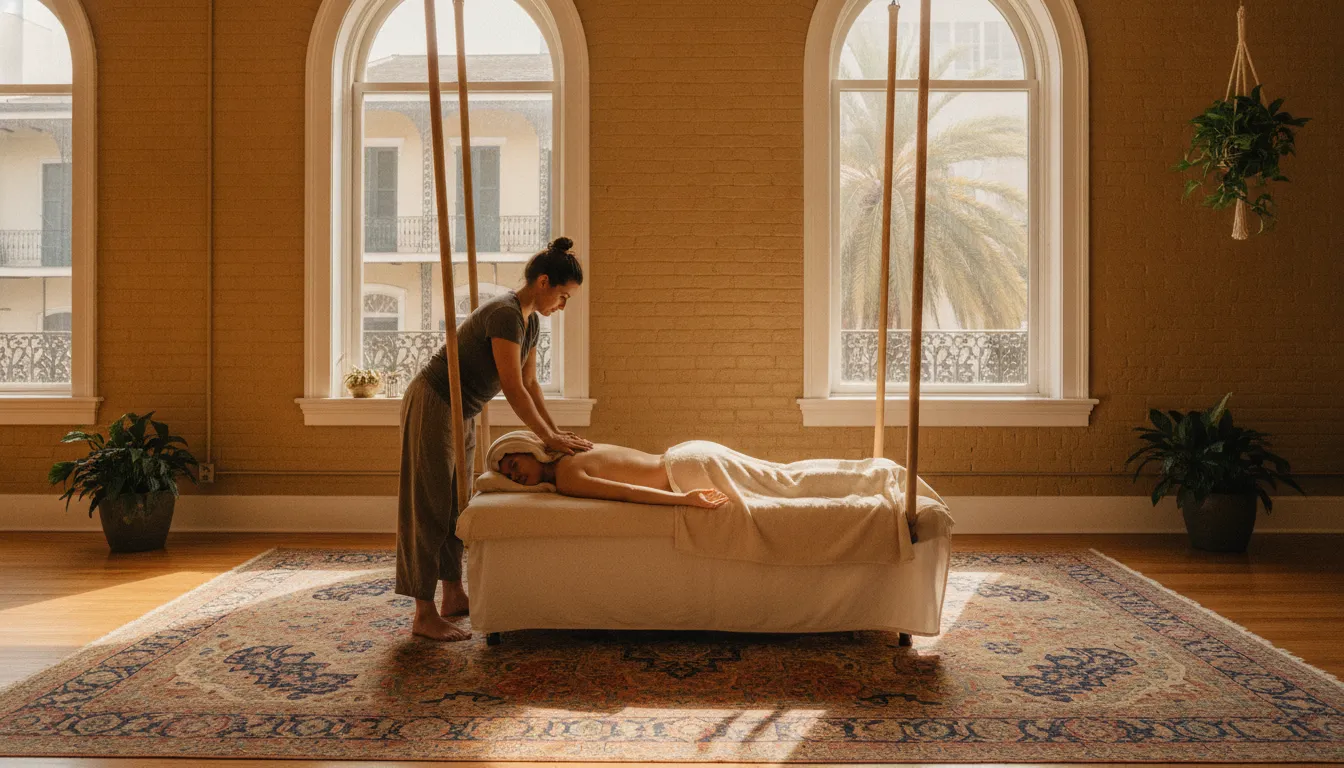
During your training, you’ll learn how to use overhead bars for balance and support, which is the key to applying precise, gravity-assisted pressure. This setup gives you complete control over the depth and flow of your movements. The curriculum covers essential anatomy, contraindications, and the specific body mechanics needed to perform a safe, effective, and deeply relaxing session. Ultimately, Ashiatsu training equips you with a skill that not only meets the demand for deep tissue work but also extends the longevity of your career by taking the stress off your upper body. It’s an investment in yourself, your practice, and the well-being of your clients.
The Ancient Roots of a Modern Massage
Ashiatsu might seem new and trendy, but its roots stretch back centuries across different cultures. The practice you’ll learn today is a modern refinement of these ancient techniques, adapted for the contemporary spa environment. At its core, Ashiatsu Deepfeet Bar Therapy is a barefoot massage technique where therapists use their feet to perform deep, gliding strokes. By using overhead bars for balance, you can apply varying levels of pressure with precision and control. This setup allows you to use your body weight effectively, creating a push-pull dynamic that results in a uniquely deep and soothing massage. It’s a powerful evolution of an age-old practice, designed for maximum therapeutic benefit for the client and career longevity for the therapist.
From Monks to Modern Spas
The practice of using feet for therapeutic massage has a rich history that dates back centuries, originating with Buddhist monks in China. They discovered the unique benefits of using their body weight to deliver deep, consistent pressure through their feet. Over time, this knowledge traveled across Asia, influencing traditional healing practices in Thailand and Japan, where it continued to evolve. The Ashiatsu you will learn in training is a contemporary refinement of these age-old methods. It has been thoughtfully adapted to meet the needs of modern clients and spa environments while holding onto the core principles of deep, effective bodywork that have been passed down through generations.
Barefoot Shiatsu and Other Names
While Ashiatsu is the most recognized term, you may also hear it called “barefoot shiatsu” or “Japanese Barefoot Massage.” These names perfectly capture the essence of the modality, which involves the therapist using their bare feet to deliver long, gliding strokes across the body. This technique provides a luxurious experience and allows for a level of consistent pressure that is nearly impossible to replicate with hands or elbows alone. The hallmark of modern Ashiatsu Deepfeet Bar Therapy is the use of overhead bars for balance and support. This setup is crucial, as it allows you to apply precise, gravity-assisted pressure that deepens the therapeutic benefits for your clients.
Core Techniques You’ll Learn and Master
Ashiatsu training isn’t just about learning to balance; it’s about translating your existing massage knowledge to your feet. You’ll master how to apply classic massage strokes in a completely new way. The core techniques you’ll learn include effleurage, petrissage, compression, and friction, all adapted for barefoot application. This allows you to deliver long, flowing, and consistent strokes that cover a larger area than your hands ever could. The training focuses heavily on proper body mechanics to ensure both your safety and the client’s comfort. You’ll learn how to seamlessly transition between movements and modify pressure for different body types and client needs. By the end of your training, you’ll have a whole new set of skills to address chronic pain and provide an unforgettable massage experience.
The Role of Oil and Cream
Just as with hands-on massage, oil or cream is essential for performing a fluid and effective Ashiatsu session. You’ll learn how to apply it properly to allow your feet to glide smoothly across the client’s skin, which is critical for executing the long, sweeping strokes that define this modality. The lubricant serves a dual purpose: it protects the skin from friction and makes the deep pressure feel more comfortable and less invasive. This smooth application is what allows you to deliver powerful, consistent pressure over a large surface area, creating a deeply therapeutic experience that doesn’t feel sharp or painful. Mastering the use of oil is a key part of providing the luxurious, effective Ashiatsu massage that clients will seek out again and again.
Ashiatsu vs. Hands-On: What’s the Difference?
The most significant difference is the quality of pressure. While a traditional deep tissue or Swedish massage uses hands, thumbs, and elbows, Ashiatsu uses the broad surface of the foot. This distributes pressure more evenly, making it feel less sharp or poky. The result is a deep massage that feels incredibly luxurious and soothing, not painful. In fact, Ashiatsu can deliver up to three times deeper pressure than a hands-on massage. For clients with dense muscle tissue or those who never feel like the pressure is deep enough, Ashiatsu is a game-changer. The long, gliding strokes from the feet can help elongate the spine, stretch shortened muscles, and release tension in a way that hands simply can’t replicate. It offers a deeper, more profound sense of relief that will keep your clients coming back.
How Ashiatsu Differs from Thai Massage
While both Ashiatsu and Thai massage can involve the therapist using their feet, the experience and techniques are worlds apart. Think of Thai massage as a form of assisted yoga; you’re fully clothed on a mat while the therapist guides you through a series of dynamic stretches and applies deep pressure using their hands, knees, and feet. It’s an active, invigorating session focused on joint mobility and flexibility. In contrast, Ashiatsu is all about delivering deep, gliding pressure. You’re comfortably on a massage table while the therapist uses overhead bars for balance to apply smooth, consistent, and often very deep strokes with their feet. This modality uses oil or cream to create a seamless flow, targeting chronic muscle tension with a broad pressure that feels luxurious rather than sharp. Essentially, if you want an interactive, stretching-focused session, Thai massage is your go-to. If you’re seeking profound, sustained deep tissue work, Ashiatsu is the clear choice.
Why Should You Learn Ashiatsu?
Deciding to learn a new modality is a big step in your massage therapy career. It’s an investment of time, energy, and money, so you want to be sure it’s the right move. Ashiatsu isn’t just another technique to add to your list; it’s a strategic choice that can reshape your practice, protect your physical health, and set you apart in a competitive market. By using your feet and body weight, you can deliver an incredible deep tissue experience that clients love, all while giving your own body a much-needed break. It’s a way to work smarter, not harder, ensuring you can have a long, fulfilling, and pain-free career. Let’s get into the specific reasons why Ashiatsu training is one of the best decisions you can make for yourself and your clients.
Save Your Hands and Extend Your Career
As a massage therapist, your hands, wrists, and shoulders are your most valuable assets. But years of deep tissue work can lead to fatigue, pain, and even career-ending injuries. Ashiatsu offers a powerful solution by shifting the work from your upper body to your feet and legs. This modality allows you to use your body weight to provide deep, consistent pressure, which means no more straining your thumbs or overworking your shoulders. By learning to leverage gravity and your own structure, you can reduce the physical toll of your work and significantly extend the life of your career. It’s a sustainable practice that protects your body so you can keep doing the healing work you love for years to come.
Stand Out with a Deeply Therapeutic Service
In a world full of spas and massage studios, standing out is key. Ashiatsu Deepfeet Bar Therapy is a specialized service that many clients have never experienced, giving you an immediate edge. It provides a uniquely deep and relaxing massage without the poking or prodding that can sometimes come with traditional deep tissue work. The broad surface of the foot delivers a consistent, gliding pressure that covers a larger area, helping muscles release more completely. This makes it incredibly effective for clients with chronic pain, serious athletes, or anyone who loves deep pressure. By offering Ashiatsu, you’re not just providing a massage; you’re providing a memorable and profoundly therapeutic experience that clients will seek out specifically.
Give Your Clients Results They’ll Rave About
Happy clients are the foundation of a successful practice, and Ashiatsu delivers results that get people talking. The one- and two-footed strokes are designed to lengthen the spine, decompress joints, and improve posture. Clients often leave feeling taller, looser, and with a greater range of motion. This deep, compressive work can release trigger points and break up adhesions more effectively than hands-on techniques alone. When clients experience this level of relief without discomfort, they become your biggest advocates. They’ll not only rebook regularly but also tell their friends and family about the amazing barefoot massage they received. Offering top-tier massage services like Ashiatsu is a direct path to building a loyal clientele and a thriving practice based on incredible results.
Holistic and Energetic Benefits
Ashiatsu offers more than just deep muscle relief; it provides a profound sense of balance for the entire system. The long, flowing strokes do more than just release physical tension—they also help move the body’s internal energy, sometimes called Qi, to clear blockages that can contribute to both physical and emotional stress. This process helps to harmonize the mind, body, and spirit, leading to a deeper state of relaxation than many clients have ever experienced. Because the pressure is distributed over the broad surface of the foot, the deep work feels soothing and luxurious rather than invasive. This unique combination of deep physical release and energetic balancing leaves clients feeling not just better, but truly centered and whole.
Enjoy the Perks of Certification
Becoming certified in Ashiatsu is more than just adding a new skill; it’s a strategic move for your career. Certification validates your expertise and gives clients the confidence to trust you with this powerful modality. With proper training, you learn to deliver incredibly deep pressure safely and effectively, which protects both you and your clients. This specialized skill sets your practice apart, attracting people who are specifically looking for the profound therapeutic results that Ashiatsu provides. Ultimately, certification is an investment in your longevity as a therapist. It equips you with a sustainable way to meet the high demand for deep tissue work, ensuring you can build a thriving practice without sacrificing your own well-being.
Your Guide to Gulf Coast Ashiatsu Training
If you’re ready to learn Ashiatsu, you want to train with instructors who are not only masters of the craft but also passionate about teaching. As the only certified Ashiatsu Deepfeet Bar Therapy training center on the Gulf Coast, NOLA Bliss is the perfect place to build your skills. We provide an immersive, supportive environment where you can confidently master this incredible modality.
Why Train with Us at NOLA Bliss?
Choosing where to get your training is a big decision. At NOLA Bliss, we offer more than just a class; we offer an experience rooted in expertise and a genuine passion for healing. Our training is led by our founder and Chief Bliss Officer, Sara Albee, a dedicated practitioner and instructor. As a nationally certified Ashiatsu training center, we welcome massage therapists from all over the country who are serious about advancing their skills. You’ll learn within an award-winning studio, surrounded by a team of professionals who live and breathe therapeutic massage. We’re here to guide you, answer your questions, and help you become a confident and effective Ashiatsu therapist.
A Peek Inside Our Training Curriculum
Our curriculum is designed to give you a deep and practical understanding of Ashiatsu. You’ll learn how to use your body weight and feet to deliver consistent, deep pressure that feels incredible to your clients. We cover the foundational barefoot techniques, including effleurage, petrissage, and compression, showing you how to apply them safely and effectively. The training focuses on proper body mechanics to protect both you and your client. You’ll leave knowing how to perform a full-body Ashiatsu Deepfeet Bar Therapy session that provides deep relaxation and therapeutic results, setting your work apart from a standard hands-on massage.
Course Structure and Requirements
Our training is hands-on—or, more accurately, feet-on—from the start. You’ll spend most of your time at the massage table, learning to use the overhead bars for balance and support. This setup is crucial, as it allows you to apply precise, gravity-assisted pressure with total control. The course covers essential anatomy and contraindications specific to Ashiatsu, with a heavy focus on body mechanics to keep both you and your client safe. Before you can enroll, you’ll need to be a licensed massage therapist and confirm that your liability insurance covers barefoot modalities. We believe in the power of direct, in-person instruction, which is why our certified program is designed to give you the hands-on guidance needed to master this technique confidently. Our dedicated team is committed to ensuring you leave fully prepared to offer this amazing service.
Flexible Training Formats and Scheduling
We believe in the power of hands-on learning, especially for a modality as nuanced as Ashiatsu. Our training is conducted in person, giving you direct access to our expert instructors for real-time feedback and guidance. Small class sizes ensure you get personalized attention as you practice your strokes and learn to move with grace and precision at the bars. This immersive format allows you to ask questions, refine your technique, and build confidence in a supportive group setting. We offer classes throughout the year to accommodate different schedules. You can check our website for the latest training dates and find a session that works for you.
Online eLearning Options
If you’re eager to get started with Ashiatsu but can’t wait for our next in-person training, you should definitely consider the online eLearning options. These aren’t watered-down versions of the real thing; the online programs are incredibly comprehensive, with detailed written lessons and video instructions that cover the exact same material as our live classes. To ensure you’re mastering the techniques, you’ll need to pass an exam before moving forward. The best part is that this path offers flexibility. You can complete the coursework at your own pace and even join a future live class later on to get that valuable hands-on practice with an instructor. It’s a solid pathway to certification for self-motivated therapists ready to begin their training now.
What It Takes to Get Certified
When you complete your training at NOLA Bliss, you’ll walk away with more than just new skills—you’ll earn a formal certification in Ashiatsu Deepfeet Bar Therapy. This certification demonstrates your commitment to your craft and your proficiency in this specialized modality. Plus, our courses are approved for Continuing Education (CE) hours, which are essential for maintaining your massage therapy license. We handle all the details so you can focus on learning. You’ll receive your certificate right in class, ready to display in your practice and show clients your advanced qualifications for providing top-tier massage services.
Understanding Costs and CEUs
Ashiatsu training is an investment in your career, and it’s helpful to know what to expect. Live certification classes often start at a few hundred dollars for a multi-day course, which typically covers your hands-on instruction, training materials, and final certification. Beyond the skills you gain, these courses offer a significant benefit: Continuing Education Units (CEUs). Most states require massage therapists to complete a certain number of CEUs to maintain their license, and our certified Ashiatsu training helps you meet those requirements. You’re not just learning a new modality; you’re also fulfilling a professional obligation that keeps your credentials current and your practice compliant.
Exploring Different Certification Levels
Ashiatsu training is typically structured in progressive levels, allowing you to build your skills methodically. You’ll likely start with a foundational course that covers the core principles, safety protocols, and basic one-footed strokes. Once you’ve mastered the fundamentals, you can move on to intermediate and advanced classes, which introduce more complex two-footed techniques and deeper therapeutic applications. This tiered approach ensures you develop a solid understanding and confidence at each stage. When you complete your training with us, you receive a formal certification in Ashiatsu Deepfeet Bar Therapy, a credential that signals your expertise and dedication to clients, helping you attract those seeking specialized, high-quality bodywork.
Getting Your Studio Ready: Equipment & Setup
One of the most exciting parts of learning Ashiatsu is preparing your own space to offer it. The primary equipment you’ll need is a set of overhead bars, which must be securely installed above your massage table. These bars are your source of balance and support, allowing you to control the depth and flow of your strokes with complete safety. During your training, we’ll cover the specifics of equipment and proper setup, so you’ll know exactly what’s required. Investing in the right setup is a key step in launching your Ashiatsu practice and creating a safe, professional environment for your clients to experience this amazing therapy.
How to Prepare for Your Ashiatsu Training
Deciding to learn a new modality is a big step, and it’s smart to do your homework before you commit. Ashiatsu is an incredible skill to add to your practice, but it requires the right foundation. Thinking through the practicalities—like your physical readiness, licensing, and insurance—ensures you’re setting yourself up for success from day one. It’s all about making sure this is the right move for you and your career, so you can confidently bring this amazing therapy to your clients. Let’s walk through the key things you need to consider before you sign up for your first training session.
Is Ashiatsu a Good Fit for You? (Physical & Safety)
Ashiatsu is a game-changer for saving your hands, but it asks your body to work in a new way. It’s a common misconception that you need to be a certain size to perform Ashiatsu. What’s more important is understanding the physics and body mechanics involved. For the safest and most effective treatment, the technique is designed for clients who are about 50 to 100 pounds heavier than the therapist. This allows you to use your body weight effectively without compromising your stability or the client’s comfort. It’s less about your specific weight and more about your strength, balance, and ability to gracefully apply deep, consistent pressure with your feet.
Checking the Boxes: Licensing and Prerequisites
Before you get too excited about walking on backs, let’s talk about the essentials. Ashiatsu training is an advanced certification, not an entry-level program. You absolutely must be a licensed massage therapist to enroll in a course and practice professionally. This prerequisite is in place for a reason. A solid foundation in anatomy, physiology, and hands-on massage techniques is crucial for understanding the complexities of Ashiatsu Deepfeet Bar Therapy. Think of it as building on the incredible skills you already have, allowing you to take your practice to a whole new level. Our team is made up of dedicated LMTs, and this training is designed for professionals like you.
A Quick Word on Insurance
This might not be the most exciting topic, but it’s one of the most important. Before you invest in training, you need to talk to your liability insurance provider. Confirm that your policy will cover you for barefoot massage modalities like Ashiatsu once you’re certified. Practicing any form of massage without the proper training and insurance coverage is a huge risk that can lead to serious legal and financial trouble. Taking a few minutes to make this call protects you, your business, and your clients. It’s a simple, professional step that gives you the peace of mind to focus on learning your new craft.
Keeping Your Clients Safe and Informed
Mastering Ashiatsu is about more than just technique; it’s about professional responsibility. A huge part of that is knowing who is—and who isn’t—a good candidate for this powerful modality. Client safety should always be your top priority, and that starts with a thorough intake and a clear understanding of contraindications. Just as important is educating your clients on what to do after their session. The care they take in the 48 hours following their massage can make a huge difference in their results. Providing clear aftercare instructions empowers them to extend the benefits of your work and helps build the trust that turns a one-time client into a regular.
Who Should Not Get Ashiatsu? (Contraindications)
While Ashiatsu Deepfeet Bar Therapy is incredibly beneficial for many, it is not suitable for everyone. It’s crucial to screen your clients carefully to ensure their safety. This deep compression work is contraindicated for individuals with certain health conditions. You should not perform Ashiatsu on clients who are pregnant or have recently had surgery, especially on their eyes. It’s also not appropriate for those with serious conditions like blood clots, severe osteoporosis, uncontrolled high blood pressure, or kidney problems. Be sure to ask about skin infections, open sores, varicose veins, and any medications they are taking, particularly blood thinners. A thorough intake process is non-negotiable to protect both your client and your practice.
Essential Aftercare Instructions for Clients
The therapeutic effects of an Ashiatsu session continue long after the client leaves your studio. To help them get the most out of their treatment, provide them with clear aftercare instructions for the next 48 hours. Advise them to drink plenty of water to stay hydrated and help their body process the deep work you’ve done. Gentle stretching is great, but they should avoid heavy lifting or any strenuous activities that could strain their back. It’s also a good idea for them to avoid sitting in hard chairs for long periods. Encouraging them to enjoy a hot bath or use a sauna can help deepen their relaxation and ease any residual soreness. Guiding your clients with this information is a key part of providing a complete and professional therapeutic massage service.
How to Grow Your New Ashiatsu Practice
Once you’ve earned your certification, the next step is to integrate this incredible modality into your work and watch your practice flourish. Adding Ashiatsu to your menu isn’t just about a new service; it’s about creating new opportunities for your clients and your career. With a smart approach, you can build a reputation as the go-to Ashiatsu therapist in your area. It starts with understanding who needs this work the most and finding clear, authentic ways to share its benefits. From marketing your skills to committing to lifelong learning, here’s how you can build a thriving Ashiatsu practice.
Finding and Keeping Your First Ashiatsu Clients
Your first Ashiatsu clients might already be on your table. Think about the people who always ask for more pressure or who have dense, athletic builds. Ashiatsu massage is a perfect fit for deep tissue lovers, athletes, and anyone with thick musculature who feels that traditional massage just doesn’t go deep enough. Start by introducing the idea to these existing clients. You can explain how the broad, consistent pressure from your feet can provide a deeper, more comfortable experience. For attracting new clients, highlight the unique benefits of Ashiatsu in your marketing to appeal to those specifically searching for powerful, therapeutic bodywork.
How to Market Your New Ashiatsu Skills
Now that you have this amazing skill, you need to let people know about it. Learning a specialized technique is a fantastic way to attract clients with specific needs and set your practice apart. Start by updating your service menu, website, and social media profiles to feature Ashiatsu prominently. Share photos or short videos of the setup (with client permission, of course) to demystify the process. When you talk about it, focus on the results: less pain, greater relaxation, and a deep therapeutic release that’s hard to achieve with hands alone. Writing a blog post or creating an email campaign about your massage therapy continuing education journey can also build excitement and credibility.
What’s Next? Advancing Your Training
Your initial certification is just the beginning. As the only certified Ashiatsu training center on the Gulf Coast, we’ve seen firsthand how mastering a unique skill can completely transform a therapist’s career. Committing to advanced training allows you to refine your technique, learn new strokes, and build the confidence to work with a wider range of clients and conditions. Continuing education keeps your skills sharp and your passion for the work alive. It also shows your clients that you are dedicated to providing them with the highest level of care, which builds trust and encourages them to keep coming back.
Never Stop Learning: Helpful Ashiatsu Resources
The journey of mastering Ashiatsu is ongoing, and there are excellent resources to support you. Many training organizations offer self-paced eLearning programs that provide comprehensive video and written instruction, covering everything you would learn in a live class. These are perfect for refreshing your memory or diving deeper into specific techniques. As you grow, you can focus on mastering strokes like effleurage, petrissage, and compression with your feet. This continued practice is essential for enhancing your Ashiatsu sessions and providing a truly well-rounded, effective service for every client who walks through your door.
Related Articles
- Ashiatsu | Nola Bliss Massage Therapy
- Workshops | Nola Bliss Massage Therapy
- Massage Services | Nola Bliss Massage Therapy
- About Us | Nola Bliss Massage Therapy
Frequently Asked Questions
Is there a weight requirement to perform Ashiatsu massage? This is a common question, and the answer is more about physics than a specific number on the scale. The technique works best when the therapist is about 50 to 100 pounds lighter than the client. This weight difference allows you to use gravity and your body weight effectively without putting too much pressure on the client. It’s less about your size and more about your ability to apply controlled, deep pressure safely.
How is Ashiatsu different from a regular deep tissue massage for the client? The biggest difference is the quality of the pressure. While a hands-on deep tissue massage can sometimes feel sharp or poky when using thumbs and elbows, Ashiatsu uses the broad surface of the foot. This delivers a deep, consistent, and gliding pressure that feels incredibly soothing. Clients often describe it as a luxurious, deep-tissue experience without any of the discomfort, allowing their muscles to release more completely.
What’s the biggest benefit for me, the therapist? The most significant benefit is career longevity. Ashiatsu shifts the work from your hands, wrists, and shoulders to your feet and legs. This means you can provide the deep pressure your clients crave without the physical strain that often leads to burnout or injury. It’s a sustainable way to practice massage, allowing you to do the work you love for many years to come, pain-free.
Do I need to be super athletic or have amazing balance to learn this? Not at all. The overhead bars are your source of balance and support, so you don’t need to be a gymnast to master Ashiatsu. The training focuses on teaching you proper body mechanics and how to use the bars to control your movements and pressure with grace and precision. It’s a skill you learn and develop through practice, not something you need to have naturally.
What’s the first step after I get my certification? Once you’re certified, start by introducing Ashiatsu to your existing clients who always ask for deeper pressure. They are the perfect candidates to experience the benefits firsthand and can become your biggest advocates. At the same time, update your website and service menu to feature your new skill, and start talking about what makes this deep, barefoot massage so unique and effective.