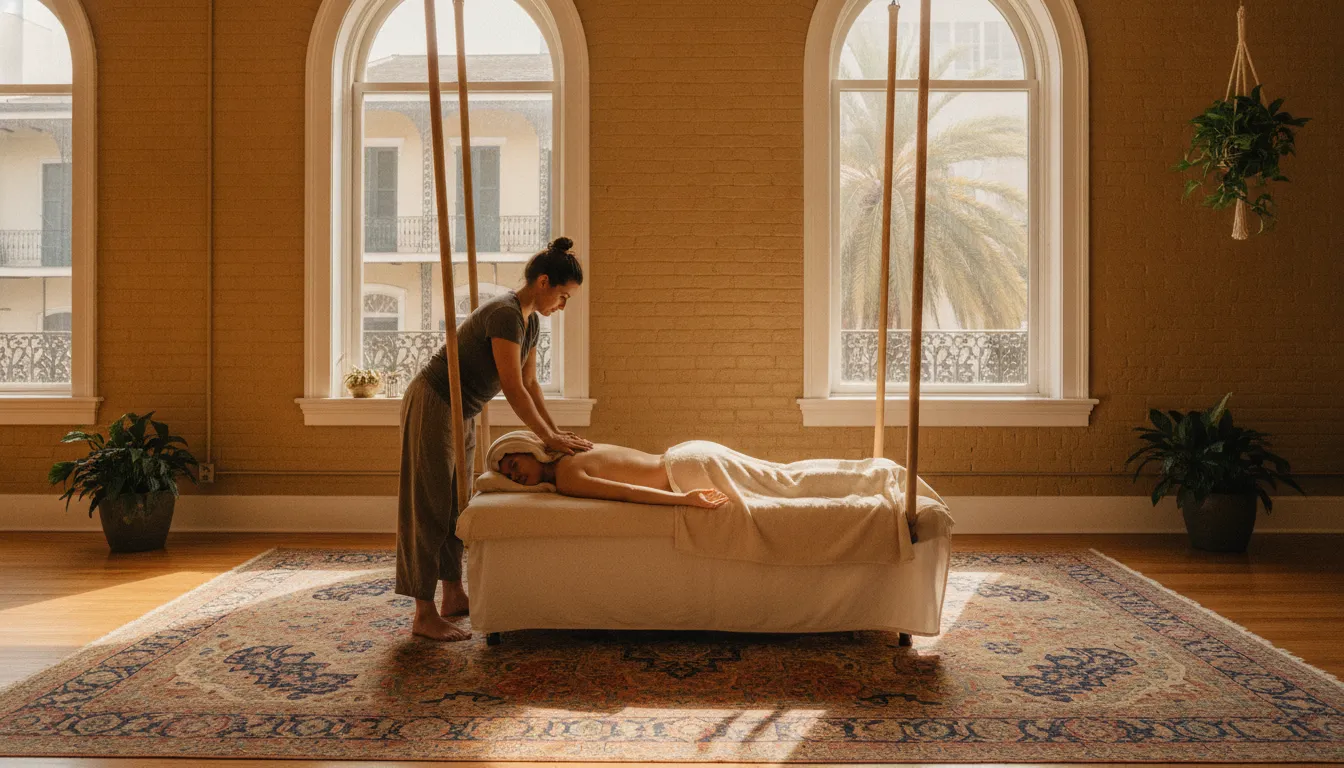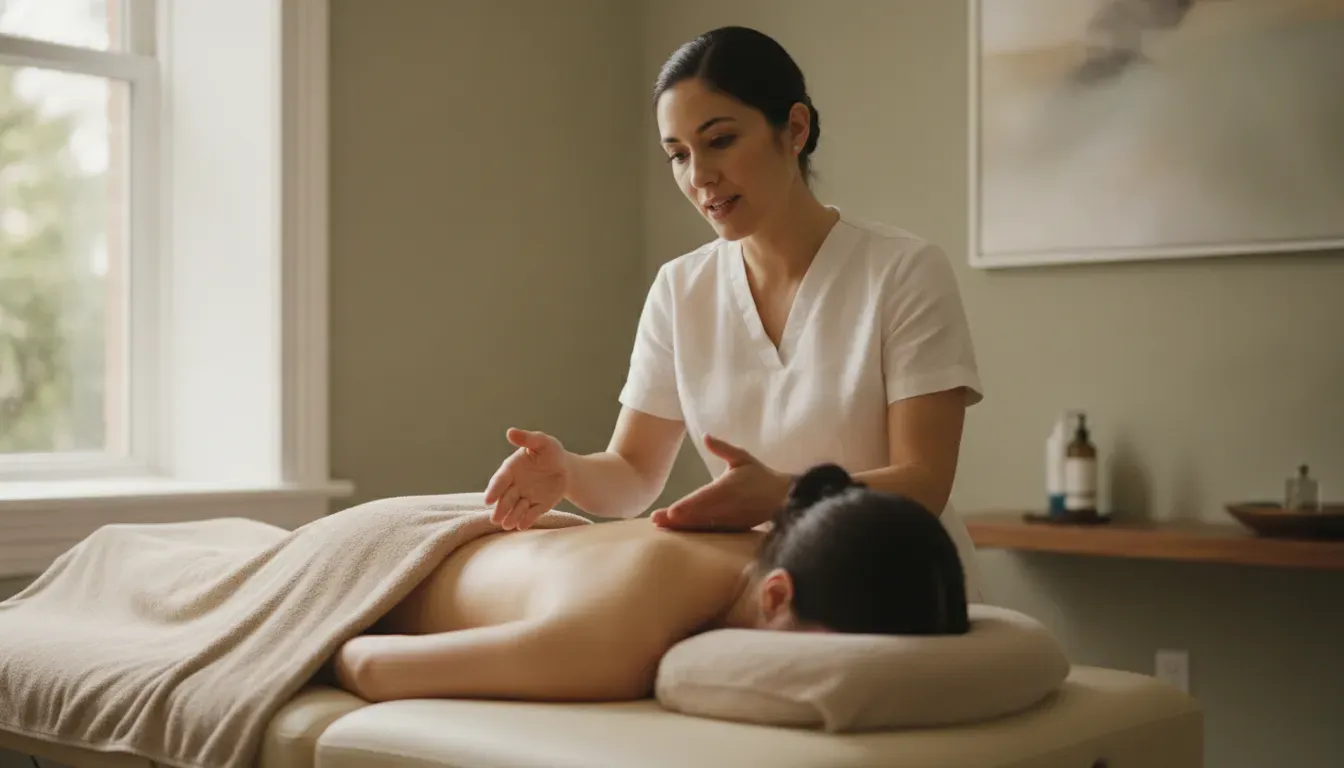

A warm massage can feel very different from a massage that relies on firm pressure alone. Smooth, heated stones add steady warmth while your therapist works through areas of tension, creating a grounded treatment that can be both soothing and therapeutic.
A hot stone massage uses smooth, heated stones as warm anchors on the body and as tools that glide over the skin. The heat can help loosen tight muscles, while the therapist adjusts pressure and technique to your comfort. A typical session may include stone placement, flowing massage strokes, and focused work on areas that feel especially tense.
Knowing what happens before, during, and after the appointment makes it easier to decide whether this treatment fits your needs. The experience starts with the stones themselves, including how they retain warmth and how your therapist checks their temperature before placing them.
Book your massage appointment online and let a NOLA Bliss therapist help you decide whether hot stone therapy fits your goals.
What Is a Hot Stone Massage and How Does the Treatment Work?
Hot stone massage combines hands-on bodywork with the steady warmth of smooth, heated stones. The therapist may place the stones on selected points of the body and glide them over oiled skin. Most hot stone massage stones are basalt, a dense volcanic rock that retains heat well. This combination is intended to promote deep relaxation while giving the therapist another way to address muscular tension.
The heat is not a miracle cure, and it does not replace medical care. Instead, it changes the conditions in which massage takes place. Warmth can help tight muscles feel less guarded, allowing a therapist to work with more comfort and less force. Massage therapy itself is used to help manage some health conditions and support overall wellness, according to the National Center for Complementary and Integrative Health.
How heat and massage techniques work together
A therapist can use the stones as moving tools, stationary warm anchors, or both. When a smooth stone travels across the body, its shape and temperature create a different sensation from hands alone. Oil helps the stone glide over the skin with less friction, supporting long, even strokes rather than abrupt pressure. The unique texture can make the treatment feel fluid and rhythmic.
At the same time, a few stones may rest on carefully selected areas while the therapist works elsewhere. That ongoing warmth can help maintain a relaxed feeling between techniques. As the muscles warm, the therapist may use methods such as broad gliding strokes. Circular work, or focused kneading, adjusting pressure to the client’s comfort and the area’s needs. The goal is not to push through pain. It is to create a therapeutic session in which heat and skilled touch complement each other.
Stone placement is individualized. Depending on the treatment plan, stones may be used along the back or near the spine, or placed on areas such as the palms or feet. The therapist should check the temperature and ask for feedback throughout the session. If the heat feels too strong, speak up immediately so the stones or technique can be adjusted.
At NOLA Bliss Massage, a therapeutic massage studio in the Warehouse District of Downtown New Orleans. Hot stone treatments are shaped by client needs rather than a one-size-fits-all routine. The studio has served the community since 2012, and its therapists average more than 10 years of experience. For readers comparing pressure, heat, and technique, this guide to how hot stone massage compares to deep tissue offers a useful next step.
The Types of Stones Used and How They Are Heated
The stone itself matters. For a professional hot stone massage, basalt is the traditional choice because it is a dense volcanic rock that holds warmth for an extended period. Its smooth surface also allows a therapist to glide across the skin with steady, controlled pressure, creating a different sensation from hands alone. The result is sustained warmth without relying on excessive pressure to reach tense areas.
Why basalt is the standard
Basalt’s heat-retaining properties make it practical for both moving strokes and stationary placement. A therapist can use a warmed stone along the muscles, then position another stone as a gentle thermal anchor while working elsewhere. This helps maintain a consistent treatment experience rather than letting the warmth disappear after a few minutes.
At NOLA Bliss Massage, professional-grade basalt stones are part of a therapeutic approach designed around the individual client. Stone size and placement can be adjusted for the treatment area and the level of sensitivity or tension present that day. The focus is not on using the hottest stone possible. It is on combining appropriate warmth with skilled massage technique.
How hot stones are heated and monitored
Most practitioners heat basalt stones by immersing them in water. Water-based heating commonly uses a range of approximately 100 to 140 degrees Fahrenheit, which allows the temperature to be adjusted with greater precision than less controlled methods. This range describes the heating environment, not a promise that every stone will be placed on the body at the same temperature. The therapist tests and adjusts each stone before and during use.
Stones should be heated in a dedicated water-based unit with the temperature monitored throughout the process. That equipment helps the therapist maintain predictable warmth and reduce the risk of overheating. Before a stone touches the skin, the therapist should check its temperature and account for the client’s feedback, comfort, and treatment position.
Safety is essential. Stones must be brought to a comfortable, safe temperature to help prevent burns or discomfort. A towel or sheet may also provide a thermal buffer when stones are placed rather than moved. If a stone feels too hot, tell your therapist immediately. A professional treatment should invite communication, not require you to tolerate heat that feels painful.
Himalayan salt and other stone enhancements
Himalayan salt stones can be used as an enhancement to a traditional basalt treatment. They offer a distinct texture and appearance while complementing the steady warmth of basalt. NOLA Bliss Massage incorporates Himalayan salt stone therapy as a core enhancement for clients who want to add another dimension to their session.
Some practitioners also offer paraffin-based variations or use electric dry-heat systems. These approaches can differ in equipment and safety practices, so the heating method should be clear before treatment begins. If you are comparing options, review the massage services available at NOLA Bliss Massage and ask which stone combination best fits your goals, sensitivity, and preferred level of warmth.
What Happens During a Hot Stone Massage Session?
A hot stone massage session is structured around two kinds of touch: the steady warmth of smooth stones and the controlled movement of the therapist’s hands. The goal is not simply to place hot stones on your back and wait. Your therapist uses heat, pressure, and rhythm together, adjusting the treatment to the areas that need the most attention.
How does the session begin?
After a brief consultation, your therapist will ask about areas of tension, soreness, or sensitivity. This conversation helps determine where the stones should be placed and how much pressure feels appropriate. Sessions commonly last 60 to 90 minutes, giving the muscles time to respond gradually to sustained warmth.
Once you are comfortably positioned and properly draped, the therapist may place heated stones on selected areas of the body. Common placement points include the back, along the spine, stomach, face, palms, feet, and toes. The exact arrangement is not identical for every client. It can be adapted to your comfort and treatment goals.
What techniques are used with the stones?
The therapist may hold a stone while using familiar Swedish massage techniques, including long strokes, circular movements, and kneading. Oil helps the stones move smoothly across the skin, preventing friction and allowing each stroke to feel continuous rather than abrupt. Because the stones retain warmth, they add a distinctive glide and texture to the massage.
Not every stone is moving at the same time. Some are used as stationary warm anchors while the therapist works on another part of the body. That combination lets one area receive consistent heat while another receives focused hands-on attention. As your muscles warm, the therapist can work into areas of tension without relying only on heavy pressure. If you are exploring hot stone therapy for back discomfort, mention the specific location and sensation during your consultation so the treatment can be tailored appropriately.
What does a hot stone massage feel like?
The first sensation is usually gentle, enveloping warmth rather than intense heat. Your therapist should check that the temperature feels comfortable and make adjustments when needed. The repeated movement of the stones, combined with their steady warmth, can create a deeply calming, almost hypnotic rhythm. Many clients find that this makes it easier to settle into a quieter, more meditative state.
Some sessions may finish with cold stones. When used, they can help calm the skin and blood vessels after the warming portion of the treatment. This contrast is optional and should always be comfortable for you. Tell your therapist if you prefer continuous warmth or would rather skip cold stones.
Throughout the appointment, communication matters. Speak up if a stone feels too warm, the pressure is too strong, or a position needs to change. A well-paced hot stone session should feel therapeutic, controlled, and restorative from beginning to end.
What Are the Key Benefits of Hot Stone Therapy?
Hot stone therapy combines the steady warmth of heated stones with purposeful massage techniques. The result is not simply a warmer version of a traditional massage. Heat can help soften tight tissue before and during the therapist’s work, while the smooth stones add a distinct gliding sensation and a calm, meditative pace.
Looser muscles and more comfortable focused work
Warmth helps tight muscles relax, which may allow a therapist to work more effectively into deeper layers without relying on excessive pressure. That can be useful when tension is concentrated in areas such as the shoulders, upper back, hips, or legs. The heat does not replace skilled assessment or hands-on technique, but it can make focused work feel more manageable for people who find intense pressure uncomfortable.
If back tension is your main concern, read more about hot stone therapy for back pain and discuss your goals with your therapist before the session.
Circulation, stress relief, and a calmer nervous system
Hot stone therapy may also support circulation and blood flow in the treated areas. Mayo Clinic notes that the combination of heat and massage can improve circulation. Although massage should be viewed as supportive wellness care rather than a cure for an underlying medical condition. Your therapist can adjust the work to your comfort level and concentrate on the areas that feel most tense.
The warmth and rhythmic strokes can create a deeply soothing experience that helps reduce everyday stress and anxiety. Stationary stones may provide continuous warmth while the therapist works elsewhere, and the steady sensation can make it easier to settle into a quieter state of mind. Many people choose the treatment because it addresses muscular tension while also offering a comforting, meditative experience.
May support better sleep
Relaxation after massage may make it easier to transition into rest. A randomized controlled trial published in Medicine examined hot stone massage therapy and sleep quality in patients receiving maintenance hemodialysis. The study reported positive effects on sleep quality in that specific patient population. That finding is encouraging, but it should not be generalized into a promise that hot stone massage will treat insomnia or improve sleep for everyone. Read the randomized controlled trial on hot stone massage and sleep quality for the study details.
Simple aftercare matters
After a heated massage, drink water and give yourself a little time to ease back into your day. Staying hydrated is a practical part of post-session care, especially if you feel relaxed or warm afterward. If you have a medical condition, reduced sensation, or concerns about heat. Mention it before treatment so the therapist can determine whether hot stone therapy is appropriate and adjust the session safely.
Hot Stone Massage vs. a Traditional Massage: What’s the Difference?
Both treatments use skilled hands to ease tension, but the source of pressure and sensation is different. A traditional Swedish massage depends primarily on the therapist’s hands, with flowing strokes, kneading, and focused pressure. Deep tissue massage uses more deliberate, sustained pressure when the goal is to address persistent muscular tightness.
Hot stone massage adds smooth, heated stones to that hands-on work. The warmth can travel deeper into tight muscle without requiring the same level of direct pressure. For someone who finds deep tissue too intense, hot stone can offer a gentler way to settle muscular tension while still feeling substantial and therapeutic.
| Comparison | Hot stone massage | Traditional Swedish or deep tissue massage |
|---|---|---|
| Primary technique | Heated stones glide over the skin or rest as warm anchors while the therapist works with their hands. | The therapist relies on hand techniques, including flowing strokes, kneading, and targeted pressure. |
| Heat depth | Warmth helps reach deeper layers of muscle and may make tight areas easier to work with. | There is no built-in heat unless a separate warming element is added, so depth comes mainly from manual technique. |
| Pressure level | Often moderate and soothing, with heat providing part of the therapeutic effect without high pressure. | Swedish pressure is generally lighter to moderate, while deep tissue may feel more focused and intense. |
| Sensation | Expect steady warmth and the distinctive smooth glide of stones across oiled skin. | Expect the direct feel of hands, with pressure and movement adjusted throughout the session. |
| Best for | People who want relaxation, warmth, and relief from tension but prefer an alternative to intense deep tissue pressure. | People who prefer hands-on work or want to choose a specific pressure style, from relaxing Swedish strokes to focused deep tissue work. |
The right choice depends on how your body responds to pressure and what you want from the appointment. If firm, concentrated work tends to leave you bracing or uncomfortable, the warmth of hot stone massage may help you relax while your therapist addresses tight areas. If you want highly targeted pressure and prefer to feel the therapist’s hands doing most of the work, Swedish or deep tissue may be a better fit.
For a closer look at the differences between heat-assisted work and focused pressure, read how hot stone massage compares to deep tissue. You can also tell your therapist about your preferred pressure, sensitive areas, and treatment goals so the session can be adjusted to you.
Is Hot Stone Massage Safe? Who Should Skip It?
For most healthy adults, hot stone massage is considered safe when it is performed by a trained professional who controls the stone temperature. Checks in throughout the session, and adapts the treatment to the client. The warmth should feel soothing, never painfully hot. At NOLA Bliss Massage, safety begins before the first stone is placed. Your therapist can discuss your goals, answer questions, and adjust pressure, placement, and heat based on how your body responds.
How are burns and discomfort prevented?
Heated stones must reach a safe, controlled temperature to reduce the risk of burns or discomfort. A professional therapist does not simply take a stone from a heater and place it on the body. The stones are checked before use, handled carefully, and removed or replaced if the heat does not feel comfortable. You should be able to speak up at any point. Tell your therapist immediately if a stone feels too hot, if your skin becomes uncomfortable, or if you would prefer less heat.
Hygiene is another essential part of a safe treatment. Massage stones are sanitized between clients through a professional cleaning process. This routine helps maintain appropriate health and safety standards throughout the service. You can learn more about NOLA Bliss Massage’s approach and professional team on our about page.
Who should get medical guidance first?
Hot stone massage may not be appropriate for everyone. Speak with your doctor before booking if you have nerve damage or reduced sensation, skin irritation or open wounds. Diabetes, high blood pressure, or another condition that affects how your body responds to heat. Reduced sensation can make it harder to recognize excessive heat, while some medical conditions may require a different approach.
Medical guidance is also important during pregnancy, while taking blood thinners, or after a recent injury or surgery. These situations do not automatically mean that massage is impossible, but they do mean the treatment should be cleared and properly modified by a qualified healthcare professional. Be ready to tell both your doctor and massage therapist about relevant diagnoses, medications, procedures, and symptoms.
What should you tell your therapist?
Share any area that is painful, bruised, numb, inflamed, or unusually sensitive before the session begins. Also mention if you are new to heat-based massage or unsure whether it is a good fit. A responsible therapist will not pressure you to continue. The safest hot stone experience is collaborative, with clear communication from consultation through the final check-in.
Book your hot stone massage appointment online and ask about scheduling, pricing, and preparation when you reserve your session at NOLA Bliss Massage.
Frequently Asked Questions
What do hot stones do during a massage?
Heated stones provide steady warmth while the therapist works with massage strokes. That heat can help loosen tight muscles, and the smooth surface lets the therapist glide across the skin with less friction. Stones may rest on areas such as the back, along the spine, palms, or feet, depending on your treatment plan.
How long does a hot stone massage session take?
Most sessions last about 60 to 90 minutes, giving your muscles time to respond to sustained warmth as the therapist moves through the treatment. Your appointment may include a brief intake and time to discuss pressure, temperature, and any areas that need extra attention. Mayo Clinic describes hot stone sessions as typically lasting 60 to 90 minutes.
Is hot stone massage better than a regular massage?
Neither option is best for everyone. Hot stones add warmth and a smooth gliding texture, which can feel soothing when you want relaxation or focused work on muscular tension. A traditional massage may be a better fit if you prefer hands-only techniques or want a different pressure pattern. Your therapist can help match the approach to your comfort and goals.
Is hot stone massage safe for everyone?
It is generally safe when the stones are heated to a comfortable, controlled temperature and your therapist checks in throughout the session. If you have reduced sensation, nerve damage, skin problems, or another medical condition that affects heat tolerance, ask your doctor before booking and tell your therapist beforehand. Speak up immediately if the stones feel too hot or uncomfortable.
Ready to Book Your Hot Stone Massage?
A hot stone massage can be a thoughtful way to settle into deeper relaxation while receiving focused therapeutic care. When you are ready to plan your session, book your hot stone massage appointment online at NOLA Bliss Massage. Choose a time that works for you, and share any questions or comfort preferences with your therapist before treatment begins.