

Living with ongoing fatigue can make ordinary plans feel unpredictable. A massage appointment may be part of a comfort-focused routine, but it should never be treated as a cure or a substitute for medical care. The most useful approach is individualized: choose a pace, pressure, position, and session length that respect how your body is feeling that day.
Book your massage appointment online and ask about a gentle, personalized session.
This guide explains what massage for chronic fatigue may realistically offer, how to plan a lower-demand visit, when to speak with a clinician first, and how to communicate clearly with your licensed massage therapist. If you have a diagnosis such as myalgic encephalomyelitis/chronic fatigue syndrome (ME/CFS), use your clinician’s advice and your own symptom history as the starting point.
Can massage help with chronic fatigue?
Massage may support relaxation, comfort, and muscle-tension management for some people experiencing chronic fatigue, but results vary. A 2024 systematic review found potential fatigue improvements in chronic fatigue syndrome research while also noting substantial differences among studies. Massage should complement, not replace, diagnosis, medical treatment, and energy-management guidance.
The distinction matters because chronic fatigue is a symptom with many possible causes. ME/CFS is a serious, long-lasting illness that can involve post-exertional malaise, sleep problems, cognitive symptoms, dizziness, and pain. The Centers for Disease Control and Prevention overview of ME/CFS explains that there is no known cure and that care focuses on managing the symptoms that most affect daily life. A massage therapist cannot diagnose the cause of fatigue.
Evidence is encouraging but not a promise. The published systematic review and meta-analysis on massage and chronic fatigue syndrome included 32 randomized trials, but the treatment methods and study quality varied. Think of massage as one optional comfort strategy to discuss with your healthcare team, not as a way to restore energy on demand.
What should gentle massage support look like?
Gentle support means the session is built around your current tolerance rather than a preset idea of therapeutic intensity. The therapist may use slower strokes, lighter pressure, more supported positioning, additional check-ins, or a shorter appointment. The goal is a manageable experience, not the deepest possible work or a dramatic feeling of being “worked out.”
- Start with your baseline. Share how you feel before the session, including pain, dizziness, sensitivity, sleep quality, and recent exertion.
- Choose pressure conservatively. Light to moderate pressure may be a better starting point than deep, sustained pressure when your response is uncertain.
- Protect your energy. Plan enough time for arrival, changing, rest, and a calm transition afterward.
- Use clear stop signals. Agree that you can ask for less pressure, a position change, a pause, or an early end at any point.
- Review the next-day response. A session that felt pleasant in the room may still be too demanding if it is followed by a meaningful symptom flare.
Comfort is individual. Some people prefer quiet and stillness, while others need conversation to keep communicating. Tell the therapist what helps you feel safe and what makes it harder to notice warning signs.
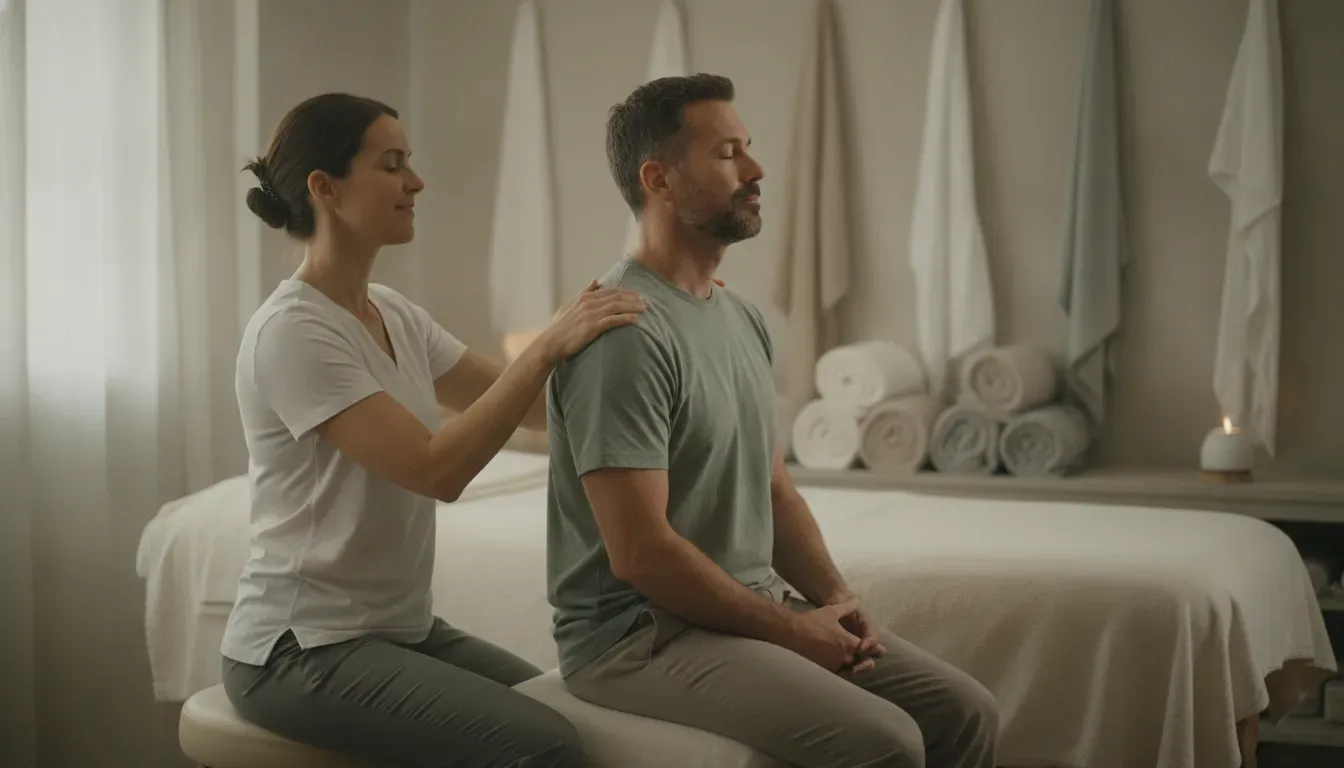
How should you plan a massage when energy is limited?
A lower-demand appointment begins before you enter the studio. Plan the visit around your most predictable time of day, allow a recovery buffer, and tell the therapist what you want to avoid. If you are having a particularly difficult day, postponing may be the most supportive choice.
- Contact the studio before booking. Explain that fatigue affects your energy and ask what session length, positioning, and pressure options are available.
- Bring relevant health information. Share diagnoses, recent procedures, injuries, medications, skin concerns, allergies, and clinician instructions that affect massage.
- Set a specific first-session goal. A goal such as “feel comfortable and learn how my body responds” is more realistic than promising to eliminate fatigue.
- Keep the rest of the day flexible. Avoid stacking the appointment with strenuous errands, exercise, or a demanding social schedule.
- Make a response plan. If symptoms increase during the session, stop or reduce the work. If you develop a concerning or unusual symptom afterward, contact your clinician.
NOLA Bliss Massage offers individualized Swedish and deep tissue massage services. For fatigue-sensitive care, discuss whether a modified Swedish approach or another lower-intensity plan is appropriate rather than assuming a named modality determines the right pressure.
If muscle tension or a specific pain area is also part of your experience, the guide to conditions massage may help support can help you prepare questions. It does not replace medical evaluation or identify the cause of fatigue.
Which massage approaches may be worth discussing?
There is no single best massage for everyone with chronic fatigue. The right starting point depends on your symptoms, medical guidance, sensory tolerance, previous response to touch, and ability to recover from the appointment. Use the table as a conversation starter, not a prescription.
| Approach | What it may offer | What to ask about |
|---|---|---|
| Modified Swedish massage | Slow, flowing work that can be adjusted toward relaxation and comfort | Can we start with light pressure and shorter work areas? |
| Deep tissue massage | More focused pressure for selected areas of persistent muscle tension | Would deeper work be appropriate now, or could it be too demanding? |
| Ashiatsu Deepfeet Bar Therapy | Broad, gravity-assisted pressure using a specialized technique | Is this suitable for my current tolerance and health history? |
| Warm stone enhancement | Gentle warmth that some clients find soothing | Do I have any heat, skin, circulation, or sensory concerns to review first? |
NOLA Bliss Massage provides Ashiatsu Deepfeet Bar Therapy and other massage options, but a signature technique is not automatically the right choice for a fatigue-sensitive visit. The studio also offers Hot Himalayan Salt Stones as an enhancement. Ask about the intensity, heat, duration, and how the option can be modified before adding it.
For context on pressure decisions, compare your goals with the practical guidance in how often to get a deep tissue massage. That article is about deep tissue planning in general, not a recommendation for people with chronic fatigue.
How can pressure and pacing be individualized?
Individualized care is an ongoing conversation, not a single intake question. A licensed therapist should be able to adjust pressure, speed, body position, coverage, temperature, and breaks as you respond. You remain the decision-maker throughout the appointment, and “less” is a complete and useful direction.
Before the session, describe your usual symptoms and any delayed response you have noticed after activity or touch. During the session, report changes such as lightheadedness, nausea, unusual weakness, pain, temperature discomfort, sensory overload, or anxiety. You do not have to wait until a sensation becomes severe to request a change.
It can help to agree on simple language in advance:
- “That pressure is comfortable” means the therapist can continue at that level while continuing to check in.
- “Please go lighter” means reduce pressure immediately, without needing to explain further.
- “Pause, please” means stop contact and give you time to settle.
- “I need to end” means the session ends. You never need to push through.
Massage is not a test of endurance. A calm, shorter visit that leaves you feeling steady may be more useful than an intense session that creates a difficult recovery period.
Book your massage appointment online and share your comfort, pressure, and pacing needs when you schedule.

When should you postpone massage or ask your clinician first?
Ask your healthcare professional before booking if your fatigue is new, unexplained, rapidly changing, or accompanied by symptoms that need diagnosis. You should also seek guidance when you have a condition, medication, or treatment plan that could change massage safety. A massage therapist can adjust a session, but cannot clear a medical risk.
Postpone the appointment and seek appropriate medical advice for an acute illness, fever, contagious infection, unexplained fainting, new chest pain, severe shortness of breath, sudden neurological symptoms, or another urgent change. Suspected or active blood clots require urgent medical guidance and should not be massaged. Ask your clinician about timing after surgery, a significant injury, a past clot, a serious circulation concern, or a flare of a known condition.
For people with ME/CFS or suspected post-exertional malaise, exertion can worsen symptoms after the activity and recovery may take much longer than expected. The NHS guidance on ME/CFS describes pacing and energy management as part of individualized care. If touch, travel, or a previous massage has triggered a delayed crash, bring that history to your clinician and therapist before trying again.
Pregnancy, recent childbirth, cancer treatment, blood-thinning medication, diabetes, reduced sensation, skin conditions, and other health factors can require specific modifications. If pregnancy is relevant, review the prenatal massage service information and confirm your situation with your healthcare professional and the therapist before scheduling.
What can you expect at NOLA Bliss Massage?
NOLA Bliss Massage is an appointment-only therapeutic massage studio in the Warehouse District of Downtown New Orleans. The team includes licensed massage therapists and offers customized massage options rather than a one-size-fits-all routine. When you call or book, explain that fatigue and recovery are part of your decision so the conversation can start before the session.
Ask about the therapist’s approach to pressure, breaks, positioning, session length, and communication. You can also ask whether the studio’s massage services can be adapted to your goals. If a service description does not answer your question, contact the studio rather than guessing from the modality name.
If you are comparing massage with other recovery goals, keep the focus on your own response. A deep tissue session may be useful for one person with localized muscle tension and too demanding for another person on the same day. The massage for back pain guide offers another example of why treatment planning should be specific to the person’s symptoms and goals.
How do you decide if a session was supportive?
Judge the session by your overall response, not only by how relaxed you felt on the table. Make a simple note of your baseline, the pressure used, how you felt later that day, and how you felt the next day. Include sleep, pain, dizziness, sensory symptoms, and energy only if those are meaningful measures for you.
A positive response might mean feeling comfortable, less tense, or emotionally settled without an unwanted symptom increase. It does not need to mean a sudden burst of energy. If you experience a delayed worsening, tell the therapist and clinician, reduce the next session’s demands, or pause massage while you reassess.
Avoid using massage to push through a warning sign. Recovery is not a race, and the appropriate plan can change from week to week. The massage recovery guide may be useful for general after-session planning, but chronic fatigue and post-exertional symptoms require personal medical guidance.
Book your massage appointment online when a personalized, comfort-first session fits your current plan.
Frequently asked questions about massage for chronic fatigue
Can massage cure chronic fatigue?
No. Massage may support relaxation, comfort, or muscle-tension management for some people, but it does not diagnose or cure chronic fatigue, ME/CFS, or another underlying condition. Discuss persistent or unexplained fatigue with a qualified healthcare professional.
What type of massage is best for chronic fatigue?
There is no universal best type. Many people start by discussing gentle, adaptable work, such as a modified Swedish approach, but your health history, sensory tolerance, previous response, and clinician guidance should shape the plan. Deeper or specialized techniques may be inappropriate on a given day.
Can massage make fatigue worse?
Yes, especially if the pressure, travel, positioning, heat, or overall exertion exceeds your current tolerance. Stop or modify the session if you feel unwell, and track delayed symptoms. If massage repeatedly causes a flare, pause and discuss the pattern with your clinician.
Should I talk to my doctor before getting a massage for chronic fatigue?
It is wise to ask your clinician when fatigue is new, unexplained, severe, changing, associated with other concerning symptoms, or part of a diagnosed condition with activity limitations. Also ask before massage after surgery or injury, during complex treatment, or when medications and circulation issues may affect safety.
What should I tell my massage therapist?
Share your diagnosis if you have one, current symptoms, recent activity, pain or sensory changes, relevant medications, injuries, procedures, pregnancy, allergies, and anything that has made massage or exertion feel worse before. Tell the therapist how to lower pressure, pause, change position, or end the session.