Hospitality work asks a lot of the body: long periods on your feet, quick turns between tasks, lifting, and the pressure to keep serving guests. If you are considering massage for hospitality workers, the useful question is not whether one session can erase a demanding shift, but how bodywork might fit into a thoughtful routine of rest and self-care.
Ask about planning a massage appointment
What physical demands can hospitality work create?
Hospitality is not one kind of job. A server may carry trays and walk across a dining room for hours. A cook may stand in one place, reach across a work surface, and repeat the same movements through a rush. A hotel housekeeper may bend, push carts, lift linens, and move from room to room. Front desk staff may spend much of a shift standing or sitting while managing a steady stream of requests.
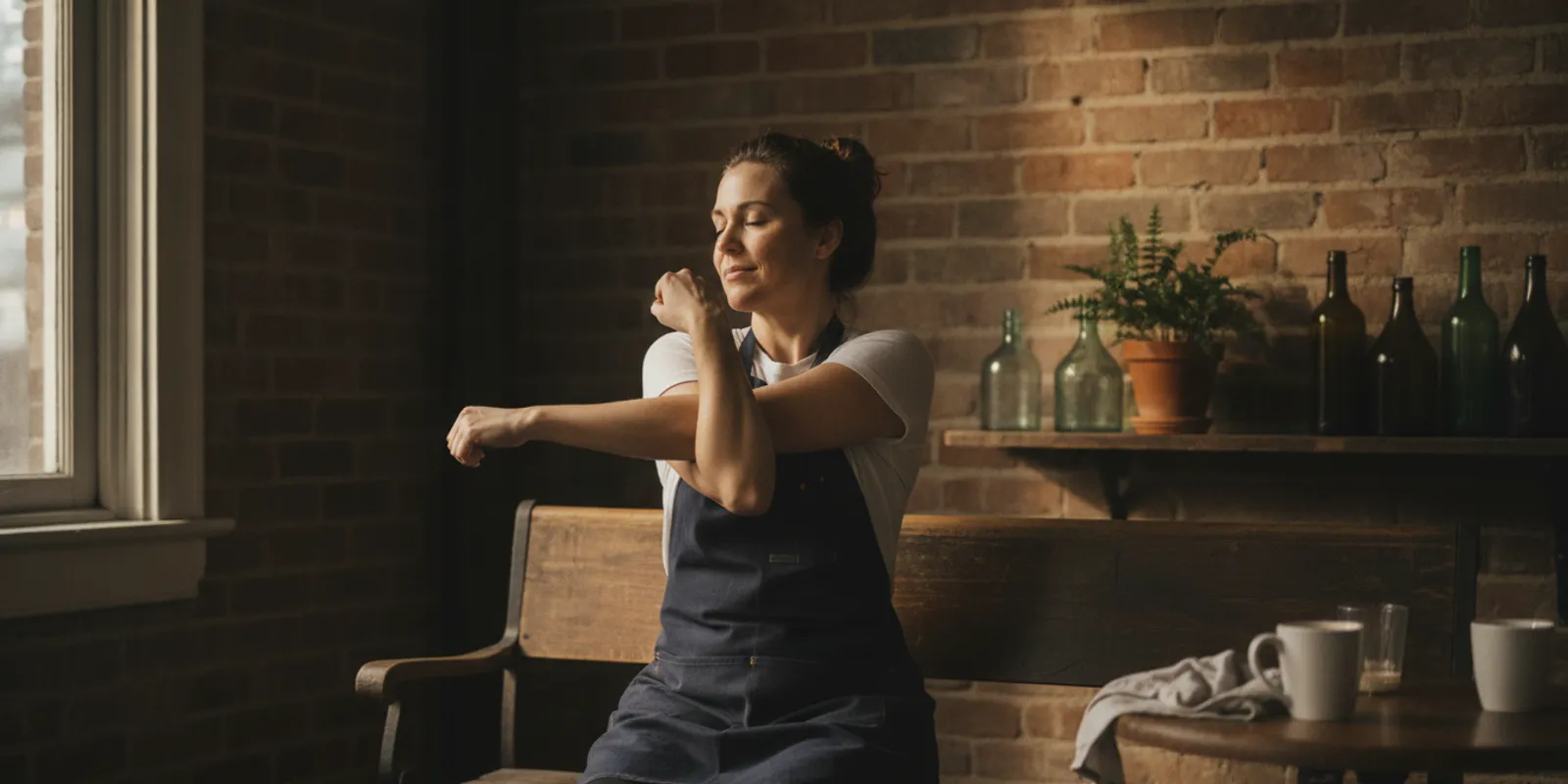
Even when tasks differ, shifts often combine time pressure with limited opportunity to change positions. You might notice tired feet after standing, a stiff feeling after holding one posture, or general muscle tension after a busy service. Repeated reaching, gripping, carrying, or turning can make certain areas feel worked more than others. Stress can also affect how tightly you hold your shoulders or jaw, or how easy it is to wind down after work.
These experiences are individual. A massage therapist cannot determine the cause of pain from a brief conversation, and massage is not a substitute for medical evaluation. The point of describing your work is to help you and the therapist discuss what feels comfortable and what you hope to get from a session.
How might massage fit into a hospitality worker’s routine?
Massage can offer dedicated time to pause and receive hands-on care. Some people choose a session because they enjoy the experience of relaxation; others want to discuss a particular area that feels tight or overworked. A session is not a guarantee of relief, and its effects can vary. It may be one part of a wider routine that includes sleep, hydration, movement breaks when possible, and appropriate medical care.
Hospitality work and massage also meet in professional settings. The University of Northwestern Health Sciences shares a profile of a massage therapy graduate working in hospitality at a hotel spa, an example of massage being offered within the hospitality environment. That context is different from receiving care as a worker, but it shows how the two fields can intersect.
At NOLA Bliss Massage, appointments focus on therapeutic massage rather than spa amenities. You can explore the studio’s massage services to see the available approaches and consider what you would like to discuss before booking.
Which parts of a shift should you describe?
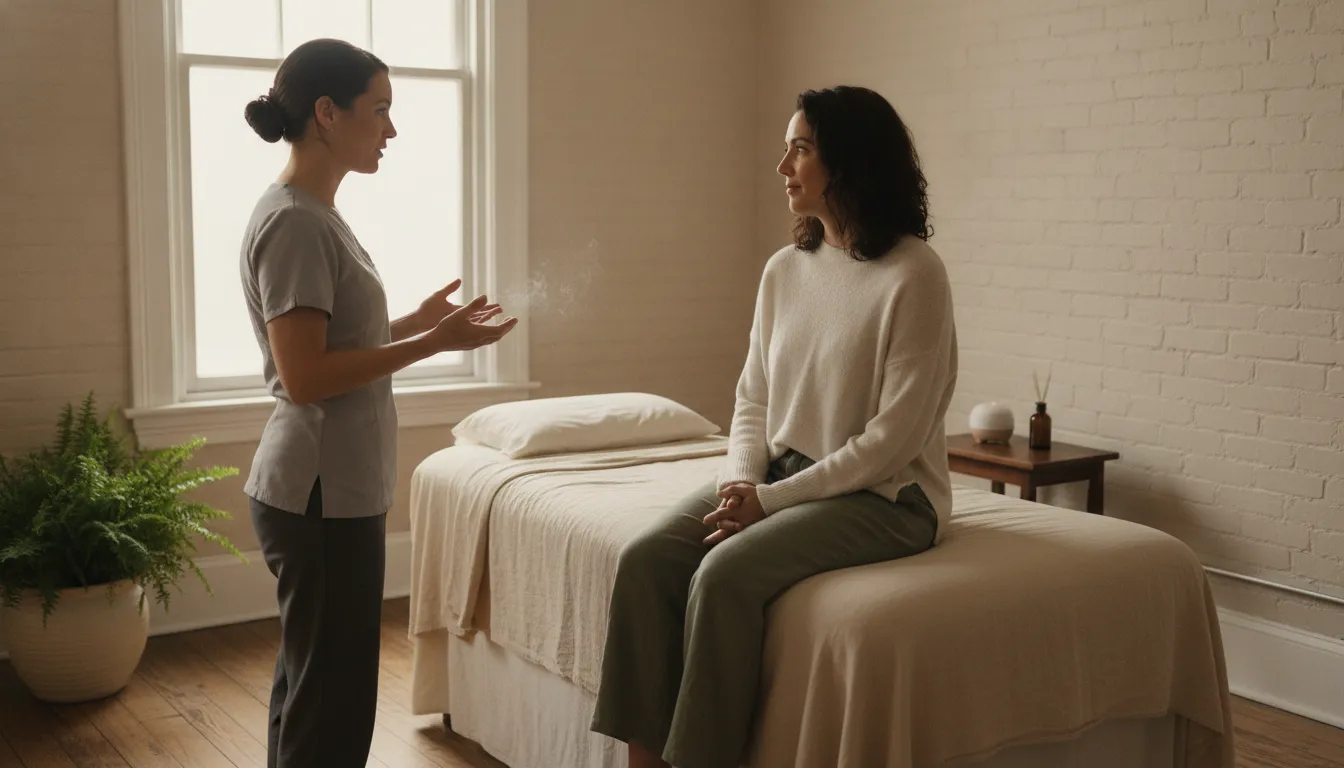
A useful conversation starts with your actual workday, not just a label such as “restaurant worker.” Explain what your tasks involve and what you notice during or after them. You do not need to use technical terms. Clear, everyday details help the therapist understand your preferences and stay within the session’s scope.
- How you spend the shift: Describe whether you stand in one place, walk most of the day, sit at a desk, or alternate among tasks.
- Repeated movements: Mention carrying trays, reaching overhead, gripping tools, bending, pushing carts, or turning frequently.
- What feels uncomfortable: Point to the area and explain when it tends to feel tired or tense. Say if any movement or pressure makes it worse.
- Your pressure preference: Tell the therapist whether you generally prefer lighter or firmer pressure, and ask for a change at any time.
- Relevant health information: Share medical concerns, injuries, recent procedures, pregnancy, or other circumstances that may affect whether massage is appropriate. Ask a healthcare professional if you are unsure.
You can also be specific about what you do not want. A good session includes ongoing communication, and you are allowed to request a different position, less pressure, a pause, or an end to the session. A therapist should not ask you to tolerate pain to prove that a technique is working.
How do common massage choices compare?
Technique names can sound like promises, but they are better understood as ways to start a conversation. The right approach depends on your preferences, comfort, and circumstances. Ask what a session involves and whether the therapist can adapt it to your needs.
| Option | What to discuss | May suit someone who | Planning note |
|---|---|---|---|
| Swedish massage | Comfort, pace, and preferred pressure | Wants a general session with adaptable pressure | Say if you would like attention to a particular area or a more even full-body approach. |
| Deep tissue massage | Pressure limits, sensitive areas, and how you respond during the session | Prefers more focused or firmer work, when appropriate | Firmer pressure is not automatically better. Ask for adjustments and do not push through pain. |
| Ashiatsu | What the technique involves and whether it is suitable for you | Is curious about this distinct style of massage | Review the studio’s Ashiatsu information and raise questions before scheduling. |
| Couples massage | Whether you want to attend with a partner or friend and which services are available | Would prefer to share the appointment experience | Check the details on the couples massage page before making plans. |
This comparison is a starting point, not a prescription. A therapist can explain the options offered at the studio, but a healthcare professional is the right person to ask about a medical condition, new injury, or symptoms that are severe or getting worse.
When should you schedule around a hospitality shift?
There is no single best time for every worker. Some people prefer an appointment on a day off, when they do not need to rush back to a physically demanding shift. Others may find a session after work more convenient. Consider your commute, how tired you tend to feel, and whether you want time to rest afterward.
Before booking, check the session length and allow time to arrive, discuss your preferences, and change afterward. If your schedule changes often, ask about the practical booking details instead of assuming that a specific time or same-day appointment will be available. You can use the contact page to ask about scheduling and appointment questions.
If you work near downtown or are visiting for a shift, check the studio’s parking and access information before you set out. Knowing how you will get there can make it easier to plan a calm transition from work to an appointment.
How can you prepare when your workday is unpredictable?
A complicated shift does not need a complicated preparation routine. A few practical steps can make the appointment easier to use:
- Choose one or two priorities. For example, you might want a relaxing session and would like the therapist to know that you stand for most of your shift. You do not have to arrive with a perfect explanation.
- Give an honest update. If a shift left you unusually tired, you have a new sore area, or your plans changed, mention it before the session begins.
- Wear something easy to change out of. Follow the studio’s directions and ask if you are unsure what to expect.
- Protect enough time. Avoid scheduling so tightly that you must hurry straight from work into the room or rush away immediately afterward.
- Speak up during the session. Let the therapist know if pressure, positioning, temperature, or anything else is uncomfortable.
For hospitality workers who manage changing hours, the most realistic routine may be occasional rather than fixed. You might plan around a quieter day, a stretch of demanding shifts, or a time when you can rest. Consistency is not a requirement for making an appointment worthwhile, and no schedule can guarantee a particular result.
What can you do between appointments?
Massage is only one possible piece of self-care. Workplace demands cannot always be changed by an individual employee, but small adjustments may be available depending on your role and workplace. When safe and permitted, consider changing position briefly, alternating tasks, taking scheduled breaks, or asking whether equipment and work surfaces can be adjusted. Comfortable, appropriate footwear may matter for people who spend much of the day standing.
After a shift, you may find it helpful to have a simple transition: sit down for a few minutes, take a comfortable walk, or do gentle movement that feels easy for you. Avoid forcing stretches or exercises that increase pain. Basic needs such as rest and regular meals can be difficult to protect during busy periods, but they matter too.
Tell a supervisor or healthcare professional if a work task is repeatedly causing problems, especially if you are concerned about safety. A massage session cannot fix unsafe work conditions, replace ergonomic changes, or determine whether an injury needs treatment.
How can you set realistic expectations?
It helps to treat massage as an experience to evaluate, not a test with a guaranteed outcome. Before the appointment, you can say what you hope to feel during or after the session, while keeping in mind that results differ from person to person. A therapist can explain what they can offer and make adjustments based on your feedback. They cannot promise to eliminate pain or undo the physical demands of a job.
Notice your response without turning it into a pass-or-fail judgment. You may feel relaxed, unchanged, or temporarily tender after bodywork. If something feels uncomfortable during the session, say so then rather than waiting until it is over. If symptoms appear or worsen afterward, pause further massage and ask a healthcare professional what to do. Your experience is useful information, but it is not a diagnosis.
It can also help to separate what you can control from what you cannot. You may be able to choose a preferred pressure, share a concern, or find a time that allows you to rest. You may not control staffing, shift length, or how much lifting a busy service requires. Massage can offer a planned moment of care; it should not suggest that workers are responsible for solving every physical challenge on their own.
When should you seek medical guidance first?
Do not rely on massage alone for new, severe, persistent, or worsening symptoms. Contact a qualified healthcare professional if you are concerned about an injury, unexplained symptoms, or pain that interferes with everyday activities. Seek urgent care for an emergency or sudden serious symptoms.
Before scheduling, ask a healthcare professional whether massage is appropriate if you have a medical condition, recent surgery, a significant injury, or another health concern that could affect treatment. Be open with the massage therapist, too. They can discuss their service and adjust or decline techniques within their professional scope, but they do not replace your medical provider.
If you would like to learn more about the people and approach behind the studio, visit NOLA Bliss Massage’s about page. For a practical appointment question, including how to plan around a work schedule, get in touch with the studio.
What is a sensible next step?
Start by noticing what your shifts ask of you and what kind of experience you want from a massage. Then compare available services, share your work routine and comfort preferences, and choose a time that leaves room to arrive without rushing. Massage for hospitality workers can be one personal-care option, but it should complement—not replace—medical advice and changes that support safer work.
Hospitality work can be physically and mentally demanding, so give yourself permission to make a plan that fits your schedule, needs, and comfort level.