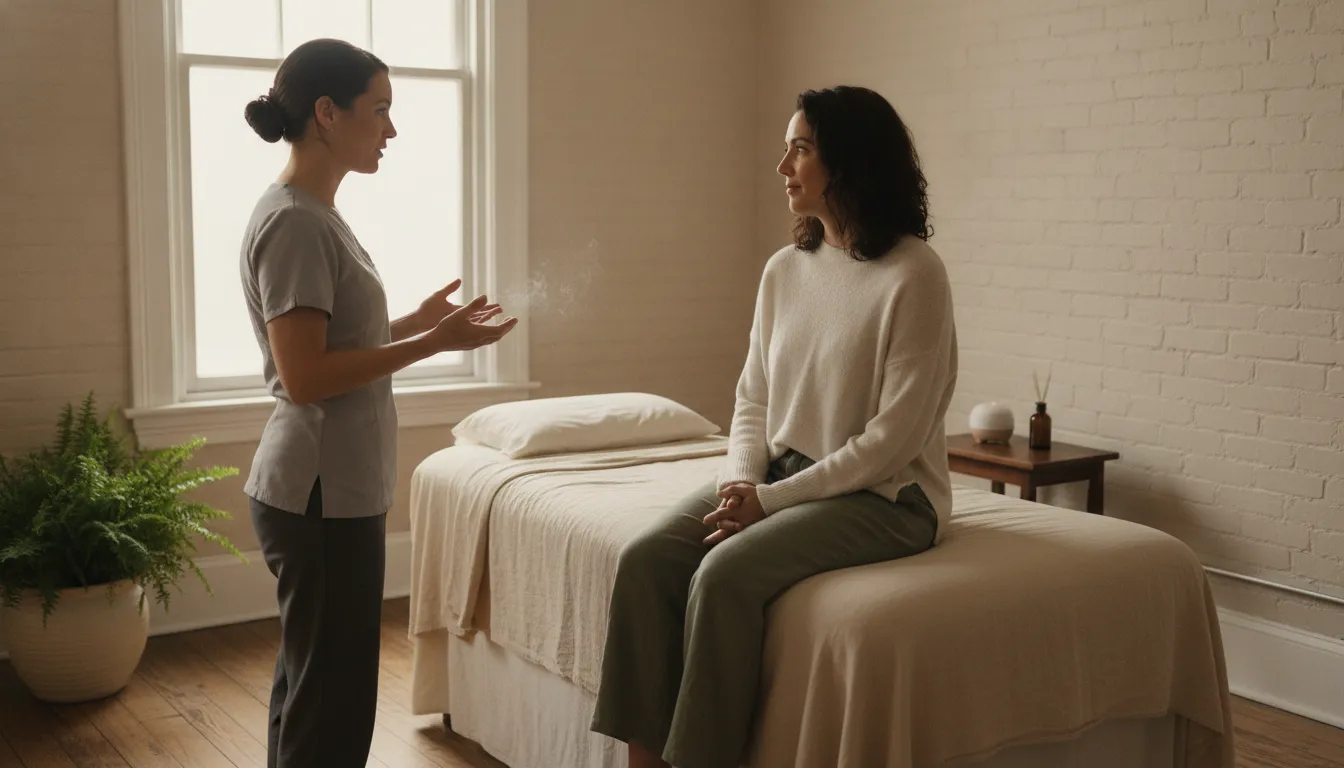

Your first therapeutic massage in New Orleans can feel easier when you know what to expect and what to share. A first session is a conversation as well as hands-on bodywork: you explain your goals and comfort needs, and the therapist uses that information to shape an approach. You do not need to arrive knowing massage terminology or having a perfect description of every ache.
Ask a question about your first appointment
What makes a first therapeutic massage different?
A therapeutic massage session is planned around the needs and preferences you describe, rather than being a fixed routine that is the same for everyone. You may be looking for general relaxation, attention to muscle tension, or a session that takes a particular area into account. The therapist needs to understand what you hope to get from the visit and what would help you feel comfortable.
That does not mean you need to name a technique or diagnose the cause of discomfort. Start with what you notice: where you feel tension, when you notice it, and what kinds of touch or positioning feel comfortable. The therapist can ask follow-up questions, explain possible approaches, and discuss what can or cannot be addressed in a massage session. Massage is not a medical diagnosis or a substitute for care from a qualified health professional.
A first visit is also a chance to establish how you will communicate. You can ask questions before the session, request a change at any time, and ask to pause or stop. Pressure, pace, positioning, and areas addressed should be discussed in a way that respects your preferences. You do not have to endure pain or stay quiet to make the appointment worthwhile.
What should you tell the therapist before the session?
Share details that could affect comfort, positioning, or the areas addressed. You might mention soreness, a recent injury or procedure, skin sensitivity, a position that is difficult to maintain, or an area you do not want touched. It is also useful to explain whether a concern is new, recurring, changing, or already being evaluated by a healthcare professional. You can share only what is relevant and what you are comfortable discussing.
- Your goal: Put your aim in everyday language, such as wanting a relaxing session or asking for attention to a tense shoulder area.
- What you notice: Describe the location and timing of discomfort, what seems to affect it, and whether it is getting better or worse. Avoid guessing at a diagnosis.
- Pressure preferences: Say whether you generally prefer light, moderate, or firmer pressure. Let the therapist know if you want check-ins.
- Comfort and boundaries: Identify areas to avoid, draping or positioning concerns, and anything that would help you feel more at ease.
- Health considerations: Mention relevant health concerns, medications or recent care when you think they may affect the session, and ask whether massage is appropriate for your situation.
- Questions: Ask about the technique, what the session involves, or how you can request a change once it begins.
A short note on your phone can help if you think you may forget something. For example: “My upper back feels tight after long workdays; please check in about pressure, and avoid my left wrist.” This is more useful than trying to select a treatment based on a label alone. You can also say that you are not sure what approach to choose and want to talk it through.
If you are unsure whether massage is suitable because of an injury, health condition, or symptom, check with a healthcare professional before booking or receiving treatment. Sudden, severe, unexplained, or worsening symptoms call for medical advice rather than relying on massage. The National Center for Complementary and Integrative Health offers general information about massage and other complementary health approaches at NCCIH; for advice about your own health, speak with your clinician.
How can you choose an approach for your first visit?
Begin with your goal and comfort level, not with the assumption that deeper pressure is better. A technique name can give you a starting point for questions, but it does not tell you by itself whether a session will feel right for you. Ask what the approach involves, how pressure can be adjusted, and whether the therapist can adapt the session to your preferences. NOLA Bliss offers options including Swedish, deep tissue, and Ashiatsu massage; the massage services overview can help you identify questions to discuss.
| Approach to ask about | Questions to raise | First-visit consideration |
|---|---|---|
| Swedish massage | Can pressure stay light or moderate? Can the focus be broad and relaxing? | Describe your preferred pressure and whether you want general work or a particular area considered. |
| Deep tissue massage | How will pressure be adjusted if an area feels tender? How do we check in? | Explain any sensitivity and agree that you can request less pressure or a different approach. |
| Ashiatsu | What does the method involve, including positioning and pressure? | Ask the therapist to explain how it works and whether it fits your goals and comfort needs. |
This comparison is a prompt for conversation, not a medical recommendation or a promise about results. Some people want focused attention; others would rather have a gentler, more general session. The right discussion is the one that makes your needs and limits clear. If you are curious about Ashiatsu massage, ask about the method before deciding whether to book it.
For instance, imagine that you sit at a desk and notice shoulder tension but are unsure whether you want deep pressure. You could explain when you notice it, ask to begin with moderate pressure, and request a check-in before the therapist works more firmly. If the pressure is uncomfortable, say so; the session can be adjusted. This kind of specific, simple conversation is more useful than trying to tough it out or choosing a technique because it sounds more intensive.
How should you prepare for the appointment?
Plan enough time to arrive without rushing. If you are visiting New Orleans, leave room for traffic, parking, and a few minutes to settle in. Review the studio’s contact and location information before heading out, and check the free parking details if you are driving downtown. If you are staying near the Convention Center or French Quarter, decide in advance whether you will walk, take a ride, or drive.
Wear clothes that are comfortable to change out of and follow any instructions provided when you book. You can ask what to expect when you arrive, including how the therapist will explain draping and positioning. You do not need to prepare a long medical history speech; a few relevant details and your main questions are enough. If you have trouble maintaining a certain position, mention it before the massage begins so you can discuss a comfortable option.
Some people feel nervous because they do not know how a massage appointment works. You can tell the therapist that it is your first session and ask them to explain the sequence before beginning. NOLA Bliss is an appointment-only therapeutic massage studio; learn more about the studio’s approach on its about page. You can also ask practical questions through the contact page before you commit to a booking.
What usually happens during a first session?
A useful first-visit plan can be broken into a few simple stages. The exact conversation and session will depend on your needs, but these steps give you a way to prepare:
- Talk through your needs. Describe your goal, areas of concern, pressure preference, and anything to avoid. Ask questions that would help you understand the plan.
- Agree on a starting approach. Discuss the technique and areas to address. Tell the therapist if you want a conservative start or regular check-ins.
- Get comfortable before hands-on work begins. Ask about positioning and draping, and speak up if you need an adjustment. You can ask for clarification rather than guessing what to do.
- Give feedback as the session goes on. Use plain phrases such as “a little lighter,” “please skip that area,” or “I need to change position.” You do not need to wait for the therapist to ask if something feels wrong.
- Take a moment afterward. Notice how you feel, ask any remaining questions, and share what you would change next time.
For many first-time clients, the hardest part is simply speaking up. It may help to remember that the therapist cannot feel what you feel. A brief request is enough; you do not need to explain or apologize. If something feels sharp, painful, or otherwise uncomfortable, say so and ask for a change. You can pause or end the session at any point.
Draping and privacy are also reasonable topics to discuss. Ask what to expect before the session begins and tell the therapist if you feel uncertain. A professional session should respect your boundaries and comfort. You decide what areas are appropriate to address and can decline any part of the session.
What can you expect after the massage?
Give yourself a little time to transition back into your day. People respond differently, so do not assume that you should feel a particular way or that one session will create a particular result. Notice what felt comfortable, which communication helped, and whether there is anything you would change next time. You might make a quick note while the experience is fresh.
Follow any general instructions the therapist provides, and contact a healthcare professional if you have a concern about a reaction or a symptom that persists or worsens. Massage is one wellness service, not a replacement for assessment or treatment of a medical problem. If you already have a clinician supporting you, you can ask them whether massage fits alongside your care.
Feedback after the appointment can make a future visit more tailored. For example, you may discover that you prefer less pressure on one area, want more time to talk before the session, or would choose a different approach. If you are exploring focused work for the back or neck, the studio’s back and neck massage guide can help you think through questions to bring to a therapist; it should not be used to diagnose a symptom.
When should you get medical guidance before booking?
Massage may not be appropriate in every circumstance, and an online article cannot determine what is safe for an individual. Speak with a healthcare professional if you have a recent injury or procedure, a significant health condition, an unexplained symptom, or uncertainty about whether massage is suitable. Explain the specific concern and ask whether you should avoid massage, wait, or take any precautions.
Seek prompt medical attention for symptoms that are sudden, severe, rapidly worsening, or otherwise concerning. Do not book a massage as a way to postpone evaluation. If a clinician says massage may be appropriate, share relevant guidance with the therapist before the session and ask how the treatment can be adapted. You do not need to disclose unrelated personal details, but the therapist needs enough information to make an informed plan for the appointment.
If your question is about a particular massage approach rather than a health concern, you can ask the studio to explain its services and what a first session entails. The couples massage information is useful if you are considering attending with someone else; otherwise, ask about the individual service that best matches your goals. The important distinction is that a massage therapist can discuss the session, while a medical professional should advise on diagnosis and medical safety.
How can you plan a first visit without adding stress?
Keep the preparation practical. Before the day, write down one main goal, any areas to avoid, your preferred pressure, and two or three questions. Confirm the appointment details, choose how you will get there, and allow a buffer so you do not have to hurry. You can review the studio’s service choices if you want to ask about a particular approach, but you do not need to select one before explaining what you want.
If you are coming from a busy workday or a day of sightseeing, consider what would make the visit manageable: a little extra travel time, comfortable clothes, or a reminder on your phone with your questions. A clear plan can help you focus on the conversation rather than trying to remember everything at the last minute. If something changes before the appointment, contact the studio and ask how to proceed.
It can also help to set a realistic expectation. Your first session is an opportunity to talk, experience an approach, and learn what feels suitable to you. It is not a test, and you are not expected to know the right technical terms. You can decide afterward whether the service matched your preferences and whether you want to discuss another visit.
Review massage services and choose what to ask about
Frequently asked questions
Do I need to know which massage technique I want?
No. Describe your goal and comfort preferences in everyday language, then ask the therapist to explain available approaches. You can use the conversation to decide what sounds appropriate, rather than choosing based on a technique name alone.
Does therapeutic massage have to feel intense?
No. More pressure is not automatically better, and you do not need to tolerate discomfort. Tell the therapist what feels comfortable and ask for lighter pressure, a different area, or a pause whenever you need one.
What if I feel nervous or do not know what to say?
Say that it is your first massage and ask the therapist to explain what will happen. A few notes about your goal, preferences, and questions can help you get started. You can communicate during the session with short requests and ask for time to think.
Should I book if I have an injury or health concern?
If you are uncertain, ask your healthcare professional whether massage is appropriate for your specific situation before booking or receiving treatment. Share relevant guidance with the therapist, and do not use massage instead of medical evaluation for a concerning symptom.
What should I wear or bring?
Wear comfortable clothing that is easy to change out of, and follow any instructions you receive when booking. You may want to bring a short list of questions or useful details, but you do not need special equipment or massage terminology.
What is a sensible next step?
Write down your goal, comfort preferences, and questions, then review the service options and contact the studio if you want to talk through a first visit. A calm, clear conversation before treatment can help you make an informed choice and feel more prepared for your first therapeutic massage in New Orleans.
When you are ready, use your questions and feedback to help shape a session that respects your needs and comfort.