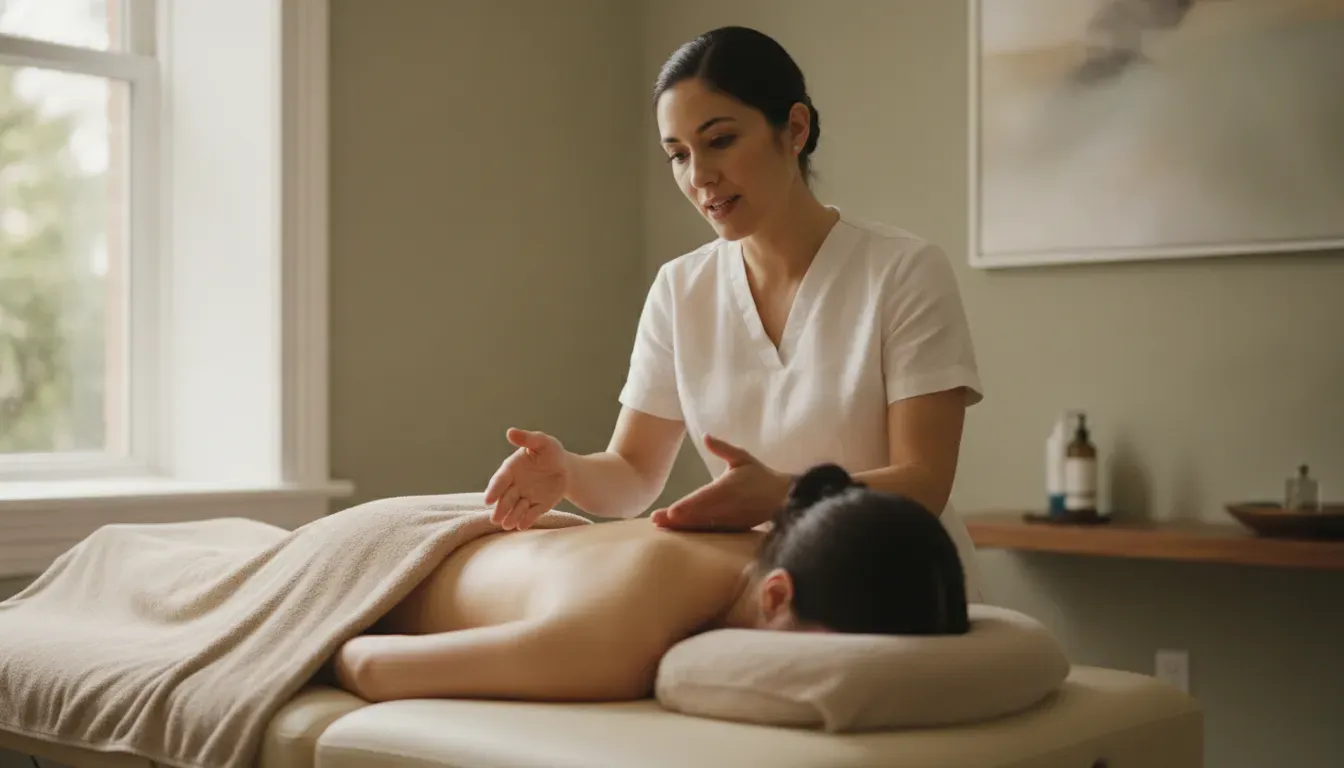

You’ve probably heard the advice: avoid massage during your first trimester. Or maybe someone warned you that certain pressure points could accidentally start labor. With so much conflicting information out there, it’s easy to feel nervous about booking an appointment when you’re expecting. We’re here to set the record straight. A professional prenatal back massage from a certified therapist is one of the safest and most beneficial things you can do for yourself during pregnancy. This article will debunk the common myths and explain the science-backed safety measures and specialized techniques that make prenatal massage a trusted source of relief for expecting mothers.
Key Takeaways
- A Prenatal Massage Requires a Specialist: Ensure your therapist is certified in prenatal care, as they are trained in safe positioning and modified techniques that are essential for you and your baby’s well-being.
- It’s More Than Just Relaxation: While incredibly calming, a prenatal massage is also a therapeutic tool for relieving common pregnancy discomforts like back pain, sciatic nerve pain, and swelling.
- Always Prioritize a Safety Check: Before you book an appointment, get approval from your doctor and confirm your therapist’s prenatal certification to ensure you can relax with total confidence.
What Makes a Prenatal Back Massage Different?
If you’ve ever wondered if a prenatal massage is just a standard massage for a pregnant person, the answer is a definite no. A true prenatal massage is tailored specifically to the needs of an expecting mother’s body. It’s a thoughtful, careful practice that requires special knowledge to ensure you and your baby are safe and comfortable. From the way you lie on the table to the techniques the therapist uses, every detail is adjusted to support you through this unique time. It’s all about providing relief and relaxation in the safest way possible.
Safe and Comfortable Positioning
One of the biggest differences you’ll notice is how you’re positioned. Lying flat on your back, especially later in pregnancy, can put pressure on a major blood vessel, which can reduce blood flow to your baby. That’s why for our prenatal massages, we’ll have you lie on your side. It’s the safest and most comfortable position. We use a whole system of soft pillows and cushions to support your head, knees, and growing belly. This setup takes all the strain off your lower back and hips, allowing you to fully relax while we work on those sore muscles.
Gentle, Modified Techniques
A prenatal massage isn’t the time for intense, deep-tissue pressure. Instead, the focus is on gentle but effective techniques that address common pregnancy discomforts. Your therapist will use soothing, long strokes to ease muscle tension in your back, hips, and legs. The pressure is always modified to be firm and comforting without being too intense. This approach is specifically designed to help with overall health, reduce stress, and relieve the aches that come with carrying a baby. It’s a gentle way to find relief and connect with your changing body.
The Importance of Specialized Training
It’s essential that your massage is performed by a therapist with specialized training in prenatal care. A certified prenatal massage therapist understands the anatomy and physiology of a pregnant body. They know which areas require extra care and which pressure points to avoid entirely. This specialized knowledge ensures the session is not only relaxing but also completely safe for you and your baby. Our dedicated team of therapists has the advanced training and experience needed to provide you with the highest quality of care, giving you peace of mind so you can truly let go and enjoy your massage.
Why You’ll Love a Prenatal Back Massage
A prenatal massage is so much more than a simple treat—it’s a powerful way to support your body and mind through the incredible changes of pregnancy. As your body works hard to grow a new life, you deserve dedicated time to rest, recharge, and feel comfortable. From easing the physical strains of a growing belly to calming the anxieties that can come with expecting, a specialized massage offers benefits that touch every part of your well-being. It’s a chance to connect with your changing body and find relief when you need it most.
Soothe Aches and Pains
As your baby grows, your center of gravity shifts, putting new pressure on your back, hips, and legs. This often leads to persistent lower back pain, sciatic nerve discomfort, and general muscle tightness. A professional prenatal massage is a safe and effective way to address these issues head-on. Our trained therapists use gentle techniques to relax your tightest muscles and relieve tension. By focusing on these problem areas, we can help ease your discomfort, which in turn often leads to better, more restorative sleep.
Find Your Calm and Reduce Stress
Pregnancy is an exciting time, but it can also bring a fair amount of stress and worry. Massage is a wonderful, natural way to manage these feelings. The simple act of therapeutic touch helps calm your nervous system and lower your body’s levels of stress hormones. As your muscles relax and your blood flow improves, you’ll feel a sense of peace wash over you. This dedicated time for yourself allows you to quiet your mind, breathe deeply, and release the mental and emotional tension you’ve been carrying.
Improve Sleep and Circulation
Many expectant mothers struggle with swelling in their legs and feet, a common side effect of increased fluid retention and pressure on major blood vessels. Massage can help by improving circulation and encouraging the movement of excess fluid, which helps reduce that uncomfortable puffy feeling. According to the American Pregnancy Association, this improved blood flow is not only great for reducing swelling but also helps balance hormones, which can lead to a more stable mood. When you’re less achy and more relaxed, a good night’s sleep is much easier to come by.
Staying Safe: What to Do Before You Book
A prenatal massage can be a game-changer for your comfort and well-being, but a little prep work goes a long way in making sure your experience is both safe and blissful. Before you get on the table, taking a few simple steps can give you total peace of mind. Think of it as your pre-relaxation checklist—a way to ensure you can fully let go and enjoy every moment.
Talk to Your Doctor First
Your first and most important call should be to your doctor or midwife. Every pregnancy is different, and your healthcare provider knows your specific circumstances best. They can give you the green light and let you know if there are any personal health considerations to keep in mind. A quick chat can confirm that a prenatal massage is a great choice for you and your baby. This conversation ensures that you and your massage therapist have all the information needed to create a perfectly safe and supportive session tailored just for you.
Know the Best Time to Get a Massage
Timing is everything. Most massage therapists, including our team, recommend waiting until after the first trimester to begin prenatal massage. The second trimester is often called the “honeymoon phase” of pregnancy, making it an ideal time to start enjoying the benefits of massage. As you move into the third trimester, massage can be incredibly helpful for managing aches and pains. Once you get close to your due date, it’s always a good idea to check in with your doctor again. They can offer the best guidance on receiving massages late in your pregnancy.
Find a Qualified Prenatal Therapist
This isn’t the time to book with just any massage therapist. It’s essential to find a licensed therapist who is certified in prenatal massage. A properly trained professional understands the changes your body is going through and knows how to keep you safe. They are skilled in proper positioning to support your growing belly and have a deep understanding of which techniques to use and which areas to avoid. The dedicated therapists at Nola Bliss have extensive training and experience, so you can relax knowing you’re in expert hands.
Safe Techniques Your Therapist Will Use
When you come in for a prenatal massage, your comfort and safety are our top priorities. A professionally trained therapist won’t just give you a standard massage; they will use specific methods designed for your changing body. These techniques ensure you and your baby are safe while providing the relief you need from pregnancy-related aches and pains. From the way you lie on the table to the amount of pressure used, every detail is carefully considered. It’s this specialized approach that makes a professional prenatal massage so effective and reassuring. Our therapists are trained to understand the anatomy and physiology of a pregnant body, so they know which areas need attention and which require a lighter touch. They’ll use a combination of supportive positioning, modified pressure, and careful techniques to address common discomforts like lower back pain, swollen ankles, and shoulder tension. You can relax knowing you’re in expert hands that understand exactly what your body needs during this special time.
Comfortable Side-Lying Positions
Forget trying to lie on your stomach. During a prenatal massage, you’ll be positioned comfortably on your side. This is the safest and most supportive way to receive a massage while pregnant, as it avoids putting any pressure on your abdomen or major blood vessels. According to the American Pregnancy Association, this side-lying posture is the preferred method for ensuring both your and your baby’s well-being. While you might see special tables with cutouts for the belly, we stick to the side-lying method because it offers superior support and stability, allowing your muscles to fully relax without any strain.
Gentle Strokes and Just the Right Pressure
Your therapist will use modified techniques that are gentle yet effective. Instead of the intense, deep-tissue work you might be used to, the focus will be on long, sweeping strokes with moderate pressure. This approach helps soothe sore muscles, improve circulation, and calm your nervous system without being too intense. The goal is to provide relief and relaxation safely. Your therapist will use firm but gentle motions, keeping their hands flat to distribute pressure evenly. This ensures your back, shoulders, and hips get the attention they need while keeping you and your baby perfectly comfortable throughout the session.
Using Pillows and Cushions for Support
We’re all about creating a cozy nest for you on the massage table. To achieve this, we use an array of pillows and cushions to support your body in the side-lying position. Pillows will be strategically placed under your head, between your knees, and alongside your belly to keep your spine aligned and take the pressure off your lower back and hips. This setup not only makes the experience incredibly comfortable but also enhances the therapeutic benefits of the massage. As explained by experts at Partum Health, proper support allows you to completely let go and sink into a state of deep relaxation.
Areas Your Therapist Will Approach with Care
A professional prenatal massage is so much more than just a gentle back rub. It’s a specialized practice that requires a deep understanding of how a woman’s body changes during pregnancy. Your therapist’s top priorities are your comfort and your baby’s safety, which is why they are trained to know exactly which areas and techniques to avoid.
This specialized knowledge is what makes a session with a certified prenatal therapist so different from a standard massage. They know how to relieve your aches and pains without ever compromising your well-being. It’s all about applying the right touch in the right places, and just as importantly, knowing where to be extra gentle or steer clear entirely. You can relax knowing you’re in expert hands.
Avoiding Specific Pressure Points
You may have heard that certain pressure points can trigger uterine contractions. While the science on this is debated, a certified prenatal massage therapist will always err on the side of caution. There are specific points, particularly around the ankles, feet, and wrists, that are traditionally associated with the pelvic region. A trained professional knows exactly where these points are and will consciously avoid applying deep, sustained pressure to them. This careful approach ensures your massage is purely for relaxation and relief, allowing you to fully unwind without a single worry. It’s a fundamental part of keeping both you and your baby safe.
Why We Skip the Abdomen and Deep Tissue Work
This one might seem obvious, but we never apply direct pressure to the abdomen during a prenatal massage. Your belly is off-limits to protect your baby and the surrounding structures. We also modify or avoid deep tissue work all over the body. During pregnancy, your blood volume increases significantly, and your ligaments become looser. Deep, intense pressure can be uncomfortable and isn’t recommended. Instead, we use gentle, therapeutic strokes that are just as effective at releasing tension in your back, hips, and shoulders without being overly intense. The goal is to soothe your muscles, not overwhelm them.
A Gentle Touch for Feet and Ankles
Swollen feet and ankles are a common complaint during pregnancy, and while a foot rub sounds heavenly, it needs to be done correctly. Pregnant women have a higher risk of blood clots, especially in the legs. Because of this, deep pressure on the calves or feet is avoided, as it could potentially dislodge a clot. Your therapist will instead use light, gentle, upward strokes moving from your toes toward your heart. This technique is fantastic for reducing swelling and improving circulation safely, giving you relief without any of the risks. It’s the perfect example of how specialized prenatal techniques are adapted for your body’s unique needs.
What to Expect During Your Appointment
Knowing what to expect can help you relax and get the most out of your prenatal massage. Your comfort and safety are the top priorities, so the entire experience is tailored to your needs as an expectant mother. From the moment you walk in, our goal is to create a calm, supportive space where you can unwind and find relief. We’ll handle the details so you can focus on feeling better.
How to Prepare and What to Tell Your Therapist
Your massage is a partnership between you and your therapist, and open communication is key. Before you even book, it’s a great idea to have a quick chat with your doctor or prenatal care provider to make sure massage is right for you. Once you arrive, we’ll have a conversation about how you’re feeling. Be ready to share any specific aches, areas of tension, or spots you’d like us to avoid. Let your therapist know about any swelling, sensitivities, or changes you’ve been experiencing. The more information you provide, the more customized and effective your prenatal massage will be. Don’t be shy—we’ve heard it all, and our only goal is to make you feel comfortable and cared for.
How Long and How Often Should You Go?
Many clients wonder how often they should come in for a prenatal massage. With your doctor’s approval, you can safely enjoy a massage as often as once a week, especially as you move further along in your pregnancy. Regular sessions, whether weekly or bi-weekly, can help manage recurring discomfort and keep your muscles feeling more flexible. However, even a monthly massage can provide significant relief and a much-needed opportunity to de-stress. We offer various session lengths to fit your schedule and needs. Ultimately, the right frequency is what feels best for your body and your budget. Listen to what your body is telling you—it’s the best guide you have.
After Your Massage: Self-Care Tips
The blissful feeling doesn’t have to end when you leave the studio. To extend the benefits of your massage, make sure to drink plenty of water throughout the rest of the day. This helps your body process the work we’ve done and keeps your muscles hydrated. Try to take it easy for a few hours afterward, allowing your body to fully integrate the therapeutic effects. For lasting relief, you can pair your massage sessions with other gentle activities your doctor has cleared, like prenatal yoga or simple daily stretches. Think of your massage as one important piece of your overall wellness routine during this special time.
Common Myths About Prenatal Massage (Debunked!)
When you’re expecting, you get a lot of advice—some of it helpful, some of it… not so much. It’s easy to feel overwhelmed by misinformation, especially when it comes to what’s safe for you and your baby. Let’s clear the air and debunk a few of the most common myths about prenatal massage so you can feel confident about getting the care you deserve.
Is Massage Safe in the First Trimester?
You’ve probably heard the one about avoiding massage during the first twelve weeks. The truth is, massage therapy can be a safe and supportive practice throughout your entire pregnancy, including the first trimester. This myth is rooted in an overabundance of caution, but it isn’t based on facts. A therapist with specialized prenatal massage training understands the unique changes your body is going through. They know exactly how to adjust their techniques, using gentle pressure and safe positioning to provide relief without posing any risk. Our therapists are trained to support you from the very beginning.
Can a Massage Accidentally Induce Labor?
Another persistent worry is that a massage could accidentally trigger premature labor. You can relax—a therapeutic prenatal massage is not going to start contractions. This concern usually stems from the existence of specific acupressure points that are thought to influence labor. However, any certified prenatal massage therapist is an expert in anatomy and knows precisely which areas to avoid. The entire session is designed to soothe and relax your body, not stimulate it. The focus is always on gentle, restorative techniques that help you feel your best as your pregnancy progresses.
Feeling Anxious? How We Can Help
It’s completely normal to feel protective and a bit anxious during pregnancy. This anxiety is often the source of myths, including the unfounded fear that massage could cause a miscarriage. There is no scientific evidence that connects massage from a qualified professional to pregnancy loss. In reality, massage can be a powerful tool for reducing stress and anxiety, which is incredibly beneficial for both you and your baby. Our team of therapists is dedicated to creating a calm, secure space where you can let go of tension with total peace of mind, knowing you’re in expert hands.
How to Find the Right Prenatal Massage Therapist
Finding the right massage therapist is always important, but when you’re pregnant, it’s essential. You need someone who doesn’t just give a great massage, but who truly understands the changes your body is going through. The right professional will know exactly how to position you safely, which techniques to use, and what areas to avoid, ensuring your experience is both relaxing and completely safe for you and your baby. Think of it as choosing a specialist. You’re not just looking for a massage therapist; you’re looking for a prenatal massage therapist. This distinction makes all the difference in getting the care you need. Taking a few extra steps to vet your therapist will give you the peace of mind to fully unwind and enjoy the relief you deserve.
Check for Certifications and Training
The most important factor to confirm is whether the therapist has specialized training and certification in prenatal massage. Standard massage therapy programs don’t always cover the specific needs of pregnant clients in depth. A certified prenatal massage therapist has completed advanced coursework on how to safely address pregnancy-related aches and pains. They understand how to modify techniques, avoid sensitive pressure points, and use proper positioning to support your body and protect your baby. Don’t be shy about asking to see their credentials—a qualified professional will be happy to share them. This certification is your assurance that they know exactly how to keep you comfortable and safe.
Smart Questions to Ask Before You Book
Once you’ve confirmed a therapist is certified, asking a few key questions can help you feel even more confident in your choice. First, it’s always a good idea to talk to your doctor or midwife before booking your first appointment to make sure massage is right for you. When you call the studio, ask what position they use for pregnant clients; the side-lying position is the safest and most comfortable. You can also ask about their experience, such as how many prenatal clients they see each week. This is your time to relax, and feeling secure in your choice is the first step.
Red Flags to Watch Out For
Knowing what to avoid is just as important as knowing what to look for. If a therapist seems hesitant to answer questions about their prenatal certification or experience, consider it a major red flag. Another warning sign is a one-size-fits-all approach. A professional therapist should conduct a thorough intake to ask about your specific pregnancy, any complications, and what you hope to get out of the session. Also, take note of the environment—the studio should be clean and professional. If they suggest you lie on your stomach, even with a table that has a cutout, it’s best to find another provider who prioritizes the recommended side-lying position for safety.
Related Articles
Frequently Asked Questions
When is the best time during pregnancy to get a massage? While it’s safe to receive a massage from a certified prenatal therapist at any point in your pregnancy, many women find the second and third trimesters to be the most beneficial. This is when aches and pains from your growing belly tend to become more noticeable. That said, if you’re struggling with tension or stress in the first trimester, a gentle massage can be wonderful. The most important step is to chat with your doctor first to get their approval.
What if I need really deep pressure for my back pain? It’s a common concern, especially if you’re used to deep tissue work. During a prenatal massage, we avoid intense, targeted pressure because your body’s ligaments are looser and your blood volume is higher. Instead, your therapist will use skilled techniques with firm, broad strokes that effectively release muscle tension and soothe pain without being too intense. You’ll be surprised how much relief you can get from these modified, safe methods.
How often can I get a prenatal massage? The ideal frequency really depends on you and how your body feels. Some clients find that a monthly session is the perfect way to manage general aches and stress. If you’re dealing with more persistent issues like sciatic pain or significant back tension, coming in every week or two can make a huge difference. Listen to your body, and we can help you figure out a schedule that supports you best.
Do I have to lie on my side the whole time? Yes, and you’ll be surprised at how comfortable it is. We use a system of soft pillows and cushions to create a supportive nest that takes all the pressure off your hips and back. Lying on your side is the safest position for you and your baby, as it ensures healthy circulation and prevents any strain on your abdomen. We’ll make sure you’re perfectly propped up so you can completely relax.
Is it okay to get a massage if I’m having morning sickness? This is a great question, and it really comes down to how you feel on the day of your appointment. For some women, the relaxation from a massage can help ease nausea. For others, any kind of sensory input can make it worse. We recommend scheduling your massage for a time of day when you typically feel your best. If you arrive and find you’re not feeling up to it, just let us know—your comfort is always the priority.