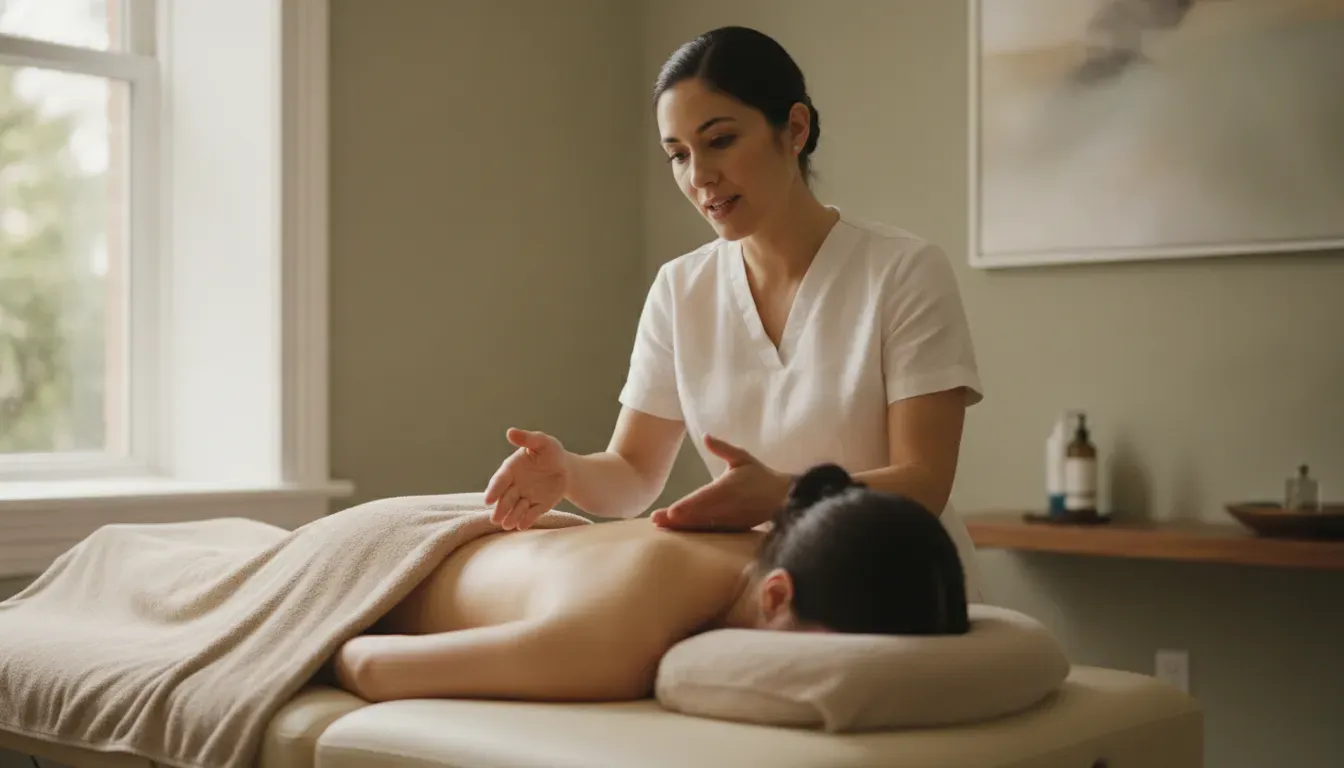

An aching lower back, restless nights, and persistent tension in your shoulders are common challenges during pregnancy. Finding a way to manage this discomfort safely is key to enjoying this special time. While you can’t just book a standard deep tissue massage, there is a powerful solution designed specifically for expectant mothers. The side-lying prenatal massage is a therapeutic approach that allows you to get the relief you crave. By supporting your body correctly, a skilled therapist can address muscle pain, reduce stress, and even help you sleep better. Let’s explore all the ways this specialized massage can help you feel more comfortable and relaxed.
Key Takeaways
- The side-lying position is non-negotiable for safety: This is the professionally recommended method for prenatal massage because it protects blood flow to the placenta and prevents strain on your body, all while keeping you comfortable with supportive pillows.
- Expect relief tailored to your pregnancy: A prenatal massage uses specialized, safe techniques to address common discomforts like backaches, hip tension, and stress, helping you feel more at ease in your changing body.
- Your therapist’s training is crucial: Always choose a licensed massage therapist with specific certification in prenatal care, and remember to communicate openly about your comfort and pressure preferences throughout your session.
What Is Side-Lying Prenatal Massage?
If you’ve ever had a massage before, you’re probably used to lying face-down or flat on your back. But as your body changes during pregnancy, those positions are no longer safe or comfortable. This is where side-lying prenatal massage comes in. It’s the professionally recommended and safest way to receive a massage, especially as you move into your second and third trimesters.
Instead of using tables with cutouts, which can fail to properly support the abdomen, the side-lying position involves resting comfortably on your side, supported by a strategic arrangement of pillows and cushions. This setup keeps your body in a stable, neutral alignment, taking all pressure off your growing belly and lower back. It allows your therapist to effectively address common pregnancy complaints in your hips, back, and shoulders without compromising your or your baby’s safety. A prenatal massage is more than just a change in position; it’s a specialized approach designed entirely around the needs of an expectant mother.
Why It’s Different From a Standard Massage
A standard massage focuses on general relaxation or muscle tension, but a prenatal massage is a specific modification of techniques to meet the needs of your changing body. The most obvious difference is the positioning. The side-lying posture, sometimes called the “lateral recumbent” position, is used to ensure your comfort and safety throughout the session.
Beyond just how you lie on the table, the massage techniques themselves are adapted. Your therapist will use strokes that are safe for pregnancy and will know which areas require a gentle touch and which can handle more focused work. The entire experience is tailored to address pregnancy-related issues, from sciatic pain and swollen ankles to shoulder tension, making it a therapeutic session designed just for you.
The Safest Position for Mom and Baby
There’s a very important reason why the side-lying position is the gold standard for prenatal massage: it’s the safest for both you and your baby. After the first trimester, it is no longer safe to lie flat on your back for an extended period. The weight of the uterus can compress a major blood vessel called the vena cava, which can reduce blood flow to your heart and the placenta. This can cause dizziness for you and decrease oxygen for your baby.
Lying on your side completely avoids this issue. In fact, the American Pregnancy Association suggests that sleeping on your left side can improve circulation and blood flow to the placenta. A qualified prenatal massage therapist will position you correctly to ensure optimal safety and comfort, so you can fully relax knowing you’re in good hands.
Benefits of a Side-Lying Prenatal Massage
A prenatal massage is so much more than a simple treat; it’s a dedicated time for you to connect with your changing body and find relief. The side-lying position makes it possible to receive therapeutic massage safely throughout your pregnancy, offering a wide range of benefits for your physical and emotional health. From soothing sore muscles to calming an anxious mind, this specialized care supports you through every trimester. Let’s look at the key ways a side-lying prenatal massage can help you feel your best.
Ease Common Pregnancy Aches and Pains
Pregnancy is a beautiful journey, but it often brings new aches and pains. As your body changes to accommodate your growing baby, you might experience discomfort in your lower back, hips, and legs. A side-lying prenatal massage is designed to address these exact issues. This position allows your therapist to safely work on tense muscles without putting any pressure on your abdomen. Research shows that massage therapy helps pregnant women relax and ease muscle tension, offering significant relief from common complaints like back and leg pain. It’s a gentle yet effective way to manage the physical demands of pregnancy.
Reduce Stress and Improve Your Mood
Taking care of your mental well-being is just as important as your physical health during pregnancy. The hormonal shifts and anticipation of a new arrival can sometimes feel overwhelming. Prenatal massage is a supportive way to manage stress and anxiety. The calming environment and soothing touch help lower cortisol (the body’s stress hormone) while encouraging the release of serotonin and dopamine, which contribute to feelings of well-being. Studies confirm that massage can help pregnant women feel less anxious and improve their mood. It’s a peaceful escape that gives you space to recharge and feel more like yourself.
Improve Sleep and Circulation
Getting a good night’s sleep can become a real challenge during pregnancy, but massage can help. By easing muscle tension and calming your nervous system, a prenatal massage can make it easier to fall asleep and stay asleep. The side-lying position also plays a crucial role in your comfort and health by promoting healthy circulation. Proper blood flow is essential for you and your baby, and experts note that side-lying ensures blood flow is optimized. This can help reduce common issues like swelling in your legs and feet, dizziness, and nausea. Better circulation and less discomfort create the perfect recipe for more restful nights.
How You’ll Be Positioned for Comfort
If you’ve ever tried to get comfortable in bed during pregnancy, you know it can be a real challenge. The great news is that a professional massage table is designed for ultimate comfort, and your therapist is an expert at making sure you feel completely supported. During a prenatal massage, your comfort and safety are the top priorities. We use a specific positioning technique with plenty of pillows and cushions to ensure you can fully relax while we work on those tired muscles. Your only job is to lie back and let us take care of the rest.
The Ideal Positioning Technique
The safest and most comfortable way to receive a massage during pregnancy is in a side-lying position. This technique, also called “lateral recumbent,” is the gold standard for prenatal massage because it protects both you and your baby. Lying on your side prevents any pressure from being placed on your abdomen or on the major blood vessels that supply oxygen to your baby. Your therapist will typically have you start on your left side to encourage optimal circulation, and they will help you switch sides as needed during the session so they can address both sides of your body.
Using Pillows and Cushions for Support
Get ready to be nestled into a supportive cocoon of pillows. To ensure every part of your body is comfortable, we use a strategic arrangement of cushions and bolsters. You can expect a pillow under your head for neck support, another one in front of your chest to support your top arm and shoulder, and a larger pillow or bolster placed between your knees and ankles. This setup supports your joints, takes the strain off your hips and lower back, and helps you feel secure and stable on the table, allowing you to completely let go and relax.
Keeping Your Spine Aligned
Proper alignment is key to getting the most out of your massage. The pillow arrangement isn’t just for coziness; it’s designed to keep your spine perfectly straight and parallel to the massage table. When done correctly, this prevents your body from twisting, which protects the ligaments around your pelvis and sacroiliac joint from overstretching. Your therapist is trained to check your alignment and make sure you are positioned perfectly before the massage begins. This stable, supported posture ensures you remain comfortable and safe throughout your entire session.
Safe Techniques for Prenatal Massage
A prenatal massage is much more than a standard massage with lighter pressure. It’s a specialized practice that requires a deep understanding of the pregnant body. Our licensed massage therapists are trained in specific techniques that are both safe and effective for you and your baby. They know how to address the unique aches and pains of pregnancy while ensuring your complete comfort and safety. From the way we position your body to the strokes we use, every element is tailored to the needs of expecting mothers. We focus on gentle, supportive methods that provide real relief, help you relax, and prepare your body for labor.
Gentle Strokes for Effective Relief
Your massage will likely begin with light, gliding strokes to warm up your muscles and help you settle into a state of relaxation. This gentle approach, known as effleurage, is key to preparing your body for more focused work on areas of tension. It increases circulation and allows your therapist to assess which muscles need the most attention without causing any discomfort. This initial phase is all about building a soothing rhythm and creating a foundation of trust, ensuring you feel secure and cared for from the very first touch of your prenatal massage.
Adjusting Pressure for Your Comfort
Communication is essential during any massage, but it’s especially important during pregnancy. While some deep pressure is avoided in certain areas, therapeutic pressure is still very much a part of prenatal massage. Your comfort is the top priority, and your therapist will adjust the pressure to a level that feels right for you. We encourage you to provide feedback throughout your session. Whether you need a lighter touch or more focused pressure on a stubborn knot, your voice guides the treatment. This collaborative approach ensures you get the relief you need in a way that feels both effective and completely safe.
Targeting Key Areas of Discomfort
Pregnancy can bring on aches in places you never expected. Our therapists are skilled at targeting the most common areas of discomfort. We often focus on the upper back, neck, and shoulders, where tension can build and lead to headaches. The side-lying position is also perfect for accessing the lower back, especially the quadratus lumborum (QL) muscle, which works overtime to support your changing posture. By applying safe, targeted techniques to these key spots, our expert therapists can help release tightness, reduce pain, and make you feel more at home in your body.
Staying Safe During Your Prenatal Massage
Your well-being and your baby’s safety are the top priorities during a prenatal massage. While massage is incredibly beneficial during pregnancy, a few safety measures ensure you can relax completely, knowing you’re in good hands. A professional therapist will guide you through the process, but being informed helps you feel confident and comfortable from the moment you book your appointment. It’s all about creating a secure, serene experience for both of you.
When to Check With Your Doctor First
Before you even get on the table, it’s a great idea to have a quick chat with your doctor or midwife about getting a prenatal massage, especially if you have a high-risk pregnancy or other health concerns. Once you have the green light, your next step is finding the right therapist. Always let them know you’re pregnant and how far along you are when booking. It’s essential to choose a licensed massage therapist who has specific training and certification in prenatal massage. This ensures they understand the unique changes your body is going through and know how to provide a safe, effective, and comfortable session.
Pressure Points and Areas to Avoid
A properly trained prenatal massage therapist knows exactly how to adapt their techniques for your changing body. They are aware of specific pressure points that should be avoided during pregnancy and will steer clear of them. One of the most important rules is to avoid deep massage on your belly. While gentle, soothing strokes can be relaxing, strong pressure in this area is off-limits. Your therapist will also position you safely, typically on your side. Lying on your left side is often preferred, as it promotes optimal circulation for you and your baby. You can rest easy knowing your therapist is trained to protect these sensitive areas while still addressing your aches and pains.
Communicating With Your Therapist
Think of your massage therapist as your partner in comfort. Open communication is the key to a wonderful experience. Don’t hesitate to speak up about what feels good and what doesn’t. Before the session starts, your therapist will ask about any specific areas of discomfort or concern you have. During the massage, continue that conversation. If the pressure is too much or not enough, or if a certain position feels awkward, just say so. Your feedback is invaluable and allows the therapist to customize the session just for you. Remember, this time is all about your relaxation and relief, so your comfort is the most important thing.
What to Expect at Your Appointment
Knowing what will happen during your appointment can help you relax and get the most out of your experience. A prenatal massage is all about ensuring your comfort and safety, so the process is a little different from a standard massage. From the moment you arrive, your therapist’s goal is to create a supportive and soothing environment for you and your baby. We’ll walk you through everything from the initial conversation with your therapist to how you’ll feel once the session is over.
Our team is dedicated to providing a professional, high-quality prenatal massage tailored to your specific needs during this special time. We want you to feel completely at ease, so here’s a step-by-step look at what your appointment will be like.
Before the Massage Begins
Your appointment will start with a conversation. It’s important to let your therapist know you’re pregnant and how far along you are, even if you mentioned it during booking. This is also the perfect time to share any specific aches, pains, or areas of concern you’re experiencing. Our licensed massage therapists have specialized training in prenatal care and will use this information to customize the session just for you. They’ll explain the side-lying position and answer any questions you have. This initial chat ensures you feel comfortable and confident before the massage even starts, setting the stage for a truly relaxing experience.
During Your Session
Once you’re ready, you’ll get comfortable on the massage table in a side-lying position. This is the safest and most comfortable way to receive a massage during pregnancy, as it avoids putting any pressure on your abdomen or major blood vessels. Your therapist will use a system of soft pillows and cushions to support your body, placing them under your head, between your knees, and beneath your belly. This setup keeps your spine aligned and allows you to fully relax. Throughout the session, your therapist will check in with you about the pressure and your comfort level, adjusting their technique to meet your needs while focusing on relieving tension in your back, hips, and shoulders.
After Your Massage Ends
When your massage is finished, your therapist will give you a moment to rest before helping you sit up slowly. They will remove all the supportive pillows to make sure you can get up from the table safely. It’s common to feel deeply relaxed, a little lighter, and notice a significant reduction in muscle tension. We encourage you to take your time getting dressed and to drink plenty of water to help your body process the therapeutic work. Many expectant mothers find that the benefits, like an improved mood and easier movement, continue long after they leave the studio, often leading to a better night’s sleep.
How to Find a Qualified Prenatal Massage Therapist
Finding the right massage therapist is always important, but during pregnancy, it’s essential. You need someone who not only helps you relax but also understands the unique needs of your changing body. A great prenatal massage is a game-changer for aches and stress, but safety comes first. Here’s how to find a therapist you can trust to take excellent care of you and your baby.
Check for Credentials and Specialized Training
When you’re looking for a prenatal massage, a standard massage license is just the starting point. You’ll want to find a therapist who has completed specialized training and certification in prenatal massage. This advanced education ensures they understand the specific anatomical changes during pregnancy and know how to keep both you and your baby safe. A certified prenatal massage therapist knows which techniques to use, what areas to avoid, and how to position you correctly for maximum comfort and safety. Don’t hesitate to ask about a therapist’s qualifications; a true professional will be happy to share their credentials and experience with you.
Key Questions to Ask Your Therapist
Once you’ve confirmed a therapist has the right credentials, it’s a good idea to ask a few questions to see if they’re the right fit. Think of it as a mini-interview to ensure you feel comfortable. Ask about their experience working with pregnant clients and the specifics of their training. A great question is, “What’s your approach to pressure?” Some people mistakenly believe prenatal massage must be extremely light, but a skilled therapist knows how to apply firm, therapeutic pressure safely. Their answers should give you confidence in their ability to provide a massage experience that is both effective and completely safe for you and your baby.
Red Flags to Watch For
Just as important as knowing what to look for is knowing what to avoid. A major red flag is any therapist who suggests you lie flat on your back after your first trimester. This position can put pressure on a major vein and reduce blood flow to your baby. A qualified therapist will always use a side-lying or semi-reclined position, supported by plenty of pillows. Also, be cautious if a therapist doesn’t take a thorough health history or seems hesitant to answer your questions. Your comfort and safety are the top priorities, and you should feel completely supported by your massage therapist from start to finish.
Related Articles
Frequently Asked Questions
Is side-lying massage necessary during the first trimester? While it’s safest to avoid lying flat on your back after the first trimester, many therapists use the side-lying position from the very beginning. It’s a great way to get used to the setup, and it ensures maximum safety and comfort right from the start. Some women can still lie face-down comfortably in the early weeks, but the side-lying position is the gold standard for a reason, so we often introduce it early to create a consistently safe and relaxing experience.
Can a prenatal massage still be deep enough to relieve my back pain? Absolutely. A common myth is that prenatal massage is just a light, fluffy rubdown. While your therapist will avoid deep pressure on certain areas, they are trained to use safe and effective techniques to release tension in your back, hips, and shoulders. We focus on applying therapeutic pressure that addresses muscle knots and soreness without compromising your safety. Always communicate with your therapist; they can adjust the pressure to a level that feels both effective and comfortable for you.
What if I can’t get comfortable on my side for a long time? This is a very common concern, but rest assured, we are experts at creating a comfortable setup. We use a system of high-quality pillows and bolsters to support every part of your body, from your head and belly to your knees and ankles. This strategic cushioning takes all the strain off your joints and keeps your spine perfectly aligned. If you ever feel uncomfortable, just let your therapist know. We can easily make adjustments or help you switch sides to ensure you remain completely relaxed.
How often should I get a prenatal massage? The frequency is really up to you and what your body needs. Many women find that a monthly massage works well to manage the common aches and pains of pregnancy. As you get into the third trimester, you might find that more frequent sessions, perhaps every week or two, provide significant relief from back pain and help you sleep better. It’s a wonderful way to support your body as it prepares for labor.
Can my partner join me for a prenatal couples massage? Yes, that’s a wonderful idea. A couples massage is a great way to connect and relax together before the baby arrives. While you receive a specialized side-lying prenatal massage, your partner can enjoy their own customized massage, like a deep tissue or Swedish session, right alongside you. It’s a shared experience where both of you get the therapeutic care you need in a calm, supportive environment.