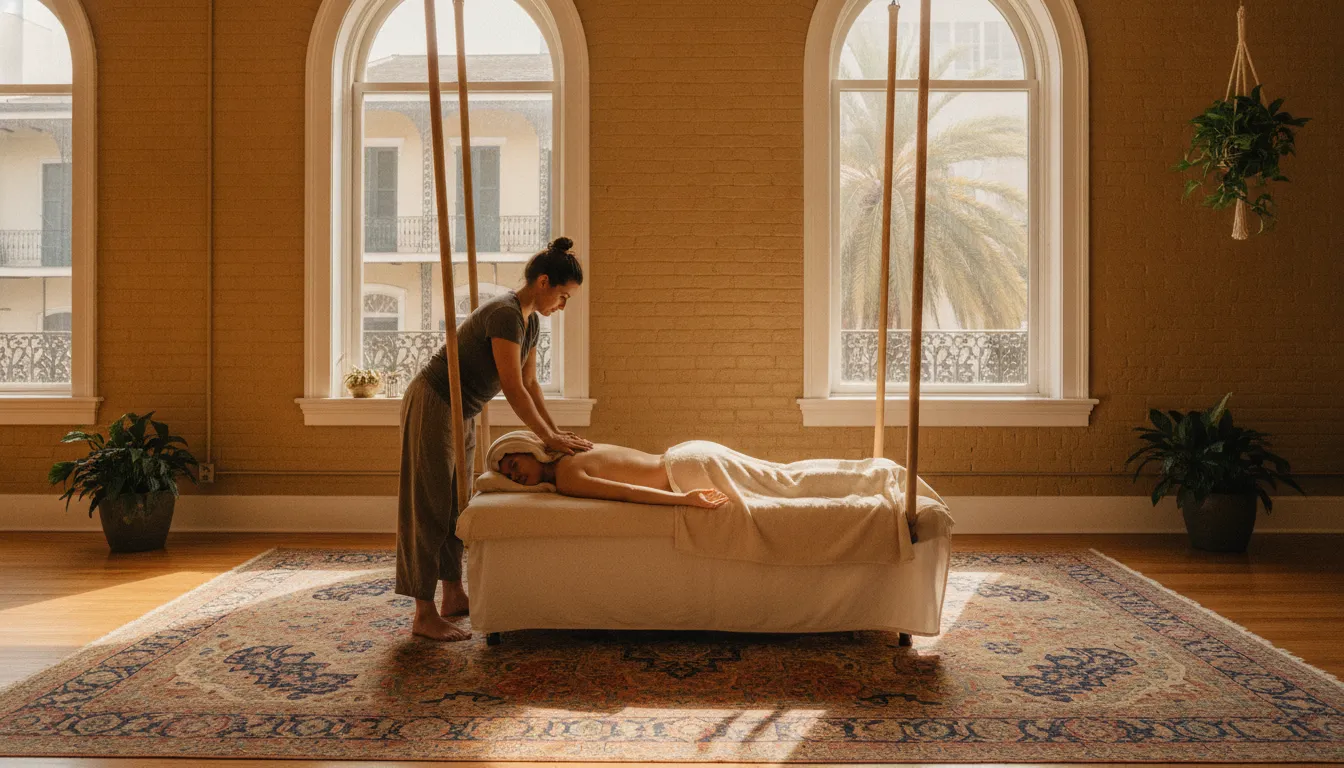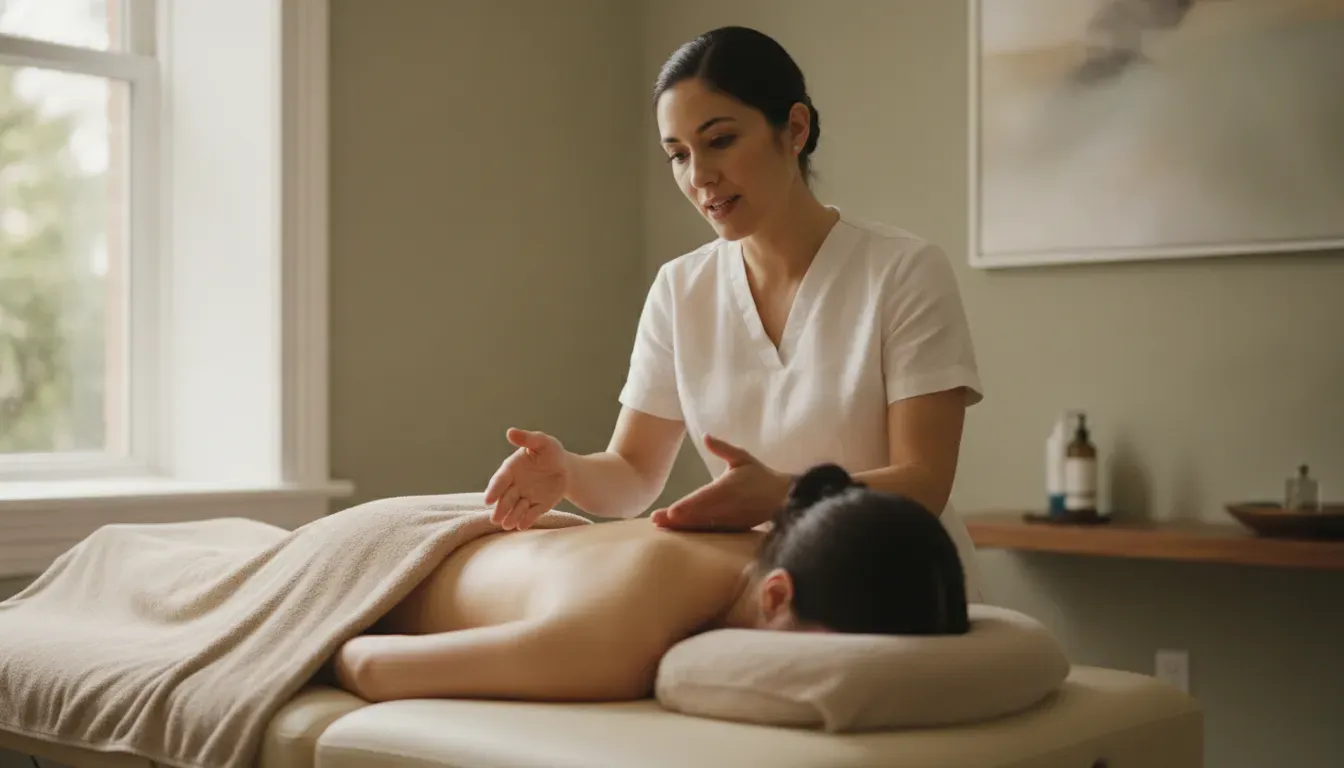

Deep pressure does not have to mean tolerating a therapist leaning harder with an elbow. Barefoot bar therapy uses a controlled, grounded approach that can cover broad areas of muscular tension while keeping the work precise and responsive to your comfort.
Book an ashiatsu massage at NOLA Bliss Massage today
Ashiatsu is a therapeutic massage method in which a trained practitioner uses bare feet. Overhead bars, and carefully balanced body weight to apply sustained pressure through the body’s larger muscle groups. The technique is often chosen for chronic back tension, post-travel soreness, athletic recovery, and guests who want more depth than hand-based work can provide.
The experience is more structured than its dramatic name may suggest. Your practitioner remains in control of pressure, pace, and positioning throughout the session, adjusting the work to your needs. Understanding how the bars, feet, and body mechanics fit together makes the method much easier to evaluate.
What Is Ashiatsu Massage?
Ashiatsu is a barefoot massage technique in which a trained practitioner uses the feet to apply broad, sustained pressure. The therapist works from overhead bars for balance and control, while the guest remains comfortably draped on the massage table. This approach can create deeper, more even contact across large muscle groups than hand-based techniques.
The meaning behind the name
The word comes from Japanese: ashi means foot, and atsu means pressure. In other words, the name describes the central method directly. Rather than concentrating pressure through fingertips, knuckles, or elbows. The practitioner uses the sole of the foot to distribute body weight across the back, hips, legs, or other appropriate areas.
The technique has a long lineage. Historical accounts trace forms of barefoot bodywork to the 12th century. With roots across several regions of Asia and beyond, including Japan, India, China, Thailand, Africa, and the Philippines. Modern practitioners have refined those traditions into a structured therapeutic method that includes specialized training, bar work, draping, pressure control, and communication throughout the session.
How modern bar therapy developed
One important chapter in modern Ashiatsu training began with DeepFeet. Ruthie Hardee founded DeepFeet in 1995, establishing a formal training pathway for practitioners who wanted to develop safe and effective barefoot massage skills. According to DeepFeet, its network now includes more than 40,000 certified graduates worldwide.
At a properly equipped studio, ceiling or wall-mounted bars give the practitioner stability while they adjust the amount, direction, and pace of pressure. The technique is often described as providing up to three times the pressure of traditional massage, although the useful goal is not maximum intensity. The goal is controlled, therapeutic pressure that remains within the guest’s comfort and treatment needs.
That combination of broad contact and careful control is why many guests explore ashiatsu barefoot massage for persistent back tension or tight, heavily used muscle groups. A qualified practitioner should discuss health history, pressure preferences, and areas to avoid before beginning, then adjust the session as the body responds.
How Ashiatsu Works: Bars, Barefoot Pressure, and Next-Level Depth
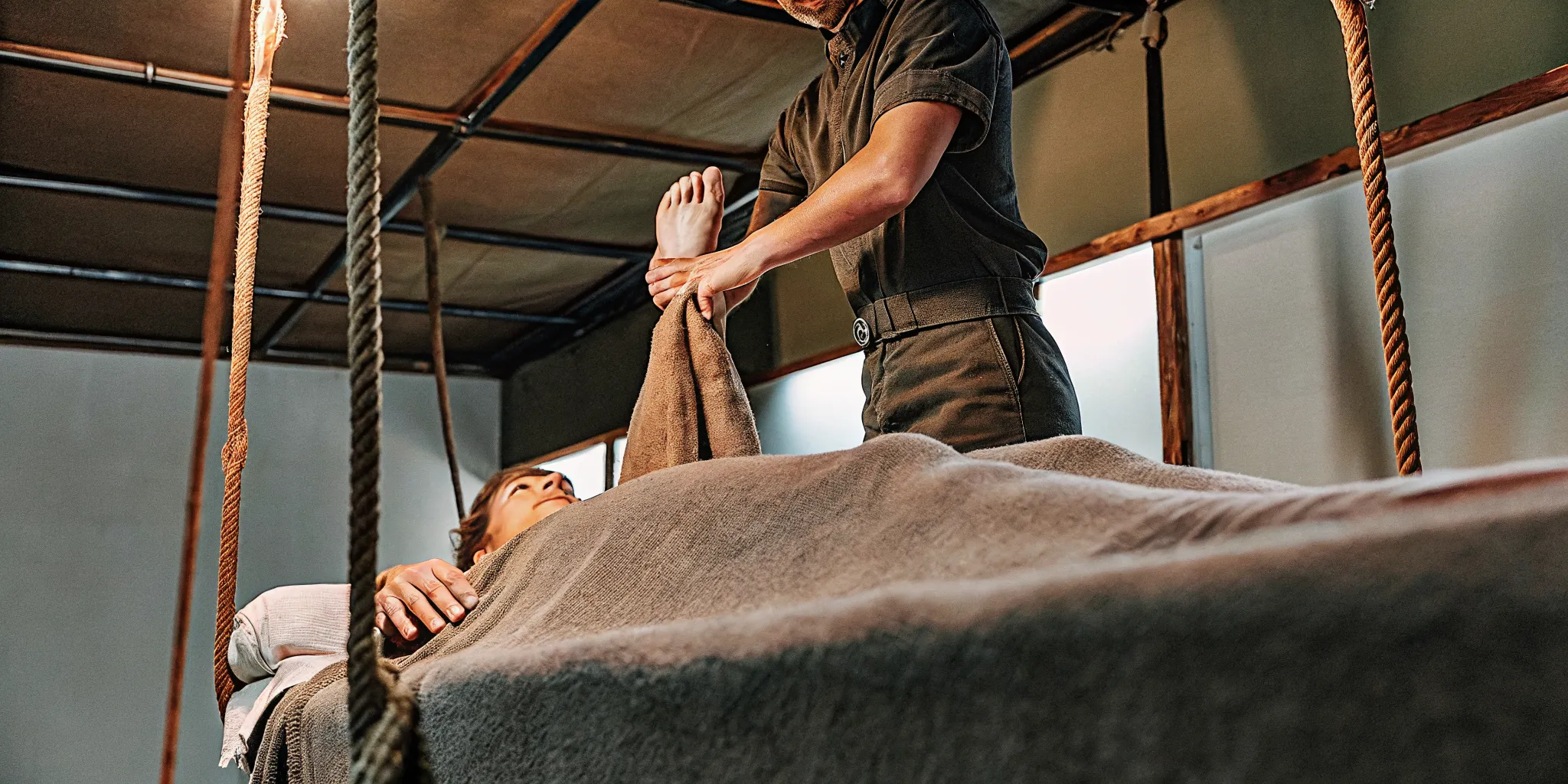
The session begins with the therapist standing above the massage table and using sturdy, ceiling-mounted bars for balance. With that support, they can control how much body weight travels through the feet and into the tissues below. The result is broad, steady pressure that feels deliberate rather than abrupt.
Why the bars matter
The bars are a practical part of the technique, not a decorative feature. They give the therapist a stable point of contact while moving across the back, hips, legs, or other large muscle groups. By adjusting their grip, stance, and weight distribution, the therapist can soften pressure, deepen it, or shift gradually from one area to the next.
This control also supports communication. Pressure should stay within each guest’s comfort and therapeutic needs. A trained therapist can check in, modify the pace, and work around areas that need a lighter approach. Ashiatsu is not about tolerating the most intense sensation possible. It is about creating useful pressure with precision.
How barefoot pressure reaches deeper tissue
The sole of the foot has a wider contact area than individual fingers. That broad surface allows the therapist to work through large muscle groups with more uniform pressure. In the customer-provided treatment description, barefoot deep tissue massage is described as delivering about three times deeper pressure than traditional massage. This can make the method especially useful when chronic back tension or substantial muscle density makes hand-based work difficult.
Rather than pressing quickly with a thumb or elbow, the therapist can sustain a slow, controlled glide. That steady contact gives the tissue time to respond and lets the guest communicate how the pressure feels. The technique may be adapted for different bodies, pain patterns, and treatment goals, so deeper does not automatically mean better in every area.
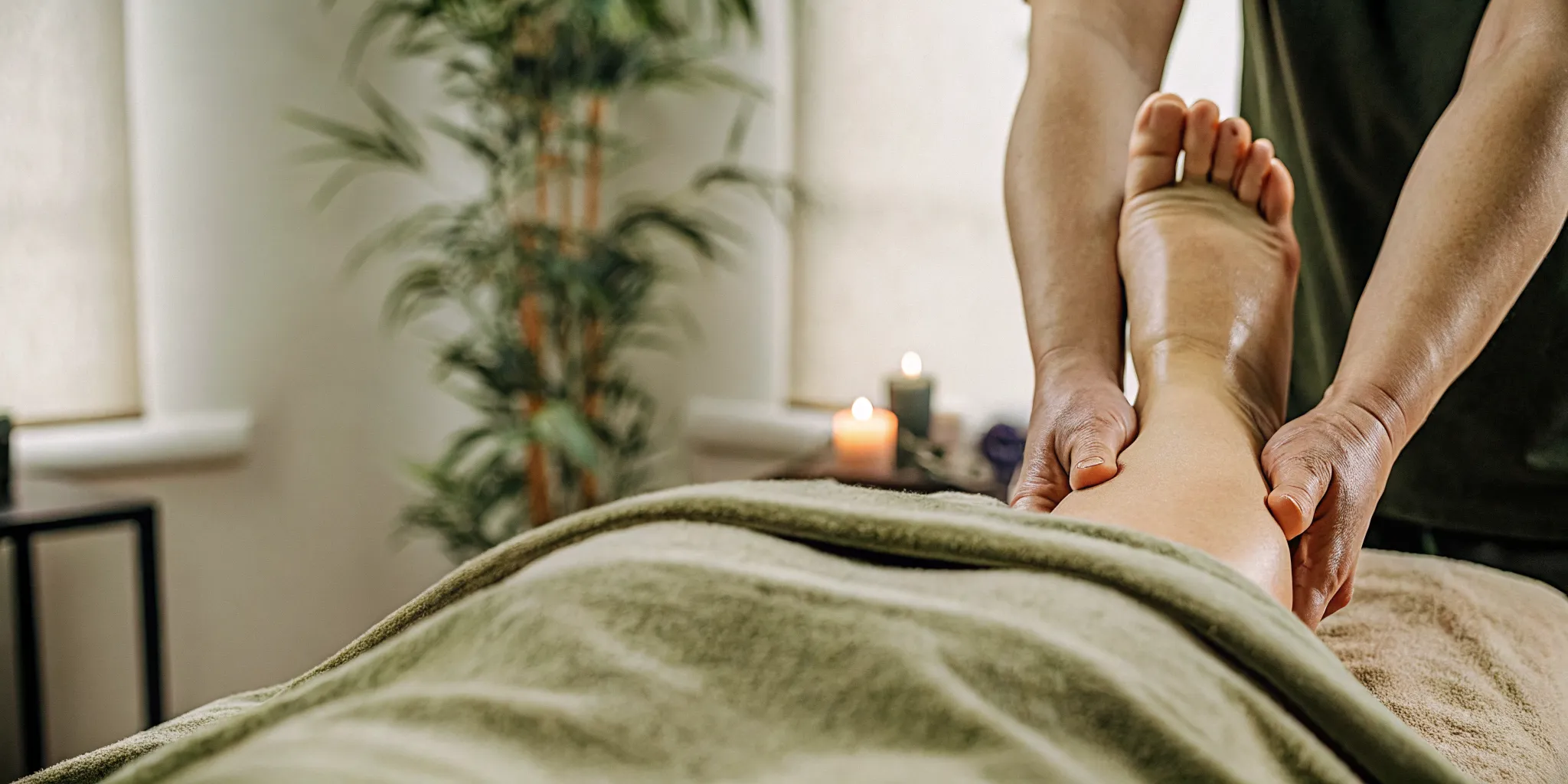
A more sustainable approach for the therapist
Using body weight and bar support can also reduce the physical demand placed on the therapist’s hands and wrists. Hand-intensive deep tissue work may require repeated force through small joints. Ashiatsu distributes that effort through the therapist’s larger muscle groups, helping maintain consistent pressure during a therapeutic session.
For guests interested in this specialized approach, the ashiatsu barefoot massage service offers a closer look at how bar therapy can support focused, remedial bodywork.
Ashiatsu vs. Deep Tissue Massage: What Actually Differs
Ashiatsu is best understood as a specialized deep tissue approach, not a completely separate therapeutic goal. Both methods can work with deeper layers of muscle and connective tissue, but the therapist’s tools and movement strategies create a different experience.
| Consideration | Ashiatsu | Classic deep tissue massage |
|---|---|---|
| How pressure is applied | The therapist uses bare feet and controlled body weight while balancing with overhead bars. The broad surface of the foot can create steady, flowing pressure. | The therapist uses hands, thumbs, elbows, or forearms to apply pressure. This allows highly focused work in smaller areas. |
| Pressure depth | Customer guidance describes barefoot bar therapy as delivering up to three times deeper pressure than traditional massage. Intensity is still adjusted to each guest’s comfort and goals. | Pressure can be moderate to deep, depending on the therapist’s technique, the tissue being treated, and the guest’s response during the session. |
| Muscle coverage | The foot can cover large muscle groups with broad, relatively uniform pressure. This makes the approach useful for extensive back, hip, or leg tension. | Hands and forearms can trace specific structures, while thumbs or elbows can address localized bands of tension, trigger points, or smaller areas. |
| Therapist ergonomics | Bars support balance and help the therapist use body weight rather than relying only on hand and upper-body force. This supports sustained, consistent pressure. | The therapist depends more heavily on hand, elbow, and forearm mechanics. Skillful body positioning remains important for consistency and endurance. |
| Ideal use cases | A strong option for guests who want broad, substantial pressure across large muscle groups, including chronic back tension, when barefoot work is appropriate. | A flexible option when treatment calls for precise work, smaller target areas, or gradual pressure changes around pain and restricted movement. |
What the research says about deep tissue work
Research supports deep tissue massage as a therapeutic option for some pain populations. One study found improvements in neck range of motion, pain, disability. And quality of life for people with myofascial pain syndrome when deep tissue massage was added to rehabilitation. Read the PubMed study.
A separate review reported favorable outcomes for pain populations and people with reduced range of motion. While also emphasizing the need to evaluate massage methods for safety and efficacy. Review the PubMed evidence. These findings describe deep tissue massage broadly, so they should not be treated as proof that every guest will respond the same way to ashiatsu.
The practical choice comes down to the type of pressure your body needs. Broad, body-weight pressure may suit extensive muscular tension, while hand-based work may be better for precise areas. A trained therapist can discuss your health history, goals, and comfort level before choosing the most appropriate approach.
Who Benefits Most From Ashiatsu Massage
Ashiatsu can be a strong fit for guests who want broad, sustained pressure rather than a lighter, fingertip-focused approach. Because the technique uses the therapist’s feet and body weight, it can address large areas of muscular tension with an even feel. Your therapist will still adjust pressure, pacing, and positioning around your comfort and goals.
- Recurring back, hip, or shoulder tension that feels spread across a broad area.
- Athletes and active bodies seeking deep, uniform work through large muscle groups.
- Desk workers holding accumulated stiffness through the neck, upper back, and hips.
- Travelers recovering from long flights, car rides, or days of walking New Orleans.
Guests with chronic back tension
People living with recurring back tightness may appreciate the depth and consistency of barefoot work. The broad contact of the foot can cover more of the back and surrounding muscles at once. Which is useful when tension feels widespread instead of isolated to one small spot. Ashiatsu is not a diagnosis or a replacement for medical care, but it may be considered as part of a broader approach to managing muscular discomfort.
Athletes and active bodies
Training, competition, and repetitive movement can leave the glutes, hamstrings, calves, shoulders, and back feeling densely tight. These larger muscle groups are often where deep, uniform pressure is most helpful. A session can be tailored toward post-training soreness, persistent tightness, or the areas that limit comfortable movement. Tell your therapist about recent workouts, injuries, and upcoming events so the session supports your current stage of recovery.
Desk workers with accumulated tension
Long hours at a desk can contribute to stiffness through the neck, shoulders, upper back, hips, and lower back. If your tension has built gradually, a focused therapeutic session may help you identify where your body is holding stress. Your therapist can combine deeper work with slower pacing and position changes instead of applying the same intensity everywhere.
Travelers recovering from long days
Visitors and local guests may seek this approach after long flights, extended car rides, conferences, or several days of walking through New Orleans. Travel-related fatigue often shows up as compressed hips, tired legs, and a stiff back. Ashiatsu can provide substantial pressure across those larger areas while keeping the session personalized to how you feel that day.
Whether you are managing chronic tightness, training regularly, working at a desk, or recovering from travel, start with an honest conversation about your goals and comfort level. Explore NOLA Bliss Massage’s therapeutic massage services to compare options and choose a session that fits your needs.
Ashiatsu Training, Safety, and Certification
Barefoot pressure requires more than strength. It depends on careful positioning, controlled movement, and a clear understanding of how pressure travels through the body. Proper training helps an ashiatsu therapist work safely while adjusting the session to each guest’s comfort, goals, and physical needs.
Why specialized training matters
A trained practitioner learns how to use the feet with precision rather than simply adding more weight. Instruction covers balance, pacing, transitions, pressure control, and communication. Those skills help the therapist work across broad muscle groups while avoiding abrupt or poorly directed force. They also make it easier to adapt the technique when a guest has areas that need lighter pressure or should be avoided.
Certification provides a useful standard for that preparation. NOLA Bliss Massage is the only certified Ashiatsu Deepfeet training center on the Gulf Coast, and founder Sara Albee is a certified instructor. Guests who want to understand the method more deeply can explore the studio’s Ashiatsu training workshops, which support education as well as hands-on practice.
How the bar system supports safer work
The overhead bar system gives the therapist a stable point for balance during a session. Instead of relying on a narrow stance or repeatedly bracing through the hands, the therapist can regulate body weight, movement, and pressure while staying centered above the table. This control supports smoother strokes and more consistent contact.
The setup also protects the therapist’s body. Hand-based deep tissue work can place repeated stress on the fingers, wrists, thumbs, and shoulders. Using the bars and larger muscles of the legs allows the therapist to deliver sustained pressure with less personal strain. That can reduce repetitive-stress risk and help support a longer, more sustainable practice.
Safety starts with communication
A safe session includes a thorough intake and ongoing feedback. Tell your therapist about injuries, recent procedures, health conditions, medications, or areas of sensitivity before treatment begins. During the massage, pressure should remain within a productive range, not become a test of endurance. Speak up if anything feels sharp, numb, unstable, or otherwise wrong. Skilled ashiatsu is deliberate and therapeutic, with technique guided by your response throughout the appointment.
Ashiatsu in New Orleans at NOLA Bliss Massage
At NOLA Bliss Massage, an ashiatsu session is designed around therapeutic results, not a spa-only escape. Guests come to the warm, inclusive studio for focused support with pain, injury recovery, back tension, and demanding muscle work. The experience is personalized to your comfort, goals, and movement needs from the first conversation through the final check-in.
A therapeutic studio with deep local experience
NOLA Bliss Massage was founded and is led by Sara Albee, who established the studio in Downtown New Orleans’ Warehouse District in 2012. Her approach keeps remedial bodywork at the center of the guest experience. Rather than treating deep pressure as a performance, the therapist adjusts technique and pacing to support useful, sustainable relief.
That experience is reflected in the studio’s recognition as New Orleans’ “Best Massage Therapist” for four consecutive years. It is also why guests can explore ashiatsu alongside other therapeutic massage services when a different approach may better match their needs.
What your visit can feel like
Before treatment begins, your therapist can discuss areas of concern, pressure preferences, relevant injuries, and what you want to accomplish. During the session, the overhead bars help the therapist work with controlled body weight while maintaining balance. Broad, steady pressure can be especially useful across the back and other large muscle groups.
The goal is not to push through discomfort. Clear communication helps your therapist distinguish productive therapeutic pressure from pressure that is too intense. You remain an active participant, and adjustments can be made throughout the appointment.
Welcoming every guest
NOLA Bliss is LGBTQ+ friendly and welcomes all bodies. You do not need to fit a particular athletic profile or have prior experience with barefoot bodywork. Whether you are a local professional managing recurring tension, a visitor recovering from travel. Or someone seeking support after an injury, the studio provides an inviting setting for individualized care.
The Warehouse District location is at 322 Lafayette St., Suite 300. Guests can use two hours of free downtown parking at 330 Exchange Alley, which makes arriving for a focused therapeutic appointment easier in the middle of New Orleans.
Reserve your ashiatsu massage session online now
Frequently Asked Questions
What is an Ashiatsu massage?
Ashiatsu is a barefoot massage method in which a trained therapist uses overhead bars for balance while applying controlled pressure with the feet. The approach can create broad, steady work across large muscle groups while the therapist adjusts intensity to your comfort and treatment goals.
Is Ashiatsu better than deep tissue massage?
Neither method is better for every guest. Ashiatsu uses foot and body-weight pressure for broad, consistent contact, while conventional deep tissue massage uses hands, forearms, or elbows for more targeted work. Your therapist can recommend the better fit based on your goals, sensitivity, medical history, and preferred pressure.
Is Ashiatsu worth it for chronic muscle tension?
It may be a useful option when you want sustained, therapeutic pressure across the back, hips, legs, or other large muscle groups. A consultation helps determine whether the technique suits your needs. Guests should share injuries, health conditions, recent procedures, and pressure preferences before the session.
What should I wear for an Ashiatsu massage?
Wear whatever allows you to feel comfortable and move easily. You will discuss draping and clothing with your therapist before treatment, and only the area being addressed is uncovered. Tell your therapist if you need adjustments for comfort, modesty, temperature, or pressure throughout the session.
Ready to Experience Ashiatsu?
If barefoot pressure feels like a helpful fit for your massage goals, a personalized session can give you a focused way to explore the technique. Book an ashiatsu massage session at a time that works for you, and arrive ready to share your comfort preferences and areas of focus.