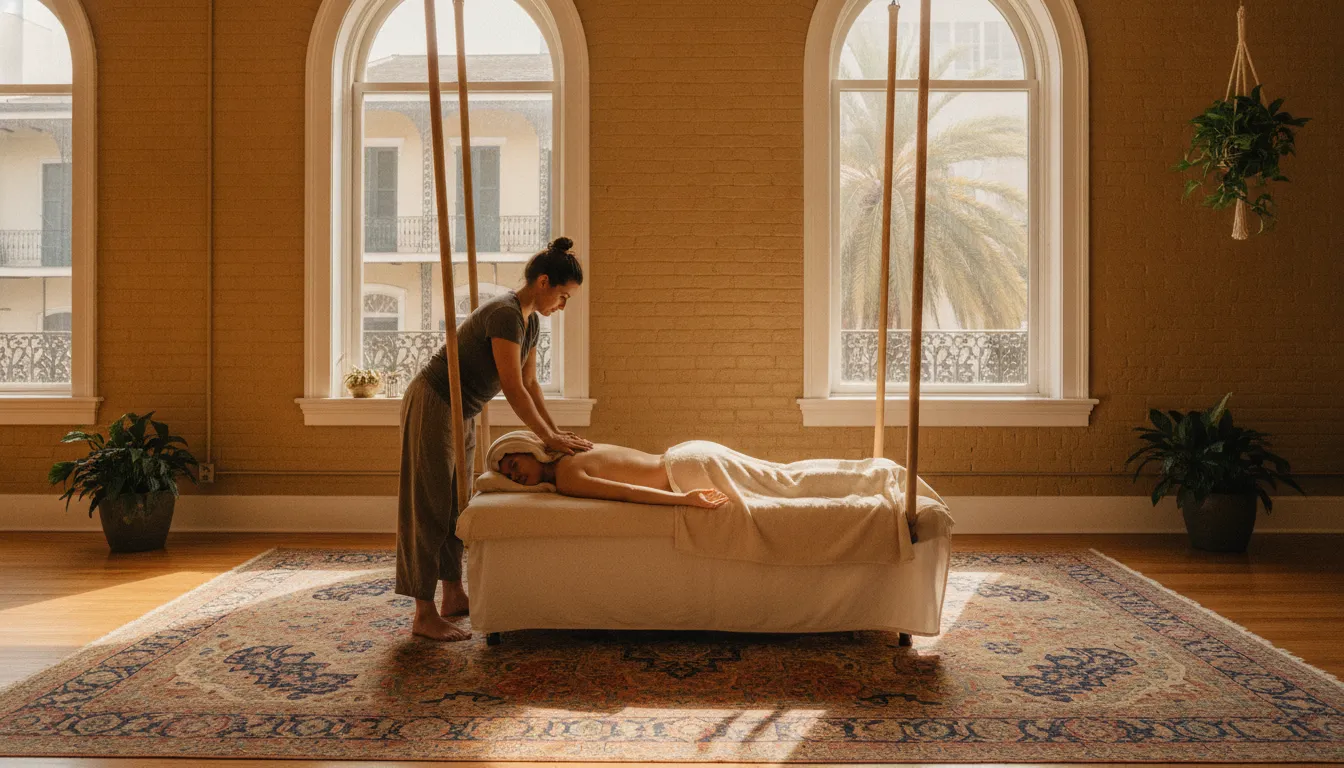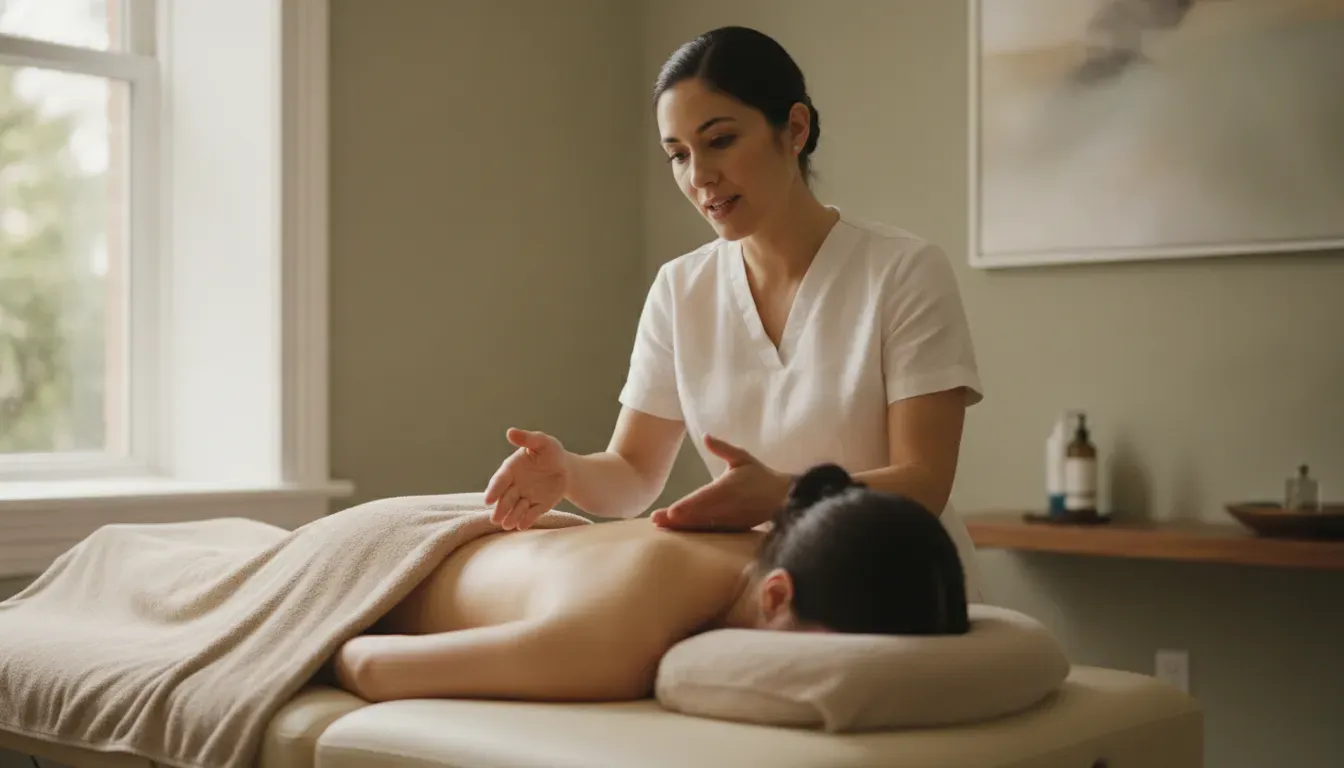

The idea of a “barefoot massage” might sound unusual, but it’s the secret to getting deep relief without the discomfort. In Ashiatsu, your therapist uses overhead bars for balance, applying deep, consistent pressure with their feet. This allows them to use gravity for a powerful yet incredibly soothing experience. Instead of the sharp poking from thumbs or elbows, you feel long, flowing strokes that release tight muscles and decompress your spine. This unique application is precisely why an ashiatsu massage for neck and shoulder pain is a game-changer for profound, lasting results.
Key Takeaways
- Experience deep pressure without the discomfort: Ashiatsu uses the therapist’s feet to apply broad, consistent compression, releasing deep knots more comfortably than the pointed pressure of traditional deep tissue massage.
- Correct posture and relieve chronic tension: The long, flowing strokes are ideal for lengthening tight muscles in the back and shoulders, addressing the postural issues that often cause persistent pain from stress or desk work.
- Always choose a certified therapist for safety: This is a specialized technique, so it’s crucial to find a therapist with specific Ashiatsu training and discuss your health history to get a safe, effective treatment.
Understanding Neck and Shoulder Pain
That persistent ache in your neck and shoulders isn’t just in your head. It’s a real, physical issue that millions of people deal with, often stemming from the routines of modern life. Whether you’re a professional spending hours at a desk in the CBD, a visitor exploring the French Quarter with a heavy bag, or someone who just woke up on the wrong side of the bed, understanding the root of your discomfort is the first step toward finding relief. The pain can range from a dull, constant throb to sharp, debilitating spasms, but it almost always points back to a few common culprits that put stress on your muscles and joints.
Common Causes of Neck and Shoulder Discomfort
Postural Strain and Daily Habits
Neck pain is incredibly common, and for many of us, the main cause is our own daily habits. Think about how much time you spend looking down at your phone or leaning forward to see your computer screen. This “tech neck” posture puts a tremendous strain on the muscles in the back of your neck while shortening the ones in the front, leading to tightness and pain. Even seemingly harmless things like carrying a heavy bag on one shoulder, sleeping with the wrong pillow, or having a poorly designed workstation can create muscular imbalances that build up over time, leaving your neck and shoulders feeling stiff and sore.
Injuries and Specific Conditions
Sometimes, neck and shoulder pain isn’t gradual but comes on suddenly. Acute injuries from events like a car accident (whiplash), a fall, or even just an awkward movement during exercise can cause immediate muscle strains and trauma. Beyond sudden injuries, certain underlying medical conditions can also be the source of chronic discomfort. Issues like arthritis, degenerative disc disease, or herniated discs directly affect the structures of your cervical spine, leading to persistent pain and stiffness. A professional therapeutic massage can be an effective part of managing these conditions.
What Are Trigger Points and Referred Pain?
Have you ever felt a sharp pain in your shoulder when you press on a specific spot in your neck? You’re likely dealing with a trigger point. These are essentially small, hyper-irritable knots that form in your muscle tissue due to overuse, stress, or injury. Think of them as tiny muscle cramps that don’t go away. What makes trigger points so tricky is that they often cause “referred pain,” which is pain felt in a different area from the source. For example, a trigger point in your upper trapezius muscle (the large muscle between your neck and shoulder) can send pain signals up into your head, causing a tension headache, or down your arm.
Associated Symptoms You Might Experience
Neck and shoulder pain rarely travels alone. It often brings a host of other uncomfortable symptoms with it that can interfere with your daily life. You might notice a significant loss of flexibility, making it difficult to turn your head to check your blind spot while driving. The muscles in your shoulders, chest, and upper back can feel perpetually tight and knotted. For some, the discomfort goes beyond simple aches and manifests as numbness, tingling, or a pins-and-needles sensation that travels down the arms and into the hands. These symptoms are your body’s way of telling you that the muscles and nerves in the area are under serious strain and need attention.
So, What Exactly Is Ashiatsu Massage?
If you’re picturing someone walking on your back, you’re on the right track, but there’s so much more to it. Ashiatsu is a unique and luxurious form of massage where a highly trained therapist uses their bare feet to deliver deep, consistent pressure. The name itself comes from the Japanese words “ashi” (foot) and “atsu” (pressure). Using parallel bars suspended from the ceiling for balance, your therapist glides their feet over your body. This technique allows them to apply a much deeper and broader pressure than they ever could with just their hands. It’s a game-changer for anyone who loves deep tissue work but wants a smoother, more relaxing experience. At Nola Bliss, our therapists are experts in Ashiatsu Deepfeet Bar Therapy, providing a treatment that feels both incredibly deep and wonderfully gentle.
Why It’s Called “Barefoot Massage”
So, what does a “barefoot massage” actually feel like? Imagine long, flowing, gravitational strokes that cover a wide surface area. Instead of the pointed pressure you might feel from a thumb or elbow, Ashiatsu provides a deep, consistent compression that coaxes muscles to release. This makes it especially effective for tackling stubborn, long-lasting pain in the neck and shoulders. The therapist uses the ceiling bars to perfectly control their weight and pressure, ensuring the massage is tailored to your comfort level. It’s a full-body experience designed to melt away tension from head to toe.
A History Spanning Millennia
Ashiatsu might feel like a modern luxury, but this powerful technique is anything but new. Its history stretches back thousands of years, with origins in ancient healing practices across Asia and India. For centuries, healers recognized the profound benefits of using their feet and body weight to apply deep, therapeutic pressure that hands alone couldn’t achieve. Today’s Ashiatsu is a refined art form, blending that ancient wisdom with a modern understanding of anatomy. Mastering this therapy requires incredible skill and dedication, which is why our expert therapists receive specialized training to provide a safe and deeply effective treatment.
How Feet Achieve Deeper Pressure Than Hands
It all comes down to physics. The foot is a larger, broader tool than the hand, which means it can distribute pressure more evenly across your muscles. This creates a sensation of deep, smooth compression rather than a sharp or poking feeling. Think of it as a rolling pin versus a pencil eraser; the rolling pin covers more ground smoothly, which is exactly what your tight muscles are craving. By using their body weight and gravity, therapists can work into the deepest layers of your muscle tissue with more control, effectively relieving tightness without causing you to tense up.
Ashiatsu or Deep Tissue: Which Is for You?
While both Ashiatsu and traditional deep tissue massage aim to relieve tension in deeper muscle layers, the application is quite different. A key advantage of Ashiatsu is that the broad, consistent pressure often leads to less soreness after your session. The gliding foot strokes help lengthen the spine and improve posture, making it a fantastic choice for chronic pain conditions like lower back pain and sciatica. If you love the intensity of a deep tissue massage but sometimes find the pointed pressure from elbows and thumbs to be too much, Ashiatsu could be your perfect match. It delivers that satisfying, deep relief in a way that feels more encompassing and less invasive.
Therapeutic vs. Spa Massage: What’s the Difference?
When you’re booking a massage, it helps to know whether you’re looking for a therapeutic session or a spa experience, because they have very different goals. A spa massage is primarily about relaxation and creating a tranquil escape. Think scented oils, soft music, and light, soothing strokes designed to help you unwind. It’s a wonderful treat, but it’s not designed to address deep-seated muscle issues. A therapeutic massage, on the other hand, is focused on results. At Nola Bliss, our therapists are trained to address specific concerns like chronic pain, muscle tension, and injury recovery. We use targeted techniques like Ashiatsu and deep tissue to make a real difference in how your body feels, focusing on healing and lasting relief rather than just temporary pampering.
Can Ashiatsu Massage Help Your Neck Pain?
If you’re dealing with persistent neck and shoulder pain, you know that a standard massage sometimes doesn’t cut it. That’s where Ashiatsu comes in. This unique therapy uses the therapist’s feet and body weight to deliver a level of deep, consistent pressure that hands simply can’t replicate. The techniques used in an Ashiatsu Deepfeet Bar Therapy session are especially effective for the kind of stubborn tension that builds up from sitting at a desk, stress, or poor posture.
Instead of the poking pressure you might feel from thumbs or elbows, Ashiatsu provides a broad, gliding compression that coaxes muscles to release. This approach allows your therapist to work through multiple layers of tissue, addressing the root cause of your discomfort without causing you to tense up. It’s a game-changer for anyone who loves deep tissue work but wants a more soothing, less intense experience. By using gravity and smooth, flowing movements, Ashiatsu effectively releases tight knots, lengthens shortened muscles, and encourages your body’s natural healing process.
How It Releases Those Stubborn Knots
One of the main reasons Ashiatsu is so effective for neck and shoulder pain is its ability to release deep, stubborn knots. Your therapist uses their feet to apply sustained, heavy pressure that sinks deep into the muscle tissue. Unlike the sharp point of a thumb or elbow, the foot provides a broad surface that can compress a tight muscle without causing the sharp pain that makes you flinch. This consistent pressure helps to break up adhesions and trigger points that have been causing you pain for weeks, months, or even years. It’s a way to reach deep muscles and tissues more effectively than with a traditional hands-on massage.
The Role of Endorphins in Pain Relief
Beyond the physical release of tight muscles, massage triggers a powerful chemical response in your body. When you receive the deep, sustained pressure of an Ashiatsu session, your body begins to produce endorphins. These are often called your body’s natural painkillers, and for good reason. They work with receptors in your brain to reduce the perception of pain while also creating a sense of calm and well-being. This is why a truly great massage leaves you feeling not just physically looser, but also mentally refreshed and emotionally balanced. The broad, consistent pressure of Ashiatsu is especially effective for encouraging this natural pain relief, helping your body manage discomfort from the inside out.
The Power of Long, Gliding Strokes
Imagine a single, flowing stroke that runs from the base of your neck all the way down your back. That’s the power of Ashiatsu. Using overhead bars for balance, your therapist can deliver long, gliding strokes that stretch and lengthen tight muscle groups. This technique is fantastic for relieving the tension that accumulates in the trapezius and rhomboid muscles, which are often the culprits behind shoulder pain. By using their body weight, the therapist can relieve tightness in the deepest layers of muscle, encouraging a release that feels both profound and incredibly relaxing. These long strokes also help to decompress the spine and improve posture.
Easing Inflammation by Improving Circulation
Chronic pain is often linked to inflammation and poor circulation in the affected tissues. The deep, compressive strokes of Ashiatsu massage act like a pump, flushing out metabolic waste and encouraging fresh, oxygenated blood to flow into your sore muscles. This improved circulation is key to the healing process. It helps reduce swelling and inflammation while delivering the nutrients your muscles need to repair themselves. By getting your blood moving more efficiently, an Ashiatsu session can help speed up recovery time and provide lasting relief from the aches and stiffness in your neck and shoulders.
Other Massage Techniques for Neck Pain
While Ashiatsu is a fantastic method for deep, lasting relief, it’s not the only tool in a skilled therapist’s toolbox. Depending on the specific nature of your neck pain, other targeted techniques might be integrated into your session to provide the most effective treatment. A great massage therapist will often combine different modalities to address your unique needs, creating a truly personalized experience. Two of the most effective techniques for tackling neck and shoulder pain are Trigger Point Therapy and Myofascial Release. Understanding what these are can help you better communicate with your therapist about the kind of relief you’re looking for.
Trigger Point Therapy
If you’ve ever had a small, hyper-irritable knot in your muscle that sends pain to another area when you press on it, you’ve found a trigger point. These tight spots develop from overuse or strain—think of the tension that builds from hunching over a computer or constantly looking down at your phone. Trigger point therapy involves your therapist locating these specific points and applying direct, sustained pressure. This pressure temporarily cuts off blood flow, and when it’s released, a fresh surge of blood rushes in, helping the muscle to relax. Since these points can cause pain that travels to other areas, releasing a trigger point in your shoulder could be the key to finally getting rid of that nagging headache.
Myofascial Release
Think of fascia as a thin, strong web of connective tissue that wraps around and supports every muscle, bone, and organ in your body. When you experience physical trauma, inflammation, or even just chronic poor posture, this fascia can become tight and restricted, leading to pain and limited movement. Myofascial release is a gentle technique where a therapist applies slow, sustained pressure to stretch the connective tissue and release these restrictions. It doesn’t feel like a typical deep tissue massage; instead, it’s a slower process that allows the fascia to gradually unwind. For neck pain, this can be incredibly effective at restoring flexibility and easing that feeling of being “stuck.”
Your First Ashiatsu Session: What to Expect
If you’ve never had an Ashiatsu massage, the idea of a therapist using their feet might sound a little unusual. But trust me, once you experience it, you’ll understand why it’s one of the most effective treatments for deep-seated muscle pain. It’s a unique experience, but your therapist is in complete control every step of the way. From the moment you lie down on the table, the focus is on providing a safe, comfortable, and deeply therapeutic session tailored just for you. Knowing what’s coming can help you relax and get the most out of your appointment.
Preparing for Your Ashiatsu Massage
Getting ready for your Ashiatsu massage is simple, but a little prep can go a long way. The most important step is to communicate openly with your therapist. Since this is a specialized treatment, it’s important to discuss your health history and any specific areas of pain so they can provide a safe and effective session. Our team of therapists is highly trained and will tailor the pressure to your comfort level. It’s also a great idea to drink plenty of water in the days leading up to your appointment. Good hydration helps your muscles become more pliable and ready to release stored tension and toxins. Just arrive ready to relax and let your therapist handle the rest.
Details of a Typical Session
Once you’re comfortably settled on the massage table, your therapist will apply oil or lotion to your skin. A typical session lasts between 60 and 90 minutes. Using the overhead bars for balance and control, your therapist will use their feet to deliver long, gliding strokes across your back, shoulders, and legs. You’ll notice the pressure is broad and consistent, which feels deeply compressive rather than sharp or pokey. This unique application allows the therapist to sink into tight muscles, releasing stubborn knots and lengthening the entire muscle group. It’s a full-body experience that feels both incredibly powerful and wonderfully relaxing, making it a standout therapeutic massage.
What Does Ashiatsu Actually Feel Like?
The first thing you’ll notice about an Ashiatsu Deepfeet Bar Therapy session is the quality of the pressure. Instead of the pointed pressure you might feel from a thumb or elbow, the therapist’s foot provides a broad, consistent compression. This allows them to sink deeper into the muscle tissue without causing the discomfort or sharpness that can sometimes happen with traditional deep tissue work. The sensation is often described as a deep, flowing massage that feels both powerful and incredibly soothing. It’s the kind of pressure that melts away knots you didn’t even know you had, leaving you feeling open and relieved.
Why You’ll See Bars on the Ceiling
A common question is, “How does the therapist stay balanced?” The answer is the overhead bars. These bars are securely mounted above the massage table, and your therapist uses them for balance and support. This setup is key to the entire practice. It allows them to gracefully control their body weight and apply the perfect amount of pressure with their feet, from light, gliding strokes to deep, sustained compression. The bars ensure your safety and comfort, giving the therapist the leverage they need to deliver a smooth, consistent massage without ever putting their full weight on you. Our dedicated team is highly trained to make every movement feel intentional and secure.
How to Communicate With Your Therapist for Best Results
Like any massage, communication is essential for a great Ashiatsu session. Your therapist is an expert, but you are the expert on your own body. Before your session begins, be sure to discuss your specific pain points, any areas of sensitivity, and your pressure preferences. Don’t be shy about speaking up during the massage, either. If you’d like more or less pressure in a certain area, just let them know. Open and honest communication ensures your therapist can tailor the treatment to your exact needs, helping you achieve the best possible results. Your comfort is the top priority in all of our massage services.
Aftercare: What to Do Post-Massage
After such a deep and effective treatment, what you do next is just as important for getting the most out of your session. The first and most important step is to drink plenty of water. The deep pressure of Ashiatsu helps release metabolic waste from your muscles, and staying hydrated helps to flush out toxins and reduce any potential soreness. It’s also a good idea to take it easy for the rest of the day. We recommend avoiding any strenuous workouts for at least 24 hours to give your muscles time to recover. Instead, consider some gentle stretching to maintain the newfound flexibility in your neck and shoulders. Most importantly, listen to your body. A little rest goes a long way in helping you fully absorb the benefits of your massage.
Could Ashiatsu Be the Answer to Your Pain?
If you’re dealing with persistent aches, you’ve probably tried a few different things to find relief. While many types of massage can help, Ashiatsu offers a unique approach that’s especially effective for certain kinds of pain. Because the therapist uses their feet and body weight, they can deliver deep, consistent pressure that’s hard to achieve with hands alone. This allows them to address deep-seated tension without the sharp, pointy feeling that can sometimes come with traditional deep tissue work.
So, how do you know if it’s the right fit for you? Ashiatsu Deepfeet Bar Therapy is particularly well-suited for tackling specific issues rooted in the muscles and connective tissues. Let’s look at a few common problems that Ashiatsu is perfect for addressing, especially when it comes to stubborn neck and shoulder pain. By understanding how this technique works, you can decide if it aligns with your wellness goals and the kind of relief you’re searching for.
For Chronic Tension and Muscle Imbalances
If you have pain that just won’t go away, like a nagging lower backache or constant tightness in your shoulders, Ashiatsu could be your solution. This technique is incredibly effective for chronic tension because the broad, deep pressure helps release stubborn knots and tight spots that have built up over time. Unlike the focused pressure of a thumb or elbow, the therapist’s foot can cover a larger area, warming up and relaxing the muscle tissue more efficiently. This deep work helps untangle the sticky tissues that contribute to long-lasting pain, making it a great choice for issues like sciatica or persistent neck stiffness.
If You’re Working on Your Posture
Many of us spend hours hunched over a desk or phone, which can lead to poor posture and the aches that come with it. Ashiatsu helps address these postural problems by lengthening tight muscles in the chest, shoulders, and back. The long, gliding strokes encourage your body to return to a more natural alignment. As the massage releases tension, it can also improve your flexibility and range of motion in your neck and shoulders. This doesn’t just feel good in the moment; it helps retrain your muscles, making it easier to maintain better posture long after you leave the massage table.
For Aches and Pains Caused by Stress
Stress has a way of settling in our bodies, often showing up as tight shoulders, a stiff neck, or tension headaches. Ashiatsu is fantastic for melting away this kind of physical stress. The deep, consistent compression helps calm your nervous system, signaling to your body that it’s time to relax. The broad strokes feel incredibly soothing and can help lower stress levels, reduce worry, and even lead to better sleep. By loosening the tight muscles where you hold your tension, this massage provides relief from the physical symptoms of stress, helping you feel more centered and at ease.
More Than Just Pain Relief: Other Ashiatsu Benefits
While Ashiatsu is a game-changer for stubborn neck and shoulder pain, its benefits reach far beyond targeted relief. This full-body therapy creates a ripple effect of wellness, helping you feel better from head to toe. The deep, consistent pressure doesn’t just work out knots; it encourages your entire system to reset, improving how you move, relax, and even sleep.
Gain More Flexibility and Range of Motion
If you feel stiff or restricted, Ashiatsu can make a real difference. The therapist’s feet apply long, sweeping strokes that stretch and lengthen tight muscles and the connective tissue around them. This technique works on deep tissues that are often hard to reach with regular stretching, helping to improve your overall flexibility and mobility. After a session, you might find it easier to touch your toes, turn your head without stiffness, or simply move through your day with more freedom. It’s a fantastic way to support an active lifestyle and keep your body feeling fluid and capable.
Find Deep Relaxation and Stress Relief
The deep pressure of Ashiatsu does more than release muscle tension; it profoundly calms your nervous system. The broad, smooth strokes can make you feel incredibly calm, helping to reduce worry and mental chatter. Unlike the sometimes sharp pressure from elbows or thumbs, the foot provides a consistent, soothing compression that encourages your body to let go of stress. This deep state of relaxation can lower cortisol levels and leave you feeling centered and peaceful long after you leave the table. It’s an ideal therapy for managing the effects of a high-stress life.
How It Can Lead to Better Sleep
It’s no surprise that when your body is pain-free and your mind is calm, you sleep better. Ashiatsu massage helps create the perfect conditions for restorative rest. By soothing sore muscles and lowering stress levels, the therapy helps your body transition into a deeper sleep cycle. Many clients report a significant improvement in their sleep quality after a session. This isn’t just about feeling less tired; better sleep is fundamental to your overall wellness. It supports your immune system, improves your mood, and gives your body the time it needs to truly repair itself.
Is Ashiatsu Safe for Everyone?
Ashiatsu offers incredible, deep relief, but it’s not a one-size-fits-all solution. Your safety and comfort are always the top priority, so understanding if this massage is the right fit for your body is key. Let’s walk through who benefits most from Ashiatsu and a few situations where another type of massage might be a better choice for you.
Who Is a Good Candidate for Ashiatsu?
If you love deep pressure and feel like a traditional massage never goes deep enough, you may have found your perfect match. Ashiatsu Deepfeet Bar Therapy is especially effective for people with chronic pain, particularly stubborn lower back pain, sciatica, and persistent neck and shoulder tension. Athletes and those with dense muscle tissue also find that the broad, consistent pressure from the therapist’s feet can release tightness in a way that hands and elbows can’t. If you’re generally healthy and looking for profound relief from muscle compression, Ashiatsu is worth exploring.
Important Health Conditions to Discuss
Your well-being comes first, so it’s important to know about conditions that don’t mix well with Ashiatsu. This deep work is not recommended for anyone with unmanaged high blood pressure. While massage is wonderful during pregnancy, Ashiatsu is not a suitable option for expectant mothers; we offer a specialized Prenatal Massage for your safety and comfort instead. If you have spinal implants, herniated discs, or have had recent surgery, it’s crucial to discuss this with your therapist. An open conversation ensures we can tailor the session to your needs or guide you to a more appropriate treatment.
When Another Massage Style Might Be Better
Sometimes, a different approach is better for your body. The deep, gliding pressure of Ashiatsu can be too intense for certain conditions. For instance, if you have varicose veins, lymphedema, or are prone to blood clots, the pressure could be too much. It’s also best to avoid Ashiatsu if you have osteoporosis or a contagious skin condition. In these cases, a classic Swedish or deep tissue massage can provide wonderful relief without the same intensity, allowing your therapist to work more specifically and gently around sensitive areas.
Let’s Bust Some Ashiatsu Myths
When people first hear about Ashiatsu, or “barefoot massage,” a few common questions and misconceptions usually come to mind. The image of a therapist using their feet can seem unusual if you’re accustomed to traditional massage techniques. But many of the initial worries people have are based on myths. Let’s clear up some of the most common ones so you can understand what makes this modality so effective, especially for stubborn neck and shoulder pain. By separating fact from fiction, you can see why so many people find Ashiatsu to be the perfect solution for deep-seated tension and chronic discomfort.
Myth: “It’s going to be painful.”
The idea of a therapist using their full body weight might sound like it would be painful, but it’s quite the opposite. Many clients describe Ashiatsu Deepfeet Bar Therapy as feeling less sharp and poky than a traditional deep tissue massage. Think about it this way: an elbow or thumb creates a very specific point of pressure. Your therapist’s foot, however, distributes that same pressure over a much larger surface area. This creates a deep, broad compression that feels incredibly soothing and allows your muscles to release without the discomfort you might associate with deep tissue work.
Myth: “It’s not safe for my neck or back.”
Your safety and comfort are the top priorities during any massage. A properly trained and certified Ashiatsu therapist knows how to apply pressure correctly and avoid sensitive areas like the spine and joints. They use overhead bars for balance and control, allowing them to adjust the depth and location of pressure with precision. Our team of licensed therapists is highly experienced and dedicated to providing a safe, healing experience. Always communicate with your therapist about any concerns or sensitive spots before your session begins so they can tailor the treatment specifically for you.
Fact: Feet Can Be More Precise Than Hands
So why use feet at all? The simple answer is that they are the perfect tools for the job. The foot provides a broader, more cushioned surface than the hands, thumbs, or elbows. This allows your therapist to deliver consistent, deep pressure that can effectively release tight knots and tension in large muscle groups like the back, shoulders, and glutes. This technique is especially effective for relieving chronic pain because it can reach deeper layers of muscle tissue more efficiently than some traditional massage methods, leading to more significant and lasting relief.
Finding a Qualified Ashiatsu Therapist
Finding a great massage therapist is a lot like finding a great hairstylist or personal trainer. When you find the right one, you stick with them. This is especially true for a specialized technique like Ashiatsu, where the quality of your experience depends entirely on the skill and training of the person providing the massage. A properly trained therapist can deliver incredible relief for your neck and shoulder pain, but an inexperienced one can make for an uncomfortable, or even ineffective, session.
Because Ashiatsu involves the therapist using their body weight and feet, a high level of trust and professionalism is essential. You want to feel completely at ease, knowing you are in the hands (or, in this case, on the feet) of an expert who understands the body’s mechanics and how to apply pressure safely. Taking a few extra minutes to vet your therapist isn’t just about getting your money’s worth; it’s about ensuring your comfort, safety, and the best possible outcome for your pain relief goals. The right therapist will not only have the technical skills but also the communication skills to create a session tailored just for you. Here’s what to look for to find a true Ashiatsu professional.
Why Certification Is Non-Negotiable
Ashiatsu isn’t a technique that a massage therapist can just pick up over a weekend. It requires in-depth, specialized training to learn how to safely and effectively use their body weight and feet to apply deep, consistent pressure. To ensure a safe and effective experience, you should always seek a qualified therapist who has received certification in this specific modality. Don’t hesitate to ask the studio or therapist about their credentials. A professional will be happy to share where they trained. Here at Nola Bliss, we’re not only practitioners but also the only certified Ashiatsu training center on the Gulf Coast, so you can feel confident you’re in expert hands.
Questions to Ask Before You Book an Appointment
Open and honest communication is key to getting a massage that meets your needs. Before you even get on the table, a good therapist will want to understand your pain points and preferences. You should also feel comfortable asking them questions to make sure they’re the right fit for you.
Here are a few things to ask:
- How long have you been practicing Ashiatsu massage?
- How do you customize the session for someone with chronic neck and shoulder pain?
- Can you adjust the pressure if it feels too intense or not deep enough?
A brief conversation can tell you a lot about their experience and approach, helping you feel more relaxed and confident going into your session.
What to Expect from a True Professional
A professional Ashiatsu Deepfeet Bar Therapy session is a unique and deeply relaxing experience. Your therapist will use overhead bars for balance and support, allowing them to apply smooth, gliding strokes with their feet. This technique allows for a much broader and more consistent pressure than is possible with hands or elbows, which is why it’s so effective for releasing tight muscles in the neck, shoulders, and back. You should feel a deep, soothing compression that works to release knots and tension without the sharp or poky feeling that can sometimes come with traditional deep tissue massage. Your comfort is the top priority, and a skilled therapist will check in with you to ensure the pressure is just right.
Related Articles
Frequently Asked Questions
Will the therapist actually be walking on my back? This is a great question and a common image people have! While your therapist does use their feet, they are not simply walking on you. They use a set of parallel bars mounted on the ceiling for balance and support. This setup gives them complete control over how much weight they apply, allowing them to deliver deep, gliding pressure that feels amazing. They can adjust the pressure precisely, so you never feel their full body weight. It’s a very controlled and graceful technique.
I love deep tissue massage. Why should I try Ashiatsu instead? If you’re a fan of deep tissue, you’ll likely love Ashiatsu. Think of it as getting that deep, satisfying pressure you crave, but delivered in a smoother, more encompassing way. Instead of the pointed pressure from an elbow or thumb, the therapist’s foot provides a broader compression. This often allows your muscles to relax and release more deeply without the “ouch” factor you might sometimes feel. Many people find they get even better results for chronic tension with less soreness afterward.
What if the pressure feels too intense during the massage? Your comfort is the most important thing, and you are always in control of your session. Communication is key. If the pressure ever feels like too much, or even if it’s not quite enough, please speak up. Your therapist will check in with you, but you should never hesitate to give feedback. A simple “that’s a little too deep” is all they need to hear to adjust their technique immediately. This massage is for you, and we want it to feel just right.
How often should I get an Ashiatsu massage for chronic neck and shoulder pain? The ideal frequency really depends on your specific situation, including how long you’ve had the pain and what your daily activities are like. For tackling long-term, stubborn tension, you might see the best results by starting with sessions closer together, perhaps once every week or two. As you start to feel relief and your muscles release, you can often space them out to once a month for maintenance. Your therapist can work with you to create a plan that fits your body’s needs and your schedule.
Is Ashiatsu only for back pain, or can it help other areas? While Ashiatsu is fantastic for the back, neck, and shoulders, it’s truly a full-body massage. The long, flowing strokes are wonderful for legs, especially for athletes or anyone with tight hamstrings and calves. It’s also great for releasing tension in the hips and glutes, which can contribute to lower back pain. Your therapist will customize the session to address your specific areas of concern, providing comprehensive relief from head to toe.
Self-Care for Neck Pain Between Sessions
While a professional massage can work wonders on deep-seated tension, what you do between appointments is just as important for managing neck and shoulder pain. Consistent self-care can extend the benefits of your massage, help keep stiffness at bay, and empower you to take control of your comfort. Think of it as teamwork between you and your therapist. They do the deep work to release stubborn knots and realign tissues, and you provide the daily maintenance that helps your body hold onto that progress. These simple at-home strategies can make a huge difference in how you feel day-to-day, helping you stay more comfortable and mobile until your next session.
Simple Self-Massage Techniques for Home
A little self-massage can go a long way in easing daily tension. Gently kneading the tops of your shoulders or using your fingertips to apply steady pressure to tight spots at the base of your neck can help soothe sore muscles. The goal is to encourage fresh, oxygen-rich blood to flow to the area, which helps your muscles heal and flushes out the waste products that cause soreness. While these techniques are great for temporary relief, they complement the deeper, more targeted work of a professional session. A treatment like Ashiatsu Deepfeet Bar Therapy can address the underlying issues in a way that’s difficult to achieve on your own.
Using Heat and Ice for Pain Management
One of the simplest and most effective tools for pain management is temperature therapy. If your neck feels tight and tense, applying a heating pad for about 10 minutes can help relax the muscles and ease stiffness. Heat is great for increasing circulation and soothing chronic tension. On the other hand, if you’re dealing with sharp pain or swelling from a recent strain, an ice pack is your best friend. Apply it for 10 minutes to help numb the area and reduce inflammation. For a more therapeutic heat experience during your next professional session, you can always add Hot Himalayan Salt Stones to your massage for deep, penetrating warmth.
Red Flags: When to Seek Professional Help
Self-care is powerful, but it’s also important to recognize when your body is signaling that it needs more support. You should seek professional help if your neck pain is severe, sharp, or lasts for several days without improvement. Pay attention to other symptoms, too. If your neck pain is accompanied by frequent headaches, dizziness, or a tingling or numb sensation in your arms or hands, it’s time to consult a professional. Ultimately, if chronic tension is making it hard to do your daily activities or simply enjoy your life, that’s a clear sign to book an appointment with a highly trained therapist who can help you find lasting relief.