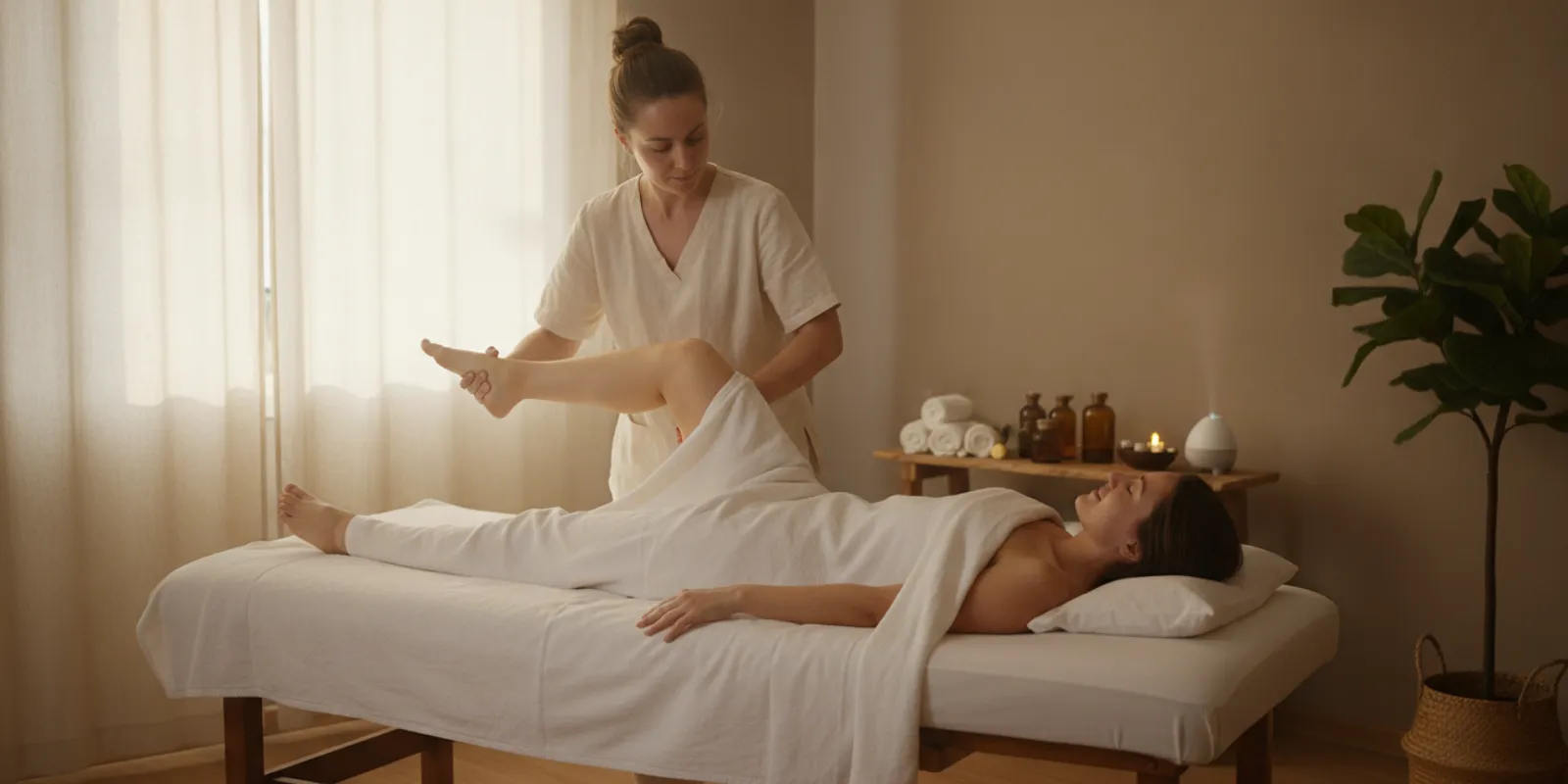

A demanding rehearsal week can leave a dancer deciding whether to rest, stretch, or book a session. Dance recovery massage may be one part of a thoughtful recovery plan, but the right timing and pressure depend on your schedule, symptoms, and comfort. Use this guide to plan a session around rehearsal or performance without treating massage as a substitute for rest or medical care.
Contact NOLA Bliss Massage to discuss your schedule and ask which available massage approach may fit your goals or use online booking
What can dance recovery massage realistically do?
Dance places repeated demands on the body. Rehearsals may involve jumps, turns, sustained positions, floor work, and repeated practice of the same movement. A massage session can offer focused hands-on attention to areas that feel tense or overworked, and it can provide time to relax. Some dancers include massage in a broader routine alongside sleep, adequate food and fluids, appropriate training progressions, and rest.
It is important to keep the goal realistic. Massage is not a guarantee against injury, and it does not repair a strain or explain the cause of persistent pain. Feeling looser after a session does not automatically mean a tissue problem has resolved or that it is safe to push harder. Treat how you feel afterward as one piece of information, not a clearance to return to full-intensity dancing.
A study exploring ballet dancers’ experiences describes recovery as including psychological, nutritional, and active strategies, and notes that persistent fatigue can affect performance quality. That is a useful reminder that recovery is broader than any single hands-on service. Read the study on fatigue and recovery in ballet. A dance-focused article from Eastern Florida State College also discusses massage in a dancer context. It should be read as general discussion, not proof that massage treats an injury. See the article about massage therapy for dancers.
When should you schedule massage around rehearsal?
There is no single best day for every dancer. A useful schedule begins with the next high-demand rehearsal, performance, or audition and works backward. Think about your past response to massage, the intensity of the session you are considering, and how much time you can leave before you need to dance at full capacity.
- During a heavy rehearsal block: If your goal is general comfort, choose a time that does not crowd out sleep, meals, or rest. Share the rehearsal schedule so the therapist understands what movement is coming up.
- Before an important performance: Avoid experimenting with a new, intense treatment immediately before you need to perform. If you already know how you respond to a particular session, you can plan with that experience in mind.
- After a performance: Consider whether you need quiet rest first. A gentle session may feel different from focused, firm pressure, and neither should be used to mask a new injury.
- During a break or lighter week: A lower-load period can give you room to notice your response without immediately returning to demanding choreography.
Scheduling should be a conversation, not a rule such as “always get massage the day before.” If you are unsure, choose a less ambitious session and leave room to adjust. Dancers with a known injury, recent procedure, or persistent symptoms should check with a qualified clinician before treating massage as part of a return-to-dance plan.
How might a rehearsal week change the plan?
Imagine you have a demanding rehearsal on Thursday and a performance on Saturday. If you have never had massage before, booking a strong, unfamiliar session on Friday leaves little time to learn how you respond. A lower-pressure appointment earlier in the week, or waiting until after the performance, may give you more flexibility. This is an example of planning, not a prescription; your own schedule and health needs may point elsewhere.
Now consider a dancer who has had a familiar, comfortable session before and has no current injury symptoms. They may prefer to arrange it during a lighter day, then leave time before the next intense rehearsal. Someone who is already exhausted or noticing worsening pain may need to reduce demands and seek appropriate advice instead of adding treatment. In every case, match the appointment to the week you actually have, not an idealized recovery calendar.
For a dancer with classes or rehearsals on most evenings, a practical plan might be to identify the least demanding day rather than searching for a perfect window. If the only available appointment falls close to class, talk about keeping the session comfortable and focused on relaxation instead of testing a new approach. If that does not feel like a good fit, postponing is a reasonable choice. The aim is to preserve room for your training decisions, not to squeeze one more task into an already full schedule.
How can you judge whether the timing worked?
After your appointment, pay attention to ordinary function and comfort rather than trying to measure a treatment effect from a single sensation. Do you feel comfortable enough to continue your planned day? Did you get enough time to rest? Did a symptom change, persist, or become worse? Make a simple note and use it to guide the next conversation. If a response concerns you, do not repeat the same approach automatically; pause and consider clinical advice.
Which massage approach might fit a dancer’s needs?
“Recovery massage” is not one standardized technique. The right approach depends on your preferences and what you want from the appointment. A therapist can discuss pressure and focus, but you remain the authority on what feels comfortable. More pressure is not automatically more effective, and pain is not a requirement for a useful session.
| What you want to consider | Possible approach | Useful planning note |
|---|---|---|
| Time to unwind and address general tension | A Swedish-style massage with pressure adjusted to your comfort | Tell the therapist whether you prefer light, moderate, or firmer pressure, and speak up if that changes. |
| Focused work on a specific area that feels tight | A targeted session or a deep-tissue approach, if appropriate for you | Describe the sensation and movement that brings it on; do not assume a tender area needs harder pressure. |
| A distinctive, broad-pressure technique | Ashiatsu may be an option to ask about | Discuss the method, your health history, and comfort before deciding. It is not the right fit for everyone. |
| Unclear, sharp, worsening, or injury-related pain | Assessment by an appropriate healthcare professional before massage | Massage is not a diagnosis. Get guidance before using a session to address a new or concerning symptom. |
For a local overview of the available options, see NOLA Bliss Massage services. The studio offers Swedish and deep-tissue massage as well as Ashiatsu. Read about Ashiatsu massage if you are curious about that distinct technique, but choose based on a conversation about fit rather than assuming one style is best for dancers.
When you compare approaches, separate two decisions: what you want from the appointment and how much pressure feels acceptable. For instance, wanting attention to a tired-feeling calf does not automatically mean you need deep pressure. You might ask for a comfortable, focused session and adjust as you go. If your goal is simply to decompress after a demanding week, broader relaxation may make more sense than concentrating on every area that feels worked. You can change your mind during the appointment; your preference is not locked in by the service name.
How can you plan a session that respects your training?
A little preparation can make it easier to keep the session aligned with your goals. You do not need to arrive with a perfect anatomy explanation. Clear, ordinary descriptions are often more helpful than guessing at a diagnosis.
- Map the week. Note your hardest rehearsals, performance dates, and any days when you can rest afterward. Mention these when asking about an appointment.
- Choose a modest goal. For example: “I want to relax and focus on general shoulder tension,” or “My calves feel tired after repeated jumps. I want to discuss a comfortable approach.” Avoid asking a massage therapist to diagnose an injury.
- Describe what you notice. Explain when the sensation began, where you feel it, and whether it changes with a particular movement. If you have numbness, weakness, swelling, or sharp pain, say so before the session and consider medical advice first.
- Set pressure boundaries. You can request lighter pressure, a change of focus, or a pause at any point. Feedback during a session is part of making it comfortable.
- Leave room to respond. Do not schedule so tightly that you must run straight from a first-time session into demanding choreography. Give yourself time to notice how your body feels.
It can help to prepare a short description rather than a long list of dance terminology. Try noting the area, the kind of sensation, when it started, and which activity seems connected to it. “My right calf feels tired after repeated jumps, but walking feels comfortable” gives a clearer starting point than a self-diagnosis. You can also state what you do not want, such as strong pressure or work on a particular area. If the issue has changed your movement or is worsening, say that plainly and prioritize appropriate clinical advice.
If your concern centers on the upper back or neck after long studio days, NOLA Bliss has a back and neck massage guide that can help you think through a focused conversation. For more information about the studio and its approach, visit the NOLA Bliss Massage about page.
What should you do between sessions?
Massage works best as one optional part of a realistic routine, not as the whole routine. Keep following the plan set by your dance instructors and healthcare providers. If you are increasing rehearsal load, do so in a way that allows you to notice how your body responds rather than stacking extra work on top of fatigue.
- Protect rest: Build recovery time into the week where possible. Persistent fatigue deserves attention; adding another treatment does not make an overloaded schedule sustainable.
- Support basic needs: Regular meals, fluids, and sleep matter to overall well-being. A massage appointment cannot replace them.
- Use movement thoughtfully: Follow guidance from your instructor or clinician about warm-ups, mobility work, and return to training. Do not force a stretch or movement because a muscle feels tight.
- Track patterns: Briefly note rehearsal intensity, symptoms, rest, and what you tried. This can help you describe recurring issues to a clinician or therapist without relying on memory.
- Reassess rather than repeat automatically: If the same pain keeps returning, worsens, or changes your technique, get an appropriate evaluation instead of simply booking more massage.
A short log can keep those observations useful without turning recovery into a second job. After rehearsal, record the type of work you did, whether the session felt light or demanding, and any symptoms that affected your movement. After massage, note the appointment timing, the pressure you requested, and how you felt later that day and before your next class. You do not need to rate every muscle or track every detail. A few consistent notes can show whether a concern is tied to a particular workload and give a healthcare professional a more concrete history if you need an evaluation.
For example, a recurring ache after a specific sequence is different information from general tiredness after an unusually long rehearsal. A note such as “discomfort begins during landing practice and remains the next morning” is more actionable than “my leg feels bad.” This tracking does not diagnose the cause, but it can help you explain what you have noticed and avoid relying on memory when several demanding days blur together.
When is massage not the next step?
Pause and seek medical guidance when symptoms are new, severe, getting worse, or interfering with normal movement. Examples include significant swelling, sudden sharp pain, weakness, numbness, a suspected fracture, or inability to bear weight. If an injury occurred during a jump, landing, or collision, a clinician can help determine what evaluation and care are appropriate.
Do not ask a massage session to override medical restrictions or speed past a recommended recovery period. If you have a health condition, are recovering from a procedure, or have been advised to avoid massage, discuss it with the clinician responsible for your care before booking. NOLA Bliss also has a practical guide to massage contraindications when you want a broader safety checklist. Tell the massage therapist about relevant health information and stop or change the session if you feel unwell or uncomfortable.
There is also a difference between ordinary post-rehearsal tiredness and a symptom that is changing your ability to dance. If you are modifying technique to get through class, repeatedly avoiding a movement, or finding that discomfort is escalating instead of settling, do not use a massage appointment to test whether you can push through. Ask a qualified clinician for advice about evaluation and return to activity. You can revisit massage as an optional comfort measure if it is appropriate, but it should not replace the guidance you need.
How can New Orleans dancers choose a practical appointment?
Convenience matters when you are balancing studio time, work, travel, and performance. NOLA Bliss Massage is in the Warehouse District of Downtown New Orleans, within reach of the French Quarter and Convention Center area. The studio offers therapeutic massage services, including deep tissue, Swedish, and Ashiatsu, and has free downtown parking information available.
Before booking, compare the appointment time with your rehearsal calendar and decide what you want to ask. You can review free parking details when planning a downtown visit. If you are still deciding which service to request, contact the studio and describe your schedule and preferences rather than selecting a technique based only on its name. The studio also provides contact and booking information.
If you are visiting New Orleans for a performance, convention, or short run of rehearsals, include travel time and the next dance commitment when you choose a slot. A session that looks convenient on a map may be less useful if it leaves no time to rest or get to the venue. Local dancers can use the same check: account for the commute, changing clothes, and any class immediately afterward. These practical details matter more than fitting a session into an imaginary ideal schedule.
Book your appointment with NOLA Bliss Massage
Frequently asked questions about dance recovery massage
Should I get massage the day before a performance?
There is no universal answer. Consider whether you have had that type and intensity of massage before, how you typically feel afterward, and whether you have time to rest. Avoid testing an unfamiliar or especially intense approach right before a performance.
Can massage fix a dance injury?
Massage should not be treated as a diagnosis or a guaranteed injury treatment. New, worsening, or function-limiting pain deserves assessment from an appropriate healthcare professional. Follow that professional’s advice about whether massage is suitable.
Does a recovery massage need to be painful?
No. Pressure should be discussed and adjusted to your comfort. Tell the therapist if it feels too intense, sharp, or otherwise wrong, and ask for a change or pause.
What should I tell the therapist before the session?
Share the dance schedule around the appointment, your goal, any areas of concern, relevant health information, and pressure preferences. Be clear about recent injuries or symptoms and do not present a suspected injury as something massage should diagnose.
How do you make a useful recovery plan?
Start with the demands of the week, choose a comfortable session goal, and leave time to assess how you respond. Dance recovery massage can be one supportive option, but rest, basic self-care, and appropriate clinical guidance remain essential parts of a sensible plan.