
Choosing the right stones is not a matter of picking the smoothest rocks from a display shelf. Material, density, heat retention, surface, and sanitation all affect how safely and effectively heat can be used during a therapeutic massage.
Hot stone therapy stones are selected and prepared for controlled heat application, most often using dense basalt that retains warmth well. Professional stones are typically heated to 130 to 145 degrees Fahrenheit, then applied with careful monitoring because the surface temperature can change as heat moves into the body.
Basalt is not the only option. Himalayan pink salt stones offer a different mineral-rich, lightly exfoliating feel, while basalt is often chosen when sustained therapeutic heat is the priority. Understanding what each material brings to the table makes it easier to evaluate heating practices, hygiene standards, and stone shape before treatment begins.
What Are Hot Stone Therapy Stones Made Of?
The material matters. It affects how a stone holds warmth, how it feels against the body, and how a massage therapist can use it in a professional treatment. The two varieties guests are most likely to encounter are dense basalt and Himalayan pink salt. Both can support a therapeutic session, but they create distinctly different experiences.
For a broader introduction to hot stone therapy stones, start with our overview. Here, we will look more closely at what each stone is made of and why that composition matters in bodywork.
Basalt’s heat-retention science
Basalt is a volcanic, or igneous, rock formed from cooled lava. It is rich in iron and magnesium, and its dense structure allows it to retain heat for an extended period. Research discussing hot basalt stone massage identifies this heat-retention quality as one reason basalt is commonly selected for the technique. You can review the academic discussion in this study of hot basalt stone massage.
Basalt is also non-porous. That means it does not readily absorb oils, moisture, or other materials from the treatment environment. For a professional studio, this makes the stones easier to clean and sanitize thoroughly between uses. NOLA Bliss Massage pairs careful hygiene practices with professional-grade equipment so the focus stays on precise, therapeutic bodywork rather than novelty.
Why Himalayan salt stones feel different
Himalayan pink salt stones are valued for their mineral-rich composition and their different tactile feel. Compared with smooth basalt, salt can provide a gentler, more textured contact that some guests associate with relaxation and mild exfoliation. The experience is less about the deep, sustained heat behavior of volcanic stone and more about how the material feels during an enhancement.
Neither variety is automatically better for every guest. A therapist can consider the intended purpose of the session, the area being addressed, and how the guest responds to touch. Basalt is often the more therapeutic choice when sustained heat is part of the treatment strategy. While Himalayan salt may appeal to guests who want a softer sensory element alongside massage.
At NOLA Bliss, the hot stone massage and Himalayan Salt Stone enhancement are selected within a personalized service plan. The goal is not to place stones for decoration. It is to use the properties of the material to support the guest’s specific bodywork needs.
| Property | Basalt stone | Himalayan pink salt stone |
|---|---|---|
| Origin | Volcanic igneous rock. | Mineral salt crystal. |
| Heat retention | Dense and heat-retentive, sustained warmth. | Holds less heat, gentler contact. |
| Skin feel | Smooth gliding surface. | Texture with light exfoliation. |
| Porosity | Non-porous and easy to sterilize. | Soluble and reacts to moisture. |
| Best use | Deep therapeutic muscle work. | Relaxation-focused enhancement. |
How Hot Stone Therapy Stones Are Heated Safely
Safe hot stone therapy depends on controlled heat, professional equipment, and careful communication. A trained massage therapist does not simply warm stones and place them on the body. Each stone is heated gradually, checked before use, and monitored during placement so the warmth supports therapeutic work without overwhelming the guest.
The right temperature and heating method
Hot massage stones are traditionally heated to approximately 130 to 145 degrees Fahrenheit, according to the University of New Hampshire Health Services. That range is warm enough to support deeper muscle work while leaving room for professional testing and adjustment. The exact comfort level can vary based on the stone’s size, the placement area, the guest’s sensitivity, and whether a towel or other barrier is used.
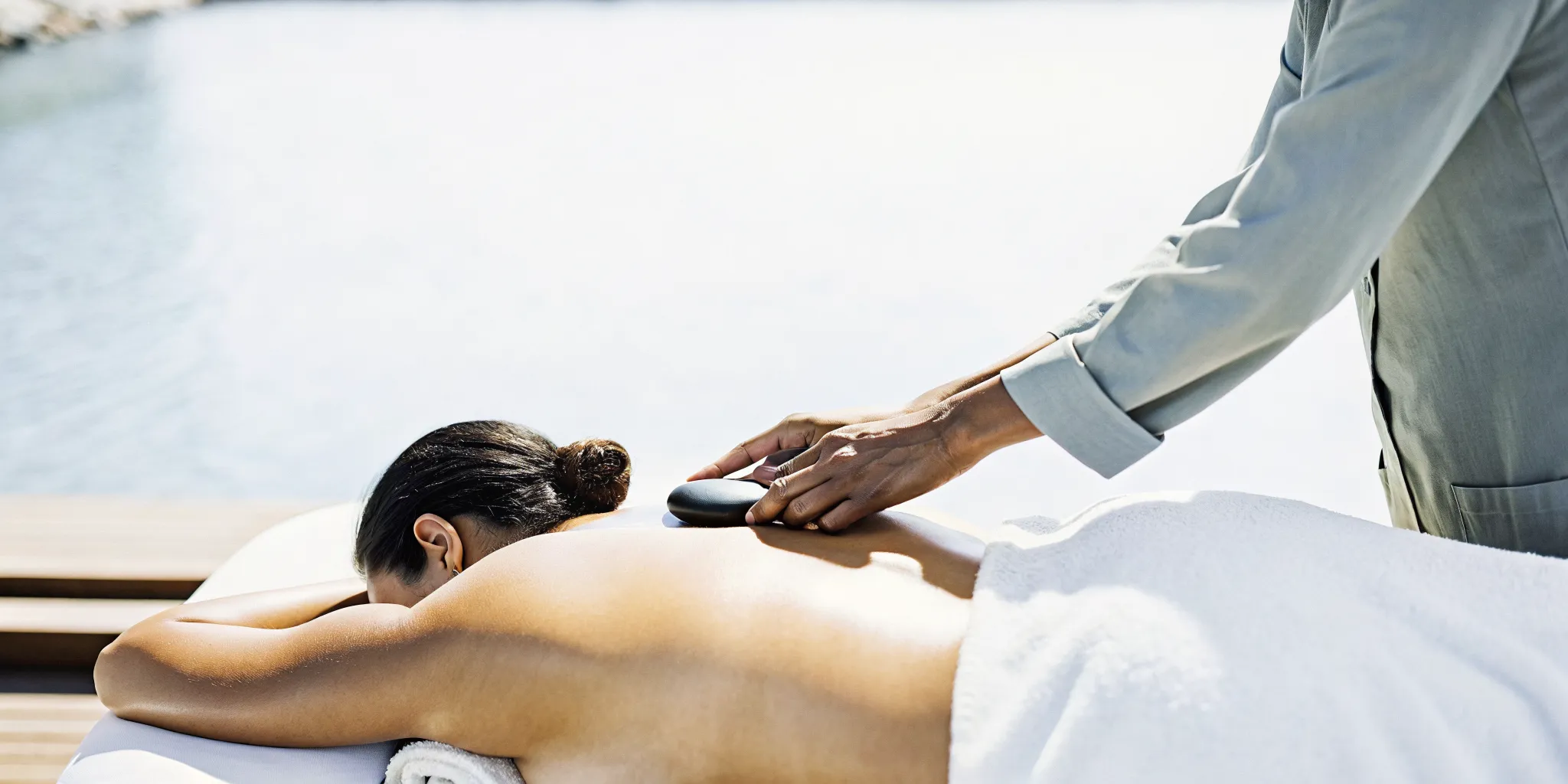
Professional therapists heat stones in a purpose-built stone warmer or heater. These units are designed to warm stones evenly and maintain a controlled water temperature. A microwave is not an appropriate substitute. Microwaves can heat stone surfaces unevenly, creating hidden hot spots that may cause a burn even when the outside feels manageable. They also provide less predictable control during a treatment.
Why heat needs time and testing
Before a stone is placed, the therapist tests it against the inside of the wrist or another sensitive area of their own skin. This simple check helps identify a stone that feels too hot before it reaches the guest. The therapist may also use a towel barrier, shorten the placement time, or select a smaller stone when the treatment area calls for more precise control.
A careful heating and testing sequence looks like this:
- Warm the stones evenly in a purpose-built stone heater to the target range.
- Test each stone on the inner wrist before it touches the guest.
- Place the stone with a towel barrier and check in with the guest.
- Monitor feedback through the session and adjust placement as needed.
Communication remains part of the safety protocol. Heat can take approximately three to four minutes to fully penetrate layers of muscle resistance. So a guest may not immediately recognize that a stone is becoming too hot. The therapist should explain this delayed sensation and invite prompt feedback. Guests should speak up at the first sign of excessive heat, stinging, or discomfort. The therapist can then remove or reposition the stone without interrupting the therapeutic goal of the session.
At NOLA Bliss Massage, hot stone therapy is used as a therapeutic enhancement to deepen muscle penetration, not as a test of how much heat someone can tolerate.
Book a therapeutic massage with hot stone enhancement.
For additional technique guidance, see the American Massage Therapy Association’s hot stone massage guidance and discuss any heat sensitivity with your therapist before treatment.
How to Choose the Right Hot Stone Therapy Stones
Professional hot stone therapy stones should support precise, comfortable placement while meeting practical hygiene standards. The best set is not simply a collection of attractive rocks. Each stone should have a smooth surface, a dense structure, reliable heat retention, and a shape that matches the area being treated. Those details help a therapist work around muscle contours without distracting pressure points or difficult cleanup.
Choose shapes and sizes for body contours
A varied stone set gives a therapist more control than a uniform set of identical pieces. Large, flat stones can rest comfortably along broad areas such as the back or thighs. Medium stones are useful in the palms or on smaller muscle groups, where their weight and surface area can provide steady contact. Small, rounded stones can fit between the toes or fingers and can follow narrow muscle contours more comfortably.
Look for polished surfaces without sharp edges, chips, deep grooves, or rough patches. A smooth finish allows the stone to glide when used as part of the massage technique and makes it easier to inspect after each service. Rounded edges also reduce the chance that a guest feels an unexpected point of pressure while the therapist is addressing a specific area.
Why density and mineral composition matter
Basalt is a strong choice for therapeutic hot stone work because it is a volcanic igneous rock rich in iron and magnesium. Its dense composition allows it to retain heat for an extended period, supporting consistent application during a session. Research describing massage with hot basalt stones identifies this heat-retention quality as part of why basalt is commonly selected for the technique. Read the research on basalt stones and massage therapy.
Density also matters for sanitation. Basalt is non-porous, so it does not readily absorb oils, moisture, or residue from the treatment environment. That makes a smooth basalt set easier to clean and sanitize properly than a porous stone with cracks or an irregular surface. In a professional setting, material choice is therefore both a therapeutic and a hygiene decision. Review the academic reference on basalt’s properties.
Sustained warmth is especially useful during deeper, slower bodywork. At NOLA Bliss, extended heat work can be paired with Ashiatsu barefoot massage, a signature deep-tissue technique that lets the therapist deliver focused pressure with full-body control.
Finally, select professional-grade stones from a supplier that describes the material and finish clearly. Avoid unlabeled stones, decorative pieces, or anything with visible damage. A carefully chosen set gives the therapist dependable tools for individualized work and helps guests receive a more controlled, comfortable experience.
Hygiene and Care: Keeping Hot Stone Therapy Stones Clean
Clean equipment is part of safe, professional therapeutic bodywork. At NOLA Bliss Massage, rigorous hygiene and professional-grade equipment support every hot stone treatment. So each guest can focus on the work without wondering how the tools were prepared.
Why Non-Porous Stone Matters
Basalt is a dense, non-porous volcanic rock. That surface matters because it does not readily absorb oils, moisture, or other residue from treatment. Non-porous hot stone therapy stones are easier to sanitize than porous materials, which makes basalt a practical choice for a professional therapeutic setting. Its density also helps it retain heat, giving therapists a consistent tool for focused muscle work.
Sanitation is not a cosmetic detail. A stone that looks clean may still require proper cleaning and disinfection after use. Professional care means following the equipment manufacturer’s directions and the studio’s established hygiene procedures, rather than relying on a quick rinse or visual inspection.
Cleaning Between Guests
After a treatment, stones should be removed from service and cleaned before they are used again. A responsible protocol includes removing oil and other residue, washing the stones with an appropriate cleaning solution, rinsing as directed, and allowing them to dry fully. Stones should also be inspected regularly for chips, cracks, or surface changes. Damaged equipment has no place in a treatment setup because it can be harder to clean and may feel uncomfortable against the skin.
Therapists also keep the surrounding setup clean, including the heating vessel, tools used to handle the stones, linens, and work surfaces. This whole-treatment approach helps prevent clean stones from being placed on a contaminated surface. It also reinforces an important distinction: heat may warm a stone, but heating alone is not a substitute for cleaning and disinfection.
Responsible Treatment Scheduling
Good care includes thoughtful treatment cadence. Professional massage guidance commonly cites one heated treatment within a six-hour window as a reasonable safety guideline when a guest receives multiple services in one day. This helps the therapist account for the cumulative effects of heat and bodywork instead of treating each appointment in isolation. Your therapist should also know about relevant health conditions, medications, or changes in how you feel before treatment begins.
That combination of clean, non-porous equipment, careful preparation, and measured scheduling supports hot stone therapy as a focused therapeutic enhancement rather than a rushed add-on.
Book your therapeutic massage at NOLA Bliss Massage.
Frequently Asked Questions
What are the differences between basalt and marble massage stones?
Basalt is a dense volcanic rock that retains heat, making it the usual choice for warming muscles during hot stone therapy. Marble does not serve the same purpose in this setting and is more commonly associated with cold-stone applications. The best material depends on whether the treatment calls for sustained warmth or cooling.
What is the recommended temperature range for hot stone therapy stones?
Professional hot massage stones are traditionally heated to 130 to 145 degrees Fahrenheit, according to University of New Hampshire Health Services: https://www.unh.edu/health. A trained massage therapist also tests each stone and checks in with the guest throughout placement, since comfort and skin sensitivity vary.
Why is black basalt the most popular stone for hot stone therapy?
Black basalt is popular because it is volcanic, dense, and rich in iron and magnesium, properties associated with extended heat retention. Its non-porous surface is also easier to sanitize than a porous material, which supports consistent hygiene in a professional therapeutic setting.
How should I test the temperature of hot stones before use?
A therapist should test the stone on the inside of the wrist before placing it on a guest, then continue monitoring the guest’s feedback. Heat can take approximately 3 to 4 minutes to penetrate muscle resistance, so a stone that initially feels comfortable may require another check shortly after placement. Professional equipment and careful communication are essential.
Ready to Book Your Hot Stone Session?
Understanding the stones can help you choose an experience that matches your therapeutic goals and preferred feel. NOLA Bliss Massage offers a Himalayan Salt Stone enhancement for guests who want to explore a distinct texture alongside focused massage work. Book a therapeutic massage session at NOLA Bliss Massage and select the enhancement that feels right for your session.