Massage for ankle pain may be worth discussing when the discomfort feels connected to tight or tired muscles around the lower leg, but massage is not a way to diagnose an ankle problem or treat every injury. The right next step depends on how the pain began, what movements affect it, and whether there are signs that call for medical assessment. If you are considering a session, share the details first and agree on a comfortable, limited approach.
What might ankle discomfort have to do with surrounding muscles?
The ankle area includes joints, ligaments, tendons, bones, and nearby muscles. Discomfort can follow an injury, repeated activity, a change in footwear or movement, or many other circumstances. A massage therapist cannot determine the cause just by working on the area. Similar sensations can have different causes, so avoid assuming that a sore ankle is simply a tight muscle.
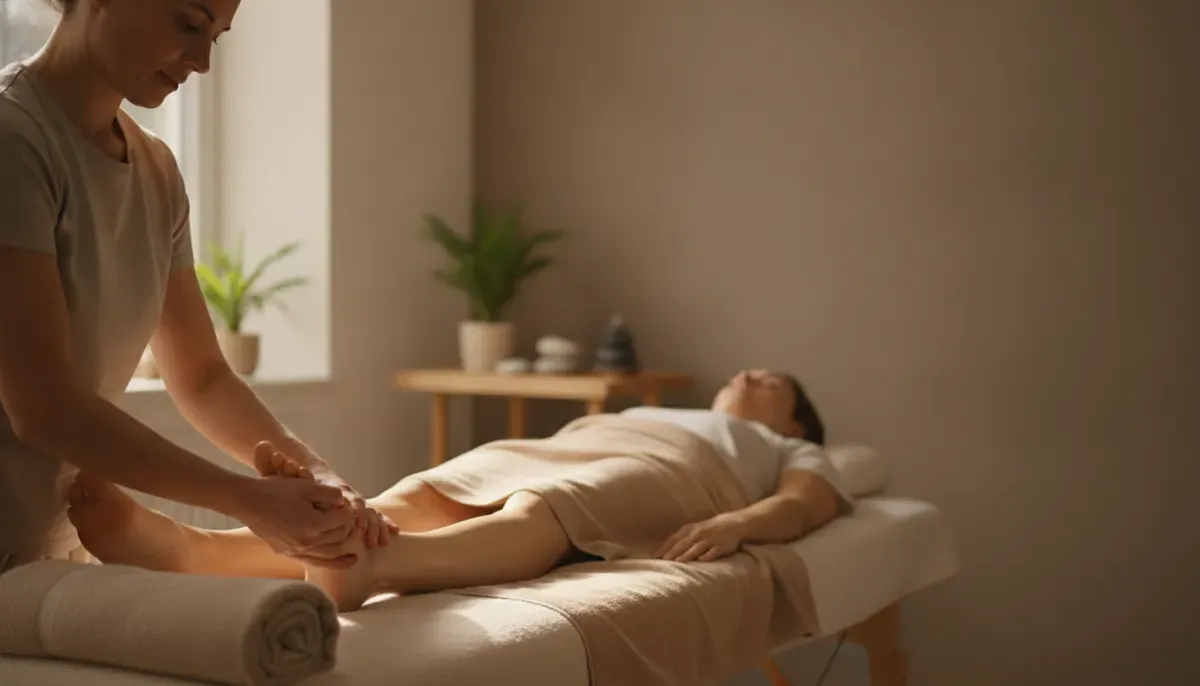
Sometimes a person notices tension or fatigue in the calf, foot, or lower leg along with ankle discomfort. Gentle work on surrounding soft tissue may feel soothing for some people, but that does not establish what is causing the ankle symptoms or mean the ankle itself should be pressed. The most useful starting point is to describe your experience plainly and let your therapist know if you have already been assessed or given care instructions.
Research is limited and should not be read as proof that massage resolves ankle pain. One study looked at how combined friction and petrissage techniques related to ankle joint flexibility and balance, not whether massage diagnoses or heals the cause of an individual’s pain. You can read the study on massage techniques, ankle flexibility, and balance for its specific scope.
When should you seek medical assessment before massage?
Consider medical evaluation before scheduling massage if your pain began after a fall, twist, collision, or other injury, especially if it is intense, getting worse, or interfering with your ability to stand or walk. Promptly seek professional care for concerning symptoms such as marked swelling, a visible change in the ankle’s shape, an open wound, numbness, or a foot that feels unusually cold or looks discolored. These examples are not a complete checklist and cannot determine what is wrong.
It is also sensible to check with a medical professional when the cause is unclear, symptoms persist or recur, or you have a health condition that may affect healing or sensation. If a clinician has already given you restrictions or a treatment plan, follow that advice and ask whether massage is appropriate before booking. Massage should not delay an assessment or replace care for a suspected injury.
For a recent sprain or other acute injury, timing matters. A page from Fremont University discussing massage techniques for acute ankle sprains cautions against cross-friction massage immediately after an injury. That is a reason to avoid trying to work through a newly injured area on your own and to get case-specific guidance, not a universal timeline for every person. See the discussion of massage techniques for acute ankle sprains.
When you are unsure whether your symptoms need assessment, choose the medical question first. A massage appointment is not an appropriate substitute for urgent or emergency care when symptoms feel severe or alarming.
What should you tell a massage therapist before a session?
Give a short, factual account before hands-on work begins. You do not need to identify the cause. Focus on what you have noticed and what makes the area feel better or worse. Helpful details include:
- When the discomfort started and whether there was a particular incident.
- Where you feel it, using words such as front, back, inside, outside, foot, or calf.
- Whether the symptoms are improving, unchanged, or worsening.
- Any swelling, bruising, altered sensation, or difficulty with ordinary movement that you have noticed.
- Whether a healthcare professional has assessed it and any advice or restrictions you were given.
- What kind of contact feels comfortable, and what you do not want the therapist to do.
Be direct if you are not sure massage is appropriate. You can ask whether the session can focus on surrounding areas rather than the ankle, or whether it would be better to wait until you have received medical advice. If symptoms change before your appointment, update the therapist rather than relying on what you described earlier.
This kind of conversation is useful for any session, not only ankle concerns. NOLA Bliss offers different massage services in New Orleans; describe your goal and ask which option, if any, seems suitable. For broader ideas about explaining upper-body tension and goals, the back and neck massage guide also illustrates why clear communication matters, though it is not an ankle-care guide.
How can you describe the symptoms without guessing at the cause?
Use observations rather than a diagnosis. You might say, “The discomfort started yesterday after I stepped awkwardly,” or, “My ankle feels sore after a long walk, but I do not remember an injury.” This gives the therapist context without requiring you to decide whether a joint, tendon, ligament, or muscle is involved. If you have no clear explanation, say so.
Try to describe the location in everyday terms and point only if comfortable. Tell the therapist whether the feeling is constant or comes and goes, and whether you noticed it during a particular activity or afterward. Mention what movements or positions seem to affect it, but do not repeatedly test a painful movement just to provide an answer. A brief description is more useful than trying to reproduce pain.
It may help to note when symptoms began and whether they have changed since then. Include any relevant medical assessment, instructions, or restrictions you have received. If something has changed since you first arranged the appointment, update the studio before the session. If the change is significant or concerning, seek medical advice instead of assuming the appointment remains appropriate.
Set boundaries in plain language, too. For example, you can say that you do not want direct pressure on the ankle, that you would prefer gentle contact, or that you want to talk before any work near the area. You can change your mind once the session begins. This conversation helps keep the focus on your comfort and makes it easier to pause or revise the plan if needed.
What can massage realistically do for ankle pain?
Massage is a hands-on wellness service, not a diagnostic exam. Depending on the situation, a session may offer a chance to address muscle tension in areas the client and therapist agree are appropriate. A person may find that comfortable touch helps them relax. Experiences vary, and temporary comfort does not prove an injury has healed or reveal the reason for pain.
It is important to keep the goal modest. Massage cannot confirm whether a bone, joint, tendon, or ligament is injured. It also cannot guarantee a particular result, restore an ankle on a set schedule, or replace rehabilitation or medical care when those are needed. Avoid treating pain during a session as something to push past. The therapist should know if pressure feels sharp, unpleasant, or makes symptoms worse.
Some research explores massage techniques in relation to ankle movement, but the evidence referenced above concerns flexibility and balance rather than a treatment protocol for ankle pain. One study is not a prescription. The choice of technique and whether to work near the ankle at all should account for the person’s circumstances, including whether an injury is recent and whether medical guidance is available.
Massage styles can feel quite different. Some people prefer lighter, broad contact; others ask about more focused pressure. A technique involving deeper pressure is not automatically a better fit for pain. NOLA Bliss describes Ashiatsu massage as one of its services, but the existence of a service does not mean it is suitable for a painful ankle. Talk about comfort, limits, and the area of concern before choosing a style.
How can you compare possible next steps?
Use the table as a conversation aid, not as a diagnostic decision tool. The right path depends on symptoms, circumstances, and professional advice.
-
New pain after a twist, fall, or impact: Seek medical guidance before massage, particularly if symptoms are significant or worsening. Keep in mind: A therapist cannot determine whether an injury needs medical treatment.
-
Severe or alarming symptoms, such as visible deformity, substantial swelling, numbness, or a cold or discolored foot: Seek prompt medical assessment; use emergency care for an emergency. Keep in mind: Do not wait for a massage appointment to assess a potentially serious problem.
-
Persistent, recurring, or unexplained discomfort: Ask a healthcare professional about possible causes and appropriate care. Keep in mind: Massage should not replace an assessment when symptoms need one.
-
Muscle tightness around the lower leg, with no known restriction against massage: Discuss gentle, comfortable work on agreed areas with a massage therapist. Keep in mind: Stop or change the approach if symptoms become uncomfortable or worse.
-
A clinician has given instructions or restrictions: Follow those instructions and ask whether massage is appropriate. Keep in mind: Share the guidance with the therapist before the session begins.
What can you expect from a cautious session discussion?
Before booking or beginning hands-on work, explain the concern and ask what the appointment can reasonably address. A careful discussion should make room for questions about the location of the work, pressure, positioning, and whether massage should wait. You can request that the therapist avoid the ankle itself and focus only on areas you have discussed, if that feels appropriate and does not conflict with medical guidance.
Agree on a simple way to communicate during the session. Let the therapist know promptly if pressure is too much, if you feel sharp pain, or if a position feels uncomfortable. You can ask to pause, adjust, or stop. You are not required to tolerate a technique that feels wrong, and the session should not be framed as a test of how much discomfort you can endure.
Afterward, pay attention to how you feel. If symptoms worsen or new concerns arise, contact a healthcare professional rather than booking repeated sessions in an attempt to manage an unexplained problem. If massage seems comfortable and you want to discuss an appointment, use the studio’s contact and booking information. For practical downtown arrival details, see NOLA Bliss parking information.
How should you decide whether to book or wait?
Start with the reason for the discomfort and whether it has been assessed. If there was a recent injury, symptoms are significant, or you have any warning signs, put medical assessment ahead of massage. If you have a clinician’s instructions, use them to guide the conversation. If the issue feels like surrounding muscle tightness and there is no reason you have been told to avoid massage, you can ask about a conservative session focused on comfort rather than a promise to fix the ankle.
Keep your expectations clear: massage may be one part of a broader self-care plan, but it does not explain the cause of ankle pain. Be ready to communicate what you feel, set boundaries, and stop if symptoms worsen. If you want to discuss whether a massage appointment fits your situation, learn more about NOLA Bliss Massage and contact the studio with your questions.
Before you decide, consider a few practical questions in order. First, is the discomfort new after a specific injury, unusually severe, or accompanied by a worrying change such as numbness or marked swelling? If so, put medical assessment ahead of any massage plan. Second, have you received a diagnosis or specific care instructions? If you have, follow those directions and clarify whether massage is compatible with them. Third, what is the limited purpose you would want from a session: for example, comfortable work on the calf while avoiding the ankle, rather than treatment of an assumed sprain? Naming a modest goal makes it easier to discuss what is and is not suitable.
Also weigh the timing and practical details. If symptoms are changing quickly, do not treat a previously booked appointment as a reason to continue with massage. Contact the studio to explain that the situation has changed, and ask whether to postpone while you seek guidance. If you are visiting New Orleans or have a busy schedule, convenience should not determine whether a symptom needs evaluation. An appointment can be rescheduled; a concerning symptom deserves the right kind of attention first.
For a less urgent concern, prepare a short note before you call or arrive: when it began, what you were doing, what has changed, and any restrictions you have been given. This keeps the conversation focused and can help prevent assumptions about the cause. You do not need to arrive with a treatment request or use medical terminology. Share the observations, ask questions, and be open to postponing massage if the situation is not clear.
Contact the studio to discuss an appointment
Frequently asked questions about massage for ankle pain
Can massage fix ankle pain?
No. Massage cannot diagnose the cause or guarantee a fix. It may be considered for comfortable work on surrounding muscles in some situations, but an injury or ongoing symptoms may need medical assessment.
Should I get a massage right after twisting my ankle?
Do not assume that massage is appropriate immediately after an injury. If pain followed a twist or impact, especially with significant symptoms, seek medical guidance first. A massage therapist cannot rule out an injury.
Can a therapist massage directly over my ankle?
That depends on the situation, and it should not be assumed. Explain your symptoms and any medical advice before hands-on work. You can ask to avoid the ankle and discuss whether any surrounding area is appropriate to address.
What if the ankle hurts more during a session?
Tell the therapist immediately and ask to pause, change the pressure or position, or stop. Do not try to push through sharp or worsening pain. If the change worries you, seek medical advice.
Can massage replace a clinician’s advice?
No. Massage is not a diagnostic assessment or replacement for medical care. Follow any instructions you have received, and check with a healthcare professional if symptoms are unexplained, persistent, worsening, or concerning.
When ankle discomfort is involved, careful communication and realistic expectations matter more than choosing a particular massage technique. Seek assessment when symptoms call for it, and consider massage only when it fits your circumstances and feels comfortable.