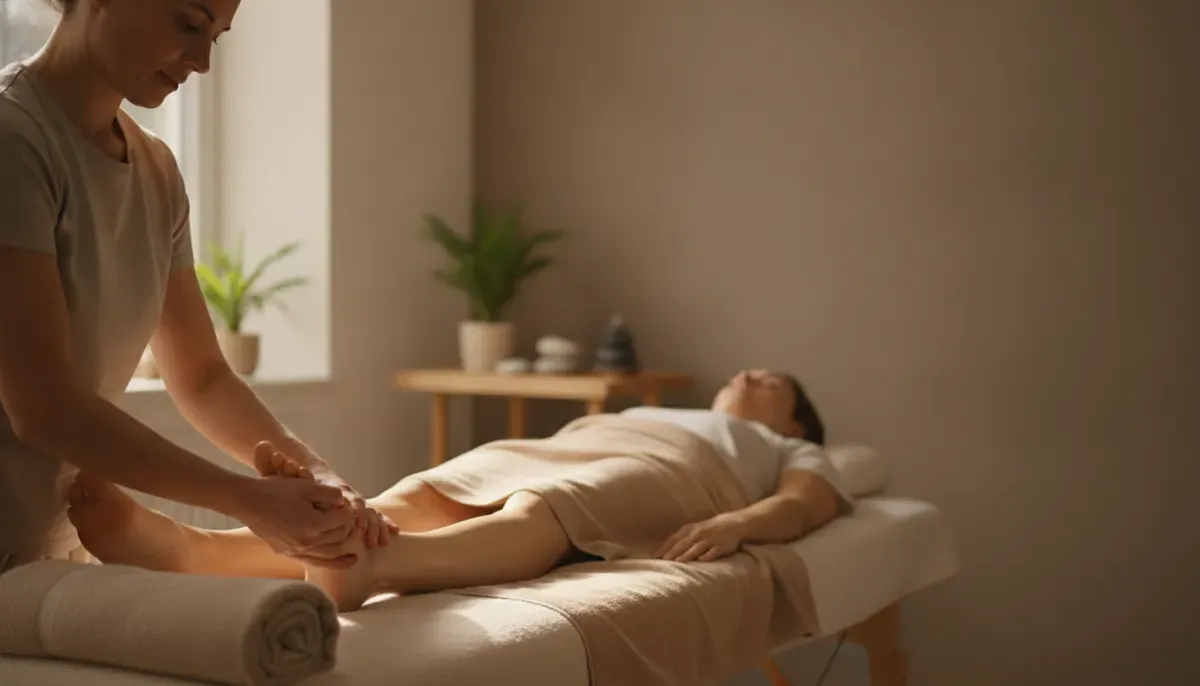
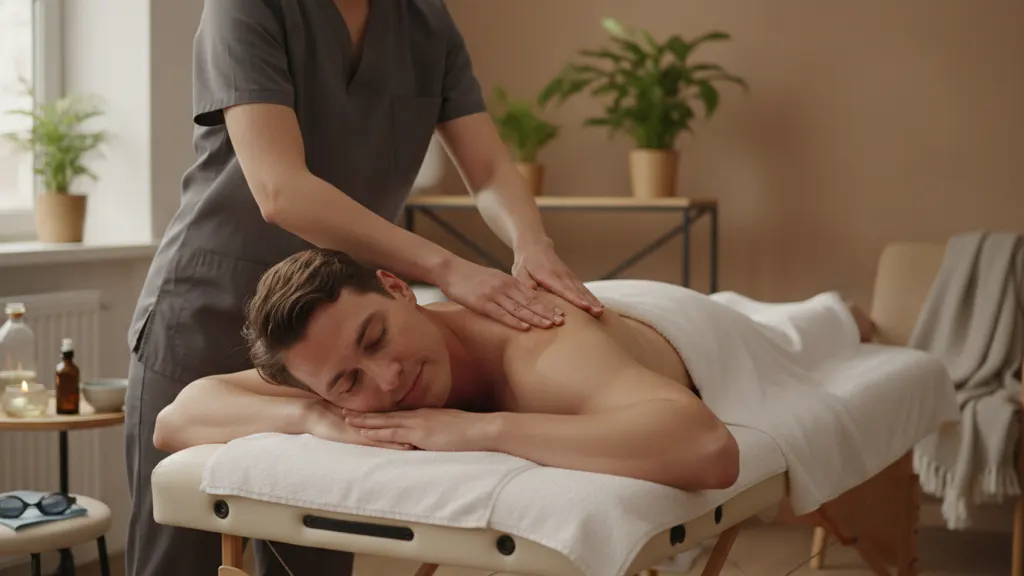
Swimming places repeated demands on the shoulders, upper back, chest, hips, and legs. A massage for swimmers can be part of a thoughtful recovery routine when it is matched to the training week, the swimmer’s comfort, and the reason for the session. It should support body awareness and ease ordinary tension, not promise a faster race, replace rest, or treat an undiagnosed injury.
Explore therapeutic massage services at NOLA Bliss Massage, then book your visit through MangoMint.
For most swimmers, the best massage plan is moderate, communicative, and scheduled around training rather than forced into the most intense part of the week. Discuss recent yardage, stroke-specific work, upcoming meets, sore areas, and any symptoms that need medical attention before the session begins.
Why Do Swimmers Often Notice Tension in the Shoulders and Back?
Swimming is repetitive by design. Each stroke asks the body to coordinate the arms, shoulder blades, trunk, hips, and legs over and over. The exact workload changes with the stroke, drill, distance, equipment, and training phase, so a swimmer’s most noticeable tightness may not tell the whole story.
Freestyle and butterfly may leave a swimmer especially aware of the shoulders, chest, or upper back. Breaststroke can make the hips and inner thighs feel heavily involved. Backstroke may draw attention to the shoulders and mid-back. These are useful conversation starters, not diagnoses. A therapist should not assume that every swimmer needs the same muscles treated or the same amount of pressure.
Training load matters too. A return after time away, a new strength program, longer practices, extra kicking, or a high-volume week can change how the body feels. A swimmer may describe this as heaviness, general soreness, reduced comfort when reaching overhead, or tension that settles after gentle movement. That is different from sharp pain, sudden weakness, visible swelling, numbness, or a loss of function.
Before booking, review massage guidance for athletes for a broader discussion of communication and realistic goals. A swimmer-specific plan should add the details of pool training rather than treat an athlete as a generic sports-massage client.
What Can Massage for Swimmers Reasonably Support?
The most useful goal is often comfort. A session may help a swimmer notice areas of ordinary muscle tension, relax after a demanding block, or decide which recovery habits deserve more attention. The therapist can adjust the approach based on the swimmer’s tolerance, recent training, and goals for the visit.
Massage is not a substitute for a training plan, sleep, nutrition, hydration, a gradual return to activity, or medical care. It also should not be described as a guaranteed way to prevent injury or improve strength, speed, endurance, or race results. Evidence on post-exercise massage is mixed and limited. One review examined massage after exercise and reported possible effects on perceived soreness, while another review assessed sports-massage claims and found that performance benefits should not be assumed. Read the review of massage after exercise and the review of sports-massage evidence for the methods and limitations.
That measured view is still useful. A swimmer does not need to decide whether massage is a miracle or a waste of time. The better question is whether a comfortable, individualized session fits the current training week and supports a broader recovery plan.
For a local service overview, see NOLA Bliss Massage’s therapeutic massage services. The right approach may be a lighter Swedish-style session, focused deep-tissue work, or another option discussed with the therapist. The selection should follow the swimmer’s needs, not a promise that a more intense treatment is automatically better.
Which Areas Should Competitive Swimmers Discuss Before a Session?
Bring a map of the training week to the conversation. Describe the stroke or strokes that make up most of the work, recent changes in volume or intensity, strength sessions, and the movements that feel limited or uncomfortable. Then identify the areas that feel tired, tense, or different from normal.
Shoulders and shoulder blades
Swimmers may focus on the front or top of the shoulder, the chest, the area between the shoulder blades, or the muscles along the side of the upper back. Instead of asking for the deepest possible work, explain which movements feel difficult and whether the sensation is soreness, pressure, stiffness, or pain. Overhead reaching, pulling, rotation, and pushing can feel different, so precise language helps.
Upper and mid-back
The upper and mid-back help connect arm movement with breathing and trunk rotation. A swimmer may feel fatigue there after longer sets or technique changes. A therapist can work within a tolerable range, but persistent pain with breathing, weakness, numbness, or a sudden change in movement deserves clinical evaluation rather than a routine massage appointment.
Hips, legs, and the kinetic chain
Kicking, starts, turns, and streamlines involve more than the shoulders. Hips, glutes, hamstrings, calves, and feet may also feel worked. Explain whether the issue is one-sided, connected to a recent change, or accompanied by swelling or difficulty walking. The goal is not to chase every tight spot in one visit. It is to choose a manageable focus and leave enough recovery capacity for the rest of the week.
Swimmers who want to compare a more focused sports approach with general therapeutic care can also read about deep-tissue sports massage. The article can help frame questions, but it should not replace an individualized conversation at the appointment.
How Should You Schedule Massage Around Training and Meets?
Timing depends on the purpose of the session and how the swimmer normally responds to hands-on work. A first visit or a more focused session deserves more space before a hard practice or competition than a familiar, gentle session. Avoid adding an unfamiliar treatment immediately before the most important event of the season.
| Training moment | Useful focus | Planning question |
|---|---|---|
| During a normal training week | Comfort, awareness, and manageable tension | Can the swimmer return to ordinary activity without feeling overworked? |
| After a demanding block | Gentle recovery support and clear communication | Is the sensation ordinary soreness, or is it new, sharp, or worsening? |
| Before a meet | Only familiar, conservative care if it is already part of the routine | Will the session leave enough time to assess the body’s response? |
| During injury-like symptoms | Pause and obtain appropriate clinical guidance | Has a qualified clinician evaluated the problem and cleared massage? |
In the middle of a training week
A regular training week often gives the most flexibility. A swimmer can schedule a session when there is time to notice how the body responds before the next demanding practice. Keep the goal simple: reduce the sense of general tension, support relaxation, or explore a recurring area of discomfort with appropriate boundaries.
After a demanding practice or training block
Do not assume that a hard practice calls for hard massage. If the body feels generally tired and sore, a conservative session may be more appropriate than aggressive pressure. Share when the practice ended, which sets were unusual, and whether symptoms are improving with ordinary recovery. If soreness is escalating or the swimmer cannot use a joint normally, postpone the massage and seek clinical advice.
In the days before competition
Meet preparation is a poor time to experiment. If massage is already familiar and consistently comfortable, a swimmer may discuss a lighter session that does not leave the body feeling bruised, tender, or fatigued. If the treatment is new, schedule it well before the meet or wait until after the event. A therapist cannot guarantee that any timing choice will improve performance.
For more general timing questions, the guide to massage after a workout provides useful context. Swimmers should still adapt the advice to their practice schedule, meet calendar, and medical guidance.
What Recovery Habits Make the Biggest Difference Between Sessions?
Massage works best as one part of a routine. It should not carry the entire responsibility for recovery. A swimmer’s coach, athletic trainer, physical therapist, or physician may have more relevant guidance for a particular training phase or injury concern.
- Respect the training plan. Increase volume, intensity, and additional strength work gradually rather than changing several variables at once.
- Use rest as a training input. Hard sessions need an appropriate recovery window. More treatment is not always more recovery.
- Keep simple notes. Track practice type, unusual drills, sleep, soreness, and symptoms that change with movement. This can improve conversations with coaches and clinicians.
- Eat and drink consistently. Follow the swimmer’s personal nutrition and hydration plan, especially around long practices and meets.
- Use comfortable movement. Gentle mobility that has already been approved by the swimmer’s coach or clinician may be more appropriate than forcing a stretch into pain.
- Communicate early. Tell the coach and appropriate medical professional when a symptom is new, persistent, one-sided, or changing technique.
Delayed soreness can feel different from an acute injury, but labels are not a substitute for evaluation. The guide to delayed-onset soreness can help swimmers organize questions about timing and symptoms. It is still important to get medical guidance when the pattern does not fit ordinary post-training discomfort.
How Should Swimmers Prepare for a Recovery Session?
Preparation is less about choosing the strongest technique and more about bringing useful information to the appointment. Note the recent training block, the next hard practice or meet, any strength work, and the areas that feel different from normal. If a symptom is changing stroke mechanics or daily activity, say so clearly instead of describing it only as tightness.
Set one practical goal
Choose a simple goal for the visit, such as feeling more comfortable through the upper back after a heavy week or learning how to communicate about a recurring tension pattern. A focused goal gives the therapist room to adjust the session without trying to address every muscle at once.
Speak up during the session
Tell the therapist if the pressure, position, temperature, or pace does not feel right. The session should remain within a tolerable range, and discomfort is not a measure of quality. If a new symptom appears, pause and discuss whether continuing makes sense.
Plan the next training decision
Before leaving, decide what information will guide the next practice. A swimmer may choose an ordinary session, a lighter day, or a clinical check depending on how the body feels. For a separate discussion of pressure and timing, review the swimming recovery massage pressure guide. Use it as a related resource, not as a reason to repeat a treatment that does not fit the current training week.
When Should Swimmers Skip Massage and Seek Clinical Care?
Massage is not the first step for every symptom. A swimmer should pause and ask a qualified clinician for guidance when pain is severe, sudden, worsening, or associated with a loss of function. The same applies to symptoms that do not behave like ordinary muscle soreness or that keep returning despite changes in training and rest.
- Sudden pain after a specific movement, collision, fall, or lift.
- Visible swelling, bruising, redness, warmth, or a noticeable change in the joint.
- Weakness, numbness, tingling, loss of grip, or difficulty raising an arm.
- Chest pain, trouble breathing, faintness, or unusual systemic symptoms.
- Fever or signs of illness.
- Pain that wakes the swimmer repeatedly or continues to worsen.
- Symptoms that alter stroke mechanics, walking, daily tasks, or sleep.
For general shoulder symptom guidance, review the NHS shoulder pain guidance, then use a local clinician’s advice for the swimmer’s situation. A massage therapist can work within a plan when appropriate, but should not diagnose a tear, nerve problem, fracture, infection, or other medical condition.
Frequently Asked Questions About Massage for Swimmers
Is massage good for swimmers after every practice?
Not necessarily. Most swimmers need a balanced routine that includes training, rest, nutrition, hydration, and appropriate clinical care. Massage may be useful when it matches the swimmer’s goals and feels comfortable, but more frequent or more intense sessions are not automatically better.
Should swimmers get a massage before a meet?
Avoid trying an unfamiliar massage immediately before an important meet. If a familiar, gentle session is already part of the swimmer’s routine, discuss timing and pressure with the therapist and leave enough time to notice the body’s response. No massage timing guarantees improved performance.
What should a swimmer tell the massage therapist?
Share the stroke or strokes being trained, recent changes in yardage or strength work, the date of the next meet, areas that feel tight or sore, and any symptom that changes movement. Also explain what pressure has felt comfortable or uncomfortable in past sessions.
Can massage treat a swimmer’s shoulder injury?
Massage should not be presented as a standalone treatment for an undiagnosed shoulder injury. A swimmer with significant pain, weakness, numbness, swelling, or loss of function should seek clinical evaluation. If a clinician recommends massage as part of care, share those instructions with the therapist.
What type of massage is best for swimmers?
There is no single best option for every swimmer. A comfortable, individualized session may use lighter or more focused work depending on the person’s goals and tolerance. Ask questions before the session and speak up if the pressure, position, or technique does not feel right.
Plan a Swimmer-Specific Recovery Conversation
A well-planned massage for swimmers starts with the training week, not a promise about race results. Bring specific information about shoulder and back workload, recent changes, meet timing, ordinary recovery habits, and any warning signs. That gives the therapist a better foundation for a comfortable, realistic session.
Book your appointment with NOLA Bliss Massage through MangoMint.