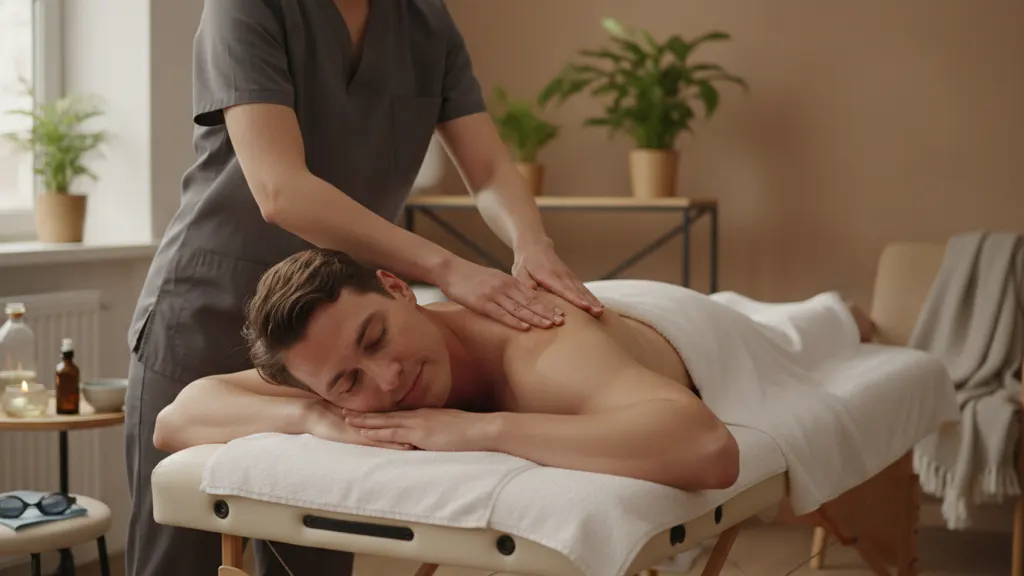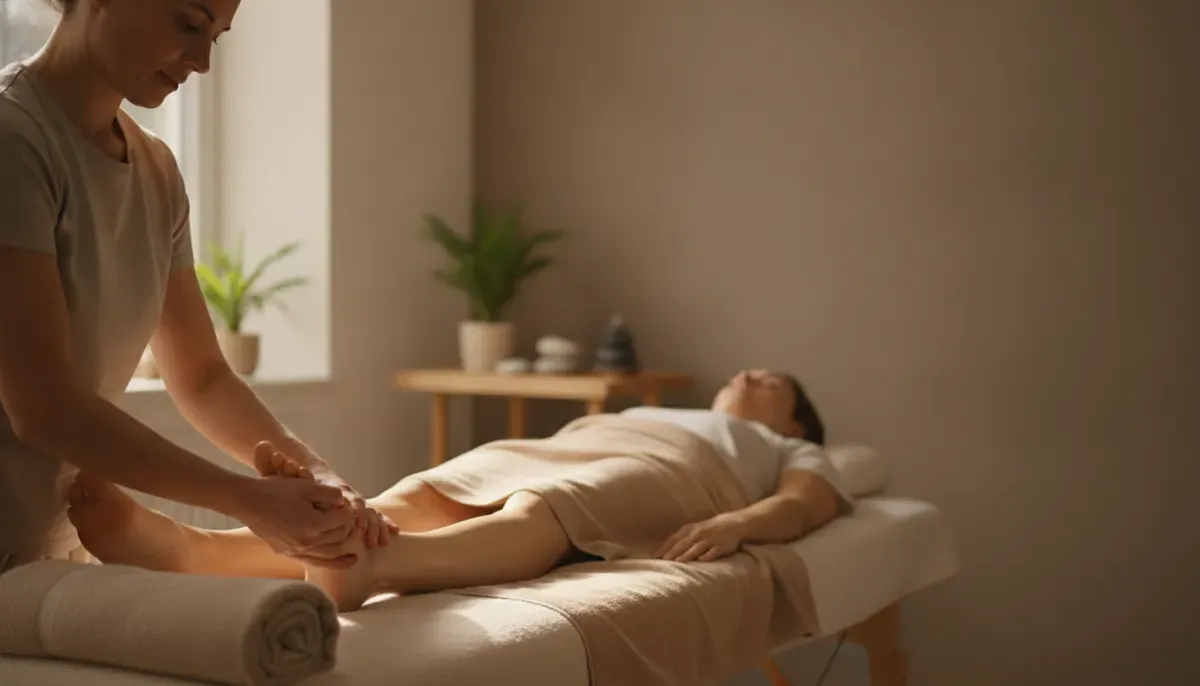

Swimming can leave the shoulders, upper back, hips, and legs feeling worked even when no single area seems injured. A swimming recovery massage can offer supportive, individualized care for muscle tension and post-training soreness. But it should not be presented as a shortcut to faster performance or a substitute for medical evaluation. Research on massage after exercise suggests possible reductions in perceived soreness, while reviews do not establish improvements in strength, sprinting, endurance, or fatigue. The practical questions are when to schedule a session, how much pressure feels appropriate, and what symptoms should change your plan.
Explore therapeutic massage services, then book your visit through MangoMint.
Swimming recovery massage may help support comfort after demanding pool sessions through pressure tailored to your tolerance and goals. It is best treated as supportive care, with realistic expectations and clear communication throughout the session.
Start by clarifying what this approach can and cannot do, then consider whether it fits your current training load, symptoms, and recovery needs.
What Is Swimming Recovery Massage and Who Can It Help?
Swimming recovery massage is a customized massage session planned around the physical demands of swimming. It may help an active adult address general muscle tightness, post-training soreness, or the feeling of heavy, overworked muscles after repeated pool sessions. The goal is supportive care. It creates a comfortable opportunity to relax tense areas and discuss how the body feels. This is different from following a fixed swimmer protocol or promising a faster return to the pool.
This approach may be worth discussing if you swim regularly, have increased your training load, returned to swimming after time away, or want help managing ordinary post-exercise soreness. It can also fit people who swim for recreation and notice tension after longer sessions. A therapist can adjust technique and pressure to your tolerance. That conversation matters because a session should feel purposeful and manageable, not like a test of how much discomfort you can endure.
Research supports a measured view of the potential benefits. A meta-analysis of 11 articles and 504 participants found lower soreness ratings after massage than no intervention at 24, 48, and 72 hours following intense exercise. The evidence does not establish that massage guarantees improved swimming performance, prevents injury, or replaces rest and appropriate medical care. A separate review found no evidence that sports massage improves strength, sprinting, endurance, or fatigue, while noting small improvements in flexibility and delayed-onset muscle soreness. Read the meta-analysis on massage after exercise for the limits and methods behind those findings.
For local planning, you can review sports massage recovery in New Orleans and explore the available therapeutic massage services. Before scheduling, share your recent training, areas that feel tired, and any symptoms that concern you. Acute injury, significant pain, unexplained symptoms, or a medical condition should be discussed with an appropriate healthcare professional first.
Which Areas Should Swimmers Discuss Before a Session?
A useful conversation begins with how you swim, not with a preset list of muscles. Tell the therapist whether your recent training emphasized long freestyle sets, repeated sprints, kick work, drills, open-water distance, or time away from the pool. Your comfort level and the purpose of the visit also matter. You may want general relaxation after a demanding week, focused attention on areas that feel overworked, or a plan for staying comfortable around regular training. These details help shape a session without assuming that every swimmer needs the same approach.
Shoulders, upper back, and chest
Swimmers often want to discuss the shoulders and upper back because repeated arm movement can make those regions feel heavily involved in training. Mention whether the sensation seems connected to pulling, recovery over the water, breathing patterns, or a change in workload. The chest can also be part of the conversation, especially if you spend substantial time in a rounded, forward-reaching position. This does not mean a therapist is diagnosing a shoulder or back problem. It simply gives them useful context for selecting techniques and checking that the pressure remains comfortable.
Hips and legs
Include the hips, glutes, thighs, calves, and feet when kicking, pushing off the wall, dryland training, or fin work has been a major part of your routine. A distance swimmer may describe a different pattern from a sprinter or triathlete. Explain what movements feel easy, what feels restricted, and what you would like to be able to do comfortably after the session. Avoid treating one tight area as proof of a specific injury. If you have acute injury, significant pain, swelling, weakness, numbness, or another medical concern, seek appropriate healthcare guidance instead of using massage as an evaluation.
For broader planning ideas, review this guide to sports massage for New Orleans athletes and the practical massage guidance for athletes. The goal is a clear, two-way discussion that connects your training pattern and goals with an adaptable, tolerable session.
When Should You Schedule Massage Around Swim Training?
There is no single appointment time that suits every swimmer. The best choice depends on how demanding the session was, how your body feels afterward, and what training or event comes next. Think of massage as supportive care that can be planned around your routine, not as a guaranteed way to speed recovery or improve performance.
After a demanding swim session
Some swimmers prefer an appointment after a hard workout, particularly when the goal is to address general muscle tension and settle into recovery. Keep the session conversation-based. Tell your therapist what the workout involved, which areas feel worked, and whether the sensation is ordinary post-exercise soreness or something more concerning. A lighter, comfortable approach may be more appropriate when you are already fatigued than an intense session that leaves you feeling more challenged. For practical context, see this guide to massage after a workout.
Research does not establish a rigid post-swim schedule. A meta-analysis found lower soreness ratings with massage than with no intervention at 24, 48, and 72 hours after intense exercise, but those findings describe group results, not a prescription for every swimmer. The evidence also has limits. A separate review found no evidence that sports massage improves strength, jumping, sprinting, endurance, or fatigue, while reporting small improvements in flexibility and delayed-onset muscle soreness. Read the research at this massage and soreness meta-analysis and this review of sports massage evidence.
On a lighter recovery day
Scheduling on a lighter day can make it easier to notice how your body responds without immediately returning to demanding pool work. This option may be useful when soreness develops gradually rather than right after practice. If you are trying to understand that delayed pattern, review understanding delayed-onset soreness. Allow your feedback, comfort, and upcoming workload to guide the conversation rather than choosing a fixed interval.
Before a swim event
Before a race or demanding training block, avoid treating a new or unusually intense massage as an experiment at the last minute. If you schedule beforehand, leave enough time to learn how your body responds and communicate any adjustments. A familiar, tolerable session may feel more practical than pursuing maximum pressure. Massage should not be used to mask acute injury or significant pain. Seek appropriate healthcare guidance for those concerns, and tell your therapist about any symptoms that could affect safe treatment.
How Do You Choose Pressure for Swimming Recovery Massage?
Start with the goal of the session and how your body feels that day, not with an assumption that the deepest pressure will be the most helpful. After a demanding swim, muscles may feel generally tired, locally tight, or unusually sensitive. Those sensations call for different conversations. Pressure is customized to your needs and tolerance, and it can change from one area to another during the same appointment.
A lighter approach may feel appropriate when you are generally fatigued, new to massage, or looking for broad, calming work after a long training block. It should feel easy to receive. You should be able to breathe normally, relax your jaw and shoulders, and let the therapist work without bracing against the table. Light pressure is not a lesser option. It can be a sensible starting point when your body needs contact without added intensity.
Moderate pressure can suit a swimmer who wants more focused work while keeping the session comfortable. You may notice a clear sensation in the muscle, but you should not need to hold your breath or tense another part of your body. You should not need to mentally prepare for each stroke. If a spot feels too sensitive, say so immediately. The therapist can reduce pressure, change the angle, slow down, or move to another area.
Firmer work may be considered when you are comfortable with more focused pressure and have discussed the areas you want addressed. It should still remain tolerable and adaptable. Deep pressure is not automatically better, and chasing intensity can leave you guarding instead of relaxing. For more context on the experience, read about how firm massage pressure feels. You can also explore how deep tissue sports massage is discussed in an athletic setting without treating one technique as the right choice for everyone.
Use simple feedback throughout the session: “lighter,” “a little more,” “stay here,” or “that area is too sensitive.” A useful pressure level lets you keep breathing steadily and communicate clearly. If you have acute injury, significant pain, unexplained symptoms, or another medical concern, pause the massage plan and speak with an appropriate healthcare professional first. The best swimming recovery massage is not the one that feels most intense. It is the one that matches your current condition and leaves room for honest communication.
Which Massage Approach May Fit Your Recovery Goals?
Swimmers do not need to choose a modality based on a label alone. The most useful starting point is how your body feels, what you want to discuss, and how much pressure you can comfortably tolerate that day. NOLA Bliss offers therapeutic massage services, including Swedish and deep tissue approaches, with pressure adapted to individual needs.
| Approach | General feel | When a swimmer might discuss it | Communication notes |
|---|---|---|---|
| Swedish | Long, flowing strokes with light to medium pressure that can feel calming and broad. | When you want a less intense session or general attention to widespread post-training tension. | Share areas that feel tired or guarded, then speak up if the pressure needs to be lighter, steadier, or more focused. |
| Deep tissue | More focused work for areas of muscle tension, with pressure adjusted to your tolerance. | When a specific region feels persistently tight and you want to explore a more targeted approach with the therapist. | Describe the sensation rather than requesting maximum pressure. Discomfort that feels sharp, alarming, or excessive is a reason to pause and reassess. |
| Ashiatsu | A distinct technique that may provide broad, sustained pressure through the therapist’s feet. | When you are curious about a different pressure experience and have no reason to avoid that technique. | Discuss comfort, positioning, and any areas that should be avoided before the session. Learn more about Ashiatsu massage for athletes. |
For swimmers, the conversation matters as much as the selection. Mention your recent training load, whether the session is close to a demanding practice, and whether your goal is broad relaxation or attention to a particular area. You can also review this guide to deep tissue sports massage before deciding what questions to ask.
No approach is medically superior for every swimmer, and massage should not be used to diagnose or treat an acute injury. A therapist can adjust technique as you provide feedback, but significant pain, sudden weakness, numbness, or another medical concern calls for an appropriate healthcare professional rather than a more intense massage.
What Else Supports Recovery Between Pool Sessions?
A massage session can be one part of a swimmer’s broader recovery routine, but daily habits still matter. Research on sports massage does not support promises of improved strength, sprinting, endurance, or fatigue. It does suggest small improvements in flexibility and delayed-onset muscle soreness. So think of supportive care as a way to stay attentive to comfort rather than a shortcut around rest or medical guidance.
- Make room for rest. After a demanding swim, allow time for your body to settle before adding another strenuous activity. A lighter day may be more useful than trying to compensate with extra work.
- Keep ordinary hydration habits. Drink fluids regularly with meals and throughout the day, especially when you have been active or in a warm environment. Avoid treating hydration as a performance formula or assuming that more is always better.
- Choose comfortable movement. Easy walking, gentle mobility, or normal daily activity may help you avoid staying rigid between sessions. Keep the movement comfortable, and stop if it increases pain or creates a new symptom.
- Protect your sleep routine. Consistent sleep gives you time to notice how your shoulders, back, hips, and legs feel before the next swim. It can also make it easier to adjust your training plans honestly when you are unusually tired.
- Monitor symptoms instead of pushing through them. Note whether soreness is settling, staying the same, or worsening. Massage and other self-care habits should complement, not replace, medical evaluation. Acute injury, significant pain, or other concerning symptoms belong with an appropriate healthcare professional. For broader context, review this massage guidance for athletes.
These habits can help you communicate more clearly during a future session, including what feels comfortable and what should be avoided. They do not require a fixed swimmer protocol, and they should be adapted to your own health, training load, and professional advice.
Book a therapeutic massage session
When Should You Skip Massage and Seek Medical Care?
Massage can be supportive when you are managing ordinary muscle tension after training, but it is not a substitute for medical evaluation. Before booking a swimming recovery massage, pause and consider whether your symptoms seem outside the range of familiar post-exercise soreness. When you are unsure, choosing professional medical guidance first is the safer decision.
Skip massage and contact an appropriate healthcare professional after an acute injury, especially if the injury followed a collision, fall, sudden twist, or forceful movement. Significant pain, pain that is worsening rather than settling, or pain that changes how you walk, move, or use an arm also deserves evaluation. Massage should not be used to test or push through a potentially serious injury.
Unexplained swelling, new weakness, numbness, or a noticeable loss of coordination are additional reasons to stop and seek care. These symptoms can have many possible causes, and a massage therapist cannot diagnose them through a session. The same applies to chest pain, pressure, trouble breathing, faintness, or other symptoms that feel urgent. Seek emergency help for emergency symptoms rather than arranging massage.
If a clinician has already evaluated you and says massage is appropriate, share any relevant guidance before the session. You can also tell the therapist what movements aggravate the area, when symptoms began, and whether anything has changed since your last swim. That information helps keep the session within a comfortable, supportive scope.
For general planning, sports massage guidance for New Orleans athletes can help you think through supportive care, but it does not replace individualized medical advice. A cautious decision protects your health and makes massage more appropriate when you are ready for it.
Frequently Asked Questions
What helps sore muscles after swimming?
Start with comfortable movement, rest, hydration as a general habit, and sleep. A massage session may provide supportive care for muscle soreness, with pressure and technique adjusted to your tolerance. It should complement, not replace, medical evaluation when pain is severe or unusual.
When is the best time to schedule a recovery massage after swimming?
Choose timing based on your training load, soreness, and upcoming swim schedule. Some swimmers prefer a session after a demanding workout, while others wait until soreness is easier to assess. If you are very tender immediately after training, tell the therapist so the session can stay comfortable and adaptable.
How much pressure should I request for a swimming recovery massage?
There is no universal pressure level for swimmers. Begin with pressure that feels tolerable rather than bracing or painful, then give specific feedback as the session continues. Light to medium work may feel appropriate for general relaxation, while firmer techniques should be discussed carefully and adjusted to the area and your response.
When should I skip massage and seek medical care?
Skip massage and contact an appropriate healthcare professional for an acute injury, significant or worsening pain, unexplained swelling, weakness, numbness, or chest symptoms. Massage is not a diagnostic service, so new or concerning symptoms deserve medical evaluation before you plan a recovery session.
Ready to Plan Your Swimming Recovery Massage?
A session can give you space to discuss how your body feels after training and choose a comfortable pressure approach that fits your needs. NOLA Bliss Massage can help you plan the conversation before your visit, whether you prefer a gentler touch or more focused work. Book a therapeutic massage session and choose a comfortable pressure approach: