A long delivery or rideshare shift can leave your low back, shoulders, and neck feeling used up, even when you never lifted anything heavy. If you are looking into massage for gig workers, the useful question is how a session can fit an irregular schedule. One appointment cannot undo months of driving. This guide covers what to tell a therapist, how to time a visit around a shift, and where massage stops being the right next step.
See massage options and book a session
NOLA Bliss Massage is a licensed studio in the Warehouse District at 322 Lafayette Street, Suite 300. You can book online or call or text 504-615-9414. Session length and pressure are chosen with you. Nothing on this page is a promise that massage will erase pain from the job.
What massage for gig workers can and cannot do
Gig work is not one job. A food courier may hop on and off a bike or scooter all evening. A rideshare driver may sit for hours with hands on a wheel. A shopper may load bags, climb stairs, and then drive to the next stop. What these shifts share is time pressure, little control over the next hour, and few chances to change position.
A 2026 review of 23 studies on gig-based food delivery workers pooled reports of work-related pain. About 43 percent involved the lower back, 39 percent the shoulder, 30 percent the neck, and 24 percent the upper back. The same review put road traffic accidents near 25 percent. Researchers pointed to long hours, staying in one posture, vehicle vibration, and the rush to hit the next drop. Read the review in Frontiers in Public Health. Those numbers describe how common the problem is. They do not show that massage treats it.
Massage is hands-on time to rest muscles and talk about what feels tight. Some people leave more comfortable. Some feel about the same. A few feel tender for a day or two. A therapist cannot diagnose why you hurt, and a session is not a substitute for medical care. If pain is severe, follows a crash, or keeps getting worse, see a clinician before you book bodywork.
It also cannot fix the job. Pay-per-trip pressure, poor vehicle setup, and unsafe streets are not solved on a massage table. Use an appointment as one planned pause. Keep medical care, rest, and safer work habits in the picture.
How driving and delivery strain the body
Name the work, not just the app. A therapist plans better when they hear what you actually do for hours at a time.
Sitting and driving
Rideshare and delivery driving keep the hips flexed and the low back in one shape. Reaching for a phone mount, twisting to check a blind spot, or holding the wheel through traffic can load the neck and shoulders. Vibration from the road adds a steady buzz that you may not notice until you get out of the car. Say how long you usually drive before a break, and whether the seat, mirrors, or mount already bother you.
Carrying, stairs, and quick stops
Couriers and shoppers add lifting to that seated time. Bags, drink carriers, and apartment stairs change the load from one stop to the next. You might feel it in the forearms from gripping a rack, in the knees from stairs, or across the upper back from a heavy tote on one shoulder. Mention which side you carry on and whether a recent shift felt different from your usual one.
Stress and odd hours
Ratings, traffic, and a stack of orders can keep your jaw and shoulders tight after the app goes quiet. Late nights also cut into sleep, which makes ordinary soreness feel louder the next day. You do not need a perfect story. One or two details about the shift are enough to start.
What to tell your therapist before the session
Intake is a conversation, not a test. Share the facts that change how someone should work. You can also say what you do not want.
- How the shift looks. Say whether you mostly sit and drive, walk and carry, ride a bike or scooter, or mix all three.
- Where it bothers you. Point to the area and say when it shows up: during the shift, after you park, or the next morning.
- Pressure. Ask for lighter or firmer work, and change it at any time. Firmer is not automatically better, and you should not be told to breathe through pain.
- Health history. Mention injuries, surgeries, pregnancy, blood-clot risk, numbness, or anything a clinician told you to avoid. If you are not sure massage is appropriate, ask that clinician first.
- A recent crash or acute injury. Do not use a massage booking as the first check after an accident. Get medical clearance, then decide on bodywork.
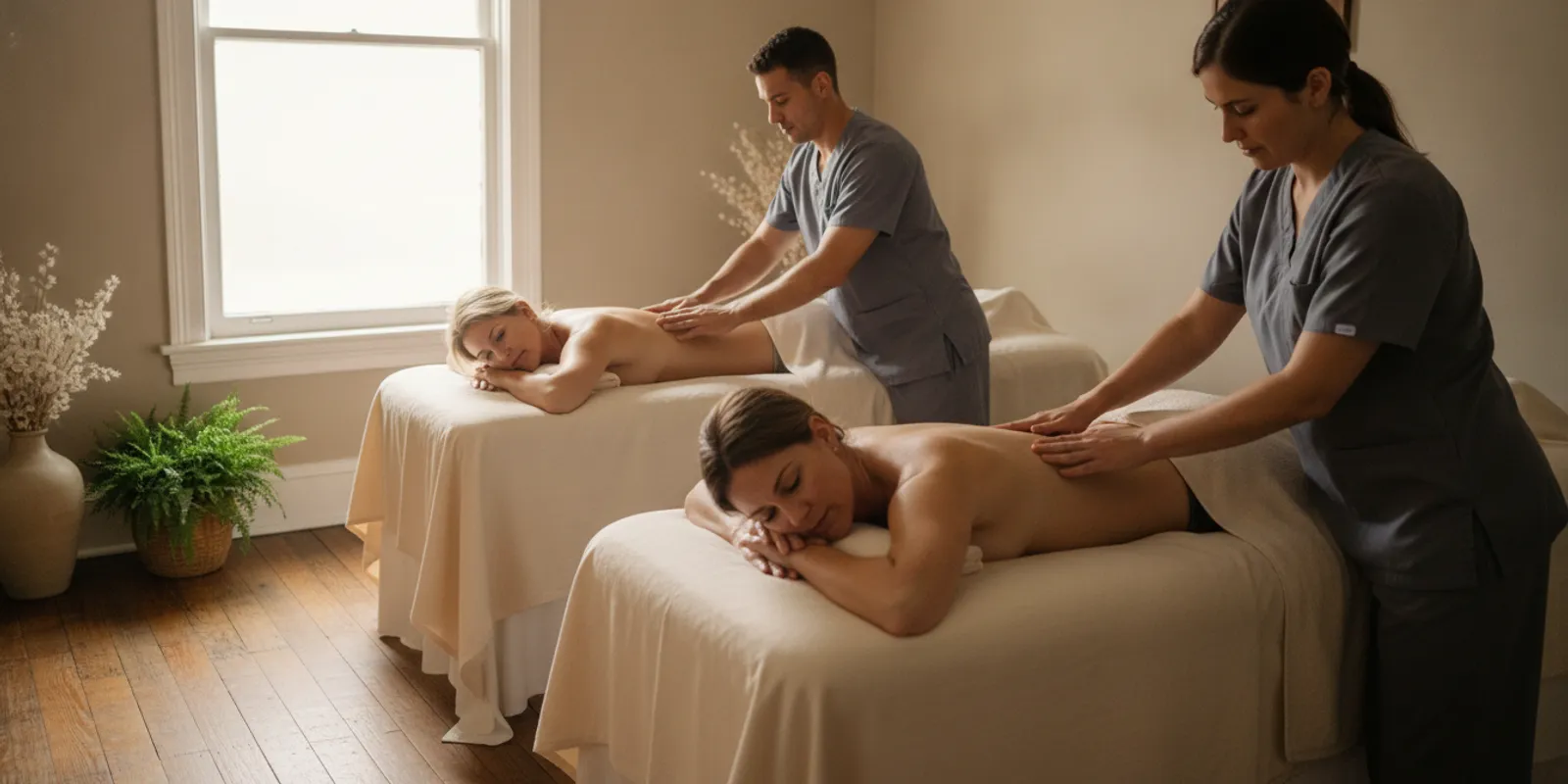
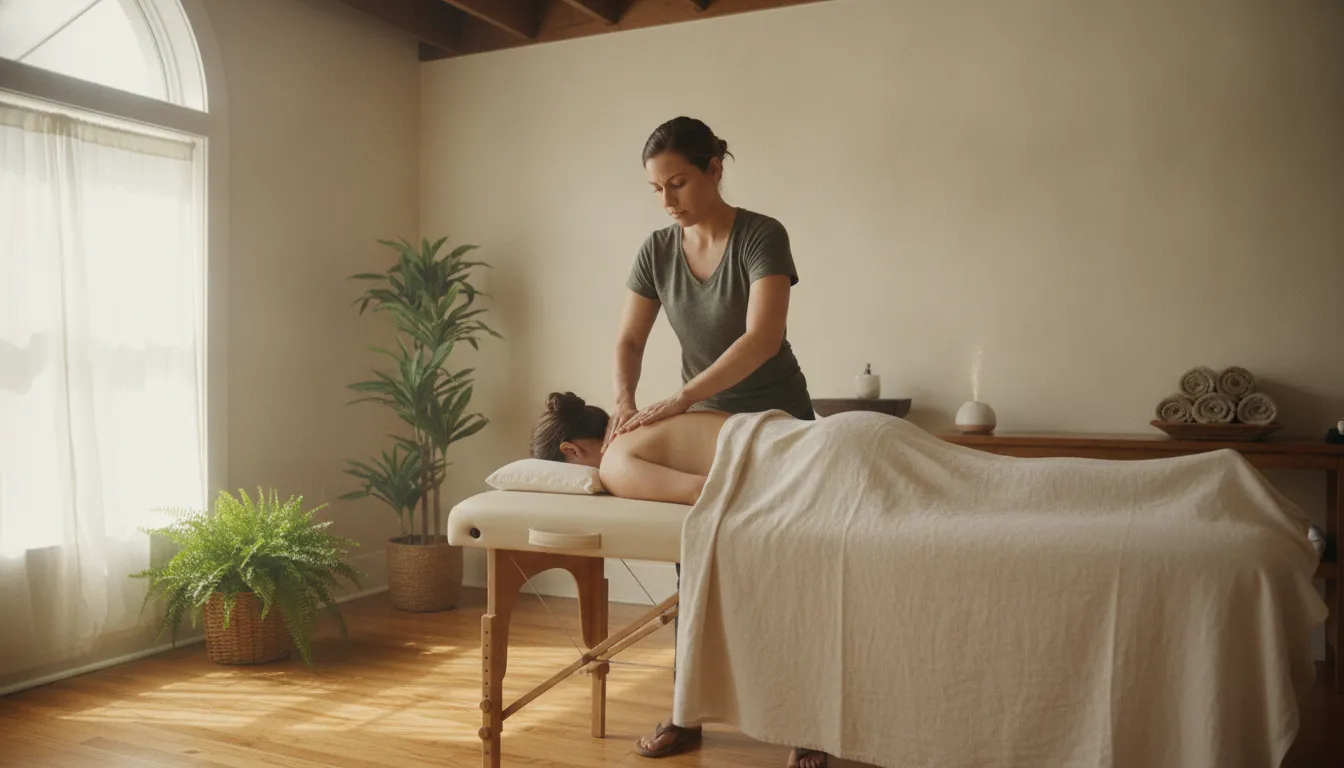
At the studio, plan to arrive a little early so there is time for that conversation. You can undress to your comfort level and stay draped. Speak up if a position, the face cradle, or the room temperature is a problem. Ending early is allowed.
How session styles compare
Names on a menu are starting points. The right session is the one you can tolerate and describe clearly. NOLA Bliss lists Swedish and deep tissue work, Ashiatsu, prenatal massage after the first trimester, and hot Himalayan salt stones as an add-on. Current individual prices on the massage services page are $120 for 60 minutes, $170 for 90 minutes, and $240 for 120 minutes. Salt stones add $25. Confirm the menu when you book, because offers can change.
| Option | What to ask | May suit you if | Planning note |
|---|---|---|---|
| Swedish or custom massage. | Ask about pace, pressure, and whether you want even full-body work or more time on one area. | This may suit you if you want a general session after a long day of driving or carrying. | A 60-minute visit is easier to fit between shifts. A 90-minute visit leaves more time for neck, shoulders, and low back. |
| Deep tissue focus. | Ask where firmer pressure is welcome and where it is not. | This may suit you if you prefer slower, specific work and can give feedback during the session. | Do not push through sharp pain. Soreness the next day is a reason to ease up, not a badge. |
| Ashiatsu. | Ask how barefoot bar work feels and whether it fits your comfort and health history. | This may suit you if you are curious about broad pressure from a therapist using overhead bars. | Read the Ashiatsu page first. This is a distinct service, not a deeper version of every massage. |
| Salt stone add-on. | Ask whether you want heat on muscles that feel tight after driving. | This may suit you if you like warmth and have no reason to avoid heat. | Tell the therapist if you flush easily, have reduced sensation, or were told to skip heat. |
Restaurant, hotel, and housekeeping work is a different pattern of standing, lifting, and guest-facing shifts. If that is your job, the hospitality workers guide is the better fit. Nursing shifts are covered separately too. This article stays with independent driving, delivery, and app-based work.
When to book around an irregular shift
There is no single best hour. The right time is the one that does not send you straight back into traffic while you still feel drowsy.
- Look at the next block of orders, not an ideal week. If your busiest window is dinner through midnight, a morning appointment on a lighter day is often easier than a session squeezed before the rush.
- Leave a buffer. Add time to park, check in, and walk out slowly. Weekday validated parking is available for appointments. The free parking page explains the garage and the weekend lot. Do not assume a same-day gap will still be open.
- Decide how you will get home. Some people feel relaxed or a little unfocused after bodywork. If that is you, avoid booking a session that ends ten minutes before you need to accept rides.
- Say if the shift changed. A crash-free but unusually heavy night, a new sore spot, or a skipped meal is worth mentioning before you get on the table.
- Pick one priority. “I drive for six hours and my neck and low back feel tight” is a clear start. You do not need a treatment plan of your own.
Short workplace massage has been studied outside gig work. In one trial, office workers who received 15-minute chair massage during breaks, twice a week for four weeks, reported less spinal and arm discomfort than a control group. The paper is indexed on PubMed. That was an office program, not a delivery route, so it is not a result you should expect from one studio visit. It does support a simpler idea: brief, scheduled bodywork can be part of a workweek, not only a rare day off.
A simple way to choose the length
Match the clock to the shift you just finished, not to an ideal recovery plan. After a short loop of trips, 60 minutes is often enough to cover neck, shoulders, and low back without taking the rest of the day. After a long airport or dinner push, 90 minutes gives the therapist time to slow down and still leave room for the areas you name. A 120-minute visit is a bigger block. Save it for a day when you are not going back online afterward.
Drink water before you arrive, eat enough that you are not shaky, and wear clothes that are easy to change. Bring the parking ticket if you used the garage. If you are coming from a shift, a two-minute walk from the car to the lobby is a better transition than scrolling the app in the elevator.
If you are booking a shared visit with a partner for an anniversary, that is a different plan. NOLA Bliss already explains how to shape that occasion in its anniversary couples massage guide. Use this article for the workweek, and that one for the celebration.
Limits, safety, and what to do between visits
Treat the session as information, not a score. You might feel looser, unchanged, or slightly sore. Sharp pain, numbness, chest symptoms, or pain that spreads or worsens is a reason to stop massage and contact a healthcare professional.
Between visits, change what you safely can. Shift the seat so your hips and knees are comfortable. Move the phone mount so you are not craning your neck, and switch the shoulder that carries the bag. Step out and walk for a minute when the app allows a pause. None of that replaces a clinician, and none of it is required to “earn” a massage.
Sleep still matters on odd hours. If winding down is the hard part, the studio’s sleep and evening routine article covers a calmer close to the day without turning massage into a cure for insomnia. For a knot that keeps returning in the same spot, the muscle knot guide explains what a session can and cannot change.
Ready to plan a visit around your next shift? Call or text 504-615-9414, or use the contact page to book and confirm parking before you head downtown.
Frequently asked questions
Is massage for gig workers different from a regular massage?
The session itself is still a therapeutic massage. What changes is the conversation. Tell the therapist how long you drive or carry, which areas bother you after a shift, and whether you have to get back in the car afterward. The goal is a comfortable session, not a special technique with a guaranteed result.
Should I book before a shift or after one?
Either can work. After a shift, you may feel tired and more aware of tight areas. Before a shift, leave enough time so you are not driving passengers or rushing orders while you still feel drowsy. Many people prefer a lighter day so the visit is not squeezed between trips.
Can massage fix back pain from delivery driving?
No. Research shows back, shoulder, and neck pain are common in food delivery work, but that research does not prove massage removes the cause. A session may feel helpful as part of rest and self-care. Ongoing, severe, or post-accident pain needs a medical evaluation first.
What if I am pregnant or recovering from an injury?
Say so before you book. Prenatal massage at NOLA Bliss is only for clients past the first trimester. And a couples booking with a pregnant partner has to be arranged by phone so the right therapist is assigned. Recent injuries and anything a doctor told you to protect should be cleared before bodywork.
Do I need a membership or a package?
No. You can book a single 60-, 90-, or 120-minute session and decide later whether you want to return. Prices are listed on the services page. Ask the studio if you are comparing add-ons, because salt-stone pricing should be confirmed at booking.