Steady muscle tightness in the back and hips after a round of golf is a sign of constant strain. Ignoring this tension can lead to chronic pain that limits your range of motion. Bodywork helps you maintain the mobility needed for a powerful and accurate swing.
Massage for golfers is an expert approach designed to address the specific muscle and joint needs of the sport, including hip and back pain. The force of a golf swing can create deep knots and tight spots that limit your movement and power. Professional sports massage helps these issues by increasing blood flow and loosening tight tissue to restore range of motion. Studies show that massage therapy offers small but real improvements in flexibility and helps reduce muscle soreness after intense play. By focusing on the core and glutes, this expert treatment helps prevent common overuse injuries like golfer’s elbow and chronic back aches. Adding regular sessions to your routine ensures your body remains strong and ready for another round.
Understanding the physical working of your play is vital for keeping your health on and off the course. Looking at Why the golf swing creates tension shows how high speed motion affects your core, hips, and spine after long hours on the green. This breakdown starts with
Why the golf swing creates tension
The golf swing is a hard move that needs many muscle groups to work together. While it might look smooth, the swing puts a high amount of force on your body. Doing this move over four hours can leave your muscles strained and sore. Many players find that a sports massage helps them handle the physical toll of the game.
Twisting force and repeating strain
A full golf swing involves a strong and sudden turn of the core, hips, and shoulders. This move creates a twisting force that can stress the soft tissues. Because golf is a game of doing the same move, these forces add up over time. Doing the same swing dozens of times per round can lead to muscle fatigue and tightness.
This repeating strain is a main cause of muscle tension in the back, hips, and shoulders. When you use muscles this way, they can stay tight for a long time. Over time, this may lead to knots in the muscle tissues. These small knots can limit how you move and make your swing weaker.
Common areas for golf tension
Most golfers feel tension in a few key spots. Back pain is one of the most common issues reported by players. This often relates to how the swing works and how the spine turns. Tightness in the lower back can also be made worse by weak core muscles. Using skilled ways to relieve back pain can help you stay on the course longer.
Hip and shoulder tension are also very frequent complaints. The swing needs good hip movement to work the right way. If your hip muscles are tight, your body may move in ways that can lead to harm. Getting a massage for tight hips is a good way to keep moving well. Pro coaches agree that movement is key for golf skill and staying power.
Soreness versus medical signs
It is normal to feel some light muscle soreness after a long day of golf. This is often called delayed onset muscle soreness, or DOMS. Studies show that massage can help reduce DOMS and help athletes move better. But you should know when a pain is more than just a simple ache.
Some signs may mean you have a problem that needs a doctor. Say, golfer’s elbow is a common injury that causes pain on the inside of the elbow. If you feel sharp pain, numbness, or tingling, you should talk to a doctor. While massage helps with muscle health, it should be part of a full health plan.
Where golfers commonly feel tightness
Playing 18 holes of golf puts a lot of stress on your body. The golf swing is a hard move that uses many muscle groups. Since you often repeat this move for hours, it can lead to strain and aches. Expert work can help find and treat these tight spots.
Hips and glutes
The power for a good swing comes from your hips. To hit the ball well, your hips must turn fully. If your muscles are too tight, they can limit your hip turn. This often leads to poor form or pain in other spots. Tight hips may even cause a loss in power or lead to hurt. Focused massage for tight hips can help keep your joints moving well on the course.
Your glutes also work hard during every round of golf. These muscles help you stay steady as you swing. When they get tight, they can pull on your lower back. This creates a cycle of pain that can ruin your game. Steady work on these spots helps you stay loose and ready for the next tee.
Low and mid back
Back pain is the most common issue for golfers. The swing forces your spine to twist at high speeds. This twist creates a lot of force on your low and mid back muscles. Over time, these muscles can stay tight or grow painful knots. This tension often comes from the way your body moves during the swing. Based on research on sports massage gains, care can help cut down on muscle soreness after a game.
A tight back can make it hard to finish your swing. It may also lead to sharp pain when you bend over to pick up your ball. You can relieve back pain by finding the deep layers of muscle. Our team uses expert tools to break up these tough spots. This keeps your back strong and mobile for every round.
Shoulders and neck
Your shoulders and neck take on a lot of tension during a golf game. Each swing pulls on these muscles as you reach for the ball. The fast stop at the end of a swing can also cause strain. Many golfers feel knots near their shoulder blades or in the base of their neck. Getting relief for shoulder tension helps you keep a wide, smooth swing arc.
Neck tightness can also limit how far you can look. This makes it hard to track your ball as it flies. Poor posture while walking the course can make this worse. Expert care helps release these tight zones. It allows your head and neck to move without pain or stiffness.
Forearms and hands
Grip is vital for control and speed in golf. But holding the club tight for hours strains your hands and arms. This often leads to a common issue known as golfer’s elbow. This is a type of strain that causes pain on the inside of the elbow. It can make it hard to hold your club or even a cup of coffee. Expert work helps to ease this pain and improve blood flow to the spot.
Your forearms also help control the face of the club. When these muscles get stiff, your aim may suffer. Massage helps to keep the soft tissues in your arms and hands loose. This keeps your touch light and your shots on target. Steady care helps prevent long term hurt from too much use.
Which massage style is best for golfers?
Every golfer has their own needs based on how they play and how their body feels. At our studio in the Warehouse District, we focus on real results to keep you on the green. We even offer free parking to make your visit easy. Some people want a light touch to help them rest after eighteen holes. Others need a firm hand to work out deep pain in their lower back or hips. Picking the right style can help you stay on the course longer and play better. You should always tell your therapist how much pressure you like. Clear talk helps the therapist give you the best care.
Swedish or relaxation massage
Swedish massage is the most common style found in many studios. It uses long, smooth strokes and kneading on the top layers of muscle. This style is a good choice for total rest after a long game. It helps lower stress and can lead to small gains in flexibility for athletes. While it may not fix a deep knot, it is a great way to help the whole body reset.
If you feel tired but not in sharp pain, this style is for you. It helps boost blood flow without the intense feel of deep tissue work. Use this if you want a light touch and a calm mind. It is also a safe choice if you are new to massage and want to see how your body reacts.
Therapeutic and deep tissue massage
Deep tissue work is more intense and focused. It targets the deeper layers of muscle and the thin tissue around them called fascia. This style is often used in sports massage to help with specific issues. It helps break up tight spots called adhesions. These spots often form from the repeated motion of a golf swing. When your muscles stay tight, they can limit how well you move.
A skilled therapist can find and release tension in your shoulders, hips, and lower back. These are the areas that work the hardest during a swing. Therapists can also focus on your forearms to help with issues like golfer’s elbow. This is a common pain caused by gripping the club too tight. Working on these spots can help you move more freely. Be sure to tell your therapist if the pressure feels too strong. The goal is to feel better, not to suffer through the session.
Ashiatsu Deepfeet Bar Therapy
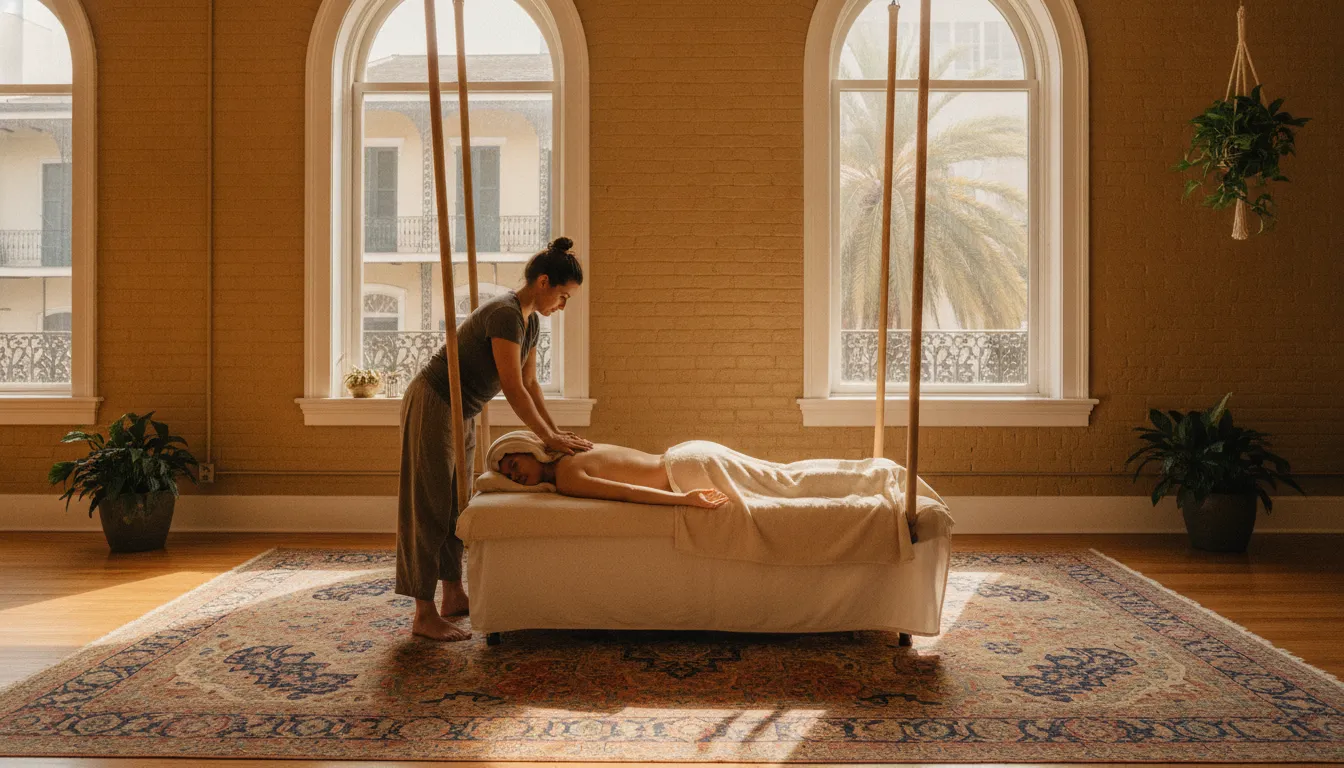
Ashiatsu is a unique style where the therapist uses their feet instead of their hands. They hold onto bars on the ceiling for balance and to control their weight. This allows them to give three times deeper pressure than a standard hand massage. It is ideal for golfers with chronic back or hip pain that does not go away with lighter work. Deep tissue Ashiatsu can reach the large muscles used in your swing without feeling sharp or pokey.
Because the feet are larger than hands, the pressure is broad and deep. If you have a large frame or dense muscles, you may find that hands just don’t go deep enough. The foot provides a long, flat surface that can slide over tight bands of muscle. This helps iron out the tension without the pokey feel of an elbow. Many people find this style more pleasant for long-term relief from stiff muscles and tight hips.
| Massage Style | Pressure Level | Primary Benefit | Best For |
|---|---|---|---|
| Swedish | Light to Medium | Stress relief and rest | New clients or recovery |
| Deep Tissue | Firm to Deep | Fixing knots and fascia | Specific pain or tight spots |
| Ashiatsu | Deepest | 3x deeper relief | Chronic pain and large muscles |
When should a golfer schedule a massage?
The best time for a sports massage depends on your goals. You might want to boost your swing range or speed up your recovery after a long day on the course. Each timing choice offers different perks for your body and your game. Since a full round can leave you sore, a smart plan helps you stay in top form.
Prep for your game
A session before you play can help your body move more freely. Research shows that massage can improve flexibility, which is vital for a smooth swing. This type of bodywork should be light and short to wake up your muscles without making them too relaxed. Aim for a session a day or two before your tee time to see the best results.
Recover after 18 holes
Playing for four hours puts stress on your back, hips, and shoulders. You should wait at least 24 hours after a round before you get a deep session. This gives your tissues time to settle after the strain of play. Using a massage to relieve back pain is a common way to deal with the physics of a golf swing. It helps move fluids through your muscles and calms the nervous system.
Plan for the long term
For the best results, you need a regular plan that fits your life. If you play every week, you might need a deep tissue session once or twice a month. This helps stop small aches from turning into real injuries. A steady routine keeps your joints mobile and your muscles healthy throughout the year.
- Pre-round prep: Schedule a light session 24 to 48 hours before you play. This helps you move better without loss of power.
- Post-round recovery: Book a session for the day after your game. This targets the soreness that often sets in after 18 holes.
- Tournament weeks: Get a deeper session early in the week of a big match. Give your body three to four days to fully recover before you compete.
- Off-season maintenance: Use the months you play less to work on chronic issues. Focus on massage for tight hips to prep for next season.
- Weekly upkeep: If you practice daily, a light session every week can prevent strain. This keeps your muscles from getting too tight over time.
How to prepare for massage for golfers
To get the most from your session, you should prep before you arrive at the studio. A few key details help your expert find the right spots to work on. Good prep leads to a better session and a better game on the green.
Tell your team about your game
Your golf game is unique to you. The way you play affects how your body moves and where it feels tight. Start by telling your team which hand you use to lead your swing. This helps them know which side of your body takes the most strain. For most, the lead side works harder during the swing. You should also share how often you play. A golfer who plays every day has needs that are not the same as someone who plays once a month. Frequent play often leads to long-term tension that needs deep work.
Mention if you walk the course or use a golf cart. Walking many miles on grass can lead to back pain and leg fatigue. If you carry your own bag, tell your expert about that too. The weight of the bag on one shoulder can cause uneven knots in your back. If you have an exact goal, like a more fluid swing, say so. Your team can focus on the muscle groups that help you reach that goal.
Pinpoint your pain and tension
Be very clear about where you feel stiff or sore. Most golfers have tension in their hips, shoulders, or low back from repeat motion. Research shows that massage for golfers can help with flexibility and reduce muscle soreness after a round. Knowing your sore spots lets the expert use the best ways for your body. If you have tight wrists or forearms from gripping the club, mention that as well. Small muscles in the arm often get missed but are vital for a good swing.
You might want to try deep tissue Ashiatsu if you have deep knots that do not go away. This method uses foot pressure to reach the deepest muscle layers. It is very helpful for the heavy strain caused by the turn of a golf swing. Make sure to list any old or new wounds too. Even a small ankle tweak from years ago can change how you stand and swing today. Your expert needs to know your health past to keep the session safe and helpful.
Discuss your pressure and goals
Most people like a certain level of pressure during a session. Some want deep, firm work, while others prefer a light touch to help them relax. Do not be shy about what you like. Our massage services are built to fit your unique needs and body type. If the work feels too deep or too light at any point, speak up right away. Talk helps your expert change their touch to what you need in the moment.
Your goals might change from week to week based on your play. One day you may need help with rest after a long game in the sun. Another day you might want to work on tight spots to prep for a big match the next morning. Telling your expert what you want for each visit ensures you get the best results for your time. When you arrive at our Warehouse District studio, take a moment to breathe and clear your mind. Being ready for your session helps your body respond better to the work.
At-home recovery habits between rounds
Playing a full round of golf puts stress on your body. The daily motion of the swing can lead to sore muscles and stiff joints over several hours.
To keep your game strong, you must focus on healing at home. Good habits help your muscles heal and get you ready for your next round. Using a daily routine that includes rest and an expert sports massage can make a big change in how you feel.
Hydration and gentle movement
Drink plenty of water before, during, and after your round. Good water intake keeps your muscle tissues loose and helps the body flush out waste. Along with water, add gentle movement to your day to avoid stiffness.
Avoid sitting for long periods right after you finish playing. Short walks can keep your blood flowing to tired areas. This helps reduce muscle soreness that peaks after a long game. Research shows that massage and movement work can improve flexibility and lower muscle pain.
Focus your work on the areas that do the most work during your swing. Your hips and lower back often take the most force when you rotate. Try simple hip circles or gentle leg swings to stay loose between games.
If your joints feel stuck or your stride feels short, getting an expert massage for tight hips can help restore your full range of motion. These small steps prevent tension from building up into a bigger injury.
Heat and cold therapy
Knowing when to use ice or heat is a key part of self-care. Use ice for new aches, sharp pain, or any area that feels swollen. Cold therapy helps to lower blood flow and ease swelling.
If your muscles just feel tight, stiff, or dull, a warm bath or heating pad is a better choice. Heat brings more blood to the area, which helps the healing process and relaxes tight fibers. Many players find that a mix of home heat and a massage to relieve back pain helps them stay agile.
Sleep is another vital part of the repair process for your body. Your system does most of its muscle tissue repair while you are in a deep sleep. Aim for seven to nine hours of quality rest each night to help your body bounce back.
This gives your system time to reset after the body strain of the game. Without enough rest, your muscles stay tired. This can lead to poor form and more pain during your next round.
When to seek professional care
While home habits are great, some issues need an expert touch. If you have sharp pain that does not go away with rest and ice, it may be time to see a pro. Chronic tension in your shoulders or neck can change your swing path and hurt your score.
A special massage for golfers can find and treat deep knots that you cannot reach on your own. At NOLA Bliss Massage in the Warehouse District, our team uses their deep knowledge of the body to help you recover fast.
If you feel pain that limits how you move, do not wait for it to get worse. Our expert therapists focus on therapeutic outcomes to get you back on the course. Early care keeps you playing the sport you love with less risk of a long-term injury.
Frequently Asked Questions
How often should golfers get a sports massage?
Pro golfers often get therapy once a week during their season. For most hobby players, one session every two to four weeks is enough to manage muscle strain. Regular care helps stop injuries before they start and keeps your body loose. Experts suggest more visits if you are training for a big game or healing from a recent pull. Regular therapy ensures your joints stay mobile and your back stays healthy for your next round.
What is golfer’s elbow and how can massage help?
Golfer’s elbow is a painful issue on the inside of the elbow caused by repeated strain. It often happens from gripping the club too tight or taking a lot of swings. Massage therapy helps by breaking up scar tissue and boosting blood flow to the area. This helps the tendon heal faster and lowers the sharp pain felt during a swing. Local work on the forearm muscles can also lower the tension that pulls on the elbow joint.
Can massage help with lower back pain from golf?
Yes, massage is very useful for back pain caused by the twisting motion of a golf swing. Deep tissue work or Ashiatsu can reach the thick muscles in the lower back and hips. Based on research on sports massage, this therapy can reduce muscle soreness and improve overall flexibility. This helps golfers keep a full range of motion. Loosening these areas takes pressure off the spine and allows for a smoother, more powerful swing.
How can self-massage help golfers between sessions?
Using a foam roller or a small ball at home is a good type of massage for golfers between pro visits. This self-care targets tight spots in the glutes and shoulders that often lock up after a game. It helps flush out waste from the muscles and keeps the fascia from getting too sticky. While it does not replace the deep work of a pro, it is a great way to stay limber. Taking a few minutes each day to roll out can help your recovery time.
Ready to book your therapeutic golf massage session?
If you do not take care of your sore muscles today, the tension in your hips and back can turn into a bad injury that lasts. This can keep you off the green for a long time. Booking a session now helps you get back to your top form faster. You can play a full round without feeling stiff aches or pain in your swing. We offer expert massage for tight hips to help you get back your full range of motion. Our team in the Warehouse District will help your golf swing feel smooth and strong once again.
Ready to book? Visit our therapeutic massage page to book a therapeutic massage in New Orleans.